

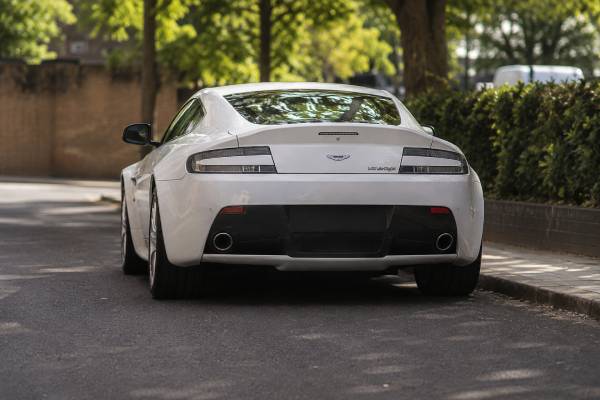
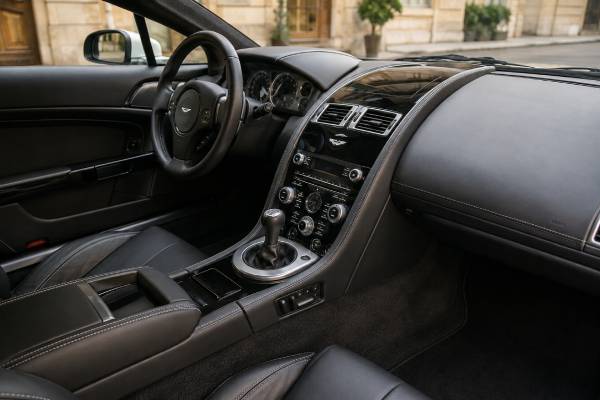
The 2009–2012 Aston Martin V12 Vantage is the car enthusiasts had imagined from the moment the compact V8 Vantage appeared: the company’s 5.9-litre V12 installed in its smallest road-car body, paired with a six-speed manual gearbox and carbon-ceramic brakes. The result was not merely a faster V8 model. Extra cooling, a revised bonnet, wider body details, firmer suspension, a shorter final drive, and substantial brake hardware turned the coupé into a more intense machine without erasing its ability to cover distance. Its 510 hp output and 190-mph capability remain serious, but rarity, sound, steering feel, and the manual transaxle now define its appeal more than raw speed. Ownership requires a different standard of preparation than the purchase price alone suggests. A clutch, carbon-ceramic brake components, V12 ignition work, or neglected corrosion can create large bills. This guide focuses on the original AM11-powered coupé sold from 2009 through 2012, not the later V12 Vantage S or limited Roadster.
Table of Contents
- The compact V12 concept
- AM11 specifications and technical layout
- Engine, chassis, and brake engineering
- Road and track character
- Service needs and fault prevention
- How to evaluate a V12 Vantage
- Rarity, value, and best use
The compact V12 concept
The original V12 Vantage is best understood as a factory-engineered hot rod built with unusually thorough development. Aston Martin did not simply fit the DBS engine and stop; it reworked airflow, cooling, braking, gearing, suspension, and body aerodynamics so the smaller platform could use the additional performance repeatedly.
The idea appeared publicly as the V12 Vantage RS concept in 2007. Customer interest was strong enough that Aston Martin approved production, and the road car arrived in 2009. The basic architecture remained familiar: bonded-aluminium VH structure, engine behind the front axle, torque tube, rear transaxle, rear-wheel drive, and two-seat liftback body. The powertrain changed the balance of the experience. The V12 adds mass ahead of the cabin, but it also supplies immediate response and a broad torque curve that the 4.3-litre V8 cannot match.
Visual differences serve a purpose. Bonnet vents release heat, a deeper front splitter manages airflow, enlarged openings feed the radiators and brakes, side-sill changes control air around the body, and a more pronounced rear lip supports high-speed stability. Carbon fibre is used where it reduces weight or supports the aerodynamic package. The result is aggressive by early Vantage standards, yet far less theatrical than the later GT12.
The six-speed manual is central to the model’s identity. There was no standard automatic alternative for the original coupé, so every regular production example asks the driver to operate a heavy clutch and deliberate transaxle. That makes it less convenient in traffic but more distinctive in a market where naturally aspirated V12 manuals have become rare.
Production numbers were low compared with the V8 range, and regional allocations differed. Rarity alone does not guarantee quality. Cars were often stored, driven on short journeys, or modified for sound. The best examples show consistent annual care, regular heat cycles, fresh tyres, healthy batteries, and evidence that high-cost wear items were inspected rather than ignored.
AM11 specifications and technical layout
The AM11 V12 Vantage is a naturally aspirated petrol ICE vehicle with a front-mid-mounted V12, six-speed manual rear transaxle, mechanical limited-slip differential, and rear-wheel drive. The tables below describe the 2009–2012 coupé; the limited 2012 Roadster carries different weight and body data.
| Specification | Value |
|---|---|
| Engine code | Aston Martin AM11 |
| Configuration | 60-degree naturally aspirated V12, aluminium construction |
| Displacement | 5,935 cc (5.9 L; commonly marketed as 6.0 L) |
| Valvetrain | DOHC, four valves per cylinder |
| Fuel system | Sequential electronic fuel injection |
| Maximum power | 510 bhp (380 kW) at 6,500 rpm |
| Maximum torque | 570 Nm (420 lb-ft) at 5,750 rpm |
| Lubrication | Wet-sump system with model-specific cooling provisions |
| Exhaust | Stainless-steel system with bypass valves |
| Specification | Value | Practical meaning |
|---|---|---|
| Transmission | Six-speed manual transaxle | Rear-mounted for mass distribution |
| Final drive | Shorter ratio than the DBS application | Improves response and in-gear urgency |
| Drive | Rear-wheel drive | No all-wheel-drive system |
| Differential | Mechanical limited-slip differential | Supports traction on corner exit |
| Power connection | Torque tube with carbon-fibre propeller shaft | Links engine to rear transaxle |
| Steering | Hydraulic power-assisted rack | Heavy, linear feedback at road speed |
| Measure | Value | Standard or condition |
|---|---|---|
| 0–62 mph (0–100 km/h) | 4.2 seconds | Manufacturer claim |
| Maximum speed | 190 mph (305 km/h) | Manufacturer claim |
| Official combined consumption | About 17.3 mpg UK (13.8 mpg US; 16.3 L/100 km) | European combined cycle, period specification |
| CO₂ emissions | Approximately 388 g/km | European homologation figure |
| Fuel tank | 80 L (21.1 US gal) | Market documentation should be checked |
| Recommended fuel | Premium unleaded | Use the minimum octane stated for the market |
| Specification | Value |
|---|---|
| Body | Three-door liftback coupé, two seats |
| Structure | Bonded aluminium VH architecture with aluminium, steel, and composite panels |
| Length | 4,385 mm (172.6 in) |
| Width excluding mirrors | 1,865 mm (73.4 in) |
| Height | 1,250 mm (49.2 in) |
| Wheelbase | 2,600 mm (102.4 in) |
| Kerb weight | Approximately 1,680 kg (3,704 lb) |
| Luggage capacity | About 300 L |
| Specification | Value |
|---|---|
| Front suspension | Independent double wishbones, coil springs, anti-roll bar |
| Rear suspension | Independent double wishbones, coil springs, anti-roll bar |
| Adaptive damping | Standard on later specifications; market and model-year dependent |
| Front brakes | 398 mm carbon-ceramic discs, six-piston calipers |
| Rear brakes | 360 mm carbon-ceramic discs, four-piston calipers |
| Front tyres | 255/35 ZR19 |
| Rear tyres | 295/30 ZR19 |
Carbon-ceramic disc measurements require the correct inspection method. Visual appearance and a conventional thickness check do not tell the whole story; mass, surface condition, heat history, and manufacturer limits matter. Before purchase, obtain a written assessment from a workshop familiar with this brake system.
Engine, chassis, and brake engineering
The V12 Vantage’s engineering strength is integration. The engine, cooling package, manual transaxle, carbon-ceramic brakes, and altered chassis calibration work together, which is why converting a V8 car into an equivalent is neither simple nor economically sensible.
The AM11 is related to the V12 used in the DBS, but packaging it in the shorter Vantage nose demanded revised intake paths, cooling airflow, oil-cooling arrangements, and exhaust routing. The bonnet apertures are not decoration; they help remove hot air from a tightly packed engine bay. Heat management remains important in ownership. Missing undertrays, damaged ducting, nonstandard grilles, or poorly fitted aftermarket exhaust components can disturb the designed airflow.
Power delivery is naturally aspirated and progressive. The engine does not provide its best work at idle speed, yet it has enough torque to pull cleanly without constant downshifts. Above the middle of the rev range, the response sharpens and the exhaust valves add volume. The sound is layered rather than simply loud: induction, mechanical V12 texture, and exhaust merge as revs rise.
The rear transaxle supports near-even weight distribution, but the clutch and torque tube introduce service complexity. Clutch replacement is a major job. Some owners install a lighter twin-plate assembly to reduce pedal effort and rotating mass. A well-executed conversion can improve the car, but it changes feel and may add chatter. Invoices should identify the kit, installer, mileage, and any related flywheel or hydraulic work.
The chassis is firmer than the contemporary V8 Vantage and carries more front-axle load. Aston used spring, damper, bushing, anti-roll-bar, steering, and alignment changes to preserve agility. The car feels planted rather than delicate. On poor surfaces, old dampers or hardened tyres can make it skittish, so a harsh test drive should not automatically be blamed on the factory setup.
Carbon-ceramic brakes reduce unsprung mass and resist repeated high-temperature use. They are also costly and vulnerable to impact damage from careless wheel removal, stones, or dropped tools. The discs may make light noises at low speed, especially when cold, but grinding, severe judder, edge damage, or warning messages require investigation. Correct pads are essential; incompatible compounds can damage the discs.
Road and track character
On the road, the original V12 Vantage feels muscular, compact, and serious. It is quicker than the official 0–62 mph figure suggests in rolling acceleration because the engine responds immediately and the gearing keeps it active.
The clutch is substantial, and the gear lever needs a firm, accurate movement. Drivers accustomed to modern dual-clutch transmissions may initially find the car slow to operate. That is not a defect. The pleasure comes from coordinating throttle, clutch, and a long-travel mechanical shift. A rushed second-to-third change can feel clumsy; a clean one is satisfying precisely because the car does not complete the task for you.
Steering weight rises naturally with cornering load. The nose is not as light as a 4.3 V8 Vantage, but the wider front tyres and chassis tune generate strong grip. The rear follows faithfully when the driver is smooth. Abrupt throttle use can overwhelm cold rear tyres, and stability control should remain active until the driver understands the car, road, and tyre condition.
The brakes tolerate hard road use with little fade, yet they need temperature and a decisive pedal. Gentle urban driving can leave surfaces less clean than repeated proper stops. Owners who never exercise the car may experience squeal or deposits and then assume the discs are failing. A specialist should distinguish normal carbon-ceramic behaviour from actual damage.
At highway speed, the V12 settles into a refined cruise, though road noise from wide tyres and the short gearing remain present. The cabin is intimate, visibility to the rear is limited, and the liftback makes luggage space more useful than the shape suggests. Long doors require careful parking, and the nose can scrape on ramps.
Track use is within the car’s design intent, but preparation matters. Brake-fluid age, tyre condition, wheel torque, coolant level, oil level, alignment, and pad life must be checked beforehand. Afterward, inspect the underbody, tyre shoulders, disc surfaces, and fluid condition. A “never tracked” claim is not automatically valuable; careful track use with documented maintenance may be preferable to years of short cold starts and inactivity.
Service needs and fault prevention
Preventive care is cheaper than fault chasing on a V12 Vantage. Service the car annually regardless of mileage, keep the battery conditioned, warm it fully during use, and correct fluid leaks or warning messages before they affect connected systems.
V12 engine health
A cold start should be prompt, with all warning lamps completing their normal check. Listen for persistent top-end tapping, belt-drive noise, irregular idle, or a misfire under load. Twelve cylinders mean twelve plugs and multiple coils; labour and parts multiply quickly when ignition work is postponed.
Check the service record for spark-plug replacement, auxiliary belts, coolant work, air filters, and oil changes using the correct specification. Inspect for oil seepage around covers and lines, coolant staining near tanks and hose joints, and damaged heat shields. The cooling fans should operate correctly, and temperature must remain stable in traffic after a spirited drive.
Oil-level checking must follow the factory procedure. The V12’s system and dipstick can be misread when the car is cold or parked on a slope. Ask the seller how oil is checked; an answer that involves topping up casually before every start is a warning sign.
Catalyst efficiency faults, oxygen-sensor issues, and misfires should be diagnosed rather than erased. Unburned fuel from a misfire can overheat a catalyst. An aftermarket exhaust may alter sound without causing trouble, but poorly designed systems, removed catalysts, or improvised valve controls can create inspection, emissions, and heat-management problems.
Clutch and driveline
Test clutch slip in a safe, high-load condition without abusing the car. Watch for engine speed rising faster than road speed, shudder when moving off, release-bearing noise, or a bite point near the end of pedal travel. Check reverse engagement and listen for clunks that may indicate worn mounts, torque-tube concerns, or excessive driveline backlash.
Transaxle fluid changes may not appear in basic service stamps, so invoices matter. A slight mechanical whine can be characteristic, but a rising howl, rumble on overrun, or noise that changes sharply with gear needs specialist assessment.
Chassis and exterior
Inspect dampers for leakage, bushes for cracking, and tyres for age or inner-edge wear. Alignment that is merely “within tolerance” can still produce poor behaviour if left and right values differ. Ask for a printout after any suspension work.
The aluminium structure resists ordinary rust but does not eliminate corrosion. Examine steel subframes, brake pipes, fasteners, suspension arms, undertray fixings, and contact points between dissimilar metals. Check the front splitter and carbon pieces from below; cosmetic repairs can conceal cracks or missing hardware.
Water can enter through ageing seals or blocked drains. Lift carpets where practical, inspect the rear storage area, and smell for damp. Test windows, door-glass drop, mirrors, seat controls, navigation, parking sensors, heater functions, and both keys. Dashboard leather shrinkage and lifted trim are common cosmetic issues and can be expensive to correct neatly.
How to evaluate a V12 Vantage
A successful purchase begins with evidence, not excitement. The engine note can make almost any example feel desirable, so use a fixed inspection sequence before negotiating.
First, confirm that the car is the original 2009–2012 AM11 coupé, not a later S, Roadster, conversion, or incorrectly described import. Decode the VIN, review the build sheet, and compare paint, interior, options, wheel design, and brake equipment with original records.
Second, establish a maintenance timeline. Annual gaps matter even at low mileage. Look for oil and brake-fluid changes, plugs, belts, tyres, battery replacements, air-conditioning service, suspension work, clutch history, and carbon-ceramic inspections. Repeated invoices for the same warning light suggest unresolved diagnosis.
Third, inspect the car cold and dry. A freshly washed underside can hide leaks, while a pre-warmed engine removes useful information. Scan all control modules, record codes, then road-test and scan again. A low-voltage history can be plausible; current misfire, catalyst, restraint, damper, or communication codes need action.
Fourth, value the brakes and clutch separately from the car. Ask for disc measurements or condition reports, pad thickness, tyre dates, and clutch replacement details. If those items are near the end of life, obtain real quotations before agreeing a price. Guessing can turn a seemingly fair deal into a financial mistake.
Fifth, arrange an aluminium-aware body inspection. Look for inconsistent panel gaps, overspray beneath seals, disturbed bonded joints, non-original fasteners, mismatched carbon weave, or paint readings that point to structural rather than cosmetic repair. Properly repaired accident damage is not automatically unacceptable, but the documentation should be complete.
Finally, choose the seller as carefully as the car. A long-term owner who explains warm-up habits, oil checks, tyre choices, and recent faults may provide more confidence than a dealer relying on low mileage and polished paint. A specialist warranty can add value only when its exclusions, claim limits, labour rates, and carbon-ceramic or clutch coverage are clear.
Rarity, value, and best use
The original V12 Vantage is one of the strongest modern Aston Martin ownership propositions for an enthusiast who wants a manual, naturally aspirated engine and compact dimensions. Its value rests on specification and condition, not merely on being a V12.
Desirable cars usually combine original bodywork, complete history, sensible colours, carbon-ceramic brakes in documented condition, a healthy clutch, unmodified emissions equipment, and regular use. Lightweight seats and unusual factory colours can add interest, but a rare option does not compensate for corrosion or overdue mechanical work.
Mileage affects price, yet ultra-low mileage creates its own questions. Seals, batteries, tyres, dampers, air-conditioning components, and fluids still age. A car that has covered several thousand miles each year with prompt servicing may be more trustworthy and more enjoyable to use. Buyers seeking investment-grade originality should accept that preservation and driving pleasure can pull in different directions.
Running costs exceed those of a V8 Vantage because the engine, brakes, tyres, and some body pieces are more expensive. Fuel consumption is substantial, and short journeys are particularly inefficient. Secure storage, specialist labour, and agreed-value insurance should be included in the ownership plan.
As a driving car, the V12 Vantage suits fast touring, weekend use, and occasional carefully prepared track work. It is less happy as a congested-city commuter because of clutch weight, visibility, door length, and heat. Regular meaningful drives are healthier than frequent five-minute starts.
A prospective owner should also decide how much originality matters before shopping. Reversible upgrades such as protective film or a documented clutch specification may support regular use, while deleted catalysts, unidentified engine software, non-standard wheels, or missing carbon pieces complicate inspection and resale. Establish that boundary in advance so rarity does not excuse a modification that conflicts with the intended ownership plan.
The model’s final appeal is coherence. Aston Martin placed a large engine in a small chassis, but it did not create a crude straight-line special. The V12’s response, the manual shift, the steering, the carbon-ceramic brakes, and the subtle body changes form a complete package. Buy a car whose history proves that completeness has been preserved, and the AM11 V12 Vantage offers an experience that later turbocharged, automated sports cars struggle to reproduce.
References
- V12 VANTAGE 2009 (Manufacturer Model Archive)
- V12 VANTAGE ROADSTER 2012 (Manufacturer Technical Background)
- 2010 Aston Martin V12 Vantage – Review – Car and Driver 2009 (Road Test)
- 2011 Aston Martin V12 Vantage – Review – Car and Driver 2010 (Instrumented Review)
- 2009 Aston Martin V12 Vantage First Drive – Motor Trend 2009 (First Drive)
- Aston Martin V12 Vantage | PH Used Buying Guide 2021 (Buying Guide)
Disclaimer
This material is informational and cannot replace professional inspection, diagnosis, or repair. Specifications, tightening values, intervals, software, parts, and procedures may change with VIN, market, production date, and equipment. Use the official Aston Martin documentation for the specific car and employ trained technicians for safety-critical or specialist work.
Sharing this article on Facebook, X/Twitter, or an Aston Martin owners’ group helps other buyers find dependable information and supports our work.