

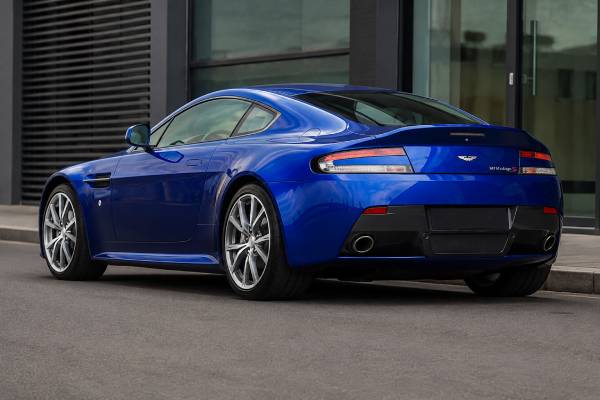
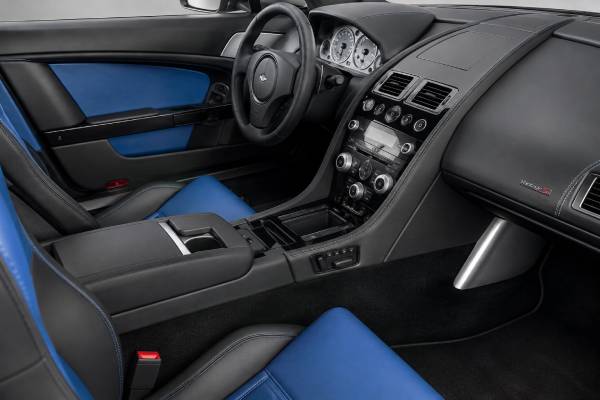
The Aston Martin V8 Vantage S is the sharper factory interpretation of the 4.7-litre VH-era Vantage, not simply a standard car with another 10 hp. Introduced for 2011, it combined the AM15 V8’s freer breathing and 430 hp with quicker steering, larger front brakes, firmer chassis tuning, wider rear tyres, and a shorter final drive. Most examples use the seven-speed Sportshift II automated manual, although a six-speed manual was offered in selected markets and years. That distinction matters because the two transmissions give the same car very different personalities and create different inspection priorities. The Vantage S remained in production through 2017, so equipment, infotainment, trim, and special-edition influence vary across the run. Its best qualities are balance, steering accuracy, naturally aspirated response, and a sense of occasion at legal road speeds. Its risks are familiar to the platform but amplified by higher-performance hardware: clutch wear, expensive brakes, ageing dampers, neglected corrosion, and incomplete servicing. This guide explains how to identify, assess, maintain, and buy the 2011–2017 430-hp coupé.
Table of Contents
- The S model’s real purpose
- AM15 specifications and equipment
- Chassis changes you can feel
- Sportshift II or six-speed manual
- Maintenance by system
- Inspection and purchase strategy
- Who should own a Vantage S
The S model’s real purpose
The V8 Vantage S was engineered to make the existing 4.7-litre car more immediate and more demanding without turning it into a stripped track special. Its gains are modest on a specification sheet but coherent from the driver’s seat.
Aston Martin raised output from 420 to 430 hp and torque from 470 to 490 Nm through intake, exhaust, and calibration changes. More important, the S received a quicker steering rack, retuned springs and dampers, larger front brake discs with six-piston calipers, wider rear tyres, and a shorter final-drive ratio. The altered gearing makes the engine feel more energetic in the middle ratios even though peak power changed by only 10 hp. Visual differences—including a deeper front splitter, side sills, rear diffuser treatment, and distinctive wheels—were connected to the car’s more assertive chassis brief rather than applied as an isolated appearance package.
The model also introduced Sportshift II to the Vantage range. This Graziano seven-speed transaxle is an automated manual, not a torque-converter automatic and not a modern dual-clutch transmission. Its single clutch must disengage for every shift, and the best results come when the driver anticipates that process. Aston Martin subsequently spread elements of the S chassis and styling to the standard V8 Vantage, particularly during the 2012 update, which can blur the distinction for casual buyers. A genuine Vantage S still has the AM15 output, S-specific badging and build data, and the appropriate powertrain specification.
Production continued through the final VH Vantage years. Early cars feel closely related to the 2011 launch specification, while later examples may have updated navigation, switchgear details, trim combinations, and market-specific equipment. Special derivatives such as the SP10, N430, GT, and other regional editions overlap mechanically but should not be assumed to have identical weight, seats, suspension, or options. Verify a car from its VIN and factory record rather than relying on an advertisement’s model label.
The S sits in a useful position today. It is more focused than the regular 4.7 but less costly and less intimidating than a V12 Vantage. It keeps the naturally aspirated V8, hydraulic steering, and compact body that define the first-generation Vantage, yet has enough factory development to feel like a resolved late-stage model. The right example is therefore bought for its integrated character, not because 430 hp is an exceptional number by current standards.
AM15 specifications and equipment
The core V8 Vantage S specification remained recognisable throughout 2011–2017, but transmission availability, optional seats, wheel designs, infotainment, and regional equipment changed. The following figures describe the coupé in representative factory specification; confirm build-specific details before ordering parts or comparing cars.
Engine and output
| Configuration | Front-mid-mounted 90-degree naturally aspirated V8 |
|---|---|
| Displacement | 4,735 cc |
| Valvetrain | 32 valves, dual overhead camshafts |
| Fuel system | Sequential electronic fuel injection |
| Maximum power | 430 bhp at approximately 7,300 rpm |
| Maximum torque | 490 Nm at approximately 5,000 rpm |
| Lubrication | Dry-sump system |
| Fuel | Premium unleaded; follow the market-specific handbook |
Transmission and performance
| Drive | Rear-wheel drive |
|---|---|
| Primary transmission | Seven-speed Sportshift II automated manual transaxle |
| Optional transmission | Six-speed manual in applicable markets and model years |
| Differential | Mechanical limited-slip differential |
| 0–60 mph | Approximately 4.5 seconds, specification dependent |
| Maximum speed | Approximately 189 mph |
Structure, suspension, and steering
| Body structure | Bonded and riveted aluminium architecture with composite panels |
|---|---|
| Engine position | Front-mid, behind the front axle line |
| Gearbox position | Rear transaxle linked by a torque tube |
| Front suspension | Independent double wishbones with coil springs and anti-roll bar |
| Rear suspension | Independent double wishbones with coil springs and anti-roll bar |
| Steering | Hydraulically assisted rack and pinion, quicker S calibration |
Brakes, wheels, and tyres
| Front brakes | 380 mm two-piece ventilated discs, six-piston calipers |
|---|---|
| Rear brakes | 330 mm ventilated discs, four-piston calipers |
| Wheel diameter | 19 inches |
| Front tyres | 245/40 ZR19 |
| Rear tyres | 285/35 ZR19 |
| Stability systems | ABS, electronic brake distribution, traction control, DSC with track setting |
Dimensions and capacity
| Length | About 4,385 mm |
|---|---|
| Width excluding mirrors | About 1,865 mm |
| Height | About 1,250 mm |
| Wheelbase | 2,600 mm |
| Kerb or dry weight | Varies by measuring standard and equipment; verify the cited market specification |
| Fuel tank | Approximately 80 litres |
| Luggage compartment | Approximately 300 litres |
These tables should be read as an identification framework, not a substitute for a build sheet. Carbon seats, lightweight wheels, audio systems, trim, emissions equipment, and transmission choice can affect mass and equipment. Tyre approvals and pressure recommendations also vary by market and load. An owner should use the exact handbook and parts catalogue associated with the VIN.
Chassis changes you can feel
The S earns its badge through response rather than comfort-free aggression. The steering, brakes, gearing, and suspension all reduce the delay between an input and the car’s reaction.
The hydraulic steering is central to that effect. The faster rack requires less hand movement and gives the front axle a more alert turn-in than an early standard Vantage. It does not create unlimited grip, and a poor alignment or mismatched tyres can make the car nervous. When geometry, bushings, and pressures are correct, however, the wheel loads naturally through a bend and communicates the onset of front-tyre effort with unusual clarity. That is one reason a well-maintained Vantage S can feel more engaging than a newer, faster car.
Spring and damper changes support the steering response. The ride is firm, especially on worn tyres or rough urban surfaces, but the chassis should not crash, float, or take a second movement to settle after a bump. A car that feels brittle may have old, overinflated, or unsuitable tyres. One that wallows may have tired dampers or bushings. The suspension is mechanically conventional enough to diagnose, yet parts and labour are not economy-car items. A pre-purchase drive should include broken pavement, a smooth high-speed road, low-speed steering at full lock, and repeated braking so that different faults cannot hide behind a short demonstration.
The 380 mm front discs improve thermal capacity and pedal consistency. They are steel, unlike the carbon-ceramic hardware on V12 and more extreme derivatives, so replacement is less financially dramatic. They are still large, two-piece performance components. Look for a pronounced lip, heat checking, vibration, cracked pad material, uneven deposits, or caliper corrosion. A pulse through the pedal does not automatically prove that the disc is permanently warped; pad transfer, hub runout, poor installation, and worn suspension joints can produce similar symptoms. Diagnosis should precede parts replacement.
Wider rear tyres and a limited-slip differential help deploy the V8’s torque. The S remains sensitive to tyre age and brand pairing because the stability-control calibration, steering, and balance assume compatible front and rear behaviour. Four matching high-quality tyres with even wear are worth more than deep tread on an unknown mixed set. Inner-shoulder wear can be hidden when the car is on the ground, so inspect the full tread width and obtain an alignment printout after any suspension work.
The body contributes to the dynamic impression. A rear transaxle and torque tube move mass away from the nose, while the aluminium structure provides a rigid base for suspension tuning. The car feels compact from the driver’s seat and rotates progressively when the driver releases the brakes and asks the front axle to turn. It is not a lightweight in absolute terms, and the engine needs revs to deliver its full force. The pleasure comes from working with those characteristics rather than overwhelming the road with turbocharged torque.
Sportshift II or six-speed manual
Transmission choice is the largest single difference between Vantage S examples. Sportshift II rewards technique and gives rapid, theatrical shifts under load; the six-speed manual is more intuitive in traffic and more directly involving.
Sportshift II uses a conventional single dry clutch operated electro-hydraulically. In automatic mode it can feel hesitant because the system must lift torque, disengage the clutch, select another ratio, and re-engage. Smooth drivers ease the accelerator slightly at the expected shift point or use the paddles and time the input. At speed, with the drivetrain warm and the throttle open, the shifts become crisp and suit the engine’s high-rev character. Crawling repeatedly on the clutch, holding the car on an incline with throttle, or asking it to creep like a torque-converter automatic accelerates wear and heat.
Clutch condition cannot be judged from mileage alone. Urban use, parking ramps, driver habits, software calibration, and adaptation quality can matter more than an odometer figure. Diagnostic equipment can report clutch data and stored faults, but the numbers require interpretation by someone familiar with the system. During a drive, check cold engagement, warm engagement, reverse selection, low-speed manoeuvring, full-throttle upshifts, and downshifts. Warning messages, a burning smell, severe shudder, unexplained neutral selection, or inconsistent bite demand investigation. A clutch replacement should include inspection of associated bearings, hydraulic components, flywheel condition, and any leaks that could contaminate the assembly.
The six-speed manual uses a conventional pedal and lever but is not automatically cheap to maintain. Its clutch is still a substantial wear item, and the rear transaxle linkage must be correctly adjusted. The pedal may be heavier than a contemporary mass-market sports car. Look for clean engagement, no slip under high load, no crunching when warm, and no driveline clonk beyond the normal mechanical sounds of a transaxle layout. A twin-plate clutch conversion is common in the specialist market because it can reduce rotational inertia and pedal effort, but it changes originality and can alter take-up characteristics. Documentation of the exact kit and installer matters.
Neither gearbox should be selected on resale folklore alone. Sportshift II is integral to the launch identity of the S and can be satisfying when operated as intended. The manual is rarer in some regions and may attract enthusiasts who prioritise mechanical control. Condition, calibration, service evidence, and the buyer’s actual driving environment should decide the choice.
Maintenance by system
A Vantage S responds best to preventive, time-based care. Low annual mileage does not stop fluids from ageing, batteries from weakening, seals from hardening, tyres from expiring, or drains from blocking.
Engine and cooling: The AM15 V8 should start promptly, settle without persistent misfire, reach normal temperature, and maintain stable oil pressure and coolant behaviour. Check for oil seepage around covers, hoses, unions, the dry-sump system, and the underside. Inspect coolant tanks, caps, hoses, radiator faces, and fan operation. Debris trapped in the radiator and condenser area reduces cooling efficiency and encourages corrosion. A sweet smell, unexplained coolant loss, dried residue, or temperature fluctuation deserves a pressure test rather than a top-up.
Ignition coils and spark plugs are normal service considerations on an ageing high-output V8. A misfire may also arise from injectors, intake leaks, wiring, fuel quality, or low battery voltage, so replacing parts by guesswork is expensive. Scan all modules, record fault codes before clearing them, and investigate the conditions under which they occurred. The exhaust valves and their vacuum control can seize or rattle; verify that any modification is deliberate and that the exhaust does not leak.
Lubricants and filters: Follow the factory schedule for the exact market but do not stretch intervals because the car covers few miles. Engine oil and filter changes create opportunities to inspect magnetic debris, leaks, belts, and underbody hardware. Gearbox, differential, brake, and coolant service histories should be explicit rather than described as “all fluids done.” Ask for dates, products, quantities, and invoices. Incorrect fluid can harm shift quality or seals even when a receipt proves that work occurred.
Battery and electronics: These cars dislike low voltage. A weak battery can create spurious warnings, lost settings, reluctant starting, alarm problems, and transmission faults. Test capacity and charging voltage, inspect battery age and terminals, and use the correct conditioner when the car is stored. Confirm that both keys work, the windows drop and reseal correctly, mirrors fold where fitted, the seat functions operate, and the navigation/audio system boots. Water ingress can damage modules and connectors, so damp carpets or condensation require tracing to the source.
Body and corrosion: The visible panels may be aluminium or composite, but steel subframes, fasteners, brake pipes, brackets, door components, and mounting points can corrode. Examine the underside with covers removed where practical. Pay attention to sill and jacking areas, front and rear subframes, suspension hardware, brake lines, exhaust mounts, door bottoms, window seals, and drainage routes. Aluminium oxidation and paint bubbling require different repair methods from conventional steel rust. A cosmetic touch-up over contamination is not a durable repair.
Suspension and steering: Listen for knocks from bushes, anti-roll-bar links, dampers, or ball joints. Check the hydraulic steering system for leakage, pump noise, and consistent assistance. Uneven ride height, feathered tyres, or a steering wheel that sits off-centre can indicate poor alignment or worn joints. Correct geometry only after mechanical play has been resolved.
Brakes and tyres: Measure disc thickness rather than estimating from appearance. Check flexible hoses, hard lines, pad age, parking-brake operation, and brake-fluid date. Tyres should be assessed by manufacture date, cracking, flat spotting, repairs, and matching specification as well as tread. A car stored for long periods can need four tyres despite displaying almost-new tread depth.
A specialist annual inspection is valuable even when the service reminder has not elapsed. It creates a trend record and allows several small jobs to be grouped before they become recovery events. The most expensive Vantage S is often the inexpensive example whose deferred work arrives all at once.
Inspection and purchase strategy
Buy the history and mechanical baseline before the colour combination. A desirable specification cannot compensate for a slipping clutch, corroded understructure, old tyres, or unexplained warning messages.
Begin by establishing identity. Match the VIN across the car and documents, obtain the factory build specification where possible, and confirm that it is a genuine Vantage S with the correct engine and transmission. Review registration history, finance or theft checks applicable to the country, mileage records, accident databases, and invoices. Service stamps without supporting detail are less useful than itemised bills from recognised Aston Martin specialists or dealers.
Study chronology rather than looking only for a recent service. Regular low-mileage inspections show continuing care. A gap followed by a single large invoice may mean that only obvious faults were repaired for sale. Check for evidence of coolant service, brake fluid, gearbox and differential oil, plugs, coils where needed, clutch work, brakes, tyres, dampers, battery replacement, air-conditioning repair, and corrosion treatment. Confirm whether aftermarket exhausts, suspension, engine software, wheels, or clutch conversions are present and whether original parts accompany the car.
Inspect the exterior in dry daylight. Panel gaps should be consistent, paint texture and metallic orientation should match, and the front splitter should not conceal impact damage. Check the bonnet, doors, rear hatch, lamp mounts, undertrays, wheel rims, and jacking points. Carbon or composite trim can crack at mounting holes. A paint-depth gauge is useful on compatible panels but cannot interpret every aluminium or composite surface, so it should support—not replace—visual and documentary evidence.
Inside, test every switch. Inspect seat bolsters, dashboard leather, headlining, door seals, carpets, luggage area, and the area behind trim for dampness. Heavy wear on pedals, steering wheel, paddles, or driver’s seat should make sense beside the recorded mileage. Confirm that warning lamps illuminate during the self-test and then extinguish. Missing warning lights can be as concerning as illuminated ones.
The cold start should be genuinely cold. Touch the engine area or review coolant temperature before starting. Listen for prolonged mechanical noise, check for smoke, and observe idle quality. On the road, build temperature gradually. Test straight-line braking, steering self-centring, ride control, air conditioning, engine response through the rev range, and all transmission modes. Recheck for leaks, smells, warning messages, and cooling-fan operation after the drive.
A pre-purchase inspection should include a full module scan, lift examination, tyre-age check, brake measurement, leak assessment, battery test, clutch evaluation, and road test by a technician familiar with VH-era cars. Request photographs and a prioritised estimate: immediate safety work, near-term maintenance, and optional cosmetic improvement. That estimate makes competing cars comparable in a way asking price alone cannot.
Budget beyond the purchase. Keep a reserve for the first-year baseline, insurance, tax, storage, quality tyres, and an unexpected specialist repair. A car that has recently received a documented clutch, brakes, tyres, dampers, and corrosion treatment may justify a higher price than a low-mileage example with original consumables. Low mileage is not condition.
Who should own a Vantage S
The V8 Vantage S suits an owner who values analogue response and occasion more than the lowest running cost or the fastest acceleration figure. It is a compact grand tourer with sports-car controls, not a maintenance-free weekend ornament.
The S is more alert than the standard 4.7, less front-heavy and costly than a V12, and more analogue than the later turbo Vantage. It gives away the V12’s force and the newer car’s speed, but its gearing, hydraulic steering, and naturally aspirated response create a distinct appeal.
Sportshift II works best on open roads rather than in dense traffic. A manual may suit drivers who dislike automated-manual behaviour, yet condition matters more than transmission dogma: an excellent Sportshift car is preferable to a compromised manual, and vice versa.
The Vantage S can be used regularly when it is maintained regularly. Exercise keeps seals, brakes, air conditioning, and electrical systems working, provided the engine is warmed fully and the car is cleaned and dried correctly. Storage should include a ventilated environment, battery conditioning, sensible tyre management, and protection from rodents and moisture. Starting the engine briefly without driving it to full temperature is not useful preservation.
Its long-term appeal rests on a combination that is becoming uncommon: a high-revving naturally aspirated V8, hydraulic steering, rear transaxle, compact proportions, and a hand-finished cabin. Those attributes do not excuse faults, but they explain why carefully maintained cars retain enthusiastic demand. Choose the example with transparent history, coherent condition, and the transmission you genuinely enjoy. Then maintain it as a performance car rather than treating it as a depreciated luxury bargain.
References
- Vantage S | Aston Martin (2025)
- Aston Martin Vantage S: The peak of sports car performance (2025)
- V8 Vantage S « Aston Martins.com (model guide)
- Aston Martin V8 Vantage | PH Used Buying Guide (2013)
- Aston Martin Vantage buying guide: powertrain (2013)
- What to Buy: Aston Martin V8 Vantage (2006–16) (2021)
Disclaimer
Specifications, service requirements, performance figures, and known issues can differ by market, model year, transmission, optional equipment, software level, and individual build. This article is general educational information, not a substitute for the vehicle handbook, workshop manual, factory technical information, professional diagnosis, or a pre-purchase inspection. Verify parts, fluids, torque settings, service intervals, and safety-critical procedures against official Aston Martin documentation for the specific VIN and use a qualified specialist where appropriate.
Please share this guide on Facebook, X/Twitter, or an Aston Martin owners’ community if it helps another enthusiast choose and maintain a Vantage S responsibly.