
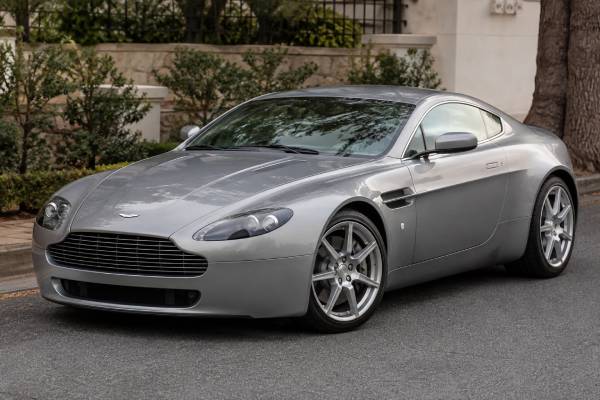
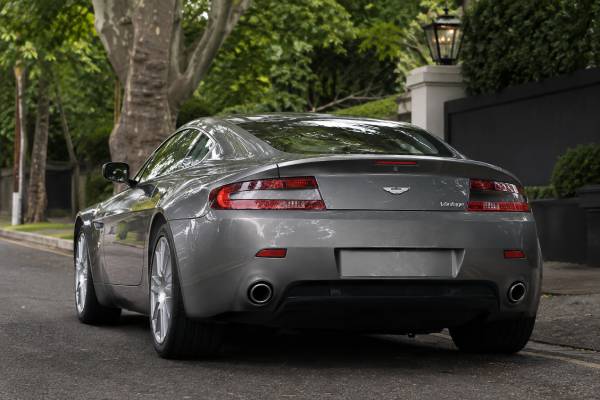
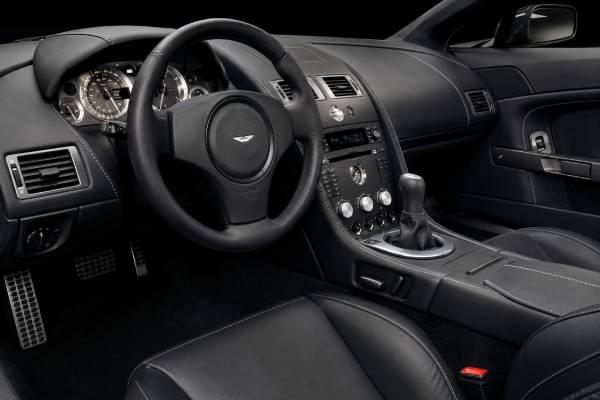
The 4.3-litre Aston Martin V8 Vantage is the original Gaydon-era Vantage: compact by Aston standards, hand-finished, naturally aspirated, and built around a bonded-aluminium structure that gave the company a credible rival to the Porsche 911. Its 380 hp output looks modest beside later Vantages, but the appeal is not a single acceleration figure. The early car combines a responsive V8, hydraulic steering, a rear-mounted transaxle, restrained styling, and a cabin that still feels special two decades later. It is also the least expensive route into this Vantage generation, which makes condition and maintenance history more important than mileage or cosmetic specification. A carefully inspected manual coupé can be a durable, rewarding modern classic; a neglected example can consume the purchase-price saving through clutch, corrosion, brake, suspension, and electrical work. This guide covers the 2005–2008 4.3-litre coupé specification represented by the AM05 engine designation, while noting market and model-year differences where they matter.
Table of Contents
- Why the first V8 Vantage still matters
- AM05 technical data and core specifications
- How the 4.3-litre car drives
- Engineering details and model evolution
- Maintenance priorities and common faults
- Inspection and buying strategy
- Ownership costs and final verdict
Why the first V8 Vantage still matters
The early V8 Vantage matters because it established the formula that carried Aston Martin’s smallest sports car for more than a decade: front-mid engine, rear transaxle, two seats, aluminium-intensive construction, and an emphasis on feel rather than headline power. It is the cleanest and least complicated expression of the VH-era Vantage idea.
Introduced for the 2005 model year in Europe and commonly sold as a 2006 model in North America, the coupé was designed as a more focused companion to the larger DB9. The proportions are unusually compact for an Aston Martin, with short overhangs, a long clamshell bonnet, a broad rear haunch, and a practical liftback rather than a conventional boot lid. The design aged well because the details were disciplined: there are no oversized intakes, towering wings, or forced retro cues.
Under the body, the architecture is more important than the badge. Bonded and riveted aluminium extrusions and castings form the main structure. The V8 sits behind the front axle line, while the six-speed gearbox and differential are grouped at the rear. A torque tube connects the two. That layout moves mass away from the nose and gives the car a balanced, settled response in fast corners.
The 4.3 is sometimes dismissed as the “slow” Vantage because the later 4.7, S, V12, GT8, and GT12 versions are stronger. That misses its character. The AM05 V8 wants revs, the manual gearbox asks for deliberate inputs, and the chassis communicates through hydraulic steering and a firm brake pedal. On a road where visibility and space matter more than a launch-control result, the early car can be more involving than a newer, faster machine.
It also occupies a useful place in the market. Purchase prices can overlap with ordinary premium performance cars, but the Aston remains a low-volume aluminium sports car with model-specific trim and labour-intensive repairs. The right mindset is not “cheap supercar.” It is “specialist modern classic whose entry price has fallen faster than its service costs.”
AM05 technical data and core specifications
This version is a conventional petrol-powered ICE car with a naturally aspirated 4.3-litre quad-cam V8, a six-speed rear transaxle, and rear-wheel drive. The standard reference point is the two-seat coupé; Roadster weight, dimensions, and performance differ and should not be mixed into a coupé comparison.
| Specification | Value |
|---|---|
| Engine family | Aston Martin AM05 |
| Configuration | Front-mid-mounted 90-degree V8, aluminium block and heads |
| Displacement | 4,282 cc (4.3 L) |
| Induction | Naturally aspirated |
| Valvetrain | DOHC, four valves per cylinder |
| Fuel system | Electronic multi-point fuel injection |
| Maximum power | 380 bhp (283 kW) at 7,000 rpm |
| Maximum torque | 410 Nm (302 lb-ft) at 5,000 rpm |
| Lubrication | Dry-sump system |
| Fuel tank | Approximately 80 L (21.1 US gal), market specification dependent |
| Specification | Value | Notes |
|---|---|---|
| Standard transmission | Six-speed manual transaxle | Rear-mounted Graziano unit |
| Optional transmission | Six-speed Sportshift automated manual | Introduced after launch; single-clutch design |
| Drive type | Rear-wheel drive | Engine and transaxle connected by torque tube |
| Differential | Mechanical limited-slip differential | Integral with rear transaxle |
| Steering | Hydraulically assisted rack and pinion | Known for natural weighting and feedback |
| Measure | Value | Condition |
|---|---|---|
| 0–60 mph | About 4.9 seconds | Manufacturer claim for coupé |
| Maximum speed | 175 mph (282 km/h) | Manufacturer claim |
| Combined fuel consumption | Roughly 17–18 mpg UK (about 15 mpg US) | Official figures vary by market and transmission |
| Practical mixed use | Often mid-teens mpg US | Driving style and traffic have a large effect |
| Highway cruising | Low-20s mpg US can be possible | Steady speed in a healthy manual car |
| Specification | Value |
|---|---|
| Body style | Three-door liftback coupé, 2 seats |
| Length | 4,382 mm (172.5 in) |
| Width excluding mirrors | 1,866 mm (73.5 in) |
| Height | 1,255 mm (49.4 in) |
| Wheelbase | 2,600 mm (102.4 in) |
| Kerb weight | About 1,570 kg (3,461 lb) |
| Weight distribution | Approximately 49:51 front to rear |
| Luggage capacity | About 300 L beneath the liftback |
| Specification | Value |
|---|---|
| Structure | Bonded and riveted aluminium VH architecture with composite body panels |
| Front suspension | Independent double wishbones, coil springs, anti-roll bar |
| Rear suspension | Independent double wishbones, coil springs, anti-roll bar |
| Front brakes | 355 mm ventilated discs with four-piston calipers |
| Rear brakes | 330 mm ventilated discs with four-piston calipers |
| Typical front tyres | 235/40 ZR19 |
| Typical rear tyres | 275/35 ZR19 |
The numbers should be read in context. “Kerb weight” and “dry weight” are not interchangeable, and early brochures, regional specifications, optional seats, and wheel packages can produce small differences. For a purchase or repair decision, the build record and VIN-specific documentation are more useful than a generic internet table.
How the 4.3-litre car drives
The 4.3 Vantage is at its best when the driver uses the upper half of the rev range and treats the controls with patience. It does not deliver the effortless low-speed shove of the later turbo car, but it rewards rhythm, accurate gear selection, and progressive inputs.
At low rpm, the V8 feels smooth rather than explosive. Torque builds cleanly, the intake note hardens, and the engine becomes more urgent above roughly 4,000 rpm. Peak power arrives at 7,000 rpm, so short-shifting makes the car feel flatter than its figures suggest. On a familiar road, holding second or third gear and letting the engine breathe is central to the experience.
The manual shift is mechanical and can be heavy when cold. First gear needs a positive hand, and rushed changes are rarely elegant. Once the transaxle oil warms, the action usually improves. A good car should not baulk repeatedly, jump out of gear, or grind during ordinary shifts. Some driveline chatter and a firm clutch are normal; severe vibration, slip, or a very high bite point deserves investigation.
Sportshift changes the character. It is not a torque-converter automatic and should not be judged like one. The system operates a conventional clutch and manual gearbox through hydraulic actuators. Smooth driving requires the driver to ease the throttle during upshifts and avoid using the accelerator to hold the car on an incline. In automatic mode it can feel awkward; with thoughtful paddle use it is more coherent. Clutch condition and actuator calibration are essential buying points.
The hydraulic steering is one of the car’s strongest features. Initial response is not nervous, but load builds naturally and the front tyres communicate grip better than many later electrically assisted systems. The ride is firm, especially on worn dampers or old tyres, yet the chassis has enough compliance for touring. A car that crashes over every sharp edge may have tired dampers, incorrect tyre pressures, unsuitable tyres, or worn suspension joints.
Braking performance is strong for road use, though the pedal can feel less boosted than drivers expect. That is part of the car’s deliberate control weighting. Pulsation, steering shake under braking, or a long pedal should not be dismissed as character. Disc wear, pad deposits, seized hardware, old fluid, or deteriorated hoses may be involved.
Engineering details and model evolution
The early Vantage’s engineering is sophisticated but understandable: a high-revving V8, dry-sump lubrication, aluminium structure, double-wishbone suspension, and a rear transaxle. The main ownership lesson is that each system must be assessed as part of a low-volume performance car, not as ordinary mass-market hardware.
The AM05 engine was assembled for Aston Martin in Cologne and shares broad ancestry with Jaguar’s AJ-V8 family, but the block, dry-sump arrangement, cylinder heads, induction, calibration, and many internal details are specific to Aston’s application. Calling it simply a “Jaguar engine” understates the changes and can lead buyers to assume parts or service procedures interchange freely when they do not.
Dry-sump lubrication allows the engine to sit lower and helps oil control under sustained cornering. It also makes oil-level checking procedure-sensitive. Readings can be misleading if the engine is cold, the car is not level, or the prescribed warm-up and settling procedure is ignored. Overfilling is not harmless. A workshop familiar with the model should check consumption, leaks, and crankcase ventilation rather than pouring in oil from a cold dipstick reading.
The bonded aluminium tub is stiff and corrosion-resistant in the conventional sense, but it is not immune to trouble. Steel fasteners, brackets, subframes, brake pipes, and suspension components can corrode. Aluminium can suffer galvanic corrosion where dissimilar metals and moisture meet. Accident repair demands the correct bonding, riveting, measuring, and refinishing methods. A glossy exterior does not prove the structure is straight.
Model-year changes were incremental. Sportshift broadened the transmission choice. Equipment, seat designs, navigation electronics, wheel styles, and trim packages evolved. Some late 4.3 cars can look very similar to early 4.7s, so the VIN, engine identity, original invoice, and build data should confirm what is being offered. Registration year alone is not enough, especially where cars were first registered well after production.
The biggest technical break arrived with the 4.7-litre update in 2008. It brought more displacement, power, torque, revised suspension and steering tuning, larger front brakes on later specifications, and numerous detail changes. A buyer should not assume every part or upgrade from a 4.7 bolts directly onto a 4.3. Modifications can be worthwhile, but documentation matters because badly matched dampers, tyres, wheels, clutch parts, or engine calibrations can spoil a well-balanced car.
Maintenance priorities and common faults
The most important maintenance priorities are annual servicing, correct oil-level practice, clutch assessment, cooling-system health, corrosion inspection, and keeping the battery fully charged. Long periods of inactivity often cause more nuisance faults than regular, warm, dry use.
Engine and cooling system
The V8 is generally robust when serviced correctly, but oil leaks, coolant leaks, auxiliary-drive noise, and ageing hoses deserve attention. Inspect the front and lower engine area, oil lines, cam-cover regions, reservoir, radiator, and hose junctions. A sweet smell after a drive, dried coolant residue, unstable temperature, or frequent top-ups calls for diagnosis.
Listen from cold. Brief mechanical noise can have several causes, but persistent knocking, heavy tapping, or rising noise with rpm is not something to rationalize. Confirm that the engine reaches operating temperature, the cooling fans cycle normally, and there is no smoke after an extended idle followed by throttle.
Ignition coils and spark plugs are service items that can produce misfires under load. A stored fault may not illuminate the warning lamp continuously. Scan all modules before purchase, not just the engine controller, and review freeze-frame data where possible.
Clutch, transaxle, and torque tube
Clutch life varies enormously. Repeated slipping during parking, reversing uphill, or creeping in traffic can shorten it. A manual car with a heavy but consistent pedal may be normal; one that flares in a high gear at full throttle is not. Replacement is labour-intensive because the transaxle layout and torque tube complicate access.
Sportshift cars need a specialist to read clutch-wear information, check learned values, inspect hydraulic operation, and road-test hot and cold. Jerky behaviour alone is not a complete diagnosis because driving technique and calibration matter, but warning messages, selection delays, fluid leaks, or repeated failure to engage a gear are significant.
Suspension, brakes, and tyres
Worn dampers, bushes, ball joints, wheel bearings, and anti-roll-bar links can accumulate gradually, leaving the car feeling vague rather than obviously broken. Inspect inner tyre shoulders because aggressive geometry and low mileage can hide age-related deterioration. Replace tyres by condition and date, not tread depth alone, and use a matched performance set with the correct load and speed ratings.
Brake discs are expensive enough that remaining thickness should be measured, not guessed through the wheel. Check the parking brake, brake pipes, caliper condition, and fluid-change record. Cars stored in damp garages can develop corrosion on disc faces and fasteners despite covering very few miles.
Body, cabin, and electrical systems
Door struts weaken, mirror mechanisms fail, headlamps can mist, and door seals or rear hatch areas may admit water. Leather can shrink around the dashboard and instrument binnacle after heat exposure. Inspect the headlining, seat bolsters, sill trims, navigation screen, heater controls, window drop function, alarm, key fobs, and every exterior lamp.
A weak battery causes a remarkable range of warnings and odd behaviour. The battery, charging voltage, and parasitic draw should be checked before expensive modules are condemned. Cars used occasionally benefit from the correct battery conditioner connected according to Aston Martin guidance.
Inspection and buying strategy
Buy the best-documented, best-inspected car rather than the lowest-mileage car. A 50,000-mile example used and serviced regularly may be safer than a 12,000-mile car that sat on old tyres, stale fluids, a weak battery, and corroding brakes.
Use the following order:
- Verify identity. Match VIN, engine specification, transmission, colour, trim, and model year to build records and invoices. Confirm the car is truly a 4.3 AM05 version.
- Read the history, not only the stamps. Annual invoices should show fluid changes, repairs, advisories, tyres, brakes, clutch work, and recurring faults. Large gaps need an explanation.
- Inspect from cold. Arrange that the engine is not warmed before arrival. Watch the start, idle, exhaust, warning lamps, and charging behaviour.
- Scan every control module. Low-voltage codes can be historical, but current transmission, restraint, body, or engine faults need resolution.
- Measure wear items. Record tyre dates and tread, brake-disc thickness, pad life, clutch behaviour, battery health, and suspension play.
- Examine structure and underside. Look for incorrect jacking, damaged undertrays, galvanic corrosion, repaired aluminium, rusty steel hardware, leaking dampers, and bent suspension parts.
- Drive long enough to warm the transaxle. Include rough roads, steady cruising, repeated shifts, braking from speed, parking manoeuvres, and a hot restart.
A pre-purchase inspection should be performed by an Aston Martin specialist with model-specific diagnostic equipment and aluminium-repair awareness. A generic inspection can identify obvious defects but may not interpret Sportshift clutch data, subtle transaxle noise, dashboard leather shrinkage, or known water paths correctly.
Originality affects value but should not be worshipped blindly. A documented twin-plate clutch conversion, quality exhaust, modern infotainment solution, or sympathetic suspension refresh can improve use. Undeclared engine tunes, cut wiring, oversized wheels, improvised exhaust valves, and cosmetic carbon overlays are more concerning. Any modification should have invoices, part numbers, and a clear reason.
Colour and interior specification influence resale, yet condition wins. Pale leather shows wear; black interiors can hide repairs; special paint is costly to match. Inspect in daylight and look across panels for texture and colour differences. Check that the clamshell bonnet sits evenly, the hatch seals and latches correctly, and the doors perform their slight glass drop when opened.
Ownership costs and final verdict
The 4.3 V8 Vantage is worth buying when the budget includes specialist maintenance after the purchase. It is less convincing when the entire budget is spent on the car and every repair must be deferred.
Routine annual servicing is manageable relative to exotic-car expectations, but major wear items arrive in clusters. A clutch, four quality tyres, brake discs and pads, dampers, a battery, and cosmetic leather work can transform a cheap example into an expensive one. Insurance, tax, fuel, secure storage, and occasional diagnostic work should be planned before purchase. An annual contingency fund is more realistic than assuming each year will contain only an oil service.
The coupé is practical enough for weekend travel. The liftback accepts soft bags, the cabin has useful shelving, and highway refinement is respectable. The low nose, wide doors, limited rear visibility, and turning circle need care in town. Ground clearance and tyre temperature matter on poor roads, while winter salt accelerates corrosion on exposed steel components.
For the driver who values steering feel, naturally aspirated response, design restraint, and occasion, the early car remains compelling. The 4.7 is faster and more flexible, the V8 S is sharper, and the V12 versions deliver greater theatre. The 4.3 counters with purity, a sweeter need for revs, lower entry cost, and historical importance as the car that made the modern Vantage line a commercial success.
The best example is not necessarily a concours garage ornament. It is a correctly maintained car with clean structural history, a healthy clutch and transaxle, fresh tyres, functioning electronics, and evidence that faults were fixed rather than cleared. Buy on evidence, warm it fully, keep the battery supported, and service it by time as well as mileage. Treated that way, the AM05 Vantage can provide the rare combination of an attainable purchase price and a genuinely hand-built driving experience.
References
- Vantage Hyper RedPress Kit 2018 (Manufacturer Press Kit)
- 2006 Aston Martin V-8 Vantage 2005 (First Drive)
- Aston Martin V8 Vantage | PH Used Buying Guide 2020 (Buying Guide)
- Aston Martin Vantage buying guide: powertrain 2013 (Technical Buying Guide)
- Aston Martin Vantage buying guide: rolling chassis 2013 (Chassis Guide)
- What to Buy: Aston Martin V8 Vantage (2006–16) 2021 (Used-Car Guide)
Disclaimer
This article is for informational purposes and is not a substitute for professional diagnosis, inspection, or repair. Specifications, torque values, service intervals, parts, and procedures can differ by VIN, market, production date, transmission, and equipment. Confirm all work against the car’s official Aston Martin service documentation and use a qualified specialist where appropriate.
Please share this guide on Facebook, X/Twitter, or your preferred enthusiast community if it helped you make a better-informed decision.