
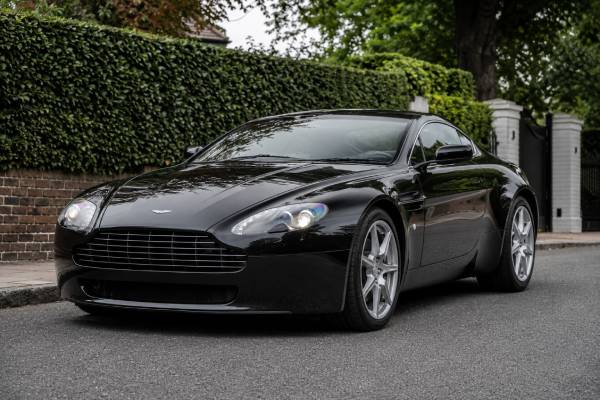
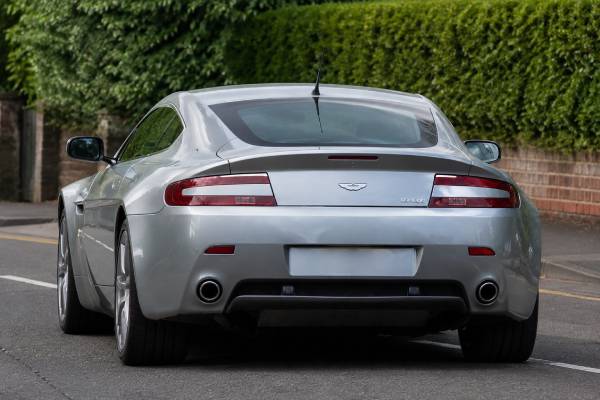
The 4.7-litre Aston Martin V8 Vantage is the mature version of the original VH-era sports car. Introduced in 2008, it retained the compact bonded-aluminium body, hydraulic steering, and rear transaxle of the 4.3 model while adding the torque and flexibility owners had wanted from the start. Output rose to 420 hp, torque reached 470 Nm, and the revised engine made the car easier to enjoy without living near the redline. Aston Martin continued refining the base 4.7 through the end of the first-generation Vantage, including a major 2012 update with quicker steering, larger brakes, wider tyres, sharper styling, and the availability of the seven-speed Sportshift II transmission. That long production run creates buying complexity: two cars advertised simply as “4.7 Vantage” may differ significantly in gearbox, chassis tune, interior electronics, brakes, and equipment. This guide covers the standard 420-hp V8 coupé family from 2008–2017 and separates it from the 430-hp Vantage S, N430, GT, GT8, and other special editions.
Table of Contents
- What the 4.7 update changed
- Standard 4.7 specification
- Early and late cars compared
- Performance without the S badge
- Long-term maintenance map
- Choosing the right configuration
- Purchase budget and ownership case
What the 4.7 update changed
The 4.7 update solved the early car’s main everyday weakness: limited mid-range torque. It did so without sacrificing naturally aspirated response or the basic mechanical character that made the 4.3 appealing.
Displacement increased from 4,282 to 4,735 cc through larger bores and a longer stroke, accompanied by revised cylinder liners, crankshaft, connecting rods, pistons, cylinder heads, and intake work. Power rose by 40 bhp, but the more useful gain was 60 Nm of torque. The engine pulls more decisively from ordinary road speeds, reducing the need to drop two gears for every overtake.
Aston also revised the chassis and supporting systems. Depending on model year, changes included spring and damper tuning, steering calibration, transmission software, brake hardware, cooling, wheel designs, seats, and cabin electronics. The car remained a two-seat front-mid-engine coupé with a rear transaxle, so the core balance did not change.
The 4.7’s long life can confuse listings. The first cars retain the original front and rear styling and six-speed Sportshift option. The 2012-model-year refresh adopted visual cues and dynamic hardware influenced by the V8 Vantage S: a lower front bumper, side sills, rear diffuser, quicker steering, larger front brakes, and wider tyres. Seven-speed Sportshift II replaced the earlier six-speed automated manual. A six-speed manual remained available and is often the most sought-after standard configuration.
Roadsters share the engine but not the same weight, structural tuning, or performance. Likewise, N420, N430, GT, SP10, Centenary, and other editions may use different outputs, seats, exhausts, wheels, dampers, and trim. This article uses the 420-hp regular coupé as its reference and treats special-edition equipment as something to verify from the build sheet.
Standard 4.7 specification
This is a naturally aspirated petrol ICE vehicle with a 4.7-litre quad-cam V8, rear-mounted manual or automated-manual transaxle, mechanical limited-slip differential, and rear-wheel drive. Figures below describe the standard coupé; late chassis specifications and optional packages can alter some values.
| Specification | Value |
|---|---|
| Configuration | Front-mid-mounted 90-degree V8, aluminium block and heads |
| Displacement | 4,735 cc (4.7 L) |
| Induction | Naturally aspirated |
| Valvetrain | DOHC, four valves per cylinder |
| Maximum power | 420 bhp (313 kW) at 7,000 rpm |
| Maximum torque | 470 Nm (346 lb-ft) at 5,750 rpm |
| Lubrication | Dry-sump system |
| Fuel requirement | Premium unleaded to the market-specified octane |
| Fuel tank | Approximately 80 L (21.1 US gal) |
| Specification | Early 4.7 | Later refreshed car |
|---|---|---|
| Manual | Six-speed rear transaxle | Six-speed rear transaxle |
| Automated manual | Six-speed Sportshift | Seven-speed Sportshift II |
| Drive | Rear-wheel drive | Rear-wheel drive |
| Differential | Mechanical limited-slip | Mechanical limited-slip |
| Steering | Hydraulic rack | Quicker hydraulic rack after refresh |
| Measure | Value | Notes |
|---|---|---|
| 0–60 mph | About 4.7 seconds | Manufacturer claim for manual coupé |
| 0–100 km/h | About 4.8 seconds | Specification varies slightly by transmission |
| Maximum speed | 180 mph (290 km/h) | Manual reference figure |
| Official combined consumption | About 19 mpg UK (roughly 15.8 mpg US; 14.7 L/100 km) | Period European cycle |
| Real mixed use | Typically mid-teens mpg US | Traffic and throttle use dominate |
| Touring range | Potentially 300 miles or more | Steady use with the large tank |
| Specification | Value |
|---|---|
| Body style | Three-door liftback coupé, two seats |
| Construction | Bonded and riveted aluminium VH structure |
| Length | About 4,385 mm (172.6 in) |
| Width excluding mirrors | About 1,865 mm (73.4 in) |
| Height | About 1,260 mm (49.6 in) |
| Wheelbase | 2,600 mm (102.4 in) |
| Kerb weight | Approximately 1,630 kg (3,594 lb) |
| Luggage capacity | Approximately 300 L |
| Specification | Early cars | 2012-on standard cars |
|---|---|---|
| Suspension | Double wishbones front and rear | Double wishbones with revised tuning |
| Front brakes | 355 mm ventilated discs | 380 mm ventilated two-piece discs |
| Rear brakes | 330 mm ventilated discs | 330 mm ventilated discs |
| Typical front tyres | 235/40 ZR19 | 245/40 ZR19 |
| Typical rear tyres | 275/35 ZR19 | 285/35 ZR19 |
| Adaptive dampers | Optional or package dependent | Equipment varies by market and year |
Because the range evolved continuously, tyre-pressure labels, service data, brake sizes, and electronic calibrations should be checked on the individual car. A late registration does not guarantee late production hardware.
Early and late cars compared
Early 4.7 cars feel closer to the original 4.3; later cars feel tighter, quicker to turn, and more modern in appearance. Neither is universally better, so the choice should follow how the car will be used.
A 2008–2011 manual coupé combines the stronger engine with the first design’s clean bumpers and narrower tyre package. Steering is slightly slower, and the ride can feel more relaxed than a Vantage S. These cars are attractive to buyers who want the original Henrik Fisker-era shape with better performance than the 4.3.
The refreshed standard car uses a quicker 15:1 steering ratio, larger front brakes, broader tyres, and bodywork similar to the S. It feels more immediate on turn-in and offers stronger braking capacity. The trade-off is heavier low-speed steering effort, more sensitivity to tyre choice, and a visual distinction from the earliest design.
Transmission choice creates an even bigger difference. The six-speed manual has a weighty clutch and a mechanical shift that improves when warm. It rewards deliberate timing and is easy to understand mechanically. The original six-speed Sportshift can be satisfying when driven with throttle lifts but is slow and awkward in automatic mode.
Sportshift II uses seven ratios and faster actuation. First gear is placed on a dog-leg-style plane within the transaxle, with the close working ratios intended to keep the engine active. It still uses a single clutch, so it does not creep or shift like a modern dual-clutch gearbox. Drivers who expect seamless automatic behaviour often dislike it; those who learn its rhythm may value its paddles and lighter left-leg workload.
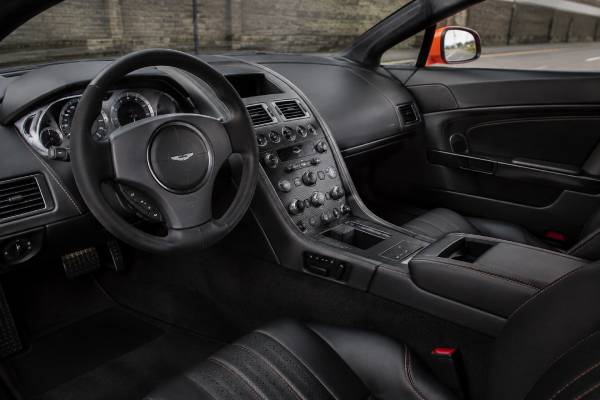
Interior changes are gradual rather than transformative. The glass key, waterfall console, small navigation screen, and dense buttons date the car. Later examples may have improved Bluetooth, parking sensors, cameras, seat options, and trim, but none provides current-generation infotainment. A discreet reversible phone-audio solution can improve usability without cutting factory wiring.
Performance without the S badge
The standard 4.7 is fast enough to use its chassis fully on the road and more relaxed than the 4.3 in daily driving. It gives up only 10 bhp to the V8 Vantage S but has softer tuning and less aggressive transmission calibration.
The engine’s best feature is its combination of mid-range strength and a 7,000-rpm power peak. It pulls cleanly from lower speeds, then hardens in sound and response above 4,000 rpm. Unlike a turbo engine, there is no sudden torque plateau. Accelerator position, engine speed, and output remain closely linked.
A healthy manual car accelerates strongly but requires a clean launch to match official figures. That is irrelevant to most owners. In second and third gear, the engine feels energetic without immediately reaching illegal speeds. The exhaust bypass valves add theatre, though permanently defeating them can create drone and may hide a fault in the vacuum control system.
The chassis is neutral and predictable. The engine sits behind the front axle, and the transaxle places weight at the rear. Hydraulic steering communicates tyre load, while the mechanical limited-slip differential helps drive out of bends. Stability control is calibrated for a rear-drive car and should remain active on public roads, particularly with cold or ageing tyres.
Late cars with larger brakes tolerate repeated hard use better. Early brakes are still capable on the road when discs, pads, fluid, and tyres are healthy. A soft pedal is not normal. Brake judder can come from pad deposits, disc runout, worn suspension joints, or wheel mounting issues; replacing discs without diagnosis can waste money.
The ride is firm but should have control and a degree of compliance. A car that floats after crests may have tired dampers. One that hops across broken pavement may have seized or over-stiff aftermarket components, incorrect pressures, or old tyres. Factory geometry is sensitive enough that a proper four-wheel alignment can noticeably restore confidence.
Long-term maintenance map
The safest maintenance plan is time-based, documented, and preventive. Annual servicing, fluid condition, clutch health, battery support, cooling-system inspection, and corrosion control matter more than chasing a low odometer reading.
Every year or at each service
Confirm the correct engine-oil change, inspect coolant level and concentration, scan all modules, test the battery and alternator, check brake-fluid age, examine tyres inside and out, and inspect the underside. The dry-sump oil level must be checked by the specified warm procedure on level ground. Overfilling can cause as much trouble as running low.
Look for oil seepage around cam covers, oil lines, and lower engine areas. Check coolant tanks, radiator faces, hose junctions, and fan operation. An engine that runs cool on the highway but climbs in traffic may have fan, radiator, thermostat, or airflow issues.
Ignition, intake, and exhaust
Spark plugs and coils age even when annual mileage is low. Misfire under load, a flashing warning lamp, or fuel smell should stop hard driving because unburned fuel can damage catalysts. Intake hoses, vacuum lines, and exhaust-valve controls become brittle with heat.
Aftermarket exhausts are common. Quality systems can reduce weight and improve sound, but check for cracked mounts, contact with the body, altered catalysts, and warning-light workarounds. Retaining original parts helps resale.
Clutch and automated-manual systems
Manual and Sportshift cars use a conventional clutch at the rear transaxle. Life depends on use. Hill starts, creeping, reversing, and poor automated-manual technique generate heat. Ask for clutch invoices and, on Sportshift, a diagnostic wear reading and adaptation report.
Twin-plate clutch conversions can reduce pedal effort and improve response. They may also produce chatter and a sharper take-up. A recognized kit installed by a specialist is preferable to an undocumented mix of parts.
Suspension, brakes, and corrosion
Bushes, ball joints, links, wheel bearings, dampers, and engine or transaxle mounts degrade gradually. Inspect tyre shoulders for geometry clues. Measure brake discs and test the parking brake; cars stored damp can corrode despite low mileage.
The aluminium body does not make the car corrosion-free. Steel subframes, fasteners, brake pipes, brackets, and contact points between dissimilar metals need inspection. Check door bottoms, sill areas, undertray fixings, rear subframe regions, and behind wheel-arch liners. Incorrect jacking can damage panels and expose metal.
Cabin and electrical reliability
Battery voltage underpins the entire electrical system. A weak battery can create transmission, alarm, window, restraint, and communication warnings. Use the correct conditioner for infrequent storage and diagnose parasitic drain rather than repeatedly replacing batteries.
Test door-glass drop, mirrors, seat movement, heater controls, air conditioning, navigation screen, audio, parking sensors, key recognition, hatch release, and alarm. Leather shrinkage around the dashboard, loose headlining, worn seat bolsters, and sticky interior coatings are common age-related issues. Skilled retrimming is preferable to adhesive shortcuts.
Choosing the right configuration
Choose the 4.7 specification that matches your tolerance for old-school controls, maintenance risk, and visual style. Condition should decide between individual cars, but configuration decides whether you will enjoy living with the winner.
A manual early coupé is the purist choice: clean styling, hydraulic steering, and a conventional gearbox. It suits open-road use and buyers willing to accept clutch weight. A late manual adds quicker steering and larger brakes, making it arguably the most complete standard 420-hp version.
Sportshift can offer value because the market often discounts it. Do not buy one merely because it is cheaper. Spend enough time driving it manually with the paddles, including parking, slopes, traffic, and a hot restart. If its operating style annoys you during the test, ownership will not improve simply because the car is beautiful.
Roadsters offer open-air sound but add weight and roof complexity. Buyers considering one should inspect hydraulic operation, fabric, seals, drains, water ingress, and structural behaviour separately. This article’s coupé figures should not be used to judge a Roadster.
Options affect comfort and resale. Lightweight seats look special but may not suit every body shape. Sports suspension can be tiring on broken roads. Carbon trim is expensive to replace, while piano-black surfaces mark easily. Premium audio matters less if exhaust sound dominates, yet missing or nonfunctional factory equipment still affects value.
Use a build sheet to identify special editions. Some later cars advertised as standard 420-hp models may actually be N420, N430, GT, or regional packages. Their power, brakes, seats, exhausts, wheels, suspension, and production significance differ. Correct identification prevents overpaying for cosmetic additions or undervaluing a genuine limited model.
A pre-purchase inspection should include a cold start, full module scan, clutch assessment, brake measurements, tyre dates, underside corrosion inspection, fluid-leak review, body-repair analysis, and a long road test. Ask the specialist to estimate both immediate work and likely two-year work, not merely issue a pass/fail statement.
Purchase budget and ownership case
The standard 4.7 Vantage offers one of the best balances in the VH range: enough torque for daily usability, naturally aspirated character, hydraulic steering, and a purchase price below the rarer V12 and GT models. It makes sense only when bought with a repair reserve.
Set aside money for tyres, brakes, battery, annual service, and age-related suspension work even if the car passes inspection. Clutch replacement is the large variable. Cosmetic perfection is costly too, because aluminium repair, paint matching, leather work, and model-specific lamps are not ordinary body-shop jobs.
Mileage should be interpreted, not feared. A 60,000-mile car with annual invoices, recent clutch, refreshed dampers, new tyres, and clean corrosion history may be stronger than a 15,000-mile car on original rubber and fluids. Conversely, high mileage without records gives no assurance that expensive work was done.
The car is practical for two-person touring. The hatch takes soft luggage, the seats are supportive, and the large fuel tank reduces stops. City use exposes its wide doors, low bonnet, poor rear visibility, and heavy controls. Road salt and outdoor storage accelerate deterioration, so a dry garage adds real value.
Compared with a 4.3, the 4.7 is easier to recommend for mixed use. Compared with a V8 S, it is slightly less urgent and may ride more calmly. Compared with the 2018 turbo Vantage, it is slower and older inside but more analogue in steering and engine response. Those differences define the buying case better than nominal horsepower.
Parts planning should reflect the car’s build date. Build-date accuracy also protects originality, correct operation, and future resale. Early and late 4.7 models can use different brake, steering, transmission, infotainment, trim, and control components even when catalogue descriptions look similar. Record the VIN, gearbox type, wheel and brake specification, and any factory option before authorising work. Buying a cheaper but incorrect used component often creates a second labour bill and can introduce calibration or fit problems. A specialist who knows the 2012-on update boundary can save more than a general workshop with a lower hourly rate.
The ideal standard 4.7 is a correctly identified car with continuous history, a healthy clutch, fresh matched tyres, straight aluminium structure, dry cabin, functioning electronics, and no deferred warning lamps. Decide early or late, manual or Sportshift, coupé or Roadster, then buy the best evidence rather than the most attractive advertisement. Maintained that way, the 420-hp Vantage remains a sophisticated sports car rather than a depreciated luxury liability.
References
- Vantage Hyper RedPress Kit 2018 (Manufacturer Heritage and Engineering Context)
- 2009 Aston Martin Vantage V8 2009 (Road Test)
- 2009 Aston Martin V8 Vantage Review & Ratings 2009 (Model Review)
- Aston Martin V8 Vantage | PH Used Buying Guide 2020 (Buying Guide)
- Aston Martin Vantage buying guide: powertrain 2013 (Powertrain Guide)
- What to Buy: Aston Martin V8 Vantage (2006–16) 2021 (Used-Car Guide)
Disclaimer
The information here is educational and does not replace a professional inspection, diagnosis, or repair manual. Specifications, torque values, service intervals, components, and procedures vary with VIN, market, production date, transmission, body style, and options. Verify the individual car against official Aston Martin service information before ordering parts or performing work.
Share this article through Facebook, X/Twitter, or a relevant owners’ community when it can help another enthusiast choose and maintain a 4.7 Vantage responsibly.