

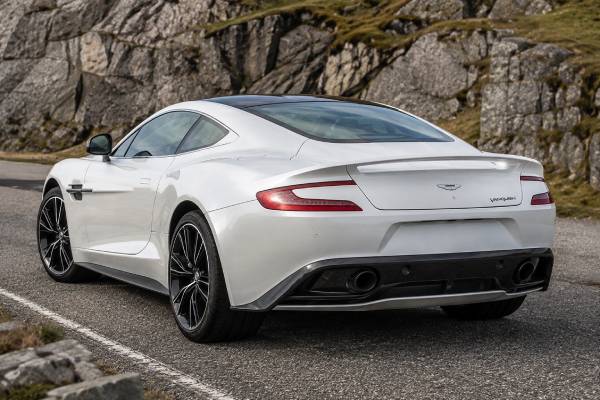
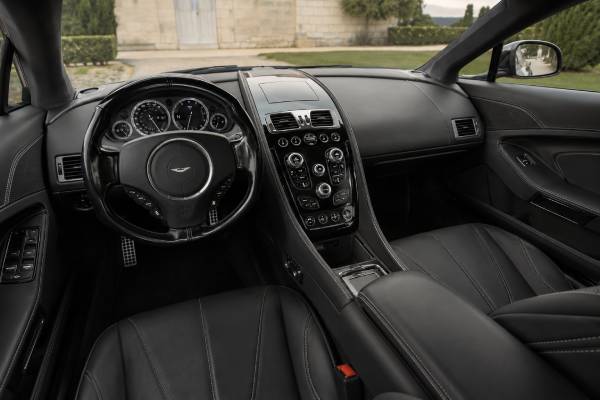
The 2012–2014 Aston Martin Vanquish is the early, 565 hp version of the second-generation flagship, and it combines a carbon-fibre body, naturally aspirated V12, rear transaxle, and dramatic One-77-influenced styling. It is easier to drive than the first Vanquish because its six-speed Touchtronic II is a conventional automatic, yet it remains a specialist ownership proposition. Carbon-ceramic brakes, adaptive dampers, a hand-finished cabin, large 20-inch tyres, and low-volume body components make condition more important than an apparently attractive purchase price. The earliest cars also sit within the production range affected by a transmission park-lock safety recall in some markets, so VIN-specific campaign status is essential. Buyers should distinguish this AM11-powered, six-speed car from the later AM29 and eight-speed version: the two look similar, but their acceleration, gearing, software, and driving character differ. A documented early car can be a compelling modern-classic GT when its drivetrain, structure, brakes, and electronics have been inspected properly.
Table of Contents
- The Early AM310 in Context
- 565 hp Vanquish Specifications
- Carbon Body and VH Platform Engineering
- Performance with the Six-Speed Transaxle
- Cabin, Practicality, and Grand-Touring Use
- Service Needs, Recall, and Expensive Wear Items
- How to Buy an Early Second-Generation Vanquish
The Early AM310 in Context
The early AM310 is best understood as the pure first specification of the second-generation Vanquish: 565 bhp, a six-speed automatic transaxle, naturally aspirated response, and a full carbon-fibre outer body. It replaced the DBS at the top of Aston Martin’s range and introduced a more sculptural form while retaining the company’s aluminium VH architecture underneath.
Its design borrowed clear themes from the limited-production One-77. The deeply formed waist, elongated side strakes, exposed carbon-fibre elements, and LED rear light blades made it look more exotic than the DB9-based cars beside it. The body was not simply decorated with carbon trim. Aston Martin used carbon-fibre panels across the exterior, reducing the body’s mass relative to the DBS while allowing complex shapes that would have been difficult to form in conventional metal.
The model’s purpose was still grand touring. It could be ordered as a 2+0 or 2+2, had a usable hatchback luggage area, and offered adaptive damping rather than a fixed track-focused setup. The steering, long bonnet, wide rear body, and V12 soundtrack created theatre, while the automatic transmission made urban and touring use less demanding than the electrohydraulic manual in the first-generation car.
That accessibility can hide the level of engineering and expense beneath the surface. Carbon Ceramic Matrix brakes were standard, the dampers were electronically controlled, and much of the trim was model-specific. The engine was a heavily developed version of Aston Martin’s 5.9-litre V12, known in this application as AM11, with bigger throttle bodies, variable valve timing, revised intake hardware, and 565 bhp. These are desirable specifications, but they also mean that an ordinary used-car inspection is not enough.
The 2012–2014 scope is important because Aston Martin introduced the AM29 engine and ZF eight-speed Touchtronic III for the later version. Sellers sometimes describe any second-generation coupe simply as a “six-litre Vanquish,” so check the build date, transmission, engine designation, output, and documents. The early car’s six forward ratios and 183 mph maximum speed are defining features, not minor details.
For some owners, the six-speed is part of the appeal. Its longer ratios and slightly more deliberate shifts allow the V12 to dominate the experience. The later eight-speed is quicker and more responsive, but the early car has a calmer, less busy grand-touring rhythm. Neither is automatically superior; they suit different priorities.
565 hp Vanquish Specifications
This Vanquish is a naturally aspirated petrol ICE coupe with a front-mid-mounted 5,935 cc V12, six-speed automatic rear transaxle, and rear-wheel drive. Its most important distinctions are the 565 bhp AM11 engine, carbon-fibre body panels, carbon-ceramic brakes, and early Touchtronic II gearbox. Published dimensions and performance figures can vary slightly by market and measurement convention.
| Specification | Value |
|---|---|
| Engine | Naturally aspirated petrol V12 |
| Displacement | 5,935 cc (5.9 litres) |
| Maximum power | 565 bhp (573 PS) at 6,750 rpm |
| Maximum torque | 620 Nm (457 lb-ft) at 5,500 rpm |
| Transmission | Six-speed Touchtronic II automatic transaxle |
| Drive | Rear-wheel drive with limited-slip differential |
| Measure | Published result |
|---|---|
| 0–62 mph (0–100 km/h) | 4.1 seconds |
| Maximum speed | 183 mph (295 km/h) |
| Power delivery | Naturally aspirated, with peak output near the upper rev range |
| Shift control | Automatic operation or steering-column paddles |
| Measurement | Value |
|---|---|
| Length | About 4,728 mm (186.1 in) |
| Width excluding mirrors | About 1,910 mm (75.2 in) |
| Height | About 1,294 mm (50.9 in) |
| Wheelbase | 2,740 mm (107.9 in) |
| Published kerb mass | About 1,739 kg (3,834 lb) |
| Luggage capacity | Up to 368 litres (13.0 cu ft) |
| Area | Configuration |
|---|---|
| Structure | Bonded aluminium VH platform |
| Exterior panels | Carbon-fibre body |
| Front suspension | Independent double wishbones |
| Rear suspension | Independent double wishbones |
| Damping | Adaptive system with driver-selectable modes |
| Brakes | Carbon Ceramic Matrix discs with ABS and stability control |
| EPA cycle | Result |
|---|---|
| Combined | 15 mpg US (about 15.7 L/100 km) |
| City | 13 mpg US (about 18.1 L/100 km) |
| Highway | 19 mpg US (about 12.4 L/100 km) |
| Fuel capacity | 20.5 US gal (about 77.6 litres) |
| Fuel grade | Premium gasoline |
The EPA result describes a US-certified 2014 configuration and should not be substituted for another market’s official consumption figure. Actual use can be significantly higher in short trips, dense traffic, or sustained high-performance driving.
Carbon Body and VH Platform Engineering
The carbon-fibre body gives the AM310 visual freedom and reduced panel mass, but the bonded aluminium VH structure beneath it remains the primary load-bearing foundation. Buyers need to assess both layers because a clean carbon panel does not prove that the aluminium structure or mounting points behind it are undamaged.
The VH platform uses bonded aluminium extrusions, castings, and panels to create the passenger cell and suspension attachment structure. This approach provided Aston Martin with a flexible architecture for several models while avoiding the weight of a conventional steel shell. On the Vanquish, carbon-fibre outer panels then formed the dramatic bonnet, roof, doors, rear quarters, and other surfaces.
Carbon behaves differently from aluminium. It does not dent in the familiar way; it may crack, delaminate, or suffer damage beneath paint. Repairs can be excellent when performed with correct materials and curing methods, but cosmetic filler and paint can also mask weak work. Panel edges, mounting points, weave where exposed, paint sinkage, unusual reflections, and inconsistent gaps deserve close inspection. Any significant repair should have photographs and invoices.
The large single-piece-looking forms make replacement expensive. Damage to the front bumper, side strakes, rear diffuser, lamp units, or exposed carbon trim may involve parts that are costly, slow to source, or difficult to refinish accurately. A minor parking impact can therefore be financially disproportionate. Check the underside of the front splitter and diffuser, not only the visible faces.
The aluminium structure also requires specialized repair. Heat, pulling methods, adhesives, rivets, corrosion isolation, and dimensional alignment must follow approved practice. Mixed-material construction creates the possibility of galvanic corrosion where unsuitable fasteners or repair materials are introduced. Evidence of structural repair is not automatically disqualifying, but the quality and documentation must be convincing.
Suspension geometry translates the structure into road behavior. A healthy car should track securely, steer consistently, and settle after a bump. Uneven tyre wear, an off-centre steering wheel, persistent pull, or reluctance to hold alignment may indicate worn joints, bent components, wheel damage, or previous impact. Four-wheel alignment is useful only after mechanical faults are corrected.
The adaptive dampers give the car genuine range, but age can reduce control gradually. A leaking damper is obvious; internal wear may be subtler, appearing as float, repeated vertical motion, poor body control, or a harsh response that does not change meaningfully between modes. Compare mode behavior during the road test and scan the suspension control system for faults.
Carbon-ceramic brakes reduce unsprung mass and resist fade, yet their condition cannot be judged solely by surface appearance. Specialists assess wear using the manufacturer’s procedure, which may include weight or condition criteria as well as visual inspection. Chips, impact damage, heavy edge deterioration, incorrect cleaning, or contamination can be serious. Replacement cost makes a professional assessment essential before purchase.
Performance with the Six-Speed Transaxle
The early Vanquish delivers its performance through engine speed and long, decisive acceleration rather than through the immediate low-rpm thrust of a turbocharged GT. The six-speed Touchtronic II reinforces that character by using fewer, wider-spaced ratios than the later eight-speed car.
The AM11 V12 responds cleanly from low speed but becomes increasingly vivid as revs rise. Bigger throttle bodies and variable valve timing help it breathe at the top of the range, and the exhaust note hardens without the acoustic filtering of turbochargers. In normal touring, the engine can remain relaxed; when overtaking, selecting a lower gear brings the power band into reach.
The Touchtronic II is a torque-converter automatic, so it creeps smoothly and handles parking more naturally than the first-generation Vanquish’s automated manual. Paddles are fixed to the steering column, allowing the driver to find them consistently while steering. Manual mode is useful on winding roads because it holds a chosen ratio and lets the engine’s response set the pace.
By later standards, shifts are not instant. That does not mean the gearbox is defective. Healthy operation should be consistent, free from flares, bangs, delayed engagement, or warning messages. Fluid condition, software, adaptation, mounts, driveline joints, and engine behavior can all influence perceived shift quality. A proper diagnosis is better than assuming every harsh event is “just old technology.”
The 2012–2014 production range requires a VIN check for the park-lock recall. The campaign concerned software communication within the six-speed automatic system that could prevent the park pawl from fully engaging in affected cars. The remedy involved a transmission-control software update. Do not rely on the gear indicator or a seller’s statement; confirm completion in the official database or with Aston Martin using the VIN.
Even with the recall completed, use the parking brake whenever the car is stationary. That habit reduces load on the park mechanism and is sound practice on an incline. During inspection, verify that the selector responds correctly, the display agrees with the selected range, and the car remains secure without unusual movement.
On the road, the chassis should feel stable rather than nervous. The long wheelbase, wide track, rear transaxle, and adaptive damping support high-speed composure. The steering is hydraulically assisted and communicates more texture than many newer electric systems, although wide front tyres can follow road cambers. Excessive tramlining can also indicate tyre or alignment problems.
The performance envelope makes warm-up important. Avoid high engine speed and heavy load until oil and coolant temperatures have stabilized. Carbon-ceramic brakes may feel different when cold or wet, so build pressure progressively and learn their response. On public roads, the car’s strongest quality is not exploiting the 183 mph figure; it is the ease with which it can merge, overtake, and sustain distance while retaining a naturally aspirated sense of occasion.
Cabin, Practicality, and Grand-Touring Use
The AM310 coupe is more usable than its exotic appearance suggests, especially in 2+2 form with the rear area treated mainly as flexible luggage space. Its hatchback opening and up-to-368-litre boot make weekend travel realistic, but low seating, wide doors, limited rear visibility, and a broad body still require planning.
Front-seat comfort depends on the exact seat type and the driver’s build. Test the seating position for at least an hour if possible. Confirm that electric adjustments, heating, memory functions, lumbar support, and seatbelt presentation work. Leather creasing is normal; severe shrinkage, detached seams, compressed bolsters, or mismatched repairs affect both comfort and value.
The 2+2 rear seats are small. They can accommodate children or occasional passengers under favorable conditions, but most owners use them for soft bags. A 2+0 car may have different storage treatment and can appeal to buyers who prefer a purer two-seat layout. Verify the original build rather than assuming a conversion is factory-correct.
The cabin’s infotainment reflects its production period. Navigation graphics and connectivity are dated beside a new GT, but physical controls and clear instrumentation remain usable. Test the screen mechanism, audio system, Bluetooth, navigation, parking sensors, cameras where fitted, USB or auxiliary inputs, and every steering-wheel control. Upgrades should be judged for integration and reversibility; poorly installed modern equipment can create trim damage or electrical problems.
Air conditioning is essential because the glass area and dark cabin surfaces can build heat. Confirm strong cooling at idle and while driving, stable fan speeds, correct vent direction, and absence of unusual compressor noise. A weak system may need more than refrigerant. Leaks, condensers, sensors, compressor control, or blend mechanisms can all be involved.
Door and window operation deserve patience. The frameless glass should drop and rise correctly when the door opens and closes, seals should meet evenly, and the door should latch without slamming. A slightly misadjusted window can generate wind noise or water ingress. Check the headlining, A-pillars, footwells, luggage floor, and rear trim for dampness or staining.
Grand-touring range depends on conditions. The fuel tank is large, but the V12’s consumption varies widely. Plan fuel stops where premium gasoline is available, especially in remote areas. Carry the tyre-inflation equipment specified for the car, understand towing points and transport procedures, and avoid improvised jacking because carbon panels and aluminium structure can be damaged by incorrect lifting.
The low nose and long doors influence daily use. Inspect the parking location before buying, including ramp angles, width, door clearance, and the ability to connect a battery maintainer. A car that fits on paper may be unpleasant to manoeuvre every time, increasing wheel and splitter damage risk.
Service Needs, Recall, and Expensive Wear Items
A reliable early AM310 needs preventive, documented maintenance rather than reactive repair after warning lights appear. Annual mileage may be low, but brake fluid, coolant, tyres, batteries, seals, filters, and lubricants still age.
The engine should receive the correct oil and filter on the VIN-specific schedule, with inspection for leaks, belt condition, cooling-system health, ignition faults, and intake issues. Twelve spark plugs and coils increase labour and parts count, so evidence of complete work matters. A persistent misfire should not be dismissed as a fuel-quality quirk; continued driving can damage catalytic converters.
Cooling packs collect debris and can corrode or lose efficiency. Inspect radiators, condensers, fans, hoses, caps, and visible staining. Stable temperature on a motorway does not prove the fans can control heat in traffic. Let the car idle after the road test and confirm normal operation.
Battery health underpins the entire electrical system. A weak battery can produce multiple warnings, disturb modules, and complicate diagnosis. Cars stored intermittently should use a compatible maintainer. Ask whether the battery has been registered or initialized according to the car’s requirements when replaced, and confirm charging voltage.
The Touchtronic II should be serviced with the correct fluid and procedure at the interval applicable to the exact car. “Sealed for life” language should not be interpreted as immunity from age, heat, leaks, or contamination. Inspect transmission, differential, and torque-tube areas for seepage and mounts for deterioration.
Carbon-ceramic brake inspection is a major buying and maintenance item. Do not use aggressive wheel cleaners or allow technicians unfamiliar with ceramic discs to strike or mishandle them. Pads must be compatible, and stones or debris should not be left trapped. If the car will be transported, the operator must secure it without contacting discs, suspension arms, or carbon body parts improperly.
Tyres can age out before wearing out. Match approved sizes and ratings, inspect inner shoulders, and replace axle pairs rather than mixing incompatible constructions. Wheel cracks, flat spots, buckles, and cosmetic repairs should be checked because the 20-inch wheels have little sidewall protection.
Complete the park-lock campaign verification before money changes hands. Also check for any other open safety or service campaigns by VIN because databases and market coverage differ. Keep printed proof of completion in the history file.
How to Buy an Early Second-Generation Vanquish
Buy the best-documented, structurally sound car you can find, even if it has more mileage than a cheaper display example. The difference between a good AM310 and a neglected one can exceed the apparent saving once brakes, dampers, tyres, cooling, trim, and carbon repairs are added.
Start by verifying the exact version. Confirm AM11-era output, six-speed transmission, production date, market, seating layout, exterior and interior specification, and VIN. Compare the seller’s description with factory or dealer records. Be cautious when a 2014 car is advertised without explaining whether it is early six-speed or later eight-speed specification.
Commission an inspection before agreeing that a refundable deposit becomes final. The inspector should have Aston Martin diagnostic equipment or equivalent access, a lift suitable for the car, familiarity with carbon-ceramic brakes, and experience recognizing carbon and bonded-aluminium repair.
Ask for a written report covering:
- Cold start, idle quality, fluid condition, leaks, and cooling operation.
- Transmission engagement, shift consistency, software status, and park-lock recall completion.
- Carbon body, exposed weave, undertrays, aluminium structure, and prior repair evidence.
- Ceramic disc and pad condition using the correct assessment method.
- Adaptive damper function, suspension joints, wheel condition, tyre dates, and alignment clues.
- Battery state, diagnostic faults, infotainment, climate control, windows, locks, and lighting.
- Service history completeness and a priced immediate-work plan.
Drive the car from cold through varied conditions. It should start cleanly, select drive and reverse without excessive delay, shift consistently, accelerate without hesitation, brake straight, and hold temperature. Listen for suspension knocks, driveline clunks, wind noise, trim rattles, and wheel-bearing hum. Recheck for leaks and messages after the hot restart.
Evaluate modifications individually. Sports exhausts, infotainment updates, paint-protection film, wheel refinishing, and suspension work can improve ownership when documented and correctly executed. Unverified engine tuning, nonstandard brake parts, cut wiring, mismatched carbon, or poorly fitted body kits increase risk. Retain original components where possible.
Calculate total acquisition cost rather than purchase price alone. Include tax, registration, insurance, transport, immediate service, tyres, battery, brake contingency, inspection, and storage preparation. A reserve for an unexpected four-figure or five-figure repair is prudent in many markets.
The early 565 hp Vanquish offers a distinctive balance. It has the visual drama and carbon construction of the second generation, the smoother usability of a true automatic, and the unboosted response of Aston Martin’s long-running V12. Its six-speed gearbox does not deliver the later car’s headline acceleration, but it gives the engine space to define the drive. Select carefully, complete every VIN check, and it can serve as both a usable GT and a significant piece of Aston Martin history.
References
- VANQUISH (Manufacturer Historic Model Archive)
- Vanquish at 25 – three generations of flagship performance and engineering excellence 2026 (Manufacturer History)
- Fuel Economy of the 2014 Aston Martin Vanquish (Official Fuel Economy Database)
- Vehicle Detail Search – 2014 ASTON MARTIN VANQUISH | NHTSA (Recall Database)
- Microsoft Word – RA-07-0028 – 6-Speed Touchtronic II Automatic Transmission Park Lock Problem 2017 (Safety Recall)
- Owner’s Guides | Aston Martin (Manufacturer Owner Resources)
Disclaimer
This article is provided for informational purposes and is not a substitute for professional diagnosis, repair, or a specialist pre-purchase inspection. Specifications, torque values, intervals, fluids, campaign coverage, and procedures vary by VIN, market, build date, and equipment; confirm every detail with the official documentation for the exact car. Please share this guide on Facebook, X/Twitter, or another relevant community to support our work.