
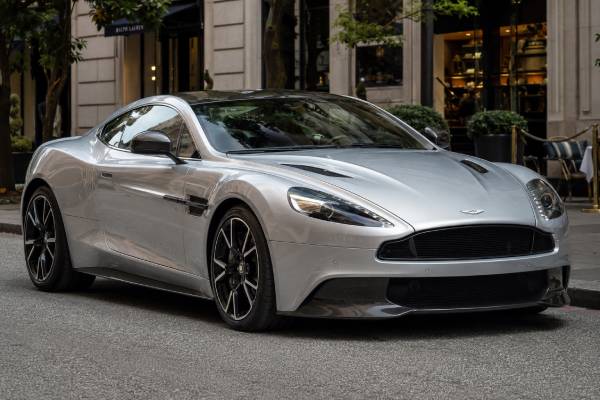
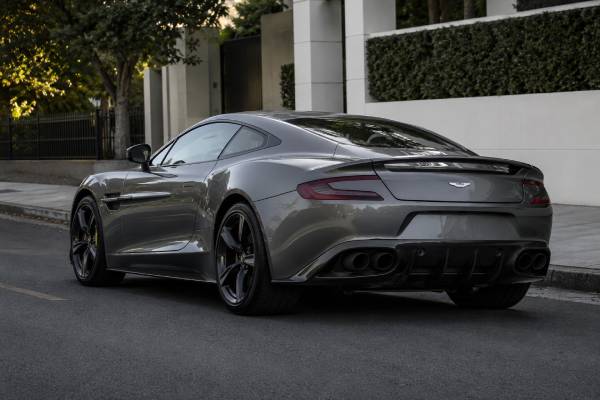
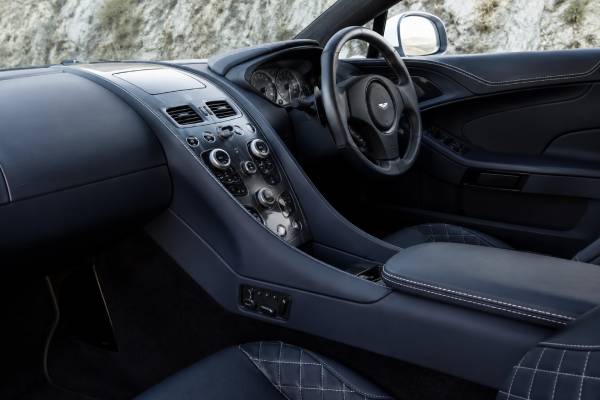
The 2016–2018 Aston Martin Vanquish S is the final and most focused series-production coupe of the naturally aspirated AM310 generation. Its 595 hp V12, revised intake system, freer-flowing exhaust, recalibrated eight-speed Touchtronic III transaxle, exposed carbon-fibre aerodynamics, and sharpened chassis distinguish it from the 568 hp Vanquish without turning it into an uncompromising track car. Official performance—0–62 mph in 3.5 seconds and 201 mph—only tells part of the story. The S feels more alert in its responses and more vocal at high engine speed, yet still offers a 2+0 or 2+2 cabin and useful hatchback luggage space. Buyers should verify that a claimed S has the correct factory hardware rather than a collection of retrofit body pieces. Carbon-ceramic brake condition, damper health, V12 ignition and cooling, transaxle behavior, carbon-panel repairs, battery voltage, and campaign status remain major cost variables. Ultimate Edition and Q commissions add rarity, but only when their provenance is documented.
Table of Contents
- What Makes the AM310 S Different
- Vanquish S Coupe Technical Data
- Airflow, Aerodynamics, and Exhaust Engineering
- The S Chassis on Road
- High-Cost Systems and Service Priorities
- Originality, Ultimate Edition, and Q Cars
- Inspection and Buying Strategy
What Makes the AM310 S Different
The S is a coordinated engine, transmission, chassis, and aerodynamic development, not a styling package. Aston Martin increased output to 595 bhp, adjusted the eight-speed gearbox and suspension, and fitted a more assertive carbon-fibre front splitter and rear diffuser to create a stronger final evolution of the second-generation Vanquish.
The naturally aspirated V12 remained the heart of the car. Revised intake breathing helped it produce 600 PS, equivalent to the 595 bhp used in many English-language specifications. Peak torque stayed around 630 Nm, so the difference from the 568 bhp model is most noticeable when the engine is allowed to rev. The S does not deliver a dramatic low-rpm torque jump; it adds intensity and top-end flow.
The exterior changes are visible and functional. The front splitter extends lower and presents exposed carbon, while the rear diffuser and quad exhaust outlets give the tail a sharper identity. Bonnet vents improve the sense of purpose and support heat management. These pieces are vulnerable to kerbs, ramps, stones, and poor repairs, making underside inspection essential.
Aston Martin tuned the adaptive chassis to match. The car still offers a usable GT mode, but it should feel more tied down and immediate than a standard 568 hp coupe. Worn dampers, old tyres, incorrect alignment, or nonstandard springs can erase that calibration. An S that drives worse than a regular Vanquish is not displaying desirable aggression; it likely needs work.
The transmission remained the ZF eight-speed rear transaxle. Calibration changes support faster response, but the basic advantage is still ratio coverage: short lower gears keep the engine active, and tall upper gears preserve long-distance refinement. Column-mounted paddles allow the driver to choose ratios without searching for a moving control.
The S arrived late in the AM310 life cycle and overlaps with several special commissions. Vanquish S Ultimate celebrated the end of production and was limited to 175 cars across coupe and Volante forms. Other Q commissions, dealer-led editions, and Zagato-bodied variants also exist. These should be identified separately; a standard S with an aftermarket stripe is not an Ultimate, and a factory bespoke car needs supporting documents.
A regular, well-specified S can be preferable to a special edition if it has better history and condition. Mechanical quality, carbon integrity, brake life, and service documentation should set the foundation. Rarity becomes meaningful only after those fundamentals are secure.
Vanquish S Coupe Technical Data
Power comes only from the naturally aspirated 5,935 cc V12, so the Vanquish S is classified as a petrol ICE model. The engine sits front-midships and sends drive to the rear wheels through an eight-speed rear transaxle. Carbon-fibre outer panels, the bonded-aluminium VH platform, adaptive double-wishbone suspension, and standard carbon-ceramic brakes define the regular S coupe covered below; special bodies and market equipment can differ.
| Specification | Value |
|---|---|
| Engine type | Naturally aspirated petrol V12 |
| Displacement | 5,935 cc (5.9 litres) |
| Maximum power | 595 bhp (600 PS) |
| Maximum torque | Approximately 630 Nm (465 lb-ft) |
| Induction | Naturally aspirated with revised intake breathing |
| Drive | Rear-wheel drive |
| Measure | Published figure |
|---|---|
| Gearbox | Eight-speed Touchtronic III automatic rear transaxle |
| 0–62 mph (0–100 km/h) | 3.5 seconds |
| Maximum speed | 201 mph (324 km/h) |
| Manual control | Fixed steering-column paddles |
| Differential | Mechanical limited-slip rear differential |
| Measurement | Approximate value |
|---|---|
| Length | About 4,730 mm (186.2 in), depending on body measurement |
| Width excluding mirrors | About 1,910 mm (75.2 in) |
| Height | About 1,294 mm (50.9 in) |
| Wheelbase | 2,740 mm (107.9 in) |
| Published kerb mass | About 1,739 kg (3,834 lb) |
| Boot volume | Up to 368 litres (13.0 cu ft) |
| Area | Configuration |
|---|---|
| Structure | Bonded aluminium VH architecture |
| Exterior panels | Carbon fibre |
| Aerodynamics | Exposed carbon front splitter and revised rear diffuser |
| Suspension | Double wishbones with S-specific adaptive calibration |
| Brakes | Carbon Ceramic Matrix discs |
| Exhaust | Quad outlets with S-specific freer-flowing character |
| Item | Detail |
|---|---|
| Seating | 2+0 or 2+2 according to build |
| Fuel | Premium unleaded gasoline |
| Fuel capacity | Approximately 78 litres (20.5 US gal) |
| Wheels | 20-inch designs, including lightweight options |
| Primary role | High-performance super grand tourer |
The exact wheel, tyre, mass, trim, and emissions data depend on market and options. Workshop values must come from documentation for the specific VIN.
Airflow, Aerodynamics, and Exhaust Engineering
The S extracts its extra character by improving how the engine breathes and how the body manages air, then making the exhaust less restrictive and more audible. These changes work together at high load, which is why the car’s distinction is clearest near the upper half of the rev range.
A naturally aspirated engine cannot raise boost to create a large output increase. It relies on reducing restriction, improving cylinder filling, controlling valve timing, and calibrating fuel and ignition accurately. The S intake system supports greater airflow, allowing the AM29-derived V12 to reach 600 PS without changing the basic 5,935 cc capacity.
Because torque remains similar to the 568 bhp car, low-speed behavior is familiar. The throttle should be smooth and predictable. As revs climb, the engine holds its pull more insistently and the exhaust becomes harder-edged. A test drive that never reaches a safe, fully warmed upper range cannot demonstrate the S’s defining quality.
The front splitter is more than visual theatre. It shapes airflow beneath and around the nose, while the rear diffuser manages exit flow under the tail. Aston Martin’s changes were intended to improve stability without adding a large wing that would compromise the car’s clean GT form. Correct ride height and intact undertrays are therefore part of the aero package.
Inspect the splitter from below for ground damage, cracks, delamination, distorted mounts, and overspray. A repaired piece should sit evenly and remain secure. The diffuser can be damaged by steep ramps, loading onto transporters, or exhaust work. Missing fasteners or nonstandard panels may create noise and disturb airflow.
Bonnet vents and grille openings must remain clear. Debris can collect around radiators and condensers, reducing cooling. Cleaning should be controlled because pressure can bend fins or force moisture into connectors. The S produces substantial heat, and stable temperature in both moving traffic and stationary conditions is mandatory.
Quad exhaust tips should align evenly. Check valves, mounts, silencers, catalysts, and heat shields for rattles or leaks. A modified system can be attractive, but verify emissions compliance and whether any engine software was altered. Removing catalyst monitoring or masking a warning is a serious concern.
The exterior carbon weave and lacquer need close attention. Heat, UV exposure, road debris, and refinishing can create clouding or mismatch. S-specific carbon parts are expensive, and a standard Vanquish panel may not reproduce the correct appearance or function. Photograph the underside during inspection for future comparison.
The S Chassis on Road
A healthy Vanquish S should feel composed and precise, not harsh for the sake of the badge. Its adaptive damping has a firmer, more controlled baseline than the standard car, but the coupe remains designed to cross distance rather than punish its occupants.
The rear transaxle helps distribute mass, and the long wheelbase supports stability. Steering is hydraulically assisted, giving steady weight and useful road texture. Wide front tyres can react to cambers, but constant correction, pull, or an off-centre wheel suggests tyre, alignment, suspension, or repair issues.
Try every damping mode on the same section of road. The softer setting should allow the body to breathe without repeated float. Firmer settings should reduce roll and pitch while preserving wheel control. A mode that only makes the car crash over edges may indicate old tyres, seized joints, worn dampers, incorrect pressure, or nonstandard parts.
The eight-speed transmission is integral to the chassis experience because shifts alter weight transfer. In automatic mode, it should choose ratios cleanly without unnecessary hunting. In manual mode, a requested shift should occur consistently. Harsh engagement from park, delayed reverse, flare, shudder, or warnings need diagnostic investigation.
Carbon-ceramic brakes reduce unsprung mass and resist fade, but their low-speed sound can vary. Judge them through pedal consistency, straight-line stopping, surface condition, pad life, and the manufacturer’s wear criteria. Vibration or pulling is not excused by the material. Disc replacement can be one of the largest single maintenance costs.
Wheel and tyre condition affects every impression. Lightweight wheel options can be desirable, but they still bend or crack. Check runout, repairs, inner barrels, and correct fasteners. Tyres should match across each axle, have current date codes, and carry appropriate speed and load ratings.
The limited-slip differential should provide clean traction without excessive chatter. Listen for whine on drive and overrun, clunks on load reversal, and vibration through the body. Some driveline response is normal in a powerful rear-drive car; a specialist must distinguish character from worn mounts, joints, torque-tube components, or differential problems.
Warm-up discipline matters. Use modest revs until engine, transmission, and tyres are ready. Ceramic brakes may need a progressive first application in cold or wet conditions. The S is capable of extreme speed, but its public-road pleasure comes from accurate throttle response, a strong mid-range overtake, controlled body movement, and the V12’s final rush—not from pursuing the maximum.
High-Cost Systems and Service Priorities
The highest-cost risks are usually cumulative: ceramic discs, adaptive dampers, aged tyres, carbon repairs, V12 ignition work, cooling components, and bespoke trim can all become due on the same low-mileage car. A preventive plan should record condition rather than waiting for a dashboard warning.
Service the V12 with the exact oil and filter specification, then inspect plugs, coils, injectors, throttle bodies, belts, hoses, radiators, fans, and leaks. Twelve-cylinder smoothness can hide a weak cylinder at idle, so diagnostic misfire counters and a loaded road test are useful. Persistent misfire can damage catalysts.
The eight-speed transaxle needs the correct fluid, fill temperature, and adaptation procedure. Generic servicing is not enough. Check the differential and torque-tube areas for leaks, mounts for deterioration, and software history for unexplained resets.
Battery voltage affects almost every module. A weak battery can create transmission, suspension, restraint, locking, and infotainment faults. Load-test it, verify charging, and use a compatible maintainer in storage. Repeated jump starts are a warning about ownership practice.
Cars built within the relevant range may require confirmation of the double-locking recall or other campaigns. The US campaign disabled a double-lock feature that could prevent an occupant from unlocking a door from inside. Applicability is determined by VIN and market, not by an assumption that all late cars were corrected.
Inspect the cooling pack for debris and corrosion. Confirm fan operation after the road test and stable temperature in traffic. Coolant loss, sweet odor, staining, or a fan that runs abnormally need investigation. Replacing a cap or topping up repeatedly without finding the cause is not adequate.
Ceramic brake records should include disc condition, pad measurements, and inspection method. Tyre invoices should show size and date. Alignment printouts, damper replacement invoices, and carbon-repair photographs add confidence. Documentation transforms an expensive claim into evidence.
Interior care is also technical. Leather can shrink, carbon lacquer can cloud, headlining can loosen, and metal coatings can wear. Check seat motors, heaters, ventilation, memory, window indexing, powered boot, climate control, audio, navigation, parking aids, and both keys. Several “small” faults can create a large parts and labour bill.
Originality, Ultimate Edition, and Q Cars
Originality should be established from the build record and invoices, not from visual confidence. The S attracted factory personalization, Q commissions, dealer projects, and aftermarket imitation, so unusual paint or carbon details need documentary support.
A standard S normally carries the model-specific aerodynamic treatment, quad exhaust, badging, and correct 595 bhp powertrain. Wheels, grille finishes, mirror caps, side strakes, roof finish, brake-caliper colours, and cabin trim could vary widely. Some owners added S parts to earlier cars; others changed an S to resemble a special edition.
Vanquish S Ultimate is a defined factory farewell model. Aston Martin limited production to 175 cars worldwide across coupe and Volante, offered three coordinated exterior and interior themes, and added unique detailing. The underlying engine, eight-speed transmission, adaptive damping, and carbon-ceramic brakes remained those of the regular S.
Confirm an Ultimate through VIN, factory records, sill or edition details, original colour and trim, invoices, and market delivery. Because customers could combine themes in certain ways, deviation from a catalogue photograph is not necessarily evidence of fraud. Conversely, decals and similar paint are easy to reproduce.
Q by Aston Martin commissions may be genuinely unique or part of a small series. Value depends on provenance, aesthetic demand, and completeness. Keep design approvals, correspondence, special parts, luggage, covers, helmets, plaques, or other commissioned accessories with the car. Missing objects can reduce the story and replacement may be impossible.
Zagato derivatives are separate models with unique carbon bodywork and limited production. They share the 600 PS engine and Touchtronic III base, but their dimensions, body panels, seating, values, and replacement-parts risks should not be mixed with a standard S guide.
Modifications need a different test. A reversible infotainment upgrade or paint-protection film can be useful. Nonstandard engine software, catalyst changes, cut wiring, replica carbon, lowered suspension, or incorrect wheels can reduce reliability and market acceptance. Ask for original parts and proof of professional installation.
A rare specification should not excuse neglected maintenance. Collectors sometimes prioritize mileage and paint while tyres, batteries, dampers, seals, and fluids age. A regularly exercised standard S with complete records may be a better long-term car than a dormant special edition requiring comprehensive recommissioning.
Inspection and Buying Strategy
The buying strategy is to prove S identity, quantify expensive wear, and test the car hot before discussing a rarity premium. Use an independent Aston Martin specialist with suitable diagnostics, carbon-body knowledge, and ceramic-brake assessment experience.
Start with documentation. Match VINs, build data, market specification, seating layout, options, keys, books, service records, campaign completion, and any Q or Ultimate evidence. Create a chronology of mileage and work. Long storage gaps should prompt questions about batteries, tyres, fuel, seals, and recommissioning.
Inspect cold on a lift. Examine carbon panels and exposed aero, bonded aluminium areas, undertrays, splitter and diffuser mounts, suspension joints, dampers, wheels, tyre dates, ceramic discs, leaks, exhaust, and cooling surfaces. A paint meter alone cannot validate carbon repair.
Scan every module before clearing faults. Review engine misfires, transmission history, damper faults, low-voltage events, locking modules, parking systems, climate control, and restraint systems. Compare code dates with battery and service invoices where possible.
The road test should cover:
- Cold start, stable idle, and smooth initial engagement.
- Low-speed steering and parking without vibration or warning.
- Automatic and paddle shifts from light to strong load.
- Safe upper-rev acceleration after complete warm-up.
- Each adaptive-damping mode on identical surfaces.
- Progressive braking from speed with no pull or judder.
- Motorway tracking, wheel balance, wind noise, and driveline hum.
- Traffic idling, fan operation, and a hot restart.
Afterward, recheck for leaks, smells, warnings, and coolant or oil changes. Obtain a written estimate that separates urgent safety work, reliability work, scheduled maintenance, and cosmetics.
Ask the inspector to preserve diagnostic reports and measured brake, tyre, and alignment data. Those records create a useful baseline for future servicing and make it easier to distinguish a new fault from an old, already investigated condition.
Compare candidates by total near-term cost. A cheaper car needing four tyres, damper work, ceramic discs, ignition service, carbon repair, and trim restoration may be dramatically more expensive than a higher-priced example. Do not let a low odometer reading override evidence.
Choose the S over the 568 hp car when its sharper body control, upper-rev intensity, S styling, and end-of-generation significance matter to you. Choose the standard car if a softer visual treatment and lower entry price are more important. In either case, condition dominates. A correct S should feel like a finished, coherent flagship—fast, stable, vocal, and still capable of carrying two people and their luggage across a continent.
References
- VANQUISH S (Manufacturer Historic Model Archive)
- Vanquish S 2017 (Manufacturer Press Release)
- Vanquish at 25 – three generations of flagship performance and engineering excellence 2026 (Manufacturer History)
- Vanquish S Ultimate: Flagship Super GT celebrated with stunning special edition 2017 (Manufacturer Special Edition Release)
- Part 573 Safety Recall Report 15V-846 2015 (Safety Recall)
- Owner’s Guides | Aston Martin (Manufacturer Owner Resources)
Disclaimer
This article is for informational purposes and is not a substitute for professional diagnosis, repair, authentication, or an independent specialist inspection. Specifications, torque values, service intervals, fluids, recalls, and procedures may vary by VIN, market, production date, and equipment; verify all work against official documentation for the exact car. Please share the guide on Facebook, X/Twitter, or an Aston Martin community if it helped your research.