
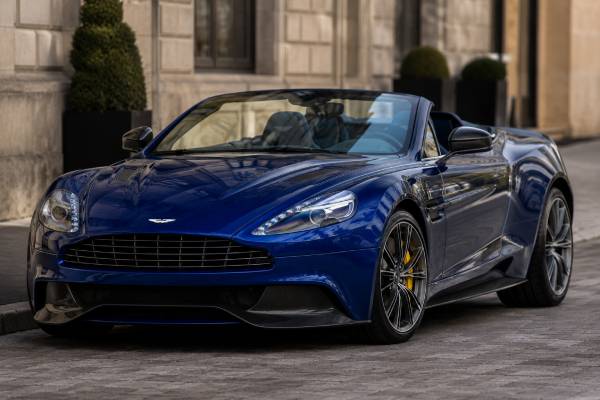
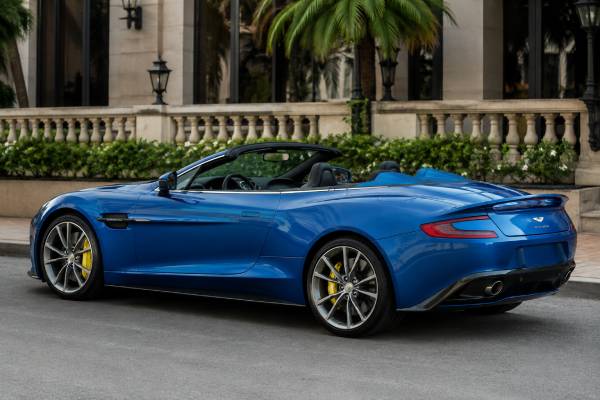
The 2013–2014 Aston Martin Vanquish Volante places the early AM11 V12 and six-speed Touchtronic II drivetrain in a carbon-bodied convertible built for high-speed touring. It retains the coupe’s 565 bhp output and 183 mph maximum speed while adding a fabric roof, model-specific rear structure, hydraulic operation, extra mass, and more exposure to water, sun, and trim aging. Those differences should shape every inspection. A buyer who evaluates only the engine and paint can miss blocked drains, tired seals, misaligned glass, roof-hydraulic leaks, damp modules, damaged carbon panels, or carbon-ceramic brakes approaching an expensive replacement threshold. The earliest Volante also overlaps the affected range for the six-speed transmission park-lock recall in some markets. When the roof system is dry and correctly adjusted, the structure is sound, and the V12 has complete service history, this version delivers an unusually rich combination of open-air theatre and genuine grand-touring pace. The right car is selected roof-first, not badge-first.
Table of Contents
- What the Volante Adds and Compromises
- Roof, Body, and Water Management
- Early Volante Technical Specification
- Open-Top Dynamics and V12 Character
- Living with the Cabin and Luggage Space
- Preventive Care for a Carbon-Bodied Convertible
- Inspection, Test Drive, and Purchase Decision
What the Volante Adds and Compromises
The Volante adds direct access to the V12’s sound and the atmosphere of the road, but it also adds mechanisms, seals, structural loads, and maintenance points that do not exist on the coupe. Its value lies in preserving nearly the same performance while changing the experience from enclosed super GT to open grand tourer.
Aston Martin designed the Volante as a flagship rather than a secondary derivative. The car uses the same AM11 5.9-litre V12 and six-speed rear transaxle as the early coupe. Official acceleration is 0–60 mph in 4.1 seconds and 0–62 mph in 4.3 seconds, with a 183 mph top speed. Those figures were remarkable for a luxury convertible and remain more than sufficient for road use.
The roof changes packaging and mass. Additional reinforcement and the folding mechanism increase kerb weight, while the stowed hood reduces luggage volume compared with the coupe. The body can still feel rigid and composed when healthy, but worn structural braces, incorrect repairs, tired dampers, or loose roof hardware may introduce shudder and noise that a seller describes as “normal for a convertible.” Some minor movement over broken surfaces is inherent; pronounced steering-column shake or repeated body tremor is not a condition to ignore.
The sensory advantages are strongest at moderate speeds. With the roof down, the naturally aspirated engine becomes more present, throttle openings are easier to hear, and the exhaust’s changing tone creates drama without requiring extreme speed. At motorway pace, wind management, window adjustment, and seat comfort matter more. Test the car both roof-up and roof-down because a short fair-weather demonstration cannot reveal sealing noise, fabric tension, or weather protection.
The Volante was available with extensive personalization. Hood colour, paint, leather, stitching, carbon details, wheels, and interior trim can make two cars look unrelated. Rare specifications can be desirable, but originality must be established through build records. A retrim or replacement hood can be positive when executed well; it should be documented rather than passed off as untouched factory material.
The early date range also creates identification issues. Later Vanquish Volantes use the AM29 engine and eight-speed Touchtronic III, while the 2013–2014 car covered here uses the 565 bhp AM11 and six-speed Touchtronic II. Confirm the gearbox and build details, especially on cars registered in a different year from manufacture.
Roof, Body, and Water Management
The roof system should complete every cycle smoothly, latch securely, seal evenly, and leave no hydraulic smell or dampness. Because water intrusion can damage expensive trim and electronics, roof and drainage assessment should come before cosmetic enthusiasm.
Operate the hood from fully closed to fully stowed and back again several times, including after the car is warm. Watch both sides for synchronized movement. Listen for straining, clicking, scraping, or a pump that continues running after movement should have stopped. Confirm that the header latches engage, the windows lower and raise in the correct sequence, and the tonneau area closes flush.
Intermittent roof faults can arise from low battery voltage, position sensors, wiring, hydraulic pressure, switches, alignment, or mechanical resistance. Do not accept a vague diagnosis based on topping up hydraulic fluid. Fluid loss indicates a leak that should be located, and continued operation can spread fluid into trim or damage the pump.
Inspect the fabric in bright, indirect light. Look for abrasion at folding points, shrinkage, faded areas, broken stitching, damaged rear-window bonding, stains, and previous patching. Water should bead and drain rather than soak immediately, but aggressive aftermarket treatments can alter appearance or contaminate adjacent materials. Use products appropriate for the hood fabric and follow the roof manufacturer’s care guidance.
Seals should be soft, clean, properly seated, and free of cuts. Check the windscreen header, side rails, rear deck, door apertures, and window contacts. Misaligned glass may create a leak even when the seal looks perfect. Test with controlled water flow rather than a high-pressure lance, which can force water past a healthy seal and create a misleading result.
Drain paths must remain open. Debris can collect around the roof well and body channels, causing water to overflow into the cabin or luggage area. Inspect carpets, underlay, rear trim cavities, seatbelt areas, luggage floor, and electrical compartments for moisture, staining, corrosion, mold, or deodorizing products. A moisture meter and trim removal by a specialist may reveal a problem hidden by dry surface carpet.
The carbon-fibre exterior needs separate assessment. It can crack or delaminate rather than dent, and painted repairs may conceal damage. The aluminium structure beneath it can also be affected by impact or unsuitable repair methods. Inspect panel gaps with the roof both raised and lowered; unusual changes may indicate alignment or structural issues.
Door fit is especially important on a convertible. Heavy, wide doors place load on hinges and latches, while frameless glass must align precisely with the hood seals. A door that drops when opened, needs force to latch, or creates inconsistent window contact deserves correction. Do not compensate for structural misalignment by over-adjusting the glass.
Early Volante Technical Specification
The early Volante is classified as a petrol ICE convertible, using a naturally aspirated V12, rear-wheel drive, and a six-speed torque-converter automatic transaxle mounted at the rear. It shares its engine output with the early coupe but carries additional roof and body hardware. The figures below describe the 565 bhp AM11-era Volante rather than the later eight-speed model.
| Specification | Value |
|---|---|
| Engine type | Naturally aspirated V12 petrol engine |
| Displacement | 5,935 cc (5.9 litres) |
| Maximum power | 565 bhp (573 PS) at 6,750 rpm |
| Maximum torque | 620 Nm (457 lb-ft) at 5,500 rpm |
| Engine location | Front-mid mounted |
| Drive type | Rear-wheel drive |
| Measure | Result |
|---|---|
| Transmission | Six-speed Touchtronic II automatic rear transaxle |
| 0–60 mph | 4.1 seconds |
| 0–62 mph (0–100 km/h) | 4.3 seconds |
| Top speed | 183 mph (295 km/h) |
| Manual control | Steering-column-mounted paddles |
| Measurement | Approximate published value |
|---|---|
| Length | 4,728 mm (186.1 in) |
| Width excluding mirrors | 1,910 mm (75.2 in) |
| Wheelbase | 2,740 mm (107.9 in) |
| Published kerb mass | About 1,844 kg (4,065 lb) |
| Luggage capacity | About 279 litres (9.9 cu ft) |
| Seating | 2+2 |
| Component | Configuration |
|---|---|
| Primary platform | Bonded aluminium VH structure with convertible reinforcement |
| Outer body | Carbon-fibre panels with fabric folding roof |
| Front suspension | Independent double wishbones |
| Rear suspension | Independent double wishbones |
| Damping | Adaptive, driver-selectable modes |
| Steering | Hydraulically assisted rack and pinion |
| Area | Specification |
|---|---|
| Brake type | Carbon Ceramic Matrix discs |
| Wheel diameter | 20 inches |
| Fuel capacity | About 78 litres (20.5 US gal) |
| Roof type | Power-operated fabric folding hood |
| Stability systems | ABS, traction control, and electronic stability control |
Weight definitions and equipment vary, so use the published mass as a comparison point rather than a scale-ticket prediction. Optional trim, market safety equipment, fuel load, and accessories alter the actual figure.
Open-Top Dynamics and V12 Character
The Volante is most rewarding when driven as a fast, fluent road car rather than as a coupe substitute. Its extra mass and open structure are perceptible, but the rear transaxle, adaptive damping, carbon-ceramic brakes, and broad track give it impressive composure when the chassis is healthy.
Roof-up, the car should feel quiet enough for long-distance use. Some additional wind noise compared with the coupe is expected, but loud whistling at one corner usually points to glass or seal adjustment. The hood should not drum excessively, and the header should remain secure over rough surfaces. Drive over diagonal bumps at low speed to listen for latch movement and body creaks, then repeat the route roof-down to separate roof noise from suspension noise.
The AM11 engine is the central attraction. It builds power in a linear way, so the driver can meter acceleration precisely. At low and medium revs it is smooth and cultured; near the top of the range it sounds harder and more urgent. Roof-down acoustics amplify both desirable sounds and faults, making exhaust leaks, accessory noise, or driveline clunks easier to hear.
The six-speed automatic suits relaxed touring. In normal mode it avoids the clutch-management demands of the first-generation Vanquish. In manual mode, the column paddles let the driver choose a lower ratio before a bend or overtake. Shifts should be consistent. Delayed drive engagement, flare between gears, abrupt banging, or warning lights require scanning and specialist diagnosis.
Affected cars must have the park-lock recall checked by VIN. The issue involved software communication that could leave the park pawl incompletely engaged. A control-module update was the remedy. Regardless of recall status, apply the parking brake before selecting park, especially on a gradient.
The carbon-ceramic brakes can provide strong, repeated stopping performance, but feel and noise vary with temperature, moisture, pad condition, and surface state. A light noise at low speed may not indicate failure, yet vibration, pulling, visible damage, warning messages, or a long pedal need immediate investigation. The cost of discs makes an informed inspection non-negotiable.
Tyres influence the Volante’s structure and ride more than many owners expect. Old or overinflated tyres can make the car feel brittle and increase shake over sharp impacts. Incorrect brands or mixed constructions can disturb balance between axles. Use approved sizes and load ratings, check date codes, and set pressures for the actual load and official market specification.
A good Volante should flow down a road with measured body movement, accurate steering, and strong traction. It will not feel as tight as the coupe over every broken surface, but it should not feel loose. If the difference between adaptive modes is absent, scan the damper system and inspect for leakage or prior replacement with incorrect parts.
Living with the Cabin and Luggage Space
The Volante works well for two-person touring if luggage is packed around its smaller boot and the roof mechanism is given the space and care it requires. The rear seats are best treated as occasional accommodation or additional soft-bag storage.
With the roof stowed, luggage capacity is more restricted than in the coupe. Use soft cases that cannot interfere with partitions, linkages, or the roof well. Never defeat a luggage separator or force the hood to operate against an obstruction. A small error can damage fabric, frame components, sensors, trim, or hydraulic hardware.
Check the owner’s documentation for loading instructions and emergency roof procedure before travel. Store any required tools where specified and do not improvise a manual closure without understanding the system. If the roof stops mid-cycle, protect the cabin from weather and seek informed assistance rather than repeatedly pressing the switch.
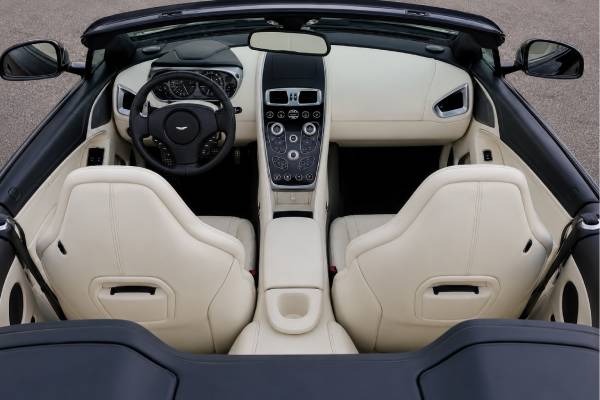
The cabin mixes leather, carbon-fibre, metal, and period infotainment. Sun exposure is a major differentiator between cars. Look for faded hides, dry stitching, shrunken dashboard coverings, cloudy screens, lifting trim, sticky coatings, and discoloured carbon lacquer. A car stored with the roof down in strong sun may look fresh at first glance but show accelerated aging in seams and upper surfaces.
Seat function matters on a tour. Test every movement, memory, heater, and lumbar adjustment. Check that front seats do not interfere with rear trim or occupants and that seatbelts retract correctly. Wind-deflector equipment, if supplied, should be present and fit securely.
The infotainment system is not contemporary, but reliability and integration matter more than screen resolution. Test navigation, audio sources, Bluetooth, parking sensors, cameras where fitted, and steering controls. Aftermarket smartphone integration can improve usability when installed without cutting the original harness or damaging trim. Ask for diagrams and invoices.
Climate control should cool strongly with the hood raised. The Volante cabin is exposed to more dust and moisture, so cabin filters, vents, fan operation, and drain paths deserve attention. A sweet odor, damp smell, or misting that returns quickly may indicate a leak or saturated interior rather than ordinary convertible behavior.
Plan storage around the car’s width, long doors, low splitter, and need for a battery maintainer. A dry garage with airflow is ideal. Do not store the hood folded for months; leaving it raised and correctly tensioned helps prevent deep creases and protects the cabin. Make sure the fabric is fully dry before long-term closure or covering.
Preventive Care for a Carbon-Bodied Convertible
Preventive care should target moisture, battery voltage, roof movement, cooling, tyres, ceramic brakes, and the bonded structure before cosmetic detailing. These systems interact: low voltage can interrupt a roof cycle, water can damage modules, and old tyres can make a healthy chassis feel defective.
Use a compatible battery maintainer when the car is parked for extended periods. Before operating the roof, start with a healthy battery and follow the conditions in the owner’s guide. If movement slows or stops, investigate rather than completing the cycle by force.
Clean roof channels and drains gently. Vacuum loose debris before using controlled water, and avoid metal probes that can puncture tubing or dislodge joints. After washing, inspect the cabin and luggage area, dry the brakes through careful use, and raise the hood until fully dry.
Service the V12 by time as well as mileage. Use the specified oil, filters, coolant, and plugs for the exact VIN. Inspect ignition coils, belts, hoses, radiator surfaces, fans, and fluid seepage. A car that completes only short trips may accumulate moisture and never heat the exhaust fully, so occasional proper operating-temperature drives are beneficial.
Transmission and differential maintenance should follow official procedures. Check the six-speed system for leaks, smooth engagement, and campaign completion. Engine and transaxle mounts can deteriorate with age, contributing to thumps that may be misdiagnosed as internal gearbox faults.
Ceramic brakes require clean handling and correct inspection. Avoid acidic wheel cleaners, do not strike the discs during wheel removal, and use protective practices when transporting or servicing the car. Record disc assessments and pad measurements so trends are visible over time.
Tyres need replacement based on age and condition, not only tread. Inspect for cracking, flat spotting, inner-edge wear, and sidewall damage. After replacement or suspension work, obtain alignment from a shop that can position and lift the car correctly.
Keep records for every roof adjustment, hydraulic repair, seal replacement, water leak, and trim removal. Convertible problems often recur when only the visible symptom is addressed. A dated map of where moisture was found and what was resealed can save diagnostic time later.
Inspection, Test Drive, and Purchase Decision
A strong purchase decision combines a dry-body inspection, repeated roof operation, diagnostic scanning, a full-temperature road test, and documentary proof of recall completion. A beautiful colour combination should be the final filter, not the first.
Inspect the car in daylight before it has been washed. Look for dampness, water tracks, seal treatments, hydraulic residue, fabric wear, and roof-panel alignment. Remove accessible luggage-floor panels and inspect around rear trim. Check window indexing and door fit from both sides.
The specialist should examine the carbon body and aluminium structure on a lift. Request assessment of undertrays, jacking areas, suspension points, braces, prior repair seams, exposed carbon, and panel mounts. Paint-depth readings are useful on some surfaces but are not a complete carbon inspection.
Operate every electrical function with the battery tested. Scan all modules, not only the engine computer. Record fault codes before clearing them. Roof, restraint, suspension, parking, transmission, climate, and body modules may contain history that explains an intermittent symptom.
The drive should include:
- Cold start, idle, and initial gear engagement.
- Slow steering-lock manoeuvres and reversing without shudder or warning.
- Roof-up driving over rough and smooth roads.
- Roof-down driving to isolate chassis, suspension, and trim sounds.
- Manual and automatic shifts at light and moderate load.
- Progressive braking from speed and a check for vibration or pull.
- Traffic idling to confirm cooling-fan and air-conditioning performance.
- A hot restart followed by a leak and warning-message recheck.
Review the history for annual service, ignition work, cooling repairs, batteries, tyres, ceramic brake assessments, dampers, roof hydraulics, seals, and software campaigns. A file showing thoughtful preventative work is more valuable than a low odometer reading with long gaps.
Estimate immediate expenditure before negotiating. Separate safety items, water-ingress repairs, drivetrain work, consumables, cosmetic restoration, and optional upgrades. Roof or structural uncertainty can escalate quickly, so an unexplained leak or poor carbon repair may justify leaving the car rather than seeking a larger discount.
The early Vanquish Volante is an excellent fit for an owner who wants a naturally aspirated flagship to use on scenic tours and fair-weather journeys while accepting specialist care. It is less suitable for someone without dry storage, access to a knowledgeable workshop, or tolerance for low-volume parts costs. When chosen carefully, it delivers something the coupe cannot: the AM11 V12 heard without a roof, while retaining the speed and visual drama that define the second-generation Vanquish.
References
- VANQUISH VOLANTE (Manufacturer Historic Model Archive)
- Vanquish at 25 – three generations of flagship performance and engineering excellence 2026 (Manufacturer History)
- Vehicle Detail Search – 2014 ASTON MARTIN VANQUISH | NHTSA (Recall Database)
- Microsoft Word – RA-07-0028 – 6-Speed Touchtronic II Automatic Transmission Park Lock Problem 2017 (Safety Recall)
- Owner’s Guides | Aston Martin (Manufacturer Owner Resources)
- Aston Martin Ownership | Luxury Car Servicing | Aston Martin (Manufacturer Owner Resources)
Disclaimer
This article is for informational use and does not replace professional diagnosis, repair, roof-system service, or a specialist pre-purchase inspection. Specifications, torque values, maintenance intervals, fluids, recall coverage, and procedures can differ by VIN, market, build date, and equipment; verify them in the official documentation for the exact vehicle. Please share this guide on Facebook, X/Twitter, or your preferred Aston Martin community if it was helpful.