
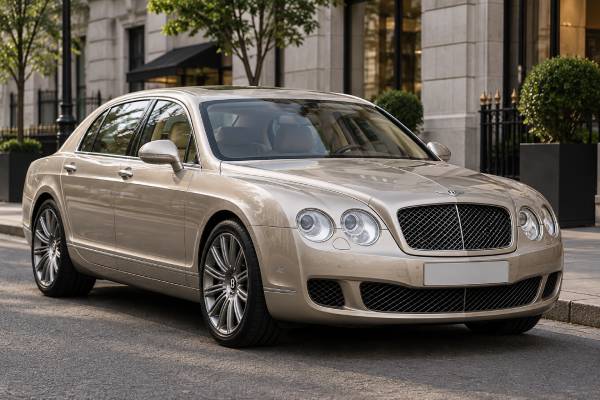
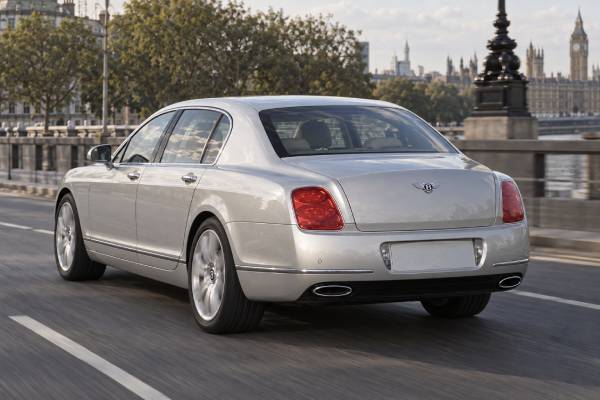
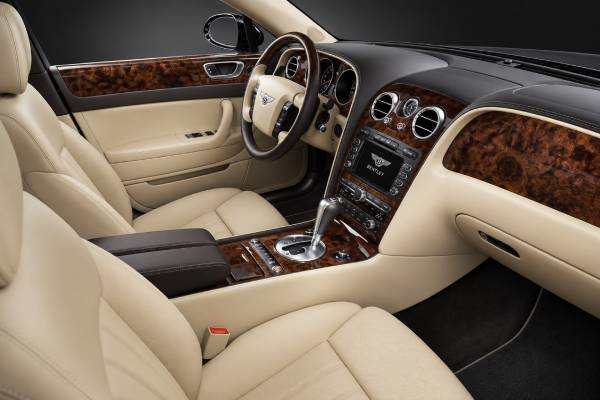
The 2005 Continental Flying Spur turned Bentley’s new Continental GT formula into a full-size four-door grand tourer. Its 6.0-liter twin-turbo W12, permanent all-wheel drive, six-speed ZF automatic, air suspension, and nearly 200 mph capability made it unlike the traditional Arnage and unlike almost every luxury sedan of its time. The assignment’s 552 hp figure reflects the commonly used U.S. rating; Bentley’s British archive describes the early car as 550 bhp. Either way, the important buying question is not whether the engine makes the brochure number. It is whether the cooling, vacuum, ignition, air-suspension, brake, transmission, battery, and electronic systems have been maintained as one integrated package. Depreciation can make an early Flying Spur look inexpensive, but parts and labor remain appropriate to a hand-finished, 2.4-ton high-performance Bentley. This guide covers the standard 3W2 W12 sedan from 2005 through 2012, excluding the 600 hp Speed model, and explains what to inspect before treating a low asking price as a bargain.
Table of Contents
- Platform, Design, and Model Scope
- W12 Specifications and Technical Data
- Performance, Ride, and Everyday Use
- Systems That Become Expensive with Age
- Maintenance Strategy and Service Priorities
- Used-Car Inspection and Test Drive
- Who Should Buy One—and When to Pass
Platform, Design, and Model Scope
The 3W2 Continental Flying Spur is a long-wheelbase four-door relative of the first Continental GT, not a rebodied Arnage. It used Volkswagen Group architecture and components, but Bentley engineered, assembled, trimmed, and calibrated the car to deliver its own combination of speed, silence, and craftsmanship.
The wheelbase grew by 320 mm compared with the GT, creating a genuinely useful rear compartment while preserving the coupe’s short front overhang and cab-rearward stance. A steel monocoque, stainless-steel front subframe, double-wishbone front suspension, multi-link rear suspension, and self-leveling air springs formed the basic structure. The car’s drag coefficient was unusually low for a large sedan, helping it reach a claimed 195 mph despite substantial frontal area and weight.
The W12 is effectively a compact 12-cylinder arrangement formed from four narrow cylinder banks. Two turbochargers and intercoolers provide the broad torque that makes the Flying Spur feel effortless. Power reaches all four wheels through a torque-converter automatic and Torsen center differential. This gives reliable traction in poor weather, but it also means that tires, wheel circumference, differentials, propeller shafts, and transmission behavior must be considered together.
Model-year equipment changed. Infotainment, telephone modules, navigation, lighting, options, trim packages, emissions hardware, and software can differ. Late cars received detail updates and may be easier to live with, but a well-maintained early example is better than a neglected facelift. The Speed, introduced for 2008, has different output and chassis tuning and is covered separately.
The car may have four seats with a full-length rear console or five seats with a folding center section. Mulliner Driving Specification, upgraded audio, rear entertainment, adaptive cruise, veneered picnic tables, and numerous paint and hide choices add desirability, but every extra powered feature is another item to test.
W12 Specifications and Technical Data
This is a gasoline-only ICE vehicle with a twin-turbocharged W12, six-speed automatic, permanent all-wheel drive, and adaptive air suspension. The tables describe the standard early output; regional emissions, fuel-economy, wheel, and equipment data can vary by model year.
| Specification | Value | Notes |
|---|---|---|
| Engine | 5,998 cc twin-turbocharged W12 | 48 valves, liquid-cooled intercooling |
| Maximum power | 552 hp (412 kW) at about 6,100 rpm | U.S.-style rating; Bentley also quoted 550 bhp |
| Maximum torque | 650 Nm (479 lb-ft) from about 1,600 rpm | Broad low-speed plateau |
| Fuel system | Electronic multi-point injection | Market emissions equipment differs |
| Recommended fuel | Premium unleaded | Follow the fuel-door label and market manual |
| Fuel capacity | About 90 L (23.8 US gal) | Useful range depends heavily on speed and traffic |
| Specification | Value |
|---|---|
| Transmission | ZF six-speed torque-converter automatic |
| Drive system | Permanent all-wheel drive with Torsen center differential |
| Front suspension | Independent double wishbones |
| Rear suspension | Independent multi-link |
| Springs and damping | Self-leveling air suspension with continuously controlled dampers |
| Steering | Speed-sensitive power-assisted rack and pinion |
| Measure | Manufacturer figure | Context |
|---|---|---|
| 0–100 km/h | 5.2 seconds | Standard W12 launch specification |
| 0–60 mph | About 4.9 seconds | Regional published figure |
| Top speed | 312 km/h (195 mph) | Requires correct tires and controlled conditions |
| Brakes | Ventilated discs with electronic assistance | Large mass makes condition and pad quality critical |
| Specification | Value | Notes |
|---|---|---|
| Body | Four-door luxury sedan | Four- or five-seat interior |
| Length | 5,290 mm (208.3 in) | Early production specification |
| Wheelbase | 3,065 mm (120.7 in) | 320 mm longer than contemporary Continental GT |
| Kerb weight | About 2,440 kg (5,379 lb) | Definition and equipment affect published value |
| Drag coefficient | Cd 0.31 | Bentley heritage specification |
| Boot volume | Approximately 475 L (16.8 cu ft) | Measurement method may differ by market |
| System | What matters |
|---|---|
| Engine oil | Correct Bentley/VW-approved specification, level checks, and documented change history |
| Cooling circuits | Pressure integrity, pump function, hose and pipe condition, clean heat exchangers |
| Automatic transmission | Fluid condition, adaptation behavior, leaks, and specialist service history |
| Air suspension | Overnight ride-height retention, compressor duty, strut and valve-block condition |
| Brakes and tires | Matched premium tires, even wear, disc thickness, caliper function, and fluid age |
| Batteries | Correct battery types, charging voltage, sleep current, and coding where required |
Performance, Ride, and Everyday Use
The standard W12 Flying Spur is already extremely fast, but its defining quality is the absence of effort. Torque arrives early, the transmission keeps the engine quiet, and the air suspension isolates the cabin while maintaining body control.
Acceleration should be smooth and continuous. Hesitation, misfire under boost, uneven idle, or a flashing engine light can point to ignition coils, spark plugs, vacuum leaks, fuel delivery, sensors, or boost-control faults. A car can feel acceptable at light throttle and fail only when the W12 is loaded, so the road test must include a controlled full-throttle pull after the engine is warm.
The six-speed automatic should shift almost invisibly in normal use and respond promptly to kickdown. Harsh engagement, shudder at steady speed, flare between gears, or a delay selecting drive or reverse needs diagnosis. Software adaptation can affect feel, but it should not be used as an excuse for mechanical wear or contaminated fluid.
Air suspension gives several ride-height and damping modes. The car should rise evenly, hold level overnight, and change modes without warnings. A corner that sits low can indicate a leaking strut or line. A compressor that runs for long periods may be compensating for leakage and can fail from overwork. Replacement of one worn component without finding the leak can lead to another expensive repair.
The steering is light for the car’s mass, and all-wheel drive makes traction feel secure. That confidence can hide tire problems. Four tires should be the same approved model, compatible size, similar tread depth, and correct load and speed rating. Large differences in rolling circumference can burden the driveline and confuse stability systems.
Braking performance is strong when the system is healthy, but consumables are expensive. Pulsation, steering shake, squeal, or vibration after a few stops can indicate disc condition, pad deposits, suspension wear, or wheel issues. Inspect inner and outer pad thickness rather than relying only on a dashboard warning.
As a daily car, the Flying Spur offers a quiet cabin, excellent seats, and usable rear space. Its size, fuel consumption, tire cost, parking exposure, and age-related electronics make it less carefree than a newer luxury sedan. It works best for an owner who drives enough to keep systems exercised and budgets for preventive service.
Systems That Become Expensive with Age
The largest ownership risks are cumulative. A weak battery, minor vacuum leak, tired suspension arm, and intermittent module can produce a car that feels generally neglected even when each fault seems small.
Cooling and engine-bay access
The W12 fills the engine bay. Some hoses, pipes, seals, vacuum lines, and sensors are labor-intensive to reach. Coolant smell, dried residue, unexplained level loss, or temperature variation should be investigated quickly. Do not assume every leak is a simple hose. Pressure testing both cold and warm, inspection beneath covers, and a scan for temperature-sensor plausibility are useful.
Ignition coils and spark plugs are normal service items, but repeated misfires may also involve injectors, wiring, intake leaks, compression, or catalysts. Replacing one coil at a time can be economical when diagnosis is clear; replacing parts randomly is not.
Air suspension and front suspension
Air struts, compressor, reservoir, valve block, height sensors, control arms, bushings, and alignment all affect ride. Knocks over broken pavement commonly come from mechanical joints rather than the air spring itself. Uneven tire wear may reveal worn arms or poor alignment before a warning appears.
Electrical and battery management
The car has many control modules and convenience systems. Low voltage can create multiple unrelated warnings. Test batteries under load, verify alternator output, measure parasitic draw after the car enters sleep mode, and scan every module. Do not clear faults before saving a complete report.
Infotainment, navigation, telephone, keyless access, parking sensors, seat modules, rear blinds, windows, and trunk functions should all be tested. Obsolete communications technology may no longer provide its original service, but the hardware should not drain the battery or disrupt other modules.
Brakes, wheel hardware, and corrosion
Road salt and age can affect brake hardware, underbody fasteners, fuel-system components, and aluminium suspension pieces. A U.S. recall addressed possible corrosion of the fuel-filter housing on certain early Continental models. Recall completion must be checked by VIN, because model-year inclusion does not prove that an individual car was repaired.
Maintenance Strategy and Service Priorities
A baseline service is essential when history is incomplete. The cheapest long-term approach is to establish the car’s condition once, then follow a consistent schedule rather than reacting to warnings.
Begin with a full diagnostic scan, battery and charging tests, fluid inspection, cooling pressure test, engine leak inspection, suspension measurement, tire date and tread check, brake measurement, and road test. Compare the VIN, engine identification, and installed parts with official data because replacement engines and components must be correctly identified.
Engine oil should be changed by time as well as mileage using the approved specification. Short trips, long storage, and repeated cold starts justify a conservative interval. Check the level exactly as the owner’s information describes; overfilling a W12 is not harmless.
“Lifetime” fluid language should not be interpreted as “never inspect.” Transmission, differential, and transfer components can leak or degrade. Service decisions should be based on condition, mileage, use, and specialist guidance, using the correct fluid and fill temperature. An improper flush can create problems, so this is not a generic quick-lube task.
Cooling-system work should use compatible coolant and proper bleeding. Clean debris from radiators and condensers, because blocked airflow raises coolant, oil, transmission, and air-conditioning load. Inspect auxiliary pumps and fans.
Brake fluid absorbs moisture even when the car travels little. Renew it on an appropriate time interval and inspect flexible hoses, caliper boots, parking-brake operation, and hard lines. The electronic parking brake must release fully.
Keep the car on a quality maintainer during storage, but first confirm that the battery and charging system are healthy. A maintainer can hide a failing battery without fixing it. Exercise climate control, windows, locks, seats, rear equipment, and ride-height functions during regular drives.
Maintain a spreadsheet or binder with dates, mileage, part numbers, scan reports, tire age, battery dates, and fluid specifications. Detailed records increase reliability and resale value because the next buyer can distinguish preventive care from crisis repairs.
Used-Car Inspection and Test Drive
A pre-purchase inspection should be performed by a Bentley specialist with factory-capable diagnostics. A general inspection can identify obvious wear but may miss module histories, adaptation values, or model-specific access issues.
See the car cold. Check both batteries, fluid levels, coolant residue, belt condition, oil leaks, engine mounts, and any fresh cleaning that may conceal leaks. Start it without throttle and watch for smoke, chain or accessory noise, warning messages, and uneven idle.
Scan all control units before and after the drive. Stored low-voltage codes are common, but their date and frequency matter. Repeated communication, suspension, misfire, catalyst, seat, or convenience faults need explanation.
On the road, assess:
- smooth boost and full-load acceleration;
- transmission engagement and shift quality;
- steering straight-ahead stability and brake tracking;
- suspension noise in every damping mode;
- vibration through the seat, steering wheel, and floor;
- coolant temperature and fan behavior in traffic;
- adaptive cruise, parking sensors, climate control, and infotainment;
- wind noise, water leaks, and door or window sealing.
After the drive, leave the engine running, inspect for coolant odor, fuel smell, smoke, or new drips, and compare wheel temperatures. Cycle the suspension and restart the car after a heat soak. Hot-start faults can be missed during a brief demonstration.
Review the VIN in official recall databases. Verify completion with invoices or dealer records, not a seller’s memory. Check body paint carefully: aluminium panels and complex finishes require skilled repair, and poorly matched metallic paint can be costly to correct.
Estimate immediate needs at retail specialist rates. Tires, front brakes, air struts, batteries, control arms, a coolant leak, and an infotainment fault can together exceed the apparent savings of a cheaper car.
Who Should Buy One—and When to Pass
Buy a standard 3W2 Flying Spur when you want discreet supercar pace, genuine rear-seat space, and traditional Bentley materials at a fraction of the original price—and when you can fund maintenance without resentment.
The standard car is often a better road companion than the Speed for buyers who prioritize ride, tire life, and understated appearance. It still reaches 60 mph in under five seconds and has more top-speed capability than any public road can safely use. Its smaller or less aggressive wheel packages can also reduce replacement cost and impact harshness.
Choose the example with the strongest history. Regular specialist invoices, matched tires, completed recalls, recent batteries, dry cooling systems, stable suspension, and clean diagnostics matter more than low mileage. Very low-mileage cars can have more storage-related faults than cars used consistently.
Pass on a car with unresolved overheating, mixed tires, repeated misfires, a suspension that drops, water in the cabin, multiple dead modules, transmission flare, heavy brake vibration, or missing records. One of these may be manageable; several together show that maintenance has been deferred across the vehicle.
Budget for insurance, secure parking, premium fuel, tires, brakes, annual inspection, diagnostic time, and a repair reserve. A prospective owner who expects ordinary executive-sedan costs will be disappointed. A buyer who understands that the purchase price is only the entry ticket can enjoy one of the most distinctive high-speed sedans of its era.
The best 2005–2012 Flying Spurs remain impressive because their basic concept still works: immense torque, all-weather traction, long-distance comfort, and a cabin made from real wood, metal, and hide. Proper maintenance turns that complexity into capability. Deferred maintenance turns it into a warning-light collection.
Long-distance readiness beyond the service stamp
A Flying Spur intended for continental travel should be tested as a journey machine, not merely passed during a local inspection. After baseline work, complete a progressively longer shakedown that includes urban heat, steady motorway running, repeated fuel stops, night lighting, rain sealing, navigation, climate control, and a fully loaded trunk. Record oil and coolant levels before and after, scan modules, and note any change in tire pressure or ride height.
Plan consumables around availability. Correct high-speed tires may need ordering, and a damaged 19- or 20-inch wheel may not be stocked near the breakdown location. Carry the locking-wheel key, towing-eye hardware, tire-inflation equipment, key codes, roadside-assistance details, and a concise summary of recent repairs. Do not carry random sensors as a substitute for diagnosis; carry the information a competent workshop needs.
Cabin endurance matters too. Confirm that rear climate zones remain stable for hours, seat ventilation and heating do not shut down, entertainment equipment does not flatten a weak battery, and the trunk latch works after repeated use. A car that passes a ten-mile test but produces low-voltage warnings after a lunch stop is not tour-ready.
This staged preparation changes ownership economics. Money spent on a measured shakedown, fluid trend, wheel balance, and preventive hose or battery work is usually cheaper than emergency transport and rushed parts replacement abroad. The standard 3W2 is at its best over distance, but only after its maintenance has been validated under the same conditions.
Before departure, verify spare keys and immobilizer behavior after the car has slept overnight. A weak key battery, faulty door-handle sensor, or module that fails to wake can strand an otherwise healthy car without producing any warning during a workshop visit.
Early-network electronics and storage behavior
The 3W2 belongs to an era when luxury convenience modules were already numerous but diagnostic information was less transparent than on later cars. Extended storage can expose weak batteries, sticky relays, aging parking sensors, intermittent keyless-entry antennas, and infotainment units that reboot or lose settings. Test the car after an overnight rest rather than only after it has been connected to workshop support. A clean cold start, complete module scan, and repeat function test after the road drive reveal more than a freshly cleared dashboard.
References
- BENTLEY NEWSROOM : 2005 Flying Spur 2026 (Heritage Collection)
- BENTLEY NEWSROOM : Flying Spur 2026 (Manufacturer Archive)
- Vehicle Detail Search – 2006 BENTLEY CONTINENTAL FLYING SPUR | NHTSA 2026 (Recall Database)
- May 15, 2008 2008 (Recall Acknowledgment)
- Technical product information 2016 (Manufacturer Communication)
- November 2, 2015 2015 (Recall Acknowledgment)
Disclaimer
This article is for informational purposes and is not a substitute for professional diagnosis or repair. Specifications, torque values, intervals, fluids, and procedures vary by VIN, market, model year, equipment, and software; verify all work against official Bentley service documentation.
Please share this guide on Facebook, X/Twitter, or a Bentley owners’ forum if it helps another buyer avoid deferred-maintenance surprises.