
The 2025–present Bentley Flying Spur Azure combines the 671 bhp High Performance Hybrid with the range’s most comfort-centered specification. Its 4.0-liter twin-turbo V8 and electric motor deliver 930 Nm and 0–60 mph in 3.8 seconds, yet Azure’s priorities are quieter: wellness seating in the front and outer rear positions, bright exterior detailing, a curated cabin, assistance systems, and chassis technology designed to reduce fatigue. Up to 80 km of electric range adds comfort by allowing silent local travel and smooth low-speed response.
Azure is not the standard Flying Spur with a different grille. Its value depends on whether the owner uses the seating, climate, filtration, assistance, and rear-cabin features that make the package useful. The PHEV also demands a charging routine and informed maintenance across 12-volt, 48-volt, and high-voltage systems. This guide explains the engineering beneath the wellness message, identifies the specifications that distinguish the 680 PS system from the 782 PS Speed and Mulliner, and shows how to configure or inspect an Azure so its luxury is supported by healthy mechanical and electrical systems.
Table of Contents
- What Azure prioritizes
- Azure technical specifications
- Wellness seating and cabin air
- Ride quality and driver assistance
- Using the hybrid calmly
- Maintenance for comfort systems
- Choosing and inspecting an Azure
What Azure prioritizes
Azure prioritizes occupant wellbeing and long-distance ease, while retaining the full 680 PS High Performance Hybrid. Its slower-looking visual language does not indicate reduced power; it indicates a different allocation of standard equipment and design attention.
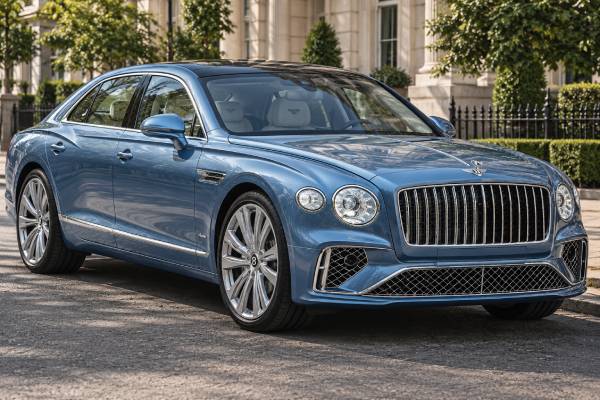
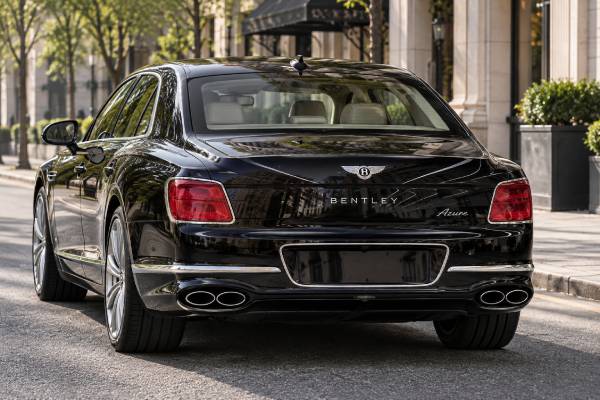
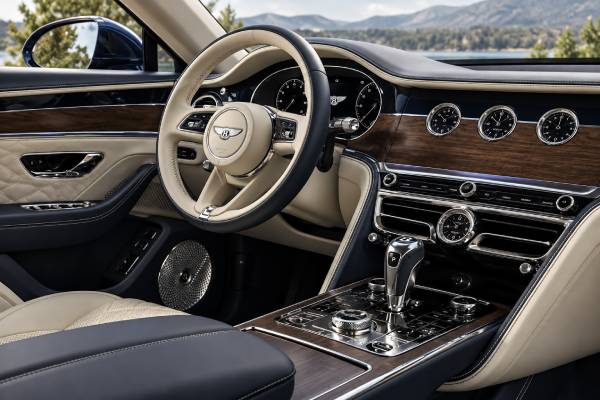
Bentley uses Azure as the opposite pole to S and Speed. Where those cars emphasize dark trim, sports exhausts, eLSD-led chassis behavior, and performance graphics, Azure uses a chrome matrix grille with vertical vanes, bright lower grilles, polished exterior details, Azure badging, and a dedicated 22-inch wheel. The cabin favors open-pore wood, soft quilting, contrast stitching, and comfort equipment.
The outer four seating positions are central. Front and outer rear seats can combine heat, ventilation, massage, adjustable bolsters, and wellness functions intended to maintain posture and temperature. The goal is not a theatrical massage at the end of a journey. It is small, periodic movement that reduces pressure and fatigue during the journey.
Touring, Comfort, and Lighting specifications are included or bundled according to market. That can bring predictive cruise assistance, lane guidance, head-up display, night vision, enhanced seat functions, ambient lighting, and rear amenities. Because global standard equipment differs, a buyer must read the build data rather than treating an international press release as the specification of a local car.
The High Performance Hybrid is well matched to Azure. Electric operation removes engine vibration in traffic, and the motor responds smoothly from rest. The V8 provides long-range authority once speeds rise. Compared with the previous Azure Hybrid’s 2.9-liter V6, the new system has much more power, a larger battery, longer electric range, faster AC charging, and a stronger chassis architecture.
Azure best suits an owner who will use both rows, charge regularly, and value assistance and wellness functions more than the Speed’s maximum output. A driver who never carries rear passengers or who wants the most expressive exhaust and differential behavior may find the core or S better aligned.
Azure technical specifications
The Flying Spur Azure is a plug-in hybrid with a 4.0-liter twin-turbo V8, one electric motor in the eight-speed dual-clutch transmission, a 25.9 kWh battery, and active all-wheel drive. The combined 680 PS rating is manufacturer-calibrated and should not be reconstructed from separate component peaks.
| Specification | Value |
|---|---|
| Powertrain type | Plug-in hybrid electric vehicle |
| Engine | 4.0-liter twin-turbocharged V8 |
| Displacement | 3,996 cc |
| Engine power | 519 PS (512 bhp; 382 kW) at 6,250 rpm |
| Engine torque | 770 Nm (568 lb-ft) at 2,300–4,500 rpm |
| Electric motor | 190 PS (188 bhp), 450 Nm (332 lb-ft) |
| Combined power | 680 PS (671 bhp) |
| Combined torque | 930 Nm (686 lb-ft) |
| Battery capacity | 25.9 kWh |
| Transmission | 8-speed dual-clutch automatic |
| Specification | Value | Condition |
|---|---|---|
| 0–60 mph | 3.8 seconds | Manufacturer figure |
| 0–100 km/h | 3.9 seconds | Manufacturer figure |
| Maximum speed | 270 km/h (168 mph) | Approved summer-tire condition may apply |
| Electric range | Up to 80 km (50 miles) | Manufacturer/EU cycle statement |
| Maximum AC charging | 11 kW | Compatible supply |
| DC fast charging | Not available | AC charging only |
| Fuel tank | 80 liters (21.1 US gal) | Published specification |
| Specification | Value |
|---|---|
| Overall length | 5,316 mm (209.3 in) |
| Width across mirrors | 2,220 mm (87.4 in) |
| Overall height | 1,474 mm (58.0 in) |
| Wheelbase | 3,194 mm (125.7 in) |
| Published unladen weight | approximately 2,646 kg (5,833 lb) |
| Boot volume | 346 liters (12.2 cu ft) |
| Suspension | Air springs with twin-valve dampers |
| Active body control | 48-volt Bentley Dynamic Ride |
| Steering | Electronic all-wheel steering |
| Azure wheel | 22-inch bright-machined design |
The 346-liter trunk is smaller than the previous gasoline Flying Spur’s. The rear cabin is expansive, but an airport-transfer buyer should check luggage capacity with real cases before choosing a four-seat console or additional trunk accessories.
Wellness seating and cabin air
Azure’s most meaningful features are the ones occupants feel over hours: postural support, temperature control, massage, filtered air, low noise, and controls that do not require constant attention. They should be tested as functional systems, not admired as brochure labels.
Wellness seating can use sensors and programmed movement to make small changes in pressure and posture. The functions may operate differently in front and rear positions and may depend on seat occupancy or selected program. During a viewing, run the longest available cycle in all four outer seats. Confirm that bolsters, lumbar sections, cushions, headrests, heat, ventilation, and massage respond without noise or asymmetry.
Automatic climate features can manage seat and cabin temperature to reduce fatigue. The car’s air-quality system filters fine particles and can switch to recirculation when pollution rises. Navigation data can prepare the system for a tunnel. These capabilities depend on clean filters, healthy sensors, climate flaps, software, and refrigerant condition. Advanced logic cannot compensate for a weak compressor or blocked drain.
The cabin should be evaluated with the audio and engine off. Listen for fan bearings, seat motors, blind mechanisms, trim movement, wheel noise, and air leaks. A PHEV’s silent low-speed operation makes small noises easier to hear, which is useful during inspection.
Leather and quilting need close examination. Azure’s new Harmony or wellness patterns use fine stitching and soft hide. Inspect perforations, thread, piping, and bolsters in daylight. Heavy conditioning can make the surface glossy and clog ventilation holes. Dye repairs can hide wear but leave inconsistent grain.
Open-pore veneer provides a low-gloss tactile finish and should not be polished like lacquered wood. Look for stains around cupholders, lifted edges, scratches, and swelling from moisture. Metal and bright-chrome controls should move cleanly without peeling or clouding.
Rear passengers may use the Touch Screen Remote for seats, climate, blinds, and entertainment. Confirm charging, pairing, responsiveness, and storage. Powered picnic tables should deploy evenly and lock securely. A high-specification Azure with several inactive rear functions loses much of the reason for choosing the trim.
Wellness seating should be tested as a system, not judged from the presence of a massage button. Set the seat manually first, then try heating, ventilation, massage, and any automatic postural function through a representative journey. The best setting supports the thighs and lower back without forcing the shoulders forward, while the head restraint remains close enough to be useful. A passenger who feels pressure after ten minutes in a showroom may feel it more strongly after two hours, so allow time and test both front and rear positions.
Cabin-air features also depend on correct use. Keep intake areas clear, replace filters according to current service guidance, and investigate persistent odors rather than masking them with fragrance. Air ionization and particulate filtration can improve the environment, but they cannot compensate for water ingress, a contaminated evaporator, smoke exposure, or neglected filters. Ask the seller to demonstrate air-quality displays and all climate zones, then listen for fan noise and confirm that temperature changes reach each seating area.
For chauffeured use, repeat the assessment from the rear while another person drives over expansion joints, patched pavement, and a curved highway ramp. Note head movement, seat vibration, road noise, and how smoothly driver-assistance systems accelerate and brake. Azure’s value is measured by reduced fatigue at the end of a journey, which makes this passenger-focused road test more revealing than a quick burst of acceleration.
Ride quality and driver assistance
The Azure should be soft without being vague. Air suspension and twin-valve damping isolate poor surfaces, Dynamic Ride controls roll, and all-wheel steering reduces the effort of placing a long sedan in town or on the highway.
Twin-valve dampers manage compression and rebound separately. On a sharp bump, they can allow wheel movement without releasing the body into a second float. In a broad corner, firmer control prevents passengers from leaning excessively. A test drive should include patched city pavement, a rolling road, and a highway lane change.
Bentley Dynamic Ride uses 48-volt electric anti-roll actuators. It can relax cross-axle stiffness on a straight and resist roll in a turn. If the Azure feels as stiff in Comfort as a performance model, or if every mode feels identical, check calibration, tires, dampers, and the active system rather than assuming that is normal.
All-wheel steering is a significant stress-reduction feature. The rear wheels oppose the fronts at parking speeds, reducing the turning circle. At higher speed they move with the fronts, creating a smoother lateral transition. The driver should notice easier maneuvering, not a strange pivot. Tire wear and steering alignment provide clues to system health.
Predictive adaptive cruise can use navigation and traffic information to adjust for speed limits, bends, junctions, and roundabouts where supported. Lane guidance can help center the car when markings are clear. These systems assist rather than replace attention. Dirty sensors, non-original windscreens, bumper repairs, or missing calibration can produce poor operation.
Surround cameras are valuable because the car is 2,220 mm wide across its mirrors. Images should be clear, stitched correctly, and free from a shifted horizon. Test parking sensors near suitable objects and verify that the automatic emergency functions do not show faults.
The 22-inch Azure wheels are visually important but reduce sidewall depth. Inner-rim bends, poor balancing, and old tires can make an expensive suspension feel busy. Check tire specification and consider a smaller approved winter wheel if climate and roads justify it.
Using the hybrid calmly
The Azure Hybrid delivers its best comfort and efficiency when the owner charges routinely and lets the control system blend energy rather than chasing every possible electric kilometer. Smooth use is more valuable than maximizing one dashboard number.
A dedicated home or workplace AC source is ideal. The 11 kW onboard charger can use a suitable three-phase wallbox, while lower-power installations take longer. Because the car normally remains parked for many hours, charging speed below the maximum may still be entirely adequate.
There is no DC fast charging. On long journeys, gasoline is the rapid energy source. Plan AC charging at overnight destinations or offices rather than waiting beside a public charger for a small PHEV battery. The 80-liter tank keeps the car useful once the initial charge is spent.
The 80 km official electric range is a standardized figure. Mild urban conditions may approach it; winter heating, highway speed, elevation, and repeated acceleration reduce it. Predicted range after charging reflects recent use, so one low display should lead to a measured test, not an immediate battery diagnosis.
The V8 can start during an indicated electric journey for performance, heating, defrosting, temperature management, or system checks. A smooth start is normal. A hard jolt, repeated cycling, or reduced-power message is not. Test the transition with moderate throttle and after the car is warm.
Hybrid mode can use the V8 efficiently at steady speed and the motor during low-speed or transient demands. Hold mode is useful when a zero-emission arrival is planned. Using the engine to force-charge the battery may be available in some strategies but is generally less efficient than plugging in.
Regeneration reduces friction-brake use, which benefits energy recovery but can leave discs underused. A consistent pedal is essential for comfort. Safe periodic friction braking helps clean surfaces, but corrosion or thickness variation requires service.
Owners should track wall energy and gasoline separately. Electricity measured at the outlet includes charging losses; the car’s consumption display may use a different boundary. Long-term cost is the only useful comparison with the V8 or Ultra Performance Hybrid.
Maintenance for comfort systems
Azure maintenance must preserve refinement as well as mobility. A car can have no drivetrain warning and still fail its purpose through noisy fans, weak seat ventilation, uneven ride height, worn tires, or disabled assistance.
The V8 requires approved oil, filters, spark plugs, and scheduled inspection despite frequent EV use. Short, intermittent combustion cycles can create condensation and fuel dilution. Include at least periodic full-temperature drives within the owner’s normal routine.
The high-voltage battery and power electronics use thermal management and diagnostic monitoring. A qualified technician should review charge faults, isolation status, cell-balance indicators, cooling data, and software. Do not open battery assemblies or handle high-voltage components without training.
The 12-volt battery starts the control network, and the 48-volt system powers Dynamic Ride. A weak low-voltage battery can create multiple warnings or prevent ready mode. Test, register, and maintain the correct battery rather than jump-starting repeatedly.
Climate service should include cabin filters, evaporator drainage, refrigerant performance, fan operation, ionization or particulate sensors where fitted, and rear-zone control. A damp smell can indicate blocked drains or water entry. Check carpets, trunk wells, and sunroof drainage after heavy rain.
Seat systems contain motors, fans, heating elements, control modules, air bladders, and switches. Intermittent faults can appear only after a long program. Exercise every function before warranty expiry and document symptoms with video when they are difficult to reproduce.
Tires, wheels, air suspension, all-wheel steering, and alignment determine ride quality. Replace mixed or hardened tires, repair bent wheels correctly, and use a workshop familiar with active rear steering. An Azure on wrong tires cannot deliver its intended calm.
Brake inspection should measure inner and outer disc faces. Regeneration may reduce pad wear but does not stop corrosion. Wheel removal also allows inspection of suspension links, air lines, and wiring damaged by road debris.
Connected services and apps require software maintenance and secure account transfer. Before selling, remove personal data; before buying, confirm the prior owner has released the vehicle. Hardware faults should not be confused with expired subscriptions, but both affect usefulness.
Choosing and inspecting an Azure
Choose Azure because its comfort equipment will be used. A buyer who selects it only for the badge may pay for systems that add inspection and repair exposure without improving the daily experience.
For a new order, begin with the passengers. Decide four or five seats, rear entertainment, picnic tables, privacy blinds, audio, and upholstery colors that tolerate expected use. Then choose exterior finish and wheel plan. A darker wheel may hide brake dust; a bright-machined Azure wheel emphasizes the trim but is harder to refurbish invisibly.
Confirm charging before delivery. Check garage length and width, door opening space, wallbox location, cable safety, electrical capacity, and off-peak tariffs. The best PHEV is one that can be connected with little effort.
For a used car, request the VIN, factory build data, service invoices, high-voltage warranty details, charging cables, both keys, account status, and recall or campaign completion. A generic advertisement rarely lists enough to distinguish standard Azure equipment from optional Mulliner additions.
Inspect the vehicle cold and charged. Observe overnight ride height, start in EV mode, complete a charging session, and then drive long enough for the V8, transmission, brakes, climate system, and chassis to reach operating temperature. Sit in every position and operate all wellness features.
A professional pre-purchase inspection should include:
- diagnostic scans before and after the road test;
- battery health and charge-event review;
- 12-volt and 48-volt system tests;
- coolant-circuit and air-conditioning inspection;
- tire age, wheel runout, alignment, and suspension checks;
- brake measurements and corrosion review;
- camera, radar, and windscreen calibration evidence;
- paint-depth readings and water-entry inspection;
- complete testing of seats, blinds, remote, displays, audio, and lighting.
Compare the Azure with the core model based on included equipment. A heavily optioned core car may approach Azure functionality, but the factory package can be more coherent and easier to explain at resale. Compare with Mulliner when craftsmanship and maximum power are priorities, and with S when the owner wants a sports exhaust, eLSD, and darker design.
The right Azure should make its complexity disappear. It moves silently, starts its V8 without disturbance, rides with control, filters the cabin, supports the body, and reduces the work of navigating a large car. Those outcomes—not the number of icons on the option list—are the standard to buy.
References
- Bentley News 2025 : New High Performance Hybrid Continental GT, GTC and Flying Spur – the daily supercar family expands 2025 (Model Launch)
- Bentley News 2025 : Bentley Motors debuts new Continental GT and Flying Spur models at Auto Shanghai 2025 2025 (Azure Overview)
- BENTLEY NEWSROOM : wellbeing behind the wheel 2026 (Wellness Design)
- BENTLEY NEWSROOM : New Flying Spur 2026 (Engineering Overview)
- : Services: Flying Spur services 2026 (Connected Services)
- Check for Recalls: Vehicle, Car Seat, Tire, Equipment | NHTSA 2026 (Recall Database)
Disclaimer
This article is for informational purposes only and does not replace professional diagnosis, repair, high-voltage work, or a VIN-specific inspection. Specifications, torque values, charging performance, maintenance intervals, software, and equipment vary by market, model year, and factory build. Verify all procedures with official Bentley documentation and qualified technicians. Please share this guide on Facebook, X/Twitter, or another platform if it was useful.