
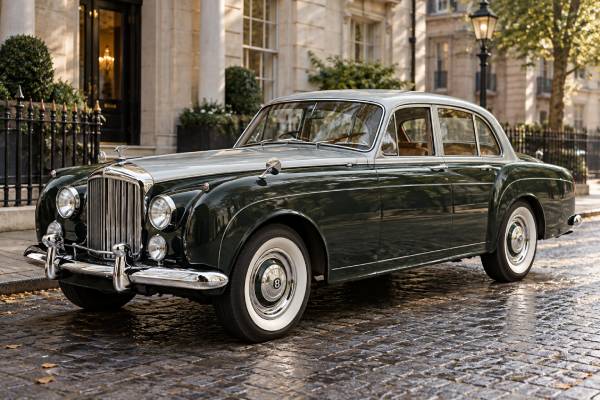
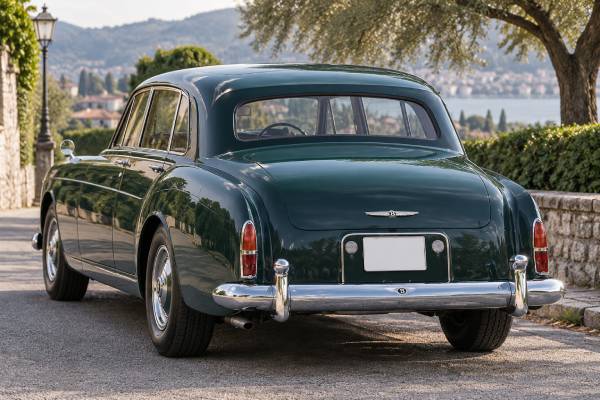
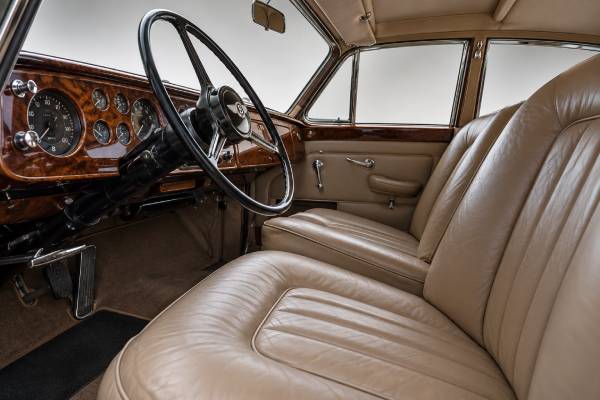
The S2 Continental Flying Spur kept H.J. Mulliner’s elegant four-door shape but changed the character underneath it. Bentley replaced the old straight-six with a new 6.23-liter aluminium V8, made power steering standard, and paired the engine with an automatic transmission. The result was less about dramatic speed than effortless response: more torque at low engine speed, stronger air-conditioning performance, and easier progress in traffic or on long climbs. That mechanical advance is also the main ownership challenge today. An S2 combines hand-built aluminium coachwork with an early version of Bentley’s long-lived L-Series V8, a complex hydraulic braking system, period cooling, and many bespoke details. A purchase decision should therefore be based on chassis records, corrosion inspection, cooling-system condition, oil pressure, transmission behavior, and restoration quality—not simply on an attractive color or a claimed low mileage. This guide covers the 1959–1962 H.J. Mulliner Continental Flying Spur and the commonly quoted 200 hp Continental output.
Table of Contents
- Why the S2 Was a Major Mechanical Change
- Engine, Chassis, and Dimension Specifications
- What an S2 Flying Spur Feels Like to Drive
- L-Series V8, Cooling, and Fuel-System Care
- Coachwork, Cabin, and Restoration Risks
- Pre-Purchase Inspection and Documentation
- Costs, Use, and Long-Term Ownership
Why the S2 Was a Major Mechanical Change
The S2’s defining feature is its all-aluminium V8, not a styling revision. Bentley introduced the engine in 1959 to provide more power, more torque, and greater accessory capacity while preserving the quiet manner expected of the marque.
The previous S1’s inline-six had deep roots and excellent refinement, but it was reaching the practical limit of its development. Bentley engineers designed a compact 90-degree V8 that could fit under the existing bonnet and provide a large increase in usable output. The engine used a cross-plane crankshaft for smoothness and an aluminium block and heads to control weight. Later descendants remained in production for decades, but an early 6.23-liter unit should not be treated as interchangeable with later 6.75-liter or turbocharged versions.
On the Continental chassis, the V8 was commonly described as producing about 200 bhp, although period manufacturers did not always publish power in the standardized way expected today. The most useful ownership measure is not the brochure figure but whether the engine develops even compression, stable hot oil pressure, clean combustion, and strong low-speed torque.
The S2 Flying Spur remained a coachbuilt car. H.J. Mulliner adapted the graceful four-door body concept used on the S1, with individual chassis receiving colors, interior arrangements, electrical equipment, air conditioning, glass, and other details according to the order. Production references generally identify 128 H.J. Mulliner Flying Spurs on the S2 Continental chassis, including a smaller number of left-hand-drive examples. Other coachbuilders also used “Flying Spur” informally for related four-door designs, so body design and coachbuilder must be checked car by car.
The combination of four doors, a tuned Continental chassis, and V8 power made the S2 unusually modern in concept. It anticipated the fast four-door grand tourer without using a unitary body, disc brakes, electronic fuel injection, or modern safety systems. That historical appeal is strongest when the car remains mechanically coherent and documented.
Engine, Chassis, and Dimension Specifications
The S2 Continental Flying Spur is a front-engine, rear-wheel-drive petrol car with an automatic transmission, separate steel chassis, and aluminium coachbuilt body. Its specification varies in detail, but the core architecture is consistent across genuine H.J. Mulliner examples.
| Specification | Value | Context |
|---|---|---|
| Engine family | Bentley L-Series V8 | Early naturally aspirated aluminium version |
| Configuration | 90-degree V8, overhead valves | Cross-plane crankshaft |
| Displacement | 6,230 cc (6.2 L) | Often written as 6¼ liters in period literature |
| Induction | Naturally aspirated | Twin SU carburettors |
| Maximum power | About 200 bhp (149 kW) | Common Continental Flying Spur estimate |
| Maximum torque | About 470 Nm (347 lb-ft) | Period estimates vary by source and tune |
| Fuel | Petrol | Octane requirement depends on compression ratio and ignition setting |
| Specification | Value | Notes |
|---|---|---|
| Transmission | Four-speed automatic | General Motors Hydra-Matic-derived unit |
| Drive | Rear-wheel drive | Hypoid final drive |
| Steering | Power-assisted | Standard on S2 |
| Brakes | Four-wheel drums | Hydraulic operation with mechanical servo assistance |
| Parking brake | Mechanical | Separate linkage requires adjustment and lubrication |
| Specification | Value |
|---|---|
| Chassis | Steel box-section frame with cross-bracing |
| Front suspension | Independent wishbones, coil springs, lever-arm dampers |
| Rear suspension | Live axle with semi-elliptic leaf springs |
| Ride control | Driver-adjustable electrically operated damping system |
| Wheels and tires | 15-inch period fitment; exact size should match chassis records and approved load rating |
| Specification | Value | Notes |
|---|---|---|
| Body style | Four-door sports saloon | H.J. Mulliner coachwork |
| Wheelbase | About 3,124 mm (123 in) | Continental chassis |
| Length | About 5,378 mm (211.7 in) | Minor variation by body detail |
| Width | About 1,899 mm (74.8 in) | Coachbuilt specification |
| Height | About 1,626 mm (64.0 in) | Depends on tires and ride condition |
| Kerb weight | Approximately 2,000 kg (4,409 lb) | Equipment and body specification affect weight |
| Measure | Typical figure | Condition |
|---|---|---|
| Top speed | Approximately 120–125 mph (193–201 km/h) | Period estimates for Continental-bodied cars |
| 0–60 mph | Roughly 10–12 seconds | Gearbox, axle ratio, condition, and test method matter |
| Primary strength | Flexible high-speed cruising | Strong low-rpm torque and automatic transmission |
What an S2 Flying Spur Feels Like to Drive
A correctly sorted S2 should feel easier and more flexible than an S1, with a strong surge from low speed and little need for engine revs. The car is still large and period-correct in its responses, but it should not feel unstable, weak, or reluctant.
The V8’s torque transforms urban driving. It moves the heavy body without the deliberate gear selection that an older six-cylinder Bentley may require. The automatic gearbox should take up drive smoothly, shift without prolonged flare, and remain consistent as the fluid reaches operating temperature. A strong thump, delayed engagement, or loss of drive on a hill is a fault, not a charming period trait.
Power steering reduces parking effort and makes the car more approachable, but it also masks wear. Inspect the steering box, pump, hoses, joints, idler components, wheel bearings, and alignment if the car wanders or needs repeated correction. The steering should become more settled as speed rises. Excessive assistance, dead movement around center, or inconsistent effort can indicate problems in the hydraulic or mechanical system.
The suspension gives a soft initial response and good isolation on long waves. It should not continue bouncing after a bump, strike its stops, or steer from the rear when the road surface changes. Worn lever-arm dampers, degraded bushings, tired leaf springs, incorrect tires, and uneven ride-control operation can make a fundamentally sound chassis feel vague.
The S2’s brakes can stop the car effectively once adjusted, but the pedal, servo, and drums must work as a system. A road test should include several moderate stops from increasing speeds, with time between them. Watch for pulling, pedal change, vibration, smoke, or a burning smell. Repeated emergency-style stops are inappropriate because the drum system stores heat.
At cruising speed the S2 should be calm. Wind noise around hand-built window frames may be present, yet booming, body shake, driveline vibration, or strong axle whine deserves investigation. Tire flat spots and propeller-shaft issues are common causes after long storage. A proper road test must last long enough for these symptoms to appear.
L-Series V8, Cooling, and Fuel-System Care
Cooling-system condition is the first mechanical priority on an S2. The aluminium V8 can be durable, but overheating, corrosion, sludge, and neglected coolant chemistry can turn a usable engine into an expensive rebuild.
The system includes the radiator, pump, thermostat, hoses, heater circuit, block passages, expansion arrangements, and often air-conditioning loads. A restored radiator alone does not prove that coolant can circulate through the engine. Ask whether the block was cleaned during overhaul and whether core plugs, water pump, thermostat, and heater valve were addressed.
Cold-start behavior gives useful clues. The engine should start without prolonged cranking, settle to an even idle, and avoid heavy smoke. Blue smoke after overrun can suggest valve-guide or ring wear. White vapor that continues when fully warm, unexplained coolant loss, or bubbles in the cooling system may indicate combustion leakage. Black smoke and fuel smell point toward carburettor or choke problems.
Hot oil pressure should be assessed with a known-accurate gauge. Old instruments can misread, but that possibility must be proven rather than used to dismiss a low reading. Bearing condition, oil viscosity, pump wear, relief-valve operation, and engine temperature all affect pressure. Listen for deep knocking under load and valve-train noise that changes as the engine warms.
Twin SU carburettors require clean fuel, correct float levels, synchronized airflow, proper needles, sound diaphragms where applicable, and a functional choke mechanism. Modern fuel can attack old hoses and seals or evaporate during storage. Replace incompatible flexible lines, inspect the tank and filters, and keep heat shields and routing correct. An electric auxiliary pump may improve priming, but it must be properly regulated and fused.
Oil leaks should be mapped after cleaning the engine. Some seepage is common, but leaks onto the exhaust, brake components, or road require action. Crankcase ventilation and excessive blow-by can increase leakage even after new seals are fitted.
A useful maintenance baseline includes compression and leak-down testing, oil-pressure verification, ignition analysis, carburettor balancing, cooling-system pressure testing, charging-system checks, and a chemical or laboratory coolant and oil assessment when the car’s history is uncertain.
Coachwork, Cabin, and Restoration Risks
The aluminium body can look excellent while corrosion develops underneath, especially where it contacts steel. Structural and coachwork inspection is therefore more important than judging paint depth alone.
H.J. Mulliner built each body with extensive hand fitting. Doors, bonnet, boot lid, window frames, brightwork, wood, and upholstery were adjusted to the individual car. Replacement panels are not normal catalog items. Restoring one side to match the other may require patterns, metal shaping, and repeated trial assembly.
Look for bubbling at lower doors, wheel arches, sill covers, window surrounds, gutters, and panel seams. Inspect the underside and body mounts for white aluminium oxide, red steel rust, trapped moisture, and sealant applied over deterioration. Dissimilar-metal corrosion can travel farther than the visible blister suggests.
Door fit is a diagnostic tool. A door that drops, requires lifting, or touches the aperture may indicate hinge wear, mount compression, previous collision damage, or structural movement. Compare gaps with the car on level ground and again after carefully lifting at approved points. Any large change warrants specialist assessment.
The cabin should be evaluated for correctness and function. Electric windows, heater controls, air conditioning, gauges, radio, rear blind, courtesy lamps, and bespoke accessories can be expensive to repair. Air conditioning was a major reason for the V8’s extra power and cooling capacity, but old systems are often incomplete or converted. Confirm compressor mounting, hoses, condenser, evaporator, controls, and refrigerant conversion rather than accepting that it merely “needs a recharge.”
Veneer cracks, loose joints, lifting lacquer, hardened leather, moth damage, and sagging headlining are repairable, but accurate restoration is labor-intensive. Original materials with patina may be more valuable than a bright retrim in the wrong grain or pattern. Ask to see pre-restoration photographs before assuming a replacement interior copies the original.
Chrome and stainless trim should be complete. Missing coachbuilt pieces can consume more time than major mechanical parts because they may need to be fabricated from scratch. Inspect bumpers, window surrounds, door handles, lamps, badges, hubcaps, and interior fittings against period photographs and build records.
Pre-Purchase Inspection and Documentation
A factory record and a specialist inspection are essential. The car’s identity, body style, original order, engine, and major restoration work should form one consistent story.
Request copies of the chassis card, coachbuilder records, ownership history, invoices, photographs, and correspondence. Confirm chassis and engine numbers physically. A matching-numbers engine may support value, but a properly documented factory replacement can be preferable to an original unit that has been damaged and poorly repaired.
The inspection should be performed with the car cold and should cover:
- engine compression, leak-down, hot oil pressure, and coolant stability;
- automatic-transmission engagement, shifting, leaks, and kickdown;
- steering assistance, free play, and pump noise;
- drum roundness, hydraulic leakage, servo operation, and wheel bearings;
- chassis corrosion, cracks, mounts, and alignment;
- aluminium body corrosion and evidence of filler-heavy repairs;
- suspension bushings, dampers, springs, and ride-control function;
- tire age, size, load rating, and wheel condition;
- charging system, wiring, gauges, windows, heating, and air conditioning;
- interior originality and completeness of coachbuilt trim.
A paint meter is less conclusive on aluminium and hand-finished panels than on a modern steel car, but it can still identify large variations. More useful evidence comes from visual inspection inside panels, restoration photos, and the reputation of the body shop.
Do not let recent cosmetic work shorten the road test. Drive on smooth and rough roads, perform gentle full-lock maneuvers, observe temperatures in traffic, and check for hot restart. Afterward, inspect for fresh leaks, coolant discharge, brake heat imbalance, and fuel odor.
A reserve for immediate work should be part of the purchase plan. Even a car with fresh paint may need tires, hoses, brake hydraulics, fuel-system cleaning, cooling work, and electrical repairs before dependable touring.
Costs, Use, and Long-Term Ownership
The S2 Flying Spur is most satisfying when used regularly and maintained before faults become failures. It is not a modern luxury car with classic styling; it is a coachbuilt machine that needs observation and mechanical sympathy.
Plan services by time as well as mileage. Brake fluid, coolant, fuel condition, battery health, tire age, seals, and lubrication degrade while the odometer stands still. Short runs that never warm the oil can be worse than a longer, gentle drive. Exercise the transmission, steering, brakes, windows, heater, and air conditioning so problems are discovered near home.
Choose specialists by system. A marque mechanic may handle the V8, chassis, and brakes, while a transmission expert, instrument restorer, coachbuilder, trimmer, or veneer specialist may be needed for other work. The owner or lead workshop should coordinate them so one repair does not compromise another.
Insurance valuation should reflect the specific chassis, history, restoration, and market, not a generic S2 figure. Keep current photographs and copies of records away from the car. For long trips, carry appropriate fluids, belts, hoses, ignition items, fuses, a tire plan, and contact details for specialists rather than a collection of random spares.
Modifications require restraint. Radial tires, electronic ignition hidden within the original distributor, improved cooling, seat belts, or a concealed battery isolator can increase usability. Each change should be engineered, documented, and reversible. Oversized wheels, harsh suspension changes, indiscriminate electric fans, or poorly integrated modern electronics can reduce both function and value.
The strongest reason to own an S2 Flying Spur is its unusual balance. It has the accessibility of four doors, the visual delicacy of coachbuilt aluminium, and the low-speed ease of a large V8. When the structure is sound and the systems are maintained, it can cover distance with a quiet authority that explains why Bentley kept developing the L-Series concept for so long.
V8 conversion-era authenticity and touring preparation
The S2’s historical importance lies partly in being the first Bentley S-series model built around the new L-series V8. That makes engine-bay authenticity unusually visible. Check carburettor type, air-cleaner housings, manifolds, ignition layout, coolant plumbing, generator or alternator arrangement, power-steering equipment, and exhaust routing against chassis-specific records. Practical upgrades may be worthwhile, but a mixture of parts from later Rolls-Royce and Bentley models can complicate tuning and future parts ordering.
Before committing an S2 to a major tour, perform more than an annual fluid change. Load-test the charging system with lights and ventilation operating, examine wheel cylinders and hoses, confirm that the automatic choke releases fully, verify hot oil pressure, and measure coolant behavior during a prolonged idle followed by an uphill pull. Check that the transmission selects each range after heat soak and that the handbrake holds without dragging after release. Pack model-appropriate ignition and fuel-delivery spares only after learning how the installed system differs from original specification.
A successful touring car should be able to restart hot, creep in traffic without fouling plugs, maintain cabin ventilation, and cruise without steering correction or driveline vibration. Those practical standards are more meaningful than a brief, gentle demonstration. An S2 that has completed recent long-distance events with documented preparation may be a better purchase than a cosmetically superior example that has traveled only between transporter and show field.
For overseas use, confirm that lighting, speedometer units, mirrors, registration markings, and fuel compatibility suit the destination. Temporary touring changes should be reversible and recorded so a future owner can distinguish legal adaptation from permanent loss of original detail.
Period road-test expectations also help: the steering and brakes demand more anticipation than a modern car, but they should remain consistent. Excessive effort, pulling, or fading is a condition problem, not an authentic characteristic to preserve.
References
- BENTLEY NEWSROOM : 1961 S2 Drophead Coupe UFF 366 2026 (Heritage Collection)
- 1961 Bentley S2 Continental ‘Flying Spur’ Saloon by H.J. Mulliner | London 2024 | RM Sotheby’s 2024
- 1961 Bentley S2 Continental ‘Flying Spur’ by H.J. Mulliner | Arizona 2014 | RM Sotheby’s 2014
- 1960 Bentley S2 Continental Flying Spur by H.J. Mulliner | The Sáragga Collection | RM Sotheby’s 2019
- 1960 BENTLEY S2 CONTINENTAL FLYING SPUR 1999
- BENTLEY NEWSROOM : 1963 S3 176FGH 2026 (Manufacturer History)
Disclaimer
This article is for informational purposes and is not a substitute for professional diagnosis, restoration, or repair. Specifications, torque values, intervals, fluids, and procedures vary by chassis, market, coachwork, and equipment; confirm all work with factory records and official service documentation for the individual car.
Please share this article on Facebook, X/Twitter, or another classic-car community to support further technical guides.