

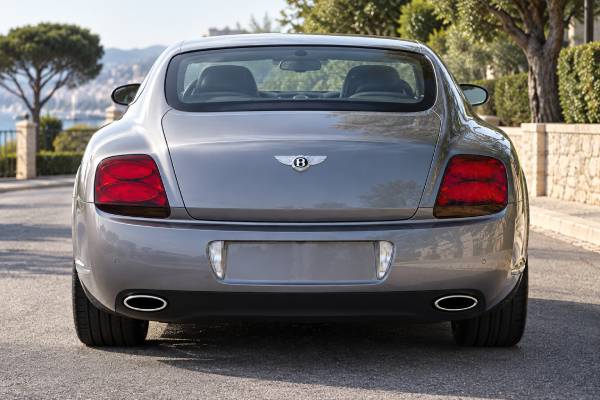
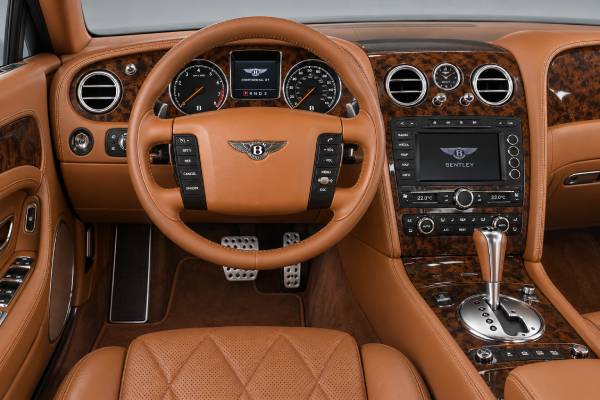
The original Bentley Continental GT turned an old-world luxury name into a modern, high-volume grand-touring brand. Its formula was dramatic but practical: a 552 hp twin-turbo W12, permanent all-wheel drive, a six-speed automatic, four real seats, and a cabin finished with the leather, wood, and metal expected of a Bentley. It was also designed to cross countries at very high speed rather than behave like a lightweight sports car.
That distinction still matters. A well-kept 3W3 Continental GT feels extraordinarily solid, quiet, and effortless, but it is a complex, heavy car whose low used price does not reduce the cost of Bentley-grade parts or labor. The best example is therefore not automatically the newest, lowest-mileage, or most highly optioned car. It is the one with verifiable maintenance, healthy electrical systems, properly functioning air suspension, matching premium tires, completed recalls, and evidence that previous owners repaired faults instead of clearing warning lights.
Table of Contents
- The W12 Grand-Touring Layout
- Continental GT Technical Data
- Performance and Road Character
- Maintenance That Protects the Car
- Faults and Expensive Warning Signs
- A Serious Pre-Purchase Inspection
- Choosing the Right Example
The W12 Grand-Touring Layout
The 3W3 Continental GT is best understood as a fast luxury coupe built around a compact but densely packaged W12 powertrain. Its engineering favors effortless torque, traction, isolation, and high-speed stability over low mass or simple servicing.
Bentley’s 5,998 cc engine places 12 cylinders in four narrow banks, creating a shorter package than a conventional V12. Two turbochargers provide 650 Nm (479 lb-ft) from only 1,600 rpm, so the car does not need high revs or frequent downshifts to accelerate hard. Maximum power is 552 bhp, equivalent to 560 PS and roughly 412 kW in later factory material. The broad torque delivery is central to the car’s personality: the driver presses the accelerator, the transmission selects a ratio, and a large reserve of thrust arrives without the theatrical buildup of a peaky engine.
The engine sits ahead of the passenger compartment and drives all four wheels through a six-speed torque-converter automatic. Early cars use an essentially even front-to-rear torque distribution in normal conditions, with the driveline able to react when grip changes. That arrangement gives reassuring wet-weather traction, but it also contributes to nose weight and a curb mass of about 2,350 kg (5,180 lb) in later factory specifications.
Air springs, self-levelling control, and electronically adjustable dampers allow the same car to ride softly on a motorway and become more controlled when the suspension setting is tightened. The system cannot make more than two metric tons disappear, yet it keeps body motion unusually disciplined for the size and period. A deployable rear spoiler, large ventilated brakes, stability control, and speed-rated tires complete a package engineered around sustained velocity.
The cabin is not merely decoration around the mechanical hardware. Front occupants receive substantial electrically adjustable seats, while the rear seats are usable for adults on shorter trips and more accommodating than the token seats in many performance coupes. A 370-liter (13.1-cu-ft) luggage compartment reinforces the GT brief. The penalty is that almost every convenience feature—seat modules, soft-close latches, navigation, audio, climate control, steering-column adjustment, parking systems, and keyless entry—adds another layer to an already intricate electrical network.
Continental GT Technical Data
The 552 hp Continental GT is the standard first-generation W12 coupe, not the 600 hp Speed or 621 hp Supersports. Specifications changed slightly by market and model year, so the following figures prioritize Bentley’s later first-generation brochure data and clearly identified U.S. EPA ratings.
| Specification | Value | Condition or note |
|---|---|---|
| Engine type | Twin-turbocharged W12, 48 valves | Gasoline internal-combustion engine |
| Displacement | 5,998 cc (6.0 L) | 84.0 mm bore × 90.2 mm stroke |
| Maximum power | 552 bhp / 560 PS / 412 kW at 6,100 rpm | Factory rating on 98 RON fuel |
| Maximum torque | 650 Nm (479 lb-ft) at 1,600 rpm | Low-rpm torque is the defining characteristic |
| Compression ratio | 9.0:1 | For the 552 hp W12 specification |
| Recommended gasoline | 98 RON; 95 RON permitted in factory data | Use the octane stated for the vehicle’s market |
| Fuel-tank capacity | 90 L (23.8 US gal) | Factory brochure figure |
| Specification | Value |
|---|---|
| Transmission | Six-speed automatic with manual shift gate and steering-column paddles |
| Drive type | Permanent all-wheel drive |
| Front suspension | Independent multi-link arrangement with air springs and electronic damping |
| Rear suspension | Independent multi-link arrangement with self-levelling air suspension |
| Steering | Power-assisted rack-and-pinion |
| Standard wheel size in later brochure | 19-inch alloy wheels |
| Optional wheel sizes | Various 19- and 20-inch factory packages |
| Brakes | Large ventilated discs; carbon-ceramic system was optional with suitable wheels |
| Measure | Value | Test basis |
|---|---|---|
| 0–60 mph | 4.6 seconds | Later Bentley first-generation specification |
| 0–100 km/h | 4.8 seconds | Bentley specification |
| Maximum speed | 318 km/h (198 mph) | Bentley specification |
| EU combined consumption | 16.6 L/100 km (17.0 mpg UK) | Period EU drive cycle |
| EU combined CO₂ | 396 g/km | Period Bentley brochure figure |
| 2004 U.S. EPA economy | 10 mpg city / 16 mpg highway / 12 mpg combined | Premium gasoline; original/revised EPA data can differ by display |
| Specification | Metric | Imperial |
|---|---|---|
| Length | 4,804 mm | 189.1 in |
| Body width | 1,916 mm | 75.4 in |
| Width across mirrors | 2,102 mm | 82.8 in |
| Height | 1,390 mm | 54.7 in |
| Wheelbase | 2,745 mm | 108.1 in |
| Kerb weight | 2,350 kg | 5,180 lb |
| Turning circle, kerb to kerb | 11.2 m | 36.7 ft |
| Luggage volume | 370 L | 13.1 cu ft |
| Item | Factory description or practical meaning |
|---|---|
| Body and seating | Pillarless two-door coupe with four seats |
| Rear aerodynamic device | Automatic deployable spoiler integrated below the rear window |
| Lighting | Bi-xenon headlamps and LED rear lamps in later first-generation specification |
| Parking brake | Electrically operated parking brake |
| Starter and auxiliary batteries | Separate battery arrangement; exact capacities changed during production |
| Timing drive | Chain-driven camshafts; no routine timing-belt replacement interval |
Performance and Road Character
The standard GT is already extremely fast, but its most memorable quality is not a launch number. It is the way the car gathers speed with little noise, little apparent effort, and exceptional straight-line stability.
At low engine speeds, the turbos and large displacement create immediate thrust. The six-speed automatic is calibrated to preserve smoothness, and full-throttle shifts feel less violent than the performance suggests. Paddles provide control on a fast road, but the gearbox’s automatic mode suits the engine because there is rarely a need to chase revs. A healthy car should move away cleanly, shift without flare or thump, and respond consistently in both light-throttle traffic and hard acceleration.
The all-wheel-drive system is valuable in rain and on cold roads, especially when 650 Nm is available almost immediately. It does not repeal tire physics. A car on old, mismatched, underinflated, or low-quality tires can feel vague, tramline, trigger driveline stress, and undermine the calibration of the stability systems. Matching tires with the correct load and speed ratings are part of the chassis, not a cosmetic expense.
In corners, the Continental initially communicates its mass. Steering response is measured rather than darting, and aggressive entry speed can produce understeer. Once settled, however, the body remains controlled and the car tracks accurately. The air suspension’s softer modes are usually preferable on broken roads; the firmest setting can reduce movement without improving grip if the surface is rough. A properly maintained GT should not crash over small bumps, continue bouncing after a crest, sit low after parking, or display a persistent suspension warning.
Braking performance also depends heavily on condition. The steel system has ample capacity for road use, but replacing large discs, pads, sensors, and seized hardware is expensive. Carbon-ceramic brakes reduce unsprung mass and resist repeated high-temperature use, yet used-car buyers must inspect them with the correct process because visible damage or wear can turn an apparently desirable option into a major liability.
Maintenance That Protects the Car
Preventive maintenance is cheaper than waiting for a Continental GT to produce a dashboard full of warnings. Service history should show more than oil changes; it should demonstrate continuing attention to fluids, batteries, cooling, suspension, brakes, tires, and electronic faults.
Use the exact oil specification, quantity, filter, and drain procedure listed for the VIN and market. The W12 has a large oil capacity and a crowded engine bay, so a quick-lube approach is inappropriate. The technician should inspect for leaks, check oil level using the prescribed procedure, and avoid assuming that a warning is merely a defective sensor. Oil seepage can spread across undertrays and disguise the true source.
Cooling-system health is equally important. Heat, age, plastic fittings, hoses, pumps, radiators, and auxiliary circuits all deserve inspection. A stable temperature gauge during a brief drive does not prove that the system is sound. Look for dried coolant residue, odor after shutdown, staining beneath the car, repeated top-ups, fan faults, and previous repairs performed with nonstandard clamps or sealants.
The transmission and driveline should be treated as serviceable mechanical systems even where old marketing language implied long-life fluids. Fluid condition, leaks, adaptation values, differential operation, and mount condition matter on an aging high-torque car. A specialist can determine whether preventive fluid service is appropriate for the vehicle’s mileage and history. Blindly flushing a neglected transmission is not the same as a careful service based on diagnosis.
Battery condition is fundamental. The car uses many control modules and can generate misleading warnings when system voltage drops. Both batteries, the charging system, sleep current, grounds, and battery-registration or adaptation procedures should be evaluated as applicable. A tender designed for the battery type is useful for cars parked for long periods, but it must not be used to conceal a battery that fails testing or a parasitic draw.
A sensible annual inspection should include:
- A full diagnostic scan of all accessible control modules, with faults recorded before they are cleared.
- Engine oil level, leakage, coolant condition, and signs of overheating or pressure loss.
- Air-suspension ride height, compressor activity, dampers, arms, ball joints, and bushes.
- Brake-disc and pad condition, flexible hoses, parking-brake operation, and fluid age.
- Tire age, tread depth, sidewall condition, matching specification, and uneven wear.
- Front and rear differential, transfer hardware, driveshaft boots, and underbody leaks.
- Spoiler, door latches, windows, seat functions, climate control, lamps, parking sensors, and infotainment.
- Recall status checked by VIN rather than by model year alone.
Faults and Expensive Warning Signs
The most dangerous used Continental GT is not necessarily the one with a visible fault. It is the one in which several faults have been temporarily hidden, warning messages have been cleared, and maintenance has been postponed until sale.
Air-suspension trouble may appear as one corner sitting low, a compressor that runs too frequently, a harsh ride, or a warning after the car has been parked. The root cause can be an air leak, valve block, height sensor, wiring issue, compressor wear, damper fault, or a combination. Replacing the compressor without finding a leak can produce a second failure.
Front suspension arms and bushes carry substantial weight and can cause knocking, unstable braking, wandering, or uneven tire wear. Because several joints work together, a vague front end should receive a full mechanical inspection rather than one guessed-at part. Alignment should follow repairs and should be performed only after wheel, tire, and suspension condition are known to be correct.
Low voltage can cause messages involving the transmission, suspension, parking brake, steering lock, or keyless system. That does not mean every warning is “just the battery.” Correct diagnosis starts with battery and charging tests, then continues with scan data and circuit checks. A seller who dismisses multiple warnings without reports or invoices is giving the buyer a reason to leave.
The W12’s crowded installation makes vacuum, breather, coolant, turbo-control, ignition, and gasket work labor-intensive. Listen for uneven idle, misfires, whistling, excessive smoke, weak boost, coolant odor, and fan operation that seems abnormal. Scan misfire counters and fuel-trim information rather than relying solely on a smooth five-minute idle.
Electrical convenience failures are common enough to deserve a systematic test. Operate every seat movement, memory setting, heater, window, mirror, latch, lamp, wiper, washer, climate zone, audio source, screen, parking sensor, key, and trunk function. Confirm that the rear spoiler deploys and retracts correctly through the proper procedure. Small faults can involve costly assemblies, unavailable trim, or hours of diagnosis.
Several safety campaigns affected portions of first-generation production, including fuel-filter corrosion and other model-year-specific issues. The correct question is not whether a car “had the recall.” Obtain the VIN, check the official database for the country in which the car is registered, and retain proof of completion. Imported vehicles may require extra investigation because campaign records do not always transfer neatly between markets.
Water entry must also be taken seriously. Check carpets, luggage-compartment wells, rear lamp areas, door seals, and module locations for dampness, staining, corrosion, or deodorizer used to hide odor. Water and complex electronics are a particularly expensive combination.
A Serious Pre-Purchase Inspection
A specialist pre-purchase inspection is mandatory for a sensible purchase. It should be performed by a workshop that knows the 3W platform and has suitable diagnostic equipment, lift access, battery-testing tools, and experience distinguishing normal Bentley behavior from an emerging failure.
Begin before the appointment by confirming the VIN, model designation, build date, market origin, ownership history, accident records, recall status, and service invoices. Photographs of stamps are not enough when major work is claimed. Match invoice dates and mileages, identify the workshop, and check that parts and labor descriptions make sense.
Ask for the engine to be completely cold when inspected. Before start-up, check fluid levels, coolant residue, oil leakage, belt condition, battery voltage, tire date codes, brake surfaces, and overnight suspension height. A warm engine on arrival can hide starting noise, smoke, weak batteries, or a suspension corner that sinks during storage.
During the road test, use several operating conditions:
- Start with gentle urban driving and confirm smooth shifts, stable idle, brake release, steering assistance, and climate-control operation.
- Drive over uneven surfaces and listen for suspension knocks, trim movement, and damper noise.
- Apply moderate acceleration in several gears, then stronger acceleration only after fluids are warm.
- Brake progressively from road speed and check for vibration, pulling, warning messages, or a soft pedal.
- Include a steady higher-speed section to reveal wheel imbalance, driveline vibration, wind noise, and cooling issues.
- Park, restart, rescan, and inspect for fresh leaks or new stored faults.
The scan report should include all modules, not only generic engine codes. Pay attention to faults marked intermittent or recently cleared, readiness monitors that suggest a reset, ride-height inconsistencies, misfire history, battery undervoltage records, and communication errors. One old low-voltage code may be explainable; a network full of fresh faults requires a coherent diagnosis.
On the lift, inspect undertrays rather than treating them as proof that the underside is clean. Look around the engine, transmission, differentials, cooling connections, steering system, air lines, suspension arms, driveshafts, exhaust, brake pipes, and jacking points. Check for mismatched fasteners or damaged covers that indicate rushed prior work.
Finally, price the identified work using Bentley-quality parts and realistic labor. Do not negotiate by guessing that every fault will be inexpensive. A cheaper car needing tires, brakes, suspension arms, battery work, a coolant repair, and cosmetic refurbishment can cost far more than a properly maintained example with a higher asking price.
Choosing the Right Example
Later first-generation cars benefited from running changes and refreshed equipment, but age alone does not establish reliability. An earlier car maintained by a knowledgeable owner can be preferable to a later car that accumulated short trips, weak batteries, inexpensive tires, and deferred repairs. Likewise, exceptionally low mileage is valuable only when storage and time-based servicing were handled correctly.
Budgeting should reflect the car’s original engineering level, not its depreciated purchase price. Fuel consumption is high, tires are large and heavily loaded, brakes are substantial, and many repairs require specialist knowledge. A reserve fund should be available immediately after purchase because even a strong inspection cannot predict every age-related failure.
The reward is a distinctive grand tourer that still feels special. The first Continental GT combines immense low-speed torque, all-weather traction, genuine four-seat utility, handcrafted materials, and a level of high-speed calm that ordinary performance coupes rarely match. The right example is not a bargain supercar in the conventional sense. It is an aging flagship that can deliver remarkable value when bought with evidence, maintained proactively, and accepted on its own terms.
References
- CONTINENTAL GT 2008 (Manufacturer Brochure)
- 2004 Bentley Continental GT 2004 (Official Fuel Economy)
- 2004 BENTLEY CONTINENTAL GT | NHTSA 2026 (Recall Database)
- May 15, 2008 2008 (Recall Document)
- 2004 Bentley Continental GT Coupe – First Drive & Road Test Review – Motor Trend 2003 (Road Test)
- Used Bentley Continental GT – 2003-2011 Reliability & Common Problems | What Car? 2026 (Used-Car Reliability)
Disclaimer
This article is for informational purposes and is not a substitute for professional diagnosis, maintenance, or repair. Specifications, torque values, service intervals, parts, and procedures can vary by VIN, market, equipment, and production date. Verify all work against the vehicle’s official Bentley service documentation and applicable recall records.
Please share this guide on Facebook, X/Twitter, or another platform if it helped you. Sharing supports the continued production of detailed owner and buyer resources.