
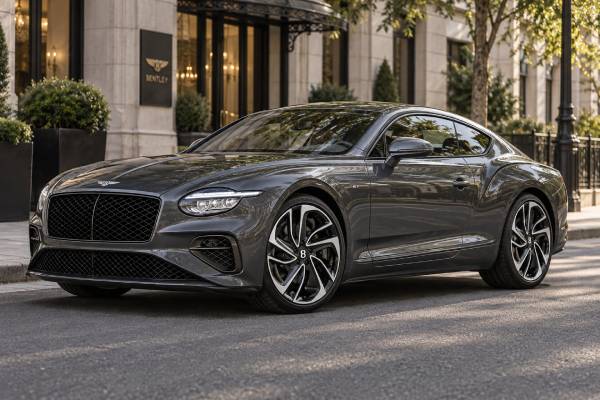
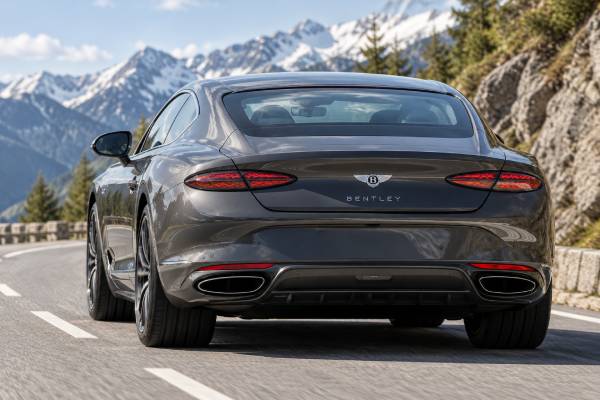
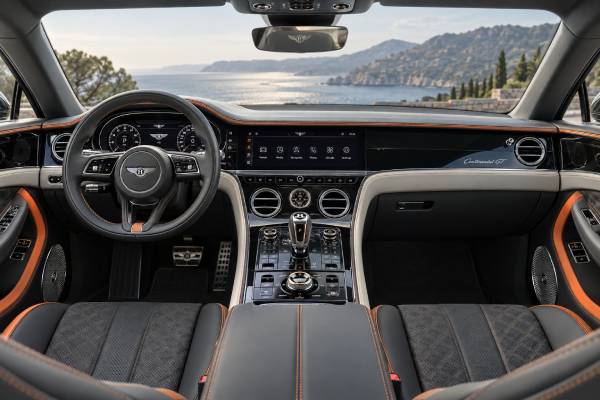
The 2025–present Bentley Continental GT High Performance Hybrid is the core fourth-generation coupé, but it is not a low-output model. Its 4.0-litre V8 and integrated electric motor produce an official 671 hp and 930 Nm, enough for 0–60 mph in 3.5 seconds—quicker than many earlier Speed models. The distinction from the 771 hp GT Speed is one of chassis emphasis, presentation and equipment rather than basic capability. Standard 21-inch wheels and comfort-led tuning may suit real roads better, while Azure, Black Edition and other specifications can change the feature set substantially. Buyers must compare build records rather than advertisements. Charging at home unlocks local electric driving and reduces cold short-cycle engine use; without charging, the car loses much of its daily logic. Early depreciation, software updates, battery coverage and costly option replacement should be included in the purchase plan from the start.
Table of Contents
- Where the 680 PS Continental GT fits in the range
- High Performance Hybrid technical data
- Performance and efficiency without the Speed badge
- Chassis choices, cabin priorities and option strategy
- Charging and ownership routines that make the PHEV work
- Ordering or inspecting a car without mixing derivatives
- Value, alternatives and the best reasons to choose the core GT
Where the 680 PS Continental GT fits in the range
The High Performance Hybrid occupies the position that once belonged to the regular Continental GT, yet its output would previously have placed it above several Speed models. Bentley quotes 680 PS, equivalent to 671 hp, and 930 Nm. The numbers matter less than the role: this is the comfort-led entry point to the fourth-generation coupé family, not an economy derivative with marginal performance.
Above it sits the Ultra Performance Hybrid GT Speed with 782 PS, a higher top speed and a more aggressive active-chassis specification. Mulliner and Black Edition treatments can add design and equipment layers, while Azure emphasizes well-being and touring comfort. Because appearance packs can blur these identities, the badge should never be the only evidence used to price a car.
The core GT’s standard 21-inch wheels are significant. They provide more tire sidewall than the largest alternatives, potentially improving ride compliance and reducing exposure to pothole damage. Larger wheels may sharpen presentation but add replacement cost and can amplify road texture. For a car intended to cross imperfect roads, the less theatrical choice may be the more luxurious one.
Performance remains abundant. A 3.5-second 0–60 mph claim places the car ahead of the previous W12 GT Speed’s published time, although the experiences are different. The hybrid delivers immediate motor torque and a forceful V8 contribution; the older car offered twelve-cylinder sound and a 208 mph maximum. The core hybrid is limited to 168 mph, a figure already far beyond public-road requirements.
The model makes most sense as a daily grand tourer. It can leave home electrically, preserve the V8 for faster or longer travel and ride with less edge than the Speed. That does not make it simple. A 25.9 kWh battery, power electronics, cooling circuits and software sit beneath the traditional craftsmanship.
Its place in the range is therefore defined by restraint, not deficiency. The buyer receives almost excessive straight-line performance while being free to prioritize quietness, smaller wheels and useful options. Paying more for the Speed is rational only when its extra chassis technology and output will be appreciated, rather than because “Speed” appears to be the default top choice.
High Performance Hybrid technical data
The core Z23 High Performance Hybrid uses the same basic battery capacity as the Speed but a 680 PS system tune, 168 mph limit and comfort-led chassis specification. Those distinctions prevent the 671 hp car from being confused with a cosmetically similar 771 hp derivative. The tables also show the standard 21-inch context and iron-brake dimensions. Trim lines such as Azure or Black Edition can alter equipment without changing the underlying output.
| Item | Specification |
|---|---|
| Powertrain class | Plug-in hybrid (PHEV) |
| Engine | 4.0L twin-turbo V8 plus transmission-mounted electric motor |
| Maximum output | 671 hp (680 PS; 500 kW) |
| Maximum torque | 930 Nm (686 lb-ft) |
| Transmission | 8-speed dual-clutch transmission with integrated 190 PS electric motor |
| Driven wheels | active all-wheel drive |
| Fuel tank | 80 L (21.1 US gal) |
| Measure | Value | Context |
|---|---|---|
| 0–60 mph | 3.5 seconds | Manufacturer claim |
| 0–100 km/h | 3.7 seconds | Manufacturer claim |
| Maximum speed | 168 mph (270 km/h) | Factory limit or announced target |
| Traction battery | 25.9 kWh gross traction battery | Published gross capacity |
| Official electric range | up to 53 miles (about 85 km) announced for the High Performance Hybrid family | WLTP launch or family figure |
| AC charging | 11 kW AC charging is the relevant home and destination charging method | Supply and temperature affect time |
| Dimension or capacity | Value |
|---|---|
| Body style | two-door, four-seat plug-in-hybrid coupé |
| Length | 4,895 mm (192.7 in) |
| Width | about 1,966 mm (77.4 in), excluding mirrors |
| Height | about 1,397 mm (55.0 in) |
| Wheelbase | 2,851 mm (112.2 in) |
| Kerb weight | around 2.45 tonnes, depending on trim and options |
| Luggage capacity | 260 L (9.2 cu ft) |
| Component | Factory specification |
|---|---|
| Suspension and active systems | two-chamber air springs and dual-valve dampers; more advanced active-chassis equipment depends on derivative |
| Brake system | 420 mm front and 380 mm rear ventilated iron discs on the core specification |
| Factory wheel context | 21-inch standard on the core model, with larger choices available |
| Steering/stability distinction | the 680 PS High Performance Hybrid out-accelerates the previous W12 GT Speed in a calmer, less aggressively styled specification |
| Area | Detail |
|---|---|
| Roof/body structure | fixed coupé body |
| Battery and charging | 25.9 kWh gross traction battery; 11 kW AC charging is the relevant home and destination charging method |
| Seating | Four seats |
| Primary buyer verification | Match wheel, brake, chassis and market equipment to the VIN build record |
The core GT’s technical case is balance: more output than the outgoing W12 Speed, a lower 168 mph ceiling, smaller standard wheels and a less aggressive chassis brief. That combination may suit real roads better than the flagship specification. Build codes remain decisive where Azure, Black Edition or optional equipment changes the apparent identity.
Performance and efficiency without the Speed badge
The core GT combines a twin-turbo V8 with a motor integrated into the dual-clutch transmission. Electric torque fills the first part of acceleration, and the engine joins as demand rises. The official 671 hp is the calibrated output of the complete system. Adding the independent engine and motor ratings would produce a misleading number because their peaks are not delivered at the same instant.
In urban use, the motor can move the car with the V8 stopped. A charged battery turns a short errand from a cold-engine cycle into an electric trip. That is valuable for refinement and local emissions, but it does not remove the need to operate the engine properly. The V8 should reach full temperature periodically, and time-based oil service remains relevant even when fuel mileage is modest.
Bentley announced up to 53 miles of electric range for the High Performance Hybrid family. Actual distance depends on speed, weather, heating, cooling, gradient, traffic and wheels. An owner should measure consumption on familiar routes over several weeks. One winter trip or a showroom range display cannot establish the car’s normal capability.
Efficiency depends heavily on charging frequency. Weighted plug-in-hybrid figures assume a meaningful share of electric operation. A driver who never plugs in may still benefit from regenerative assistance, but carries the battery mass while relying mostly on petrol. Compare expected electricity and fuel use using the intended routine, not the headline laboratory result alone.
The 168 mph maximum differentiates this derivative from the 208 mph Speed. It is not evidence that the core car struggles at motorway pace. Instead, it reflects product positioning, tire specification and calibration. Attempts to remove the limit or install unofficial power software introduce warranty, emissions and thermal-management questions that outweigh any practical gain.
Brake feel deserves attention because the system blends regeneration with 420 mm front and 380 mm rear iron discs. Gentle deceleration may recover energy, while firmer stops rely increasingly on friction. The pedal should remain predictable as the balance changes. Low friction-brake use can permit corrosion or deposits, so disc condition should be inspected rather than inferred from mileage.
The eight-speed DCT links electric and combustion behavior. During a test, include quiet electric creep, a hill start, moderate throttle that wakes the V8, manual shifts and a hot restart. Note any symptom with battery state and temperature. A shunt cannot be diagnosed intelligently without knowing whether it occurred during engine engagement, clutch take-up or a normal gear change.
This powertrain rewards measured use. Electric mode handles low-load travel; the V8 gives sustained range and performance; regeneration recovers a portion of deceleration energy. It is efficient only when those functions are integrated into the owner’s habits as effectively as they are integrated into the car.
Chassis choices, cabin priorities and option strategy
A fourth-generation GT can be transformed by options, but more equipment does not automatically produce a better car. The core suspension uses two-chamber air springs and dual-valve dampers. Its tuning favors isolation and control rather than the Speed’s most assertive behavior. Before ordering or buying used, decide whether the priority is ride, visual impact, driver assistance or rear-seat comfort.
Wheel choice has an immediate effect. The standard 21-inch setup offers the most sidewall and may reduce impact harshness. Twenty-two-inch designs fill the arches and can improve steering immediacy, but their tires cost more and their inner barrels are more vulnerable. Inspect repaired wheels carefully; a refinished face can conceal a distorted rim.
Seat specification matters on long journeys. Test cushion length, lumbar adjustment, heating, ventilation and massage rather than assuming the most elaborate seat suits every body. Contrast stitching and quilting influence atmosphere, but pressure points determine whether the car remains comfortable after three hours.
Driver-assistance content varies by trim and package. Confirm adaptive cruise, lane functions, night vision, head-up display, parking cameras and traffic recognition individually. A blank switch or an icon in the menu is not proof that the relevant hardware is installed. Replacement windscreens, bumper repairs and wheel alignment may require sensor calibration.
The rotating display is a signature option where fitted. Operate all three faces repeatedly and listen for strain. Check that the wood veneer aligns and that the screen completes its movement after software wake-up. It is a luxury feature, not a reason to accept drivetrain or charging defects.
Audio, ambient lighting, rear privacy glass and trim packages should be evaluated in person. Some buyers may prefer a quiet, lighter specification over a heavily optioned demonstrator. Others will value Touring Specification and premium audio on every journey. The correct strategy is to pay for functions that will be used, not for a long order-sheet total.
Azure and Black Edition cars may combine appearance, comfort or chassis equipment differently by market and model year. Obtain the official build sheet and current-market brochure for the exact vehicle. Do not transpose standard equipment from the Speed or assume that a familiar package name contains the same features in every country.
A successful specification supports the GT’s role. Smaller wheels, supportive seats and useful assistance may deliver more satisfaction than maximum carbon trim. The core model’s advantage is the freedom to remain understated; an option strategy that imitates the Speed without its chassis hardware can spend heavily while missing that point.
Charging and ownership routines that make the PHEV work
The GT’s charging system is designed around AC home and destination use at up to 11 kW. That suits a car parked overnight. The first ownership task is not choosing a public network; it is arranging a safe, correctly rated supply where the car normally sleeps. A qualified electrician should assess the circuit, earthing, protection and cable route.
Charging time depends on available power. A wallbox delivering less than the car’s maximum will still work but will take longer. Scheduled charging can use off-peak tariffs, and preconditioning while connected can prepare the cabin without drawing as much from the battery immediately after departure.
Develop a routine rather than chasing a specific percentage. For many owners, plugging in after the last journey is simplest. The vehicle’s settings and handbook should guide charge limits or schedules. Generic advice from a different battery-electric model may not match Bentley’s management strategy.
Inspect the charge inlet before connecting. The pins, seals and locking mechanism should be clean and undamaged. The cable should not have crushed insulation or overheated contacts. If a session fails, test a known-good cable and supply before concluding that the car is at fault. Keep records of time, power and any error message.
Long-distance use requires little special planning. Begin with energy in the battery, allow the hybrid control to deploy it and use the 80-litre fuel tank for sustained travel. An overnight hotel charger can restore local electric capability at the destination. Stopping repeatedly for slow AC charging during a motorway day may be less efficient than continuing on petrol and charging during a longer stop.
Storage needs a plan. Follow Bentley guidance for battery state, 12-volt support and fuel age. Do not leave the car for months with a discharged traction battery or an unsupported conventional battery. A high-voltage pack can hold energy while the 12-volt system becomes too weak to wake the vehicle.
Ownership records should include electricity as well as fuel. Track home charging, public sessions and petrol purchases over a representative period. This reveals whether the car is delivering the expected benefit and helps identify a sudden rise in consumption that could reflect weather, tire pressure or a fault.
Service planning should recognize calendar time. Oil, brake fluid, filters, coolant checks and inspections do not disappear because many miles were electric. Regeneration may reduce pad wear, yet corrosion and fluid moisture remain possible. Tires continue to carry around 2.45 tonnes and 930 Nm.
A well-integrated routine is almost invisible: arrive, connect, leave prepared and let the V8 handle journeys beyond the electric portion. When charging is inconvenient enough to be skipped, the owner should reconsider whether a late V8 or W12 Continental would be a simpler fit.
Ordering or inspecting a car without mixing derivatives
The expanding Continental range creates a risk of specification confusion. A core GT, Azure, Speed, Mulliner or Black Edition may share the same basic body and hybrid architecture while differing in output, chassis hardware, wheels, trim and standard features. Advertisements often compress those distinctions into phrases such as “fully loaded” or “Speed styling.” Neither phrase identifies the derivative.
For a new order, use the market configurator and written dealer order at the same time. Record option codes, paint, hide, veneer, wheel size, brake type, assistance packages and charging accessories. Review the final factory acceptance before production. A verbal promise about a feature is difficult to resolve after delivery.
For a used car, begin with the VIN and factory build data. The High Performance Hybrid should show 680 PS system output and the equipment appropriate to its model year. Check registration documents and software screens, but do not rely on a removable badge or grille. Confirm whether later cosmetic parts were fitted after delivery.
Inspect the car with a full battery and a cold V8. Verify AC charging first, then drive electrically long enough to observe consumption, gearbox behavior and climate performance. Bring the engine into operation gradually and test blended acceleration. A seller who presents the battery empty prevents meaningful evaluation of half the powertrain.
Request campaign and update history by VIN. Early software can affect charging, infotainment, driver assistance or powertrain behavior. A clean dashboard after fault clearing is not equivalent to a documented update. Save a scan before and after the road test.
Look beneath the car for damage to shields, aero panels and jacking points. Battery protection and cooling routes make underbody condition more important than on a conventional GT. Check tires for matching model, load rating, production date and tread. Measure wheels rather than accepting “recently refurbished.”
Review warranty documents line by line. The high-voltage battery may have terms separate from the general vehicle warranty. Ask about transfer, mileage, capacity criteria, exclusions and required servicing. Service plans and connected services can also have market-specific end dates.
At delivery, confirm both keys, charging cable, handbook pack, tool kit and any accessories listed on the order. Test remote functions before accounts are transferred. A missing cable or unpaired app is easier to resolve while the selling dealer still controls the transaction.
Precision prevents overpayment. The core GT is excellent on its own terms, but it should not be priced as a Speed because it wears 22-inch wheels, nor dismissed as basic because it lacks a dramatic exterior pack. Its value follows verified configuration, condition and software maturity.
Value, alternatives and the best reasons to choose the core GT
The financial case for the core GT begins with avoiding equipment that does not improve the owner’s use. Its 671 hp already exceeds any reasonable road requirement. The Speed adds output and chassis intensity, but also a higher purchase price and potentially more expensive consumables. A comfort-focused driver may be paying to make the car less aligned with the intended journey.
Early depreciation is likely to be meaningful because luxury PHEVs are sensitive to new technology, incentives, warranty remaining and model-year changes. Buyers should compare transaction prices rather than list prices and retain a reserve for tires, charging installation and specialist inspection. A heavily discounted car can still be poor value if its specification is undesirable or software history unclear.
The late third-generation V8 GT is an important alternative. It is lighter, mechanically simpler and offers a larger traditional luggage layout without charging. It cannot move silently or deliver the hybrid’s torque and acceleration. The final W12 models add historical appeal and greater top speed, but fuel and maintenance costs remain formidable.
The fourth-generation GT Speed is the natural comparison within the current range. It is appropriate for a driver who values the eLSD, rear-steer character, greater power and 208 mph engineering envelope. The core GT is preferable when ride, discretion and purchase efficiency outrank ultimate specification.
A GTC provides open-air travel but sacrifices boot space, adds roof maintenance and carries more mass. Buyers who lower a roof only a few times a year should experience both bodies before accepting those compromises. The fixed-roof GT is quieter, more practical and easier to keep weather-tight.
Condition will outweigh rarity among ordinary production cars. Complete dealer or specialist records, healthy battery data, current software, unmarked wheels and matching tires give a future buyer confidence. A low-mileage example that has not been charged, updated or exercised can require expensive recommissioning.
The strongest reasons to choose the core GT are straightforward: it delivers fourth-generation design and hybrid refinement, outruns many former flagships, rides on a less aggressive setup and can complete daily local travel electrically. It avoids the assumption that the most expensive derivative is automatically the best.
Buy it when the charging arrangement is easy, the build sheet suits the intended journeys and the car demonstrates smooth behavior in every operating mode. Those three conditions create more value than another 100 hp that will rarely be used.
References
- Bentley News 2025 : New High Performance Hybrid Continental GT, GTC and Flying Spur – the daily supercar family expands 2025 (Official Model/Technical Source)
- Continental GT Range 2025 (Official Model/Technical Source)
- Bentley Continental GT | Luxury Hybrid Coupé | Bentley Motors 2026 (Official Model/Technical Source)
- Bentley News 2024 : The new Continental GT Speed: redefining the definitive Grand Tourer 2024 (Official Model/Technical Source)
- Check for Recalls: Vehicle, Car Seat, Tire, Equipment | NHTSA 2026 (Recall/Service Source)
- Technical Service Bulletin 2076639/2 2025 (Recall/Service Source)
Disclaimer
This guide is general information and does not replace VIN-specific Bentley documentation or an inspection by qualified hybrid technicians. Equipment, performance, charging, warranty and service requirements can differ by model year, market and build specification. Use official procedures before maintenance or high-voltage work.
Please share the article on Facebook, X/Twitter or with another buyer who is deciding between Continental GT hybrid derivatives.