


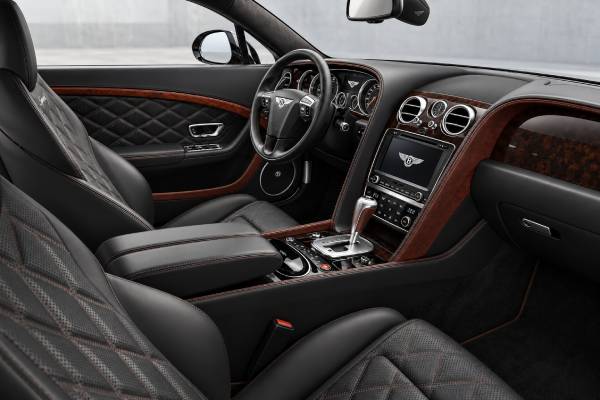
The 626 bhp Continental GT Speed is the strengthened middle chapter of Bentley’s second-generation performance coupe. Output rose to 820 Nm (605 lb-ft), top speed increased to 331 km/h (206 mph), and the eight-speed automatic and rear-biased all-wheel drive remained central to its character. The change from the earlier 616 bhp model is modest: greater torque and a more developed high-speed package.
Used-car listings often blur the boundary between the two outputs, facelift dates, and calendar registrations. This guide covers the 626 bhp/635 PS version identified in Bentley’s 2014-era range material through the assignment’s 2016 scope. It does not treat badges or a claimed model year as proof. Buyers should verify the VIN, build sheet, engine specification, original market, and transmission software before comparing prices. They should then investigate the systems that make a 2.3-tonne 206 mph coupe viable: cooling, tires, brakes, air suspension, AWD, active aerodynamics, and stable electrical supply. A GT Speed can tolerate high loads when maintained correctly, but its refinement can conceal deterioration during a brief test drive.
Table of Contents
- The 626 hp Update in Context
- GT Speed Numbers That Matter
- Managing Power, Mass, and Heat
- Brake, Tire, and Suspension Evidence
- Diagnostics and Service History
- How to Inspect a Candidate
- Value, Use, and Long-Term Care
The 626 hp Update in Context
The 626 bhp GT Speed is an evolution of the 616 bhp second-generation Speed, not a clean-sheet model. Bentley increased W12 output by 10 bhp and torque by 20 Nm, retained the eight-speed ZF automatic, and claimed an additional 1 mph at the top end.
The twin-turbo 5,998 cc W12 produces maximum power at 6,000 rpm and maximum torque from about 1,700 rpm. The broad plateau matters more than the modest peak-power increase. At highway speed, a small accelerator movement produces immediate acceleration without a dramatic downshift. The car’s defining sensation remains sustained thrust rather than a sudden high-rev rush.
The eight-speed automatic uses a torque converter for smooth starting, closely spaced middle gears for acceleration, and tall upper ratios for touring. Steering-column paddles give manual control without rotating with the steering wheel. A healthy unit should be almost invisible in gentle use and decisive under load. Roughness is not a normal sign of a “sporting” calibration.
Permanent AWD employs a nominal 40:60 front/rear split. The rearward balance helps the coupe feel more neutral under power, but the front wheels still contribute traction and steering. Four tires must match in size, type, load capacity, speed rating, and rolling circumference. One odd replacement tire can undermine the very system intended to provide security.
The Speed chassis is 10 mm lower than the standard GT and uses dedicated air-suspension, damping, steering, and stability-control settings. The 21-inch wheels, dark matrix grilles, black-background winged badges, rifled oval exhausts, and Speed cabin details provide visual identification. Facelift styling and option combinations can vary with production date, so these cues should support, not replace, factory records.
A key comparison is the 567 bhp standard W12. The GT Speed is faster, firmer, and more visually assertive. The standard car may ride more gently and can be less costly when equipped with iron brakes and 20-inch wheels. A buyer who never values the Speed chassis or output should not pay merely for the badge.
Another comparison is the later 582 bhp standard facelift W12. Its variable cylinder displacement and revised styling belong to a different engine specification. The 626 bhp Speed remains the more powerful performance derivative. When registrations overlap, confirm output rather than assuming every facelift-shaped car is the same.
Originality affects value, but correct maintenance takes priority. A factory wheel repaired professionally is preferable to an original wheel with a crack; fresh approved tires are better than old original-brand rubber. Nonstandard engine software, lowering modules, spacers, and exhaust changes deserve extra scrutiny because they alter loads and can obscure fault diagnosis.
GT Speed Numbers That Matter
Mechanically, the 2+2 coupe places Bentley’s W12 ahead of an eight-ratio automatic and a permanently engaged four-wheel driveline, then supports the body on air springs beneath an automatically deployed rear aerofoil. Its 820 Nm torque, 21-inch tire package, and brake condition are as important to ownership as the 626 bhp headline.
| Item | Factory specification |
|---|---|
| Engine | 5,998 cc twin-turbocharged W12 |
| Installation | Front, longitudinal |
| Construction | Aluminum-alloy block and heads, 48 valves |
| Maximum power | 626 bhp / 635 PS / 467 kW at 6,000 rpm |
| Maximum torque | 820 Nm (605 lb-ft) from about 1,700 rpm |
| Induction | Twin turbochargers with charge-air cooling |
| Fuel | Premium gasoline to the market-specific approved standard |
| System | Layout |
|---|---|
| Transmission | Eight-speed ZF automatic with column-mounted paddles |
| Drive | Permanent all-wheel drive |
| Nominal split | 40 percent front / 60 percent rear |
| Front suspension | Four-link double wishbones with air springs and anti-roll bar |
| Rear suspension | Trapezoidal multi-link with air springs and anti-roll bar |
| Damping | Continuous electronic damping control |
| Ride height | Speed calibration approximately 10 mm lower than standard GT |
| Measure | Metric | Imperial |
|---|---|---|
| Wheelbase | 2,746 mm | 108.1 in |
| Overall length | 4,806 mm | 189.2 in |
| Body width | 1,943 mm | 76.5 in |
| Width including mirrors | 2,227 mm | 87.7 in |
| Height | about 1,394 mm | 54.9 in |
| EU curb weight | about 2,320 kg | 5,115 lb |
| Fuel tank | 90 L | about 23.8 US gal |
| Trunk | 358 L | 12.6 cu ft |
| Measure | Factory claim |
|---|---|
| 0–60 mph | 4.0 seconds |
| 0–100 km/h | 4.2 seconds |
| Maximum speed | 331 km/h (206 mph) |
| Transmission | Eight forward ratios |
| Seating | Four in a 2+2 coupe |
| Area | Typical equipment |
|---|---|
| Wheels | 21-inch Speed design; exact style and finish vary |
| Tires | Bentley-approved high-performance fitment with correct load and speed rating |
| Standard brakes | Large ventilated iron discs |
| Optional brakes | Carbon-silicon-carbide ceramic discs on applicable cars |
| Electronic systems | ABS, stability control, traction control, tire-pressure monitoring |
Production changes, market certification, and options can alter details. Official VIN-based information should determine fluid, tire, pressure, torque, and repair specifications.
Managing Power, Mass, and Heat
The GT Speed’s durability depends on controlling heat and load. The engine can produce enormous acceleration with little drama, which makes it easy to overlook how hard the cooling, transmission, tires, and brakes are working.
The W12 should start quickly and settle to a smooth idle. Listen from cold before the car is moved. Persistent chain-like rattle, accessory noise, uneven exhaust rhythm, smoke, raw-fuel smell, or coolant odor should be documented. A warning-free dashboard is not enough; intermittent misfire and mixture faults may remain stored.
Under moderate load, boost should build in one continuous sweep. Hesitation can come from ignition, injectors, fuel pressure, air leaks, turbo control, sensors, or wiring. A correct diagnosis compares cylinder misfire counters, fuel trims, pressure data, and physical condition. Replacing coils without evidence can leave the root cause untouched.
Cooling airflow passes through multiple heat exchangers in a crowded nose. Debris and bent fins reduce capacity. Inspect through and behind the openings, check fan operation, look for dried coolant above undertrays, and monitor temperature after traffic and a warm restart. Repeated coolant top-up is a leak symptom, not routine consumption.
The eight-speed automatic coordinates closely with the engine. It should not bang into gear or flare during a shift. Test Drive and Reverse after an overnight cold start and again when fully warm. A jolt on throttle change may involve mounts or driveline joints, so the entire torque path should be evaluated.
High-speed aerodynamics depend on the rear spoiler and underbody panels. Test spoiler operation through the proper control or diagnostic procedure. Missing panels, damaged ducts, or incorrect bumper parts can affect airflow and noise. No inspection needs a maximum-speed attempt; hardware condition and fault data are safer evidence.
Engine and transmission software modifications can increase cylinder pressure, exhaust heat, turbo demand, and clutch load. A dyno sheet does not prove durability. Ask who supplied the calibration, whether factory software can be restored, what fuel it requires, and whether any emissions or protection strategies were changed.
The car should be warmed by gentle driving before heavy load. Long idling is not a substitute. After demanding use, normal cooling behavior should be allowed to complete without immediately isolating the battery or putting the car into long storage.
Brake, Tire, and Suspension Evidence
The fastest way to misjudge a GT Speed is to focus on engine power and ignore the contact patches. Tire, wheel, brake, and suspension condition determine whether the car can use its output safely and whether an attractive purchase price remains attractive.
Read every tire sidewall. Record manufacturer, model, size, load index, speed symbol, date code, and repair history. Measure tread at inner, center, and outer positions. Wide tires can conceal severe inner-edge wear. Four matching tires with similar depth support AWD operation; mixed constructions or large wear differences do not.
Inspect each 21-inch wheel inside and out. Look for bends, flat spots, cracks, welds, excessive machining, and paint covering repairs. A wheel can look perfect face-on and still be distorted at the inner barrel. Road-force measurement can help locate vibration that ordinary balancing misses.
Iron brakes should be measured for disc thickness, lip, surface condition, and variation. Pads, caliper seals, hoses, and brake-fluid history matter too. Steering shake under braking may originate from discs, suspension joints, wheel damage, or tire irregularity, so diagnosis should not stop at the first assumption.
Optional carbon-ceramic discs require specialist assessment. They resist heat and reduce unsprung mass, but chips, edge impact, incorrect pads, or surface damage can make replacement necessary. Use the approved evaluation method; a visual estimate through the spokes is inadequate. Confirm that the wheel design and fasteners are suitable for the brake package.
Air suspension should hold level after sitting. Note compressor run time at startup and after ride-height changes. Excessive operation can indicate leakage. Drive over the same road in each damping mode. The differences need not be dramatic, but a failed damper or control fault can make one corner bounce, crash, or respond differently.
Suspension arms, bushings, ball joints, wheel bearings, and tie rods carry high mass and tire loads. Clunks over small sharp bumps, wandering, uneven tire wear, or steering delay deserve a lift inspection. Alignment should follow component repair; it cannot compensate for worn joints.
The Speed sits lower, so examine front undertrays, splitter areas, sills, and jacking points. Incorrect lifting can crack covers or deform mounting areas. A car repeatedly driven into curbs may show bumper paintwork, but the more important evidence is below.
Diagnostics and Service History
The quality of a GT Speed’s history is measured by detail, not by the number of stamps. Useful records connect symptoms, diagnostic findings, parts, mileage, and final verification.
Arrange invoices chronologically. Look for annual care even during low-mileage years. Identify oil specification, brake-fluid renewals, coolant work, spark-plug replacement, battery testing, tire sets, alignment, suspension repairs, transmission service decisions, and software updates. Repeated entries for the same warning reveal an unresolved pattern.
A Bentley-capable diagnostic scan should cover all modules. Save current, pending, intermittent, and historical faults before clearing. Review readiness status, system voltage, misfire data, suspension levels, spoiler faults, transmission data, tire-pressure system, parking functions, and comfort modules. A generic engine-code reader misses much of the car.
Battery health deserves unusual emphasis because low voltage can create a cascade of misleading messages. Test capacity and charging output, inspect terminals and grounds, and investigate abnormal parasitic draw. A maintainer is useful during storage, but it cannot rescue an internally weak battery.
Electronic function checks should include both keys, keyless entry, power latching, seats and memories, steering column, windows, mirrors, trunk, lighting, climate control, heated and ventilated features, infotainment, navigation, audio, Bluetooth, cameras, parking sensors, cruise systems, and tire-pressure display. Option lists vary, so use the build record as the checklist.
Water can enter a coupe through body drains, door membranes, glass bonding, trunk seals, or collision repair. Feel carpets and inspect trunk cavities, electronic areas, and connector condition. An unexplained damp smell or recently replaced module deserves context.
Recall and service-campaign information must be checked by VIN through the appropriate market channel. A model-year search gives only a starting point. Completion records and invoices should show whether the particular car received applicable work.
Service history also establishes how the car was used. Frequent tire replacement, repeated wheel repair, track-related brake work, or modifications are not automatically disqualifying, but they change the inspection. Conversely, very low mileage can mean old fluids, flat-spotted tires, and mechanisms that were rarely exercised.
How to Inspect a Candidate
A specialist pre-purchase inspection should be a controlled sequence from cold start to hot lift examination. It should produce a written, priced action plan.
Before the visit, verify legal identity, ownership, finance status, import history, accident records, and factory specification. Ask the seller not to warm the car or erase faults. Confirm that there is enough fuel and time for a complete test.
During the static inspection:
- Match VINs and labels.
- Measure and inspect paint and panel alignment.
- Examine cooling inlets, underbody, wheels, tires, and brakes.
- Test battery capacity and every electrical function.
- Scan all modules and save the report.
- Check fluid levels, residue, odors, and previous repairs.
- Confirm rear-spoiler operation and Speed-specific equipment.
On the road, begin gently. Check low-speed steering, full-lock behavior, brake pedal, gearbox engagement, and suspension noise. Progress to highway speed to identify tire vibration, wheel imbalance, bearing noise, or wind roar. Use each damping mode on the same surface. Apply moderate acceleration only when fluids and tires are known to be safe.
After full warm-up, test shift response, steady-throttle smoothness, braking from several lawful speeds, coolant stability, fan behavior, and hot restart. Observe the car idling after the drive; heat soak can expose coolant seepage and electrical weakness.
Lift the warm vehicle. Remove or lower undertrays only with permission and correct procedure. Inspect for fresh oil, coolant, transmission, and differential residue; damaged aerodynamic panels; worn bushings; air-spring condition; damper leaks; torn boots; exhaust contact; and unsafe wheel repair.
Translate findings into four categories: immediate safety, overdue service, likely within twelve months, and cosmetic or optional. Add realistic specialist labor and taxes. This format prevents an attractive interior from distracting from four old tires and a leaking suspension.
Pause the purchase when the model cannot be verified, fault history has just been cleared without explanation, the engine overheats or misfires, transmission engagement is severely abnormal, structural repair is uncertain, water has reached modules, or carbon brakes cannot be assessed. Uncertainty should be priced, not ignored.
Value, Use, and Long-Term Care
The 626 bhp GT Speed makes sense for an owner who specifically wants the sharper chassis and top W12 output of the regular range. It is less rational for someone who will never value the Speed differences and would prefer the ride or operating margin of a standard W12 or V8.
Condition creates more value than a fashionable option. Desirable paint, Mulliner trim, premium audio, adaptive cruise, and carbon brakes can distinguish a car, but each feature must work and be documented. A common-color car with excellent history is often the better purchase.
Estimate first-year needs before committing. Include a full tire set, wheel correction, brake work, battery, baseline fluids, alignment, suspension diagnosis, cooling repair, and an unrelated contingency even if not all will be needed. Insurance, secure storage, and transport to a specialist belong in the total too. Buyers who intend to tour across borders should also confirm roadside-assistance coverage, suitable flatbed availability, wheel-lock keys, tire-repair limitations, and access to the correct fluids. These practical details rarely appear in advertisements, yet they determine whether a minor problem remains an inconvenience or becomes an expensive recovery.
Once acquired, correct safety and heat-management issues first. Establish oil, coolant, brake fluid, transmission history, tire age, battery, alignment, and diagnostic baselines. Record disc measurements and photograph the underside. Keep original parts removed during reversible upgrades.
Use the car regularly enough to exercise the air suspension, spoiler, climate system, brakes, transmission, and AWD. Choose journeys long enough to warm the drivetrain. Avoid repeated starts simply to move it around a garage. Support the battery during genuine storage and inspect tires before the first drive afterward.
The difference between 616 and 626 bhp is small in ordinary traffic; the difference between a maintained and neglected GT Speed is enormous. A good car feels cohesive—engine, gearbox, steering, damping, brakes, and cabin all respond without excuses. That cohesion is the real product Bentley engineered. It also provides the best early warning system: when a familiar vibration, delay, noise, or ride-height change appears, a documented baseline lets the owner investigate immediately instead of accepting gradual decline as normal aging.
The 626 bhp version remains an exceptional long-distance coupe because it combines massive torque with four-seat comfort and all-weather traction. Treat 206 mph as evidence of the engineering standard, not a public-road objective. Preserve the systems that made the claim possible, and the car will deliver its more useful talent: effortless speed over real journeys.
References
- CONTINENTAL GT AND SPEED CONVERTIBLE 2014 (Manufacturer Brochure)
- Vehicle Detail Search – 2015 BENTLEY CONTINENTAL GT | NHTSA 2015 (Recall Database)
- November 2, 2015 2015 (Recall Communication)
- 2015 Bentley Continental GT Speed 2015 (EPA Fuel Economy)
- 2015 Bentley Continental GT Speed Review & Ratings | Edmunds 2015 (Vehicle Review)
Disclaimer
This article is informational and does not replace professional diagnosis, repair, or a specialist pre-purchase inspection. Specifications, torque values, maintenance intervals, and procedures can differ by VIN, market, production date, and equipment; verify them in official Bentley service documentation. Please share the guide on Facebook, X/Twitter, or another platform if it encourages informed care.