

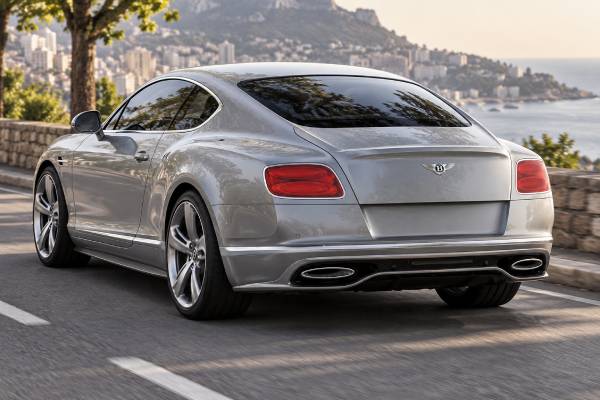
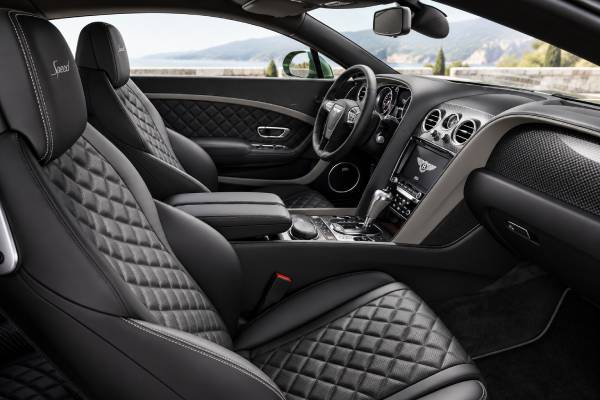
The 2016–2018 Bentley Continental GT Speed is the final regular-production evolution of the second-generation Speed coupé. Its 6.0-litre twin-turbo W12 produces 633 hp and 840 Nm, enough for 0–60 mph in 3.9 seconds and a 206 mph maximum, yet the car’s real talent is sustained, low-effort speed. Unlike the limited Supersports, it retains a broader grand-touring brief and a larger pool of replacement parts and specifications. That does not make it cheap to own. Heat, age, heavy 21-inch wheels, air suspension, driveline fluids and optional carbon brakes can create five-figure decisions. The strongest examples feel tight at parking speed, calm at motorway speed and completely linear under full load. The weakest often hide deferred work behind perfect leather and low mileage. Inspection should therefore begin with a cold engine, continue through a fully warm road test and finish on a lift with a complete diagnostic report.
Table of Contents
- What changed for the 2016–2018 GT Speed
- Core specifications for the 633 hp coupé
- How Bentley made a 2.3-tonne car feel urgent
- High-speed hardware, brakes and tires
- Service strategy for the late second-generation Speed
- A pre-purchase inspection built around costly systems
- Buying verdict: rarity, usability and alternatives
What changed for the 2016–2018 GT Speed
The late GT Speed is best understood as the polished endpoint of Bentley’s original Continental formula. For 2016, output rose to 642 PS—633 hp in the assignment’s rating—with torque climbing to 840 Nm. Top speed reached 206 mph, making this the fastest regular-production version before the 700 hp Supersports. The body and basic platform were familiar, but the final calibration gave the car stronger mid-range acceleration and a more decisive character without abandoning four-seat comfort.
Its place in the range matters to a buyer. A standard W12 GT is softer and less visually assertive; the Supersports adds carbon bodywork, standard ceramic brakes, much more torque and a limited-production identity. The Speed sits between them. It is special enough to feel like a flagship, but not so rare that every mile or non-original detail becomes a collector argument. That middle position can make it the most usable late second-generation coupé.
Do not identify one by grille color or badges alone. Speed-style wheels, exhaust finishers and interior emblems can be fitted to other cars. Obtain the factory build information and verify the chassis code, original wheels, brake package, exterior specification and Mulliner content. A car converted to look newer or more expensive may still drive well, but its market value should reflect what it actually left Crewe as.
The coupé body gives the 393 a structural advantage over the related GTC Speed. It is lighter, quieter at very high speed and free of roof hydraulics or drain maintenance. In return, it lacks the convertible’s theatre. For a buyer planning frequent motorway use, the fixed roof, larger luggage area and 206 mph calibration make a coherent package.
Age now influences the car as much as mileage. Rubber mounts, suspension joints, batteries, cooling fittings and tire compounds deteriorate while parked. A regularly exercised car with long-trip invoices can be more convincing than an ultra-low-mileage example that has spent years on a charger. The late Speed deserves to be assessed as a complete machine, not as an engine output and a leather condition report.
Core specifications for the 633 hp coupé
These figures describe the late second-generation GT Speed coupé after output rose to 642 PS. The fixed roof, 21-inch Speed hardware and 206 mph claim distinguish it from the GTC and from the 700 hp Supersports. Published mass and consumption can vary by measuring convention, so the tables are best used to identify the correct derivative and to frame an inspection rather than to predict one car’s exact scale weight or fuel use.
| Item | Specification |
|---|---|
| Powertrain class | Gasoline internal-combustion engine (ICE) |
| Engine | 6.0L twin-turbo W12 |
| Maximum output | 633 hp (642 PS; 472 kW) |
| Maximum torque | 840 Nm (620 lb-ft) |
| Transmission | 8-speed torque-converter automatic |
| Driven wheels | rear-biased permanent all-wheel drive |
| Fuel tank | 90 L (23.8 US gal) |
| Measure | Value | Context |
|---|---|---|
| 0–60 mph | 3.9 seconds | Manufacturer claim |
| 0–100 km/h | 4.1 seconds | Manufacturer claim |
| Maximum speed | 206 mph (331 km/h) | Factory limit or announced target |
| Combined fuel consumption | about 14.6 L/100 km combined on the period European cycle | Period European or WLTP figure |
| CO₂ emissions | about 338 g/km on the period European cycle | Market and equipment can change result |
| Dimension or capacity | Value |
|---|---|
| Body style | two-door, four-seat coupé |
| Length | 4,806 mm (189.2 in) |
| Width | 1,944 mm (76.5 in), excluding mirrors |
| Height | 1,394 mm (54.9 in) |
| Wheelbase | 2,746 mm (108.1 in) |
| Kerb weight | about 2,320 kg (5,115 lb) kerb |
| Luggage capacity | 358 L (12.6 cu ft) |
| Component | Factory specification |
|---|---|
| Suspension and active systems | lowered air suspension with adaptive damping and a firmer Speed calibration |
| Brake system | 405 mm front and 335 mm rear ventilated steel discs; carbon-ceramic brakes optional |
| Factory wheel context | 21-inch directional Speed wheels |
| Steering/stability distinction | the 2016 update increased output to 642 PS and torque to 840 Nm, making this the final and fastest regular-production second-generation GT Speed |
| Area | Detail |
|---|---|
| Roof/body structure | fixed aluminium-and-steel coupé roof structure |
| Fuel capacity | 90 L (23.8 US gal) |
| Seating | Four seats |
| Primary buyer verification | Match wheel, brake, chassis and market equipment to the VIN build record |
The late GT Speed’s appeal is the blend of 206 mph engineering and regular four-seat usability. Its numbers sit below the Supersports, but the less specialized hardware can make it a more approachable long-distance purchase. Tire specification, disc measurements and the exact wheel design should be recorded because those details influence both driving quality and future originality.
How Bentley made a 2.3-tonne car feel urgent
The 633 hp figure explains only part of the GT Speed’s pace. The more important number in ordinary driving is 840 Nm, delivered through a broad rev range and managed by an eight-speed torque-converter automatic. The car does not need to hunt for power. A modest pedal movement produces a firm, continuous increase in speed, while a full-throttle request should bring one clean downshift sequence rather than hesitation or a flare between ratios.
Bentley’s rear-biased all-wheel-drive strategy helps the coupé deploy that torque without feeling front-led. The driver should sense strong traction and a stable rear axle, not binding in tight turns or repeated electronic intervention on dry pavement. Four tires must match closely in brand, model, wear and construction. A pair of newly fitted tires can be a warning rather than a benefit if the other axle is much more worn.
The lowered Speed air suspension controls roll more tightly than the standard GT, but it still has to ride like a grand tourer. At urban speed, the body should take one measured movement over a bump and settle. At motorway speed, it should hold a steady vertical attitude instead of floating. A corner that drops after parking, a compressor that runs after every start or a permanently firm ride requires fault-code and ride-height analysis.
Urgency also comes from gearing and throttle calibration. In the more aggressive drive setting, the transmission holds ratios longer and reacts more quickly to pedal input. That should not make low-speed operation crude. Delayed engagement, repeated shunting when creeping or a pronounced clunk as load reverses can indicate adaptation, mount, driveline or internal transmission issues. The complaint needs reproduction at the temperature and road condition where it occurs.
The steering is weighty and stable rather than quick. On a well-aligned car, the nose follows a chosen line without constant correction and the wheel returns smoothly after a junction. Large 21-inch tires can follow road grooves, but severe tramlining is not automatically normal. Check pressure, tread pattern, inner-edge wear and wheel runout before blaming the steering system.
A late GT Speed should feel faster the longer the road becomes. It is not defined by a dramatic first meter; it is defined by acceleration that continues with little loss of refinement. During testing, build load progressively and watch coolant temperature, warning behavior and shift quality. A tuned or tired car may produce a spectacular initial surge while lacking the repeatability that makes the factory Speed convincing.
High-speed hardware, brakes and tires
The GT Speed’s chassis hardware is expensive because it must repeatedly manage more than 2.3 tonnes at exceptional speed. Brakes, tires and cooling are therefore performance components, not routine afterthoughts. Before buying, identify whether the car has standard iron discs or the optional carbon-silicon-carbide package; the inspection method and replacement budget differ substantially.
Iron discs should be checked for a pronounced outer lip, corrosion on unused areas, heat checking and pad deposits. A vibration under moderate braking may come from deposits or runout rather than a visibly warped disc, so measurement is more useful than guesswork. Carbon discs require examination for chips, surface damage and wear by the approved criteria. An attractive yellow or red caliper does not prove the expensive parts behind it are healthy.
Pedal behavior should remain predictable through several stops. Begin with light applications, then increase pressure after the tires and brakes are warm. The pedal must not lengthen, pulse or pull the car to one side. Old fluid can reduce confidence even when the friction material looks good. Ask when it was changed and whether the system was bled with the correct diagnostic procedure.
The original 21-inch Speed wheels are vulnerable to inner-barrel distortion that cannot be seen in sales photographs. Inspect them on a lift and look for welds, cracks, flat spots and excessive balancing weights. Refinished faces may hide kerb damage but do not correct a bent barrel. At speed, wheel or tire faults can appear as a narrow-band vibration through the seat or steering column.
Tire date and specification deserve written notes. The car’s 206 mph capability requires the correct speed and load ratings, even if the owner never approaches that figure. Old high-performance rubber can retain deep tread while losing wet grip and braking performance. Four new, factory-appropriate tires often transform a car that has been described as nervous or harsh.
Cooling supports every high-speed component. Front heat exchangers should be free of heavy debris and impact damage, fans should operate correctly and undertrays should be present. A history of repeated overheating, coolant loss or improvised hose repairs is especially concerning on a high-output W12. Sustained pace creates heat for much longer than a brief acceleration test.
Finally, inspect aerodynamic and underbody pieces. Missing fasteners, cracked liners or a damaged lower lip may appear cosmetic, but they can alter airflow and reveal careless lifting or high-speed impact. The correct Speed feels exceptionally stable because tires, alignment, brakes, damping and airflow all agree. One compromised part can make the whole car feel less composed.
Service strategy for the late second-generation Speed
The most effective service strategy treats the car as a heat-cycled system rather than a collection of mileage intervals. Build a chronology from invoices showing engine oil, filters, spark plugs, brake fluid, coolant investigation and any gearbox or differential work. A stamp with no parts or labor detail cannot show whether a recurring leak, warning or vibration was actually resolved.
Use oil that meets Bentley’s approval and check level by the prescribed method. Record consumption against distance and driving type. A car used for short urban trips can dilute oil differently from one driven for hours, while turbocharger or seal issues create other patterns. Data collected between services gives a technician something more useful than a one-time level reading.
Cooling-system care is central. The W12’s compact packaging exposes hoses, plastic unions, pumps and wiring to sustained temperature. Look for dried pink or white residue, staining on undertrays and a fan strategy that seems abnormal after shutdown. Pressure testing at an annual visit can reveal a small seep before it becomes a roadside loss of coolant.
Discuss transmission and final-drive fluids with a specialist who understands this generation, the car’s age and its use. Some schedules describe long service life, but time, thermal history and prior repairs may justify preventive work. Correct fluid, fill temperature and procedure are essential; a generic power flush is not a substitute for model-specific service.
Air suspension benefits from diagnosis before replacement. Stored faults, measured heights and compressor duty cycle can distinguish a leaking spring from a valve block, sensor or voltage problem. Front control-arm bushes and joints carry heavy loads and can create vague steering or braking movement before producing a loud knock. Alignment after suspension work should be documented.
A strong 12-volt battery keeps the many control units stable. Test reserve capacity, alternator output and voltage drop instead of replacing batteries solely by age. During storage, use a suitable maintainer and avoid repeated brief starts that never recharge the energy used. Preserve a diagnostic scan before clearing low-voltage codes so later faults can be compared intelligently.
For a newly purchased car, establish a measured baseline:
- Save a complete diagnostic report and software status.
- Pressure-test cooling and inspect the turbocharger area.
- Measure tires, wheel runout, brake wear and fluid condition.
- Check ride height, control arms and alignment.
- Review gearbox and differential service evidence.
- Perform overdue work, then repeat the hot road test.
This sequence costs more than a basic oil change, but it converts uncertainty into a maintenance plan and protects the car’s most valuable quality: repeatable high-speed performance.
A pre-purchase inspection built around costly systems
The inspection should be designed around repairs that can change the purchase decision. Commission a Bentley-experienced workshop, not the selling dealer, and require enough time for a genuine cold start, lift access and a long drive. The report should quote the exact brake system, wheel type and affected components rather than using broad phrases such as “some suspension wear.”
Start with provenance. Check the chassis identity, original specification, service dates, recalls, campaigns, key count and ownership sequence. Paint-depth readings and glass dates can reveal repair, while disturbed front-end fasteners may explain alignment or cooling concerns. A documented panel repair is easier to value than unexplained evidence spread across both sides of the car.
Watch the first start without preheating. The engine should settle promptly, maintain even idle and avoid persistent smoke or warning messages. Listen as electrical loads are added. Then inspect for fresh fluid, because a seller may have cleaned old residue but cannot easily hide a leak that appears during the test.
The road route should contain slow turns, rough pavement, a constant-speed cruise and progressive acceleration after full warm-up. Note the exact speed and load where any vibration occurs. A steering-wheel shake points toward different components from a seat vibration; a clunk on power application differs from one produced by braking or a bump.
Run module scans before and after driving. Do not allow deletion of faults before the inspector records them. An old undervoltage event may be minor, but active suspension, transmission, engine or parking-brake faults need explanation. Freeze-frame information can show whether a fault arose at start-up, at speed or under heat.
Ask for these measurements and checks:
- Cooling-system pressure retention and evidence of seepage
- Engine mounts, turbo plumbing and heat-affected wiring
- Gearbox engagement, adaptation behavior and driveline backlash
- Air-spring leakage, compressor activity and front-arm condition
- Wheel runout, prior repair and correct 21-inch specification
- Tire model, age, tread-depth spread and inner-shoulder wear
- Disc and pad condition for the exact iron or carbon system
- Underbody, lower aero and signs of incorrect lifting
The report should conclude with an immediate budget and a two-year forecast. A low asking price is meaningful only after ceramic brakes, four tires, suspension work and cooling repairs have been priced honestly. The GT Speed is a rewarding purchase when its costly systems are already coherent, not when the buyer hopes they will become coherent later.
Buying verdict: rarity, usability and alternatives
The late second-generation GT Speed is a strong choice for a driver who wants traditional W12 character and true 200-mph engineering without entering limited-edition Supersports territory. It is rarer and more focused than the ordinary W12, yet still practical enough for long trips, four occupants on shorter journeys and regular use. That balance—not a speculative future value—is the main reason to buy one.
Condition should outweigh mileage and color. Compare several cars using the same categories: service evidence, cooling history, gearbox behavior, suspension health, brake package, wheel condition, tire age, body repair and electronic faults. Put a cash value beside every weakness. A higher-mileage car with fresh tires, iron brakes and continuous invoices can be a better driver’s asset than a pristine-looking garage queen needing recommissioning.
The brake choice influences ownership. Carbon ceramics reduce unsprung mass and resist repeated heat, but damage or wear can create a very large bill. Iron brakes are less exotic and may suit an owner focused on road touring. Neither package is automatically superior; the correct choice depends on condition, intended use and the buyer’s tolerance for replacement cost.
Alternative models clarify the decision. The standard W12 provides much of the effortless character at a softer price and ride. The 700 hp Supersports adds rarity, carbon hardware and stronger collector identity, but usually costs more and demands greater originality. A third-generation W12 feels more modern, agile and electronically sophisticated, though it loses some of the late second-generation car’s old-world atmosphere.
Set aside a first-year reserve after the inspection. The new owner may still choose to replace aged tires, refresh fluids, align the chassis, install a battery or correct minor trim and electrical issues. A contingency prevents those jobs from being postponed simply because the purchase consumed the entire budget.
Buy the car whose story is supported by behavior. It should start cleanly, engage gears promptly, steer straight, change suspension modes, brake without vibration and pull hard after full warm-up. When those tests agree with the records, the 633 hp GT Speed remains a distinctive grand tourer: less precious than a Supersports, more dramatic than a standard W12 and capable of covering serious distance with unusual calm.
References
- Bentley Continental | History and Heritage | Bentley Motors 2026 (Official Model/Technical Source)
- Bentley News 2017 : NEW BENTLEY CONTINENTAL SUPERSPORTS : THE WORLD’S FASTEST FOUR-SEAT CAR 2017 (Official Model/Technical Source)
- Bentley News 2024 : End of an era as final Bentley W12 engine hand-built in Crewe 2024 (Official Model/Technical Source)
- Technical Service Bulletin 2076639/2 2025 (Recall/Service Source)
- Check for Recalls: Vehicle, Car Seat, Tire, Equipment | NHTSA 2026 (Recall/Service Source)
Disclaimer
Use this article for general information and purchase planning, not as repair instruction or a professional diagnosis. Specifications, tightening values, intervals and procedures can differ by VIN, destination market and equipment, so consult official Bentley service documentation for the individual vehicle.
If this guide proved useful, please share it on Facebook, X/Twitter or in an appropriate enthusiast community to support our work.