
The first Continental GT Speed was Bentley’s answer to owners who wanted the original W12 coupe to feel more alert without losing its grand-touring character. Output rose from 552 to 600 bhp, torque increased to 750 Nm (553 lb-ft), the claimed top speed crossed 200 mph, and the chassis received firmer, lower settings, revised steering, larger wheels, and detail changes intended to make a 2.35-ton luxury coupe respond with greater precision.
That does not make every used GT Speed a better purchase than a standard GT. The Speed’s performance parts, 20-inch tires, lower suspension, and frequent carbon-ceramic brake option can increase both desirability and financial exposure. It also shares the first-generation platform’s age-sensitive air suspension, batteries, cooling system, dense W12 packaging, electrical network, and water-management concerns. A strong example should feel tight, consistent, and mechanically quiet. A weak one often advertises trouble through mismatched tires, uneven ride height, recently cleared faults, steering vibration, delayed maintenance, or expensive options that no longer work.
Table of Contents
- What the Speed Package Changed
- Speed Model Technical Specifications
- Using 600 hp Well
- High-Load Components and Wear
- W12 Service Strategy
- Diagnosing a Used GT Speed
- Value, Originality, and Selection
What the Speed Package Changed
The GT Speed was more than an engine tune. Bentley increased boost and revised internal components, recalibrated the chassis, fitted a smaller steering wheel, lowered the suspension, and used 20-inch performance tires to sharpen the first-generation Continental’s responses.
The 5,998 cc W12 retained its 84.0 mm bore, 90.2 mm stroke, twin turbochargers, and 9.0:1 compression ratio. Maximum power reached 600 bhp at 6,000 rpm, while maximum torque rose from 650 to 750 Nm and arrived at 1,750 rpm. Bentley’s changes included revised pistons and connecting rods for the higher cylinder pressure, along with intake, exhaust, and calibration work. The additional output shortened the 0–100 km/h claim to 4.5 seconds and raised top speed to 326 km/h (202 mph).
Those gains sound modest against the standard car’s 318 km/h maximum, but the aerodynamic power demand near 200 mph rises sharply. The Speed’s significance is therefore not the extra four miles per hour alone. The stronger midrange, more immediate throttle response, and closer relationship between steering input and body movement are what drivers notice on ordinary roads.
The chassis changes are equally important when assessing a used example. Bentley lowered and stiffened the suspension, revised anti-roll control, sharpened steering response, and fitted 275/35 R20 performance tires. Some cars have optional carbon-ceramic brakes. These components work as a system. Replacing the factory wheel and tire package with incorrect offsets, budget tires, or substantially heavier wheels can erase the calibration Bentley developed and add stress to suspension and steering hardware.
The permanent all-wheel-drive system remains central to the car’s accessibility. It distributes the W12’s torque across four contact patches and works with stability control to keep the car composed. The Speed can still understeer if driven into a corner too aggressively, because the engine lies ahead of the cabin and the car carries substantial mass. Its improved agility is relative to the standard GT, not evidence that physics has been removed.
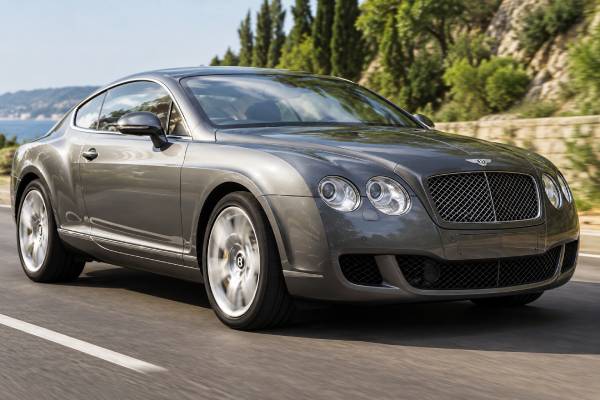
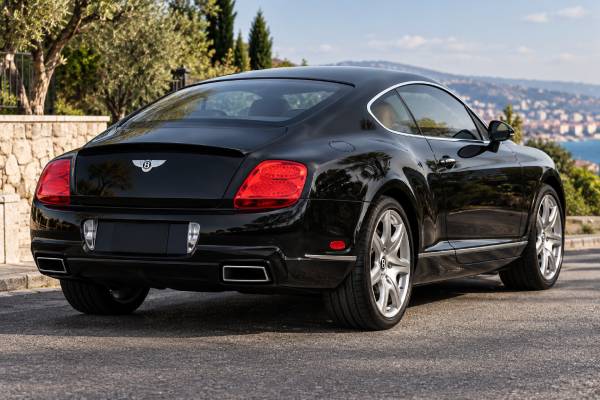
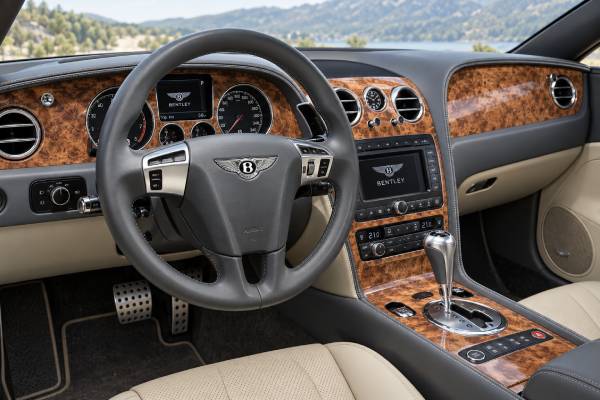
Visual distinctions are understated: a darker grille, rifled oval exhaust outlets, model-specific wheels, and interior features such as diamond quilting, drilled pedals, embroidered seat emblems, and a sporting gear selector. Because many of these parts can be added later, verify the model through the VIN, build data, and original documentation rather than appearance alone.
Speed Model Technical Specifications
The data below describe the 600 hp first-generation coupe. They should not be mixed with the later 610 PS facelift ratings used in some markets, the 621 hp Supersports, or second-generation Speed specifications.
| Parameter | Specification | Context |
|---|---|---|
| Engine | 5,998 cc twin-turbocharged W12 | Four valves per cylinder |
| Bore × stroke | 84.0 × 90.2 mm | Factory dimensions |
| Compression ratio | 9.0:1 | Period Speed specification |
| Maximum power | 600 bhp / 610 PS / 449 kW at 6,000 rpm | Factory brochure rating |
| Maximum torque | 750 Nm (553 lb-ft) at 1,750 rpm | 100 Nm more than the standard 552 hp GT |
| Fuel | 98 RON recommended; 95 RON permitted in period literature | Use the market-specific manual and fuel label |
| Fuel-tank capacity | 90 L (23.8 US gal) | Factory figure |
| System | Speed specification |
|---|---|
| Transmission | Six-speed torque-converter automatic with paddle operation |
| Driveline | Permanent all-wheel drive |
| Suspension | Independent self-levelling air suspension with electronically variable damping |
| Speed calibration | Lower ride height, uprated spring/damper settings, revised anti-roll bars, and sharper steering response |
| Factory wheel | 20-inch multi-spoke alloy wheel |
| Factory tire size | 275/35 R20 in common Speed specification |
| Brake choices | Large steel discs; carbon-ceramic system available |
| Test | Result | Source type |
|---|---|---|
| 0–60 mph | 4.3 seconds | Bentley claim |
| 0–100 km/h | 4.5 seconds | Bentley claim |
| Maximum speed | 326 km/h (202 mph) | Bentley claim |
| EU combined fuel use | 16.6 L/100 km (17.0 mpg UK) | Period EU cycle in factory brochure |
| EU combined CO₂ | 396 g/km | Period factory figure |
| 2008 U.S. EPA GT rating | 10 mpg city / 17 mpg highway / 13 mpg combined | EPA listing for the 6.0-liter automatic GT family |
| Measurement | Value |
|---|---|
| Length | 4,804 mm (189.1 in) |
| Body width | 1,916 mm (75.4 in) |
| Width across mirrors | 2,102 mm (82.8 in) |
| Height | 1,380 mm (54.3 in) |
| Wheelbase | 2,745 mm (108.1 in) |
| Kerb weight | 2,350 kg (5,180 lb) |
| Luggage capacity | 370 L (13.1 cu ft) |
| Seating | Four |
| Area | Typical original feature |
|---|---|
| Exterior | Dark-finish grille and lower grille |
| Exhaust | Twin rifled oval stainless-steel outlets |
| Cabin | Diamond-quilted hide and embroidered Bentley emblems |
| Driver controls | Three-spoke sports wheel, drilled alloy pedals, and knurled gear selector |
| Ride height | Lower than the standard GT |
| Wheels | 20-inch multi-spoke Speed design |
Using 600 hp Well
The GT Speed is fastest when driven smoothly. Its huge torque reserve, all-wheel drive, and stable body reward deliberate inputs, while abrupt steering or braking exposes mass and consumes tires quickly.
At road speed, the difference from a standard GT appears most clearly during passing. The engine responds with less delay and maintains strong acceleration as speed rises. A healthy car should deliver one continuous surge, without boost fluctuation, misfire, smoke, or transmission hesitation. The exhaust note becomes deeper under load but should not be accompanied by metallic rattles or a warning lamp.
The six-speed automatic is not a modern dual-clutch unit. It prioritizes refinement, and paddle requests are not instantaneous by current standards. That is normal. Slipping, flaring between gears, repeated harsh engagement, or a shudder at steady throttle is not. Check behavior from cold and hot because some faults emerge only after fluid temperature rises.
Steering is heavier and more direct than in the standard car, but the front tires still manage a large workload. The Speed turns in cleanly when the driver completes most braking in a straight line. Carry too much brake into the corner and the outside front tire can become overloaded. Progressive throttle then lets the AWD system use the rear tires and settle the chassis.
The 20-inch setup improves response but reduces the amount of tire sidewall available to absorb sharp impacts. Bent wheels, sidewall bubbles, cracked inner rims, and alignment errors are therefore realistic inspection concerns. A vibration near motorway speed may be a tire or wheel problem, but it can also involve hubs, bearings, driveshafts, or suspension joints. Do not authorize repeated balancing without checking the whole system.
At high speed, aerodynamic stability and brake condition matter more than raw output. The deployable rear spoiler must operate correctly. Undertrays and cooling ducts should be intact. Brake fluid, tire age, wheel torque, and pressure must be correct. A 202-mph claim is historical specification data, not an invitation to test an aging car outside a controlled environment.
High-Load Components and Wear
The Speed’s consumables work harder than they do on an ordinary luxury coupe. Tires, brakes, front suspension arms, wheel bearings, engine mounts, and cooling components all deal with high mass, high torque, and sometimes aggressive driving.
Tire condition is the first filter when viewing a car. Four matching premium tires in the correct size and rating suggest that an owner understood the platform. Mixed brands, large tread-depth differences, incorrect load ratings, or old date codes suggest cost cutting. Because the car uses permanent AWD, rolling circumference should remain closely matched across axles.
Steel brakes are expensive but straightforward to assess through measurements, surface condition, pad thickness, and road testing. Carbon-ceramic discs require more specialized inspection. Look for chips, impact marks, heat damage, unusual surface changes, and replacement documentation. Disc wear cannot be judged reliably from a casual glance alone, and the cost of a full set can alter the value of the entire car.
The lower Speed suspension may reveal wear sooner through knocking, tramlining, or harshness. Check every arm and bush rather than replacing only the loudest joint. Air springs, dampers, compressor, valve block, height sensors, and electrical supply must also work together. A car that rises slowly or sits unevenly after storage may have more than one fault.
Cooling deserves attention because the higher-output engine operates in a tightly packed bay. Inspect radiators, fans, hoses, fittings, pumps, reservoirs, and evidence of dried coolant. A car that has been modified for more boost without documented cooling and fueling work is a poor candidate for conservative ownership.
The automatic rear spoiler is another load-related component. It should deploy and retract without grinding, binding, asymmetry, or warning messages. Previous body repairs can disturb alignment, while water and age can affect motors and sensors.
W12 Service Strategy
A successful GT Speed maintenance plan is based on condition, time, and documented inspection rather than the minimum number of oil changes. The car’s systems are interconnected, so postponing one fault often creates a second.
Engine oil must meet the exact approved specification for the VIN and market. Confirm quantity and level through the prescribed process. Because large undertrays can collect fluid, remove or inspect them during service rather than declaring the engine dry from above. Oil leaks should be traced to their source before they contaminate mounts, wiring, or exhaust components.
Ignition and air-management faults can appear as a slightly rough idle long before a dramatic warning. Review misfire counters, fuel trims, boost control, and stored faults. Coils, plugs, vacuum hoses, breather components, and intake seals are relatively ordinary parts placed in an extraordinary amount of packaging. Labor planning matters.
The transmission, transfer hardware, and differentials should be checked for leaks and fluid condition. “Lifetime” does not mean unaffected by age, heat, or contamination. A specialist should decide whether service is appropriate based on history and operating behavior. Do not substitute a power flush for diagnosis.
Battery management is essential. Test both batteries, verify alternator output, inspect connections, and measure the vehicle’s sleep current. A correct battery tender is useful during storage, but the car should still pass load tests. Low system voltage can create suspension, transmission, parking-brake, steering-lock, and comfort-system warnings.
Annual care should include:
- Complete module scan before codes are erased.
- Cooling-system pressure and visual checks.
- Suspension height comparison after an overnight park.
- Tire age, pressure, circumference, and alignment review.
- Brake measurement and parking-brake operation.
- Spoiler, seat, window, mirror, latch, climate, and infotainment tests.
- Inspection of plenum and drainage areas for standing water or debris.
- Recall status confirmed from the VIN in the relevant market database.
Cars driven rarely need careful storage rather than less maintenance. Keep the fuel fresh, avoid repeated short starts, warm the drivetrain fully during use, and monitor humidity. Exercise mechanisms such as seats, windows, spoiler, and parking brake so developing problems are found before a long trip.
Diagnosing a Used GT Speed
The most useful pre-purchase question is not “Does it have warning lights?” It is “What evidence shows that every system was healthy before the seller cleared the car for viewing?”
Arrange a cold inspection at a Bentley-experienced workshop. Record battery voltage and scan every module before starting. Readiness monitors, code timestamps where available, and a high number of recently cleared faults can reveal preparation intended to hide a problem.
The cold start should be immediate and even. Listen for chain, accessory, pump, or exhaust noise; observe smoke; and watch how quickly idle stabilizes. Verify that both cooling fans behave plausibly and that coolant temperature rises steadily. A clean dashboard does not override abnormal live data.
Inspect the plenum and water-management areas carefully. Blocked drains and standing water can damage electrical modules and wiring. Look for leaves, previous sealant, corrosion, tide marks, nonfactory wiring repairs, and damp carpets. Water damage can create intermittent faults that appear unrelated.
On the road, separate the test into phases. Begin with low-speed turns, parking maneuvers, and gentle shifts. Add rough surfaces to expose suspension noise. Use steady medium-speed throttle to reveal shudder, then full load only when the engine is warm and conditions are safe. Brake several times with increasing pressure. Finish with a motorway-speed check for vibration and wind noise.
Specific red flags include:
- One corner settling after the car has been parked.
- Continuous compressor operation or suspension warnings.
- Vibration that changes between acceleration and coasting.
- Misfire under boost or a flashing engine lamp.
- Delayed engagement of Drive or Reverse.
- Brake pulsation, pulling, or squeal from damaged ceramic components.
- Mismatched tires or wheels with visible impact damage.
- Dampness near electronics or a strong deodorizer smell.
- Missing service invoices for major claimed work.
- Performance modifications without dyno, fueling, cooling, and maintenance records.
After the road test, scan again. New faults, rising misfire counts, abnormal temperatures, or suspension-height differences should be priced as diagnosed problems, not negotiating trivia. Obtain written estimates before agreeing on value.
Value, Originality, and Selection
The best GT Speed is usually the most complete, documented, and correctly specified car, not the cheapest or the one with the largest aftermarket wheels. Original Speed hardware and a coherent maintenance history are central to both driving quality and future value.
Confirm that the VIN identifies a GT Speed and compare the build sheet with the car. Factory wheels, grille treatment, interior quilting, exhaust finish, trim, and brake type should agree. Modifications are not automatically harmful, but reversible, documented changes from reputable specialists are easier to value than anonymous engine software or cosmetic imitation parts.
Mileage should be interpreted with condition. A higher-mileage car that received regular fluid service, suspension repairs, batteries, tires, and cooling work may be safer than a low-mileage garage ornament on original rubber and old fluids. Long storage can harden seals, corrode brakes, flatten tires, and allow drains to block.
Color and specification affect enjoyment, but mechanical condition determines whether the car can be used. Reserve money for immediate baseline service even after a good inspection. Ownership costs should be compared with the car’s original super-luxury status rather than its depreciated purchase price.
The 600 hp GT Speed occupies a useful place in Bentley history. It is faster and more focused than the original GT, yet still has four seats, a proper luggage compartment, air-suspension comfort, and the handcrafted atmosphere that made the Continental successful. Buy one as a high-speed grand tourer with expensive systems, not as a bargain sports coupe. Maintained on that basis, it remains an unusually complete and charismatic machine.
One final comparison helps frame the purchase. The standard 552 hp GT is not slow, and on poor surfaces its softer calibration may even feel more relaxed. The Speed earns its premium when its original chassis is intact and the buyer values sharper steering, stronger midrange acceleration, and the historical importance of Bentley’s first modern 200-mph production coupe. A neglected Speed with incorrect wheels or tired dampers can feel worse than a carefully maintained standard car.
Insurance, registration, emissions taxation, and parts availability vary widely by country, so investigate them before purchase. Confirm that a local workshop can obtain model-specific diagnostic access and knows how to inspect carbon-ceramic brakes if fitted. Transporting an immobile car to a distant specialist can turn a manageable fault into a major logistical cost.
Keep a detailed ownership file from the first day. Record tire dates and tread depths, battery test results, suspension heights, fluid services, scan reports, and part numbers. This evidence makes developing trends easier to spot and protects resale value. It also prevents a future technician from repeating old diagnostic work or confusing an intermittent voltage event with a new mechanical failure.
References
- CONTINENTAL GT 2008 (Manufacturer Brochure)
- Vehicle Detail Search – 2008 BENTLEY CONTINENTAL GT SPEED | NHTSA 2026 (Recall Database)
- 2008 Bentley Continental GT 2008 (Official Fuel Economy)
- 2008 Bentley Continental GT Speed – Newcomers – Motor Trend 2007 (Road Test)
- Road Test: Bentley Continental GT Speed 2008 (Road Test)
- Review: Bentley Continental GT Speed 2008 (Road Test)
Disclaimer
This article is informational and is not a replacement for professional inspection, diagnosis, maintenance, or repair. Specifications, approved fluids, procedures, torque values, service intervals, and campaign applicability vary by VIN, market, options, and production date. Verify all work through the official Bentley service information for the exact car.
Please share this guide on Facebook, X/Twitter, or another platform if it helped. Sharing supports further detailed vehicle research.