

The 500 hp Continental GT V8 is the second-generation Bentley coupe for drivers who want the craftsmanship and long-distance calm of the W12 car with a lighter-feeling nose, a sharper exhaust note, and materially lower fuel use. Introduced for the 2012-era Type 393 range and sold alongside the W12, it uses a 4.0-liter twin-turbocharged V8, an eight-speed automatic, and permanent all-wheel drive. It is not a budget Bentley in engineering or upkeep: the car still weighs more than 2.2 tonnes, carries complex air suspension and electronics, and can generate five-figure repair bills when neglected. The best examples are therefore selected by history and condition rather than mileage or paint color. This guide identifies the exact 500 hp model, lays out verified specifications, explains the hot-V engine and chassis, and turns the usual inspection advice into a practical buying and ownership strategy.
Table of Contents
- Why the 500 hp V8 Matters
- Continental GT V8 Technical Data
- Reading the Car Before the Road Test
- Hot-V Engine and Eight-Speed Behavior
- Chassis, Brakes, Tires, and Body
- Service History That Changes the Risk
- Choosing and Owning the Right Example
Why the 500 hp V8 Matters
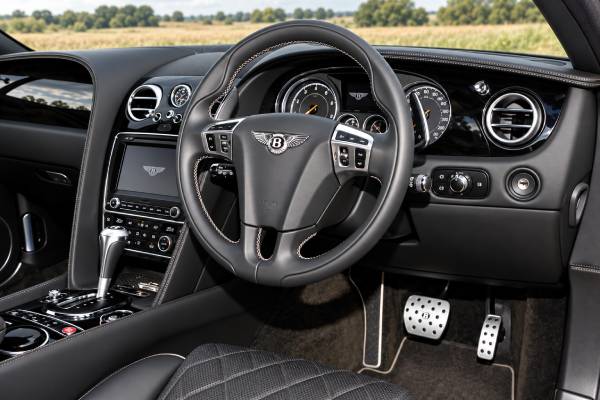
The base V8 is the most balanced second-generation Continental GT for many road users. It preserves the coupe’s quiet cabin, four-seat layout, all-weather traction, and hand-finished interior while reducing mass over the front axle and adding a more animated engine character.
Bentley introduced the V8 as more than a smaller-engine substitute. The 4.0-liter unit delivered 500 bhp and 660 Nm from low engine speed, and its eight-speed transmission gave it a broader ratio spread than early second-generation W12 cars. The factory claimed 0–60 mph in 4.6 seconds and 188 mph, so performance was never remotely modest. The difference was response: the V8 sounded busier, turned in with less reluctance, and could travel farther on a tank.
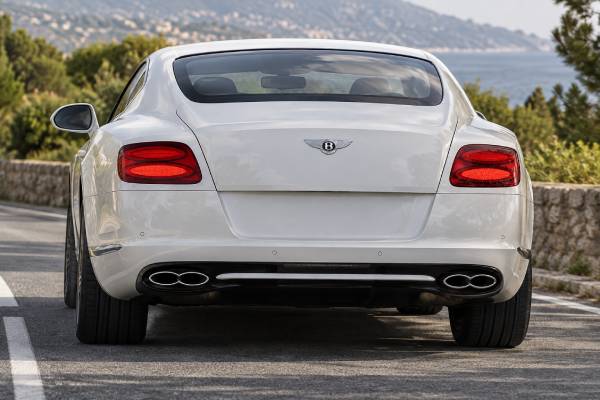
The visual identifiers are useful, but they are not proof of specification. Original V8 cars commonly have red enamel winged-B badges, a gloss-black matrix grille with a bright surround and center bar, a three-segment lower bumper treatment, and twin “figure-eight” exhaust outlets. Wheels, grilles, badges, and exhaust parts are easily changed. Confirm the model through the VIN, build record, engine designation, and equipment list.
This article concerns the 500 hp standard GT V8 coupe, not the 521 hp V8 S, a W12, a Speed, a Supersports, or the all-new third-generation Continental introduced around the end of this date range. Advertisements sometimes apply “V8 S” to a standard V8 because a car has sports wheels or red brake calipers. The S has its own output, chassis tune, trim details, and market timing; it should be valued and inspected as a separate model.
The V8’s appeal is strongest when the car remains close to its intended role. It is a grand tourer, not a lightweight sports coupe. The steering and front-end response are more willing than the W12’s, but the tires, brakes, dampers, and bushings still control substantial mass. A healthy example feels cohesive and unhurried; a tired one exposes every deferred repair at once.
Continental GT V8 Technical Data
This is an internal-combustion grand tourer with a front-mounted, direct-injected, twin-turbocharged 4.0-liter V8. An eight-speed ZF automatic sends power to all four wheels through a permanent system with a nominal 40:60 front-to-rear torque split. The figures below describe the standard 500 bhp Type 393 coupe; later V8 S and third-generation specifications do not belong in this table.
| Item | Factory specification |
|---|---|
| Engine | 4.0-liter twin-turbocharged V8, direct petrol injection |
| Maximum power | 500 bhp / 507 PS / 373 kW at 6,000 rpm |
| Maximum torque | 660 Nm / 487 lb-ft at 1,700 rpm |
| Transmission | 8-speed ZF automatic with Quickshift and steering-column paddles |
| Drive | Permanent all-wheel drive, nominal 40:60 front/rear split |
| Fuel | Premium unleaded gasoline |
| Efficiency technology | Variable cylinder displacement under suitable light-load conditions |
| Measure | Value |
|---|---|
| 0–100 km/h | 4.8 seconds |
| 0–60 mph | 4.6 seconds |
| Top speed | 303 km/h / 188 mph |
| 80–120 km/h | 3.2 seconds |
| 50–70 mph | 2.5 seconds |
| Item | Metric | Imperial |
|---|---|---|
| Length | 4,806 mm | 189.2 in |
| Width across body | 1,944 mm | 76.5 in |
| Width including mirrors | 2,227 mm | 87.7 in |
| Height | 1,404 mm | 55.3 in |
| Wheelbase | 2,746 mm | 108.1 in |
| Fuel tank | 90 liters | 24 US gal |
| Trunk volume | 358 liters | 12.6 cu ft |
| Item | Specification |
|---|---|
| EU kerb weight | 2,295 kg / 5,060 lb |
| Gross vehicle weight | 2,750 kg / 6,063 lb |
| Standard wheel format | 20-inch alloy wheels; optional designs and 21-inch packages exist |
| Standard front brakes | 405 mm ventilated iron discs |
| Standard rear brakes | 335 mm ventilated iron discs |
| Optional brakes | 420 mm front / 356 mm rear carbon-silicon-carbide discs on suitably equipped cars |
| Test | City | Highway | Combined |
|---|---|---|---|
| 2013 U.S. EPA, GT V8 | 14 mpg | 24 mpg | 18 mpg |
| Later 2016 U.S. EPA listing | 15 mpg | 25 mpg | 18 mpg |
| Original EU combined cycle | 10.5 L/100 km / 26.7 mpg imperial | ||
Reading the Car Before the Road Test
A useful inspection starts while the car is cold and stationary. The aim is to establish whether its appearance, documents, tire dates, fluid state, and electronic behavior tell one consistent story before heat and a cleared dashboard hide evidence.
Ask the seller not to start the car before the appointment. Confirm that the engine is genuinely cold by feeling safe, accessible metal away from moving components and by comparing coolant and intake-air readings on a diagnostic scan. A cold start can reveal delayed cranking, smoke, chain or valvetrain noise, an uneven idle, belt noise, and secondary-air or mixture faults that disappear after warm-up.
Walk around the coupe at eye level. Panel gaps should be even, the aluminum-intensive outer body should not show crude filler edges, and the paint should have a consistent texture in daylight. A paint-depth gauge can help, but interpretation matters because aluminum panels and previous high-quality refinishing may read differently. Look below the front bumper, sills, jacking points, undertrays, rear valance, and wheel arches for impact damage or careless lifting.
The pillarless side glass is part of the weather sealing. Open each door and watch the glass drop and rise cleanly. Check the full seal perimeter for distortion, wind-noise witness marks, and trapped grit. Wet carpets, misted lamps, corrosion at electrical connections, or a musty trunk smell deserve investigation rather than air freshener.
Do not accept “they all do that” for a weak battery warning, random convenience faults, or a slow-starting infotainment unit. Low voltage can create multiple symptoms, but it can also conceal a failing battery, charging fault, excessive parasitic draw, or a car left dormant for long periods. Test battery condition and charging voltage; then scan every control module, not just the engine.
Operate every costly feature in a deliberate sequence:
- Adjust both seats through all axes and test heating, ventilation, massage, and memory where fitted.
- Run climate control from cold to hot, vary fan speed, and confirm air distribution on both sides.
- Test windows, mirrors, central locking, soft-close functions, parking sensors, camera, audio, navigation, telephone connection, and steering-wheel controls.
- Cycle the rear spoiler if the diagnostic system permits and inspect its movement and drains.
- Check all exterior lamps and examine headlamp lenses for condensation or internal failure.
- Read stored, pending, and historic faults and note readiness status before anything is cleared.
Hot-V Engine and Eight-Speed Behavior
The V8 should start promptly, settle into an even idle, build boost smoothly, and shift without flare or thump. Because the turbochargers sit inside the cylinder-bank “V,” oil quality, cooling integrity, heat management, and correct diagnostic work matter more than a polished engine cover.
Bentley’s hot-side-inside arrangement shortens gas paths to the turbochargers and helps response. It also packages intense heat in the valley of the engine. This does not make failure inevitable, but it raises the value of regular oil service with the correct approved lubricant, clean oil-supply components, sound coolant plumbing, and an owner who investigated warnings rather than repeatedly clearing them.
A Bentley technical product information document for V8T Continentals describes diagnosis for difficult starting, unusual turbo noise, reduced performance, and damaged turbocharger impellers. Its workshop procedure includes checking oil supply and return paths, the oil strainer and non-return valve, and related installation details. That is a reason for evidence-based inspection—not a claim that every car needs turbochargers. Ask whether oil-screen, non-return-valve, turbocharger, or related campaign work has been done, and verify the answer by VIN and invoice.
Warning signs include extended cranking, a siren-like whine, scraping, smoke after idle, intermittent low boost, misfire under load, unusual oil consumption, and boost-control faults. Some symptoms can come from less catastrophic causes such as a split hose, ignition coil, plug, pressure sensor, diverter valve, or crankcase-ventilation problem. A specialist should test rather than guess.
Inspect the accessible cooling circuit for dried residue, low level, mixed coolant, swelling hoses, and evidence of repeated top-ups. Bring the car fully to temperature while monitoring actual readings. Electric fans should respond normally, cabin heat should remain stable, and the system should not smell of coolant after shutdown. A recent water pump or valve replacement is helpful only when the invoice identifies the fault and parts.
The eight-speed automatic normally makes the V8 feel relaxed at cruise and immediate when asked for acceleration. Test light-throttle upshifts, gentle slowing, a rolling kickdown, manual paddle requests, reversing on level ground, and selection of Drive after a hot soak. A hard engagement, prolonged delay, rpm flare, shudder, or repeated hunting needs diagnosis. Software adaptation, mounts, fluid condition, driveline joints, or internal transmission wear can produce different versions of “bad shifting.”
The permanent all-wheel-drive system should operate silently. Full-lock maneuvering may load wide tires, but binding, clunks, vibration, or a speed-related hum can point to mismatched rolling circumference, wheel-bearing wear, driveshaft joints, differential trouble, or transfer components. All four tires should match in model, size, load and speed rating, and be close in tread depth.
Chassis, Brakes, Tires, and Body
A sound GT V8 rides with authority and controls its weight without float, repeated bouncing, or steering shake. The most revealing road test combines rough urban surfaces, a smooth highway, long curves, firm braking, and low-speed parking maneuvers.
Before driving, leave the car parked long enough to judge ride height. A corner that settles noticeably can indicate an air leak, valve issue, line problem, or strut fault. Listen for a compressor that runs excessively at start-up or repeatedly during a short test. Change the suspension modes and confirm that the difference is plausible, while recognizing that a mode lamp alone does not prove healthy dampers.
Check front control-arm bushings, ball joints, anti-roll-bar links, rear links, mounts, and wheel bearings. The coupe’s mass can turn small clearances into knocks or imprecise alignment. Uneven inside-edge wear is especially important because a freshly polished wheel face can distract from a tire near the cords. Obtain a four-wheel alignment printout when abnormal wear is present; alignment cannot repair bent wheels or worn joints.
Iron brakes are powerful but expensive in Bentley dimensions. Measure disc thickness and condition, inspect both faces, note pad depth, and feel for judder from motorway speeds. A lip alone is not a complete measurement. Check calipers, hoses, parking-brake operation, and brake fluid history.
Optional carbon-silicon-carbide brakes require a different buying approach. Their advantages include heat capacity and reduced unsprung mass, but replacement cost is high. Inspect for chips, impact marks, surface damage, contamination, and minimum-weight data using the approved method. A visual glance through the wheel cannot establish remaining life. Verify that pads and discs are correct and that no seller has represented painted iron brakes as ceramics.
Wheel quality affects the whole car. Look for cracks, welds, flat spots, repeated balancing weights, and loss of finish around the bead. During the test, note vibration by speed and whether it changes under load or braking. A Bentley can mask a bent wheel at town speed and reveal it clearly at highway speed.
The coupe body deserves an underside inspection on a lift. Remove or lower only what the specialist can refit correctly, then look for fluid traces, damaged undertrays, crushed lifting areas, corrosion at fasteners and brackets, coolant staining, and repairs to subframes or floor structures. Verify that lower panels are present; missing fasteners often tell the story of rushed previous work.
Service History That Changes the Risk
The best history is not simply a row of stamps. It is a chronological file showing correct fluids, recurring inspections, fault diagnosis, recall or campaign checks, and expensive work performed by people who understood this powertrain.
Start with identity. Match VINs on the vehicle and documents, obtain a factory build specification, and confirm that the 500 hp V8—not a V8 S or converted W12 car—is being assessed. Run title, theft, finance, salvage, and mileage checks appropriate to the country. In the United States, enter the VIN in the NHTSA recall lookup because a model-page search cannot say whether one particular car has open work.
Build a simple timeline of mileage, dates, and invoices. Gaps matter more when they coincide with long storage, export, auction movement, or repeated changes of owner. An annual low-mileage service can be more reassuring than a car driven far past its oil interval because the odometer barely moved.
Prioritize evidence for:
- Correct engine-oil specification and sensible time/mileage intervals
- Spark plugs and ignition work documented by date and mileage
- Cooling-system repairs with pressure testing and identified parts
- Brake fluid, filters, and other scheduled fluids
- Transmission and driveline assessment or service using the correct procedure
- Battery replacement, registration/coding, charging diagnosis, and storage support
- Air-suspension repairs, alignment, tires, and wheel refurbishment
- Turbocharger, oil-strainer, non-return-valve, or related technical work
- Water-ingress investigation rather than repeated carpet drying
- Software updates, campaigns, recalls, and diagnostic reports
“Lifetime fluid” language should not end the discussion. The relevant question is what Bentley documentation specifies for the VIN and market, what a qualified specialist recommends for the car’s age and use, and whether the fluid or component shows evidence of trouble. Aggressive flushing without diagnosis is not automatically good maintenance.
Obtain a written pre-purchase inspection that includes a full module scan, cold start, lift inspection, battery and charging test, tire and brake measurements, road test, and costed priorities. A generic workshop’s statement that the car “drives well” is not enough. The report should distinguish immediate safety work, near-term maintenance, monitored seepage or wear, and optional cosmetic improvement.
A clear scan is only one data point. Readiness monitors may show that codes were recently erased, and mechanical wear may not create a fault. Compare the electronic report with temperatures, misfire counters, boost behavior, physical evidence, service invoices, and the seller’s explanation.
Choosing and Owning the Right Example
Buy the car that has already been cared for, not the one whose low price leaves room for imagined repairs. On this model, tires, brakes, air suspension, cooling, turbocharger oil supply, body condition, and electronics can each outweigh a tempting discount.
Compare candidates on a common worksheet. Record production date, model year, mileage, ownership count, service gaps, tire age, brake measurements, diagnostic findings, paintwork, option list, and the specialist’s cost estimate. This prevents rare paint or quilted leather from overruling mechanical evidence.
The standard V8 suits an owner who values response and range more than the W12’s effortless character. The V8 S is the alternative for a firmer, more overtly sporting factory package; the W12 offers a uniquely smooth surge; the GTC adds open-air use and roof complexity. None is universally superior. Select the body and powertrain that match actual journeys.
Budget in layers. The purchase price covers only the car. Set aside funds for an immediate baseline service, all four tires if dates or specifications are questionable, brake work, battery support, alignment, and a meaningful contingency. Insurance, tax, fuel, dry storage, specialist access, and flatbed recovery should be planned before collection.
On arrival, resist the urge to modify the car. First establish correct fluids and pressures, repair leaks, clear open campaigns, make the tires and brakes uniform, test the battery, and document diagnostic values. A clean baseline makes later fault-finding faster and protects resale evidence.
Use the car regularly enough to reach full temperature. Short starts without driving create condensation, draw on a large electrical system, and do little for seals or brakes. A quality battery maintainer is useful during storage, but it should not mask a weak battery or parasitic drain. Keep tire pressures appropriate to load and wheel package, and recheck them before long high-speed journeys.
A good Continental GT V8 does not feel like the lesser car in the range. It feels deliberately different: the V8 responds cleanly, the eight-speed finds the right ratio without fuss, the chassis settles after one movement, and the cabin remains composed over distance. That complete behavior is the buying target. Power badges and an empty dashboard cannot substitute for it.
References
- v8 introduction: 07 2012 (Bentley Model Brochure)
- Fuel Economy of the 2013 Bentley Continental GT 2013 (U.S. EPA)
- 2013 BENTLEY CONTINENTAL GT | NHTSA 2013 (Safety and Recall Search)
- Technical product information 2052085/1 2018 (Bentley Technical Product Information)
- First Drive: 2013 Bentley Continental GT V8 2012 (Contemporary Road Test)
- 2013 Bentley Continental GT Review & Ratings 2013 (Model Overview)
Disclaimer
This article is for general information and cannot replace factory repair information, professional diagnosis, or a Bentley-specialist pre-purchase inspection. Specifications, fluids, intervals, procedures, campaigns, and equipment can differ by VIN, production date, market, and options; confirm them in the official documentation for the individual car. Please share this guide on Facebook, X/Twitter, or another platform if it helps another owner make a careful decision.