

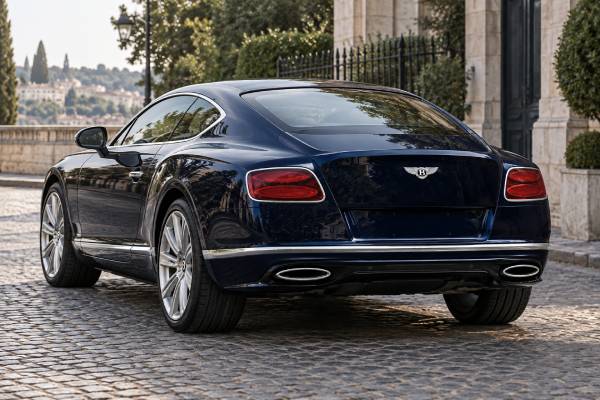
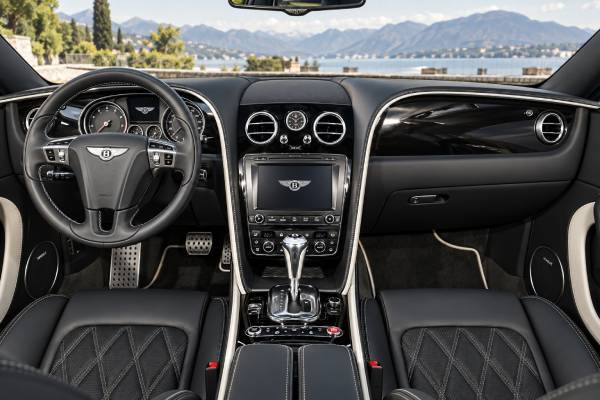
The 582 hp Continental GT W12 is the mature, facelifted form of Bentley’s second-generation Type 393 coupe. It sits between the earlier 567 hp standard W12 and the 626 hp GT Speed, combining a revised 6.0-liter twin-turbo engine with an eight-speed automatic, permanent all-wheel drive, and cylinder deactivation under suitable light loads. Factory figures of 720 Nm, 0–60 mph in 4.3 seconds, and 198 mph describe a car with enormous reserve, but they do not explain the used-car challenge. Production dates overlap earlier specifications, advertisements often confuse the standard GT with the Speed, and 2018 registrations can overlap the all-new third generation. A sound purchase therefore begins with exact identity and continues through cold-start diagnostics, heat-soak testing, tire and brake measurements, air-suspension checks, and documentary proof. This guide defines the 582 hp car precisely and turns its engineering and service needs into a practical inspection and ownership plan.
Table of Contents
- Place the 582 hp Car in the Range
- Facelift W12 Numbers That Matter
- What Changed Inside the Revised W12
- Test It Cold, Hot, and Under Load
- Assess the Systems That Carry the Speed
- Prove History Before Pricing Condition
- Decide Whether This Is Your Continental
Place the 582 hp Car in the Range
The exact subject is the standard second-generation Continental GT coupe with the 582 bhp W12. The power rating, Type 393 platform, factory build data, and VIN matter more than a registration year because the stated 2015–2018 period contains several nearby versions.
Earlier Type 393 W12 coupes were commonly rated at 567 bhp and 700 Nm. The facelifted standard car increased output to 582 bhp and torque to 720 Nm, added variable displacement capable of running on six cylinders in appropriate conditions, and retained the eight-speed ZF automatic and rear-biased all-wheel-drive layout. The GT Speed remained a different model with 626 bhp, 820 Nm, a higher top speed, a lower and more sporting chassis presentation, and Speed-specific trim.
Do not identify the car from a grille, wheel, or badge. Darkened lamps, large wheels, red brake calipers, quilted leather, and carbon trim could be factory options, later additions, or components borrowed from another derivative. Obtain the factory specification and verify engine output, model designation, production date, market equipment, brake type, wheel package, and any Mulliner options.
The 2018 boundary is particularly important. Bentley’s all-new third-generation Continental GT entered the market around this period with a different platform, body, electrical architecture, engine specification, and dual-clutch transmission. A late registration does not transform a second-generation Type 393 into the newer car, and an early build date does not automatically place a third-generation example in this article. The VIN and physical platform resolve the question.
The standard 582 hp W12 has its own appeal. It is less visually aggressive and slightly less rapid than the Speed, yet it delivers the defining W12 smoothness, four-seat touring ability, and nearly 200 mph performance. For road use, the softer standard chassis and less conspicuous appearance can be advantages. It also avoids the idea that every drive must justify a Speed badge.
Facelift W12 Numbers That Matter
This gasoline coupe uses a front-mounted, twin-turbocharged 6.0-liter W12. Steering-column paddles command the eight-speed ZF automatic, while the Torsen center differential apportions 40 percent of the nominal drive forward and 60 percent rearward. The tables cover only the 582 bhp standard coupe.
| Item | Factory value |
|---|---|
| Engine | 6.0-liter twin-turbocharged W12 |
| Maximum power | 582 bhp / 590 PS / 434 kW at 6,000 rpm |
| Maximum torque | 720 Nm / 531 lb-ft at 1,800 rpm |
| Transmission | 8-speed ZF automatic with Quickshift and column-mounted paddles |
| Drive system | Permanent all-wheel drive, nominal 40:60 front/rear split |
| Efficiency feature | Variable displacement from 12 to 6 cylinders under suitable low-load conditions |
| Fuel | Premium unleaded gasoline |
| Measure | Result |
|---|---|
| 0–100 km/h | 4.5 seconds |
| 0–60 mph | 4.3 seconds |
| Top speed | 319 km/h / 198 mph |
| Measure | Metric | Imperial |
|---|---|---|
| Length | 4,818 mm | 189.7 in |
| Width across body | 1,947 mm | 76.7 in |
| Width including mirrors | 2,226 mm | 87.6 in |
| Height | 1,401 mm | 55.2 in |
| Wheelbase | 2,746 mm | 108 in |
| Item | Value |
|---|---|
| EU kerb weight | 2,320 kg / 5,115 lb |
| Gross vehicle weight | 2,750 kg / 6,063 lb |
| Fuel tank | 90 liters / 24 US gal |
| Trunk volume | 358 liters / 12.6 cu ft |
| Seating | Four-seat coupe |
| Test procedure | City/urban | Highway/extra-urban | Combined |
|---|---|---|---|
| U.S. EPA, 2016 GT W12 | 12 mpg | 21 mpg | 15 mpg |
| Published EU cycle | 21.9 L/100 km | 9.8 L/100 km | 14.2 L/100 km |
These are homologated or manufacturer figures from the facelift-era car. Wheel and tire packages, brakes, options, market specification, test procedure, weather, and use alter real-world results. Do not combine an independent acceleration test with a factory value without naming the different method.
What Changed Inside the Revised W12
The revised engine made the standard GT more powerful and more efficient without changing its essential character. The important additions are the 720 Nm torque plateau, updated turbo and engine management, cooperation with the eight-speed transmission, and variable displacement that can deactivate six cylinders when full output is unnecessary.
A W12 is not two conventional V6 engines placed side by side. Its compact layout uses staggered narrow-angle cylinder banks to package twelve cylinders in a shorter length than a traditional V12. In the Continental, that allows a relatively short nose and four-seat cabin, but it also creates a dense engine bay. Access time can be a major part of repair cost even when the failed component is ordinary.
The two turbochargers are tuned for strong response at low engine speed rather than a dramatic surge near the redline. A healthy car gathers speed with little apparent effort. That calm delivery is why a road test must include instrument readings and deliberate load: noise and drama are poor measures of whether 720 Nm is arriving correctly.
Variable displacement is intended to be seamless. Under appropriate light load, the engine management system can shut down one bank arrangement so that six cylinders carry the work, then restore all twelve when the driver requests more torque. Activation depends on operating conditions. A buyer should not expect a constant dashboard display or attempt to force the mode during a short test.
The eight-speed automatic contributes as much to the facelifted feel as the output increase. Lower ratios help launch the 2,320 kg coupe, while the upper gears reduce engine speed on a long cruise. Quickshift logic and paddles provide direct requests, but this is still calibrated as a grand-touring automatic. Violent engagement is not evidence of sportiness.
Permanent all-wheel drive uses a nominal rear bias to reduce the front-led sensation of earlier Continentals while maintaining traction. The split does not eliminate the need for matched tires. Differences in size, construction, tread depth, or pressure can affect stability control and place unnecessary load on driveline components.
The engine’s cylinder count should not dominate the whole purchase. Cooling valves, pumps, hoses, radiators, fans, ignition components, sensors, vacuum plumbing, mounts, batteries, and wiring all influence how the W12 behaves. A specialist who understands the system will follow measured symptoms rather than replacing the most famous part first.
Test It Cold, Hot, and Under Load
A credible test spans three states: a genuine cold start, full operating temperature under progressive load, and a hot restart after a short soak. Cars that are started before the appointment or driven only around a dealership cannot complete that examination.
Confirm cold status through touch where safe and diagnostic temperatures. On start-up, the engine should crank promptly and settle without persistent misfire, heavy smoke, warning messages, belt squeal, or prolonged mechanical rattle. Brief changes during catalyst warm-up can be normal; record duration and scan values rather than interpreting every sound as failure.
Inspect the engine bay before heat obscures leaks. Look for dried coolant residue, oil misting, staining below reservoirs, nonfactory clamps, cracked wiring covers, disturbed fasteners, and evidence that fluid was added immediately before sale. Check oil level using the prescribed method and verify the correct fluid specification from the VIN documentation.
Bring the car to temperature while monitoring live data. Cabin heat should remain stable, fans should respond appropriately, and the car should not smell strongly of coolant after stopping. A center gauge can remain calm while a local valve, pump, or sensor is misbehaving, so actual readings and a pressure test are valuable when evidence is suspicious.
Apply throttle in stages on a suitable road. The W12 should pull evenly from low speed without hesitation, surging, boost-control warnings, or misfire. Use one firm acceleration only after temperatures are correct and conditions are legal and safe. Compare requested and actual boost, fuel-trim behavior, misfire counts, and relevant temperatures with specialist expectations.
Then test the transmission in situations that reveal different faults: a gentle first upshift, steady low-speed traffic, a rolling kickdown, manual paddle commands, deceleration toward a stop, reverse selection, and Drive engagement after heat soak. Delay, flare, repeated hunting, shudder, or a harsh bang needs diagnosis. Software adaptation, mounts, fluid state, driveline joints, or internal wear can feel similar from the seat.
Listen at parking speed and highway speed. Full-lock maneuvers should not produce repeated clunks or severe binding. A hum that changes with speed may come from tires, wheel bearings, differentials, or propeller-shaft components. Vibration under load, during coast, and under braking should be recorded separately because each condition points in a different direction.
After the road portion, let the car sit briefly and restart it. Recheck for warning messages, smoke, fluid odor, cooling-fan behavior, and any new stored or pending faults. Heat-related electrical or fuel-control problems may appear only now.
A full scan must cover every module. Note fault status, frequency, mileage or time stamps where available, readiness monitors, and system voltage. Recently cleared codes do not prove repair, and an empty engine module cannot show a worn suspension bush or cracked wheel. Electronic and physical evidence must agree.
Assess the Systems That Carry the Speed
The chassis, tires, brakes, air suspension, body, and electrical network determine whether the engine’s performance is usable. Their condition should be measured on a lift and confirmed on varied roads, not inferred from a clean dashboard.
Leave the car parked and compare all four ride heights. A low corner or compressor that runs repeatedly can indicate an air leak, valve issue, sensor problem, weak compressor, or strut fault. Cycle the approved suspension settings and judge whether the damping response changes without warning messages or excessive bouncing.
On rough surfaces, listen for control-arm bushes, ball joints, anti-roll-bar links, mounts, and rear suspension joints. On a smooth road, check steering center, straight-line stability, and wheel balance. The Continental should take one controlled movement after a bump; float, repeated oscillation, or a sharp knock is not part of its luxury character.
Tire inspection must include the hidden inner shoulders. Record brand, model, exact size, load and speed ratings, production dates, tread depth across the width, repairs, and sidewall condition. Four matching tires with similar wear are the safest baseline. A new pair installed only at the visible axle may conceal alignment trouble or leave an undesirable circumference difference.
Standard iron brakes are large, powerful, and expensive. Measure pads and discs, inspect both disc faces, check fluid history, and test for high-speed judder and low-speed release. Optional carbon-silicon-carbide brakes require a specialist familiar with their inspection criteria, including impact damage, chips, contamination, and the approved assessment of remaining serviceability. Painted calipers do not identify disc material.
Inspect every wheel for bends, cracks, welds, bead damage, and excessive balancing weights. Large wheels can look perfect after cosmetic refinishing while remaining out of round. A speed-specific vibration should be investigated before purchase rather than dismissed as “just balancing.”
The aluminum body needs consistent panel fit and correct repair methods. Examine paint texture in daylight, lower bumpers, sills, wheel arches, undertrays, jacking points, subframes, and floor structures. A paint-depth gauge is useful only as part of an inspection; prior high-quality refinishing may be acceptable, while a low reading cannot rule out replaced panels.
Inside, operate all seat functions, climate zones, windows, mirrors, locks, soft-close features, infotainment, audio, navigation, telephone connection, parking sensors, camera, lighting, steering controls, and driver aids. Test them again after the road drive. Heat and voltage changes can reveal intermittent faults.
Battery condition deserves its own measurements. These cars contain many control modules and can behave erratically when voltage is low. Test battery health, cranking voltage, charging output, and parasitic draw when indicated. A battery maintainer is useful in storage but should not become a permanent explanation for a failing battery or an undiagnosed drain.
Prove History Before Pricing Condition
Price the car only after its identity, service chronology, recall status, options, and current measurements are documented. A low odometer reading or a recent dealer stamp cannot substitute for proof of how the car was stored, diagnosed, and repaired.
Match the VIN on the body, title, invoices, diagnostic reports, and factory record. Run appropriate title, theft, finance, salvage, mileage, and export checks. In the United States, use the official VIN recall lookup; the NHTSA model page is a starting point, not confirmation that one vehicle has completed every campaign.
Build a timeline with dates and mileage. Mark changes of owner, long gaps, auction entries, periods abroad, and clusters of repairs. Low-use cars still age through battery decline, tire hardening, seal deterioration, moisture, and fluid contamination. Frequent short starts can be less kind than long, fully warmed journeys.
Look for explicit evidence of:
- Correct engine oil and filter work at sensible intervals
- Spark plugs, ignition components, and misfire diagnosis
- Cooling-system pressure tests and identified pump, valve, hose, fan, or radiator repairs
- Transmission and driveline assessment using the correct Bentley procedures
- Brake-fluid service, measured pads and discs, and carbon-brake records where fitted
- Four-wheel alignment, matched tires, and structural wheel repairs
- Air-suspension and steering diagnosis
- Battery replacement, coding or registration where required, charging tests, and storage support
- Water-entry investigation around glass, doors, trunk, and body drains
- Software updates, recalls, service campaigns, and full module scans
Do not treat every replaced part as reassurance. A series of batteries may show that a drain was never found; repeated coolant top-ups may hide a leak; repeated alignment without renewed joints may never hold. Good invoices identify the complaint, tests, cause, parts, and verification.
Modifications alter value according to quality and reversibility. Engine software can increase heat and torque beyond the assumptions of the standard 582 hp specification. Lowering, oversized wheels, exhaust changes, catalyst removal, or nonfactory electronic accessories can affect legality, refinement, and diagnosis. Obtain original parts and calibration records or price the uncertainty.
Commission an independent Bentley-specialist inspection with cold start, lift access, full scan, live data, road test, battery analysis, fluid and leak inspection, tire and brake measurements, and a written estimate. Separate immediate safety work, work expected within a year, and cosmetic preferences. Add contingency for faults that require trim or undertray removal.
Reasons to pause include overheating, persistent misfire, serious transmission delay, recurring low voltage, structural doubt, active fluid loss, mismatched or damaged tires, unverified carbon brakes, and a seller who refuses diagnostics. The most economical 582 hp GT is usually the one whose expensive needs have already been handled correctly.
Decide Whether This Is Your Continental
Choose the 582 hp W12 when its smoothness, discreet appearance, and long-distance effortlessness matter more than the sharper V8 character or the Speed’s extra output. It is a distinct specification, not merely the midpoint in a horsepower table.
Compare alternatives honestly. The 500 hp V8 carries less mass over the nose, has a stronger exhaust voice, and uses less fuel. The 626 hp Speed adds torque, top speed, and a more focused chassis. The GTC offers open motoring but sacrifices trunk space and adds roof systems. The third-generation car brings newer architecture and a dual-clutch transmission, but it is not the same ownership proposition.
Budget beyond scheduled servicing. Four premium tires, large brakes, air suspension, cooling work, batteries, electronics, and body repair can each be significant. Arrange insurance, dry storage, specialist access, and suitable flatbed recovery before the first long trip. Keep a reserve that does not depend on selling the car.
After purchase, create a baseline instead of assuming the pre-sale service covered everything. Confirm fluids and filters, tire dates and pressures, brake measurements, battery health, alignment, cooling integrity, recalls, and diagnostic status. Retain the report and every later invoice in order.
Use the coupe as intended. Warm it with moderate driving, avoid repeated brief starts, and give the engine and transmission time to reach operating condition. During storage, keep the car dry and use an appropriate maintainer according to instructions. Exercise climate, seats, windows, locks, and other systems regularly.
Respond to changes early. A new coolant scent, slow crank, uneven idle, altered shift, tire vibration, suspension drop, or intermittent convenience fault is easier to diagnose while it is repeatable. Record the conditions rather than waiting for a warning lamp to remain on.
The right car feels almost understated despite its figures. The W12 starts cleanly, delivers torque without a step, the eight-speed changes ratios without drawing attention, and the body remains settled at speed. That unity is the true reason to buy the 582 hp Continental GT—and the standard against which every candidate should be judged.
References
- 36/ INTERIOR 46/ IN-CAR TECHNOLOGY 52/ PERSONALISING YOUR CAR 2016 (Bentley Model Brochure)
- 2016 Bentley Continental GT 2016 (U.S. EPA Fuel Economy)
- 2016 BENTLEY CONTINENTAL GT | NHTSA 2016 (Safety and Recall Search)
- 2016 Bentley Continental GT Review & Ratings 2016 (Model Overview)
- 2016 Bentley Continental GT First Drive Review 2015 (Contemporary Road Test)
- First Drive: 2016 Bentley Continental GT Speed / GT V8 S coupe 2015 (Facelift Engineering Context)
Disclaimer
This article is informational and does not replace official Bentley workshop literature, professional diagnosis, or an independent pre-purchase inspection. Specifications, fluids, service schedules, procedures, campaigns, and installed equipment can differ by VIN, production date, market, and options; verify all decisions against the documentation for the individual car. Please share this guide on Facebook, X/Twitter, or another platform if it helps encourage careful buying and maintenance.