


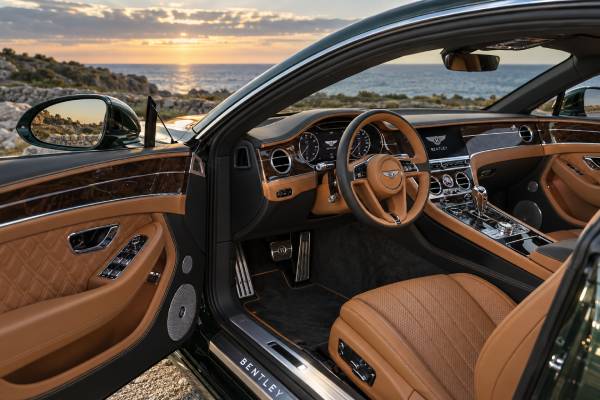
The 2018–2021 Bentley Continental GT W12 is more than a redesigned second-generation car. The 3S3 platform moved the engine rearward, extended the wheelbase, adopted active all-wheel drive, introduced an eight-speed dual-clutch transmission and used a 48-volt active chassis to control roll without simply making the ride harsh. Its 626 hp and 900 Nm produce 0–60 mph in 3.6 seconds and a 207 mph maximum, but the transformation is most obvious in steering response, cabin packaging and the lower visual stance. Early cars require careful software and electrical due diligence. DCT behavior, active aero, rotating-display operation, low-voltage battery health and 48-volt faults belong in the same conversation as oil, coolant and brakes. A fully updated, well-used car can be a better purchase than a low-mileage example with intermittent warnings and incomplete invoices. The generation reset rewards buyers who verify the whole electronic and mechanical system.
Table of Contents
- The platform reset behind the 2018 Continental GT
- W12 coupé specifications and technical layout
- Why the dual-clutch gearbox changed the car’s character
- Chassis technology, cabin packaging and real-world touring
- Maintenance for the W12, 48-volt systems and DCT
- Common inspection themes on early third-generation cars
- How to select model year, options and condition
The platform reset behind the 2018 Continental GT
The third-generation Continental GT reset the model by changing proportions and hardware together. Its wheelbase grew, the front axle moved forward relative to the cabin and the W12 sat farther back in the chassis. That packaging reduced the visual front overhang and improved weight placement, so the 3S3 feels less nose-led than the second-generation coupé even though it remains a very heavy grand tourer.
The transmission change is equally important. Bentley replaced the conventional eight-speed automatic with an eight-speed dual-clutch unit. This gives faster, more direct shifts and a stronger mechanical connection, especially in Sport. It also creates different low-speed behavior and maintenance questions. A buyer familiar with the older car should not assume every engagement characteristic is the same.
Active all-wheel drive distributes torque according to drive mode and grip rather than using the previous fixed strategy. Under normal conditions the car can feel rear biased, while the front axle contributes as required. The 48-volt Bentley Dynamic Ride system can oppose roll quickly, allowing the air springs and dampers to retain compliance. The combination makes the car respond more like a smaller coupé without denying its mass.
Cabin design also changed ownership. The 12.3-inch display, optional rotating panel, extensive driver assistance and new connectivity added convenience but increased dependence on stable voltage and current software. A car can be mechanically sound yet frustrating if modules, cameras or infotainment functions are not updated and tested.
The 2018–2021 scope includes early production, so build date and campaign history matter. Later software may improve gearbox, display or chassis behavior. Verify that recalls and service actions were completed by VIN, then ask for invoices showing how intermittent complaints were resolved. A dealer visit listed as “checked” is less useful than a report naming the fault and repair.
This generation is attractive because it retains the full 6.0-litre W12 while delivering a more balanced platform. It is neither the last W12 Speed nor the newest hybrid. For many buyers, that middle position offers the right blend of traditional engine character and modern chassis control—provided the electronic baseline is complete.
W12 coupé specifications and technical layout
This technical snapshot covers the launch-era third-generation W12 coupé, whose MSB-based platform, dual-clutch gearbox and active all-wheel drive mark a clean break from the preceding 393. Its 635 PS output is only part of the change; wheelbase, luggage space, electrical architecture and suspension systems also moved forward. The figures should be read as 3S3 W12 data, with market homologation and optional 22-inch equipment checked separately.
| Item | Specification |
|---|---|
| Powertrain class | Gasoline internal-combustion engine (ICE) |
| Engine | 6.0L twin-turbo W12 TSI |
| Maximum output | 626 hp (635 PS; 467 kW) |
| Maximum torque | 900 Nm (664 lb-ft) |
| Transmission | 8-speed dual-clutch transmission |
| Driven wheels | active all-wheel drive with a rear-drive default strategy |
| Fuel tank | 90 L (23.8 US gal) |
| Measure | Value | Context |
|---|---|---|
| 0–60 mph | 3.6 seconds | Manufacturer claim |
| 0–100 km/h | 3.7 seconds | Manufacturer claim |
| Maximum speed | 207 mph (333 km/h) | Factory limit or announced target |
| Combined fuel consumption | 12.2 L/100 km combined on the launch European cycle | Period European or WLTP figure |
| CO₂ emissions | 278 g/km on the launch European cycle | Market and equipment can change result |
| Dimension or capacity | Value |
|---|---|
| Body style | two-door, four-seat coupé |
| Length | 4,850 mm (190.9 in) |
| Width | 1,954 mm (76.9 in), excluding mirrors |
| Height | 1,405 mm (55.3 in) |
| Wheelbase | 2,851 mm (112.2 in) |
| Kerb weight | 2,244 kg (4,947 lb) kerb under Bentley’s published definition |
| Luggage capacity | 358 L (12.6 cu ft) |
| Component | Factory specification |
|---|---|
| Suspension and active systems | three-chamber air springs, adaptive dampers and available 48-volt Bentley Dynamic Ride |
| Brake system | 420 mm front and 380 mm rear ventilated iron discs |
| Factory wheel context | 21-inch standard; 22-inch options widely specified |
| Steering/stability distinction | this was the clean-sheet third-generation coupé, with a longer wheelbase, engine set farther rearward, active AWD and Bentley’s first dual-clutch transmission |
| Area | Detail |
|---|---|
| Roof/body structure | fixed coupé body with an aluminium-intensive outer structure |
| Fuel capacity | 90 L (23.8 US gal) |
| Seating | Four seats |
| Primary buyer verification | Match wheel, brake, chassis and market equipment to the VIN build record |
The third-generation numbers show a car redesigned around a longer wheelbase, rearward engine position and dual-clutch transmission rather than a simple facelift. Optional wheels and brakes can change unsprung mass and running cost substantially. A VIN-specific configuration report is the proper bridge between these model-family figures and the parts fitted to a particular 3S3.
Why the dual-clutch gearbox changed the car’s character
The dual-clutch gearbox changed the Continental’s character by removing some of the fluid slip associated with the older torque-converter automatic. At speed, shifts can feel immediate and tightly connected to throttle input. In Sport, the transmission holds lower gears and reacts more aggressively. The result is a car that feels alert rather than merely powerful.
Low-speed operation requires context. A dual-clutch unit manages takeoff through clutches, so creeping on an incline or reversing into a tight space can feel different from a conventional automatic. Mild mechanical engagement is normal; repeated shudder, a long delay selecting Drive, a harsh bang or an overheating message is not. Test the car cold, warm and after several parking maneuvers.
The gearbox works with the W12’s 900 Nm, which means software and mechanical condition must agree. A weak battery or incomplete adaptation can influence behavior, while mount wear and driveline backlash can exaggerate a normal shift. Diagnosis should include fault codes, clutch data where available, software level and a road test—not an immediate assumption that the entire transmission is failing.
Paddle response provides another check. Commands should be acknowledged consistently, and the selected gear should remain stable under steady throttle. A flare during an upshift, hesitation during a decisive downshift or a vibration tied to one gear needs investigation. Record the temperature and drive mode when the symptom appears so a technician can reproduce it.
Fluid-service decisions should follow Bentley information for the exact VIN and market, plus a specialist’s assessment of age and use. If service is performed, correct fluid, fill temperature and procedure are essential. A generic flush or undocumented additive can introduce risk into a unit that depends on precise clutch control.
The transmission’s strengths emerge on a flowing road. It can keep the W12 near its broad torque peak without interrupting the chassis, helping the 3S3 accelerate from a bend with less delay than the older car. The driver should feel one coordinated response from pedal, engine, gearbox and active driveline.
When buying, compare several cars if possible. One example may reveal how cleanly the system can operate and prevent a seller from describing every shunt as normal. The correct DCT gives the Continental a new layer of precision while remaining civil enough for traffic and long-distance use.
Chassis technology, cabin packaging and real-world touring
The third-generation chassis is successful because it can vary its behavior without becoming inconsistent. Three-chamber air springs provide a broad range of support, adaptive dampers control wheel movement and the 48-volt anti-roll system can resist body lean quickly. In Comfort, the car should breathe over long undulations; in Sport, it should take a set sooner without turning every surface joint into a shock.
Check whether the car sits level after several hours. A leaking air spring, height sensor or valve issue may not trigger an immediate warning, but the compressor’s run time and stored data can reveal it. Repeatedly forcing the system to raise a low corner shortens compressor life. A specialist should measure heights and duty cycle before parts are selected.
Steering is electrically assisted and variable in ratio. The wheel should remain centered on a flat road, build effort predictably and return without a sticky point. Pulling can come from alignment, tire construction, brake drag or accident history. Wide 21- or 22-inch tires make the car sensitive to inner-edge wear, so measure tread across the full width.
The brake package is substantial: 420 mm front and 380 mm rear iron discs with ten-piston front calipers. Pedal response should be firm and repeatable. Deposit vibration can appear after gentle use or storage, while old fluid can reduce consistency. Inspect the inside faces and pad wear rather than judging only through the wheel spokes.
Touring usability improved through the longer wheelbase and 358-litre luggage area. The rear seats remain occasional for adults, but the cabin feels more spacious and the front seating position more integrated with the car. Test every seat motor, massage or ventilation function fitted, because comfort options carry expensive modules and trim.
The optional rotating display is both theatre and a mechanism. Cycle between touchscreen, gauges and veneer several times, including after a restart. Listen for strain and check alignment in every position. A single successful demonstration is not enough when the mechanism may bind intermittently.
Driver-assistance systems should be tested on a suitable road. Cameras, radar and sensors may require calibration after windscreen or body repair. Warning messages that vanish after a restart still deserve documentation. The best touring car is one whose technology reduces effort; a car requiring repeated resets defeats the purpose of the generation’s added complexity.
Maintenance for the W12, 48-volt systems and DCT
Maintenance should begin with three separate electrical and mechanical baselines: conventional 12-volt health, 48-volt chassis operation and W12/DCT condition. These systems interact, and a low-voltage event can produce warnings far from its source. Save a full scan before clearing codes, then test both battery condition and charging performance.
The W12 needs approved oil and close cooling-system observation. Its twin-scroll turbochargers and dense packaging produce sustained heat. Check unions, hoses, pumps, expansion tanks and undertrays for residue. Any unexplained loss should be pressure-tested; topping up repeatedly removes evidence and risks overheating.
Track oil level between services using the handbook method. A single reading cannot distinguish consumption, leakage or an incorrect fill. Note mileage, driving pattern and any smoke or odor. Annual oil changes remain sensible even on a low-mileage car because time and short trips affect the lubricant.
The DCT should be serviced only with the correct parts, fluid and temperature procedure. Discuss age, mileage and usage with a Bentley specialist, especially if the car has spent time in heavy traffic or has a history of launch-control use. Software updates and adaptations should be documented separately from mechanical repair.
The 48-volt Dynamic Ride system needs data-led diagnosis. Active anti-roll actuators, wiring and control electronics can set faults that are not resolved by replacing ordinary suspension components. Verify mode changes, scan stored events and inspect connectors for moisture or damage. Ride complaints should be compared with tire pressure and wheel condition before expensive chassis work begins.
Cooling airflows through multiple heat exchangers, so clean the front stack carefully and inspect damage after stone impacts. Active aerodynamic elements should move freely and remain correctly aligned. An undertray fitted poorly after service can disturb airflow and conceal leakage.
A structured first service after purchase should cover:
- Complete diagnostic and software-status report.
- Load tests for low-voltage and 48-volt support systems.
- Engine-oil baseline and cooling pressure check.
- DCT operation review, with fluid history verified.
- Brake, tire, wheel and alignment measurements.
- Air-suspension height and active-roll assessment.
- Retest after full warm-up and preserve the results.
Keeping those records builds a useful trend. Future technicians can see whether a compressor runs longer, a battery weakens or a DCT adaptation changes, rather than starting each visit from zero.
Common inspection themes on early third-generation cars
Early 3S3 inspection should focus on software maturity and complete system function as much as on visible wear. Commission a workshop with access to Bentley diagnostics and enough time to drive the car from cold to full temperature. The seller should not erase faults before the report is saved.
Begin with body and build identity. Compare VIN data, glass dates, paint thickness and option codes. Check the front for signs of repair around radar, cameras, active aero and cooling ducts. A beautifully repaired panel may still require sensor calibration, so confirm that assistance systems operate without stored faults.
Observe the first start. The engine should settle evenly, displays should boot without repeated messages and the rotating panel should initialize correctly if fitted. Add electrical loads—lights, climate, seat functions and audio—while monitoring voltage behavior. Intermittent warnings during this phase can be more revealing than a later drive after the battery has recovered.
Use the road test to separate DCT, tire and chassis symptoms. Perform slow reversing, a hill start, gentle upshifts, steady cruising and a controlled full-torque request. Then compare Comfort and Sport over the same surface. Note whether a vibration follows engine speed, road speed or clutch engagement.
Inspect the underside while the car is warm. Look for coolant and oil residue, missing fasteners, damage to active-aero components and evidence of incorrect lifting. Measure tire wear across the full tread, inspect wheel barrels and record brake condition on both disc faces.
The report should explicitly cover:
- Software campaigns, recalls and stored module faults
- 12-volt battery capacity and charging output
- W12 coolant pressure, oil leakage and hot restart
- DCT engagement, clutch behavior and adaptation evidence
- 48-volt Dynamic Ride operation and ride heights
- Active aero, rotating display and driver-assistance systems
- Wheel runout, tire match and alignment
- Iron-disc condition, pad life and brake-fluid age
A low-mileage early car may require more recommissioning than a later, regularly used example. Price battery, tires, software work and overdue fluids before deciding that the smaller odometer deserves a premium. The best early cars are those whose initial issues were resolved and documented, not those that simply avoided use.
How to select model year, options and condition
Select condition before model year. Later cars may have incremental software and equipment changes, but a fully updated 2018 example with continuous service can be preferable to a neglected 2021 car. Compare VIN-specific campaign completion and invoices rather than relying on the registration date alone.
Wheel size affects real ownership. Twenty-one-inch wheels provide more sidewall and may suit damaged roads, while 22-inch designs sharpen appearance and steering response at the cost of tire price and impact protection. Inspect the actual wheel for straightness and previous repair. The most desirable design is not valuable if it creates vibration.
The rotating display, upgraded audio, touring assistance and Mulliner options add appeal, but they also add systems to test. Operate every feature repeatedly. A failed mechanism or camera should be costed at the purchase stage. Do not value a non-working option as though it were present and healthy.
Brake condition is more important than caliper color. The standard iron system offers powerful stopping and more predictable replacement economics than exotic alternatives on other derivatives. Measure disc wear and check for storage corrosion or deposits. A car used gently can still need brake work.
Mileage should be matched to evidence. Long-distance use often suits the W12 and DCT, while repeated short trips can create battery and moisture problems. Inspect steering controls, bolsters, pedals and luggage trim for consistency with the odometer. Ask for the reason behind any long period with almost no mileage.
A first-year reserve should cover tires, alignment, fluids, a battery and software or minor electrical correction. Even an excellent inspection cannot predict every module or seal. Keeping funds available allows the new owner to establish a reliable baseline instead of postponing work.
The right 626 hp Continental GT should start without drama, shift cleanly in every mode, maintain ride height, run all displays and assistance systems, and remain dry underneath after a full-temperature drive. When those qualities align, the early third-generation W12 offers a compelling combination: the traditional twelve-cylinder engine with a platform that finally makes the car feel as modern dynamically as it looks.
References
- Bentley News 2017: THE BENTLEY CONTINENTAL GT – LUXURY GRAND TOURING 2017 (Official Model/Technical Source)
- The New Continental GT and Continental GT Convertible 2020 (Official Model/Technical Source)
- Bentley Continental | History and Heritage | Bentley Motors 2026 (Official Model/Technical Source)
- Bentley News 2024 : End of an era as final Bentley W12 engine hand-built in Crewe 2024 (Official Model/Technical Source)
- Technical Service Bulletin 2076639/2 2025 (Recall/Service Source)
- Check for Recalls: Vehicle, Car Seat, Tire, Equipment | NHTSA 2026 (Recall/Service Source)
Disclaimer
This article is intended for general information and does not replace professional diagnosis or repair. Specifications, torque values, service intervals and procedures can differ by VIN, market, build date and equipment; verify them in official Bentley service documentation for the exact vehicle.
If the guide assisted your research, please share it on Facebook, X/Twitter or with another prospective owner to support our work.