
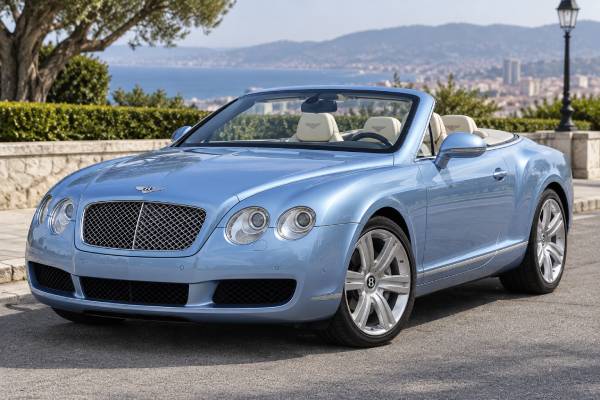
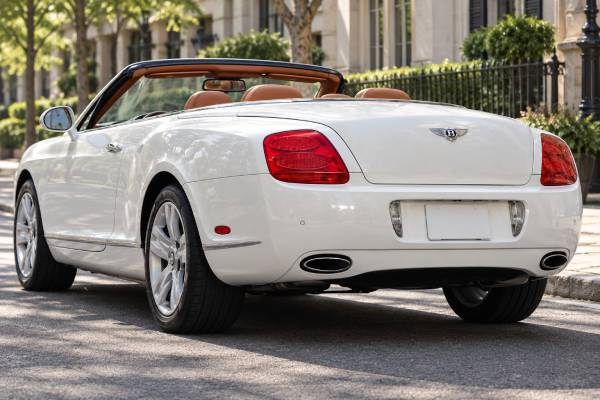
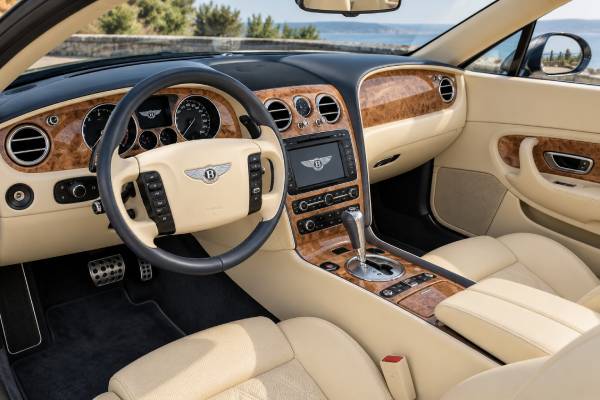
The first Bentley Continental GTC did more than remove the coupe’s roof. Bentley reinforced the body, reworked rear suspension mounting, packaged a fully concealed multi-layer soft top, and preserved the 552 hp twin-turbo W12, permanent all-wheel drive, and four-seat layout. The result was one of the fastest and most substantial convertibles of its era: 312 km/h (195 mph) with the roof raised, a claimed 0–100 km/h time of 5.1 seconds, and enough insulation to make long-distance touring credible rather than exhausting.
Age changes the buying equation. The 3W4 GTC combines the complex Continental platform with hydraulic roof hardware, seals, drains, and body reinforcement. A cheap example can become expensive quickly. The right car is dry, completes every roof movement smoothly, has healthy batteries and level air suspension, wears matching tires, scans cleanly, and documents cooling-system care without evidence of water or low-voltage damage.
Table of Contents
- How Bentley Engineered the GTC
- GTC Specifications and Capacities
- Roof-Up and Roof-Down Road Behavior
- Convertible-Specific Maintenance
- Mechanical and Electrical Risk Areas
- Inspection From Cold Start to Roof Cycle
- Ownership Fit and Purchase Decision
How Bentley Engineered the GTC
The GTC is a structurally reinforced grand tourer, not simply a Continental GT with its steel roof cut away. Its heavier shell, strengthened windshield structure, revised rear mounting points, and seven-bow fabric roof were designed to retain refinement and control at speeds that expose weakness in ordinary convertibles.
Removing a fixed roof reduces torsional rigidity, so Bentley added material in the sills, cross-members, and body structure. The extra reinforcement helps the doors fit properly and reduces steering-column shake over uneven roads. It also contributes to a kerb weight of 2,475 kg (5,456 lb), roughly 125 kg more than the later first-generation coupe brochure figure. That mass influences tire loading, brake wear, suspension life, and the way the car responds to abrupt direction changes.
The powertrain is familiar from the original GT. A 5,998 cc twin-turbo W12 produces 552 bhp at 6,100 rpm and 650 Nm (479 lb-ft) from 1,600 rpm. A six-speed automatic sends power to all four wheels. Because maximum torque arrives so early, the GTC can accelerate strongly without constantly dropping several gears, which suits relaxed open-air driving. The transmission should feel smooth and decisive; harsh engagement, flare, repeated hunting, or driveline vibration are faults, not normal consequences of the car’s weight.
The fabric roof has three layers and is stored beneath a hard cover, leaving the car with a clean profile when lowered. Bentley quoted approximately 25 seconds for operation on period cars, depending on the exact procedure and market specification. The mechanism must synchronize latches, hydraulic movement, windows, tonneau cover, and position sensors. A complete cycle should be smooth and consistent, without manual assistance, repeated button presses, hydraulic smell, warning messages, or one side moving at a different rate.
Packaging the roof reduces luggage capacity to 235 liters (8.3 cu ft), compared with 370 liters in the coupe. Rear legroom is also limited, but the GTC remains a true four-seat convertible by high-performance standards. Its cabin is highly insulated with the roof raised, and period testing noted that normal conversation remained possible at speeds that would overwhelm many soft tops.
Air suspension and continuously controlled dampers compensate for the car’s mass and provide useful ride-height and firmness adjustment. The suspension is part of the GTC’s character: it should isolate rough surfaces without floating, and it should control body motion without crashing over joints. Any corner that settles after parking or any compressor that runs for an extended period needs diagnosis.
GTC Specifications and Capacities
These figures apply to the 552 hp first-generation GTC rather than the later 600 hp GTC Speed or 621 hp Supersports Convertible. Market equipment and model-year details vary, so VIN-specific documentation remains the final authority.
| Specification | Value | Technical note |
|---|---|---|
| Engine configuration | Twin-turbocharged W12, 48 valves | Front-mounted gasoline engine |
| Displacement | 5,998 cc (6.0 L) | 84.0 mm bore × 90.2 mm stroke |
| Maximum power | 552 bhp / 560 PS / 411 kW at 6,100 rpm | Period Bentley rating |
| Maximum torque | 650 Nm (479 lb-ft) at 1,600 rpm | Broad low-speed delivery |
| Compression ratio | 9.0:1 | Factory specification |
| Fuel requirement | 98 RON recommended; 95 RON permitted in period data | Follow the label and manual for the market |
| Fuel capacity | 90 L (23.8 US gal) | Large tank supports touring range despite high consumption |
| System | Factory arrangement |
|---|---|
| Transmission | Six-speed automatic with manual selection and steering-column paddles |
| Drive | Permanent all-wheel drive |
| Suspension | Independent air suspension with self-levelling and continuously variable electronic damping |
| Steering | Power-assisted rack-and-pinion |
| Brakes | Ventilated discs with ABS, stability control, and electronic brake-force functions |
| Common factory wheel size | 19 inches; 20-inch packages were available |
| Parking brake | Electrically operated |
| Measure | Value | Basis |
|---|---|---|
| 0–60 mph | 4.8 seconds | Bentley specification |
| 0–100 km/h | 5.1 seconds | Bentley specification |
| Top speed, roof raised | 312 km/h (195 mph) | Bentley specification |
| Top speed, roof lowered | Approximately 306 km/h (190 mph) | Period Bentley/media figure |
| 2007 U.S. EPA economy | 10 mpg city / 17 mpg highway / 13 mpg combined | Premium gasoline, EPA rating |
| EPA passenger volume | 86 cu ft | U.S. classification data |
| Specification | Metric | Imperial |
|---|---|---|
| Length | 4,804 mm | 189.1 in |
| Width across body | 1,916 mm | 75.4 in |
| Width across mirrors | 2,101 mm | 82.7 in |
| Height | 1,398 mm | 55.0 in |
| Wheelbase | 2,745 mm | 108.1 in |
| Front/rear track | 1,623 / 1,607 mm | 63.9 / 63.3 in |
| Kerb weight | 2,475 kg | 5,456 lb |
| Turning circle | 11.2 m | 36.7 ft |
| Measure | Value |
|---|---|
| Seating capacity | Four |
| Front legroom | 1,074 mm (42.3 in) |
| Rear legroom | 743 mm (29.3 in) |
| Luggage volume | 235 L (8.3 cu ft) |
| Maximum luggage-floor length | 1,081 mm (42.6 in) |
| Minimum luggage-floor width | 805 mm (31.7 in) |
| Luggage sill height | 706 mm (27.8 in) |
Roof-Up and Roof-Down Road Behavior
The GTC’s strongest dynamic achievement is that it still feels like a Bentley grand tourer with the roof removed. It is not as rigid, light, or luggage-friendly as the coupe, but it avoids the loose structure and turbulent cabin associated with many older high-output convertibles.
With the roof raised, wind noise should remain subdued and the headliner should sit evenly without excessive movement. Rattles from the header rail, rear deck, or side windows indicate adjustment, seal, latch, or body issues worth investigating. The frameless windows must drop and rise correctly when the doors are opened and closed; poor indexing can create leaks, wind noise, and damaged seals.
With the roof down, the car’s performance remains formidable. The W12 does not need to be revved aggressively, so open-air acceleration feels like a continuous surge rather than a sequence of loud gear changes. The exhaust is audible without dominating the cabin. At legal speeds the GTC is remarkably calm, especially with the wind deflector fitted and the side windows raised.
The additional mass is obvious under hard braking and in tight transitions. Smooth inputs produce the best results. Entering a bend too fast asks the front tires to manage steering, braking, and much of the car’s weight at once. A measured turn-in followed by progressive throttle lets the all-wheel-drive system stabilize the car. The GTC is capable, but it remains a large luxury convertible rather than a compact sports roadster.
Ride quality provides a useful health check. On a good car, Comfort mode absorbs sharp edges while retaining control. Sportier suspension settings reduce roll and pitch but should not produce repeated impacts or a nervous, skittish response. A harsh ride can result from failed dampers, incorrect ride height, overinflated or unsuitable tires, worn bushes, or aftermarket wheels with poor fitment.
The brakes should stop the car without steering shake, pedal pulsation, grinding, or delayed release. Because lightly used convertibles often sit for long periods, corrosion can mark the discs and seize hardware. A brief drive may clean light surface rust, but persistent vibration or uneven braking requires measurement rather than optimistic assumptions.
Convertible-Specific Maintenance
Roof care is a mechanical and water-management task, not just cosmetic detailing. Owners should keep drains clear, seals clean and correctly treated, hydraulic components dry, and roof fabric free from products that damage its water resistance or leave residues.
Operate the roof regularly in suitable conditions. Long periods without movement can allow joints to stiffen and hide developing faults. The car should be level, the battery fully charged, the luggage area correctly arranged, and the operating procedure followed exactly. Stop if the mechanism becomes asymmetric, makes a sharp new noise, or requires help by hand.
Inspect the fabric for abrasion at folds, thinning, separated stitching, shrinkage, staining, and previous patch repairs. Check the rear glass bonding and surrounding seams. A visually clean outer layer does not prove that the roof is watertight; water testing should be controlled and followed by inspection of carpets, rear quarters, luggage compartments, and module areas.
Seals around the windshield header, side glass, rear deck, and tonneau cover need cleaning with products suitable for automotive weatherstripping. Petroleum-based dressings can attract dirt or harm material. Window alignment matters because the frameless glass forms part of the seal. A regulator or door-latch fault can therefore become a water-leak problem.
Drain channels must carry water outside the body. Compressed air used carelessly can disconnect a hose or force debris deeper into the system, so a specialist familiar with the drainage path is preferable. Evidence of standing water, tide marks, green electrical corrosion, or repeated fogging should trigger a detailed search before modules fail.
Hydraulic-fluid stains or odor deserve immediate attention. A leaking cylinder, line, pump, or connection can spread fluid into trim and insulation. Replacing only the visible failed component without checking the rest of the system may postpone rather than solve the problem.
The rest of the maintenance program remains demanding. Engine oil, coolant, brake fluid, filters, spark plugs, transmission and differential fluids, air suspension, batteries, tires, and brakes all need time- and mileage-aware attention. The W12’s tight packaging means labor can dominate the invoice even when the failed part is inexpensive.
A car used mainly in summer still benefits from:
- Monthly battery-voltage and tender checks during storage.
- Periodic roof cycles at the correct temperature and with sufficient battery charge.
- Tire-pressure checks before driving, including inspection for age cracking and flat spotting.
- Full warm-up drives long enough to evaporate moisture from oil and exhaust.
- Climate-control operation to circulate refrigerant oil and verify drainage.
- Inspection after heavy rain or washing, especially beneath rear trim and in luggage wells.
- An annual diagnostic scan even when no warning remains illuminated.
Mechanical and Electrical Risk Areas
The GTC’s biggest financial risks often overlap. A weak battery can interrupt a roof cycle, low voltage can create module faults, blocked drainage can wet electrical components, and an air-suspension leak can overwork the compressor until both parts need replacement.
Start with electrical health. The platform uses two batteries and many networked modules. Test both batteries under load, confirm charging output, inspect grounds, and measure parasitic draw after the car enters sleep mode. Repeated jump-starting, disconnected batteries, or a permanent tender used to mask discharge can leave a confusing fault history.
Air suspension should hold height after an overnight park. Listen for compressor run time at start-up and after changing ride height. A sinking corner may indicate a leaking spring, line, valve, or fitting. Height-sensor faults and worn suspension arms can produce similar symptoms, so scan data and physical inspection must agree before parts are ordered.
W12 concerns include coolant leaks, aged hoses and fittings, vacuum or breather faults, ignition misfires, oil leakage, turbo-control issues, and heat-damaged wiring or plastics. The engine should start promptly from cold, settle evenly, pull strongly without surging, and show no smoke beyond brief condensation. A clean engine bay can be positive, but recent steam-cleaning may also erase evidence.
The six-speed automatic and all-wheel-drive system are durable when healthy but costly when neglected. Check for delayed Drive or Reverse engagement, shudder under light load, harsh downshifts, fluid leakage, transfer noise, and vibration at road speed. Matching tire circumference across all four wheels helps protect the driveline.
Body and cabin mechanisms deserve equal attention. Test soft-close doors, seat motors, memory, heaters, steering-column movement, mirrors, windows, keyless entry, lamps, parking sensors, navigation, audio, climate zones, trunk release, fuel flap, and rear spoiler. A list of “minor” faults can require multiple control units and extensive trim removal.
Safety campaigns affected some first-generation cars, including fuel-system and other production-specific issues. Completion must be checked by VIN in the relevant official database. A stamped service book does not prove recall completion, and a seller’s assurance is not a substitute for a campaign record.
Inspection From Cold Start to Roof Cycle
A GTC inspection should be deliberately longer than a coupe inspection because the roof, drains, rear body structure, and water-sensitive electronics must be evaluated separately. Use a Bentley-experienced specialist and insist that the car remain cold and roofed overnight before the appointment.
First, inspect the surroundings and the car’s resting stance. Look for fluid spots, one corner sitting low, condensation inside lamps, damp glass, or a battery charger already attached. Check tire brand, model, size, load rating, speed rating, date code, and tread depth at inner as well as outer shoulders.
Open the doors and smell the cabin before air conditioning or fragrances are switched on. A musty odor, damp seatbelt, wet rear carpet, staining below trim, or corrosion beneath the luggage floor can reveal water entry. Lift accessible panels carefully and inspect the roof-stowage area for debris, fluid, damaged fasteners, and signs of repeated repair.
Cycle the roof more than once, but only after battery condition is confirmed. Observe:
- Window drop and rise timing.
- Header-latch release and engagement.
- Symmetry of roof-frame movement.
- Tonneau-cover movement and panel alignment.
- Hydraulic-pump sound and cycle duration.
- Warning messages or pauses.
- Final window sealing with the roof raised.
- Any fresh fluid or fabric scuffing after operation.
Then perform a controlled water test rather than directing a pressure washer at seals. Verify drainage beneath the car and recheck hidden areas. Some leaks appear only when the car is parked at an angle, so service history and owner observations remain valuable.
The mechanical test begins with a cold start, scan, and live-data review. Watch for misfire counts, fuel-trim imbalance, coolant-temperature plausibility, battery-voltage history, suspension heights, transmission faults, and recently cleared codes. Generic code readers are inadequate because they do not access every Bentley control module.
During the road test, use urban speed, rough surfaces, steady cruising, moderate acceleration, full steering lock in both directions, and repeated braking. Listen with the roof both raised and lowered. Structural rattles, glass movement, suspension knocks, or driveline shudder may be easier to isolate in one configuration.
After the drive, rescan the car and inspect for coolant odor, fresh leaks, excessive fan operation, uneven wheel temperatures, and suspension height changes. A purchase decision should be based on a written list of findings and repair estimates, not on the emotional effect of driving a roof-down W12.
Ownership Fit and Purchase Decision
The first-generation GTC suits an owner who values occasion, craftsmanship, and effortless speed more than low running costs or modern infotainment. It is a poor choice for someone who needs predictable economy-car expenses, has no local specialist, or plans to repair warning lights only when the car stops moving.
Model year matters less than evidence. Later cars received running updates, but an early example with detailed invoices, dry bodywork, a fully serviced roof, and recent suspension work can be stronger than a later low-mileage car with vague history. Compare condition, not odometer numbers alone.
Options should be assessed for both desirability and replacement cost. Mulliner trim, unusual veneers, upgraded audio, massage seats, special paint, and larger wheels can make a car appealing. They also add systems and materials that may be expensive to restore. Carbon-ceramic brakes require specialist inspection, while oversized aftermarket wheels can damage ride quality and driveline behavior.
Preserve a repair reserve after purchase. Immediate needs commonly include tires, battery work, fluid service, alignment, suspension arms, roof adjustment, brake components, or correction of neglected convenience features. Spending more on a documented car is often cheaper than rescuing the lowest-priced listing.
A strong GTC delivers something rare even now: four-seat open-air travel with a hand-finished cabin, all-weather traction, 552 hp, and genuine continent-crossing refinement. Its complexity is not a footnote; it is the engineering that makes the experience possible. Buy the mechanism as carefully as the appearance, maintain it before faults cascade, and the 3W4 can remain an exceptional grand tourer rather than an immobile luxury ornament.
References
- CONTINENTAL GTC 2006 (Manufacturer Brochure)
- 2007 Bentley Continental GTC 2007 (Official Fuel Economy)
- Vehicle Detail Search – 2007 BENTLEY CONTINENTAL GTC | NHTSA 2026 (Recall Database)
- 2007 Bentley Continental GTC – First Drive – European Car Magazine 2007 (Road Test)
- 2007 Bentley Continental GTC 2006 (Road Test)
- Used Bentley Continental GT – 2003-2011 Reliability & Common Problems | What Car? 2026 (Platform Reliability)
Disclaimer
This article is for informational purposes and does not replace professional diagnosis, maintenance, or repair. Specifications, roof procedures, fluid requirements, torque values, intervals, and parts can differ by VIN, market, equipment, and production date. Confirm all work with the official Bentley documentation for the exact vehicle.
Please share this article on Facebook, X/Twitter, or another platform if it was useful. Your support helps fund more detailed technical and buyer guides.