

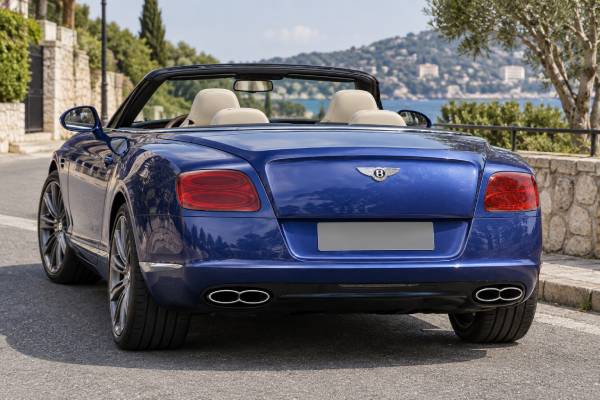
A convertible weighing 2.5 tonnes should not feel effortless at 300 km/h, yet that was precisely the challenge behind the 2013–2014 Continental GTC Speed. Bentley gave its second-generation open grand tourer a 616 bhp twin-turbo W12, 800 Nm (590 lb-ft), an eight-speed automatic, rear-biased all-wheel drive, and a chassis lowered by 10 mm. The result was a claimed 325 km/h (202 mph) maximum speed and 0–100 km/h in 4.4 seconds.
Those figures explain the model’s status, but they do not explain how to buy one well. The GTC Speed combines the dense mechanical packaging of a W12 Continental with a powered four-layer roof, additional body reinforcement, complex water management, and large performance tires. Its cabin can hide leaks, low-voltage faults, and deferred chassis work behind beautiful leather and veneer. Evaluation therefore moves from roof and body to diagnostics, cooling, suspension, brakes, and history—not from paint color to asking price. This covers the 616 bhp 394-generation GTC Speed sold for 2013 and 2014, before the later 626 bhp update.
Table of Contents
- What Made the 616 hp Convertible Different
- Factory Specifications for the 394 Speed
- The Roof Is Part of the Engineering
- Reading the Car Through a Road Test
- An Ownership Calendar That Prevents Neglect
- Buyer Checks That Protect the Budget
- The Case for This GTC Speed
What Made the 616 hp Convertible Different
The 616 bhp GTC Speed was engineered as the fastest open model in the second-generation Continental range, not as a trim package. Its engine, gearbox, suspension calibration, wheels, tires, aerodynamics, and stability programming support a performance target beyond the regular W12 convertible.
Its 5,998 cc W12 develops 616 bhp at 6,000 rpm and 800 Nm from about 1,700 rpm. Compared with the standard 567 bhp W12, the Speed offers more peak output and a stronger torque plateau. In ordinary driving, the difference appears as quicker response from medium speed and less need for the transmission to search for power.
The eight-speed ZF automatic is central to the model. It uses a short first ratio for launch and two overdrive ratios for touring. Changes are faster and more closely spaced than those of the earlier six-speed GTC Speed, while a torque converter preserves smooth low-speed operation. The driver can request ratios through fixed steering-column paddles, useful when descending or positioning the car for a bend.
A Torsen-based permanent all-wheel-drive system normally sends 40 percent of torque forward and 60 percent rearward. That balance gives the car a more adjustable feel than first-generation 50:50 examples, though the front tires still carry significant steering and drive load. Four matched tires with correct circumference remain essential for both handling and driveline health.
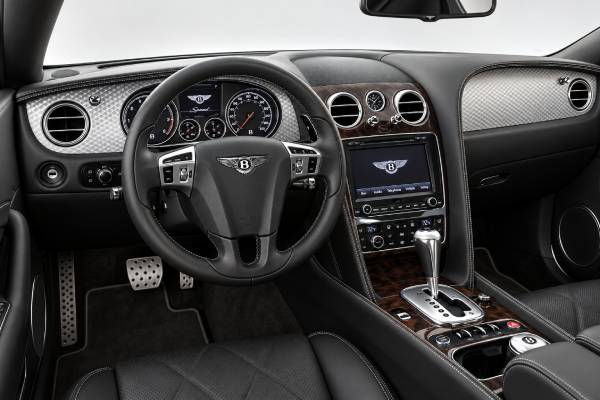
Bentley reduced ride height by 10 mm and revised spring, damper, steering, and electronic-control settings. The standard 21-inch Speed wheels, dark-tint grilles, rifled elliptical exhaust outlets, body-colored lower rear treatment, and black-background winged badges distinguish the model. Inside, the Mulliner Driving Specification brought quilted upholstery and sporting details, while individual cars could be ordered in a wide range of colors and veneers.
The four-layer fabric roof can be raised or lowered in about 25 seconds and can operate at low road speed where the handbook permits. That convenience should not obscure the number of components involved: header latches, frame links, drive mechanisms, hydraulic or electrical actuation, windows, storage cover, switches, position sensors, seals, drains, and control software must agree before a cycle completes.
Model-year identification matters because a 2014 registration can refer to different build specifications in different markets. The engine figure in this assignment—616 bhp, or 625 PS—is the clearest boundary. Verify it through the factory record and VIN rather than badges or seller description.
Factory Specifications for the 394 Speed
The 394 GTC Speed is a four-seat internal-combustion convertible with a front-longitudinal W12, eight-speed automatic, permanent AWD, self-leveling air suspension, and a powered fabric roof. Its mass and speed make brake, tire, and suspension condition especially important.
| Specification | Factory figure |
|---|---|
| Configuration | 5,998 cc twin-turbocharged W12 |
| Position | Front, longitudinal |
| Construction | Aluminum-alloy block and heads, 48 valves |
| Maximum power | 616 bhp / 625 PS / 460 kW at 6,000 rpm |
| Maximum torque | 800 Nm (590 lb-ft) from about 1,700 rpm |
| Induction | Twin turbochargers with charge-air cooling |
| Fuel | Premium gasoline; use the approved market specification |
| Item | Layout |
|---|---|
| Transmission | Eight-speed ZF automatic with steering-column paddles |
| Driveline | Permanent AWD, nominal 40:60 front/rear split |
| Front suspension | Four-link double wishbones with computer-controlled air springs |
| Rear suspension | Trapezoidal multi-link with computer-controlled air springs |
| Dampers | Continuous damping control with driver-selectable settings |
| Speed ride height | 10 mm lower than the regular GTC |
| Wheels | 21-inch Speed-design alloys |
| Brakes | Ventilated iron discs; carbon-ceramic system available in many markets |
| Measure | Metric | Imperial |
|---|---|---|
| Length | 4,806 mm | 189.2 in |
| Width across body | 1,943 mm | 76.5 in |
| Width including mirrors | 2,227 mm | 87.7 in |
| Height, roof raised | about 1,403 mm | 55.2 in |
| Wheelbase | 2,746 mm | 108.1 in |
| EU curb weight | about 2,495 kg | 5,501 lb |
| Fuel tank | 90 L | about 23.8 US gal |
| Trunk capacity | 260 L | 9.2 cu ft |
| Measure | Claim |
|---|---|
| 0–60 mph | 4.1 seconds |
| 0–100 km/h | 4.4 seconds |
| Maximum speed | 325 km/h (202 mph) |
| Seating | Four, in a 2+2 layout |
| Roof cycle | Approximately 25 seconds |
| Measure | Published figure |
|---|---|
| European combined cycle | approximately 14.9 L/100 km, depending on certification |
| U.S. ratings | typically in the low teens city and high teens highway for the W12 Speed |
| Tank capacity | 90 L (23.8 US gal) |
| Real-world variables | temperature, traffic, roof position, tire pressure, fuel blend, and driving load |
Factory claims may vary by market and rounding. Do not transfer tire pressures, wheel torques, fluids, or repair procedures from a different Continental version without checking the correct VIN-based documentation.
The Roof Is Part of the Engineering
The GTC’s roof should be inspected as a structural, sealing, acoustic, and electronic system. A roof that merely opens once is not proof that it is healthy.
The four-layer construction is designed to give coupe-like insulation when raised. A sound car should have even fabric tension, aligned bows, secure rear-glass bonding, and seals that meet the side glass consistently. The headliner should be dry and smooth, without water marks or evidence that adhesive has been disturbed.
Operate the roof from a fully charged battery. Watch the front windows drop, the header release, the frame fold, the tonneau cover move, and the system lock at the end. Repeat the cycle after the road test, because temperature can change pump output, sensor behavior, and hydraulic leakage. Any need for manual help, repeated button presses, or a battery reset is a fault to price.
Drainage is equally important. Water must pass through designed channels rather than enter the cabin or trunk. Blocked drains, displaced seals, previous body repair, and careless pressure washing can redirect water toward carpets and modules. Feel under removable mats and inspect the lowest accessible areas, battery compartment, rear quarters, and trunk side cavities. A fresh fragrance or newly replaced carpet is not evidence of dryness.
Window indexing must be correct. Each side glass lowers slightly when a door opens and rises into the seal after closing. Misalignment can produce wind noise and leaks, while a weak regulator or door module can interrupt roof operation. Check both doors repeatedly with the roof up and down.
At highway speed, listen for a localized whistle, flutter, or roar. Broad wind sound with the roof lowered is expected; concentrated noise at one corner with it raised suggests alignment or seal trouble. Do not accept “all convertibles do that” without comparing the sound to the roof’s physical condition.
The fixed rear seating and trunk packaging create practical limits. Rear legroom is modest and the 260-liter trunk is shallower than the coupe’s 358-liter compartment. A wind deflector, manuals, battery maintainer, and emergency items consume some of that volume. Owners planning long tours should test actual luggage before purchase.
Roof preservation is simple but disciplined: stow only clean, dry fabric; keep seals free of grit; use approved care products; maintain battery voltage; clear drains; and operate the system periodically in suitable temperatures. Avoid leaving the roof folded for months, which can set creases and keep dirt compressed against the fabric.
Reading the Car Through a Road Test
A healthy GTC Speed feels composed, silent for a convertible, and extremely strong. The test drive should expose consistency across temperature, road surface, and suspension setting rather than chase dramatic acceleration.
Start before the engine has run that day. Note battery voltage behavior, cranking speed, warning-lamp sequence, idle stability, exhaust smoke, and odors. The W12 should settle without prolonged shaking. Stored misfires may not illuminate a warning immediately, so a diagnostic scan remains necessary even when the idle seems smooth.
At low speed, listen over ramps and diagonal entrances. The reinforced body should feel solid, though minor trim movement may appear with age. Sharp scuttle shake, repeated clunks, or a roof-frame knock needs localization. Check steering on full lock and make sure no tire contacts a liner.
Use all damper settings on the same stretch of road. Comfort mode should allow more movement without floating; firmer modes should reduce roll and pitch without becoming uncontrolled. A car that remains harsh may have overinflated or aged tires, bent wheels, nonstandard coding, or worn suspension. A car that bounces may have weak dampers or air-system faults.
The eight-speed automatic should creep smoothly, engage both directions promptly, and downshift without a heavy impact. Test gentle, moderate, and manual changes after warm-up. Flaring, shuddering, or a long pause before acceleration cannot be explained by the car’s size.
Build speed gradually. The W12 should provide a seamless surge with no boost oscillation, warning lamp, smoke, or fuel smell. Check steady-speed operation because small misfires or driveline vibration can appear only at a narrow rpm. Lift off and reapply power to reveal mount or shaft clunks.
Brake several times from lawful speeds. The pedal should stay consistent and the car should remain straight. Steering shake can arise from disc variation, wheel damage, suspension wear, or tire defects. On a carbon-ceramic car, ask a qualified specialist to evaluate disc condition under the approved criteria; visual shine is not a wear measurement.
Monitor coolant temperature and fans during a period of idle after the drive. Then shut down and restart. Heat soak is useful because weak starters, sensors, cooling components, and electrical connections often reveal themselves when warm.
An Ownership Calendar That Prevents Neglect
The safest maintenance plan combines mileage-based factory requirements with time-based inspection. A convertible driven only a few thousand miles per year still ages in the roof, fluids, tires, battery, seals, and suspension.
At each use, look at tire condition, ride height, fluid spots, and dashboard messages. Listen to the roof and window indexing before leaving home. A quick observation of compressor run time can catch an air leak before the compressor overheats.
Monthly during the driving season, check pressures cold, inspect the roof fabric and drains, operate climate control, test the spare key, and confirm that the rear spoiler and trunk mechanisms work. Review battery-maintainer connection and cable condition during storage.
At least annually, obtain a full vehicle scan and physical inspection. Service engine oil and filter according to official requirements and usage. Measure brake wear, inspect hoses and calipers, test brake-fluid condition, examine radiator faces, check coolant concentration and leakage, review suspension joints and air springs, and record tire tread across the full width.
Age-sensitive work should include:
- replacement of tires based on condition and age, not tread alone;
- battery capacity testing before low voltage produces network faults;
- brake-fluid renewal at the specified time interval;
- cooling-system inspection under pressure when residue or odor appears;
- cleaning of drain paths and correction of water entry immediately;
- transmission and driveline fluid decisions based on official procedures and documented condition;
- ignition inspection when plugs reach the applicable interval or misfire data changes;
- alignment after tire, wheel, or suspension work—not as a substitute for it.
Keep a log separate from invoices. Record date, mileage, fuel, oil added, tire pressures, warning messages, scan results, and work requested. This lets an owner see a slow change that a technician meeting the car once may miss.
Long storage should be dry, ventilated, and electrically supported. Do not start the engine briefly just to “circulate oil.” Either leave it properly stored or drive far enough to bring the engine, transmission, brakes, and exhaust to operating temperature. Move the car enough to avoid tire flat spots, following safe storage practice.
Modifications can interfere with this maintenance logic. Lowering modules change alignment, wheel spacers alter loads, and engine tunes can increase heat. An aftermarket entertainment system may disturb network wiring or battery draw. Require diagrams, invoices, and reversible installation before accepting any alteration as added value.
Buyer Checks That Protect the Budget
The inspection must establish what the car is, what it needs now, and what is likely to be due soon. It should produce a written costed list, not a general statement that the car “drives well.”
Begin with documents. Match the VIN everywhere, obtain the factory specification, verify the 616 bhp Speed identity, and review registration, import, accident, title, recall, and ownership history. Look for two keys, manuals, service book, option records, and invoices.
Inspect the body in clean daylight. Check the low front bumper, cooling inlets, wheel arches, sill covers, trunk floor, underbody, and lifting points. Paint measurement can reveal repair, but aluminum, composite, and steel panels require informed interpretation. Panel alignment and repair documentation matter more than a single number.
Then inspect the expensive consumables:
| Area | Evidence to collect | Why it matters |
|---|---|---|
| Tires | Matching set, date codes, inner-edge tread, approved ratings | Traction, AWD circumference, and immediate replacement cost |
| Wheels | Runout, cracks, welds, bends, correct size and offset | Vibration and structural integrity |
| Brakes | Disc and pad measurements; ceramic assessment if fitted | Safety and potentially major cost |
| Roof | Two complete cycles, dry cabin, scan data, seal condition | Water damage and complex repair |
| Air suspension | Overnight level, compressor duty, sensor data, damper leaks | Ride, tire wear, and cascading compressor failure |
| Cooling | Pressure test, fan operation, residue, stable hot behavior | W12 heat management |
A Bentley-capable diagnostic tool should read all modules, not only generic engine codes. Save current, intermittent, and historical faults before anything is cleared. Compare mileage recorded in different controllers where available. Recently erased codes, incomplete monitors, or implausibly empty history deserve explanation.
The inspection should end on a lift after the road test. Warm fluids make leaks easier to identify. Request photographs of concerns and written estimates from the shop likely to do the repair. Add overdue scheduled work and a contingency for findings hidden until disassembly.
Avoid buying when the seller blocks a roof test, cold start, scan, or independent inspection. Caution is also warranted with damp carpets, repeated suspension warnings, active misfires, overheating, structural repair without records, mismatched tires, or carbon brakes whose condition cannot be established.
The Case for This GTC Speed
The 616 bhp GTC Speed offers a distinctive balance: it is faster and more focused than the standard W12 convertible, yet less visually altered than later special editions. The eight-speed gearbox makes it substantially more polished than the first-generation GTC Speed.
Choose it over the coupe only when open-air travel is central to the appeal. The convertible carries more mass, has less luggage room, adds roof maintenance, and gives up a little acceleration and ultimate rigidity. In return, it delivers a sense of occasion the coupe cannot replicate and remains usable in poor weather with the roof raised and AWD engaged.
Compare individual cars by history and configuration rather than odometer alone. A frequently serviced 50,000-mile car can be less risky than a 15,000-mile example with decade-old tires, stained roof drains, and no invoices. A rare paint color is valuable only when the body and trim are sound. Carbon ceramics are desirable only when their condition is proven.
Before committing, identify a local Bentley specialist, price a correct tire set, understand brake equipment, and reserve funds for an unrelated first-year repair. Insurance, secure storage, transport, and battery support belong in the ownership budget too.
After purchase, correct safety and water-entry issues first, then establish fluids, filters, tires, alignment, battery, and scan baselines. Preserve all records and original parts. A well-documented car is easier to maintain because each technician can see what has already been tested.
The 394 GTC Speed is not a lightweight sports convertible and should not be judged as one. Its achievement is combining four seats, a quiet powered roof, 202 mph engineering, immense W12 torque, and long-distance refinement. When all systems are healthy, it feels deliberate rather than excessive. That is the reason to buy this exact version—and the reason not to compromise on inspection.
References
- THE NEW CONTINENTAL GT SPEED AND GT SPEED CONVERTIBLE 2013 (Manufacturer Brochure)
- 2013 Bentley Continental GTC Speed First Drive – Motor Trend 2013 (Road Test)
- 2013 Bentley Continental GT Speed Convertible: First Look | Cars.com 2013 (Model Introduction)
- Vehicle Detail Search – 2013 Bentley Continental Gtc | NHTSA 2013 (Recall Database)
- 2013 Bentley Continental GT Speed Review & Ratings | Edmunds 2013 (Vehicle Review)
Disclaimer
This material is for information only and is not a substitute for professional diagnosis, repair, or a specialist inspection. Specifications, torque values, maintenance intervals, and procedures differ by VIN, market, production date, and equipment; consult official Bentley service documentation before work. Please share the guide on Facebook, X/Twitter, or another network if it helps others care for these vehicles responsibly.