

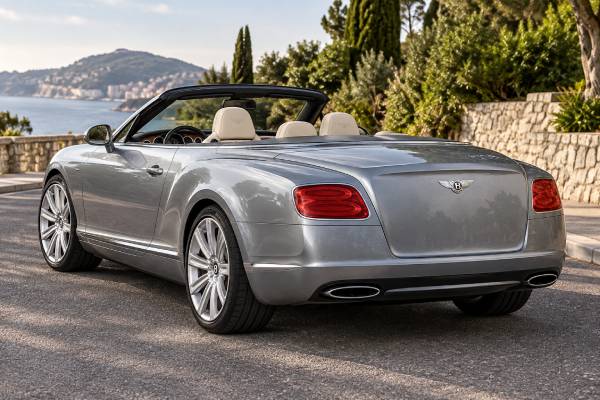
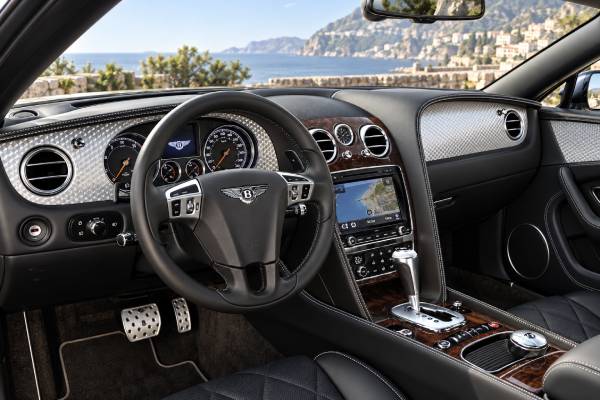
The Continental GTC V8 turns Bentley’s second-generation grand tourer into an all-season open car without surrendering serious speed. Its 500 hp twin-turbo 4.0-liter V8, eight-speed automatic, and permanent all-wheel drive deliver the same basic character as the coupe, but the Type 394 convertible adds a four-layer fabric roof, rollover protection, extra body reinforcement, less luggage space, and about 175 kg of additional mass. Those differences shape the buying process. A clean engine scan is not enough when roof alignment, water drainage, window indexing, cabin electronics, and underbody condition can determine whether ownership is enjoyable. The right car feels quiet and tight with the roof raised, calm with it lowered, and mechanically consistent from a cold start through a hot restart. This guide focuses on the standard 500 hp GTC V8, explains its specifications and engineering, and provides a convertible-specific method for inspecting, maintaining, and choosing one.
Table of Contents
- Identify the Correct V8 Convertible
- GTC V8 Specifications in Context
- Make the Roof the First Inspection
- Evaluate the V8 and Driveline
- Test the Convertible as a Complete Car
- Turn Records into a Repair Forecast
- Build a Sensible Ownership Routine
Identify the Correct V8 Convertible
The car covered here is the standard 500 bhp Type 394 Continental GTC V8. It is not the 521 bhp V8 S, a W12 GTC, a Speed, or the later third-generation convertible, even when wheels or badges make an advertisement look convincing.
Factory V8 cues usually include red winged-B emblems, a gloss-black matrix grille framed in bright metal, a three-part lower front treatment, and twin exhaust outlets shaped like flattened figure eights. The engine note is also distinct from the W12’s. None of those clues is immutable. Grilles, badges, wheels, valances, and exhaust systems can be exchanged, so the VIN, production record, engine data, and original option list must settle identity.
The date range needs similar care. Registration year can lag production, and “2018” may describe either a late second-generation car or, in some markets, an early example of the entirely redesigned generation. Check for the Type 394 platform and the 500 hp specification rather than trusting a search filter. The standard V8 remained separate from the V8 S, which carried more power and a more assertive chassis and appearance package.
Why choose this version? The V8 has a more audible, rhythmic character than the W12, responds briskly through its eight ratios, and uses less fuel. The convertible remains heavy, yet the lighter engine helps the front of the car feel less burdened than a W12 GTC. It is still a luxury tourer rather than a small roadster; its strengths are stability, refinement, all-weather traction, and the ability to cover distance with the roof in either position.
Condition is more important than a rare color combination. An attractive cabin can coexist with clogged drains, damp control modules, aging tires, weak batteries, worn suspension joints, or incomplete turbocharger work. Conversely, a higher-mileage car with dry carpets, a consistently functioning roof, matched tires, and a thick specialist history may be the safer purchase.
GTC V8 Specifications in Context
The GTC V8 is a gasoline-only internal-combustion convertible. Its front-mounted, direct-injected 4.0-liter V8 places two turbochargers between the cylinder banks, while an eight-speed ZF automatic and permanent all-wheel drive distribute 660 Nm through a nominal rear-biased 40:60 split. The data below apply to the 500 bhp standard convertible, not the V8 S.
| Item | Specification |
|---|---|
| Engine | 4.0-liter twin-turbocharged V8 with direct injection |
| Maximum power | 500 bhp / 507 PS / 373 kW at 6,000 rpm |
| Maximum torque | 660 Nm / 487 lb-ft at 1,700 rpm |
| Transmission | 8-speed ZF automatic with Quickshift and column-mounted paddles |
| Driveline | Permanent all-wheel drive, nominal 40:60 front/rear torque split |
| 0–100 km/h | 5.0 seconds |
| 0–60 mph | 4.7 seconds |
| Top speed | 301 km/h / 187 mph |
| Measure | Metric | Imperial |
|---|---|---|
| Length | 4,806 mm | 189.2 in |
| Width across body | 1,943 mm | 76.5 in |
| Width including mirrors | 2,227 mm | 87.7 in |
| Height | 1,403 mm | 55.2 in |
| Wheelbase | 2,746 mm | 108.1 in |
| Item | Value |
|---|---|
| EU kerb weight | 2,470 kg / 5,445 lb |
| Gross vehicle weight | 2,900 kg / 6,393 lb |
| Trunk volume | 260 liters / 9.1 cu ft |
| Fuel tank | 90 liters / 24 US gal |
| Seating | Four-seat convertible |
| Roof | Power-operated four-layer insulated fabric hood |
| Item | Factory information |
|---|---|
| Standard front discs | 405 mm ventilated iron |
| Standard rear discs | 335 mm ventilated iron |
| Optional carbon brakes | 420 mm front / 356 mm rear carbon-silicon-carbide |
| Standard wheel diameter | 20 inches; other factory wheel packages were available |
| Stability systems | ABS, electronic brake-force distribution, brake assist, traction and stability control |
| Certification | City | Highway | Combined |
|---|---|---|---|
| 2013 U.S. EPA | 13 mpg | 24 mpg | 17 mpg |
| 2016 U.S. EPA convertible listing | 13 mpg | 23 mpg | 16 mpg |
| Original EU combined cycle | 10.9 L/100 km / 25.9 mpg imperial | ||
Differences between certification years do not necessarily indicate a mechanical change. Use the label and official data for the individual model year when registering, comparing, or estimating use.
Make the Roof the First Inspection
The roof and its water-management system should be tested before a long road test. A convertible that is dry, aligned, quiet, and repeatable is far more valuable than one whose hood works only after assistance or leaves unexplained moisture behind trim.
Begin with the fabric fully dry and in good light. Look for abrasion at folds, discoloration, shrinkage, loose stitching, repaired cuts, damaged piping, and areas that sit differently from side to side. Inspect the rear glass bond and surrounding material. Cosmetics matter, but fit and water control matter more.
Operate the roof through a complete opening and closing cycle with the car positioned and powered as the handbook requires. Watch both sides rather than staring only at the instrument display. Movement should be synchronized, latches should engage without repeated attempts, flaps should settle properly, and the windows should index in the correct sequence. Repeat the cycle after the car has warmed and again after a short drive if the seller permits it. Intermittent faults often appear with heat, voltage change, or body movement.
Stop immediately if components collide, fabric catches, a motor labors, or one side falls behind. Continued cycling can turn an adjustment or sensor problem into bent links, damaged trim, or hydraulic work. A low battery may interrupt operation, but “it only needs charging” is a diagnosis to verify, not an excuse.
Examine the seals around the windscreen header, side glass, rear quarters, and roof stowage area. The frameless windows should lower slightly when a door is opened and rise cleanly into the seal when it closes. Wind noise, witness marks, torn rubber, or glass that pushes against the roof can indicate lost indexing or alignment.
Water must leave the car through designed channels and drains. A specialist should inspect and, where appropriate, test those paths without blasting compressed air into delicate hoses. Check the front and rear footwells, under removable trunk trim, around the battery and modules, behind seats, and beneath mats. Moisture meters and careful trim removal are more useful than touching the visible carpet surface.
Evidence of previous water entry includes tide marks, oxidized connectors, white residue, swollen carpet backing, musty odor, replaced modules, misting lamps, and fresh sealant applied without a documented leak test. Drying the carpet does not repair the cause. Ask for invoices that identify the entry point, drain or seal work, module inspection, and confirmation that the cabin remained dry.
Roof-up refinement is part of the road test. At moderate and highway speeds, listen for a localized whistle, drumming, clicking header latch, or movement at a side window. Some extra noise compared with the coupe is normal; a sharp leak from one corner is not. With the roof down, check that trim remains secure and that the wind deflector, neck warmers, and other convertible options operate if fitted.
Evaluate the V8 and Driveline
The engine should be assessed from a genuinely cold start through full operating temperature and a hot restart. Smooth boost, stable temperature, clean oil and coolant behavior, and consistent transmission response are more persuasive than a recently detailed bay.
The turbochargers sit in the hot inner valley of the V8, shortening exhaust paths but making lubrication and heat control especially important. Use the exact Bentley-approved oil specification for the VIN and market, and look for dated evidence rather than a generic “fully synthetic” invoice. Long intervals, repeated low-level warnings, or unknown oil history increase uncertainty.
Bentley technical information for V8T Continental models describes cases involving difficult starting, unusual turbocharger noise, reduced output, damaged impellers, and checks of turbo oil feed and return paths, the strainer, and the non-return valve. It does not prove that every engine is defective. It does justify asking whether relevant work was performed and whether a specialist has checked the VIN, boost data, and oil-supply condition.
At start-up, note cranking time, smoke, rattles, ticking, and the time needed to settle. During a controlled drive, apply load progressively. Boost should arrive evenly without surging, warning lamps, a siren-like whine, or an abrupt loss of power. After idling and after a downhill overrun, check for smoke again. Misfires can arise from plugs, coils, injectors, air leaks, or more serious causes; fault codes and misfire counters should direct diagnosis.
Inspect for dried coolant, oil seepage, damaged wiring, brittle connectors, improvised hose clamps, and a strong fuel or coolant smell. Monitor actual coolant temperature and fan behavior until the car is fully warm. A stable gauge alone cannot show every local cooling fault.
The eight-speed transmission should engage Drive and Reverse promptly and make both light and firm shifts without flare, bang, or persistent shudder. Test a gentle pull-away, steady cruise, rolling acceleration, manual paddle commands, and a hot maneuver into a parking space. Mounts, software adaptation, driveline joints, tire mismatch, and internal wear can create different symptoms, so avoid authorizing a transmission replacement from a single sensation.
All four tires must have compatible rolling circumference. The ideal set matches in brand, model, size, speed and load rating, with close tread depth and similar age. A mixed set can upset ride, braking, stability-control behavior, and the all-wheel-drive system. On full steering lock, mild tire scrub differs from mechanical binding or repeated clunks.
Complete the mechanical inspection on a lift. Look for coolant traces, oil residue, damaged undertrays, crushed lifting points, exhaust damage, missing fasteners, worn driveline joints, and repairs to subframes or floor reinforcements. The convertible’s underside also reveals whether previous technicians treated the car carefully.
Test the Convertible as a Complete Car
The best road test judges the body, suspension, brakes, tires, cabin, and electronics as one system. A GTC can accelerate perfectly yet still be a poor purchase because it rattles, sits unevenly, wears tires internally, or carries unresolved voltage faults.
Before moving, compare ride height at all four corners after the car has stood. A sagging corner, frequent compressor operation, or suspension warning can point to air leaks, valve-block problems, a weak compressor, height-sensor faults, or a strut issue. Switch between suspension modes and note whether damping changes sensibly.
Use varied roads. Sharp low-speed bumps expose knocks and trim movement. A smooth highway reveals wheel imbalance, wind noise, and wandering. Long curves show whether the car takes a set cleanly, and repeated gentle braking can expose drag or judder. The body should feel solid for a large convertible; persistent cowl shake, door movement, or unexplained rattles deserve closer inspection for wear or prior damage.
Inspect front and rear suspension links, bushes, joints, dampers, mounts, and wheel bearings. The car’s weight and large wheels punish worn components. Inner tire shoulders can be far worse than the visible outer tread, so examine the full width of every tire. Ask for an alignment report when wear is uneven.
The standard iron brakes need measurements, not adjectives. Record pad thickness, disc condition and thickness, hose state, fluid history, parking-brake function, and any vibration. Optional carbon-silicon-carbide discs demand specialist inspection for chips, impact damage, contamination, and remaining serviceability by the approved method. Their replacement cost makes an unsupported “ceramics are lifetime” claim unacceptable.
Test cabin equipment twice, once before driving and once after heat has built. Include seat movements and memories, heating, ventilation, massage, climate control, infotainment, audio, camera, parking sensors, mirrors, windows, steering controls, soft-close or power-latch functions, lighting, and key operation. Convertible-specific options such as neck warmers and wind deflectors should be included in the written result.
Battery state affects nearly everything. Measure resting condition, cranking behavior, and charging output, then scan all modules. Low voltage may explain a cluster of faults, but replacing the battery without checking draw, coding requirements, and stored events can leave the real problem intact.
Turn Records into a Repair Forecast
A service file becomes useful when it is converted into dates, mileage, completed work, current measurements, and likely next costs. Stamps alone cannot show whether the roof leaked, the correct oil was used, or a warning was diagnosed.
Match the VIN on the car, title, service invoices, and factory build record. Check history databases appropriate to the country for mileage, salvage, theft, finance, and export entries. Use the official VIN recall lookup rather than assuming that a model-wide web page confirms completion.
Create a chronology and flag long gaps. Low annual mileage does not remove the effects of time on batteries, tires, seals, fluids, fabric, and corrosion at connectors. A car stored correctly with annual attention is different from one parked after a fault.
High-value documentation includes:
- Correct oil and filter changes at sensible time and mileage intervals
- Spark-plug and ignition-system work
- Cooling pressure tests and identified pump, valve, hose, or radiator repairs
- Roof adjustments, hydraulic or sensor work, seal replacement, and leak testing
- Drain cleaning performed without damaging or disconnecting hoses
- Brake-fluid service, measured discs and pads, and correct carbon-brake records where applicable
- Four matching tires, wheel repairs, and alignment reports
- Air-suspension diagnosis and replacement invoices
- Battery, charging, and parasitic-draw diagnosis
- Turbocharger, strainer, non-return-valve, and oil-line work
- Full diagnostic reports and completed recalls or service campaigns
Ask the inspecting specialist to price findings in three groups: safety or water-entry work needed now, predictable work within the next year, and cosmetic or discretionary items. Add a contingency because trim removal can expose additional moisture damage and turbo, cooling, or suspension diagnosis may expand after initial testing.
Walk away from active water entry, an incomplete roof cycle, serious overheating, persistent misfire, metal or scraping turbo noise, structural uncertainty, badly mismatched tires, unknown ceramic-brake condition, or refusal of an independent examination. There will be another color combination; there may not be an inexpensive repair.
Build a Sensible Ownership Routine
Successful ownership comes from keeping the car dry, electrically healthy, fully warmed in use, and ahead of wear. The GTC V8 rewards regular attention more than sporadic rescue work after months of storage.
Arrange insurance, secure dry parking, a Bentley-capable workshop, and flatbed recovery before buying. Maintain a separate repair reserve beyond routine servicing. Roof mechanisms, suspension, brakes, cooling, tires, and electronics can create independent expenses even on a well-kept car.
After purchase, establish a documented baseline. Verify fluids, tire specifications and dates, brake measurements, battery condition, roof operation, drain flow, alignment, cooling pressure, and open campaigns. Repair water entry and safety issues before cosmetic work. Keep the scan report from this point so future changes have context.
Use the roof regularly in suitable dry conditions rather than leaving it untouched for years. Clear loose debris gently, keep drains managed according to Bentley procedures, and never fold a wet or frozen hood. Clean the fabric with products and methods intended for convertible material; aggressive brushing and household waterproofing can damage appearance or seals.
When storing the car, make sure the hood and cabin are dry, inflate tires correctly, avoid applying improvised covers that rub the paint, and connect an appropriate maintainer as instructed. A maintainer preserves a healthy battery; it does not cure a failing cell or unexplained current draw.
Drive long enough for oil, coolant, transmission, brakes, and exhaust to reach normal conditions. Warm the engine with moderate load rather than extended stationary idling, and allow temperatures to settle after hard use. Watch for a changed start, new smoke, coolant scent, altered boost sound, slow roof motion, or a corner losing height.
Choose the GTC over the coupe only when the open experience matters. The coupe has greater luggage space, less mass, and fewer sealing and roof variables. The W12 offers a smoother, more abundant surge, while the V8 S is more overtly sporting. The standard GTC V8’s case rests on its combination of sound, response, range, and relaxed roof-down travel.
A healthy car proves itself through consistency. The hood completes every cycle, the windows meet their seals, the carpets remain dry, the V8 pulls evenly, the gearbox fades into the background, and the structure settles after bumps without secondary movement. That consistency is worth paying for because it cannot be recreated cheaply from a neglected example.
References
- v8 introduction: 07 2012 (Bentley Model Brochure)
- Fuel Economy of the 2013 Bentley Continental GTC 2013 (U.S. EPA)
- 2013 BENTLEY CONTINENTAL GTC | NHTSA 2013 (Safety and Recall Search)
- Technical product information 2052085/1 2018 (Bentley Technical Product Information)
- Tested: 2013 Bentley Continental GTC V8 2012 (Instrumented Road Test)
- 2013 Bentley Continental GTC Review & Ratings 2013 (Model Overview)
Disclaimer
This guide provides general information and is not a substitute for official workshop instructions, professional diagnosis, or an independent Bentley-specialist inspection. Specifications, service intervals, fluid requirements, procedures, campaigns, and fitted equipment may differ by VIN, build date, market, and option selection; verify them for the particular vehicle. Please share the article on Facebook, X/Twitter, or another platform if it supports more informed ownership.