

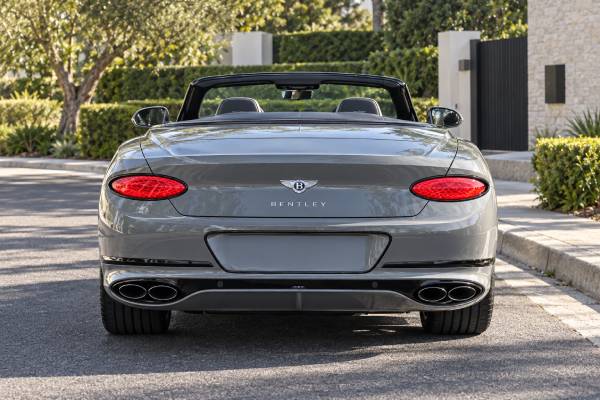
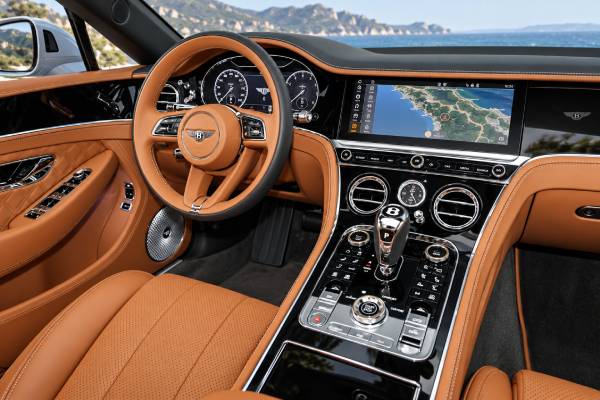
The 2020–2024 Bentley Continental GTC V8 brings together the third-generation convertible’s insulated 19-second roof and the range’s lighter, more vocal 542 hp engine. It gives away some W12 thrust and 9 mph of maximum speed, yet the front end often feels more willing and the car remains capable of 0–60 mph in about four seconds. That balance makes it attractive for owners who intend to drive often rather than preserve a badge. The everyday advantages appear only when the roof, battery, cooling system and dual-clutch transmission are healthy. A weak 12-volt supply can disturb window and roof behavior; blocked drains can damage an immaculate cabin; oversized wheels can spoil both ride and tire life. A meaningful inspection must include a cold roof cycle, slow maneuvering, a steady cruise that activates cylinder deactivation, a rough-road check and a full warm diagnostic scan.
Table of Contents
- The everyday logic of the V8-powered GTC
- Roof and packaging details that shape ownership
- Technical data for the 542 hp convertible
- How it behaves in town, on a pass and on a motorway
- Service planning for the engine, roof and chassis
- A methodical used-GTC inspection
- Which options matter and what a good example feels like
The everyday logic of the V8-powered GTC
The everyday logic is balance. The 4.0-litre V8 produces enough torque to make the GTC effortlessly fast, yet its lower mass over the front axle gives the open car a more responsive feel than the W12 version. The difference is not dramatic on a specification table, but it appears in steering effort, transition through a bend and the car’s willingness to change direction.
Performance remains far beyond normal road needs. Bentley quoted about four seconds to 60 mph and 198 mph at the top end. More useful is the 770 Nm available for overtaking without high revs. The V8 also brings a distinct exhaust pulse, making roof-down acceleration more engaging at moderate speeds than the smoother W12 experience.
The convertible body adds weight and reduces luggage space, so the V8 does not become a light sports car. It remains a four-seat luxury GT designed for distance. Buyers should expect deliberate steering, a substantial footprint and high consumable costs. The appeal is that the car feels less nose-heavy while preserving the comfort and craftsmanship that define the GTC.
Cylinder deactivation can shut down four cylinders during light-load cruising. The transition should be discreet. A droning vibration or hesitation at steady speed needs investigation of mounts, ignition, tires or driveline behavior rather than an assumption that deactivation always feels obvious.
The 2020–2024 range spans several model years and option combinations. Check the build record for wheel size, assistance systems, active anti-roll equipment, audio and seating. Advertisements often copy standard lists from another year. A car’s actual specification determines replacement cost and driving character.
Frequent use suits this model when journeys are long enough to warm the engine and dry the roof structure. It is less persuasive as a static object. The V8 GTC rewards an owner who cycles the hood, maintains voltage and takes advantage of its ability to handle both urban errands and multi-day touring.
Roof and packaging details that shape ownership
The seven-bow fabric roof shapes almost every practical decision. It opens or closes in 19 seconds at up to the stated low road speed, but inspection is best performed while stationary. Watch the two frame sides, the rear-deck movement and every window. Timing should remain synchronized from the first latch release to the final confirmation.
Run the mechanism with the car cold and repeat after a journey. A marginal hydraulic component, sensor or seal may behave differently when warm. Listen for a pump whose tone changes abruptly and look for a window that needs a second attempt to seal. Intermittent behavior is still a defect even if the top eventually completes the cycle.
The cloth should be viewed when closed, partly folded and fully stowed. Check seams, fold lines, rear-glass adhesion, discoloration and contact marks. A freshly treated surface can look excellent while hiding abrasion caused by incorrect frame adjustment. The headliner may also show moisture or rubbing before the outer fabric does.
Drain paths protect expensive electrical equipment. Inspect the trunk, rear footwells, side cavities and padding beneath visible carpet. Controlled water testing can confirm discharge without overwhelming the seals. Never accept a musty odor or condensation as normal convertible character.
Packaging is the price of the roof. Luggage capacity falls to about 235 litres, and the shape favors soft bags. Keep the roof stowage area clear and do not wedge cargo against moving panels. The rear seats remain useful for children, occasional adults or luggage, but access and legroom should be tested with the intended front-seat position.
Roof-down comfort relies on more than the fabric. Check the wind deflector, heated seats, neck warmer if fitted, climate output, microphones and window calibration. At motorway speed, the raised roof should be quiet enough for relaxed conversation. Excessive whistle or flutter usually indicates fit, not an unavoidable property of the model.
Storage requires thought. Avoid folding a frozen or heavily wet roof, maintain the battery and exercise the mechanism periodically in suitable conditions. A GTC used only on sunny days can still suffer if drains are never checked and the hood remains in one position for months.
Technical data for the 542 hp convertible
This section fixes the reference point for the 3S4 V8 convertible: 550 PS, 770 Nm, a 19-second roof and the open car’s own mass and luggage limits. It should not inherit the coupé’s boot figure or the W12 GTC’s maximum speed. Because wheel and assistance packages varied widely, the tables emphasize the underlying mechanical specification while leaving market-option verification to the factory record.
| Item | Specification |
|---|---|
| Powertrain class | Gasoline internal-combustion engine (ICE) |
| Engine | 4.0L twin-turbo V8 |
| Maximum output | 542 hp (550 PS; 404 kW) |
| Maximum torque | 770 Nm (568 lb-ft) |
| Transmission | 8-speed dual-clutch transmission |
| Driven wheels | active all-wheel drive with a rear-drive bias |
| Fuel tank | 90 L (23.8 US gal) |
| Measure | Value | Context |
|---|---|---|
| 0–60 mph | 4.0 seconds | Manufacturer claim |
| 0–100 km/h | 4.1 seconds | Manufacturer claim |
| Maximum speed | 198 mph (318 km/h) | Factory limit or announced target |
| Combined fuel consumption | 12.1–12.7 L/100 km WLTP combined across later European specifications | Period European or WLTP figure |
| CO₂ emissions | 275–288 g/km WLTP across the wider V8 family, depending on configuration | Market and equipment can change result |
| Dimension or capacity | Value |
|---|---|
| Body style | two-door, four-seat fabric-roof convertible |
| Length | 4,850 mm (190.9 in) |
| Width | 1,964 mm (77.3 in), excluding mirrors |
| Height | about 1,399 mm (55.1 in) |
| Wheelbase | 2,849 mm (112.2 in) |
| Kerb weight | about 2,335 kg (5,148 lb) kerb |
| Luggage capacity | 235 L (8.3 cu ft) |
| Component | Factory specification |
|---|---|
| Suspension and active systems | three-chamber air suspension with adaptive dampers; active anti-roll control available by specification |
| Brake system | 420 mm front and 380 mm rear ventilated iron discs |
| Factory wheel context | 20-inch launch wheel with 21- and 22-inch alternatives |
| Steering/stability distinction | the V8 convertible paired a 19-second Z-fold roof with an engine that could deactivate four cylinders and still reach 198 mph |
| Area | Detail |
|---|---|
| Roof/body structure | seven-bow insulated fabric roof, deployable or stowable in 19 seconds at up to 30 mph (50 km/h) |
| Fuel capacity | 90 L (23.8 US gal) |
| Seating | Four seats |
| Primary buyer verification | Match wheel, brake, chassis and market equipment to the VIN build record |
The V8 GTC trades the W12’s final 9 mph for a lighter-feeling nose and a more vocal engine, while retaining the same roof-dependent inspection burden. Its tire and wheel choice deserves particular attention because open-body mass remains high. Market documents should settle any conflict over emissions, standard equipment or brake fitment. The published 198 mph capability also assumes the correct high-speed tire category and a mechanically sound roof-up body. It should never be used to justify unknown repairs, mixed tire constructions or missing underbody panels. For normal ownership, the more useful comparison is how the V8 package reduces nose weight while preserving the GTC’s air-sprung touring character.
How it behaves in town, on a pass and on a motorway
In town, the V8 GTC is defined by width and clutch control rather than engine power. The dual-clutch transmission should select Drive and Reverse promptly, then creep smoothly enough for parking. A small amount of engagement feel is normal; repeated shudder, a delayed response or a hot-clutch warning is not. Cameras and sensors should make the car manageable, so test every view and alert.
The V8 responds readily at low speed and usually needs less throttle than expected. The engine should idle evenly with the roof both up and down, without a vibration through the seat. Listen for exhaust valve rattles or heat-shield noise, which become easier to hear in the open cabin.
On a mountain pass, lower front-engine mass helps the steering. The car still carries substantial weight, so the best technique is to brake early, allow the chassis to settle and use the 770 Nm on exit. Abrupt inputs only ask the tires to manage acceleration, steering and mass simultaneously.
Three-chamber air suspension should keep the body composed while allowing wheel movement. Compare modes on the same road. Comfort should soften impacts without continuing to heave; Sport should control roll without becoming brittle. One low corner or frequent compressor activity points toward pneumatic diagnosis.
The iron brakes are large enough for repeated road use, but pedal consistency matters more than visual size. Build pressure gradually and check for steering shake or a change in travel. Old fluid, storage deposits and tire condition can all reduce confidence.
On a motorway, the GTC should become quiet and stable. The steering should hold a line with small corrections, the DCT should select a relaxed ratio and the roof should remain free of flutter. Cylinder deactivation may operate during steady cruising; the change should not produce a persistent drone.
Wheel choice alters every environment. Twenty-inch wheels offer more sidewall, while 21- and 22-inch designs bring sharper appearance and greater impact sensitivity. Inspect inner rims and tire shoulders. A car that feels restless may need four coherent tires and alignment rather than expensive active-chassis parts.
A complete test uses all three settings—urban, flowing road and cruise—because each reveals different faults. The best V8 GTC feels easy in town, controlled in bends and almost coupé-like at speed.
Service planning for the engine, roof and chassis
Service planning should be divided into engine heat, roof water management and chassis load. These areas meet through the electrical network, so begin with a full diagnostic report and a tested 12-volt battery. Low voltage can interrupt roof movement, disturb window indexing and create warnings from unrelated systems.
The hot-V engine places turbochargers between the cylinder banks. That improves response but concentrates temperature around oil and coolant hardware. Use approved oil, document level changes and inspect the valley and undertrays for fresh residue. Persistent odor after a drive deserves investigation.
Cooling service goes beyond checking the reservoir. Examine pumps, hose unions, front heat exchangers and ducts. Clean debris carefully and pressure-test unexplained loss. A fan running unusually long after shutdown can be a useful early clue.
The DCT needs correct software and model-specific procedure. Record any complaint with temperature, gear and throttle position. If fluid work is due under the applicable schedule or specialist recommendation, use the exact product and fill method. A universal flush is not appropriate.
Roof maintenance should occur before leakage. Clear drains safely, clean seal contact areas and inspect fabric fold points. Operate the top through a complete cycle after battery work and confirm every glass panel relearns its position. Keep notes when pump duration or latch timing changes.
Air springs and adaptive dampers carry significant mass. Measure ride height after overnight parking and compare compressor run time. If the car has 48-volt active roll control, scan that system separately. Tire pressure and wheel damage should be ruled out before a ride complaint leads to expensive replacement.
A sensible annual plan is:
- Oil and filter service with hot-V leak inspection.
- Cooling pressure test and heat-exchanger examination.
- Battery capacity and complete module scan.
- Roof, seal, drain and window-indexing check.
- DCT behavior and software review.
- Brake, wheel, tire and alignment measurements.
- Air-suspension and active-chassis data review.
This schedule creates continuity. A workshop can compare roof timing, battery health and ride height year by year instead of diagnosing every complaint without a baseline.
A methodical used-GTC inspection
A methodical inspection starts before the engine is warm. Ask the seller not to operate the roof or start the car on the appointment day. A genuine cold condition reveals battery strength, engine behavior and roof resistance that can disappear after charging or heating.
Check identity and repair history. Match the VIN to the V8 derivative and option record. Examine glass dates, paint depth, hinge fasteners, sill lifting points and rear-deck alignment. Poor structural repair can influence roof fit even when the exterior looks excellent.
Perform the first roof cycle from outside. Watch both sides, inspect the fabric mid-fold and verify window sequencing. Then look beneath the trunk floor and rear carpets for moisture. Repeat the operation after the road test. A system that works once but slows when warm is not fully healthy.
During the first start, note idle, smoke and warning sequence. Add electrical loads and operate seat, climate and infotainment functions. The battery may start the V8 while still dropping voltage enough to disturb modules.
The road route should include reverse parking, an incline, steady cruising, rough pavement, several braking levels and controlled acceleration after full warm-up. Note whether any vibration follows vehicle speed, engine speed or roof position. Compare suspension modes on the same section.
On the lift, inspect the hot-V area from below, cooling residue, wheel barrels, tire inner edges, brake faces, undertrays and reinforcement. Scan every control unit again and preserve the reports.
The written findings should cover:
- Fabric roof, frame, hydraulics, seals and rear glass
- Drain flow and evidence of past water entry
- Window indexing, neck warmer and seat modules
- V8 oil/coolant leakage and turbocharger-area condition
- DCT creep, engagement and hot behavior
- Battery reserve and software/campaign status
- Air suspension and optional 48-volt active-roll system
- Wheel repairs, tire matching and alignment
- Brake-disc, pad and fluid condition
Convert each material issue into cost and urgency. The purchase decision becomes much clearer when roof adjustment, four tires and a battery are priced instead of described vaguely as age-related.
Which options matter and what a good example feels like
Options matter when they improve repeated use. For a GTC, seat heating, ventilation, neck warmers, touring assistance and audio can add more value than decorative carbon. Test them for a full operating cycle. An option that fails intermittently should be costed as a repair, not counted as equipment.
Wheel size deserves an honest decision. Larger wheels may suit the visual design, but they reduce sidewall protection and increase tire expense. A 20- or 21-inch car on excellent matching rubber can ride, steer and brake better than a 22-inch car with repaired rims.
The rotating display adds theatre and a complex mechanism. Cycle it between screen, gauges and veneer several times and after a restart. Check alignment and listen for strain. A fixed display may be less dramatic but removes one potential repair.
Color, veneer and stitching influence desirability, especially when the combination is original and coherent. They should decide between two mechanically equal cars, not distract from dampness or a weak DCT. A common color with complete history is often easier to own and resell.
Mileage should be interpreted through use. Long trips allow the engine and exhaust to warm fully, while low-use storage can age tires and batteries. Compare the odometer with bolster, steering, pedal and brake wear. Ask how often the roof was cycled and whether the car remained on a maintainer.
A good example feels synchronized. The windows move before the roof, the roof closes without correction, the V8 responds immediately, the DCT engages predictably and the body settles after one movement. No system calls attention to itself.
Keep a first-year reserve for tires, battery, fluids, alignment or seal adjustment. Even a strong car may benefit from a new baseline. When the budget supports that work, the V8 GTC becomes what its specification promises: a convertible for frequent travel rather than an elaborate machine that is too risky to use.
References
- Bentley News 2019: NEW CONTINENTAL GT V8 AND GT V8 CONVERTIBLE 2019 (Official Model/Technical Source)
- Bentley News 2024 : Continental GT V8, GTC V8, and Flying Spur V8 leave the UK, European, and MEAI markets 2024 (Official Model/Technical Source)
- Bentley News 2018: BENTLEY CONTINENTAL GT CONVERTIBLE: TOP GRAND TOURER 2018 (Official Model/Technical Source)
- The New Continental GT and Continental GT Convertible 2020 (Official Model/Technical Source)
- Technical Service Bulletin 2076639/2 2025 (Recall/Service Source)
- Check for Recalls: Vehicle, Car Seat, Tire, Equipment | NHTSA 2026 (Recall/Service Source)
Disclaimer
This guide is for informational use and cannot replace professional inspection, diagnosis or repair. Specifications, torque values, service intervals and procedures vary by VIN, market and equipment; confirm them with official Bentley service documentation for the individual car.
Please share the article on Facebook, X/Twitter or with another convertible owner if it helped your research and you would like to support our work.