
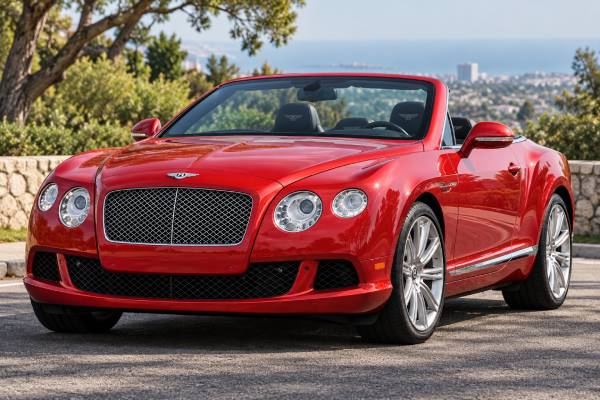
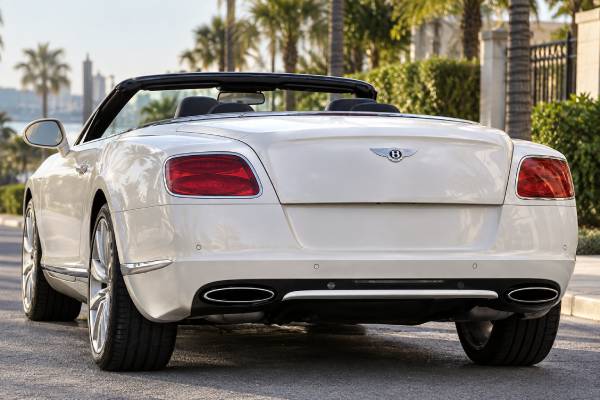
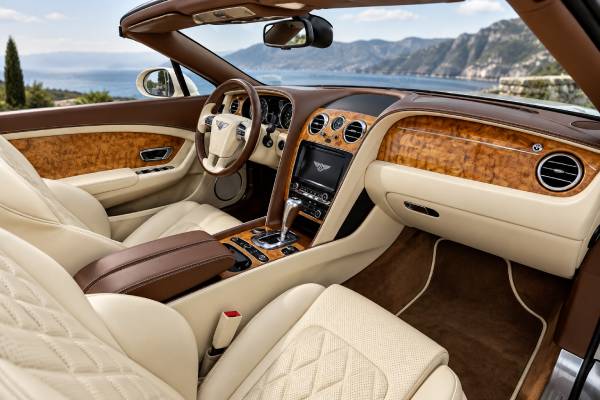
The 2015–2018 Bentley Continental GTC W12 is the mature version of the second-generation open grand tourer: 582 hp, permanent all-wheel drive, a deep reserve of 720 Nm and a fabric roof that turns a formal coupé-shaped cabin into a four-seat convertible. It is not the later Speed or Supersports, and that is part of its appeal. The standard W12 tune emphasizes quiet torque, supple air suspension and effortless distance rather than sharper responses. Ownership is still demanding. Cooling hardware sits in a crowded engine bay, the roof needs clean drains and correct window indexing, and a weak battery can create a misleading collection of warnings. Buy on condition, service continuity and system behavior rather than mileage alone. A well-kept car remains one of the few convertibles that can cross a country in poor weather, carry four people in genuine Bentley surroundings and make 195 mph performance feel almost incidental.
Table of Contents
- Why this facelifted GTC still matters
- W12 convertible specifications and technical data
- What the 582 hp W12 feels like on the road
- The roof, cabin and long-distance character
- Maintenance priorities for a heavy twelve-cylinder convertible
- Inspection points that separate good cars from expensive projects
- Who should buy one and how to choose the right example
Why this facelifted GTC still matters
The facelifted 582 hp GTC matters because it represents the most settled form of the regular second-generation convertible. Bentley had already refined the body, cabin electronics and eight-speed automatic, then gave the W12 more power, 720 Nm of torque and cylinder deactivation for light-load cruising. The result is less aggressive than a GTC Speed but better aligned with the way many owners actually use a Continental: long journeys, city arrivals and roof-down touring rather than repeated maximum-attack driving.
Model identification deserves care. The 394 chassis code covers the convertible body, but advertisements may blur ordinary W12 cars, Speed derivatives, Mulliner styling packages and later Supersports models. Check the VIN build record before assuming that a wheel, brake, grille or interior detail proves a particular factory specification. A converted appearance may be harmless, yet it can complicate parts ordering and reduce value if original pieces are missing.
The 2015 update also sits at an interesting point in Bentley history. It retains the heavier, more traditional second-generation feel—hydraulic richness, substantial controls and a deep dashboard—while adding later engine-management features. Compared with the third-generation GTC, it is less digitally integrated and less agile, but it can feel more ceremonial. Some buyers prefer that quality because the car never pretends to be a lightweight sports machine.
Use pattern strongly affects condition. A GTC that regularly completed long trips may have more miles but fewer battery, moisture and short-cycle problems than one started briefly in a collection. Look for annual maintenance, stable mileage progression and invoices that show faults were investigated rather than merely cleared. The best cars feel consistent from the first cold start to the final warm roof cycle.
The regular W12 also avoids some of the collector pressure surrounding a Supersports. That can make it easier to buy for use, choose a conventional color and accept honest mileage. It is still expensive machinery, but its value lies in a complete experience rather than rarity alone: quiet twelve-cylinder thrust, four-season weather protection and a cabin that remains special after several hours on the road.
W12 convertible specifications and technical data
The tables below isolate the facelifted 2015–2018 GTC W12, not the earlier 567 hp convertible and not the contemporary Speed. Its 590 PS tune, six-speed-era body architecture, 90-litre tank and fabric-roof packaging belong together when judging performance or operating cost. Convertible mass and the 260-litre luggage figure are especially easy to confuse with coupé data. Use the values as a period baseline, then check the car’s market build sheet for wheel, brake and emissions equipment.
| Item | Specification |
|---|---|
| Powertrain class | Gasoline internal-combustion engine (ICE) |
| Engine | 6.0L twin-turbo W12 |
| Maximum output | 582 hp (590 PS; 434 kW) |
| Maximum torque | 720 Nm (531 lb-ft) |
| Transmission | 8-speed torque-converter automatic |
| Driven wheels | permanent all-wheel drive |
| Fuel tank | 90 L (23.8 US gal) |
| Measure | Value | Context |
|---|---|---|
| 0–60 mph | 4.4 seconds | Manufacturer claim |
| 0–100 km/h | 4.7 seconds | Manufacturer claim |
| Maximum speed | 195 mph (314 km/h) | Factory limit or announced target |
| Combined fuel consumption | roughly 14.3 L/100 km combined on the period European cycle | Period European or WLTP figure |
| CO₂ emissions | approximately 330 g/km on the period European cycle | Market and equipment can change result |
| Dimension or capacity | Value |
|---|---|
| Body style | two-door, four-seat fabric-roof convertible |
| Length | 4,806 mm (189.2 in) |
| Width | 1,944 mm (76.5 in), excluding mirrors |
| Height | 1,403 mm (55.2 in) |
| Wheelbase | 2,746 mm (108.1 in) |
| Kerb weight | about 2,495 kg (5,501 lb) kerb |
| Luggage capacity | 260 L (9.2 cu ft) |
| Component | Factory specification |
|---|---|
| Suspension and active systems | front double wishbones, rear multi-link, air springs and adaptive damping |
| Brake system | ventilated steel discs; carbon-ceramic system was optional in some markets |
| Factory wheel context | 20-inch standard; 21-inch packages common |
| Steering/stability distinction | the 2015 facelift raised the W12 to 590 PS, added cylinder deactivation and retained the stately hydraulic feel of the second-generation GTC |
| Area | Detail |
|---|---|
| Roof/body structure | multi-layer fabric roof; operate only within the handbook speed and temperature limits |
| Fuel capacity | 90 L (23.8 US gal) |
| Seating | Four seats |
| Primary buyer verification | Match wheel, brake, chassis and market equipment to the VIN build record |
Together, the figures describe a comfort-first twelve-cylinder convertible rather than an early Speed substitute. Its considerable mass makes tire age, wheel straightness and brake condition disproportionately important, while the ordinary 20-inch starting specification can be an advantage on poor roads. Use the VIN record to settle any uncertainty about optional ceramics, wheel packages or regional emissions before ordering parts.
What the 582 hp W12 feels like on the road
The 582 hp W12 delivers its performance as a continuous swell rather than a dramatic rush. With maximum torque available across a broad middle range, the car rarely needs high engine speed to overtake. A healthy example should move away cleanly, build boost without hesitation and shift through the eight-speed automatic without flare or a pronounced thump. The sensation is one of reserve: the driver asks for more speed and the large convertible simply supplies it.
Permanent all-wheel drive provides confidence in poor weather, but it also makes tire consistency critical. Four tires with the same nominal size can still differ in rolling circumference when brands, models or tread depths are mixed. That difference forces the driveline to reconcile unequal wheel speeds. Inspect date codes and inner shoulders, measure all four tread depths and reject the idea that two new tires automatically solve a four-wheel-drive problem.
The air suspension should feel soft-edged without becoming floaty. In Comfort, sharp impacts should be rounded and body motion should settle after one movement. A car that bounces repeatedly, sits low at one corner or runs its compressor for an unusually long time needs investigation. In firmer modes the body should become more controlled, not simply harsh. Mode changes that produce no meaningful difference can indicate a fault, coding issue or worn hardware.
Steering is deliberate rather than nervous. The front end should track straight, load progressively in a bend and return naturally after a turn. Pulling may come from alignment, tire construction, brake drag or road crown, so diagnosis should begin with measured pressures and condition rather than immediate parts replacement. On rough roads, distinguish a suspension knock from a wheel vibration or trim tick; each follows a different pattern.
Braking performance must match the car’s mass. The pedal should remain stable through several progressively firmer stops, with no steering shake or deposit judder. Cars fitted with the optional carbon-ceramic system need specialist assessment because replacement economics differ radically from iron brakes. Regardless of material, old fluid, glazed pads and tires hardened by age can make the car feel less secure long before a dashboard message appears.
A useful road test starts gently and lasts long enough to reach full temperature. Include parking maneuvers, a steady cruise, rough pavement, several braking events and one firm legal acceleration. Afterward, restart the engine hot and look beneath the car for fresh coolant or oil. The correct 582 hp GTC feels calm at every stage; excuses such as intermittent warning lights, normal clunks or a roof that only works sometimes should not be accepted.
The roof, cabin and long-distance character
The powered fabric roof is a major vehicle system, and its condition determines whether the GTC works as intended. Cycle it from fully closed to fully stowed while watching both sides. The frame should move symmetrically, the latches should complete without a second attempt and every side window should drop and reseal in the correct sequence. Repeat the operation after a drive because temperature can expose weak hydraulics, marginal sensors or increased seal friction.
Inspect more than the outer cloth. Look along seams, fold lines and the rear-glass bond; then examine the headliner for marks that suggest contact or moisture. Uneven tension, abrasion near a bow or evidence of recoloring may point to adjustment work hidden by detailing. The roof should sit evenly against the windscreen header and side glass, without a whistle that changes when the body flexes over a diagonal bump.
Water control depends on drains, seals and window alignment working together. Check beneath the trunk floor, behind side trim where practical, in rear footwells and around seat-belt exits. A musty smell, condensation inside lamps or a repeatedly fogged rear window can reveal moisture even when the visible carpet feels dry. Controlled water testing is preferable to directing a pressure washer at the seals, which can create a leak no normal rainstorm would produce.
Roof-down comfort is one of the car’s central strengths. Heated seats, climate control, wind deflector and the tall glass line allow useful driving in cool weather. Test each feature individually. Strong cabin heat can hide a weak seat element, while a wind deflector stored with the car may be damaged or incomplete. With the top raised, the multi-layer fabric should suppress wind noise well enough for relaxed conversation at motorway speed.
The rear seats are best viewed as occasional adult accommodation or useful space for luggage and children. The trunk’s 260 litres are adequate for carefully chosen soft bags, but roof packaging limits flexibility. Before a trip, confirm that the stowage area is clear and do not force luggage against the mechanism. A roof obstruction can damage trim, sensors or linkages even if the system stops before completing its movement.
Long-distance character comes from the combination of low engine speed, heavy sound insulation and supportive seating. Spend enough time in the driver’s seat to confirm lumbar support, seat motors, memory, ventilation if fitted and steering-column adjustment. A beautiful cabin with one failed seat module can become tiring quickly. The GTC succeeds when the cabin, roof and chassis disappear into the journey rather than demanding repeated attention.
Maintenance priorities for a heavy twelve-cylinder convertible
Maintenance should be planned around heat, time and system interaction. Begin with a complete invoice timeline, not just a stamped book. Confirm annual engine-oil service with an approved specification, brake-fluid changes, spark-plug work, filters, coolant inspection and any transmission or driveline attention. The VIN-specific Bentley schedule is the controlling reference because market and equipment changes can alter the required work.
The engine bay is crowded, and small coolant leaks deserve early action. Inspect hose junctions, plastic fittings, expansion tanks, pump areas and the underside for dried residue. A sweet smell after shutdown, unexplained level loss or a fan that continues unusually long should lead to pressure testing. Overheating a W12 can turn an inexpensive connection into a much larger repair, so repeated topping up is not a maintenance strategy.
Oil level must be checked by the documented procedure and tracked over time. Overfilling can be harmful, while a declining level may indicate leakage, consumption or a turbocharger-related issue. Photograph readings and note mileage between checks. This creates evidence a specialist can use instead of relying on a vague statement that the car “uses a little oil.”
The roof needs regular exercise and inspection even when the car is stored with the hood raised. Keep drain paths clean, condition seals with suitable products and avoid folding a dirty or frozen fabric top. Inspect hydraulic areas for residue and listen for a pump that runs longer than it previously did. Early correction of adjustment or seal problems is usually cheaper than repairing water-damaged electronics.
Low-voltage battery health is essential. A battery can still start the engine while causing voltage drops that interrupt module communication, window indexing or roof logic. Test capacity and charging output, use an appropriate maintainer during storage and preserve diagnostic reports before clearing faults. Replacing expensive modules before stabilizing supply voltage is a common and avoidable mistake.
Tires, brakes and suspension age even when mileage is low. Record tire date codes, inspect wheel barrels, measure pad and disc condition and change brake fluid by time. Air springs and dampers should be assessed with ride-height data and fault history rather than replaced by guesswork. Alignment is worth checking after tire replacement because the car’s mass and wide rubber can destroy an expensive set quickly.
A sensible first-month baseline is:
- Scan every control unit and save the report.
- Measure battery condition, tire age and brake life.
- Pressure-check the cooling system and inspect undertrays.
- Cycle and water-test the roof under controlled conditions.
- Complete overdue fluids and filters with approved materials.
- Recheck the car hot and document the new condition.
Inspection points that separate good cars from expensive projects
A proper pre-purchase inspection must be independent, model-aware and long enough to reproduce faults. Request a cold start, a lift inspection, a full road test and diagnostic scans before and after driving. Ask the specialist to divide findings into safety-critical work, overdue service, developing faults and cosmetic choices. That structure turns a list of observations into a usable purchase budget.
Start with identity and body history. Compare VIN labels, glass dates, paint depth and fastener marks with the seller’s story. Inspect the long doors for hinge sag, the reinforced sills for lifting damage and the underside for missing fasteners or cracked panels. A high-quality repair is not automatically disqualifying, but unexplained structural work affects alignment, roof sealing and value.
The engine should be genuinely cold before starting. Listen for abnormal mechanical noise, watch for persistent smoke and confirm a stable idle. During the drive, use light throttle before requesting full boost. Hesitation, misfire, surging or a warning under load carries more weight than a perfect stationary demonstration. After reaching temperature, switch off briefly and check hot restart quality.
Treat the roof as an inspection route rather than one button press. Examine fabric and seals, perform a complete cycle, check every window, then look for moisture in concealed areas. Operate the roof again after the road test. If the seller says it fails only in cold weather, on slopes or after rain, that information is evidence of a real fault—not reassurance.
Scan all modules before codes are cleared. Old low-voltage entries may be explainable, but recurring communication, suspension, roof, transmission or engine faults need diagnosis. Print the reports and note which codes return after the test. A warning that disappears when the battery is charged still justifies a battery and charging-system evaluation.
Put the following on the written work order:
- Roof hydraulic operation, latch timing and window indexing
- Drain flow and signs of past water entry
- Air-suspension ride height, compressor duty and stored faults
- Cooling-system pressure and residue around connections
- Matching tire make, model, age and tread depth
- Iron or carbon-brake condition and realistic replacement cost
- Transmission engagement, shift quality and driveline noise
- Battery capacity, charging output and complete module scan
Finally, price the exact car rather than a generic Continental. A carbon-brake option, special wheel or interior module can change the repair estimate dramatically. The inspection has done its job only when every material finding has a likely cause, an urgency level and a credible cost.
Who should buy one and how to choose the right example
This GTC suits a buyer who wants traditional W12 smoothness, genuine all-season open-air travel and a cabin that feels handcrafted rather than minimalist. It is a poor fit for someone seeking low running costs, lightweight steering or a car that can tolerate neglected storage. The purchase should begin with an honest use case: regular touring, seasonal weekend use or collection duty each demands a different service and storage plan.
Compare candidates with one condition sheet. Record service continuity, ownership history, recall status, roof behavior, tire dates, brake life, battery test, cooling evidence, body repairs, key count and accessories. Add the cost of immediate and near-term work before comparing asking prices. A cheaper car with old tires, weak air suspension and an uncertain roof can exceed the price of a better example before the first holiday.
Mileage needs interpretation. A 40,000-mile car that traveled long distances and received annual care may be healthier than a 12,000-mile car repeatedly started in a damp garage. Look for wear that agrees with the odometer: seat bolsters, steering controls, pedals, brake discs and wheel finish should tell a consistent story. Sudden gaps or sharp changes in annual use deserve explanation.
Specification affects enjoyment but should remain secondary to condition. Conventional steel brakes are often easier for a touring owner to budget than carbon ceramics. Twenty-inch wheels generally provide more tire sidewall than 21-inch alternatives, which can improve ride and pothole resistance. Bold paint and Mulliner trim may support value, yet they cannot compensate for missing invoices or unresolved warnings.
Keep a reserve after purchase. Even a strong car may need a fresh battery, four matched tires, alignment, fluid baseline or small electrical repairs as it adapts to regular use. Buying at the absolute financial limit encourages delayed maintenance, which is exactly how these cars become intimidating. The first year should improve the vehicle’s baseline, not merely preserve its appearance.
The final choice should be the car that repeats the same clean behavior during every test: smooth cold start, even boost, prompt transmission engagement, stable ride height, quiet roof, dry cabin and clear diagnostics. When those systems agree, the 582 hp GTC still delivers something rare—a formal, weatherproof grand tourer that becomes a convertible without losing its sense of occasion.
References
- Bentley Continental | History and Heritage | Bentley Motors 2026 (Official Model/Technical Source)
- Bentley News 2024 : End of an era as final Bentley W12 engine hand-built in Crewe 2024 (Official Model/Technical Source)
- Technical Service Bulletin 2076639/2 2025 (Recall/Service Source)
- Check for Recalls: Vehicle, Car Seat, Tire, Equipment | NHTSA 2026 (Recall/Service Source)
- Bentley Connectivity | Music and Connectivity | Bentley Motors 2026 (Official Model/Technical Source)
Disclaimer
This article is for informational purposes and is not a substitute for professional diagnosis or repair. Specifications, torque values, service intervals and procedures can vary by VIN, market and installed equipment; verify all work against official Bentley service documentation for the exact car.
Please share this guide on Facebook, X/Twitter or with a Bentley owner if it helped your research and you would like to support our work.