

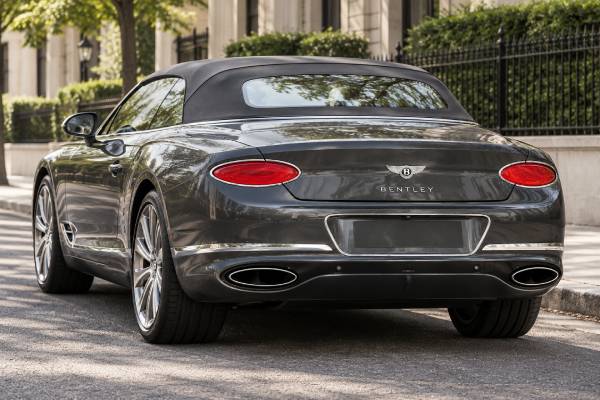
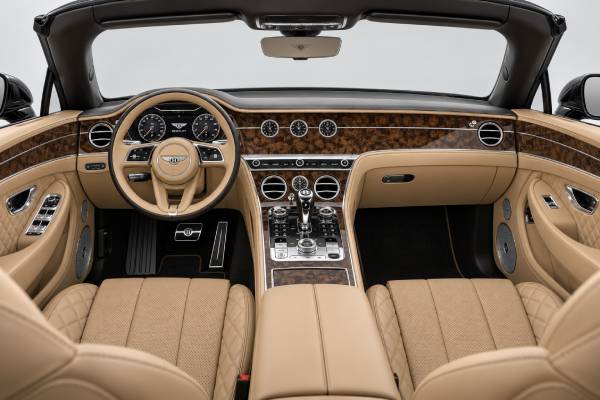
The 2019–2021 Bentley Continental GTC W12 was designed to make an open car behave like a closed grand tourer. It uses the third-generation platform, 626 hp W12, active all-wheel drive and eight-speed dual-clutch transmission, while a seven-bow Z-fold roof opens in 19 seconds and the car still reaches 207 mph. The achievement is not merely speed. With the roof raised, cabin noise fell dramatically compared with the previous GTC, and neck warmers, heated surfaces and improved sealing make roof-down driving useful beyond summer. Those benefits depend on adjustment. Rear-quarter windows, drains, fabric tension, latches and the low-voltage supply must work together. The 48-volt chassis and DCT add another layer of inspection. Buyers should test the car as a convertible, a luxury cabin and a high-output W12 machine, because a fault in any one role changes the value of the whole car.
Table of Contents
- How Bentley made the third-generation GTC quieter
- Technical specifications for the 626 hp W12 convertible
- The roof system and four-season comfort engineering
- W12 performance, active AWD and chassis control
- Ownership care for a complex open-top grand tourer
- Used-car checks that matter more than cosmetic perfection
- Choosing the right specification and avoiding false economy
How Bentley made the third-generation GTC quieter
Bentley made the 3S4 quieter by treating the fabric roof as an acoustic structure rather than a simple weather cover. The seven-bow design uses more insulation and a revised sealing path, while the body and glass geometry reduce wind disturbance. With the hood raised, a good car should support normal conversation at motorway speed and feel closer to a coupé than the previous GTC did.
Noise control begins with fit. The roof must pull evenly against the windscreen header, side windows and rear deck. A whistle that changes when the body crosses a diagonal bump can indicate seal alignment, glass calibration or prior body movement. Compare both sides and look for polished contact patches that show where a seal is rubbing rather than compressing correctly.
The Z-fold mechanism also improves appearance because the roof stows without a separate tonneau cover. That simplicity outside conceals complex timing beneath the deck. Both frame sides, rear-quarter windows, main side glass and latches must coordinate. Operate the system more than once, including after a drive, and watch for one side arriving early or a window that hesitates.
Bentley extended roof-down usability with neck warmers, seat heating and effective climate control. Test each outlet and seat independently. A warm cabin can disguise a failed neck vent, while a successful one-minute demonstration may not reveal a module that shuts down after heating. The wind deflector should be present, undamaged and easy to install.
Water management is inseparable from quietness. A displaced seal may first produce a faint wind noise and later a leak. Inspect the trunk floor, rear side cavities, seat-belt areas and carpet padding. Damp modules can cause intermittent faults long after the visible interior has dried.
The quieter roof is one of the model’s strongest achievements, but it should not make buyers ignore normal convertible checks. A 207 mph rating places enormous value on correct fabric tension, window fit and attachment integrity. The best GTC is quiet because every small part is adjusted correctly, not because the audio system hides the noise.
Technical specifications for the 626 hp W12 convertible
The 3S4 W12 convertible uses the same 635 PS headline output as the coupé but carries its own roof, reinforcement, boot and kerb-mass figures. These tables keep those body-specific values together with the Z-fold roof operation and air-suspension hardware. They are useful for detecting advertisements assembled from mixed GT and GTC specifications. Final confirmation should come from the build sheet and registration documents for the individual market.
| Item | Specification |
|---|---|
| Powertrain class | Gasoline internal-combustion engine (ICE) |
| Engine | 6.0L twin-turbo W12 TSI |
| Maximum output | 626 hp (635 PS; 467 kW) |
| Maximum torque | 900 Nm (664 lb-ft) |
| Transmission | 8-speed dual-clutch transmission |
| Driven wheels | active all-wheel drive with rear-biased operation |
| Fuel tank | 90 L (23.8 US gal) |
| Measure | Value | Context |
|---|---|---|
| 0–60 mph | 3.7 seconds | Manufacturer claim |
| 0–100 km/h | 3.8 seconds | Manufacturer claim |
| Maximum speed | 207 mph (333 km/h) | Factory limit or announced target |
| Combined fuel consumption | about 14 L/100 km combined, depending on market test procedure and equipment | Period European or WLTP figure |
| CO₂ emissions | official figures vary by market and model year | Market and equipment can change result |
| Dimension or capacity | Value |
|---|---|
| Body style | two-door, four-seat fabric-roof convertible |
| Length | 4,850 mm (190.9 in) |
| Width | 1,964 mm (77.3 in), excluding mirrors |
| Height | about 1,399 mm (55.1 in) |
| Wheelbase | 2,849 mm (112.2 in) |
| Kerb weight | about 2,414 kg (5,322 lb) kerb |
| Luggage capacity | 235 L (8.3 cu ft) |
| Component | Factory specification |
|---|---|
| Suspension and active systems | three-chamber air suspension; 48-volt Bentley Dynamic Ride available or standard by specification |
| Brake system | 420 mm front and 380 mm rear ventilated iron discs |
| Factory wheel context | 21-inch standard, with several 22-inch designs optional |
| Steering/stability distinction | the third-generation GTC cut cabin noise sharply, used a Z-fold roof that opened in 19 seconds, and matched the coupé’s 207 mph top speed |
| Area | Detail |
|---|---|
| Roof/body structure | seven-bow Z-fold fabric roof, operable in 19 seconds at up to 30 mph (50 km/h) |
| Fuel capacity | 90 L (23.8 US gal) |
| Seating | Four seats |
| Primary buyer verification | Match wheel, brake, chassis and market equipment to the VIN build record |
Sharing 207 mph capability with the coupé does not erase the GTC’s roof, drain and luggage constraints. Its higher mass also raises the importance of matched tires and accurately identified brakes. Treat the table values as a body-specific reference, then reconcile them with the vehicle’s option codes and local homologation paperwork.
The roof system and four-season comfort engineering
The roof opens or closes in 19 seconds at speeds up to 30 mph under the stated conditions, but stationary operation remains the safest way to inspect it closely. Begin with a fully charged battery and clean, dry fabric. Watch the header unlatch, the side glass lower, the bows fold and the rear deck settle. The final message should appear without manual assistance or a second attempt.
Temperature can expose marginal operation. Cold seals are stiffer, while warm hydraulic fluid and expanded components may change timing. Repeat the cycle after the car has reached operating temperature. A pump that becomes much louder, a latch that pauses or a rear window that fails only when warm deserves diagnosis before purchase.
Fabric needs inspection under several angles of light. Look for abrasion at fold points, unequal tension, seam damage, discoloration and separation around the heated rear glass. Cosmetic treatment can darken faded cloth but cannot restore damaged fibers or correct a frame that folds against the wrong area.
Drain maintenance should be preventive. Leaves and debris can obstruct channels, while compressed-air or wire methods used carelessly can disconnect or puncture hoses. A specialist should clear them appropriately and confirm discharge beneath the car. After controlled water testing, inspect hidden padding rather than touching only the top surface of the carpet.
Four-season comfort depends on glass and climate calibration. The main windows and rear quarters must index to seal with the hood up, then adopt the correct position when it is lowered. Test demisting, heated seats, neck warmers and the heated rear window. A winter-capable convertible is useful only when those systems work before rain or frost arrives.
Storage practice affects the roof. Avoid folding it while frozen, heavily soiled or saturated. Do not leave objects in the stowage area, and keep luggage from pressing against moving trim. During long storage, preserve battery voltage so a partial roof cycle does not stop halfway and strain the system.
Finally, drive over a rough surface with the top both raised and lowered. Some extra open-body movement is normal, but a concentrated creak or header knock can reveal adjustment or repair history. The goal is not absolute silence; it is consistent, controlled behavior from a structure designed to provide coupé-like refinement.
W12 performance, active AWD and chassis control
The 626 hp W12 gives the GTC the same 207 mph maximum as the coupé, an unusual achievement for an open four-seat car. Its 900 Nm arrives early and allows rapid overtaking without high revs. A healthy engine should idle evenly, build power without a gap and restart hot without extended cranking or smoke.
The eight-speed dual-clutch transmission makes shifts more direct than in the previous GTC. At road speed it should feel crisp, especially in Sport, while low-speed clutch engagement may be more noticeable than a torque-converter automatic. What is unacceptable is repeated shudder, a long selection delay, overheating or a violent change in behavior once warm.
Active all-wheel drive sends torque according to mode and grip. On dry roads the car can feel rear biased, yet the front axle should contribute smoothly when needed. Four tires must match closely because circumference differences influence the control system. Record brand, model, production date and tread depth at each corner.
Three-chamber air suspension carries the convertible’s mass, and 48-volt Bentley Dynamic Ride may actively resist roll depending on specification. The car should float less than the older model while remaining comfortable. Compare modes on the same section of road. A low corner after parking or a compressor that runs excessively signals a leak or control issue.
The large iron brakes use 420 mm front and 380 mm rear discs. Pedal pressure should produce straight, proportional deceleration. Storage can leave deposits or corrosion, so inspect both disc faces and repeat several stops after warm-up. Fluid age influences pedal consistency even when pads remain thick.
Rear-body reinforcement and the roof add weight, but they should not make the steering vague. The wheel should stay centered and the front end should respond without a second movement from the body. Severe tramlining often begins with worn or mismatched 21- or 22-inch tires, damaged wheels or alignment—not with the steering rack itself.
A complete road test moves from gentle to demanding. Start with parking maneuvers, then a steady cruise, rough pavement, controlled braking and a firm legal acceleration. Observe temperatures and warnings after each phase. The proper GTC does not feel like separate comfort and performance modes; it changes character while maintaining one stable mechanical foundation.
Ownership care for a complex open-top grand tourer
Ownership care should be organized by systems that interact. Low voltage can interrupt roof logic, affect DCT messages and create chassis faults; water entry can damage modules far from the seal; old tires can make active suspension feel defective. Begin each diagnosis with battery condition, a full scan and physical inspection before authorizing expensive modules.
The W12 needs annual oil service with the approved lubricant, plus recorded level checks between visits. A level trend is more informative than repeated top-ups. Inspect turbocharger areas, heat shields and undertrays for residue, and investigate persistent odor or smoke. Dense packaging can spread fluid away from its source.
Cooling is a preventive priority. Pressure-test unexplained loss, inspect pumps and connections, and keep front heat exchangers free of debris. Long fan operation or a sweet smell after shutdown should not be dismissed. A small leak corrected early protects the engine, wiring and nearby rubber components.
DCT and active-driveline work requires model-specific procedure. Review software updates and adaptation history, then discuss fluid service using VIN and market information. Avoid generic flushing or additives. If a shift complaint exists, document the gear, temperature, throttle and mode that reproduce it.
The roof and drains deserve scheduled attention rather than repair only after leakage. Clean seals, inspect fabric and rear-glass bonding, check drain discharge and exercise the mechanism in suitable conditions. Examine window indexing whenever a battery is replaced or disconnected because relearning may affect sealing.
Air suspension and the 48-volt roll system should be scanned annually. Measure ride heights, compressor run time and tire wear. A specialist can distinguish pneumatic leakage from a sensor, wiring or active-roll fault. Replacing suspension arms blindly is expensive and may leave the actual cause untouched.
Use a planned baseline after purchase:
- Verify campaigns and save full diagnostic reports.
- Test the 12-volt battery and charging system.
- Service oil and inspect cooling under pressure.
- Cycle, inspect and water-test the roof and drains.
- Measure wheels, tires, brakes and alignment.
- Review DCT, active AWD and 48-volt data.
- Repeat all functions after a long drive.
Careful records protect resale, but their greater value is diagnostic continuity. The same workshop can compare current readings with the previous year and identify change before it becomes failure.
Used-car checks that matter more than cosmetic perfection
A flawless-looking cabin cannot prove that the roof, 48-volt system or DCT is healthy. Prioritize checks whose repair costs and safety consequences exceed minor leather or paint wear. Commission an independent Bentley specialist and insist that the car remain cold before the appointment.
Begin with the VIN and option record. Confirm the W12 derivative, wheel size, brake system, assistance package, audio and Mulliner content. Advertisements often copy another car’s specification. The build sheet also helps identify missing accessories such as the wind deflector, charging equipment for maintainers or special trim.
Inspect the body for evidence that might affect roof geometry. Compare panel gaps, glass dates, paint depth, hinge bolts, sill condition and underfloor braces. A repaired bumper is usually manageable; unexplained distortion around the windscreen frame or rear deck is more significant.
Perform a roof cycle from outside and another after the drive. Check fabric, latches, all windows and hidden dampness. Use a controlled water test when permission and conditions allow. A seller’s assurance that the car leaks only in heavy rain is a description of a fault.
During the drive, reproduce low-speed DCT operation, suspension mode changes and full warm-up. Note any vibration by road speed and any shudder by engine load. Brake progressively and assess steering center. Run scans before and after; preserve freeze-frame data and do not accept a cleared dashboard as proof of repair.
Ask for written findings on:
- Roof frame timing, seals, fabric and drain performance
- Rear-quarter windows, neck warmers and seat functions
- 12-volt reserve capacity and software/campaign status
- W12 oil leakage, coolant pressure and hot restart
- DCT engagement and active-AWD fault history
- 48-volt Dynamic Ride and air-suspension measurements
- Wheel damage, tire matching and inner-edge wear
- Brake-disc condition, pad life and fluid age
- Underbody damage and evidence of previous repair
Cosmetic flaws can be priced easily. Intermittent electronic behavior or moisture history is harder because diagnosis may require time. The better purchase is usually the honest car with a documented scratch and stable systems, not the freshly detailed car whose warnings were erased that morning.
Choosing the right specification and avoiding false economy
Choose a specification that supports the intended journeys. A buyer covering poor roads may prefer 21-inch wheels for greater sidewall, while 22-inch designs bring visual impact and sharper response at higher tire cost. The decision should follow actual road conditions, not the assumption that the largest wheel is automatically the best.
Comfort equipment carries real value in a GTC. Neck warmers, seat ventilation, driver assistance and upgraded audio can make long roof-down travel easier. Test every item for full duration. A non-working option should reduce the price by its likely repair cost, not remain listed as a premium feature.
Color and veneer influence emotion, but roof and mechanical condition set the financial outcome. A rare paint combination cannot offset water evidence, old tires or missing software work. Conversely, a conventional specification with complete invoices may be easier to live with and resell.
Avoid false economy in pre-purchase inspection. The cost of a specialist report is small relative to a roof hydraulic fault, 48-volt actuator, DCT issue or four damaged 22-inch wheels. The same logic applies to tires and batteries: buying the cheapest replacements can create handling or electrical problems that mimic larger faults.
Mileage should be judged with storage history. Long-distance use keeps systems active, whereas years of static display can harden tires and seals. Confirm that the wear on controls, seats and brakes matches the odometer, then ask how the car was maintained during low-use periods.
Keep funds available after delivery. A new owner may choose to establish fresh fluids, install a tested battery, replace a mixed tire set or correct roof alignment even when none is an emergency. That reserve prevents the first year from becoming a series of deferred decisions.
The right GTC W12 is the one that behaves as three cars at once: a quiet closed grand tourer, a refined open convertible and a fully capable 626 hp machine. If one of those roles is compromised, the asking price should reflect it. When all three work, the 3S4 offers a breadth that few modern convertibles can approach.
References
- Bentley News 2018: BENTLEY CONTINENTAL GT CONVERTIBLE: TOP GRAND TOURER 2018 (Official Model/Technical Source)
- The New Continental GT and Continental GT Convertible 2020 (Official Model/Technical Source)
- Bentley News 2017: THE BENTLEY CONTINENTAL GT – LUXURY GRAND TOURING 2017 (Official Model/Technical Source)
- Bentley News 2024 : End of an era as final Bentley W12 engine hand-built in Crewe 2024 (Official Model/Technical Source)
- Technical Service Bulletin 2076639/2 2025 (Recall/Service Source)
- Check for Recalls: Vehicle, Car Seat, Tire, Equipment | NHTSA 2026 (Recall/Service Source)
Disclaimer
The information in this article is for general guidance and is not a replacement for professional diagnosis or repair. Specifications, torque values, service timing and procedures vary by VIN, market and equipment; consult official Bentley service documentation for the specific vehicle.
Please share the guide on Facebook, X/Twitter or with another owner if it supported your research and you would like to help our work.