

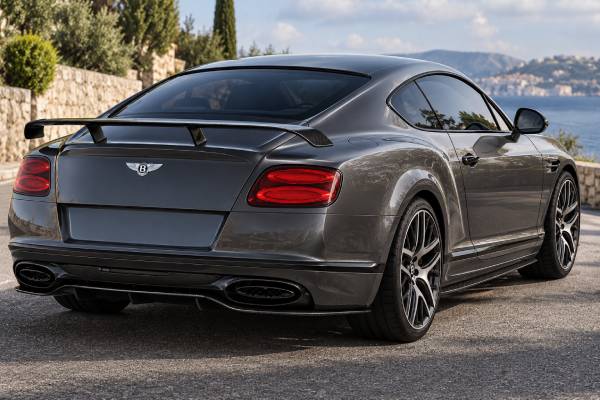
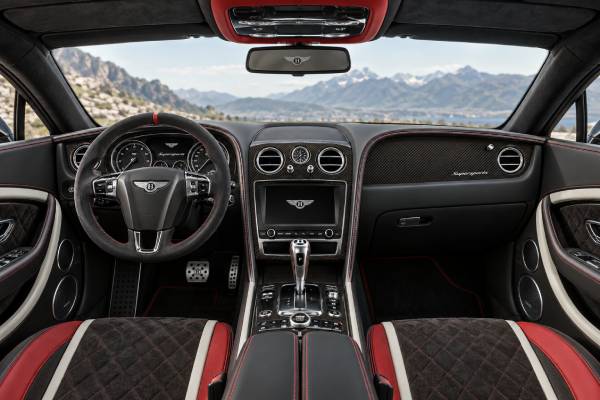
The 2017–2018 Bentley Continental Supersports is the factory-developed summit of the second-generation coupé. Bentley planned 710 examples, matching the engine’s 710 PS output, while the U.S.-market figure of 700 hp sits alongside 1,017 Nm, a 3.4-second 0–60 mph claim and a 209 mph maximum. Those numbers matter, but the car’s distinction lies in the surrounding hardware: standard carbon-silicon-carbide brakes, forged wheels, brake-based torque vectoring, lowered adaptive suspension and unique carbon-fibre body pieces. This is both a usable grand tourer and a collector car, so originality and mechanical readiness carry equal weight. Replacement costs can be extreme, and a cosmetic restoration cannot recreate a clean build record or undamaged ceramic discs. The best buying strategy is to verify identity first, measure condition second and discuss price last. A correct Supersports should feel cohesive, not like a tuned GT Speed with expensive trim.
Table of Contents
- Why the 2017 Supersports became an instant landmark
- Verified specifications for the 700 hp W12 flagship
- The engineering behind 209 mph and 750 lb-ft
- Carbon brakes, torque vectoring and road behavior
- Maintaining a low-volume Bentley performance model
- Authenticity and condition checks for collectors
- Ownership outlook, values and the right buyer profile
Why the 2017 Supersports became an instant landmark
The 2017 Supersports became a landmark because Bentley treated it as a complete high-performance model rather than a power package. The twin-turbo W12 was raised to 710 PS and 1,017 Nm, but the factory also revised airflow, cooling, chassis calibration, brakes, wheels and stability programming. At launch, Bentley described the coupé as the fastest and most powerful four-seat production car, and the 209 mph claim gave it an immediate place in the company’s history.
Production planning reinforced the message. Bentley announced 710 coupés, a number tied to the metric horsepower figure. That makes the car limited without being a one-off coachbuilt object. Owners can still use it for distance, carry rear passengers and service it through the wider Continental ecosystem, yet numbered production and unique hardware create a stronger originality requirement than on an ordinary GT Speed.
The distinction from a late GT Speed is substantial. The Speed produces 633 hp and 840 Nm; the Supersports adds 67 hp, 177 Nm and standard carbon-silicon-carbide brakes, along with forged wheels and model-specific carbon-fibre pieces. Brake-based torque vectoring also helps the large coupé rotate by selectively controlling the inside wheels. These changes affect how the car drives and what it costs to restore.
Identity should be established before condition is debated. Obtain the factory build record and confirm the correct derivative, numbered-series details, original aerodynamic parts, wheel design, exhaust treatment and cabin specification. Supersports-style parts can be fitted to other Continentals, while genuine cars may have lost valuable original pieces after damage or modification.
Collector status does not excuse poor use. A car that has remained stationary for years can develop old tires, corroded brake hardware, weak batteries and dried seals despite an immaculate odometer. Conversely, a carefully driven example may have stone chips but a far stronger mechanical history. The most desirable car combines honest use with evidence of timely service.
What makes the model enduring is the factory balance. A tuned W12 can equal or exceed the output, but it does not automatically reproduce the brake capacity, chassis behavior, cooling, aero or provenance. The Supersports matters because all of those elements were engineered and validated as one package.
Verified specifications for the 700 hp W12 flagship
Only the 2017–2018 second-generation Supersports coupé is represented here. Its 710 PS W12, 1,017 Nm, standard carbon-silicon-carbide braking system and limited-series chassis specification are materially different from a GT Speed wearing aftermarket trim. The tables put those identifying features beside the factory performance claims and body dimensions. Production records and build data remain essential because originality carries unusual weight for this derivative.
| Item | Specification |
|---|---|
| Powertrain class | Gasoline internal-combustion engine (ICE) |
| Engine | 6.0L twin-turbo W12 |
| Maximum output | 700 hp (710 PS; 522 kW) |
| Maximum torque | 1017 Nm (750 lb-ft) |
| Transmission | 8-speed torque-converter automatic with faster shift calibration |
| Driven wheels | rear-biased all-wheel drive with torque vectoring by braking |
| Fuel tank | 90 L (23.8 US gal) |
| Measure | Value | Context |
|---|---|---|
| 0–60 mph | 3.4 seconds | Manufacturer claim |
| 0–100 km/h | 3.5 seconds | Manufacturer claim |
| Maximum speed | 209 mph (336 km/h) | Factory limit or announced target |
| Combined fuel consumption | about 15.7 L/100 km combined on the period European cycle | Period European or WLTP figure |
| CO₂ emissions | about 358 g/km on the period European cycle | Market and equipment can change result |
| Dimension or capacity | Value |
|---|---|
| Body style | two-door, four-seat high-performance coupé |
| Length | 4,806 mm (189.2 in) |
| Width | 1,944 mm (76.5 in), excluding mirrors |
| Height | about 1,394 mm (54.9 in) |
| Wheelbase | 2,746 mm (108.1 in) |
| Kerb weight | about 2,280 kg (5,026 lb) kerb |
| Luggage capacity | 358 L (12.6 cu ft) |
| Component | Factory specification |
|---|---|
| Suspension and active systems | lowered adaptive air suspension with revised anti-roll calibration |
| Brake system | 420 mm front and 356 mm rear carbon-silicon-carbide discs |
| Factory wheel context | 21-inch forged alloy wheels with 275/35 ZR21 performance tires |
| Steering/stability distinction | 710 examples were planned, matching the 710 PS output; the coupé was announced as the fastest and most powerful Bentley production car of its era |
| Area | Detail |
|---|---|
| Roof/body structure | fixed coupé roof; carbon-fibre exterior components reduce mass and manage airflow |
| Fuel capacity | 90 L (23.8 US gal) |
| Seating | Four seats |
| Primary buyer verification | Match wheel, brake, chassis and market equipment to the VIN build record |
The Supersports tables reveal why authenticity matters: output, torque, carbon brakes, forged wheels and low-volume production form one package. Substituting ordinary Speed components may keep a car mobile but can erode both intended performance and collector value. Part numbers, build records and measured carbon-disc condition should accompany any serious purchase assessment.
The engineering behind 209 mph and 750 lb-ft
Reaching 209 mph in a four-seat, 2.3-tonne luxury coupé requires more than a large torque figure. The W12 must supply power continuously, the cooling system must reject sustained heat, the transmission must keep the engine in its effective range and the body must remain stable as aerodynamic load rises. The Supersports combines these requirements rather than optimizing only the first few seconds of acceleration.
The engine’s 1,017 Nm—750 lb-ft—is the defining sensation. It arrives as immense mid-range force, allowing the car to gain speed without dramatic revs. A healthy example should deliver that force cleanly from part throttle to full load. Hesitation, boost flutter, misfire or an abrupt torque step is inconsistent with factory behavior and warrants investigation of ignition, fueling, plumbing and control software.
The eight-speed automatic has to manage this torque while retaining low-speed civility. Test cold selection of Drive and Reverse, gentle creep, normal upshifts, a decisive kickdown and hot restart behavior. A tuned transmission, altered control unit or poorly completed fluid service may feel aggressive in a way that is mistaken for Supersports character. Factory performance should be forceful but coordinated.
Rear-biased all-wheel drive provides traction, while brake-based torque vectoring supports turn-in. The system can slow an inside wheel to help the car rotate, reducing the sense that the front axle is merely dragging mass around a corner. Its operation should be unobtrusive. Repeated intervention, warning lights or brake heat at one wheel requires diagnosis rather than praise for an active system.
Aerodynamics and cooling are linked. Carbon-fibre exterior pieces manage airflow as well as appearance, so cracked, missing or replica parts should be treated seriously. Inspect lower surfaces and attachment points, not only visible weave. Front heat exchangers need clean airflow; debris, bent fins and damaged ducts can compromise the thermal margin the 209 mph claim depends on.
The engine bay’s density makes small leaks important. Look for coolant residue, oil mist around hot components and wiring hardened by heat. A car that performs one hard pull may still have a cooling weakness that appears only after repeated load. The inspection route should therefore include progressive acceleration, a steady high-load period within legal limits and observation after shutdown.
Factory calibration is part of value. Modifications may add power but also alter heat, transmission load and emissions behavior. Require invoices, original parts and a reversible strategy for any tuned car. For many collectors, an unmodified example with consistent output is worth more than a faster car whose development history is unknown.
Carbon brakes, torque vectoring and road behavior
The carbon-silicon-carbide braking system is central to the Supersports, not an optional visual cue. Large 420 mm front and 356 mm rear discs reduce fade and unsprung mass, but their replacement cost makes proper assessment essential. Surface appearance alone is insufficient. A specialist should inspect for edge damage, chips, heat-related marks and wear according to the approved method, then record pad condition and remaining service life.
Brake feel should be firm and repeatable. Begin with light stops to establish straight tracking, then increase pressure once the tires and brakes are warm. A changing pedal, steering tremor or one wheel that radiates much more heat may indicate deposits, a sticking caliper, old fluid or mechanical damage. Carbon discs can be damaged by incorrect wheel handling, so inspect them whenever a wheel has been refurbished or repaired.
The forged 21-inch wheels are lighter than conventional alternatives, yet the low-profile 275/35 ZR21 tires remain vulnerable. Check the inner barrels for cracks, welding and flat spots. Tire age matters as much as tread. A low-mileage Supersports may still be unsafe on original or very old rubber, particularly in rain and under braking.
Torque vectoring changes how the car enters a bend. With measured steering and throttle, the front end should follow the line without excessive push, and the rear should feel supported rather than loose. The system cannot remove mass, so abrupt inputs still overwhelm grip. A disciplined driver senses the car taking a set, then uses the enormous torque after the chassis is balanced.
The lowered adaptive air suspension should control pitch and roll while preserving enough compliance for touring. A harsh car may have aged tires, incorrect pressures or a suspension fault rather than a legitimately aggressive setup. Compare modes over the same road. The body should become more restrained as settings change, with no warning or delayed height adjustment.
Alignment is particularly important because the Supersports can consume inner tire shoulders without obvious steering pull. Request measured values after any wheel, suspension or body repair. A car that has visited circuits may be aligned differently from road specification; that is not inherently wrong, but the owner should understand the compromise and the effect on tire life.
Road behavior should remain calm at ordinary speeds. The car is special because it can deploy extreme performance without feeling improvised. Noises, tramlining, brake judder or abrupt electronic intervention should be investigated as faults or setup issues. A genuine Supersports in correct condition feels unusually precise for its size, not merely stiffer than a standard Continental.
Maintaining a low-volume Bentley performance model
Maintenance must protect both function and originality. Start with a file containing itemized service invoices, campaign records, brake measurements, tire dates and photographs of unique components. A conventional service stamp does not show whether carbon discs were assessed, forged wheels were repaired correctly or model-specific ducts remained in place.
Engine oil should meet the approved Bentley specification and be changed on time even when annual mileage is minimal. Record level and consumption rather than relying on memory. Persistent oil odor, smoke or residue near the turbochargers calls for diagnosis because the hot engine bay can spread a small leak across several surfaces.
Cooling deserves preventive attention. The W12’s high output places substantial demand on pumps, radiators, intercoolers and connections. Clean debris from heat exchangers carefully, inspect ducts after front-end work and pressure-test any unexplained coolant loss. Repeated topping up hides evidence and risks a larger thermal event.
The carbon brakes need their own service history. Record disc identification, inspection method, pad replacement and any track use. Wheel removal should be performed with care to avoid contact damage. Brake fluid still ages by time, and a moisture-laden fluid can undermine pedal consistency even when the expensive friction components remain healthy.
Forged wheels should be checked for roundness whenever tires are replaced. Avoid repeated cosmetic machining that removes material or conceals structural repair. Fit four appropriate high-speed tires as a set when age or mismatch is significant, then perform an accurate alignment. The cost is high, but compromised tires make every other performance component irrelevant.
Air suspension, torque-vectoring brake functions and all-wheel drive should be diagnosed through data rather than parts swapping. Save fault scans, compare ride heights and monitor compressor duty. A low-voltage event can create misleading chassis messages, so battery testing belongs near the beginning of the process.
Storage needs a deliberate plan. Use a suitable battery maintainer, control humidity, avoid parking with hot or wet brakes, and move the car enough to prevent tire flat spotting if manufacturer guidance permits. Do not run the engine briefly simply to hear it; a full journey that reaches operating temperature is more valuable.
A useful annual program includes:
- Engine-oil and filter service with a leak inspection.
- Cooling pressure test and heat-exchanger cleaning.
- Diagnostic scan with battery and charging-system results.
- Measured carbon-disc, pad, wheel and tire report.
- Ride-height, alignment and underbody examination.
- Inventory of unique trim, tools, keys and original parts.
This approach turns preservation into evidence. That evidence supports diagnosis today and authenticity when the car is sold.
Authenticity and condition checks for collectors
A collector inspection begins with proof that the car is what the seller claims. Match the VIN, numbered-series documentation, build specification and market records. Verify that the exterior carbon-fibre pieces, forged wheels, brake system, exhaust finish and cabin details correspond to the factory configuration. Photographs from earlier ownership can help confirm when a component changed.
Paint and body work require context. A repaired bumper or stone-chipped front panel is common on a car capable of sustained speed, and a documented high-quality repair need not disqualify it. More serious concern arises from disturbed structural fasteners, inconsistent panel gaps, damaged underfloor reinforcement or unexplained changes in wheel alignment. Use paint-depth readings together with physical evidence.
The carbon components deserve close light and low viewing angles. Look for cloudy clearcoat, impact fractures, delamination, repaired mounting tabs and replica weave. Replacement parts should have traceable origin. Cosmetic carbon added later may be acceptable for a driver, but it should not be valued as original limited-series equipment.
Mechanical checks must be equally rigorous. Observe a true cold start, then scan all modules before clearing anything. Road test through several temperature and load conditions, inspect the underside and scan again. A code that returns after full torque or heavy braking has more significance than an old battery-related entry that remains absent.
Ask the specialist to document:
- Carbon-disc and pad condition using the correct procedure
- Original forged wheels, runout and any structural repair
- Tire brand, model, production date and tread-depth spread
- W12 oil and coolant leakage, boost behavior and hot restart
- Transmission engagement and differential noise
- Air-suspension height, compressor duty and stored faults
- Carbon aero, ducts, undertrays and lifting points
- Paint, glass and fastener evidence of previous repair
- Software, keys, manuals, accessories and original parts
Originality should not become an excuse to preserve worn safety components. Old factory tires are useful artifacts but should not remain on a driven car. Keep removed pieces documented and stored while fitting safe replacements. The same principle applies to consumables: preserving the car’s identity does not mean avoiding necessary maintenance.
Finally, reconcile condition with the asking price. A missing original carbon panel, damaged ceramic disc or incorrect wheel can cost more than a modest mileage difference. Collector-grade value belongs to cars whose documentation, hardware and behavior support one another.
Ownership outlook, values and the right buyer profile
The Supersports is likely to remain one of the most significant second-generation Continentals because its production limit, factory output and engineering changes are easy to understand. That does not mean every example will rise equally in value. Original specification, documented service, undamaged carbon brakes and a coherent ownership history will separate the strongest cars from those relying on rarity alone.
The ideal buyer is both collector and user. Pure display storage can create battery, tire, seal and brake problems, while hard use without records erodes confidence. A measured program of touring, occasional performance driving and timely inspection keeps the systems active and produces the documentation future buyers want.
Choose between originality and modification consciously. A reversible exhaust or wheel change may suit a driver, but original parts should accompany the car. Engine or control-unit tuning carries greater consequences because it changes heat and driveline load. An unmodified car may command a premium even when a tuned example feels faster.
Budget beyond the purchase. Four correct tires, carbon-brake work, a damaged wheel or a unique aero panel can each be material. Secure storage, specialist transport and agreed-value insurance may also be appropriate. The car is affordable only when those obligations fit comfortably, not when the buyer can just reach the asking price.
Compare it with alternatives honestly. A late GT Speed offers most of the grand-touring experience with lower rarity pressure and potentially simpler brake choices. The Supersports Convertible is scarcer and more theatrical but heavier and more complicated. A newer third-generation GT Speed is more agile and electronically advanced, yet lacks the limited 710-car narrative and second-generation character.
The buying decision should conclude with three questions: Is the identity proven? Is the mechanical condition measured? Is the owner prepared to maintain unique parts correctly? When all three answers are yes, the 700 hp Supersports offers more than a collectible badge. It remains a factory-engineered, four-seat 209 mph car whose breadth is still remarkable.
References
- Bentley News 2017 : NEW BENTLEY CONTINENTAL SUPERSPORTS : THE WORLD’S FASTEST FOUR-SEAT CAR 2017 (Official Model/Technical Source)
- Bentley Continental | History and Heritage | Bentley Motors 2026 (Official Model/Technical Source)
- Bentley News 2024 : End of an era as final Bentley W12 engine hand-built in Crewe 2024 (Official Model/Technical Source)
- Technical Service Bulletin 2076639/2 2025 (Recall/Service Source)
- Check for Recalls: Vehicle, Car Seat, Tire, Equipment | NHTSA 2026 (Recall/Service Source)
- Bentley Connectivity | Music and Connectivity | Bentley Motors 2026 (Official Model/Technical Source)
Disclaimer
The material above is for informational purposes and does not replace professional inspection, diagnosis or repair. Specifications, torque values, service intervals and procedures may differ by VIN, market and factory equipment; use official Bentley service documentation for the individual car.
If this article helped, please share it on Facebook, X/Twitter or with a collector or owner to support our work.