

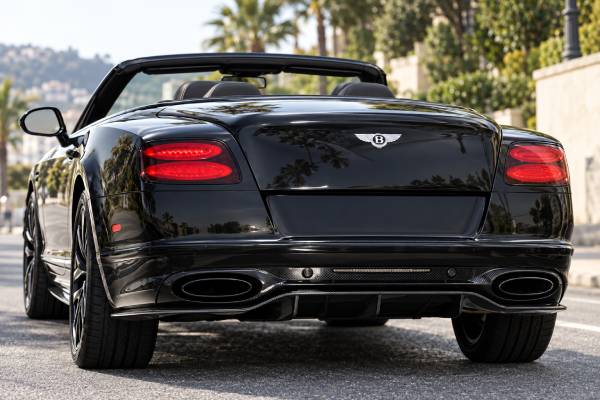
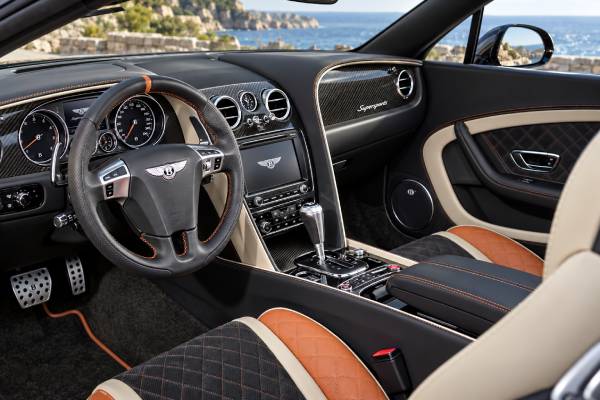
The 2017–2018 Bentley Continental Supersports Convertible combines four seats, a powered fabric roof, 700 hp and 1,017 Nm in one of the rarest second-generation Continental forms. It retains the coupé’s carbon brakes and factory performance engineering but carries extra structural mass, reaches 60 mph in about 3.7 seconds and is rated at 205 mph rather than 209. That trade is not a flaw; it is the point. The convertible delivers an open-air sense of scale that the fixed-roof car cannot match. It also multiplies the ownership checks. Roof hydraulics, drains, rear-deck alignment, underfloor reinforcement and water evidence sit beside ceramic-disc measurement, forged-wheel condition and W12 cooling history. Because production was limited, originality affects value more strongly than it does on a regular GTC. A good car should still be driven and warmed properly. Storage-only history is not automatically evidence of mechanical care.
Table of Contents
- What makes the Supersports Convertible different
- Technical data for the 700 hp open-top model
- How the convertible changes the Supersports formula
- Roof structure, aero balance and braking loads
- Preserving the W12, fabric top and rare components
- Collector-grade inspection and documentation
- Buying one for use, display or long-term ownership
What makes the Supersports Convertible different
The Supersports Convertible is different because it preserves the coupé’s 700 hp powertrain and extreme braking package while adding a fully powered roof and the structural work needed to remove the fixed top. It is not merely a GTC Speed with carbon trim. Output rises to 710 PS, torque reaches 1,017 Nm and the chassis uses Supersports-specific tuning, forged wheels and brake-based torque vectoring. The open body changes the sensations, packaging and inspection priorities.
Performance remains extraordinary. Bentley quoted 0–60 mph in 3.7 seconds and 205 mph, figures that still place the car beyond most luxury convertibles. The loss of four miles per hour relative to the coupé is small; the added experience is large. With the hood lowered, the W12’s exhaust, turbocharger sound and sheer airflow make acceleration feel more dramatic than the stopwatch suggests.
Rarity also separates it from the regular GTC range. The convertible formed only a portion of the limited Supersports production and is encountered far less often than the coupé. That scarcity increases the importance of build records, original carbon components and correct wheels. A replacement part that seems minor on a normal GTC can have a significant effect on collector value here.
The body should be viewed as an integrated structure. Reinforced sills and underfloor sections compensate for the absent roof, while the rear deck must package the folded fabric top. Poor lifting, accident repair or misalignment can reveal itself through roof sealing, door fit and body noise. A glossy exterior cannot prove that the underlying shell remains square.
Despite the specification, the car is still a Bentley grand tourer. Seats, climate control, wind management and sound insulation are intended to make long travel possible. A harsh, rattling or nervous example is not automatically “more sporting.” It may have old tires, damaged wheels, incorrect alignment or unresolved suspension issues.
The car’s identity rests on contradiction: it is both a limited collector model and a usable four-seat convertible. Owners preserve it best by maintaining that dual purpose—documenting originality while exercising the mechanical and roof systems often enough to keep them healthy.
Technical data for the 700 hp open-top model
The convertible Supersports shares the 710 PS engine with the coupé but not its mass, roof system, luggage volume or published acceleration. Those open-body differences are captured below alongside the model-specific carbon brakes and forged wheels. A buyer should use this section to separate a genuine 394 Supersports Convertible from a modified GTC Speed, then corroborate the result with factory build information and numbered-series documentation.
| Item | Specification |
|---|---|
| Powertrain class | Gasoline internal-combustion engine (ICE) |
| Engine | 6.0L twin-turbo W12 |
| Maximum output | 700 hp (710 PS; 522 kW) |
| Maximum torque | 1017 Nm (750 lb-ft) |
| Transmission | 8-speed torque-converter automatic with Supersports calibration |
| Driven wheels | rear-biased all-wheel drive with brake-based torque vectoring |
| Fuel tank | 90 L (23.8 US gal) |
| Measure | Value | Context |
|---|---|---|
| 0–60 mph | 3.7 seconds | Manufacturer claim |
| 0–100 km/h | 3.9 seconds | Manufacturer claim |
| Maximum speed | 205 mph (330 km/h) | Factory limit or announced target |
| Combined fuel consumption | about 16 L/100 km combined on the period European cycle | Period European or WLTP figure |
| CO₂ emissions | roughly 365 g/km on the period European cycle | Market and equipment can change result |
| Dimension or capacity | Value |
|---|---|
| Body style | two-door, four-seat high-performance convertible |
| Length | 4,806 mm (189.2 in) |
| Width | 1,944 mm (76.5 in), excluding mirrors |
| Height | about 1,403 mm (55.2 in) |
| Wheelbase | 2,746 mm (108.1 in) |
| Kerb weight | about 2,455 kg (5,412 lb) kerb |
| Luggage capacity | 260 L (9.2 cu ft) |
| Component | Factory specification |
|---|---|
| Suspension and active systems | lowered air suspension with adaptive damping and Supersports-specific tuning |
| Brake system | 420 mm front and 356 mm rear carbon-silicon-carbide discs |
| Factory wheel context | 21-inch forged wheels and 275/35 ZR21 tires |
| Steering/stability distinction | the convertible delivered the same 710 PS and 1,017 Nm as the coupé while retaining four seats and a powered fabric roof |
| Area | Detail |
|---|---|
| Roof/body structure | multi-layer power fabric roof, unique rear-deck packaging and additional structural reinforcement |
| Fuel capacity | 90 L (23.8 US gal) |
| Seating | Four seats |
| Primary buyer verification | Match wheel, brake, chassis and market equipment to the VIN build record |
Open-body drama came with measurable compromises in mass, luggage and acceleration, not with a reduction in the 700 hp output. That makes the convertible’s roof and body integrity as important as its carbon braking system. Verify numbered-series provenance, wheel specification and every Supersports-specific part before treating rarity as proof of condition.
How the convertible changes the Supersports formula
Removing the fixed roof changes where the driver feels the Supersports. The coupé communicates performance through stiffness and precision; the convertible adds sound, wind and greater awareness of the car’s size. The W12 still delivers 750 lb-ft across the middle of the rev range, but the open cabin makes each gear and throttle change more noticeable. A correct car should remain smooth, not abrupt.
Additional reinforcement raises mass and alters the way the body responds to uneven roads. A small amount of movement over diagonal bumps is expected, yet persistent steering-column shake, a dashboard knock or creaking from one rear quarter warrants investigation. Drive the same rough section with the roof both raised and lowered to separate body, trim and roof-frame noises.
The powered top changes aerodynamics and rear packaging. When closed, it should present an even surface with no lifted edges or obvious tension differences. When stowed, the cover must sit flush and the mechanism must not contact luggage or loose objects. The rear deck and seals should be inspected after any body repair because minor misalignment can create wind noise and water entry.
At speed, tire and alignment quality dominate confidence. The 21-inch forged wheels use low-profile performance tires that can follow grooves or react sharply to damaged pavement. A car that wanders may not need steering parts; it may need four matched tires, corrected pressures and factory geometry. Inspect inner tread because the outer shoulder can look healthy while the inside is near the cords.
The roof-down environment also affects comfort. Test the wind deflector, heated seats, climate system and every window position. A weak rear-quarter window or incorrect index can create buffeting and sealing trouble. The car’s ability to cover distance depends on these smaller functions as much as on engine output.
Acceleration should be tested only after full warm-up. The automatic transmission must manage immense torque without flare or a violent shock, and the engine should pull evenly through boost. A car that feels spectacular for one short burst but develops heat, warning or shift issues afterward has failed the more important Supersports test: repeatability.
Roof structure, aero balance and braking loads
The convertible’s roof structure should be inspected as carefully as its carbon brakes. Begin with the fabric, seams, rear glass and header seal, then watch the frame through a complete movement. Both sides should rise and fold together, latches should complete without intervention and the windows should follow the programmed sequence. Repeat the operation after a drive because warm hydraulics can behave differently.
Water control is a hidden engineering function. Drain channels must remain open, seals must contact evenly and rear-deck panels must guide water away from modules and trim. Check beneath the trunk floor, around rear side cavities and under carpet padding. A dry surface after detailing does not rule out a previous leak; corrosion on fasteners or a musty odor often tells the longer story.
At 205 mph, aerodynamic pieces have functional value. Inspect carbon splitters, ducts, side elements and rear components for cracks, repaired tabs or replica parts. Damage below the visible face may alter attachment security. The car should also retain undertrays and fasteners, since high-speed airflow depends on a complete lower surface.
Braking loads are exceptional because the vehicle combines very high speed with convertible mass. The standard carbon-silicon-carbide discs require a technician familiar with Bentley’s inspection criteria. Check edges and surfaces for impact damage, record pad thickness and verify that previous wheel work did not contact a disc. Replacement cost makes vague assurances unacceptable.
Road testing the brakes should build gradually. Confirm straight light-pressure stops, then increase load once tires and components are warm. Pedal travel must remain consistent, and the car should not pull or produce steering vibration. Brake fluid age still matters even when the friction material appears excellent.
Forged wheels reduce unsprung mass but remain susceptible to inner-barrel damage. View each from behind and check runout. Welding or repeated cosmetic machining affects value and may affect safety. Tires need the correct load and speed ratings, similar tread depths and recent production dates.
Body, aero and brakes should be considered together after any accident. A front impact can disturb ducts and cooling; a side or underbody event can influence roof fit and alignment; poor wheel repair can threaten the ceramic discs. A collector-grade inspection traces those relationships instead of checking each component in isolation.
Preserving the W12, fabric top and rare components
Preservation starts with use that reaches operating temperature. Brief starts in storage introduce moisture, consume battery energy and leave the exhaust cold. A planned drive allows oil, coolant, transmission fluid and brakes to stabilize, then gives the owner a chance to operate the roof and inspect the car afterward. Mileage added this way is evidence of care rather than automatic harm.
The W12 needs approved oil, accurate level checks and a cooling system free of slow loss. Record oil consumption and photograph any residue before cleaning. Inspect front heat exchangers, hose connections, expansion tanks and undertrays. A sweet smell or long fan run after shutdown should lead to testing, not another top-up.
Turbocharger heat affects nearby seals and wiring. During annual service, examine heat shields, connectors and plumbing for hardening or staining. A boost leak can reduce performance without immediately setting a clear fault, while an oil leak can spread across the densely packaged engine and appear to originate elsewhere.
Roof preservation requires clean fabric and free drains. Do not fold the top when it is frozen, heavily wet or contaminated with grit. Use cleaning and protection products intended for the material, and keep aggressive chemicals away from seals and rear-glass bonding. Exercise the mechanism through a full cycle in suitable conditions, then confirm that the stowage cover and windows return correctly.
Rare carbon pieces should be photographed, inventoried and protected from careless parking or lifting. Clearcoat damage can be cosmetic, but impact fractures or delamination require specialist evaluation. Keep any replaced original component with the car, along with invoices and part numbers.
Carbon brakes deserve their own log. Record inspections, pad changes, tire changes and track or high-speed use. Wheel removal should be performed carefully, and the parking brake should not be left wet after washing if storage follows immediately. Time-based brake-fluid service remains necessary.
Electrical health connects every system. Test the 12-volt battery under load, verify charging performance and use an approved maintainer. Low voltage can interrupt roof movement or generate a cluster of unrelated messages. Save diagnostic reports so recurring faults can be distinguished from one historic battery event.
A preservation schedule should include annual oil service, cooling pressure assessment, roof/drain examination, measured brake and tire condition, alignment review and a complete electronic scan. The objective is not to freeze the car in time; it is to keep every unique component ready to perform as designed.
Collector-grade inspection and documentation
Collector-grade inspection begins with a paper trail. Match the VIN to the build sheet, market records, numbered-series documentation and service history. Confirm original color, interior, carbon package, wheels and brake specification. A genuine car can lose value when unique parts are replaced without documentation, even if the substitutes are visually convincing.
Review ownership chronology and mileage progression. Long periods of inactivity should be accompanied by evidence of battery maintenance, climate-controlled storage and recommissioning. Sudden mileage changes, repeated dealer transfers or missing annual records deserve questions. Ask for photographs and invoices from earlier periods when possible.
Body examination should combine paint measurement with structural clues. Inspect windscreen pillars, door hinges, sill reinforcements, underfloor braces and roof-cover alignment. Look for crushed lifting points, non-original fasteners and sealant that differs from the opposite side. A repaired bumper is not equivalent to a distorted convertible shell.
The roof test should be documented on video. Record movement from outside, window sequencing, latch completion and the final fit of the cover. Check fabric when partly folded and inspect hidden areas for moisture. A roof that operates once after battery charging is not automatically proven reliable.
Mechanical testing requires a cold engine, full warm-up, progressive boost and a hot restart. Scan every module before driving and again afterward. Inspect the underside while fluids are warm, when fresh seepage is easier to locate. Verify transmission engagement, suspension modes, torque-vectoring-related brake behavior and stability warnings.
The specialist’s report should specifically address:
- Supersports identity and original limited-series equipment
- Condition and authenticity of exterior carbon-fibre parts
- Fabric roof, frame, hydraulics, seals, drains and rear glass
- Carbon-disc and pad measurements using the proper method
- Forged-wheel runout, repairs and correct tire specification
- W12 cooling, oil leakage, boost delivery and hot restart
- Air-suspension heights, compressor activity and alignment
- Underbody reinforcement, lifting damage and accident evidence
- Keys, manuals, wind deflector, tools and retained original parts
Documentation adds value only when it can be verified. A folder of invoices should correspond to the components on the car, and claimed brake or roof work should have part numbers and dates. The strongest Supersports Convertible is the one whose rarity is supported by measurable condition, not simply by a seller’s description.
Buying one for use, display or long-term ownership
The intended use should be decided before selecting a car. A driver will prioritize fresh tires, reliable roof operation, conventional usability and transparent mechanical history. A display-focused collector may place greater weight on original paint, low mileage and complete accessories. A long-term owner needs both: authenticity that protects value and condition that allows regular exercise.
For road use, do not overpay for untouched consumables. Original tires and worn pads are not advantages when the car will be driven. Retain documented original items where appropriate, but fit safe replacements. A car with modest mileage and recently measured carbon brakes may offer more confidence than an ultra-low-mileage example on aged rubber.
For display, storage conditions become part of maintenance. Control humidity, support the battery, avoid tire flat spotting and do not park the car immediately after washing with wet brakes. Cycle the roof and climate systems periodically in accordance with Bentley guidance. Static presentation should not mean mechanical neglect.
Long-term value will likely favor original specification, complete records and undamaged unique components. Color may influence desirability, but mechanical and structural quality dominate. A rare paint combination cannot offset missing carbon parts, a repaired ceramic disc or unexplained roof misalignment.
Compare alternatives before paying a scarcity premium. The Supersports coupé is lighter, stiffer and marginally faster. A GTC Speed offers similar open-top usability with lower collector pressure and less unique hardware. A third-generation GTC Speed is more modern and agile but does not share the 710 PS limited-series story.
Build a reserve for tires, battery, fluid baseline, roof adjustment and specialist transport. Insurance should reflect agreed value and usage, while secure storage should allow inspection rather than hiding the car under a cover for months. The purchase price is only the first part of preserving a rare convertible.
The right car is one whose purpose matches the buyer. For regular use, choose repeatable behavior and recent maintenance. For collection, choose proven originality without ignoring age. When both qualities meet, the Supersports Convertible delivers an experience no coupé can duplicate: open-air W12 force, four-seat luxury and factory-engineered performance beyond 200 mph.
References
- Bentley News 2017 : NEW BENTLEY CONTINENTAL SUPERSPORTS : THE WORLD’S FASTEST FOUR-SEAT CAR 2017 (Official Model/Technical Source)
- Bentley Continental | History and Heritage | Bentley Motors 2026 (Official Model/Technical Source)
- Bentley News 2024 : End of an era as final Bentley W12 engine hand-built in Crewe 2024 (Official Model/Technical Source)
- Technical Service Bulletin 2076639/2 2025 (Recall/Service Source)
- Check for Recalls: Vehicle, Car Seat, Tire, Equipment | NHTSA 2026 (Recall/Service Source)
- Bentley Connectivity | Music and Connectivity | Bentley Motors 2026 (Official Model/Technical Source)
Disclaimer
This article is an informational resource, not a substitute for professional inspection, diagnosis or repair. Specifications, torque values, intervals and procedures can change with VIN, market and installed equipment; verify them in official Bentley service documentation for the exact vehicle.
Please consider sharing this guide on Facebook, X/Twitter or with another Bentley enthusiast to support our work.