
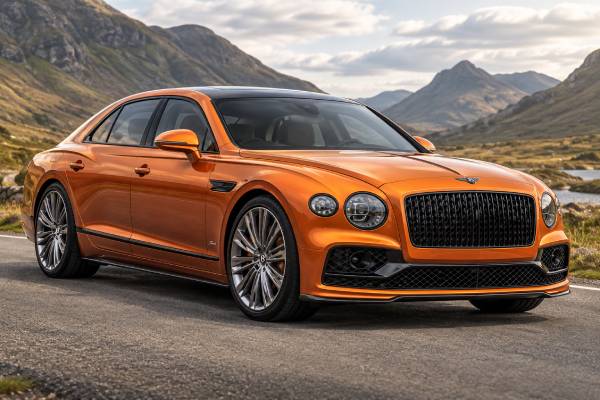
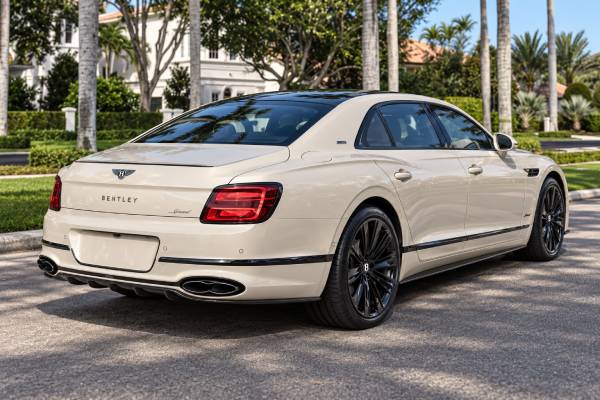
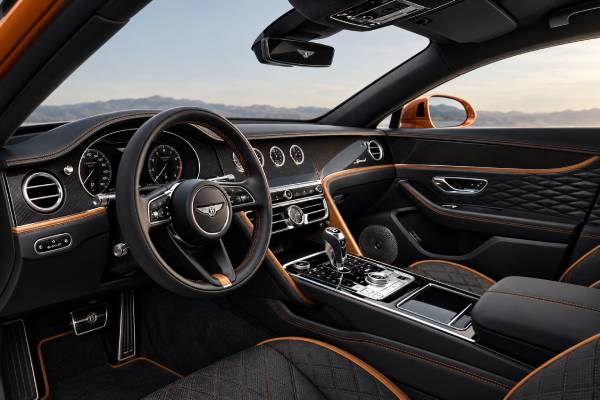
The 2024–present Bentley Flying Spur Speed replaces twelve-cylinder tradition with a 771 bhp plug-in-hybrid system—and becomes faster, more powerful, and more technically ambitious than the W12 car it succeeds. Its 4.0-liter twin-turbo V8 and 190 PS electric motor produce 1,000 Nm, launching the sedan to 60 mph in 3.3 seconds. A 25.9 kWh battery also supports up to 76 km of WLTP electric range, while the Performance Active Chassis combines twin-valve dampers, air springs, 48-volt active anti-roll control, rear steering, active all-wheel drive, torque vectoring, and an electronic limited-slip differential.
Peak acceleration depends on charge and thermal conditions; the car charges on AC; its 22-inch tires and large brakes work hard; and software, three voltage systems, cooling circuits, and chassis components need specialist care. This guide examines the Speed as a system. It explains why the new V8 is different from the outgoing engine, how the hybrid and chassis modes change the car, which specifications should be verified, and how to buy or maintain a four-door supercar without confusing headline output with condition.
Table of Contents
- From W12 Speed to V8 PHEV
- Speed technical specifications
- Performance Active Chassis
- Power delivery and driving modes
- Electric range and grand touring
- Maintenance under high load
- Buying and configuring a Speed
From W12 Speed to V8 PHEV
The new Speed is not a direct mechanical continuation of the old W12 model. It changes the engine, adds a traction battery and motor, revises the suspension and electronics, and shifts the car’s weight distribution rearward while retaining the Flying Spur’s basic dimensions and luxury-sedan role.
The outgoing Speed produced 635 PS and 900 Nm from a 6.0-liter W12. The Ultra Performance Hybrid increases those figures to 782 PS and 1,000 Nm. Bentley claims half a second less to 100 km/h. Maximum speed falls from 333 km/h to 285 km/h, but the new car gains electric driving, much lower weighted emissions, and stronger torque from low speed.
The V8 is not the previous 550 PS cylinder-deactivation engine. It produces 600 PS and 800 Nm, uses 350-bar fuel injection, and adopts twin single-scroll turbochargers. Electric torque covers the response gap while the turbos build boost. Instead of deactivating four cylinders, the control system can stop the entire engine and continue on the motor.
The Speed’s design is intentionally darker than Mulliner. Dark-tint matrix grilles, dark brightware, Speed badging, 22-inch wheels, model-specific quilting, and performance graphics establish the theme. Depending on model year, later exterior updates may introduce the new single-headlamp treatment announced for the wider Flying Spur range. Verify the exact model-year design rather than assuming every “3S” looks identical.
The new electrical architecture also broadens infotainment and driver-assistance capabilities. Wireless smartphone integration, over-the-air map updates, connected applications, improved air quality management, and newer assistance functions sit alongside the performance hardware. These features need account transfer, software support, and sensor calibration after repairs.
The result is a Speed with wider ability rather than a single-minded track sedan. It can cross a city electrically, cruise quietly, or deploy 771 bhp. The owner must use and maintain all those modes if the car is to remain more than a specification-sheet achievement.
Speed technical specifications
The Flying Spur Speed is a plug-in hybrid with a 4.0-liter twin-turbo V8, one electric motor inside the transmission, a 25.9 kWh battery, and all-wheel drive. Component outputs and system output are published separately because the peaks are managed electronically and should not be added independently.
| Specification | Value |
|---|---|
| Combustion engine | 4.0-liter twin-turbocharged V8 |
| Engine displacement | 3,996 cc |
| V8 power | 600 PS (about 592 bhp; 441 kW) |
| V8 torque | 800 Nm (590 lb-ft) |
| Electric motor power | 190 PS (187 bhp) |
| Electric motor torque | 450 Nm (332 lb-ft) |
| Combined power | 782 PS (771 bhp; 575 kW) |
| Combined torque | 1,000 Nm (738 lb-ft) |
| Battery capacity | 25.9 kWh |
| Transmission | 8-speed dual-clutch automatic |
| Specification | Value | Basis |
|---|---|---|
| 0–60 mph | 3.3 seconds | Manufacturer claim |
| 0–100 km/h | 3.5 seconds | Manufacturer claim |
| Maximum speed | 285 km/h (177 mph) | Manufacturer claim |
| Electric-only range | Up to 76 km (47 miles) | EU/WLTP |
| Maximum EV speed | 140 km/h (87 mph) | Conditions permitting |
| Total range | Up to 829 km (515 miles) | Manufacturer statement |
| Maximum AC rate | 11 kW | Compatible supply |
| Fastest stated 0–100% charge | 2 hours 45 minutes | 11 kW and suitable conditions |
| DC fast charging | Not supported | AC-only charging |
| Specification | Value |
|---|---|
| Overall length | 5,316 mm (209.3 in) |
| Width across mirrors | 2,220 mm (87.4 in) |
| Overall height | 1,474 mm (58.0 in) |
| Wheelbase | 3,194 mm (125.7 in) |
| Published unladen weight | approximately 2,646 kg (5,833 lb) |
| Weight distribution | 48.3:51.7 front to rear |
| Boot volume | 346 liters (12.2 cu ft) |
| Fuel tank | 80 liters (21.1 US gal) |
Regional weight conventions differ, so the stated value should be tied to the source definition. The rear-biased distribution is more instructive for handling than a comparison between unlike curb- and unladen-weight standards.
Performance Active Chassis
The Performance Active Chassis is the system that allows the Speed to use 1,000 Nm without feeling like a heavy PHEV with stiff springs. It coordinates mechanical grip, body control, steering geometry, damping, and electronic torque management.
The car uses two-chamber air springs rather than the outgoing model’s three-chamber arrangement, paired with new twin-valve dampers. Separate valves for compression and rebound give engineers finer control over how the body reacts to a bump and how quickly the wheel returns. Comfort can remain compliant while Sport tightens body movement.
Bentley Dynamic Ride supplies active anti-roll control through a 48-volt system. Rather than relying only on passive bar stiffness, actuators apply counter-torque in a bend and can reduce cross-axle coupling on a straight road. A fault may appear as a warning, excess roll, or little difference between modes. Diagnosis should include the 48-volt battery, wiring, sensors, controllers, and actuators.
All-wheel steering changes rear-wheel angle with speed. Opposite-phase steering tightens low-speed turns; same-phase steering stabilizes faster lane changes. The Speed should feel unexpectedly manageable in a parking garage and unusually calm in a quick directional change. A crooked steering wheel, uneven rear tire wear, or an unstable highway feel can indicate alignment or calibration issues.
The electronic limited-slip differential is a key change. It controls left-right torque at the rear axle, working with active front-rear torque distribution and brake-based vectoring. Under acceleration out of a corner, it can send more torque to the wheel able to use it. The driver experiences traction and a cleaner line rather than a dramatic mechanical event.
Electronic stability control has several calibrations, including a dynamic mode intended to permit more rotation before intervention. That setting belongs on an appropriate closed course with sufficient skill and space. On public roads, the standard safety systems should remain active.
Tires define the system’s limit. Correct approved 22-inch tires, similar tread depth, accurate pressures, and undamaged wheels are mandatory. A PHEV’s instant torque can expose weak rear tires quickly, while mismatched rolling circumference can disturb the all-wheel-drive system.
Power delivery and driving modes
The new Speed is fastest when the battery is charged and the powertrain is at its intended temperature. The motor supplies instant response, the V8 adds sustained power, and the transmission keeps both within their useful speed ranges.
In pure electric use, 190 PS is enough to move the car briskly through normal traffic. The maximum electric speed of 140 km/h is unusually high for a PHEV, although acceleration demand, temperature, state of charge, and climate needs can start the engine earlier. Bentley also allows substantial throttle opening before combustion intervention under suitable conditions.
Sport mode deploys the full combined system and emphasizes the V8’s cross-plane sound through a sports exhaust. Bentley states that the exhaust note is natural rather than electronically synthesized. The experience differs from the W12: the V8 has a stronger pulse and more obvious character, while the old engine delivered a smoother, denser surge.
The motor’s location inside the transmission allows torque filling during shifts. That helps the dual-clutch gearbox feel more continuous under acceleration. At parking speed, however, the system still manages physical clutch engagement. Test cold and warm creep, reverse, inclines, and stop-start traffic for shudder or delay.
Energy management maintains a protected battery buffer after the displayed electric range reaches zero. The car does not become a conventional V8 with a physically empty pack. It continues to recover energy and provide hybrid support, although repeated maximum-output events can reduce temporary electrical assistance as temperature or state of charge changes.
Regeneration blends motor braking and friction brakes. Pedal feel should be smooth and predictable. Drivers who use light deceleration may leave the iron discs underused, causing corrosion. The system may also vary regeneration based on drive mode and conditions, so evaluate consistency rather than expecting one fixed deceleration level.
The maximum speed is lower than the W12 Speed’s, but 177 mph remains far beyond normal use. The new car’s advantage appears in accessible acceleration, response, low-speed electric refinement, and lower official emissions. Buyers seeking the old car’s 207 mph headline or twelve-cylinder feel should not assume the new Speed is the same product with more horsepower.
Electric range and grand touring
The Speed can perform meaningful daily travel on electricity, but it is not designed around public DC fast charging. Its ideal routine is home or workplace AC charging, with gasoline providing rapid long-distance replenishment.
A compatible 11 kW three-phase source can complete a full charge in about 2 hours 45 minutes. Many residential installations provide less power, extending the time. That is usually irrelevant overnight. Owners should choose a safe fixed installation, keep the cable path clear, and avoid unapproved extensions or adapters.
The 76 km WLTP figure is achieved under standardized conditions. Real range falls with cold weather, high speed, cabin heat, repeated acceleration, elevation, and large winter loads. It may rise in mild urban use. The dashboard estimate reflects recent history, so battery health should not be judged from one number after a dealer demonstration.
Wall electricity includes conversion and thermal losses. A utility meter will show more energy than the battery stores. When comparing operating cost, record electricity drawn, gasoline used, and distance over several weeks. The official weighted fuel-consumption figure assumes repeated charging and is not representative for an owner who rarely plugs in.
On a tour, use charge retention when a quiet or restricted urban section awaits at the destination. Do not detour for short DC sessions the car cannot accept. Select hotels or parking facilities with AC charging where the car will remain for several hours. The 80-liter tank and quoted 829 km total range preserve the Flying Spur’s grand-touring purpose.
The 346-liter trunk is the main packaging compromise. It is smaller than the old gasoline model’s 420 liters. Bring actual luggage to a showroom and check the opening shape, not just the volume. A four-seat rear console can further limit flexibility for long items.
Pre-conditioning can improve comfort and reduce the first demand on the battery when plugged in. Connected functionality and scheduling depend on market, app support, account status, and software. Confirm how the vehicle is removed from the previous owner’s account before purchase.
Maintenance under high load
A 771 bhp PHEV needs maintenance based on time, operating conditions, and system data—not only odometer distance. Electric commuting can reduce engine use while high-performance driving can stress the battery, cooling, tires, and brakes intensely in a short period.
Use the exact Bentley-approved oil and observe the VIN-specific interval. The V8’s high-pressure injection, turbochargers, catalysts, and cooling system need clean fluids and full-temperature operation. Repeated brief engine starts during winter PHEV use can age oil even when total engine mileage is modest.
High-voltage inspection should cover fault history, cell-balance indicators, isolation monitoring, coolant circuits, charge interruptions, and software. It must be performed by trained technicians. Owners should not open battery housings or handle orange cabling.
The 12-volt battery starts the control sequence; the high-voltage battery drives the car; the 48-volt system powers active chassis hardware. All three can produce overlapping warnings when voltage is low. Test each according to the service procedure and record results before replacing parts.
Brakes need direct inspection. Regeneration may leave iron discs rusty, while repeated high-speed use can create heat checking or wear. Carbon-ceramic systems, if selected, require specialist condition assessment and a major replacement reserve. Red or black caliper paint reveals little about disc life.
Inspect tires at every service for inner-edge wear, cuts, impact bubbles, heat damage, and age. Measure wheel runout after pothole strikes. The torque and mass justify replacing a questionable tire early. Alignment must account for ride height and all-wheel steering.
Air suspension, Dynamic Ride, eLSD, rear steering, and active AWD should be scanned and road-tested. A warning cleared at delivery may return only after the systems warm or experience load. A proper inspection includes a second diagnostic pass after the road test.
Cooling circuits serve the engine, battery, power electronics, transmission, and cabin. A low reservoir or dried residue should be traced, not topped up indefinitely. Software cannot repair a physical leak.
Repeated hard driving creates heat in several systems at once. The V8, electric motor, battery, transmission, brakes, tires, and active chassis all operate under greater load, so warning messages or reduced performance should never be treated as something to drive through. Allow the car to complete its cooling strategy after a demanding run, avoid shutting it down immediately after repeated full-load operation when official guidance advises otherwise, and inspect for odors, fluid residue, tire damage, or brake vibration. Track-style use may fall outside ordinary warranty assumptions and can require more frequent checks even when the dashboard shows no scheduled service due.
Brake choice should reflect that use. Carbon-ceramic discs resist fade and reduce unsprung mass, but their condition must be assessed with the correct procedure, and replacement cost is substantial. Iron brakes may be more practical for road-driven cars that encounter winter contamination or ordinary workshop support. Either system still depends on fresh fluid, healthy cooling airflow, correct pads, and tires capable of converting braking force into grip.
The hybrid battery also influences repeatability. Maximum combined output is managed by software according to temperature, charge state, and protection limits. A single acceleration figure does not promise identical performance after many runs, nor should owners attempt to override thermal safeguards. The intelligent approach is to maintain the car correctly, begin a demanding drive with suitable charge and temperatures, and treat any persistent power reduction as diagnostic information.
Buying and configuring a Speed
A new Speed should be specified around use and road conditions; a used Speed should be selected by verified system health. In either case, choosing the most expensive options does not guarantee the best car.
For configuration, decide whether the car will carry rear passengers frequently. The five-seat layout is more flexible; four seats create a more exclusive cabin. Choose wheels with local potholes and winter tires in mind. Decide between iron and optional high-performance brake systems based on realistic driving and replacement tolerance.
The Speed’s dark exterior treatment can be paired with vivid paint or a discreet shade. Gloss-black trim shows damage easily, and complex finishes are expensive to repair. Protective film may make sense on high-impact areas when installed without cutting paint or blocking sensors.
For a used example, demand the VIN, build data, full service history, charging cables, both keys, software and campaign records, high-voltage warranty details, and account-transfer instructions. Conduct a real AC charge and test EV mode before asking for full performance.
The pre-purchase inspection should include:
- full diagnostic scans before and after driving;
- battery state and charge-event review;
- 12- and 48-volt system tests;
- cooling-system inspection for all circuits;
- brake measurements and tire age;
- wheel runout and alignment assessment;
- suspension, rear-steering, eLSD, and Dynamic Ride checks;
- paint depth and driver-assistance calibration records;
- operation of seats, blinds, rotating display, audio, cameras, and connected functions.
Compare the Speed with the Mulliner on presentation, not power. Both use the Ultra Performance Hybrid and Performance Active Chassis. Mulliner adds more brightwork, bespoke design, and wellness specification; Speed makes the performance theme explicit. The 680 PS core and Azure models are slower and top out at a lower speed, but they may be more rational for owners who do not need the eLSD-led sports setup.
A low-mileage car is not automatically superior. It may have old tires, an underused charging system, stale fuel, corroded brakes, or a weak auxiliary battery. A regularly driven and well-documented Speed can be the safer purchase.
The right car should demonstrate the breadth Bentley promises: clean electric movement, seamless hybrid response, strong and repeatable acceleration, clear mode differences, accurate steering, and a cabin free from excuses. Buy that evidence rather than the badge alone.
References
- Bentley News 2024 : The new Flying Spur: The most powerful Bentley four-door ever 2024 (Model Launch)
- Bentley News 2024 : Ultra Performance Hybrid powertrain for next Flying Spur 2024 (Powertrain Preview)
- BENTLEY NEWSROOM : New Flying Spur 2026 (Technical Overview)
- Bentley News 2025 : Flying Spur sets new ‘Winter Lap Record’ at most northerly active racetrack in the world 2025 (Chassis Demonstration)
- : Services: Flying Spur services 2026 (Connected Services)
- Check for Recalls: Vehicle, Car Seat, Tire, Equipment | NHTSA 2026 (Recall Database)
Disclaimer
This article is for informational purposes only and is not a substitute for professional diagnosis, repair, high-voltage service, or a VIN-specific inspection. Specifications, torque values, charging performance, intervals, software, and equipment vary by market, model year, and factory build. Verify procedures using official Bentley documentation and qualified technicians. Please share this article on Facebook, X/Twitter, or another platform if it was useful.