
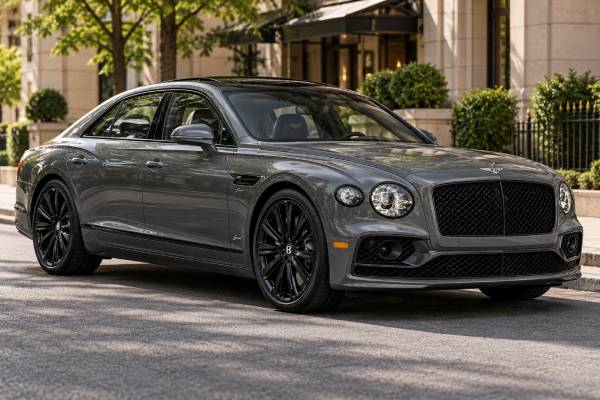
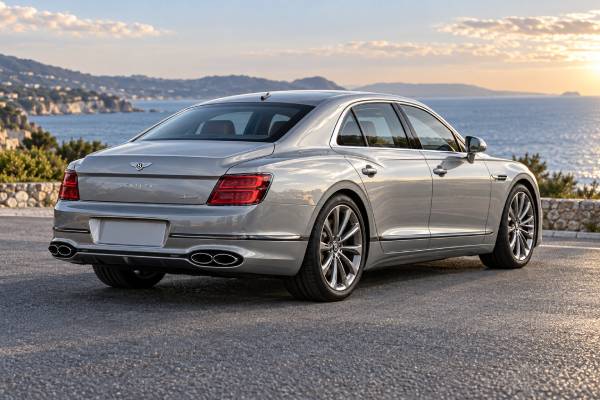
The 2022–2024 Bentley Flying Spur Speed is the final performance-focused W12 sedan in Bentley’s third-generation Flying Spur line. Its 6.0-liter twin-turbo engine delivers 626 bhp and 900 Nm, enough for 0–60 mph in 3.7 seconds and a 207 mph maximum speed. Yet the Speed badge is not only about output. Electronic all-wheel steering, Bentley Dynamic Ride, active all-wheel drive, torque vectoring, dark exterior detailing, and a more assertive cabin make the car feel sharper than its limousine proportions suggest.
Bentley ended W12 production in 2024 and replaced the engine’s flagship role with a more powerful V8 plug-in hybrid. That gives the outgoing Speed historical importance, but significance does not excuse poor condition. Twelve-cylinder heat management, active chassis components, dual-clutch behavior, brakes, 22-inch tires, complex electronics, and incomplete campaigns can make a cheap car expensive. The following guide treats the Speed as an engineering system and a used purchase, explaining what distinguishes it, which figures matter, how it should drive, and what must be verified before paying for one of the last 207 mph W12 four-doors.
Table of Contents
- Speed and the end of the W12
- Flying Spur Speed specifications
- W12 power delivery and transmission
- Performance chassis systems
- Speed design and daily use
- Preserving a final W12
- Inspection, value, and alternatives
Speed and the end of the W12
The Flying Spur Speed was created to complete Bentley’s performance range and became one of the last production models to use the company’s W12. It replaced the regular W12 Flying Spur at the top of the late third-generation lineup and added a more focused visual and chassis specification.
Bentley’s W12 story began in the early 2000s and evolved through higher output, improved thermal control, direct and port injection, cylinder deactivation, and more compact packaging. In the Flying Spur Speed, the engine produced 635 PS, or 626 bhp, rather than the 659 PS used by the contemporary Continental GT Speed. The sedan still reached 333 km/h, making it one of the fastest four-door luxury cars of its era.
The Speed sat above the S. Compared with the V8 S, it gained 85 PS and 130 Nm, cut 0.4 second from the 0–60 mph claim, and increased maximum speed by 9 mph. Both had Dynamic Ride and rear steering, so the Speed’s premium centered on the W12’s surge, higher terminal performance, flagship status, and unique trim rather than exclusive access to every chassis feature.
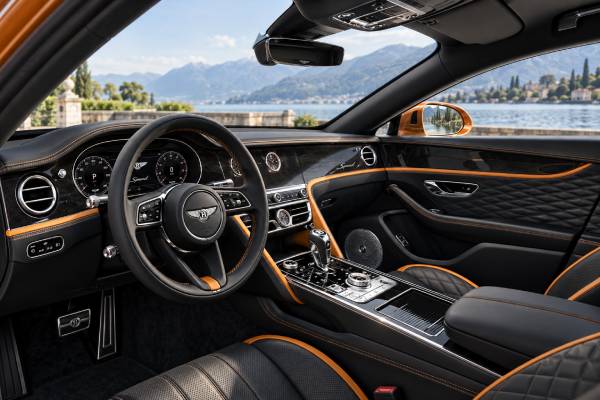
Exterior details included dark-tinted grilles and lamps, Speed badging, 22-inch wheels, and bright or dark treatments depending on options. Inside, Speed-specific color splits, embroidery, Dinamica, and performance graphics separated it from Mulliner’s formal luxury. The limited Speed Edition 12 further celebrated the engine with numbered and W12-themed details, but that edition should not be confused with the standard Speed covered here.
The car’s historical appeal is strongest when it remains original. Factory paint, correct wheels, complete books, both keys, charging or battery-maintainer accessories where supplied, and documented service all matter. Loud exhaust modifications or cosmetic conversions may reduce the audience even if they attract attention.
Flying Spur Speed specifications
This is a gasoline internal-combustion sedan using a compact twin-turbo W12, an eight-speed dual-clutch transmission, and active all-wheel drive. The performance figures below are Bentley claims for the 626 bhp Speed; measured results and regional specifications can differ.
| Specification | Value |
|---|---|
| Engine layout | 6.0-liter twin-turbocharged W12 |
| Displacement | 5,950 cc |
| Maximum power | 635 PS (626 bhp; 467 kW) |
| Maximum torque | 900 Nm (664 lb-ft) |
| Fuel delivery | Direct and port fuel injection |
| Efficiency technology | Cylinder deactivation and start-stop strategies |
| Transmission | 8-speed dual-clutch automatic |
| Drivetrain | Active all-wheel drive |
| Specification | Value | Basis |
|---|---|---|
| 0–60 mph | 3.7 seconds | Manufacturer claim |
| 0–100 km/h | 3.8 seconds | Manufacturer claim |
| Top speed | 333 km/h (207 mph) | Manufacturer claim |
| Fuel tank | 90 liters (23.8 US gal) | Regional value |
| Boot volume | 420 liters (14.8 cu ft) | Gasoline model |
| Seating | Five seats or optional four-seat arrangement | Build dependent |
| Specification | Value |
|---|---|
| Length | 5,316 mm (209.3 in) |
| Width across mirrors | 2,220 mm (87.4 in) |
| Wheelbase | 3,194 mm (125.7 in) |
| Primary suspension | Three-chamber adaptive air suspension |
| Active roll control | 48-volt Bentley Dynamic Ride |
| Rear axle steering | Electronic all-wheel steering |
| Cornering aid | Torque Vectoring by Brake |
| Standard wheel diameter | 22 inches |
Weight figures vary by regional definition and equipment. The useful comparison is that the W12 carries roughly 100 kg more than the V8 Flying Spur. The Speed’s active chassis manages that mass convincingly, but tires, brakes, and suspension parts still experience the physical load.
W12 power delivery and transmission
The Speed’s W12 is defined by uninterrupted torque and smoothness. It does not need a dramatic high-rpm crescendo because 900 Nm is available across a broad band, allowing the gearbox to use tall ratios and still deliver immediate passing performance.
The unusual cylinder arrangement packages twelve cylinders into a shorter engine than a conventional V12. Two turbochargers supply compressed air, while direct and port injection serve different operating needs. Cylinder deactivation can reduce fuel use at light load, although overall consumption remains substantial in a large 207 mph sedan.
A healthy W12 idles with very little vibration. That smoothness can hide a developing ignition or fueling issue, so a diagnostic inspection should review misfire counts, fuel trims, stored faults, and operating temperatures. A slight unevenness that would be obvious in a four-cylinder engine can disappear into twelve combustion events.
The dual-clutch transmission contributes to the car’s speed. It preselects the next ratio on the alternate clutch, enabling fast changes under acceleration. In Comfort or Bentley mode, software aims for refinement. Sport mode increases response, holds gears, and makes paddle inputs more immediate. At walking speed, clutch engagement can be perceptible; repeated shudder, a long delay into reverse, or a heavy bang is not normal.
The W12’s 207 mph figure depends on far more than power. Cooling airflow, oil and coolant temperature control, tire capability, aero stability, brake capacity, and software limits all contribute. For ordinary owners, the lesson is not to attempt the maximum. It is to respect the maintenance standard required by a car engineered to reach it.
Fuel quality matters. Use the octane rating specified for the market. Old fuel and long storage are poor companions for a complex direct-injection engine. A car that spends months unused should still be warmed fully during regular drives rather than idled briefly in a garage.
Exhaust sound is subdued compared with the V8 S. The W12 produces a dense, refined tone that grows under load but rarely dominates. Aftermarket systems may add volume at the cost of drone and originality. Any modification should be checked for emissions compliance, heat shielding, valve operation, and reversible installation.
Performance chassis systems
The Speed’s chassis turns extreme straight-line ability into a manageable driving experience. Rear steering and active anti-roll control make the car feel shorter and flatter, while air springs preserve the ride expected of a Bentley.
Dynamic Ride uses 48-volt electric actuators at the anti-roll bars. Bentley’s system can apply substantial counter-torque in fractions of a second. During cornering it limits roll; on a straight road it can decouple the wheels more effectively than a fixed stiff bar. The driver should notice distinct mode changes without harshness or warning messages.
Electronic all-wheel steering turns the rear wheels opposite the fronts at low speed, reducing the turning circle. Above a threshold, it turns them in the same direction, adding stability. This system is one reason a 5.3-meter car can feel manageable in a city and calm at highway speed. It also means a simple alignment must be performed by a shop with the correct procedures and calibration capability.
Active all-wheel drive controls front-rear torque distribution. The car normally favors rear-led behavior and adds front torque when needed. Brake-based vectoring fine-tunes the line across an axle. On wet roads, acceleration should be clean with no persistent tugging or stability-control intervention on moderate throttle.
The air suspension uses three chambers and adaptive damping. A healthy Speed can be firm and controlled in Sport but still isolate broken pavement in Comfort. It should not sit low at one corner after an overnight stand. Excessive compressor operation indicates leakage or pressure loss and should be resolved before the compressor is damaged.
Brakes are a major purchase item. Large iron discs were standard, with carbon-ceramic brakes available depending on market and configuration. Iron discs need thickness and inner-face inspection. Carbon-ceramic discs need a specialist condition assessment, because chips, impact marks, or wear can lead to exceptionally expensive replacement.
Tire approval is non-negotiable. The Speed’s size, load, and maximum capability demand correct speed and load ratings. Check age even when tread is deep. A car driven little can retain tires that are visually impressive but hardened and unsuitable. Matching tread depth also supports the all-wheel-drive system.
Speed design and daily use
The Speed is visually darker and more athletic than Mulliner, but it remains a practical four-door grand tourer. Its daily usefulness depends on choosing the right seating arrangement, equipment, and wheel condition rather than simply accepting the flagship badge.
Outside, inspect the matrix grilles, lower apertures, lamp tint, black or dark brightware, mirror caps, and 22-inch wheels for originality. Gloss-black surfaces show swirl marks and repainting. Large wheels often carry hidden inner-rim damage. A poorly machined refurbishment changes the shape of spokes and diamond-cut edges.
The cabin can combine leather and Dinamica with Speed embroidery and model-specific graphics. Dinamica on the steering wheel and seat areas should retain a soft, matte texture. Greasy shine, crushed fibers, or uneven color usually comes from wear or wrong cleaning products. Compare high-contact areas with the passenger side.
Four-seat configuration adds a continuous rear console and individual rear chairs. Five seats offer greater flexibility. Both can include massage, ventilation, blinds, picnic tables, a touchscreen remote, and rear entertainment. Specific 2021–2023 Flying Spurs with certain screens were included in a retention-bracket recall, so confirm completion by VIN.
The Bentley Rotating Display, premium audio, head-up display, night vision, surround cameras, adaptive cruise, and lane-support functions may be present. Test them all. A disconnected mobile service is different from a failed control module, but both should be understood before purchase.
Despite its maximum speed, the car can be used quietly every day. The engine is flexible, the air suspension softens poor roads, and the trunk is larger than in the PHEV. Its limitations are physical: width in old parking structures, long doors, expensive low-profile tires, and high fuel use in urban traffic.
Winter use is possible with the correct wheel and tire package. Do not rely on all-wheel drive alone. Summer performance tires lose effectiveness in cold conditions, and the car’s mass increases stopping distance. A dedicated approved winter set protects the 22-inch wheels and improves safety.
Preserving a final W12
Preservation means using the car properly and maintaining it on time, not storing it indefinitely. Regular full-temperature driving, clean fluids, battery support, correct tires, and documented repairs are better for the W12 than repeated short starts or years of inactivity.
Engine oil must meet the Bentley approval for the VIN and market. Obtain invoices rather than relying on a service-menu reset. Review spark plugs, filters, brake fluid, coolant, belts, transmission and differential service, and software campaigns. Twelve cylinders mean more ignition and fueling components, so small issues should be diagnosed before they affect catalysts or turbo performance.
Cooling deserves particular attention. Inspect coolant reservoirs, pumps, hoses, turbo circuits, fan operation, and dried residue. A sweet odor after a drive or unexplained coolant top-up needs pressure testing. Heat can harden nearby plastics and wiring, making preventive replacement of a minor line preferable to a roadside failure.
The 12-volt battery supports a large electronic network. Use an approved maintainer when the car is parked for extended periods. Battery replacement requires the correct specification and registration. Low voltage can create false or secondary warnings across the chassis, assistance, and infotainment systems.
Dynamic Ride has its own 48-volt supply and control network. A scan should include both 12- and 48-volt systems. Air-suspension height, rear-steering calibration, and active-roll performance should be checked during service, especially after wheel impact or alignment work.
Brakes and tires may age before they wear out on collector-kept cars. Corroded inner disc faces, flat-spotted tires, hardened rubber, and seized fasteners are common storage-related risks. Exercise the systems and inspect them physically rather than assuming low mileage preserves them.
Keep original parts removed during reversible changes. Preserve the build sheet, books, keys, tool kit, tire-compressor equipment, wheel-lock key, and every invoice. Historical value is strengthened by a clear chain of stewardship, not by an unsupported claim that the car is “one of the last.”
Preservation does not mean avoiding use. A final-generation W12 benefits from complete heat cycles, clean fluids, exercised seals, and regular operation of its chassis and comfort systems. A car that has sat for months may show flat-spotted tires, weak batteries, sticky brake surfaces, stale fuel, dried seals, or faults caused by low voltage even when its odometer looks attractive. Build a storage routine around correct tire pressures, a suitable battery maintainer, a dry ventilated space, fuel quality, and scheduled drives long enough to reach stable operating temperature. Record those drives and any corrective work so low annual mileage has context.
High-speed capability also changes the inspection standard. Tires must be checked by exact specification and date, not only by tread depth. Examine the inner sidewalls and wheel barrels for impact damage, verify that all four tires are compatible, and confirm that any seasonal set is appropriate for the intended speed and climate. Brake discs need inspection for cracking, scoring, corrosion, lip formation, and heat evidence; carbon-ceramic equipment requires the manufacturer’s assessment method rather than a casual visual judgment. A vibration that appears only under firm braking or at highway speed can indicate an expensive issue that a short urban test will miss.
A prospective owner should budget for condition, not merely purchase price. A cheaper Speed with overdue tires, tired suspension, cosmetic wheel damage, weak batteries, and incomplete service records can consume the difference quickly. Conversely, a higher-mileage example with transparent maintenance, consistent use, correct parts, and documented campaign completion may be the safer long-term car. The final W12 has emotional and historical appeal, but that appeal is strongest when supported by evidence that the entire vehicle—not just the engine—has been preserved.
Condition evidence should carry more weight than rarity claims or showroom polish.
Inspection records should include tire dates, alignment results, and brake measurements.
Inspection, value, and alternatives
The correct Speed purchase combines mechanical health, originality, documented annual maintenance, and a specification that you would have chosen new. End-of-W12 sentiment should come after those fundamentals.
A specialist pre-purchase inspection should begin cold and include a full diagnostic scan, battery tests, fluid-leak review, cooling-system assessment, tire ages and runout, brake measurements, underbody inspection, air-suspension leak check, Dynamic Ride and rear-steering operation, paint-depth readings, and recall verification. Save all codes before clearing or updating anything.
During the road test, evaluate low-speed clutch take-up, ride in every mode, steering on tight turns, highway tracking, brake vibration, wheel balance, full-load acceleration, and heat-soaked restart. The car should remain composed as temperatures rise. A warning that appears only after a hard drive is more important than a clean dashboard at start-up.
Look closely at history. Frequent ownership changes, long gaps, repeated battery replacements, unexplained coolant work, multiple wheel repairs, or a recent auction sale are prompts for deeper investigation. They are not automatic rejection, but they need a coherent explanation.
Estimate immediate costs with written quotes. Four correct tires, front and rear brakes, annual service, a battery, wheel refurbishment, and a minor cooling leak can create a large first-year bill. Carbon-ceramic brake replacement or active-chassis repair can be larger still.
Compare the Speed with three alternatives. The Mulliner W12 uses the same engine but emphasizes craftsmanship and formal luxury. The S V8 is lighter at the nose and can feel more playful, with lower flagship significance. The new Ultra Performance Hybrid Speed is much more powerful, offers electric range, and uses a newer electrical architecture, but it lacks the W12’s unique smoothness and simplicity of refueling.
Future collectability is plausible but not guaranteed. Production numbers, specification, region, condition, and broader market tastes will shape values. The safest approach is to buy the car because its experience matters to you, then preserve the features future buyers are likely to value: originality, documentation, matching components, fault-free operation, and careful use.
A final W12 Speed that meets those standards is more than a fast sedan. It represents the end point of Bentley’s twelve-cylinder development in a body that can carry four adults and luggage across a continent. That combination is why condition deserves the same attention as rarity.
References
- Bentley News 2022 : FLYING SPUR SPEED COMPLETES NEW PRODUCT PORTFOLIO 2022 (Model Launch)
- BENTLEY NEWSROOM : Flying Spur Speed 2022 (Model Overview)
- Bentley News 2019: NEW FLYING SPUR – SPORTS SEDAN MEETS LUXURY LIMOUSINE 2019 (W12 Engineering)
- Bentley News 2023 : TRIBUTE TO AN ENGINEERING ICON: BENTLEY SPEED EDITION 12 2023 (W12 History)
- Bentley Motors Website: FAQs: Flying Spur FAQs 2026 (Connected Services)
- Check for Recalls: Vehicle, Car Seat, Tire, Equipment | NHTSA 2026 (Recall Database)
Disclaimer
This article is for informational purposes and is not a substitute for professional diagnosis, repair, or a VIN-specific inspection. Specifications, torque values, service intervals, software, procedures, and fitted equipment differ by market, model year, and individual build. Verify all work using official Bentley service documentation. Please share this guide on Facebook, X/Twitter, or another platform if it was useful.