
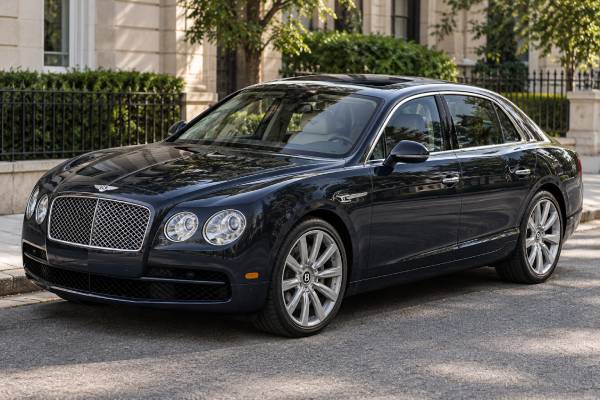
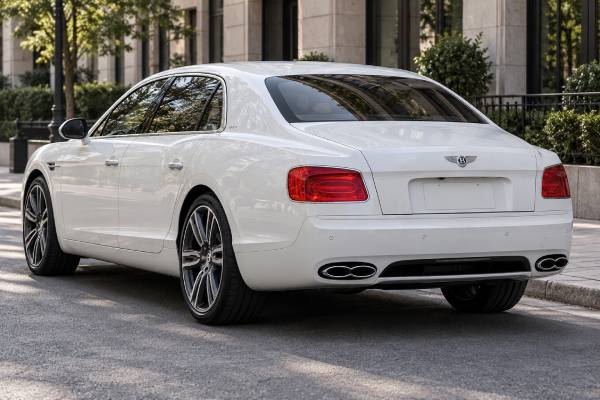
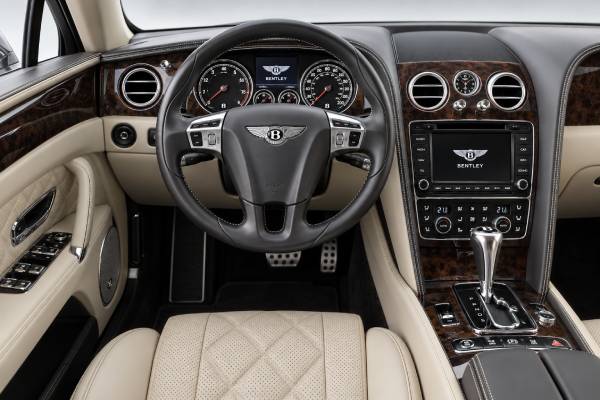
The Flying Spur V8 S is the point at which Bentley’s second-generation sedan became more deliberately driver-focused without adopting the twelve-cylinder cost and mass of the W12 S. Offered for 2016–2018, it raises the 4.0-liter twin-turbo V8 to 521 hp and 680 Nm, sharpens throttle and transmission response, firms the suspension, gives the exhaust a stronger voice, and adds dark exterior and model-specific cabin details. The result is not a track sedan; it is a faster-reacting grand tourer whose value depends on retaining the refinement that separates an authentic S from a modified standard V8. Used-car inspection must therefore judge calibration and condition together. Harshness, booming exhaust, wheel vibration, or nervous steering are not proof of sportiness. This guide defines the V8 S, documents its specifications, explains what its chassis changes should feel like, identifies the systems that can undermine that experience, and sets out a purchase method for a rare derivative that is easy to imitate cosmetically but expensive to restore mechanically.
Table of Contents
- What the S Badge Changed
- V8 S Specifications and Factory Performance
- Chassis, Exhaust, and Calibration in Motion
- Mechanical Care That Preserves S Character
- Cabin, Options, and Cosmetic Condition
- How to Authenticate and Inspect a V8 S
- The Rare Middle Ground: Value and Ownership
What the S Badge Changed
The V8 S is a distinct factory model, not a standard V8 with black trim. Bentley increased output by about 21 hp and 20 Nm, revised powertrain software, introduced a sportier chassis tune, and used model-specific visual details to create a more responsive version of the 4W2.
Its 3,993 cc hot-V engine remains closely related to the standard V8. The turbochargers sit within the valley between the cylinder banks, shortening exhaust paths and improving response. Bentley’s S calibration produces 521 hp in the assignment’s rating, commonly stated as 528 PS, and 680 Nm. The eight-speed automatic and permanent all-wheel-drive hardware remain familiar, but their programming makes the car more eager to hold lower ratios and respond to the accelerator.
Suspension changes matter more than the modest power increase. The S uses a firmer air-suspension and damping calibration, with revised stability-control behavior and steering feel. A sport exhaust gives the cross-plane V8 a more prominent note without turning the cabin into a constant resonance chamber when original and healthy.
Exterior identifiers commonly include gloss-black radiator and lower grilles, dark lamp treatment, V8 S badges, red brake calipers, and specific wheel designs. Inside, knurled controls, contrast stitching, embroidered emblems, and optional Mulliner details may appear. Bentley offered extensive personalization, so colors and trim patterns vary widely.
Build data is decisive because cosmetic pieces can be fitted to a standard V8. Verify derivative, engine code, original options, wheel and brake specification, and market equipment. Modifications do not automatically make a car bad, but they must be declared, reversible where possible, and supported by evidence that the chassis and emissions systems still operate correctly.
The V8 S occupied an unusual position. It was lighter over the nose than either W12 model, faster than the standard V8, and less overtly extreme than the W12 S. That combination makes it attractive today, provided a buyer does not mistake rarity for immunity from normal 4W2 aging.
V8 S Specifications and Factory Performance
The V8 S is a gasoline internal-combustion vehicle with twin turbochargers, cylinder deactivation under suitable light load, an eight-speed automatic, permanent rear-biased all-wheel drive, and adaptive air suspension.
| Specification | Value | Difference from standard V8 |
|---|---|---|
| Engine | 3,993 cc twin-turbo V8 | Same basic hot-V architecture |
| Maximum power | 521 hp (about 528 PS / 388 kW) | Approximately 21 hp higher |
| Maximum torque | 680 Nm (502 lb-ft) | 20 Nm higher |
| Transmission | ZF eight-speed torque-converter automatic | S-specific response calibration |
| Drive | Permanent AWD, nominally 40:60 front to rear | Rear-biased feel with all-weather traction |
| Efficiency system | Four-cylinder deactivation at light load | Transition should remain smooth |
| Measure | Published figure | Interpretation |
|---|---|---|
| 0–60 mph | Approximately 4.6 seconds | Traction makes repeated launches consistent |
| 0–100 km/h | Approximately 4.9 seconds | Faster than standard V8 |
| Top speed | 306 km/h (190 mph) | Requires correct speed-rated tires |
| Torque peak | Broad low-to-midrange plateau | Strong passing without high rpm |
| Powertrain classification | ICE | No electric traction system |
| Item | Approximate value or configuration |
|---|---|
| Length | 5,299 mm (208.6 in) |
| Wheelbase | 3,066 mm (120.7 in) |
| Kerb weight | About 2,425 kg (5,346 lb), equipment-dependent |
| Front suspension | Double wishbones, air springs, controlled dampers |
| Rear suspension | Multi-link, self-leveling air springs |
| Braking | Large ventilated discs; optional carbon-ceramic system in some specifications |
| Location | Expected feature | Caution |
|---|---|---|
| Front | Dark matrix grilles and V8 S badging | Grilles and badges are easily retrofitted |
| Rear | Figure-eight outlets with sport exhaust tuning | Aftermarket exhaust may look similar |
| Brakes | Often red-painted calipers | Paint color alone proves nothing |
| Interior | S emblems, sport-themed stitching and controls | Personalization creates exceptions |
| Electronics | Correct engine and chassis software identity | Check with factory-capable diagnostics |
| Attribute | Acceptable behavior | Unacceptable substitute |
|---|---|---|
| Ride | Firmly controlled but compliant | Crashing blamed on S tuning |
| Exhaust | Rich under load, subdued at cruise | Continuous drone or leaks |
| Steering | Accurate and stable | Tramlining blamed on wide tires |
| Power | Linear boost without misfire | A tune used to hide poor factory performance |
| Transmission | Fast response without harshness | Impact shifts called “sporty” |
Chassis, Exhaust, and Calibration in Motion
The V8 S should feel more alert than the standard V8 without losing the composure of a Bentley. Its defining quality is controlled response, not constant stiffness or noise.
At low speed, the car should move away smoothly and steer without tire scrub, clunks, or driveline wind-up. The throttle may feel more immediate than in the standard car, but parking maneuvers should remain easy. An abrupt first movement can indicate engine or transmission mounts, adaptation issues, brake drag, or driveline play.
On an open road, the lighter V8 helps the front axle change direction with less delay than a W12. The firmer damping reduces pitch and roll, yet the car should still absorb broken surfaces. A wheel that has been repaired poorly, a tire with a stiff or damaged sidewall, worn control-arm bushes, or incorrect alignment can make the S feel nervous and falsely suggest an aggressive factory setup.
The sport exhaust should be most obvious during cold start and acceleration. At constant speed, the cabin should remain suitable for long-distance conversation. Drone can come from aftermarket resonators, damaged valves, loose heat shields, leaks, incorrect coding, or non-standard rear sections. Confirm what is original before attempting diagnosis.
The automatic transmission should respond faster in Sport and hold ratios longer. It must still shift cleanly. Flare, shudder, delayed engagement, or harsh coast-down shifts are defects, not features. Evaluate the gearbox after at least enough driving to warm the fluid.
Cylinder deactivation may operate in gentle cruising. The transition should not produce a persistent vibration through the seat or steering column. If roughness appears at a repeatable load, inspect mounts, wheel balance, propeller shaft, ignition, fueling, and engine-management data instead of assuming the mode change is normal.
All-wheel drive allows strong traction, but its performance depends on four closely matched tires. The V8 S is particularly sensitive to tire choice because its steering calibration exposes differences in sidewall response. Record brand, model, size, age, pressure, repair history, and tread depth. A matching name on the sidewall does not guarantee matching construction if specification codes differ.
Brakes must deliver repeatable stopping power. A car stored after washing can develop surface rust; this should clear evenly. Persistent judder, pedal travel, pull, or hot-wheel smell needs measurement. Carbon-ceramic brakes, if fitted, require specialist inspection for damage and remaining life rather than a visual guess.
Mechanical Care That Preserves S Character
Maintenance on a V8 S is not only about avoiding breakdown. It preserves the calibration Bentley intended. Worn mounts, tired bushes, mismatched tires, degraded dampers, and poor software work can erase the qualities that justify buying the S.
The hot-V engine concentrates turbochargers and exhaust heat between the cylinder banks. Use the exact approved oil, keep the level correct, and change it by time as well as mileage. Inspect for seepage around the upper engine, oil odor after a hot stop, smoke after idling, and residue beneath covers.
Cooling capacity should be verified rather than inferred from the dashboard gauge. Clean debris from the layered heat exchangers, pressure-test the system, examine hoses and plastic junctions, and confirm fan and auxiliary-pump operation. Unexplained top-ups deserve a diagnosis before purchase.
Spark plugs and coils work under substantial cylinder pressure. A weak coil may behave normally at idle and misfire only under boost. Use live misfire counts and a controlled acceleration test. Replacing plugs with an incorrect heat range or gap can create problems that appear only at high load.
Turbo-control plumbing, diverter or wastegate systems, crankcase ventilation, and intake seals can deteriorate with heat. Symptoms may include inconsistent boost, whistle, fuel-trim faults, oil consumption, or a soft midrange. Smoke testing and live data are more useful than swapping components from a generic fault-code description.
The eight-speed automatic and all-wheel-drive components require leak inspections and correct fluid-service procedures. “Sealed for life” should never mean that seepage, overheating history, or degraded shift behavior is ignored. Do not authorize a universal fluid or high-pressure flush.
Air suspension needs periodic height and compressor checks. A small leak can remain hidden because the system raises the car at start-up. Record each corner on level ground before shutdown and after an overnight rest. Diagnose struts, lines, valves, reservoir, sensors, and compressor as a system.
Suspension arms, ball joints, steering links, wheel bearings, and mounts carry high loads. Replace worn pairs or related sets where condition justifies it, then perform a correct alignment at representative ride height. A bargain repair that leaves mixed bush stiffness can make the car less coherent.
Battery voltage affects every module. Test battery capacity, charging output, and sleep current. A maintainer is sensible during storage, but repeated discharge requires investigation of modules, accessories, trackers, or a battery that was never coded or installed correctly.
Cabin, Options, and Cosmetic Condition
The V8 S is still a luxury object, and cosmetic restoration can rival mechanical work in cost. A buyer should inspect leather, veneer, metal, carpets, switches, powered mechanisms, and paint with the same discipline applied to the engine.
Bentley offered extensive color and material combinations. Verify that seat panels, stitching, piping, headliner, veneer, and carpets are internally consistent with the build specification. A repaired bolster may look acceptable in photographs but show incorrect grain or gloss in daylight.
Operate every seat through its full travel, including lumbar, massage, heating, ventilation, memory, and rear controls where fitted. Listen for clicking gears or asymmetric movement. Powered tables, blinds, screens, headphones, climate zones, and removable controllers should be demonstrated, not listed as untested accessories.
Inspect the headlining around grab handles, lamps, and the rear window for early sagging. Examine veneer edges for lifting, lacquer cracks, or sunlight damage. Knurled metal controls should move precisely; sticky coatings or loose trim detract from the tactile quality that defines the cabin.
Exterior black trim can reveal poor washing technique through swirls and staining. Wheel faces and inner barrels should be checked for cracks, flat spots, excessive refinishing, and incorrect color. Red calipers are highly visible, so peeling paint or overspray can signal low-quality cosmetic work.
Use a paint-depth gauge across steel and aluminium panels while recognizing that material affects readings. Look for sanding marks, masking edges, overspray on seals, disturbed bolts, mismatched metallic orientation, and non-original glass. A properly documented repair is preferable to an unexplained “all original” claim contradicted by evidence.
Water ingress deserves special attention. Inspect under mats, in the trunk, around modules, and beneath the spare-area floor. Damp insulation can remain wet after the visible carpet dries. Recurrent electrical faults after rain are a strong clue.
A rare specification can add desirability, but unusual colors do not guarantee value. Condition, originality, market taste, and replacement feasibility matter. Price special paint or veneer only after confirming it is correct and repairable.
How to Authenticate and Inspect a V8 S
A proper V8 S inspection begins by proving what the car is, then tests whether it still behaves as that model should. Do not reverse the order by assuming a badge and loud exhaust establish identity.
Request the VIN and obtain factory build information. Match derivative, engine output, market, original wheels, brakes, trim, driver-assistance systems, rear-seat layout, and special-order content. Compare software identifiers and option coding with the physical car using Bentley-capable diagnostics.
Ask specifically about tuning. An ECU or transmission tune may not be visible, and returning the car to stock can reveal hardware or emissions faults. Require invoices, tuner identity, original files, and confirmation of legal and insurance implications. Undocumented tuning lowers certainty even when the car feels strong.
Inspect from a true cold start. Note cranking speed, initial exhaust, rattles, idle quality, suspension leveling, warning-light sequence, and voltage. Do not let a seller warm the vehicle before the specialist arrives.
The diagnostic scan should be saved before clearing anything. Review misfire history, boost deviations, catalyst and oxygen-sensor data, transmission adaptations, suspension level faults, battery-management events, infotainment errors, and emissions-readiness monitors. Multiple modules reporting implausible voltage at the same time often point to electrical supply; isolated recurring faults require their own diagnosis.
Drive on varied surfaces. Use Comfort and Sport modes, accelerate progressively, hold a light steady load to observe cylinder deactivation, cruise at speeds that expose wheel vibration, and perform several controlled stops. Test a hot restart and transmission engagement after heat soak.
After the drive, inspect for oil or coolant odor, smoke, fresh leakage, hot brakes, prolonged fan operation, and suspension settling. Scan again. A code that appears only after load is more useful than a seller’s assurance that the warning “has never come back.”
Verify recall and campaign status by VIN through official channels. Model-year inclusion in an online summary does not prove that an individual vehicle was affected or repaired. Keep the printout with the purchase file.
Finally, create a costed rectification list. Separate safety items, reliability items, originality corrections, and optional cosmetic work. A V8 S can justify a premium over a standard V8 only when its identity, condition, and distinctive calibration remain intact.
The Rare Middle Ground: Value and Ownership
The V8 S occupies a compelling middle ground: more character and response than the standard V8, less front-end mass than the W12s, and enough rarity to feel special without depending on a twelve-cylinder badge.
It is best for an owner who expects to drive. The firmer suspension and stronger exhaust are meaningful during real journeys, while four-door practicality and rear comfort remain. A buyer seeking maximum softness may prefer the standard V8. A collector focused on top-speed hierarchy may prefer the W12 S.
Do not expect V8 running costs in the ordinary sense. The car still uses large tires, complex air suspension, powerful brakes, multiple batteries or extensive electrical management depending on specification, expensive body finishes, and specialist diagnostics. Fuel savings relative to a W12 do not fund neglected repairs.
Service history should show continuity rather than a burst of work just before sale. Recent tires, brakes, batteries, and suspension repairs are valuable only when the invoices identify correct parts and causes. An owner who has maintained the S as a complete vehicle is more important than the odometer reading.
Walk away from persistent oil smoke, coolant loss, boost or misfire faults, transmission shudder, suspension sag, cracked wheels, water-damaged electronics, unverified accident repair, mixed tires, or undocumented performance software. A rare derivative does not become more desirable by being difficult to diagnose.
Set aside a repair reserve before purchase. Include annual servicing, fluid baselining, brake and tire aging, cosmetic wheel care, and the possibility that a non-critical comfort module will fail. Ownership is more enjoyable when every warning does not threaten the household budget.
The best V8 S demonstrates why calibration matters. It is not dramatically faster on paper than the standard V8, yet it reacts with more purpose, sounds more alive, and carries its mass with greater discipline. When authenticity and maintenance support that character, the 2016–2018 V8 S is one of the most interesting and usable Flying Spurs of its generation.
Returning a modified V8 S to factory behavior
Some V8 S examples have aftermarket wheels, lowered suspension coding, exhaust changes, intake parts, or engine and transmission software. Returning one to standard can require more than reinstalling visible components. Original control-unit files, coding, exhaust valves, wheel dimensions, tire specifications, alignment targets, and suspension reference heights must all be identified.
A reversal plan should start with a complete inventory and diagnostic backup. Confirm whether catalysts, oxygen sensors, resonators, active exhaust hardware, or wiring were altered. Check that factory parts remain available and that software can be restored without immobilizer or component-protection problems. Price the work before paying an originality premium.
A well-engineered modification with documentation may suit a buyer who understands it. The concern is uncertainty: a lowered car with uneven tires and unknown calibration cannot be evaluated against Bentley’s intended ride or torque limits. Factory behavior is a useful diagnostic baseline, and a genuine V8 S is valuable precisely because Bentley developed that balance already.
References
- BENTLEY NEWSROOM : Flying Spur 2026 (Manufacturer Model Archive)
- BENTLEY NEWSROOM : 2018 Flying Spur W12 S 2026 (4W2 Generation Data)
- BENTLEY NEWSROOM : Technical Specifications 2026 (Manufacturer Technical Archive)
- Vehicle Detail Search – 2018 BENTLEY FLYING SPUR | NHTSA 2026 (Recall Database)
- November 2, 2015 2015 (Related Generation Recall Documentation)
- Search Safety Issues | NHTSA 2026 (VIN Recall Search)
Disclaimer
This article is a general research and buying resource, not a vehicle-specific mechanical opinion. Confirm derivative, specifications, recall status, service procedures, fluids, software, and parts through the VIN, current Bentley information, and an appropriately qualified technician.
Share this guide on Facebook, X/Twitter, or a Bentley owners’ group if it can help preserve another genuine V8 S.