
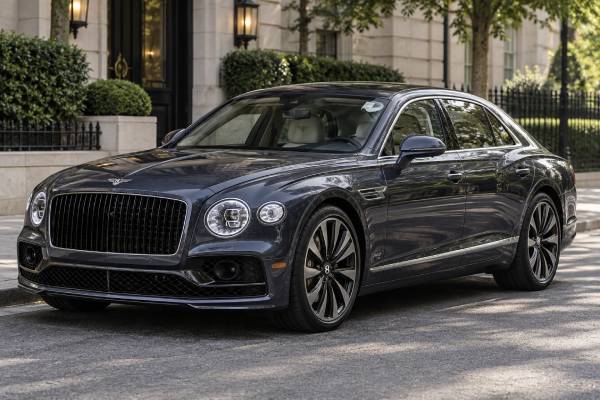
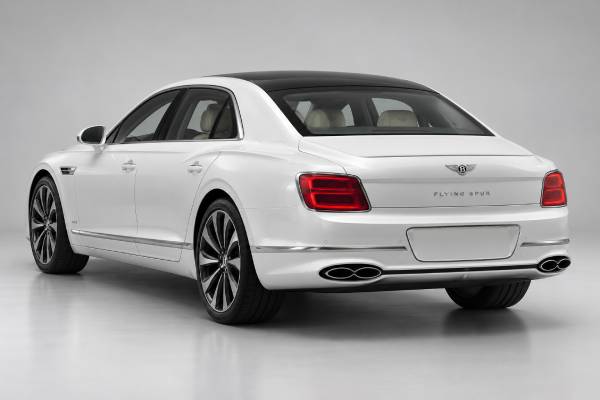
The third-generation Flying Spur W12 is a fundamentally different car from the 4W2 it replaced. Launched for 2019, the ZG2 moved to a longer, more sophisticated platform with a 3,194 mm wheelbase, rear-wheel steering, active all-wheel drive, a 48-volt active anti-roll system, and an eight-speed dual-clutch transmission. Its 6.0-liter twin-turbo W12 retains the familiar 626 hp figure but raises torque to 900 Nm, producing a 3.7-second 0–60 mph claim and a 207 mph maximum. That combination makes it faster, more agile, and more electronically integrated than any preceding standard Flying Spur. It also changes the used-car risk profile. Correct operation now depends on conventional fluids and cooling plus 48-volt hardware, steering actuators, active chassis control, driver-assistance sensors, a rotating infotainment display, and software configuration. This guide explains the clean-sheet engineering, documents the key specifications, and provides a rigorous maintenance and buying framework for 2019–2022 W12 cars before performance, luxury, and complexity are mistaken for guaranteed condition.
Table of Contents
- Why the ZG2 Was a Clean-Sheet Flying Spur
- W12 Specifications, Dimensions, and Performance
- Active AWD, Rear Steering, and 48-Volt Chassis
- Dual-Clutch Transmission and W12 Operation
- Digital Luxury, Driver Assistance, and Cabin Checks
- Maintenance, Diagnostics, and Pre-Purchase Testing
- Buying Strategy and W12 Ownership Verdict
Why the ZG2 Was a Clean-Sheet Flying Spur
The ZG2 did not merely update the previous Flying Spur. Bentley changed the platform, transmission type, wheelbase, driveline logic, steering system, chassis electronics, body proportions, and cabin architecture while preserving the four-door grand-touring mission.
A wheelbase increase of 128 mm created stronger rear-seat proportions and moved the front axle forward visually. The body combines aluminium and steel structures, with sculpted panels, cut-crystal-effect lamps, and the option of an electronically deployable Flying B mascot. The longer wheelbase improves space, while rear-wheel steering reduces the apparent size in tight turns and adds stability at speed.
The W12 remains a 5,998 cc twin-turbo unit, producing 626 hp and 900 Nm. Unlike the fixed all-wheel drive of the 4W2, the ZG2’s active system can operate primarily through the rear axle and send torque forward when conditions require it. The result is lighter-feeling turn-in and a more rear-driven balance.
An eight-speed dual-clutch transmission replaces the earlier torque-converter automatic. Dual clutches allow quick ratio changes and direct mechanical connection, but low-speed behavior differs from a conventional automatic. Some clutch take-up sensation is inherent; shudder, repeated hesitation, warning messages, or harsh engagement are not.
Bentley Dynamic Ride uses a 48-volt electrical system to power active anti-roll actuators. It can oppose body roll rapidly in corners while allowing more wheel independence in straight-line comfort. Rear-wheel steering and active damping work alongside this system, making software, sensors, alignment, and voltage supply inseparable from traditional mechanical condition.
The assignment covers the standard 626 hp W12 through 2022. Later range changes and Speed positioning should not be used to assume equipment on an earlier car. Verify each vehicle’s model year, market, options, software, and build data.
W12 Specifications, Dimensions, and Performance
This ZG2 is a gasoline internal-combustion vehicle. It uses a twin-turbo W12, eight-speed dual-clutch gearbox, active all-wheel drive, rear-wheel steering, adaptive air suspension, and a 48-volt active anti-roll system.
| Specification | Value | Technical context |
|---|---|---|
| Engine | 5,998 cc twin-turbocharged W12 | 48 valves, gasoline ICE |
| Maximum power | 626 hp (635 PS / 467 kW) | Standard ZG2 W12 rating |
| Maximum torque | 900 Nm (664 lb-ft) | Substantial increase over 4W2 W12 S |
| Transmission | Eight-speed dual-clutch | Seventh and eighth serve as overdrive ratios |
| Drive | Active all-wheel drive | Rear-led operation with front torque on demand |
| Fuel | Premium unleaded gasoline | Use exact regional requirement |
| Measure | Factory figure | Notes |
|---|---|---|
| 0–60 mph | 3.7 seconds | Manufacturer claim |
| 0–100 km/h | 3.8 seconds | Active AWD supports launch traction |
| Top speed | 333 km/h (207 mph) | Reached in sixth gear |
| Maximum torque | 900 Nm | Requires healthy tires and driveline control |
| Powertrain class | ICE | No traction motor or high-voltage battery |
| Item | Value |
|---|---|
| Length | 5,316 mm (209.3 in) |
| Width across body | 1,978 mm (77.9 in) |
| Width including mirrors | 2,220 mm (87.4 in) |
| Height | 1,484 mm (58.4 in) |
| Wheelbase | 3,194 mm (125.7 in) |
| Kerb weight | Approximately 2,437 kg (5,373 lb) |
| System | Function | Inspection issue |
|---|---|---|
| Rear-wheel steering | Opposite-phase at low speed, same-phase at higher speed | Alignment, actuator faults, uneven tire wear |
| Bentley Dynamic Ride | 48-volt active anti-roll control | Voltage supply, actuator or communication faults |
| Air suspension | Self-leveling springing with adaptive damping | Height retention, compressor cycles, sensor accuracy |
| Active AWD | Adds front torque when traction requires | Matched tires, clutch control, driveline warnings |
| Torque vectoring by brake | Supports cornering response | Brake condition and correct sensor data |
| Option or feature | Additional checks |
|---|---|
| Bentley Rotating Display | Full rotation, alignment, screen, gauges, sleep behavior |
| Touring Specification | Adaptive cruise, lane systems, head-up display, night vision |
| Rear Seat Entertainment | Screens, controls, audio, connections, mounting |
| Mulliner Driving Specification | Wheel authenticity, quilting, trim condition, option coding |
| Electronic Flying B | Deployment, retraction, illumination, anti-trap operation |
Active AWD, Rear Steering, and 48-Volt Chassis
The ZG2’s agility comes from several systems cooperating. A buyer cannot judge them by the absence of warning lights alone; road behavior, tire evidence, alignment data, and a complete diagnostic scan are all required.
At low speed, rear-wheel steering turns the back wheels opposite the fronts, reducing the effective turning circle. The car should maneuver cleanly without tire hopping, steering notches, or rear-axle clunks. At speed, the rear wheels steer in the same direction as the fronts to improve lane-change stability. A system fault may disable assistance or create an alignment that wears tires rapidly.
Bentley Dynamic Ride uses electric actuators in the anti-roll bars. On a straight road, it can allow each side greater independence for comfort. In a corner, it applies torque to resist roll. A properly functioning car should feel supple over single-wheel disturbances and controlled during direction changes. Excessive lean, a rigid ride, warnings, or inability to distinguish modes needs diagnosis.
The 48-volt network is separate from but coordinated with conventional electrical systems. Battery state, converters, wiring, connectors, and communication all matter. Do not work on orange or marked high-energy circuits without correct training, isolation procedures, and documentation. Although this is not a hybrid traction battery, it can still deliver hazardous current.
Active all-wheel drive normally favors the rear axle, reducing the persistent front-drive influence of the old fixed system. When slip or demand rises, a clutch system directs torque forward. Four matched tires remain essential because control software assumes predictable rolling radii and grip.
Tire choice has an outsized effect on steering. Large 21- and 22-inch wheels produce heavy loads and limited sidewall compliance. Check inner shoulders, sidewalls, production dates, repairs, wheel runout, and road-force balance. A car with incorrect tires may feel like it has a chassis fault; a chassis fault may destroy a new set quickly.
Alignment must account for rear-wheel steering, ride height, and manufacturer procedures. A generic quick alignment can center the steering wheel while leaving rear thrust angle or actuator reference incorrect. Demand a printout with before-and-after values.
Brakes contribute to torque vectoring and stability control, so unequal pads, sticking calipers, old fluid, or mismatched friction materials affect more than stopping distance. Measure disc condition and compare wheel temperatures after a controlled drive.
Dual-Clutch Transmission and W12 Operation
The dual-clutch gearbox changes the character of the Flying Spur. It provides crisp shifts and direct response, but its clutch take-up at parking speed must be understood rather than compared blindly with the former torque-converter unit.
From a stop, the gearbox engages a clutch much like an automated manual. A slight change in feel on inclines or during inching can be normal. Repeated judder, a pause followed by a lurch, slipping under load, overheating messages, or harsh selection of reverse is not. Test after cold start, in dense low-speed maneuvers, and again when fully warm.
The transmission reaches maximum speed in sixth gear, while seventh and eighth reduce engine speed during cruising. It should select ratios promptly in Bentley mode and become more assertive in Sport. Manual commands should be honored without unexplained delay when conditions permit.
Clutch adaptations, software, fluid condition, temperature management, mounts, and engine torque delivery all influence behavior. A reset may temporarily change symptoms without correcting wear or leakage. Capture diagnostic values before anyone erases adaptations.
The W12 should start rapidly and idle smoothly. Its twin turbochargers deliver a broad surge with little drama. Under controlled acceleration, watch requested versus actual boost, fuel pressure, ignition timing, intake temperatures, and misfire counts. The engine’s power can hide a weak cylinder until the system is loaded.
Cooling remains critical. Inspect layered radiators and charge-cooling components, auxiliary pumps, fans, hoses, expansion tank, and dried residue. Monitor temperature in traffic and after acceleration. A repeated coolant top-up is a fault history, not routine care.
The W12 can deactivate cylinders under certain light-load conditions on this generation, depending on calibration. Any change should be unobtrusive. Vibration may instead originate from mounts, tires, driveline components, or combustion faults.
Oil level and specification must be correct. Follow the electronic or manual measurement procedure for the exact build. Turbochargers and high-temperature components rely on stable lubrication. Smoke, burning odor, or oil pooled in intake plumbing needs specialist evaluation.
Because access is tight, insist on diagnosis before authorizing major disassembly. A detailed scan, pressure tests, smoke testing, fluid analysis, and scoped visual inspection can prevent expensive parts replacement based on assumptions.
Digital Luxury, Driver Assistance, and Cabin Checks
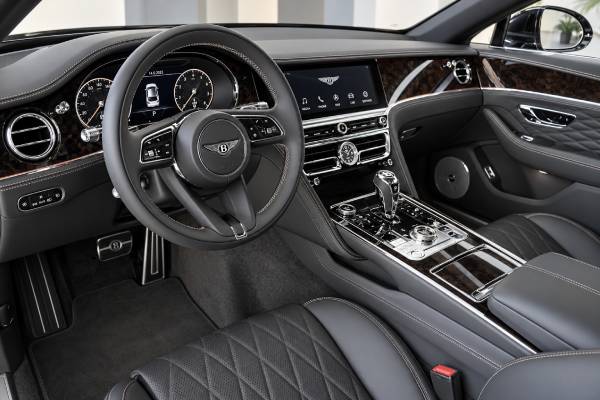
The ZG2 combines traditional wood, hide, and metal with a modern electrical architecture. Interior condition now includes software behavior, camera calibration, network sleep, and motorized displays as well as stitching and veneer.
The optional Bentley Rotating Display presents a central touchscreen, three analogue-style gauges, or a plain veneer surface. It should rotate quietly, stop flush in all positions, respond to commands, and enter sleep without cycling. A mechanism fault is not equivalent to an ordinary screen replacement because alignment and trim matching matter.
Driver-assistance equipment can include adaptive cruise, lane assistance, night vision, head-up display, traffic-sign recognition, top-view cameras, parking assistance, and cross-traffic alerts. Test features under safe conditions and scan their modules. Windshield replacement, bumper paint, wheel alignment, or collision repair may require sensor calibration.
Camera images should be clear and correctly stitched. Condensation, misalignment, blank views, or parking overlays that do not match steering movement are not trivial on a vehicle this large. Inspect sensor faces for paint buildup or damage.
Rear passengers may have powered seats, massage, heating, ventilation, blinds, climate zones, touch-screen controls, tables, and entertainment. Operate every function through its complete range. A car used by a chauffeur can show intense rear-system wear despite an immaculate steering wheel.
Check all keys, keyless entry zones, soft-close doors, trunk controls, charging ports, audio channels, ambient lighting, and the deployable mascot if fitted. Low voltage can generate broad faults, so battery state and parasitic draw must be evaluated before condemning multiple modules.
Materials still require traditional inspection. Look for leather stretch, dye transfer, veneer cracking, metal scratches, headliner sagging, carpet moisture, and mismatched repair color. Special-order finishes may be difficult to reproduce; document them with factory codes before cosmetic work.
Water ingress can damage both luxury and safety systems. Examine under carpets, trunk side compartments, panoramic-roof drains where applicable, door seals, and module enclosures. A musty odor or recently replaced carpet is a reason to investigate beneath the surface.
Maintenance, Diagnostics, and Pre-Purchase Testing
ZG2 maintenance begins with software-aware mechanical discipline. The car needs correct fluids and hardware plus voltage stability, module scans, calibration records, and careful handling of 48-volt systems.
For an unknown car, establish a baseline: complete diagnostic report, 12-volt and 48-volt system tests, coolant pressure test, engine leak inspection, DCT data, ride-height measurements, rear-steering and alignment status, brake measurements, tire record, camera operation, and recall check.
Engine oil should be changed by time and mileage using Bentley approval. Inspect plugs, coils, filters, turbo plumbing, crankcase ventilation, and mounts based on condition and schedule. Do not postpone an ignition fault because the car still accelerates strongly.
DCT service must follow exact fluid, filter, temperature, and adaptation procedures for the VIN. The active AWD clutch, differentials, rear-steering hardware, and air suspension need leak and condition checks. Generic “lifetime fluid” language is not permission to ignore abnormal behavior.
Brake fluid is time-sensitive. Steel discs should be measured for thickness and runout; optional carbon-ceramic components require trained assessment. Tire-pressure sensors, wheel bolts, and inner rims should be checked whenever wheels are removed.
Battery maintenance is more than connecting a charger. Verify correct battery type, state of health, charging strategy, module sleep, and accessory draw. Use manufacturer-approved support equipment during programming so voltage does not collapse mid-update.
Before purchase, inspect from cold, scan before clearing, drive through low-speed clutch work and sustained cruise, exercise every chassis mode, test strong but legal acceleration, perform controlled braking, and restart after heat soak. Re-scan and inspect for fresh leaks, fan behavior, hot brakes, or suspension settling.
Request proof of recalls and campaigns by VIN. Online year lists can identify possible actions but cannot confirm completion. Authorized records should identify the operation, date, and mileage.
Any collision history deserves extra scrutiny because cameras, radar, rear steering, suspension geometry, active anti-roll components, and mixed-material body repair can all be affected. A visually attractive repair may still leave calibration or corrosion-prevention issues.
Buying Strategy and W12 Ownership Verdict
The ZG2 W12 suits a buyer who wants the last full expression of Bentley’s twelve-cylinder standard sedan with modern chassis intelligence. Its reward is extraordinary range of ability; its price is dependence on specialist maintenance and correct electronic integration.
Choose a car for evidence, not merely model year or mileage. A strong example has continuous invoices, matched recent tires, stable cooling, smooth DCT behavior at all temperatures, functioning rear steering and 48-volt systems, complete option operation, and clean calibration records.
Later does not automatically mean better. Equipment changed and software evolved, but a well-supported 2019 car can be a safer purchase than a 2022 car with collision history or unresolved warnings. Verify warranty history and dealer campaigns where records are available.
Compare alternatives honestly. The V8 is lighter and may reduce fuel and some service burden. The plug-in hybrid provides electric urban operation but adds traction-battery and charging assessment. The W12 offers the most effortless torque, highest maximum speed, and strongest connection to Bentley’s modern twelve-cylinder era.
Budget for premium fuel, high-specification tires, large brakes, annual specialist inspection, battery support, software diagnosis, air suspension, active chassis hardware, and expensive trim. The purchase price should leave room for a substantial contingency.
Reject DCT shudder, unexplained overheating, boost or misfire faults, 48-volt warnings, rear-steering errors, uneven tire wear, water-damaged modules, non-functioning safety systems, or major body repair without calibration evidence. Multiple “minor” warning messages can share a voltage cause, but they can also represent multiple costly failures; diagnosis must decide.
The best ZG2 W12 feels smaller than its dimensions, quieter than its speed, and more connected than its luxury suggests. When every mechanical, electrical, and chassis system contributes correctly, it delivers one of the most complete four-door grand-touring experiences built. Buy that integration, not simply 626 hp, and the 2019–2022 Flying Spur W12 can justify both its complexity and its place at the end of an era.
Software provenance and post-repair calibration
On a ZG2 W12, software history is part of mechanical history. Engine, transmission, all-wheel drive, rear steering, active suspension, driver assistance, infotainment, and body systems exchange data continuously. A module replacement or update can solve a known issue, but incomplete coding or mismatched software levels can create subtle behavior without a permanent warning.
Request invoices that identify the control unit, software action, reason, and post-work calibration. After suspension, steering, windshield, camera, radar, bumper, or collision work, look for alignment and calibration reports. A receipt for parts alone does not show that the car’s reference values were restored.
Incomplete records warrant a broader diagnostic investigation before purchase.
Before purchase, save a complete vehicle scan including module identification and software versions. Compare replacement-module dates with the service history. Non-factory performance software should be disclosed, and the ability to restore original files should be confirmed before valuation.
Software provenance is especially valuable when diagnosing intermittent faults. It helps a technician distinguish a new hardware problem from an incomplete earlier repair and avoids repeating updates that were already attempted. For the ZG2, a clean digital history supports the same confidence that oil and coolant records provide for the engine.
Keep printed recovery instructions that identify approved lifting and towing points. Active air suspension, rear steering, large underbody panels, and all-wheel drive make casual roadside handling risky; the correct transporter and securing method can prevent a minor breakdown from becoming chassis damage.
Confirm that any roadside-assistance policy recognizes the car’s width, mass, low underbody clearance, and need for a flatbed. Standard recovery equipment may be unsuitable even when the policy nominally covers the vehicle.
Storage readiness for a complex W12
A seldom-used ZG2 should be evaluated for more than mileage. Confirm appropriate battery support, dry brake surfaces, fresh fuel, tire condition, suspension stability, and complete module wake-up after an extended rest. Low use without disciplined storage can be harder on this car than regular, fully warmed journeys.
References
- BENTLEY NEWSROOM : 2019 Flying Spur DF69EUX 2026 (Heritage Collection)
- BENTLEY NEWSROOM : Flying Spur 2026 (Manufacturer Model Archive)
- BENTLEY NEWSROOM : Technical Specifications 2026 (Manufacturer Technical Archive)
- Bentley Bulletin 2021 (Manufacturer Recall Communication)
- Search Safety Issues | NHTSA 2026 (VIN Recall Search)
Disclaimer
This article is general educational material and cannot determine the condition, safety, or value of an individual ZG2. Verify specifications, fluids, software, 48-volt procedures, recall status, service operations, and component compatibility by VIN through current Bentley information and qualified specialists.
Share this guide on Facebook, X/Twitter, or an owners’ forum if it can help another buyer understand the third-generation W12 before purchase.