
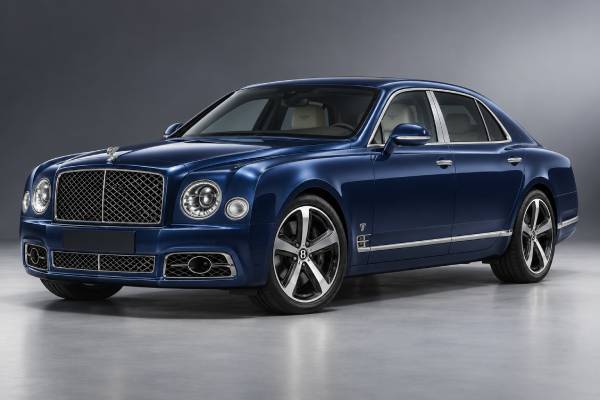
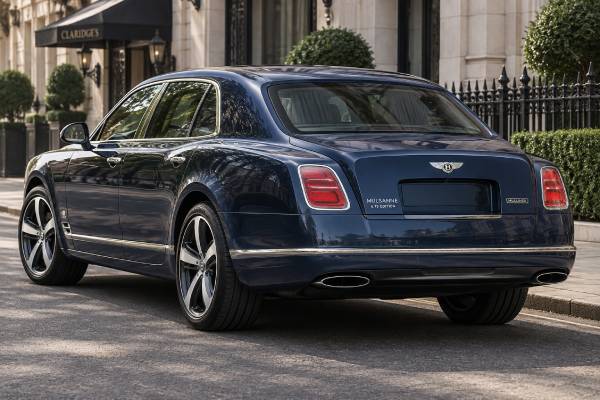
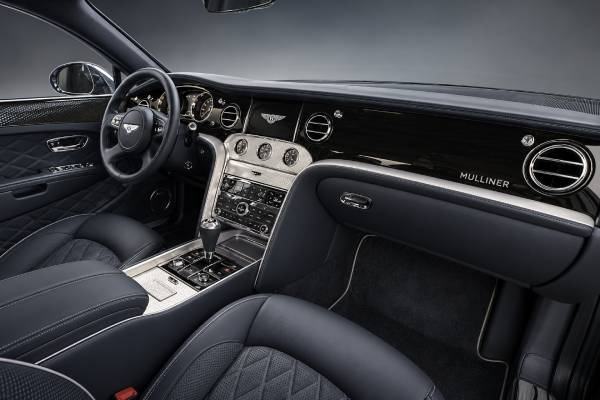
The 2020 Bentley Mulsanne 6.75 Edition by Mulliner is the official farewell to both the Mulsanne and Bentley’s 6.75-litre L-series V8. Limited to 30 cars and based on the 530 hp Mulsanne Speed, it combines 1,100 Nm of torque, a 190 mph top speed, and the standard-wheelbase flagship body with details that reference the engine’s six-decade production history. Ventilation controls modeled on the V8’s oil cap, instrument faces showing engine cutaways, 6.75 Edition embroidery and badges, black intake hardware, special wheels, silver-painted veneer, and a chairman-signed engine plaque distinguish it from an ordinary Speed. Its value therefore depends on authenticity and completeness as much as mechanical condition. A missing welcome-lamp module, refinished plaque, incorrect wheel, or replaced trim panel can matter disproportionately on one of 30 examples. This guide explains the final edition’s exact specification, its unique design content, how to validate a car, and how to preserve it without turning it into an unusable static object.
Table of Contents
- The Final Act for the Mulsanne and L-Series V8
- 6.75 Edition Specifications and Performance
- Mulliner Details That Define the Edition
- Collectibility, Authentication, and Provenance
- Driving and Mechanical Character
- Maintenance and Preservation Plan
- Buying Strategy and Long-Term Stewardship
The Final Act for the Mulsanne and L-Series V8
The 6.75 Edition was conceived as a commemorative endpoint, not simply another appearance package. Bentley announced it in January 2020, limited production to 30 cars, and completed Mulsanne production later that year. The Flying Spur then assumed the flagship role, while the L-series V8 ended a continuous production history that had begun in 1959.
The edition’s name refers to the engine’s 6.75-litre displacement. It also deliberately uses the Mulsanne Speed as its base, ensuring that the last version carried the highest regular-production output of the engine: 530 bhp and 1,100 Nm. No Extended Wheelbase 6.75 Edition was offered as part of the announced 30-car series.
Bentley had built the modern Mulsanne for more than a decade and reported more than 7,300 cars across the family. Against that total, 30 final editions are exceptionally scarce. Rarity alone does not guarantee future appreciation, but it changes the buying framework. A normal Mulsanne can be chosen largely on condition and color; a 6.75 Edition also needs documented identity and all edition-specific components.
The timing adds significance. The car closed the chapter on a pushrod, two-valve, large-displacement V8 whose architecture had survived through carburetion, single and twin turbocharging, fuel injection, emissions controls, variable cam timing, and cylinder deactivation. The final engine was not technically frozen in the past. It used modern combustion analysis, electronic management, turbo control, and diagnostics while retaining a distinctive low-rev mechanical layout.
Mulliner’s task was to make that engineering history visible without changing the Mulsanne’s fundamental shape. The design team referenced engine components in controls, instruments, badges, illumination, color, and material finishes. These details are subtle enough for the car to remain dignified but specific enough that replacing them with standard Mulsanne parts would materially alter the edition.
The result sits in an unusual category: it is a high-performance luxury saloon, a limited Mulliner commission, the last named Mulsanne derivative, and a memorial to an engine family. Each of those identities affects preservation priorities.
6.75 Edition Specifications and Performance
Mechanically, the 6.75 Edition follows the standard-wheelbase Mulsanne Speed. It is a petrol-powered, front-engine, rear-wheel-drive saloon with a 6,752 cc twin-turbocharged V8 and an eight-speed ZF automatic. The final-edition parts are primarily design, trim, and finish changes rather than a separate power tune.
| Specification | Value | Notes |
|---|---|---|
| Engine family | L-series V8, assignment code L410HT | Final production form |
| Displacement | 6,752 cc (6.75 L; 412 cu in) | Basis of the edition name |
| Architecture | 90-degree OHV V8 | Two valves per cylinder |
| Induction | Twin turbochargers with intercooling | Electronic boost control |
| Maximum power | 530 bhp (395 kW; 537 PS) at 4,000 rpm | Mulsanne Speed output |
| Maximum torque | 1,100 Nm (811 lb-ft) at 1,750 rpm | Mulsanne Speed output |
| Fuel system | Electronic multipoint injection | Premium unleaded gasoline |
| Efficiency systems | Variable cam phasing and cylinder deactivation | Operate during suitable light-load driving |
| Component | Configuration |
|---|---|
| Transmission | ZF 8HP eight-speed automatic with Speed calibration |
| Drive type | Rear-wheel drive |
| Front suspension | Double wishbones with air springs and adaptive damping |
| Rear suspension | Multi-link with air springs and Continuous Damping Control |
| Drive modes | Comfort, Bentley, Sport, and Custom |
| Front brakes | Ventilated discs, approximately 400 mm diameter |
| Rear brakes | Ventilated discs, approximately 370 mm diameter |
| Wheels | 21-inch five-spoke Speed design with edition finish |
| Measure | Value | Condition |
|---|---|---|
| 0–60 mph | 4.8 seconds | Speed-based manufacturer figure |
| 0–100 km/h | 4.9 seconds | Speed-based manufacturer figure |
| Top speed | 305 km/h (190 mph) | Manufacturer figure |
| Combined fuel use | About 16.2 L/100 km | Late-production WLTP family figure |
| Combined CO₂ | About 365 g/km | Late-production WLTP family figure |
| Fuel tank | 96 L (25.4 US gal) | Published Mulsanne capacity |
| Measurement | Value |
|---|---|
| Body style | Four-door standard-wheelbase saloon |
| Length | 5,575 mm (219.5 in) |
| Width across body | 1,926 mm (75.8 in) |
| Height | Approximately 1,521 mm (59.9 in) |
| Wheelbase | 3,266 mm (128.6 in) |
| Kerb weight | Approximately 2,685 kg (5,920 lb) |
| Common tire size | 265/40 ZR21 front and rear |
| Item | Specification |
|---|---|
| Model year | 2020 |
| Production limit | 30 cars |
| Base model | Mulsanne Speed |
| Creator | Bentley Mulliner |
| Purpose | Final Mulsanne and L-series V8 commemorative edition |
The output and performance are not unique to the edition, but the combination of final production status and Speed mechanical specification is. A seller claiming additional factory horsepower should provide official documentation rather than relying on aftermarket estimates.
Mulliner Details That Define the Edition
The edition-specific parts are its most important identity markers. They reference the engine directly and should be photographed, recorded, and preserved before any refurbishment begins.
The organ-stop ventilation controls use caps shaped like miniature versions of the engine’s oil filler cap. They are tactile, highly visible, and easy to mistake for replaceable decorative pieces. A standard Mulsanne organ stop will function but is not correct for the edition.
Instrument faces for the clock and minor gauges carry schematic cutaway drawings of the V8. The 6.75 Edition motif appears in seat embroidery, exterior and engine-bay badging, and LED welcome-lamp projections. Confirm that each lamp projects the correct image clearly and that replacement modules have not been substituted.
The exterior uses gloss-black or dark-tint treatments to contrast with the customer-selected paint. Bentley specified darkened treatments for items such as brightware, the Flying B mascot, lighting, grille elements, and exhaust finishers. Exact appearance should be compared with the build sheet and original delivery photographs because owners could choose among paint colors and bespoke details.
The 21-inch five-spoke Mulsanne Speed wheel has a special bright-machined finish with gloss-black pockets. Wheel refinishing is a major authenticity issue. A generic silver repaint or incorrect diamond cutting can erase the intended contrast and change edge profiles. Inspect all four wheels for matching finish, correct markings, previous welding, and curb repair.
Under the bonnet, the intake manifold is finished in black rather than the traditional silver. The engine-number plaque was to be signed by Bentley Chairman and Chief Executive Adrian Hallmark instead of only following the normal craftsman-signature convention. Plaque condition, mounting, engraving, and signature should be documented. Cleaning products or polishing can permanently damage it.
The cabin was offered in four announced single-tone hide colors—Imperial Blue, Beluga, Fireglow, and Newmarket Tan—with a bespoke split adding silver accents. Silver could appear in seat piping, console-area accent hide, overmat bindings, and through perforated leather. The center and rear consoles used silver-painted veneer, a finish that requires different restoration judgment from conventional wood veneer.
| Location | Edition feature | Inspection point |
|---|---|---|
| Vent controls | Miniature oil-cap organ stops | Correct shape, finish, and complete set |
| Instruments | Engine cutaway graphics | No standard replacement faces |
| Seats and badges | 6.75 Edition motifs | Embroidery and badges match build record |
| Welcome lamps | Projected 6.75 logo | Both sides operate clearly |
| Engine bay | Black intake and special plaque | Original finish and undamaged signature |
| Wheels | Bright-machined faces, gloss-black pockets | Matching correct refinishing |
| Consoles | Silver-painted veneer | No cracks, mismatched repaint, or lifting |
Because only 30 cars exist, a replacement part may be unavailable or supplied only through specialist channels. Owners should retain every removed piece, even when damaged, and record part numbers and repair methods.
Collectibility, Authentication, and Provenance
Authentication should precede valuation. A normal Mulsanne Speed can be fitted with black trim, edition-style badges, and refinished wheels, so visual resemblance alone is insufficient.
Begin with the VIN and official build record. The record should identify the 6.75 Edition by Mulliner, original paint, hide color, veneer, options, destination market, and production date. Ask a Bentley retailer or recognized marque specialist to confirm the car through factory systems where possible.
Then compare the physical car with documentation. Check every edition detail, engine number, plaque, wheel marking, badges, lamps, interior colors, embroidery, and console finish. Look for invoices following accident damage or trim replacement. A correctly replaced component does not necessarily destroy value, but an ordinary part substituted without disclosure affects originality.
Provenance adds confidence. The ideal file includes the order form, Mulliner specification, factory correspondence, delivery invoice, photographs at handover, owner’s manuals, keys, remotes, service records, and records of storage. Transport receipts and battery-maintainer logs can also explain very low mileage.
Mileage needs context. A delivery-mile car may be highly collectible but can still suffer from aged tires, flat spots, battery damage, dried seals, stale fuel, brake corrosion, and inactive air suspension. A carefully driven car with several thousand miles may be mechanically healthier while showing minor wear. Decide whether the goal is preservation, occasional use, or frequent touring before choosing between them.
Inspect paint and body repair with appropriate tools. The Mulsanne uses complex aluminium and steel construction, hand-finished joints, cameras, radar, and closely aligned trim. Accident work can affect more than paint. Originality claims should be supported by paint-depth patterns and repair records, not by a seller’s observation that all panels look glossy.
Edition-specific condition should be graded separately from general condition. A small chip in standard body paint is easier to correct than a damaged signed engine plaque. A worn normal tire is a routine service item; an incorrectly refinished wheel changes a visual signature. A weak standard battery is expected aging; water damage to special console veneer is a major concern.
Counterfeit risk is not limited to complete replica cars. Individual badges and trim can be added to increase the apparent desirability of a Speed. The safest valuation language is “factory documented 6.75 Edition” rather than “looks like a final edition.”
Market price can be thin because so few cars trade publicly. Auction results may reflect color, geography, taxes, mileage, celebrity connection, and timing more than a stable guide. Compare verified examples and adjust for originality, not only mileage.
Driving and Mechanical Character
The 6.75 Edition drives like a late Mulsanne Speed: immensely torquey, quiet, rear-wheel driven, and more agile than its size suggests. The commemorative trim does not turn it into a different mechanical model, which is useful for service support and for understanding its behavior.
In Bentley mode, the eight-speed automatic uses the V8’s low-rpm torque to minimize shifts. Comfort allows more suspension movement, while Sport holds the engine above about 2,000 rpm and tightens damping and steering response. The difference should be obvious but not abrupt.
Acceleration is striking because sound and effort remain subdued. Full throttle should produce a clean, continuous surge with no misfire, warning lights, smoke, or gear flare. A low-mileage collector car still needs this test under controlled conditions; storage can affect plugs, coils, fuel quality, turbo controls, and transmission adaptations.
The 21-inch tires and large brakes deserve particular care. Tires may age out with almost full tread, and a 2020 date code is already meaningful in 2026. Flat spotting from display storage can cause vibration that changes as the tire warms. Inspect inner shoulders and wheel barrels, not only the visible sidewalls.
Brakes should be smooth and powerful. Long storage can create disc corrosion or pad imprint, while cautious low-speed use can leave deposits. Measurement and a proper bedding assessment are better than replacing parts automatically. Any high-speed test is inappropriate until tire age, wheel integrity, fluid condition, and braking performance are confirmed.
Air suspension should maintain a level stance after parking and change modes without prolonged compressor operation. A final edition is not protected from ordinary Mulsanne aging. Height sensors, air springs, dampers, compressors, valves, and batteries remain service items.
The best use pattern combines preservation with exercise. Periodic long drives bring oil and coolant to stable temperature, operate cylinder deactivation and transmission functions, move air-suspension valves, dry brakes, and reveal developing faults. Repeated idling in storage provides heat without enough airflow or drivetrain exercise and is not a substitute.
Drive with mechanical sympathy. Use gentle load until warm, reduce load before shutdown after sustained performance, and avoid repeated short trips. The engine is robust, but the final production status makes preventable damage especially undesirable.
Maintenance and Preservation Plan
A preservation plan should protect both mechanical health and edition-specific originality. The car must remain serviceable without losing evidence of how it left Mulliner.
Document before touching
Photograph the engine bay, plaque, wheel finishes, badges, lamp projections, organ stops, instrument faces, upholstery, console veneer, labels, and fastener positions. Save diagnostic scans and record software versions. This baseline helps later technicians distinguish factory details from changes.
Use protective covers that do not trap moisture against leather or paint. Avoid adhesive tape on special trim and do not place tools on the signed plaque or black intake finish. During dealer or transport visits, provide written instructions about unique surfaces.
Mechanical schedule
Follow Bentley’s time and mileage requirements for oil, brake fluid, coolant inspections, filters, plugs, and other service items. Low mileage does not eliminate time-based work. Test battery capacity, charging, parasitic draw, tire age, air-suspension leak-down, coolant pressure, and fault memory annually.
Fuel should remain fresh. For longer storage, use an appropriate stabilizing strategy based on professional advice and local fuel formulation. Do not start the engine briefly every few weeks; either store it correctly or drive it long enough to reach full operating temperature.
Cosmetic conservation
Clean machined wheels with products safe for clear-coated cut surfaces. Harsh acid can stain the metal and attack black pockets. Use pH-appropriate leather cleaners, avoid oversaturating perforated hides, and do not recolor silver accents without matching the original material specification.
Silver-painted veneer and black engine finishes should be conserved before refinishing. A small authentic flaw may be preferable to a broad repaint with the wrong gloss or texture. Consult a specialist who has seen another 6.75 Edition rather than treating the surfaces as generic Mulsanne trim.
| Priority | Action | Reason |
|---|---|---|
| Identity | Secure build sheet, photographs, and provenance | Confirms one of 30 factory cars |
| Safety | Replace aged tires and fluids when due | Low mileage does not stop aging |
| Mechanical health | Drive to full temperature and scan annually | Prevents storage faults from remaining hidden |
| Edition trim | Protect plaque, organ stops, gauges, wheels, and veneer | Replacement may be difficult or impossible |
| Electrical stability | Maintain batteries with approved equipment | Low voltage can damage ownership confidence and create faults |
| Records | Keep all removed parts and invoices | Supports future authenticity and repairability |
Recalls and campaigns remain VIN-specific. Confirm completion through Bentley and the relevant national database. A collector should not postpone a safety recall to preserve untouched software or parts; document the work and retain replaced items when legally and practically possible.
Buying Strategy and Long-Term Stewardship
Buy the car only after factory identity, condition, and intended use are aligned. A final edition is a poor impulse purchase if the buyer lacks correct storage, specialist access, and a plan for exercising it.
The pre-purchase inspection should be performed by a Bentley specialist and include a cold start, full diagnostic scan, battery test, cooling-system check, air-suspension assessment, brake measurement, tire and wheel inspection, paint-depth survey, road test, hot restart, and complete option test. Add a dedicated edition-authenticity checklist rather than expecting a technician to remember every Mulliner detail.
Ask the inspector to identify standard wear, urgent mechanical work, originality deviations, and preservation-sensitive repairs separately. This distinction matters. A worn brake pad is straightforward; a damaged signed plaque is not. A low battery is routine; a missing edition instrument face raises questions about prior repair.
Insurance should reflect agreed value and limited replacement availability. Discuss transport, choice of repairer, use of original parts, and salvage rights. Standard market-value coverage may not account for one-of-30 provenance or special trim.
Storage should be dry, climate-stable, secure, and large enough to open the long doors without contact. Use tire-management practices appropriate to the storage duration, maintain battery voltage, and keep records of periodic inspection. Avoid plastic sheets that trap condensation beneath the car.
For road use, set a mileage philosophy before purchase. Some owners will preserve a low odometer; others will tour. Both approaches can be responsible. The destructive pattern is irregular use with deferred fluid, tire, and battery service because the car is “too valuable to drive.”
Modifications should be minimal and reversible. Phone integration can be hidden, but engine tunes, lowering, non-standard wheels, altered exhaust, tinted edition lamps, and replaced badges risk both mechanical balance and provenance. Keep any standard part removed during a reversible update.
The car’s likely future value should never justify unsafe tires or inactive maintenance. Preservation means retaining function and evidence, not freezing consumables indefinitely. A fully documented tire replacement with the old date-coded set retained for display is more responsible than driving on hardened originals.
The 6.75 Edition’s lasting appeal is unusually coherent. It marks the end of a model, an engine, and a style of flagship construction, while using the most powerful Mulsanne tune and Mulliner craftsmanship to tell that story. The best owner will act as a steward: document it, exercise it, service it, conserve its special parts, and resist unnecessary alteration. Treated that way, the final edition remains both a usable Bentley and a credible historical artifact.
References
- Bentley Mulsanne 6.75 Edition by Mulliner (2020) – pictures, information & specs 2020 (Final Edition Reference)
- Bentley Mulsanne | History and Heritage | Bentley Motors 2026 (Manufacturer Heritage)
- Technical Service Bulletin 2030349/3 2019 (TSB)
- Technical Service Bulletin 2053492/3 2019 (TSB)
- EC77 2070237/1 2023 (Field Campaign)
- Search Safety Issues | NHTSA 2026 (Recall Database)
Disclaimer
This article is for informational purposes and is not a substitute for professional diagnosis, repair, appraisal, authentication, or official Bentley workshop instructions. Specifications, torque values, fluids, intervals, software, recalls, and bespoke details vary by VIN and market; verify the individual car through official build and service documentation. Please share this guide on Facebook, X/Twitter, or a marque community if it helps preserve accurate knowledge about the final Mulsanne.