
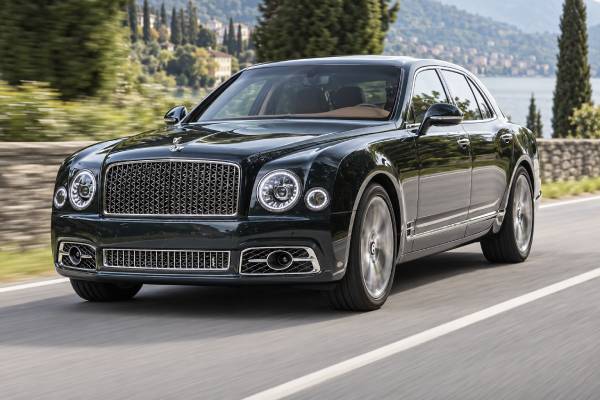
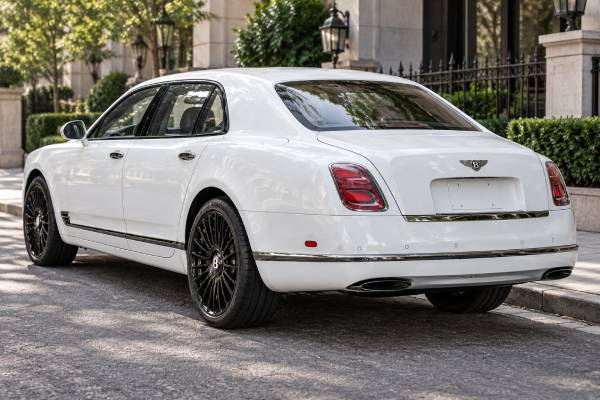
The 2015–2020 Bentley Mulsanne Speed is the driver-focused version of Bentley’s hand-built flagship. Its reworked 6.75-litre twin-turbo V8 produces 530 bhp and 1,100 Nm, enough to accelerate the large rear-wheel-drive saloon to 60 mph in 4.8 seconds and reach 190 mph. Bentley did more than add power: the eight-speed transmission received a sharper calibration, Sport mode keeps the engine above 2,000 rpm for immediate turbo response, and the adaptive air suspension and steering gained a more assertive setting. Darkened brightwork, rifled exhaust outlets, Speed badging, and directional 21-inch wheels identify it without turning the car into a visually loud performance model. Used examples need close evaluation because the same performance that makes the Speed special increases demands on tires, brakes, cooling, suspension, and maintenance history. This guide covers both the original 2015 appearance and the redesigned 2016–2020 cars, while keeping their shared 530 hp mechanical identity clear.
Table of Contents
- What Bentley Changed for the Speed
- Mulsanne Speed Specifications
- Combustion, Turbocharging, and Gearbox Calibration
- How a 2.7-Tonne Flagship Handles Speed
- Performance-Specific Maintenance Priorities
- Authenticity, Options, and Pre-Purchase Checks
- Ownership Strategy and Final Verdict
What Bentley Changed for the Speed
The Mulsanne Speed was engineered to make the flagship more responsive without sacrificing its limousine-grade ride. It is not merely a cosmetic package, and it is not the same as a standard 505 hp Mulsanne fitted with Mulliner wheels and quilted leather.
Bentley increased output to 530 bhp and torque to 1,100 Nm by revising the combustion system, intake ports, injectors, spark plugs, compression characteristics, variable valve timing, and turbocharger control. The eight-speed ZF automatic gained a dedicated strategy. In Sport mode, it holds lower gears and keeps the engine above roughly 2,000 rpm, where the turbochargers can respond quickly.
The chassis retains air springs and continuously controlled dampers, but the Speed includes a more driver-focused Sport setup and revised steering behavior. Comfort and Bentley modes remain available, so the car can still travel with the softness expected of a flagship. The engineering objective was range, not a single hard-edged calibration.
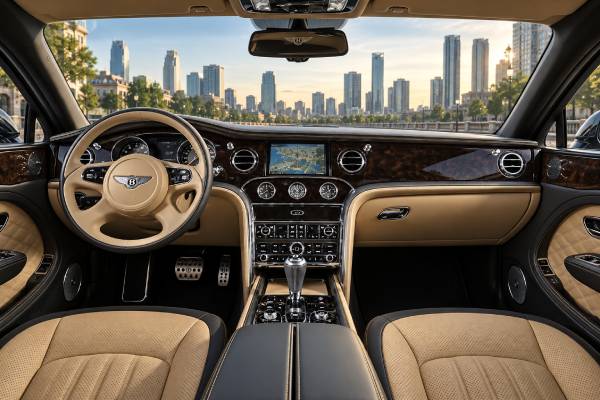
Visual identification is deliberately restrained. Common Speed details include dark-tint matrix grilles, darker lamps, specific fender badges, rifled exhaust finishers, and 21-inch directional forged wheels. The Mulliner Driving Specification is effectively integral to the car’s character, bringing diamond quilting, drilled alloy pedals, a knurled gear lever, and other cabin details.
The 2015 launch car uses the original Mulsanne front-end design. For 2016, the whole family received a broader vertical-vane grille, new bonnet and wings, revised lamps and bumpers, new seats and trim, updated infotainment, and more acoustic isolation. Buyers should distinguish a rare pre-facelift Speed from the later redesigned version rather than assuming all model years look alike.
The Speed’s performance can be deceptively accessible. There is no dramatic high-rpm soundtrack to warn the driver that speed is building. Torque arrives low, the cabin stays quiet, and the body remains composed. Tire quality, brake condition, and road space therefore matter more than the subdued sensory experience suggests.
Mulsanne Speed Specifications
The Speed is a petrol-powered, front-engine, rear-wheel-drive saloon. Its 6,752 cc L-series V8 uses two turbochargers and sends 530 bhp through an eight-speed automatic. The figures below describe the standard-wheelbase Speed; the 6.75 Edition by Mulliner is a separate final edition based on this mechanical package.
| Specification | Value | Notes |
|---|---|---|
| Engine family | L-series V8, assignment code L410HT | Speed calibration |
| Displacement | 6,752 cc (6.75 L; 412 cu in) | Often rounded to 6.8 L |
| Valve layout | OHV, two valves per cylinder | Variable cam phasing |
| Induction | Twin turbochargers with intercooling | Electronic boost control |
| Maximum power | 530 bhp (395 kW; 537 PS) at 4,000 rpm | Manufacturer figure |
| Maximum torque | 1,100 Nm (811 lb-ft) at 1,750 rpm | Manufacturer figure |
| Fuel system | Electronic multipoint injection | Premium unleaded gasoline |
| Efficiency technology | Cylinder deactivation and variable valve timing | Used under suitable load conditions |
| Component | Configuration |
|---|---|
| Transmission | ZF 8HP eight-speed automatic with Speed calibration |
| Drive type | Rear-wheel drive |
| Front suspension | Double wishbones, air springs, Continuous Damping Control |
| Rear suspension | Multi-link with air springs and adaptive damping |
| Driver settings | Comfort, Bentley, Sport, and Custom |
| Wheels | 21-inch forged directional alloys |
| Tires | 265/40 ZR21 front and rear |
| Brakes | 400 mm front and 370 mm rear ventilated discs |
| Measure | Value | Condition |
|---|---|---|
| 0–60 mph | 4.8 seconds | Manufacturer figure |
| 0–100 km/h | 4.9 seconds | Manufacturer figure |
| Top speed | 305 km/h (190 mph) | Manufacturer figure |
| Efficiency improvement at launch | Approximately 13 percent | Compared with preceding powertrain calibration |
| Claimed range gain | About 80 km (50 mi) | Result of the efficiency update |
| Later WLTP combined consumption | About 16.2 L/100 km (17.4 mpg UK) | Published late-production family figure |
| Later combined CO₂ | About 365 g/km | WLTP family figure |
| Fuel tank | 96 L (25.4 US gal) | Published capacity |
| Measurement | Value |
|---|---|
| Length | 5,575 mm (219.5 in) |
| Width across body | 1,926 mm (75.8 in) |
| Height | Approximately 1,521 mm (59.9 in) |
| Wheelbase | 3,266 mm (128.6 in) |
| Kerb weight | Approximately 2,685 kg (5,920 lb) |
| Body | Four-door, four- or five-seat saloon |
| Area | Typical factory feature |
|---|---|
| Front and side grilles | Dark-tint matrix treatment |
| Lamps | Dark-tinted front and rear appearance |
| Exhaust | Rifled sports finishers |
| Wheels | Handed 21-inch directional design |
| Cabin | Diamond quilting, knurled selector, drilled pedals |
| Badging | Speed identification on exterior and interior |
Weight figures vary with equipment and measurement convention. The important buying point is not a few kilograms but whether the suspension, brakes, wheels, and tires are in condition to control that mass at the available performance level.
Combustion, Turbocharging, and Gearbox Calibration
The Speed’s extra output came from improving combustion quality and airflow rather than simply turning up boost. Bentley redesigned the combustion chamber and associated components to create faster, more controlled burning, while recalibrating turbo and valve-timing strategies.
The engine retains the old-school pushrod, two-valve layout, but modern analysis and control systems make it operate very differently from earlier L-series engines. Revised pistons promote mixture motion, updated spark-plug positioning improves ignition, and cooling changes manage higher local temperatures. Sodium-filled exhaust valves and revised valve-spring and cam profiles support the increased load.
Peak power is less revealing than the torque plateau. With 1,100 Nm at 1,750 rpm, the engine can accelerate the car strongly without a dramatic downshift. In normal Bentley mode, the transmission uses that torque to keep progress smooth. In Sport, it changes the operating strategy by holding gears and keeping the turbochargers ready.
A healthy car should transition between these behaviors cleanly. Hesitation, surging, misfire, transmission flare, or a large delay after throttle input is not simply turbo lag. Diagnosis should consider ignition coils and plugs, fuel pressure, injectors, air leaks, boost control, throttle adaptation, transmission adaptations, battery voltage, and fault memory.
Cylinder deactivation reduces pumping losses under light load by allowing the engine to run on four cylinders. It should be nearly imperceptible. Roughness or warning messages may originate from mounts, ignition, valve control, sensors, or unrelated driveline issues. Parts should not be replaced merely because a technician sees a cylinder-mode change in data.
The engine’s low-rev character can encourage short trips, but repeated cold use is not ideal. Moisture and fuel dilution remain concerns in a large engine with substantial oil and coolant volume. Gentle driving until full operating temperature, followed by enough road time to stabilize the system, is preferable to prolonged stationary warming.
Heat soak after hard use is another consideration. A few miles of reduced load before parking allow coolant and oil flow to carry heat away from turbo and exhaust areas. Immediate shutdown after a sustained high-speed run is avoidable stress. The car does not require elaborate ritual after ordinary use; it requires mechanical sympathy proportional to the load just applied.
How a 2.7-Tonne Flagship Handles Speed
The Mulsanne Speed controls its mass impressively, but physics remains visible in braking distance, tire load, and rapid direction changes. Its dynamic achievement is making high speed feel composed without erasing the soft primary ride expected of a Bentley flagship.
In Comfort mode, the car allows more body movement and filters sharp impacts. Bentley mode is the balanced default. Sport tightens damping and steering response, reduces float, and complements the gearbox’s lower-gear strategy. Custom mode lets the driver separate powertrain and chassis choices.
During a test drive, all modes should produce a clear but logical difference. A car that remains harsh in Comfort may have incorrect tires, damaged wheels, failed dampers, suspension faults, or a calibration issue. A car that floats in Sport may have weak dampers or air-suspension problems. Diagnostic scans should be combined with physical inspection because not every worn bush creates a fault code.
The directional 21-inch wheels are a signature feature. Each design is handed for the left or right side, so confirm that wheels are installed in the intended positions and are genuine. Inspect inner barrels for cracks and repairs, measure runout, and check for corrosion at tire beads. The correct Bentley-approved tire specification is essential for load, speed, noise, and steering behavior.
Flat spotting can imitate wheel imbalance, especially after the heavy car sits on warm tires. A vibration that diminishes as the tires heat may be temporary; one that persists may involve permanent flat spots, wheel damage, balance, radial force variation, suspension bushes, or steering components. Repeatedly adding weights is not a diagnosis.
The brakes are powerful but have a demanding job. Disc condition, pad thickness, caliper operation, brake-fluid age, wheel-bearing play, and tire grip all affect stopping. Vibration can come from disc thickness variation or deposits, but worn suspension can also transmit shake. Replacement parts and labor are costly enough that a brake measurement report is valuable before purchase.
At road speed, the body should remain quiet and stable. Wind noise around windows, vibration through the seat, or wandering over cambers can point to seals, alignment, tires, bush wear, or accident repair. The car’s acoustic isolation makes small mechanical noises easier to locate, so do not cover them with the audio system during evaluation.
Performance-Specific Maintenance Priorities
The Speed needs the same disciplined care as a standard Mulsanne, with less tolerance for shortcuts in cooling, ignition, tires, and brakes. Its engine and chassis work closer to their intended performance envelope whenever the driver uses the extra capability.
Cooling and lubrication
Inspect coolant level and condition, pressure-test when loss is suspected, verify fan operation, examine radiators and auxiliary coolers for debris, and check hoses and connections for staining. A coolant smell after driving or residue in the valley and turbo areas needs prompt investigation.
Use the oil specification approved for the exact model year and market, and maintain time-based changes even at low mileage. Turbo oil feeds and returns, cover seals, breathers, and cooler connections should be dry enough to distinguish a minor film from an active leak. Oil reaching hot components is both a smoke and fire concern.
Ignition, fuel, and mounts
Spark plugs and ignition components work under high cylinder pressure. A misfire that appears only under full load can damage catalysts and should not be repeatedly reproduced. Engine and transmission mounts also influence how torque reaches the body; worn mounts can create thumps, vibration, or apparent shift harshness.
Premium fuel is mandatory. If the car has been stored, verify fuel age and tank condition before performance testing. Software tunes that promise more boost deserve skepticism unless accompanied by engineering data, thermal validation, and transmission considerations. The factory output already places major load on the driveline.
Air suspension and electronics
Air springs, dampers, compressor, valve block, height sensors, and control modules must work together. Record ride height after overnight parking, listen for compressor frequency, and scan stored faults. Weak batteries can create suspension and drivetrain warnings, but genuine faults should not be cleared and ignored.
| System | Why the Speed stresses it | Evidence to request |
|---|---|---|
| Tires | High mass, 190 mph capability, 21-inch fitment | Matching approved set, dates, alignment report |
| Brakes | Repeated conversion of high kinetic energy | Disc measurements, pad and fluid history |
| Cooling | Higher combustion and turbo heat | Pressure tests, coolant and hose records |
| Ignition | High cylinder pressure under boost | Plug service and misfire-free scan data |
| Suspension | Sport calibration and heavy wheel loads | Fault scan, ride-height check, bush inspection |
| Transmission | 1,100 Nm and aggressive Sport strategy | Smooth road test, adaptation and leak checks |
Cosmetic care also affects cost. Dark-tint grilles, lamps, wheel finishes, carbon-fiber or special veneer, quilted hides, and rifled exhaust tips are model-defining. Incorrect refinishing can be more visible on a Speed than honest light wear.
Authenticity, Options, and Pre-Purchase Checks
Authenticate the car as a factory Speed through the VIN, build sheet, engine specification, software identification, exterior details, and interior equipment. Cosmetic conversion from a standard Mulsanne is possible because many pieces can be purchased separately.
Check that the directional wheels are genuine and correctly positioned. Confirm Speed badges, dark-tint lighting and grilles, exhaust finishers, interior quilting, selector, pedals, and instrument displays. Options and bespoke Mulliner work should appear on the build record. A replacement grille or wheel after damage is not a problem when correctly documented.
The 2015 pre-facelift Speed deserves special attention because later front-end parts are visually different. Make sure accident repairs did not create a hybrid body. On 2016–2020 cars, inspect the wider grille, lamp mounting, bonnet and wing alignment, cameras, radar, and parking sensors after any front repair.
A complete test should begin cold and include:
- battery voltage and startup warning sequence;
- smooth idle and clean exhaust;
- air-suspension rise and mode changes;
- gentle and full-load transmission behavior;
- boost response without misfire;
- braking from several speeds;
- wheel and tire vibration as temperatures change;
- infotainment, cameras, driver assistance, and rear-seat equipment;
- hot restart after heat soak;
- diagnostic scan for current, pending, and history faults.
Service history should show annual attention even when mileage is low. Look for plugs, coolant, brake fluid, batteries, tires, brake parts, suspension work, software campaigns, transmission inspection, and option repairs. A stamped book without invoices cannot show what brand of tire was fitted or why a warning light was cleared.
Check recalls by VIN in the relevant market. Verify completion through official records rather than assuming a low-production luxury car was automatically updated. Imported cars may require cross-market investigation.
Paint measurement is worthwhile. The body uses aluminium exterior panels in important areas and hand-finished joints. High-quality repairs are possible, but poor panel alignment, overspray, missing fasteners, disturbed radar mounts, and undertray damage can affect both appearance and systems.
Ownership Strategy and Final Verdict
The Mulsanne Speed is best for an owner who will use its sharper responses, not merely collect the badge. A standard Mulsanne rides slightly more gently and usually costs less, while the Speed offers a meaningful increase in urgency and a more focused visual identity.
Running costs remain flagship-level. Fuel is obvious, but tires, brakes, batteries, suspension components, cooling repairs, and diagnostic labor are the larger risk categories. Keep a repair reserve after purchase and choose a specialist before a warning appears. Transporting a disabled Mulsanne correctly is itself a planned expense.
The car benefits from regular long drives. They warm the drivetrain, exercise the air suspension, maintain brake surfaces, and reveal tire behavior. Urban use alone exposes wheels and bodywork while rarely allowing the engine to reach stable temperature. Secure dry storage and a battery maintainer are sensible between trips.
Avoid heavily modified examples unless the work is exceptionally well documented. Engine tunes, lowered suspension, non-standard wheels, exhaust changes, and aftermarket electronics can compromise refinement and resale. Reversible, discreet updates such as modern phone integration are easier to accept.
The strongest purchase is a car with matched approved tires, straight wheels, measured brakes, stable ride height, complete diagnostic history, no coolant loss, smooth full-load operation, and intact Speed-specific trim. A low odometer cannot replace those facts.
On the road, the Speed’s appeal is not simply that it is faster than the standard car. It creates a rare contrast between old-school engine architecture, immense low-rpm torque, hand-built luxury, and modern chassis control. The driver can cross a country in Comfort mode and then select Sport for a more alert car without losing the quiet cabin or deep ride quality.
That duality makes the Mulsanne Speed one of the most convincing late expressions of Bentley’s “silent sports car” idea. Bought with disciplined inspection and maintained at the level its performance demands, it is not a standard Mulsanne with extra badges; it is the dynamic peak of the regular-production Mulsanne family.
The post-purchase baseline should be more rigorous than a routine oil service. Record tire make, specification, date codes, cold pressures, tread depth, and wheel runout; measure brake discs and pads; test both batteries; scan every control module; verify ride height after overnight parking; and pressure-check the cooling system. Save the measurements even when all are acceptable. They provide a reference for later vibration, brake, or suspension complaints.
Ask for evidence of how the car was driven and stored. Frequent motorway use can be easier on the drivetrain than repeated short urban journeys, while long stationary periods can flat-spot tires and weaken batteries. Diagnostic operating data, service dates, and tire history help interpret a low odometer reading. A car that received annual fluids and regular long drives may be a safer purchase than one displayed for years on its original tires.
When replacing consumables, preserve the Speed’s calibration by using approved-equivalent components. Tire construction affects steering and ride, brake-pad compounds affect pedal feel and disc deposits, and incorrect wheel repair can add vibration. Bargain substitutions undermine the very qualities that justify buying the Speed.
A final handover road test with the servicing technician is valuable. Drive the same route in Comfort, Bentley, and Sport modes, agree on what is normal, and document any remaining noise. That shared reference reduces the risk that a future concern is dismissed as a characteristic or that normal driveline behavior is chased as a fault.
References
- Bentley Mulsanne | History and Heritage | Bentley Motors 2026 (Manufacturer Heritage)
- Bentley Mulsanne 2026 (Model Reference)
- Technical Service Bulletin 2030349/3 2019 (TSB)
- Technical Service Bulletin 2053492/3 2019 (TSB)
- EC77 2070237/1 2023 (Field Campaign)
- Search Safety Issues | NHTSA 2026 (Recall Database)
Disclaimer
This article is for informational purposes and is not a substitute for professional diagnosis, repair, or official Bentley workshop procedures. Specifications, torque values, fluids, intervals, software, and recall status vary by VIN, market, model year, and equipment; verify all work against official service documentation. Please share this article on Facebook, X/Twitter, or a Bentley community if it supports informed Mulsanne Speed ownership.