
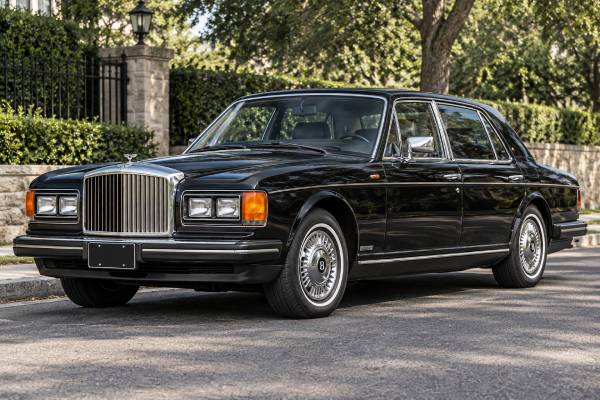
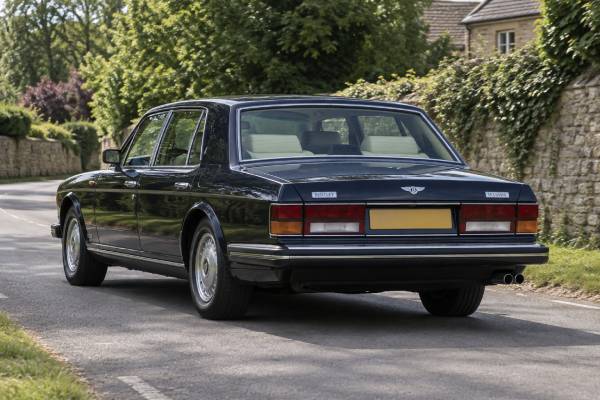
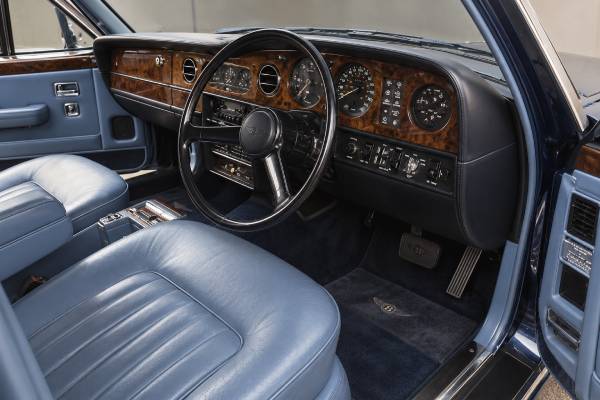
The 1981–1985 Bentley Mulsanne LWB is a rare, chauffeur-friendly extension of the early SZ-generation saloon. Bentley added roughly 100 mm, or four inches, to the wheelbase and directed virtually all of that gain to the rear compartment through longer rear doors and greater legroom. Mechanically, it remained the naturally aspirated Mulsanne: a 6.75-litre L-series V8, three-speed GM automatic, rear-wheel drive, independent suspension, and high-pressure hydraulic braking with rear self-levelling. The long-wheelbase version is not dramatically faster, more complicated, or more powerful than the standard car, but its rarity, proportions, rear-cabin hardware, and body-specific trim make poor examples harder to restore. Buyers should therefore treat completeness and structural condition as primary specifications. This guide covers the 1981–1985 LWB assignment scope, not the later Mulsanne S LWB or turbocharged derivatives, and explains what the added length changes in driving, preservation, inspection, and ownership.
Table of Contents
- What the Long Wheelbase Actually Changes
- Mulsanne LWB Specifications and Technical Layout
- Rear Cabin, Doors, and Coachwork Details
- Driving, Parking, and Chassis Behavior
- Rarity, Identification, and Originality
- Preservation and Service Priorities
- Buyer’s Guide and Ownership Fit
What the Long Wheelbase Actually Changes
The LWB’s defining benefit is rear legroom, not a wholesale mechanical redesign. Its wheelbase grows from about 3,060 mm to 3,160 mm, and the body becomes roughly 100 mm longer than the standard Mulsanne. The extension sits between the axles and is expressed through longer rear doors, so the car maintains recognizable factory proportions rather than looking like an aftermarket stretch conversion.
That distinction matters. A factory long-wheelbase Crewe saloon was engineered, trimmed, and finished as a complete model. Door shells, glass, seals, brightwork, interior wood, carpets, wiring runs, and some hardware are LWB-specific. A missing small part may therefore be much harder to replace than a common engine-service item. The car’s underlying mechanical systems are shared widely enough to be supported by specialists, but rear-compartment and body pieces require patience.
The LWB is best understood as a private-car limousine. Some examples were ordered with a division, rear entertainment or communications equipment, special cabinetry, or unusually formal trim. Others were specified simply as more spacious owner-driven saloons. Condition and build specification vary greatly because Bentley would accommodate individual requests, and later owners often added telephones, audio equipment, privacy glass, or non-original electrical accessories.
Within the 1981–1985 scope, the engine remains naturally aspirated and produces about 200 hp. The extra length and mass slightly soften acceleration, but the real-world difference from the standard car is small. The more noticeable changes are a larger turning circle, greater rear-door length, increased sensitivity to parking space, and a calmer rear-seat environment over long road undulations.
Mulsanne LWB Specifications and Technical Layout
This is a conventional petrol-powered luxury saloon with a front-mounted 6,750 cc V8 and rear-wheel drive. The L410-family engine is low-revving and torque-oriented, while the GM THM400 automatic and self-levelling suspension support smooth, heavily loaded travel rather than sporting response.
| Specification | Value | Practical meaning |
|---|---|---|
| Engine | 6,750 cc L-series 90-degree V8 | Often described as 6.8 L |
| Valve gear | Pushrod OHV, two valves per cylinder | Hydraulic tappets reduce routine adjustment needs |
| Induction | Naturally aspirated | No turbocharger or intercooler |
| Fuel delivery | Twin SU carburettors in many markets | Selected export cars use fuel injection |
| Maximum power | Approximately 200 hp (149 kW) | About 198.5 bhp is also quoted |
| Transmission | GM THM400 three-speed automatic | Strong unit when fluid, cooling, and linkages are correct |
| Driven wheels | Rear-wheel drive | Open differential in normal specification |
| Measurement | Value | Notes |
|---|---|---|
| Body style | Four-door long-wheelbase saloon | Rear compartment may include optional division |
| Wheelbase | Approximately 3,160 mm (124.4 in) | About 100 mm longer than standard |
| Length | Approximately 5,410 mm (213.0 in) | Some U.S.-market cars are around 5,420 mm |
| Width | Approximately 1,890 mm (74.4 in) | About 2,010 mm including mirrors |
| Height | Approximately 1,480 mm (58.3 in) | Ride height affects measurement |
| Track | About 1,540 mm front and rear | Shared basic SZ footprint |
| Kerb weight | About 2,273 kg (5,011 lb) | Export equipment can raise this figure |
| Boot volume | About 350 L (12.4 cu ft) | Extra wheelbase benefits passengers, not luggage |
| System | Configuration |
|---|---|
| Front suspension | Independent wishbones, coil springs, anti-roll bar |
| Rear suspension | Independent semi-trailing arms with hydraulic self-levelling |
| Steering | Power-assisted rack and pinion |
| Braking | Four-wheel discs with high-pressure hydraulic assistance |
| Turning circle | Approximately 12.1 m (39.7 ft) |
| Wheels and tires | Period high-load touring fitment |
| Measure | Published value | Interpretation |
|---|---|---|
| 0–100 km/h | About 10.2 seconds | Condition and market equipment affect results |
| Top speed | About 192 km/h (119 mph) | Designed for sustained quiet cruising |
| Power-to-weight character | Relaxed rather than sporting | Transmission response matters more than peak output |
Factory literature did not always advertise output figures for these cars, and modern databases sometimes mix later fuel-injected specifications into early records. The most accurate description is therefore about 200 hp, with the car’s individual market and chassis number used for parts and tuning.
Rear Cabin, Doors, and Coachwork Details
The rear compartment is the reason to choose this model, and it should be evaluated as carefully as the engine. The extra four inches allow passengers to sit farther from the front seatbacks, improve entry through longer rear doors, and create space for formal options without making the cabin feel cramped.
Long rear doors are both an asset and a risk. They are heavy, place greater leverage on hinges, and need generous clearance in narrow parking spaces. Open each door slowly and watch the trailing edge relative to the body. It should not drop, catch, or need lifting to close. Check hinges, check straps, latch alignment, seals, window frames, and the condition of wood and leather carried by the door. Repairing a worn hinge is straightforward compared with finding damaged LWB-specific glass or brightwork.
A division, when fitted, changes the car’s character and inspection needs. Confirm that the glass rises and lowers smoothly, that seals do not whistle, and that any intercom or communication controls are safely wired. Old telephones and entertainment systems may be historically interesting even when obsolete. Removing them can leave holes in veneer, leather, consoles, or body panels, so preservation is often preferable to crude modernization.
The rear seat may appear as two individually shaped positions rather than a simple bench. Examine seat frames, motors where fitted, reclining functions, armrests, reading lamps, vanity mirrors, ashtrays, picnic tables, and footrests. A feature that seems decorative may contain rare hinges, catches, plated trim, or matched veneer. Veneer repairs should preserve grain and color across the whole cabin rather than treating one cracked panel in isolation.
Water ingress is especially damaging because the LWB has more door aperture and seal length. Lift carpet edges in the rear footwells and inspect underlay for dampness, staining, odor, or corrosion. Check the rear screen surround, door membranes, sunroof drains if equipped, and air-conditioning condensate drains. A dry-looking upper carpet can hide saturated felt beneath it.
The longer body should present straight, consistent shut lines. Waves in the roof or sills, mismatched paint around the center section, or non-factory welding can indicate major accident repair or an aftermarket conversion. A genuine factory LWB should be confirmed by chassis information and build records rather than appearance alone.
Driving, Parking, and Chassis Behavior
The LWB should feel like a slightly more deliberate Mulsanne, not a flexible or unwieldy limousine. Its longer wheelbase gives rear passengers a smoother response to certain road inputs, while the self-levelling system is intended to keep the car at the correct attitude when people or luggage are added.
From the driver’s seat, the front corners remain visible enough for an experienced driver to place the car accurately, but the rear axle and bumper sit farther away than expected. The longer rear doors also extend into neighboring spaces. A reversing camera can be added discreetly, yet correct mirrors, good steering lock, and slow planning remain more important than gadgets.
Steering should be light and predictable. A car that needs constant correction may have old tires, incorrect pressures, worn bushes, poor alignment, steering-rack movement, or rear suspension wear. Because the body is longer, small alignment problems can make the car feel more cumbersome than it should.
Ride quality depends on more than springs. Hydraulic levelling, dampers, subframe mounts, anti-roll-bar bushes, tires, and seat condition all shape the result. A car can sit level while still having weak accumulators or seized height-control hardware. Conversely, a rear that sinks after weeks in storage is not judged the same way as one that drops immediately after shutdown. A specialist should assess pressure retention and system operation under load.
Brakes should respond immediately and evenly. The pedal action is different from a conventional vacuum-assisted system, but the car must not require excessive force or display warning lamps during normal driving. Test repeated stops only in a safe environment, then confirm that ride height remains correct and no fluid has appeared beneath the car.
The naturally aspirated V8 works best with progressive throttle. At urban speeds, torque and automatic gearing move the car without obvious effort. On steep grades or overtaking, the three-speed transmission may need a decisive kickdown. Sluggish response can be normal only within limits; misfire, delayed downshift, black smoke, or fuel starvation are faults.
At a cruise, listen for wind noise around the extended rear doors and division, vibration through the driveline, differential whine, exhaust booming, and tire roar. A properly sealed LWB should be exceptionally quiet. Noise is valuable diagnostic information because the original design suppresses it so effectively.
Rarity, Identification, and Originality
The early Mulsanne LWB is genuinely scarce. Specialist records identify only 47 examples across the full 1981–1987 production period, with the assignment covering the earlier 1981–1985 subset. That rarity does not guarantee high value, but it makes provenance, completeness, and correct body components unusually important.
A convincing identity file should include the chassis number, build date, original market, paint and trim specification, engine number where recorded, and evidence of factory LWB construction. The earliest listed chassis is from 1981, even though the version could be ordered around the model launch. Registration dates can lag build dates, especially for expensive cars held by dealers or coachwork departments.
Use the VIN to establish whether the car is a Bentley, long-wheelbase model, and correct production series. Do not rely on badges, because they are removable and some cars have been altered during restoration. Factory build sheets, club records, historic registration documents, and old photographs can confirm division equipment, colors, wheels, and special-order features.
Originality is most valuable where replacement is difficult:
- long rear doors, glass, frames, and stainless trim;
- division structure and controls;
- matched wood sets and rear cabinetry;
- unique carpets and leather panels;
- correct bumpers and market lighting;
- factory wheels, trims, badges, and hub hardware;
- complete tool kit, manuals, keys, and service books.
Mechanical upgrades should be judged by execution. Electronic ignition, modern compressor seals, improved relays, or hidden audio can make the car more usable. Poorly installed alarm systems, household wire, unfused circuits, cut veneer, non-load-rated tires, and improvised hydraulic hoses reduce both safety and value.
Color changes are not automatically disqualifying, but a full repaint should include door jambs, boot, engine-bay edges, and the extended rear-door apertures. Partial color changes can be especially obvious on a LWB because there is more trim and more visible painted structure around the rear compartment.
Preservation and Service Priorities
A rare LWB should be maintained for dependable use, not immobilized in pursuit of cosmetic perfection. Regular heat cycles, hydraulic operation, air-conditioning use, and movement of windows and seats help expose small faults before they become storage damage.
Start with the cooling system. The alloy V8 cannot tolerate repeated overheating. Inspect radiator flow, hoses, water pump, thermostat, belts, fan operation, expansion tank, heater circuit, and coolant chemistry. Any unexplained coolant loss deserves pressure testing. A clean engine bay is useful only when it has not been pressure-washed to hide leaks or fill connectors with water.
The braking and levelling hydraulics require correct fluid, clean reservoirs and filters where applicable, functioning accumulators, dry pipes, and properly timed warning behavior. Service procedures are specialized. A general workshop that guesses at fluids or bleeding order can turn routine work into a major repair.
Carburetted engines need synchronized SU units, sound mounts and linkages, correct enrichment, and ignition components capable of producing a strong spark under load. Fuel hoses should be treated as age-limited safety items. On injected export versions, inspect pressure regulation, cold-start behavior, injector condition, and electrical connectors.
The long cabin adds service points. Lubricate door hinges and latches correctly, keep drains open, condition seals, and operate division glass, rear seats, reading lights, and communication equipment. Do not repeatedly force a slow motor; voltage drop, dried grease, or a binding mechanism should be corrected first.
| Priority | Area | Recommended approach |
|---|---|---|
| Safety | Brakes, hydraulic pressure, tires, steering | Inspect before meaningful road use |
| Engine protection | Cooling, oil, fuel hoses, ignition | Establish a documented baseline |
| Structure | Sills, floors, screen surrounds, door apertures | Stop water and corrosion early |
| Body-specific items | Rear doors, glass, division, trim | Repair gently and retain original parts |
| Comfort | Climate control, seats, windows, audio | Diagnose circuits before replacing components |
| Cosmetics | Leather, wood, paint, plated hardware | Conserve first; restore only with matching materials |
Storage should be dry, ventilated, and supported by regular exercise rather than indefinite idling. Bring the engine fully to temperature on drives long enough to evaporate moisture, use a quality battery maintainer, keep fuel fresh, and avoid parking with damp carpets. Tire flat-spotting and brake corrosion are reduced by movement, but the car should not be driven on unsafe aged tires merely to exercise it.
Buyer’s Guide and Ownership Fit
The right buyer wants rear-space rarity and is willing to preserve a complex hand-built body. Someone seeking the easiest or fastest SZ Bentley is better served by a standard-wheelbase naturally aspirated car or, for performance, a well-sorted Turbo R.
Inspect the LWB from the rear compartment outward. Confirm that the body is genuine, the special parts are present, the structure is dry, and the doors fit. Then evaluate the shared mechanical systems. This order prevents an apparently healthy engine from distracting attention from irreplaceable coachwork.
A proper viewing should include a cold start, full warm-up, extended road test, hydraulic-pressure assessment, operation of every rear-cabin feature, and inspection on a lift. Ask for invoices rather than verbal assurances. A recent repaint, engine tune, or air-conditioning recharge does not substitute for brake, hydraulic, corrosion, and cooling records.
Budget categories should be explicit:
- immediate safety work, including tires and brakes;
- reliability work, including cooling, fuel, ignition, charging, and hydraulics;
- water sealing and corrosion arrest;
- restoration of LWB-specific cabin and body items;
- optional cosmetic improvement.
Market prices can be inconsistent because so few cars change hands and specification varies. A division car with excellent provenance may appeal strongly to one buyer and feel less practical to another. Condition-adjusted replacement cost is therefore more useful than a generic price guide. The best example may cost substantially more upfront but still be cheaper than repairing an incomplete car.
For use, the LWB excels at formal events, relaxed touring, and carrying adults in genuine rear comfort. It is less convenient in tight urban garages and requires advance planning for service, parts, and secure storage. A professional driver is not necessary, but anyone at the wheel should understand the car’s length, hydraulic brake feel, warm-up needs, and limited modern crash protection.
The ownership verdict is favorable when rarity serves a purpose. The long-wheelbase Mulsanne offers a rear-seat experience that the standard car cannot duplicate, while preserving the quiet, naturally aspirated character of the early SZ. Its extra four inches are modest on paper but central to its identity. Buy one because the factory LWB body and rear compartment matter to you—not simply because the badge is uncommon—and insist on structural integrity, complete trim, and documented specialist care.
Transport and workshop access deserve advance planning with an LWB. Measure trailer deck length, ramp angle, tie-down positions, lift spacing, and workshop-door clearance before the car is moved. Recovery operators accustomed to modern low cars may still place straps against hydraulic lines, exhaust parts, or delicate suspension points. Supply approved lifting and towing information and photograph the underside before transport so new damage can be identified.
Restoration sequencing should protect the long body. Structural and water-sealing work comes before wood, leather, and electronics, because a beautifully retrimmed rear cabin can be damaged again by one unresolved screen or door leak. Door alignment should be corrected before new seals are fitted; otherwise the fresh rubber may be blamed for wind noise that actually comes from hinge wear or body movement. Likewise, division wiring and rear accessories should be mapped before carpets and cabinetry are removed.
A rare car does not require every surface to be renewed. Original leather with gentle creasing, lightly marked stainless trim, and factory-finished wood often communicate quality better than over-restored materials. Preserve date stamps, handwritten assembly marks, coachwork labels, and old accessory installations when they help explain the car. Photograph hidden markings before closing panels.
For longer trips, carry a conservative support kit chosen with the specialist: correct spare fluids in sealed containers, approved fuses and bulbs, tire-inflation equipment, a battery support lead, basic documentation, and contact details for marque specialists along the route. Avoid carrying random universal hoses or fluids that invite an uninformed roadside repair. The objective is to reach qualified help without compromising a rare hydraulic or electrical system.
Before accepting the car after service, sit in the rear and repeat the same quality check a passenger would notice: door closure, window sealing, division operation, reading lights, seat comfort, ventilation, rattles, odors, and ride height with occupants aboard. Mechanical work is incomplete if the model’s defining rear-cabin experience has been disturbed.
References
- Bentley Mulsanne LWB 2026 (Model and Production Reference)
- Bentley Mulsanne 2026 (Standard-Wheelbase Comparison)
- Bentley Mulsanne Turbo 2026 (Contemporary Variant Reference)
- 1980-1998 2022 (Official Technical Library)
- Coachwork Repair Manual 1985 (Official Coachwork Manual)
Disclaimer
This article is for informational purposes and does not replace professional diagnosis, repair, or factory workshop information. Specifications, torque values, service intervals, fluids, and procedures vary by VIN, market, production date, and special equipment; verify the individual car against official service documentation. Please share this article on Facebook, X/Twitter, or a relevant owners’ group if it helps another enthusiast preserve an early long-wheelbase Bentley.