
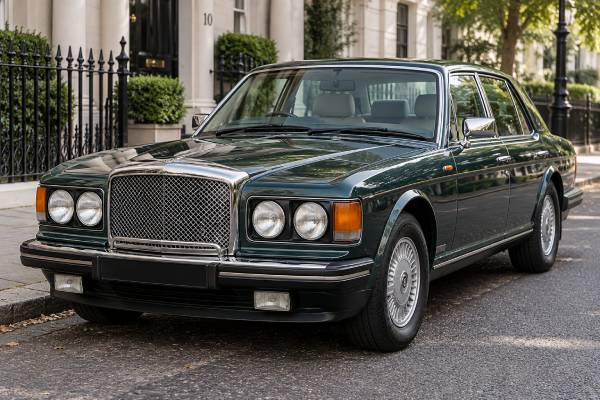
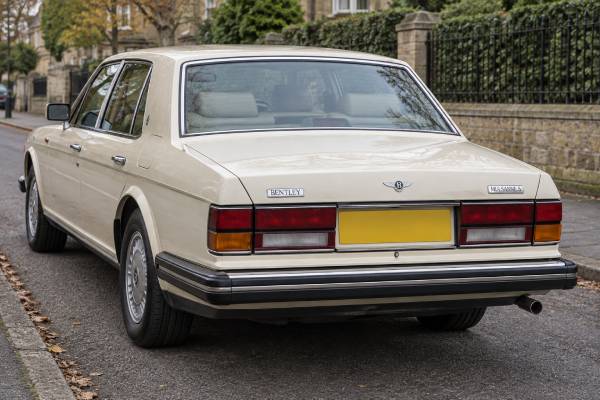
The 1988–1992 Bentley Mulsanne S is the overlooked middle member of the late SZ range. It combined the naturally aspirated 6.75-litre V8 with electronic fuel injection, anti-lock brakes, Turbo R-influenced cabin details, and a more purposeful Bentley appearance, yet stopped short of turbocharged performance. Its approximately 232 hp output was an improvement over the earlier Mulsanne, and its calm delivery suits owners who want traditional Crewe refinement without the added heat and boost-system demands of a Turbo R. The model also spans an important technical transition: early examples retain the three-speed automatic and first-generation suspension specification, while later cars gained adaptive damping and, for 1992, a four-speed electronically controlled transmission. Only 909 standard-wheelbase examples were produced, making specification and condition more important than generic market averages. This guide explains the exact 1988–1992 Mulsanne S, the changes within the run, the systems most likely to need attention, and the checks that separate a usable car from a deferred-maintenance liability.
Table of Contents
- The Mulsanne S as the Middle Bentley
- Specifications and Production Changes
- Fuel Injection, Engine Management, and Transmission
- Cabin, Chassis, Suspension, and ABS
- Maintenance by System
- How to Inspect a Mulsanne S
- Costs, Use Cases, and Final Assessment
The Mulsanne S as the Middle Bentley
The Mulsanne S was positioned between the entry-level Bentley Eight and the high-performance Turbo R. That role explains its specification better than the letter “S,” which did not indicate a limited edition or a turbocharged sports package. It was a regular production model intended to give the naturally aspirated Bentley greater presence, equipment, and performance.
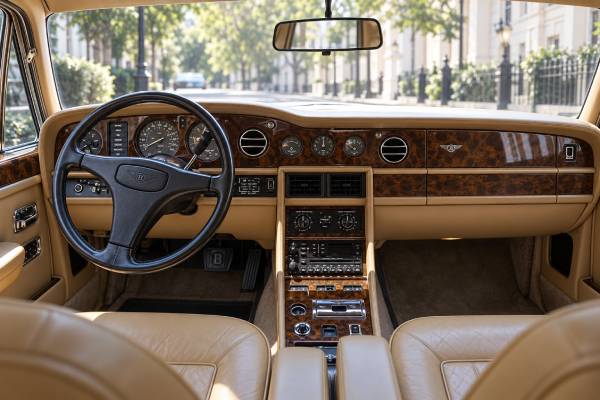
Deliveries began around August 1987 for the 1988 model year. Bentley used the new name as a running evolution of the Mulsanne rather than a clean-sheet replacement. The car retained the SZ platform and 6,750 cc V8, but adopted electronic fuel injection as standard, anti-lock braking, alloy wheels, body-color mirrors, specific badging, and an interior closely related to the Turbo R’s. Straight-grain walnut and a center console with a tachometer gave the driving environment a more contemporary, sporting tone.
The naturally aspirated engine is central to the car’s identity. It does not produce the explosive mid-range of a Turbo R, but it is smoother thermally, simpler around the exhaust side, and less likely to encourage a buyer to overlook a tired chassis because the acceleration is exciting. The Mulsanne S is best when driven as a fast, dignified touring car rather than judged against modern performance sedans.
Its production figure of 909 standard-wheelbase cars is small enough to make originality relevant, but not so small that every example is automatically collectible. Long-wheelbase Mulsanne S cars also exist in much lower numbers and should not be confused with the standard car covered here. Value follows body integrity, hydraulic condition, working electronics, correct interior trim, and documented specialist work.
The model-year spread requires care. A 1988 car and a 1992 car can look broadly similar while differing in engine management, suspension control, transmission, safety equipment, and diagnostic needs. Buyers should identify the actual build specification before comparing prices or ordering parts.
Specifications and Production Changes
The Mulsanne S is a front-engine, rear-wheel-drive petrol saloon using Bentley’s L-series V8 in naturally aspirated, fuel-injected form. The assignment’s L410I label distinguishes the injected engine family, while the individual VIN remains essential because major equipment changed during the five model years.
| Specification | Value | Notes |
|---|---|---|
| Engine | 6,750 cc L-series V8 | Often rounded to 6.8 L |
| Architecture | 90-degree OHV V8 | Two valves per cylinder, hydraulic tappets |
| Induction | Naturally aspirated | No turbocharger |
| Fuel system | Electronic fuel injection | Management specification changes during production |
| Maximum power | Approximately 232 hp (173 kW) | Published for the revised naturally aspirated engine |
| Fuel | Premium petrol/gasoline | Use market-appropriate octane |
| Model period | Transmission | Key chassis equipment |
|---|---|---|
| 1988–1989 | GM THM400 three-speed automatic | Hydraulic self-levelling, anti-lock brakes |
| 1990–1991 | Three-speed automatic | Electronically controlled adaptive damping introduced |
| 1992 | GM 4L80-E four-speed automatic | Electronic transmission control and adaptive suspension |
| All years | Rear-wheel drive | Independent front and rear suspension |
| Measurement | Approximate value | Condition |
|---|---|---|
| Body style | Four-door standard-wheelbase saloon | Normally four or five seats |
| Length | About 5,310 mm (209.1 in) | Market bumpers can alter overall length |
| Width | About 1,890 mm (74.4 in) | Excluding mirrors |
| Height | About 1,480 mm (58.3 in) | Ride height affects figure |
| Wheelbase | About 3,060 mm (120.5 in) | Standard SZ wheelbase |
| Kerb weight | Approximately 2,320 kg (5,115 lb) for later cars | Market figures differ |
| 0–100 km/h | About 10.6 seconds | Healthy standard car |
| Top speed | About 202 km/h (126 mph) | Published late-model figure |
| Turning circle | About 13.1 m (43.0 ft) on later specification | Useful urban consideration |
| Model year | Notable feature |
|---|---|
| 1988 | Mulsanne S launch specification with EFI, ABS, alloy wheels, and Turbo R-style cabin |
| 1989 | Paired round headlamps and revised in-car entertainment across the Bentley range |
| 1990 | Updated engine management and electronically controlled suspension |
| 1991 | Continuation of the adaptive-damping specification with market detail changes |
| 1992 | Four-speed GM 4L80-E automatic introduced |
Production changes can overlap registration dates. A car titled as one year may have been built to the preceding specification, especially in markets that register the year of first sale. Confirm equipment by VIN, build record, transmission type, control units, and visible hardware.
Fuel Injection, Engine Management, and Transmission
The injected naturally aspirated V8 should start cleanly, idle smoothly, and deliver a broad, progressive response. It is less demanding than the turbo engine, but its electronic management introduces sensors, wiring, relays, grounds, and air-metering components that deteriorate with heat and age.
Early Mulsanne S cars use an injection and ignition arrangement developed from late first-generation SZ systems. Later cars moved to more integrated Bosch K-Motronic management. The exact hardware can vary by emissions market. A buyer should not assume that a diagnostic procedure or replacement control unit advertised for any 1988–1992 Rolls-Royce or Bentley will fit the car in front of them.
Common drivability complaints include unstable idle, hot-start difficulty, hesitation, rich exhaust smell, poor fuel economy, and intermittent cutting out. Possible causes range from simple vacuum leaks and weak ignition components to contaminated injectors, failed temperature sensors, air-flow metering faults, fuel-pressure problems, or poor electrical grounds. Replacing expensive control units before checking power supply, connectors, and base mechanical health is a frequent mistake.
A compression test or leak-down test is useful when there is smoke, uneven running, crankcase pressure, or long-term neglect. It is not necessary to dismantle a smooth engine merely because of mileage. The L-series V8 can cover substantial distance when coolant chemistry, oil changes, and warm-up practices are correct.
The three-speed THM400 used through 1991 is mechanically robust and familiar to transmission specialists, but Bentley-specific linkage, cooling, mounting, and installation details matter. It should select Drive and Reverse promptly and shift without flare. The 1992 4L80-E adds an overdrive ratio and electronic control. It lowers engine speed at cruise but introduces wiring, sensors, and controller diagnosis. Warning lights, limp-home behavior, harsh shifts, or loss of overdrive should be scanned and tested rather than treated with fluid additives.
Transmission fluid condition can reveal abuse. Dark fluid, burnt odor, delayed engagement, and debris in the pan indicate more than an overdue service. A fluid change may improve a healthy unit but will not rebuild worn clutches. On a 1992 car, confirm that the correct electronic transmission is present and that conversions have not left mismatched wiring or controls.
Fuel economy is poor by modern standards, though the extra gear in 1992 can improve relaxed highway cruising. Buyers should calculate range from the individual car’s observed consumption and tank condition rather than rely on a single published figure. Old fuel senders and gauges may be inaccurate, and sediment in rarely used tanks can cause intermittent starvation.
Cabin, Chassis, Suspension, and ABS
The Mulsanne S cabin should feel more driver-focused than the early Mulsanne without losing traditional Crewe finish. The center console, tachometer, alloy wheels, specific badges, and Turbo R-influenced detailing visually separate it from the entry-level Eight.
Straight-grain walnut is an identifying feature on many cars. Inspect veneer for lifting, cracks around instruments, sun bleaching, and previous clear-coat repairs. Matching color and grain across dashboard, door caps, console, and rear trim is difficult, so conservation is preferable to isolated replacement. Leather should be supple at bolsters and piping, and the wool headlining should remain secure.
Electrical comfort systems are extensive for the period. Test power seats, memory functions where fitted, windows, locks, mirrors, lamps, wipers, washers, instruments, radio, aerial, climate control, rear reading lights, and any telephone or alarm. One slow window may be dried grease or voltage loss; several intermittent accessories may indicate a charging, ground, fuse-board, or wiring problem.
The climate-control system can produce excellent heating and cooling when correctly set up. Faults can involve refrigerant loss, compressor control, vacuum or servo mechanisms, blend flaps, fan resistors, temperature sensors, and blocked drains. Verify cold air at idle and during a drive, then test stable heat. An air-conditioning system “just needing a recharge” may need hoses, seals, compressor work, or correct conversion from an older refrigerant.
Chassis behavior differs by model year. Early cars use a more conventional damper setup, while 1990-on examples add electronically controlled adaptive damping. The later system can adjust control but depends on sensors, wiring, actuators, and compatible dampers. A warning or permanently firm/soft ride should be diagnosed. Some cars have been converted to passive dampers; this may be practical, but the work and warning-light strategy should be documented.
Anti-lock braking was standard and is a major safety improvement over early SZ models. It does not simplify the underlying high-pressure hydraulic braking and self-levelling system. The buyer must evaluate both the Crewe hydraulic pressure system and the ABS electronics. Persistent warning lamps, rapid accumulator cycling, hard or inconsistent pedal effort, leaking mineral fluid on later systems, or non-functioning wheel-speed sensors require specialist attention.
Tires influence the car’s personality. Correct load and speed ratings, matched construction, and recent date codes matter more than a fashionable tread pattern. Oversized wheels and short sidewalls can worsen ride, steering kickback, tramlining, and clearance. The original alloy wheels should be checked for corrosion, distortion, and correct fasteners.
Maintenance by System
The best maintenance plan is organized by systems and age, not mileage alone. A low-mileage Mulsanne S can require more work than a regularly driven car if coolant, hydraulic fluid, hoses, tires, seals, and electrical connections have aged untouched.
Engine protection
Keep the cooling system clean and pressure-tight. Inspect the radiator, expansion tank, hoses, thermostat, belts, water pump, fan operation, heater circuit, and evidence of previous overheating. Coolant chemistry is critical in an alloy engine. Rust-colored liquid, oily residue, persistent bubbles, or unexplained loss requires investigation.
Oil changes should occur on time even when annual mileage is low. Check for leaks at covers, seals, pressure lines, and the oil cooler where fitted. A small seep can be monitored; oil reaching exhaust components or a rapidly dropping level cannot. Warm oil pressure and noise are more informative than a cold start alone.
Fuel and ignition
Replace old fuel hoses with correct ethanol-compatible specification, inspect pumps and filters, clean grounds, and verify charging voltage. Tune the engine only after vacuum leaks, compression, fuel pressure, and ignition condition are known. A rich mixture can wash cylinder walls and damage catalysts on equipped cars, while a lean mixture can raise combustion temperature.
Hydraulics and suspension
Use only the fluid specified for the exact chassis. Different SZ periods use different hydraulic-fluid requirements, and mixing types can damage seals. Accumulators, pumps, pressure switches, reservoirs, filters, pipes, calipers, height-control valves, and struts should be inspected as a connected system.
| Symptom | Likely systems | First action |
|---|---|---|
| Hydraulic warning stays on | Pressure, accumulators, pumps, switches | Stop and perform pressure testing |
| Rear sits low | Levelling valves, struts, pressure supply | Check leaks and loaded ride height |
| Rough hot idle | Injection, ignition, vacuum, sensors | Test base engine and fuel pressure |
| Harsh or fixed suspension | Adaptive damping electronics or dampers | Read faults and inspect actuators |
| ABS warning | Wheel sensors, wiring, controller, voltage | Diagnose before replacing hydraulic parts |
| Battery repeatedly flat | Charging, alarm, relays, accessory circuits | Measure parasitic draw systematically |
| Temperature rises in traffic | Radiator, fan, pump, thermostat | Pressure-test and verify airflow |
Body care belongs in the maintenance schedule. Keep sunroof and plenum drains open, repair screen seals, clean wheel arches, and inspect sills and floor edges annually. Once water reaches carpet underlay, corrosion and electrical faults can develop unseen.
How to Inspect a Mulsanne S
A Mulsanne S should be inspected cold, hot, stationary, on the road, and on a lift. A short warm drive can conceal starting, charging, hydraulic-pressure, and temperature problems.
Start with identity. Match the VIN and documents, establish the original market, and determine whether the car is a 1988–1989, 1990–1991, or 1992 technical specification. Confirm the transmission, headlamp style, suspension controls, injection hardware, ABS equipment, wheels, interior wood, and badging. Obtain build information when originality affects value.
Inspect corrosion around sills, jacking points, wheel arches, lower wings, door bottoms, floor seams, boot floor, screen surrounds, subframe areas, and under trim. Look for fresh underseal over scale, overspray on seals, uneven gaps, and different texture between panels. A body that appears excellent from standing height can require major work beneath stainless trim and carpets.
During the cold start, note cranking speed, oil-pressure response, exhaust smoke, idle, charging voltage, fuel smell, hydraulic warning-light sequence, and suspension rise. Operate every accessory while the alternator is carrying load. Low voltage can produce misleading ABS, suspension, and engine-management symptoms.
The road test should include urban traffic, a steady cruise, acceleration through the gears, repeated normal braking, rough surfaces, and a hot restart. The car should track straight, steer consistently, hold temperature, shift cleanly, and remain level. Listen for rear suspension knocks, driveline clunks, wind noise, differential whine, and exhaust contact.
A pre-purchase inspection should produce written findings and estimated priorities. Ask the specialist to separate:
- immediate safety defects;
- hydraulic and cooling risks;
- electronic faults and diagnostic uncertainty;
- corrosion and water ingress;
- originality issues;
- cosmetic restoration;
- normal future servicing.
Service history should show more than oil changes. Valuable invoices mention accumulators, hydraulic hoses, brake work, cooling parts, suspension dampers, injection diagnosis, transmission service, tires, climate-control repairs, and corrosion treatment. Repeated temporary fixes to the same symptom are a warning.
Avoid a car with several disconnected warning lamps. Removing bulbs is a cheap way to hide ABS, suspension, charging, or hydraulic faults. All warning indicators should illuminate during the correct test sequence and then extinguish as designed.
Costs, Use Cases, and Final Assessment
The Mulsanne S suits an owner who wants late-1980s Bentley presence and traditional V8 smoothness without turbocharged complexity. It is neither the cheapest SZ to restore nor the most valuable when finished, so buying condition is especially important.
Fuel, insurance, and routine servicing are predictable compared with the potential cost of hydraulics, bodywork, adaptive dampers, air conditioning, electronic diagnosis, and interior restoration. Set aside a repair reserve after purchase rather than spending the entire budget on the most polished car available. A slightly worn but documented car can be a better choice than a freshly detailed example with silent warning lamps and no invoices.
The 1988–1989 cars are mechanically a little simpler and preserve more of the first-generation SZ feel. The 1990–1991 cars add adaptive damping and revised management. The 1992 car’s four-speed automatic makes highway use more relaxed but adds electronic transmission diagnosis. None is universally best; the right choice depends on the owner’s priorities and the individual car’s history.
As a touring car, the Mulsanne S is spacious, quiet, and less overtly aggressive than a Turbo R. It can manage modern traffic, but the driver must respect its mass, tire technology, and braking-system maintenance. Regular use on meaningful trips is healthier than long storage interrupted by idling.
Preserve correct wheels, trim, wood, and injection components. Sensible reversible upgrades—battery charging connection, discreet audio, improved air-conditioning reliability, or hidden hands-free equipment—can make the car easier to use. Avoid low-profile tires, cut dashboards, improvised suspension conversions, and undocumented emissions removal.
The buying verdict is simple: choose the best systemically maintained car. A sound Mulsanne S should start immediately, idle cleanly, shift properly, keep stable temperature, clear its hydraulic and ABS warnings, control body movement, cool the cabin, and show no serious structural corrosion. When those fundamentals are present, the model delivers a distinctive balance: more developed and purposeful than the early Mulsanne, calmer and easier to own than a neglected turbo car, and rare enough to feel genuinely special.
Choosing among model years should begin with intended use rather than a belief that the newest car is automatically best. An early three-speed example preserves simpler transmission control and the first Mulsanne S appearance. A 1990–1991 car adds adaptive damping and more integrated management, which can improve refinement when functioning correctly. The 1992 four-speed car lowers cruising engine speed and feels more contemporary on motorways, but its electronic transmission creates another system that must be diagnosed properly.
Documentation should identify production changes at component level. Useful invoices list control-unit numbers, damper type, hydraulic fluid specification, transmission model, software or adjustment work, and the chassis range for installed parts. Generic entries such as “electrical repair” or “suspension fixed” offer little help when a later owner must decide whether the car remains factory-correct.
After purchase, create a fault hierarchy. Safety warnings, fluid loss, cooling instability, tire age, and charging faults come first. Driveability and climate control follow. Cosmetic restoration comes last unless water ingress is involved. This order prevents a common failure pattern in which money is spent on leather and paint while low voltage continues to trigger ABS and suspension faults.
A well-kept Mulsanne S rewards this method because its systems are understandable when examined one at a time. The model becomes expensive when several neglected systems interact and each symptom is treated as a separate mystery.
References
- Bentley Mulsanne S 2026 (Model and Production Reference)
- BENTLEY MULSANNE S 2021 (Technical History)
- Bentley Mulsanne 2026 (Predecessor Reference)
- Bentley Mulsanne Turbo 2026 (Range Context)
- 1980-1998 2022 (Official Technical Library)
- Service Schedule Manual 1989 (Official Service Manual)
Disclaimer
This article is for informational purposes and does not replace professional diagnosis, repair, or factory workshop instructions. Specifications, torque values, fluids, service intervals, control systems, and procedures vary by VIN, market, production date, and equipment; verify the individual Mulsanne S against official service documentation. Please share this guide on Facebook, X/Twitter, or an owners’ community if it helps another buyer make a better-informed decision.