
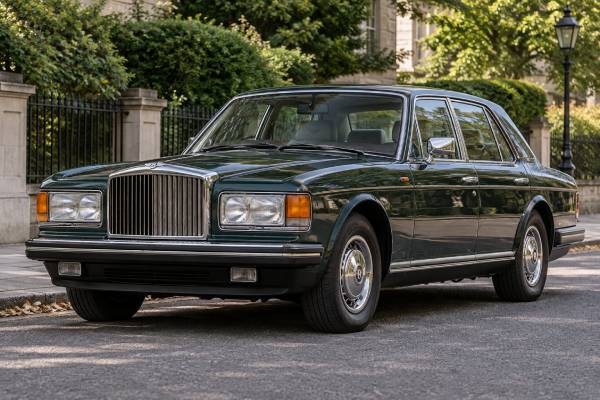
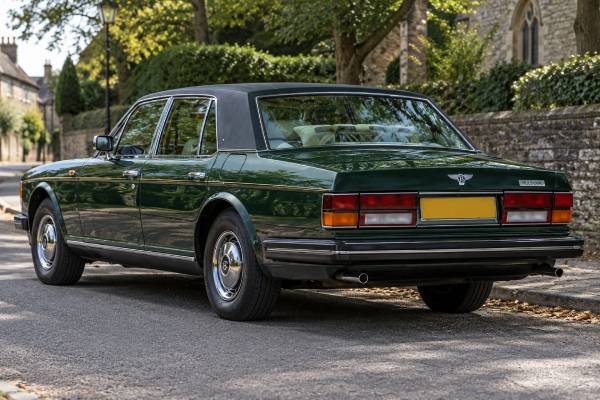
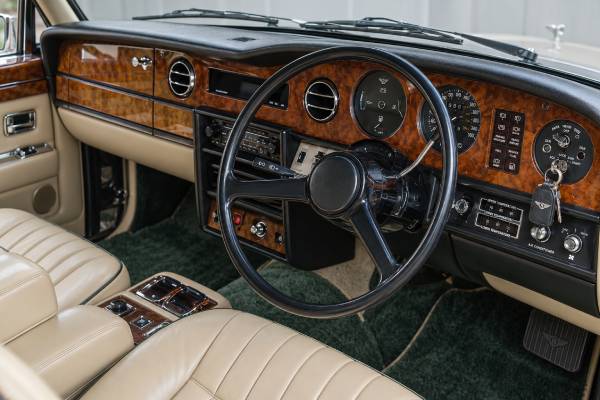
The 1980–1985 Bentley Mulsanne is a traditional Crewe-built luxury saloon whose appeal lies in calm authority rather than headline performance. It introduced the Mulsanne name on the new SZ platform, pairing the long-serving 6.75-litre L-series V8 with rear-wheel drive, a three-speed automatic transmission, self-levelling rear suspension, and the deeply finished cabin expected of a hand-built Bentley. In period, its approximately 200 hp output sounded modest for such a large car, but the engine was tuned for low-speed flexibility and near-silent progress rather than high-rpm drama. Today, condition matters far more than mileage or cosmetic shine. A correctly maintained example can feel remarkably composed, while a neglected one can hide expensive hydraulic, cooling, corrosion, and trim problems. This guide focuses specifically on the naturally aspirated short-wheelbase Mulsanne built from 1980 through 1985, including the market differences that affect fuel delivery, lighting, emissions equipment, and buying decisions.
Table of Contents
- Identity, Scope, and Historical Position
- Technical Profile and Verified Specifications
- Road Character, Chassis, and Braking
- Year and Market Differences That Matter
- Maintenance Priorities for Reliable Ownership
- Inspection and Buying Strategy
- Ownership Costs, Use, and Verdict
Identity, Scope, and Historical Position
The early Mulsanne was essentially Bentley’s more discreet interpretation of the Rolls-Royce Silver Spirit platform, but it was not merely a badge exercise. Its lower, wider stainless-steel grille, Bentley badging, restrained ornamentation, and more driver-oriented image gave it a different social and visual character. The name also broke with Bentley’s long post-war habit of single-letter model designations and deliberately evoked the Mulsanne Straight at Le Mans.
This article covers the naturally aspirated standard-wheelbase saloon from the 1980 launch through the 1985 model year. The broader first-generation Mulsanne continued beyond this period, so later fuel-injected, catalytic-converter, trim, and chassis changes should not automatically be applied to an earlier car. The assignment’s L410 designation is best treated as an engine-family identifier for the 6.75-litre L-series V8; individual chassis and market specifications remain the decisive reference when ordering parts.
The early car occupies an interesting point in Bentley history. It arrived when Bentley sales were a small fraction of Rolls-Royce production, before the turbocharged models rebuilt the marque’s sporting identity. As a result, the naturally aspirated Mulsanne is less aggressive and usually less expensive than a Mulsanne Turbo or Turbo R, yet it retains the same basic architecture, craftsmanship, hydraulic systems, and sense of occasion.
Its strongest qualities are easy to understand:
- exceptionally quiet low-speed operation;
- abundant cabin space without the extra length of the LWB model;
- supple independent suspension with rear self-levelling;
- hand-finished leather, wood, wool, and metalwork;
- a durable understressed V8 when cooling, lubrication, and ignition are kept correct;
- a comparatively subtle appearance beside a Rolls-Royce of the same era.
The trade-off is complexity. This is not a simple old American V8 saloon dressed in English leather. The braking and levelling hydraulics, climate control, electrical distribution, body construction, and bespoke trim demand methodical diagnosis and specialists who understand Crewe cars.
Technical Profile and Verified Specifications
The 1980–1985 Mulsanne is a front-engine, rear-wheel-drive internal-combustion saloon. Its 6,750 cc pushrod V8 uses two valves per cylinder and, in most non-emissions markets during this period, twin SU carburettors; certain export cars used fuel injection. Power is sent through the robust GM Turbo-Hydramatic 400 three-speed automatic.
| Specification | Value | Notes |
|---|---|---|
| Engine family | Bentley/Rolls-Royce L-series V8 | Assignment designation L410 |
| Displacement | 6,750 cc (6.75 L; 411.9 cu in) | Often rounded to 6.8 L |
| Layout | 90-degree V8, overhead valves | Two valves per cylinder |
| Bore × stroke | 104.1 × 99.1 mm (4.10 × 3.90 in) | Traditional long-stroke L-series architecture |
| Induction | Naturally aspirated | No turbocharger on this model |
| Fuel system | Twin SU carburettors; fuel injection in selected export markets | Confirm by VIN and market |
| Maximum power | About 200 hp (approximately 149 kW) | Factory output was not always prominently published |
| Fuel | Petrol/gasoline | Use octane appropriate to compression ratio and ignition setting |
| Specification | Value |
|---|---|
| Transmission | GM THM400 three-speed automatic |
| Drive type | Rear-wheel drive |
| Body construction | Steel monocoque with front and rear subframes |
| Front suspension | Independent wishbones, coil springs, anti-roll bar |
| Rear suspension | Independent semi-trailing arms, coil springs, hydraulic self-levelling |
| Steering | Power-assisted rack and pinion |
| Brakes | Four-wheel discs with high-pressure hydraulic assistance |
| Measurement | Value | Condition |
|---|---|---|
| Body style | Four-door saloon | Typically four or five seats depending on rear arrangement |
| Length | Approximately 5,310 mm (209.1 in) | Some export bumpers add length |
| Width | Approximately 1,890 mm (74.4 in) | About 2,010 mm with mirrors |
| Height | Approximately 1,480–1,490 mm (58.3–58.7 in) | Ride height and tires affect measurement |
| Wheelbase | 3,060 mm (120.5 in) | Standard-wheelbase saloon |
| Track | Approximately 1,540 mm front and rear | Published period figure |
| Kerb weight | About 2,245 kg (4,949 lb) | Export equipment can increase weight |
| Luggage capacity | About 350 L (12.4 cu ft) | Period geometric estimate |
| Measure | Approximate value | Context |
|---|---|---|
| 0–100 km/h | About 10.2 seconds | Healthy standard car in period condition |
| 0–60 mph | About 9.6–10.0 seconds | Source and market dependent |
| Top speed | About 192 km/h (119 mph) | Later revisions may be quoted higher |
| Turning circle | About 11.7 m (38.4 ft) | Useful parking consideration |
These figures describe the car’s scale better than its personality. The Mulsanne does not encourage repeated full-throttle acceleration. Its engine, gearing, throttle calibration, and heavy flywheel effect are arranged to make normal progress feel unhurried and seamless.
Road Character, Chassis, and Braking
A sound early Mulsanne should feel soft but controlled, not loose, floating, or reluctant to stop. The defining sensation is isolation: the V8 is barely audible at a cruise, the three-speed automatic changes gear without drama, and the suspension absorbs large road inputs while preserving a stable body attitude.
The engine’s modest specific output is intentional. Rather than producing power through engine speed, the L-series V8 relies on displacement and a broad torque curve. In town, only a small throttle opening is needed. On faster roads, the transmission may hold a high gear until the driver makes a clear demand, after which the kickdown should be firm but not violent. Hesitation, backfiring, fuel smell, or an uneven idle point to adjustment or repair needs, not to normal old-car character.
Steering is light by modern standards, but it should remain accurate around the straight-ahead position. Excessive wandering may come from tires, alignment, worn suspension joints, steering-rack mounts, or rear-suspension geometry. Owners sometimes chase a single component when the real cure is a complete inspection of rubber bushes, ball joints, dampers, subframe mounts, and ride height.
The braking system requires a mental reset for drivers used to conventional vacuum assistance. Crewe’s high-pressure hydraulics provide powerful braking with relatively little pedal travel. A healthy system feels immediate and consistent. A hard pedal, delayed warning lights, repeated pump cycling, fluid leaks, or uneven braking require specialist attention. Because the rear self-levelling system shares hydraulic principles and components with the braking system, neglect in one area often signals neglect elsewhere.
Tires matter disproportionately. The car is heavy, softly sprung, and designed around tall-sidewall tires with appropriate load and speed ratings. Old tires can look excellent while becoming hard, noisy, and unsafe. Incorrect modern replacements may also change steering effort, ride quality, and clearance. Date codes, matching sets, load index, and documented fitment are more important than tread depth alone.
The Mulsanne’s limits are lower and more progressive than those of the later Turbo R. It can cover distance quickly, but it rewards smooth steering, early braking, and measured throttle inputs. Trying to make it behave like a modern sports saloon misses the point and exposes worn chassis components quickly.
Year and Market Differences That Matter
The safest rule is to buy parts and assess specifications by chassis number, not by a generic “1980s Mulsanne” label. Lighting, bumpers, fuel systems, emissions hardware, dashboard details, and minor mechanical components changed by market and during production.
Early non-North-American cars generally used twin SU carburettors, while cars built for stricter emissions markets could use fuel injection. That difference affects cold starting, fuel pumps, filters, intake plumbing, ignition setup, workshop knowledge, and parts sourcing. A converted or partially modified system deserves careful scrutiny because undocumented combinations can produce persistent drivability problems.
External clues also matter. United States and Canadian cars commonly have energy-absorbing bumpers and market-specific lamps, which change overall length and appearance. Headlamp cleaning equipment, side markers, instruments, emissions labels, and climate-control details may differ. Imported cars are not inherently undesirable, but the buyer should confirm that registration documents, VIN plates, emissions equipment, and replacement parts match the car’s actual origin.
The 1985 model year brought detail changes including revisions to dashboard equipment and headlamp cleaning on some markets. Production changes did not always occur neatly on January 1, and cars could be registered later than they were built. The chassis number and build records therefore carry more weight than the date in a current registration document.
A useful identity check includes:
- comparing the VIN on the body, plate, and documents;
- confirming the engine number where accessible;
- checking paint and trim codes against the surviving finish;
- identifying whether the fuel system is original to the market specification;
- inspecting the grille, badges, wheel trims, lamps, and bumpers for correct early features;
- obtaining factory build information or established club records when provenance matters.
Avoid judging originality too rigidly where sensible safety or reliability work has been documented. A discreet modern ignition component, improved cooling fan control, or upgraded air-conditioning refrigerant conversion can be beneficial. The warning sign is not modification itself; it is undocumented work that makes future diagnosis harder.
Maintenance Priorities for Reliable Ownership
Preventive maintenance is far cheaper than restoring a dormant or repeatedly overheated Mulsanne. The best ownership plan starts with a baseline service, pressure and leak checks, cooling-system verification, fresh age-sensitive fluids, and a written list separating urgent safety work from cosmetic improvements.
Cooling and lubrication
The alloy V8 depends on a clean, correctly filled cooling system. Inspect the radiator core, expansion tank, hoses, thermostat operation, water pump, fan belts, heater circuit, and evidence of previous overheating. Coolant that looks rusty or oily, persistent pressure after cooling, unexplained loss, or combustion residue around the filler requires diagnosis before regular use.
Oil pressure and consumption should be assessed with the engine fully warm. A minor seep is common on an old hand-built V8, but active leaks onto exhaust components or a rapidly falling level are not. Service records should show regular oil changes rather than long mileage intervals stretched over many years. Low annual mileage does not protect oil from fuel dilution, condensation, and additive depletion.
Fuel, ignition, and carburettor condition
Carburetted cars need synchronized, leak-free SU units, sound diaphragms and linkages, correct float levels, and an ignition system in good order. Starting should be prompt from cold with the automatic enrichment working correctly, then settle as the engine warms. Black exhaust smoke, fuel odor, hot-start difficulty, and plug fouling usually indicate faults rather than charming eccentricity.
Old fuel hoses are a fire risk. Replace age-hardened lines with specification-correct hose and clips, inspect pumps and filters, and ensure any electric modifications are fused. On injected export cars, verify that pressure regulators, injectors, cold-start components, and wiring have not been bypassed to mask another problem.
Hydraulics and brakes
The high-pressure system must be serviced with the correct approved fluid and procedures. Mixing fluids or improvising bleeding methods can damage seals and create unsafe results. Warning lamps should illuminate during the start sequence and extinguish in the expected manner. Frequent clicking or cycling, slow pressure build, leakage, and sinking ride height all justify specialist testing.
| Area | What good condition looks like | Common warning sign |
|---|---|---|
| Cooling system | Stable temperature, clean coolant, dry hoses and radiator | Loss, staining, hot smell, temperature rise in traffic |
| Engine oil | Correct level, steady pressure, limited seepage | Heavy leaks, smoke, contaminated oil |
| Hydraulic system | Warnings clear normally, no rapid pump cycling | Persistent lamps, hard pedal, wet components |
| Transmission | Clean engagement and smooth shifts | Delay, flare, harsh engagement, burnt fluid smell |
| Suspension | Level stance, quiet travel, controlled rebound | Rear sag, knocking, repeated bouncing |
| Climate control | Stable temperature and airflow from all modes | Only heat, only cold, weak fan, vacuum faults |
| Electrical system | Strong charging and reliable accessories | Hot wiring, intermittent circuits, battery drain |
The transmission is generally durable if fluid level, cooling, and adjustment are correct. Long delay when selecting Drive or Reverse, engine-speed flare between shifts, or a burnt smell deserves investigation. Because the unit is common in principle but installation details are Bentley-specific, removal and linkage work should still be entrusted to someone familiar with the car.
Inspection and Buying Strategy
Buy the best documented mechanical car, not the shiniest one. Paint, leather, and wood can absorb attention during a viewing, but hydraulics, corrosion, cooling, and deferred servicing determine whether the purchase becomes enjoyable or overwhelming.
Begin with the body. Inspect the lower wings, wheel arches, sills, door bottoms, jacking areas, boot floor, windscreen and rear-window surrounds, and seams where moisture can sit beneath trim. Look for bubbling, uneven panel gaps, overspray on seals, cracked filler, and fresh underseal hiding repairs. Stainless trim is durable but expensive to straighten or replace, and the grille should be examined for impact distortion.
The cabin should be complete even if imperfect. Correct switchgear, vents, veneers, picnic-table hardware where fitted, lambswool or Wilton carpets, seat mechanisms, door cappings, and headlining are costly to source. Sun-damaged leather can often be conserved, but torn hides, missing piping, lifted veneer, and water-stained wood require skilled work. Check for damp under carpets because leaks can damage both structure and electrical connections.
A cold start is essential. Ask the seller not to warm the car before arrival. Observe oil-pressure behavior, exhaust smoke, fuel smell, idle quality, charging voltage, hydraulic warning lamps, and the time taken for the suspension to settle. Let the engine reach full temperature, then drive in traffic and at road speed. A brief loop around a storage facility reveals very little.
During the road test, check:
- straight tracking and an even steering response;
- clean transmission engagement from rest;
- stable coolant temperature after idling;
- consistent braking without pull or warning lamps;
- rear ride height after repeated braking and loading;
- operation of heat, air conditioning, windows, seats, locks, and instruments;
- vibration under acceleration and at cruising speed;
- hot restart after a ten-minute stop.
A pre-purchase inspection should include hydraulic-pressure testing, underbody access, cooling-system assessment, compression or leak-down testing when symptoms justify it, and verification of the chassis number. The specialist’s estimate should divide work into safety-critical, reliability, and cosmetic categories. That structure helps prevent an attractive low purchase price from hiding a restoration-scale first year.
Ownership Costs, Use, and Verdict
The 1980–1985 Mulsanne makes sense for an owner who values craftsmanship, quiet travel, and mechanical character more than speed or low running costs. It is happiest when used regularly, stored dry, warmed fully, and maintained before faults cascade into larger repairs.
Fuel consumption is substantial, especially in short urban trips, but fuel is rarely the largest financial risk. Labor-intensive hydraulic work, corrosion repair, cooling-system neglect, air-conditioning restoration, tires, and bespoke trim can each exceed years of petrol expense. A realistic budget therefore includes an annual service allowance plus a reserve for age-related projects. The reserve should remain available even after buying a car with good records because rubber, seals, relays, and plated components continue to age.
The most valuable service history is specific rather than merely thick. Invoices should identify hydraulic accumulators or pumps, hoses, brake work, cooling components, ignition parts, transmission service, suspension bushes, tires, and rust repair. A stack of repeated oil-change receipts is reassuring but does not prove that the complex systems have been maintained.
For regular touring, sensible upgrades may include modern hidden audio, improved battery isolation, a carefully installed charging lead, better air-conditioning performance, and period-appropriate tires from a current production batch. Avoid irreversible interior cutting, incorrect wheels, low-profile tires, and crude electrical additions. These changes undermine both the driving experience and future repairability.
The naturally aspirated Mulsanne is not the fastest or most collectible SZ Bentley, which can be an advantage. It offers the core Crewe experience without the extra heat and performance demands of the turbocharged cars. A healthy example feels dignified rather than slow, and its balance of compact standard-wheelbase proportions and traditional engineering is distinctive.
The final decision should rest on three questions: Is the structure sound? Do the hydraulic, cooling, and electrical systems work correctly? Is there enough documentation to understand what has been done? A positive answer to all three is worth paying for. A cheap car that fails them is likely to remain cheap only until the first serious workshop visit.
A sensible first-year plan begins before collection. Ask the inspecting workshop to price a roadworthy baseline rather than a concours restoration: fresh age-sensitive fluids, verified hydraulic pressure, current tires, cooling-system integrity, fuel-hose safety, reliable charging, and working exterior lighting. Once the car can be driven safely, use several progressively longer journeys to establish oil consumption, coolant stability, hot-start behavior, transmission operation, and overnight fluid loss. This staged approach produces better information than dismantling several systems at once.
Keep a model-specific log from the first day. Record cold and hot oil level, coolant level, tire pressures, battery voltage, mileage, fuel added, and any warning-light behavior. Photograph leak locations before cleaning them. On a hand-built car, small changes over time are often more useful than a single workshop snapshot. A seep that remains stable for two years can be planned; a fresh hydraulic trail after every drive needs immediate action.
Parts planning also matters. Service items are available through specialists, but correct trim, lamps, switches, and early-market components may require rebuilding or patient sourcing. Do not discard an original failed part merely because a replacement has been installed. Label it, store its fasteners, and keep the invoice describing why it was removed. That habit preserves future repair options and supports the car’s history.
Finally, agree on how the car will be used. Occasional local journeys, long tours, and formal events place different demands on air conditioning, tires, battery care, and storage. An ownership plan built around real use is more sustainable than an open-ended restoration driven by every cosmetic imperfection.
References
- Bentley Mulsanne 2026 (Model and Production Reference)
- Bentley Mulsanne LWB 2026 (Wheelbase Comparison)
- Bentley Mulsanne Turbo 2026 (Contemporary Variant Reference)
- 1980-1998 2022 (Official Technical Library)
- Coachwork Repair Manual 1985 (Official Coachwork Manual)
Disclaimer
This article is for informational purposes and is not a substitute for professional diagnosis, repair, or a model-specific workshop manual. Specifications, torque values, intervals, fluids, and procedures can vary by VIN, market, production change, and equipment; verify all work against official service documentation for the individual car. Please share this guide on Facebook, X/Twitter, or your preferred enthusiast community if it helped support informed Bentley ownership.