
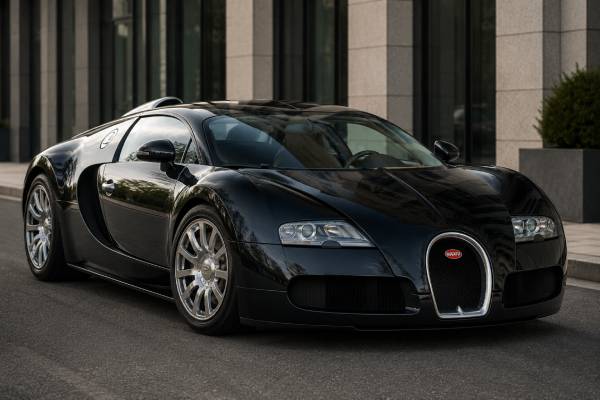
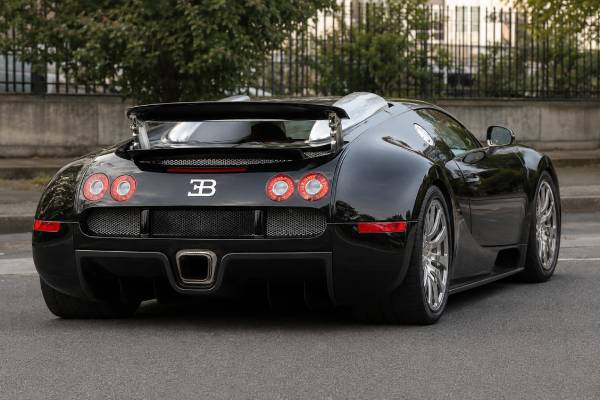
The 2009–2011 Bugatti Veyron 16.4 is still one of the clearest examples of engineering ambition turned into a road car. It was not simply built to be quick in a straight line. It was built to make 1,001 hp usable, stable, luxurious, and repeatable in a car a customer could drive away from the factory. That is why the Veyron remains important even after newer hypercars have become faster. It set the modern template: extreme power, all-wheel drive, dual-clutch shifting, active aerodynamics, carbon construction, and luxury-car refinement in one package.
For buyers and enthusiasts, the late 2009–2011 Veyron 16.4 coupe sits in an especially interesting place. It has the original 1,001-hp character, the mature late-production build period, and the fixed-roof body that many collectors prefer. It is complex, costly, and highly specialized, but it is also one of the defining performance cars of the 21st century.
Table of Contents
- Why the Veyron 16.4 Still Matters
- CBXA W16 Specs and Chassis Data
- Late Coupe Production and Variants
- Engineering Details That Defined the Car
- How the 1,001-hp Veyron Drives
- Maintenance Realities and Known Risks
- Buying a 2009–2011 Veyron 16.4
Why the Veyron 16.4 Still Matters
The Veyron 16.4 matters because it proved that a 400 km/h luxury road car could be engineered as a complete production machine, not as a fragile prototype. By 2009–2011, the standard coupe had already become a benchmark for what a modern hypercar could be.
Bugatti developed the Veyron under Volkswagen Group ownership, with the goal of reviving one of the most famous names in motoring with something technically undeniable. The result was not a lightweight analog supercar in the mold of the McLaren F1 or Ferrari F40. It was heavier, more complex, and more luxurious. Its achievement was different: it made four-digit power feel organized.
The “16.4” name tells much of the story. “16” refers to the 16-cylinder W16 engine, while “4” refers to the four turbochargers. The car also used permanent all-wheel drive, a seven-speed dual-clutch transmission, active ride height control, an air-brake rear wing, and a carbon-fiber passenger cell. In the early 2000s, putting all of those systems into one road car was a huge task.
The 2009–2011 period is important because it represents the later part of original Veyron 16.4 coupe production. During the same era, Bugatti expanded the range with the Grand Sport roadster and then the 1,200 PS Super Sport. That makes the standard coupe easy to misunderstand. It is not the most powerful Veyron, but it is the original concept in its cleanest form: fixed roof, 1,001-hp rating, and the smooth high-speed character that made the model famous.
Today, collectors care about the Veyron for four main reasons:
- It marked Bugatti’s modern return as a serious engineering-led brand.
- It normalized the idea of the usable 1,000-hp road car.
- It used a unique W16 engine layout that later became central to Bugatti identity.
- It combines limited production, high development cost, and historical importance.
The Veyron’s reputation has also matured. Early critics sometimes described it as too heavy or too clinical. With time, that criticism has softened. The car now looks less like excess for its own sake and more like a carefully executed technical statement. It was built to answer a simple question: how fast could a road car be while still feeling like a Bugatti?
CBXA W16 Specs and Chassis Data
The Veyron 16.4’s main story is its powertrain: an 8.0-liter quad-turbocharged W16 paired with all-wheel drive and a seven-speed dual-clutch gearbox. The late 2009–2011 coupe kept the original 1,001-hp character rather than adopting the later Super Sport’s 1,200 PS output.
In many markets, the engine output is listed as 1,001 PS, which equals about 987 mechanical horsepower. Enthusiast and listing formats often round or label the car as 1,001 hp, so buyers should understand the convention being used when comparing documents.
| Item | Specification |
|---|---|
| Model | Bugatti Veyron 16.4 coupe |
| Covered years | 2009–2011 |
| Engine code | CBXA |
| Engine type | 8.0-liter W16 gasoline engine |
| Displacement | 7,993 cc |
| Induction | Four turbochargers with charge-air cooling |
| Valvetrain | 64 valves, four valves per cylinder |
| Maximum output | 1,001 PS / about 987 hp |
| Maximum torque | 1,250 Nm |
| Transmission | Seven-speed dual-clutch automatic |
| Drivetrain | All-wheel drive |
The W16 layout is not simply a long V16. It is closer in concept to two narrow-angle VR8-type cylinder groups arranged into a compact W shape. That packaging allowed Bugatti to fit 16 cylinders, four turbochargers, cooling systems, driveline hardware, and luxury-car equipment into a mid-engine body without making the car absurdly long.
| Item | Specification |
|---|---|
| Body style | Two-door fixed-roof coupe |
| Construction | Carbon-fiber monocoque with front and rear substructures |
| Wheelbase | 2,710 mm |
| Length | 4,462 mm |
| Width | 1,998 mm |
| Height | 1,204 mm |
| Kerb weight | About 1,888 kg |
| 0–100 km/h | About 2.5 seconds |
| 0–200 km/h | About 7.3 seconds |
| 0–300 km/h | About 16.7 seconds |
| Top speed | About 407 km/h in top-speed mode |
The braking system is just as important as the engine. The Veyron uses carbon-ceramic brake discs, large multi-piston calipers, ABS, and an active rear wing that can act as an air brake. The wing is not decorative. At very high speed, it helps add stability and braking force when the driver needs to slow the car from speeds few road cars can reach.
The tires are also model-defining. The Veyron uses special Michelin PAX run-flat tires developed for its speed and weight. Tire condition is not a small ownership detail; it is a central safety item. A Veyron that looks cosmetically perfect but sits on old or incorrectly handled tires is not ready for serious use.
Late Coupe Production and Variants
A 2009–2011 Veyron 16.4 coupe is part of the original fixed-roof Veyron family, not the open-top Grand Sport or the higher-output Super Sport. That distinction matters for value, collectability, service needs, and how the car should be described in a listing.
The standard Veyron 16.4 coupe was the foundation model. It carried the 1,001 PS W16, all-wheel drive, and the 407 km/h top-speed capability that made the car famous. The Grand Sport, introduced for the 2009 model period, added an open-roof body with structural reinforcement. The Super Sport, introduced later, increased output to 1,200 PS and added revised aerodynamics for even higher performance.
| Version | Main Difference | Buyer Relevance |
|---|---|---|
| Veyron 16.4 coupe | Original fixed-roof 1,001 PS model | Purest version of the original concept |
| Grand Sport | Open-top body based on the standard powertrain | More theatrical, but structurally different |
| Super Sport | 1,200 PS output and revised aero package | More powerful and rarer, with different value logic |
| Grand Sport Vitesse | Open-top body with Super Sport-style output | Combines roadster body with higher power |
For a late standard coupe, authenticity should be checked carefully. Many Veyrons were personalized through colors, interior trims, wheel finishes, and exposed carbon details. Personalization is normal for the model, but documentation must match the car. A special paint combination, unique leather color, or exposed carbon finish can help value when it is original and recorded by Bugatti.
Important identification points include:
- VIN and original factory specification
- engine and gearbox records
- exterior paint or exposed carbon configuration
- leather, stitching, and cabin trim details
- wheel finish and tire specification
- service book, invoices, and Bugatti dealer records
- top-speed key, books, tools, battery maintainer, and accessories
Late cars can be attractive because buyers often assume they benefited from production maturity. That can be true, but condition still matters more than model year alone. A carefully maintained 2009 car can be a better purchase than a neglected 2011 car with deferred service, old tires, weak batteries, or missing records.
Collectors also separate “standard” from “ordinary.” A standard Veyron 16.4 is not common in any normal sense. Its value comes from being the original fixed-roof expression of the Veyron idea. The car does not need to be a Super Sport to be historically important.
Engineering Details That Defined the Car
The Veyron’s specialness comes from integration. Bugatti did not just install a huge engine; it built a whole car around heat, airflow, stability, driveline strength, and high-speed safety.
The most obvious engineering feature is the W16 engine. With 16 cylinders and four turbochargers, the engine had to manage extreme heat and airflow. The Veyron uses a complex cooling package with multiple radiators serving the engine, intercoolers, transmission, differentials, air conditioning, and engine oil. This is why the car has so many intakes and vents. They are not styling theater; they are survival equipment.
Aerodynamics and active systems
The Veyron changes its body behavior depending on speed and mode. In normal driving, it behaves like a stable grand tourer. At higher speeds, the suspension lowers and the rear wing changes position to improve stability. For top-speed operation, the car uses a special mode that reduces drag and sets the car up for maximum velocity.
That top-speed mode is part of the Veyron’s mystique. It is not something the driver casually activates while moving. It requires a deliberate procedure because the car must confirm that conditions are suitable. This fits the Veyron’s personality: wild numbers, controlled by careful systems.
Body and cabin design
The shape is rounded, compact, and muscular rather than sharp-edged. The horseshoe grille ties the car to prewar Bugatti identity, while the two-tone body treatment recalls classic Bugatti color separation. On many cars, the side intake sweep became the main visual signature.
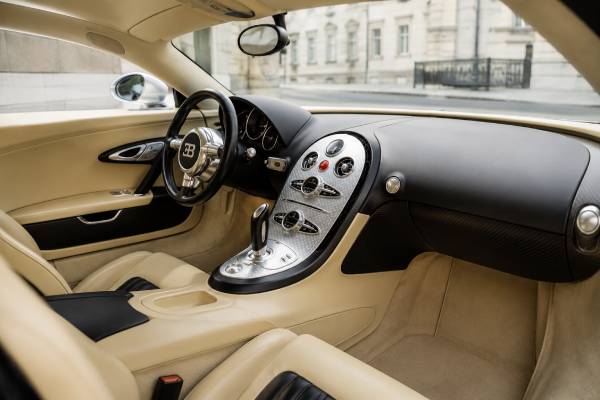
Inside, the Veyron feels more like a leather-lined high-speed instrument than a stripped track car. The cabin is simple by modern screen-heavy standards. The central controls are relatively clean, the materials are rich, and the driving position feels more luxurious grand tourer than racing prototype. That is a major part of the appeal. Bugatti wanted the Veyron to be usable, not punishing.
Sound and sensory character
The W16 sound is not like a V10, V12, or flat-plane V8. It has a dense, layered mechanical note, with turbocharged force rather than a high, thin racing scream. At low speed it can feel surprisingly calm. Under load, the sound builds into a deep, pressurized rush.
That sensory balance is one reason the standard 1,001 PS coupe remains appealing. Later hypercars can feel sharper or more aggressive, but the original Veyron has a unique combination of mass, torque, silence, grip, and speed. It feels expensive before it feels dramatic.
How the 1,001-hp Veyron Drives
The Veyron drives less like a nervous racing car and more like a high-speed grand tourer with absurd reserves. Its greatest trick is making 1,001 PS feel manageable rather than frightening all the time.
At low speed, the Veyron can feel heavy, wide, and mechanically dense. Visibility is better than many people expect, but the car still needs care in traffic and parking spaces. The nose is not long, yet the width and value of every panel make urban driving more stressful than the actual controls suggest.
The dual-clutch gearbox is smooth for its era. It does not have the instant, highly polished behavior of the newest dual-clutch units, but it was a major step forward when the car arrived. In automatic mode, it helps the Veyron feel civilized. In manual paddle mode, it gives the driver more control without making the car difficult.
The engine response is defined by torque. The four turbochargers do not make the car feel lazy, but there is a sense of immense pressure building rather than a naturally aspirated snap. Once the engine is fully on boost, the acceleration feels continuous and almost unreal. The all-wheel-drive system helps turn that power into forward motion instead of wheelspin.
On the road, the Veyron’s weight is always part of the experience. It is not a delicate back-road car in the way a lightweight supercar is. The steering is stable rather than chatty, and the chassis gives the driver confidence through grip and composure more than through playful feedback. It works best on fast, open roads where the car can settle and flow.
The brakes are powerful, but their condition and temperature matter. Carbon-ceramic systems can feel different from iron brakes, especially at low speed. Buyers should not judge brake health only by pedal feel during a short gentle drive. Disc condition, pad life, surface marks, and service history all matter.
At high speed, the Veyron’s personality becomes clearer. The body settles, the active systems work in the background, and the car feels designed for velocities that would make most performance cars feel loose or overworked. This is where the Veyron earns its legend. It does not merely reach big numbers; it was engineered to remain calm while doing so.
For track use, the standard Veyron is not the obvious choice. It is heavy, expensive to consume, and built more for high-speed stability than repeated circuit punishment. It can be driven hard, but every lap carries tire, brake, fluid, and heat costs that are far beyond normal supercar ownership. The best use case is fast road driving, carefully chosen events, and occasional controlled high-speed running under expert supervision.
Maintenance Realities and Known Risks
A Veyron is not maintained like a normal exotic car. It requires Bugatti-level expertise, correct equipment, model-specific procedures, and a budget that treats tires, fluids, batteries, and inspections as serious line items.
The biggest mistake is assuming low mileage means low risk. Low use can protect cosmetics, but it can also allow batteries to weaken, seals to age, fluids to sit, tires to expire, and hydraulic systems to develop issues. A Veyron should be judged by condition and service continuity, not by odometer reading alone.
Key maintenance areas include:
- Tires: Age, condition, correct specification, mounting history, and replacement timing are critical.
- Wheels: Inspect for damage, corrosion, previous repairs, and correct matching to the tire system.
- Cooling system: The W16 relies on extensive cooling hardware, so leaks, blocked airflow, damaged radiators, and aged hoses matter.
- Turbocharger system: Check oil leaks, boost behavior, heat shielding, and any signs of poor storage or irregular running.
- Dual-clutch transmission: Confirm service records, shift quality, fault codes, clutch data where available, and fluid history.
- All-wheel-drive hardware: Inspect driveline condition, differential service records, and any vibration or noise.
- Carbon-ceramic brakes: Measure wear properly and inspect for chips, cracks, uneven surfaces, and incorrect cleaning damage.
- Hydraulic and active aero systems: Check ride-height behavior, wing operation, warning lights, pumps, lines, and sensors.
- Electrical systems: Weak batteries and storage problems can create faults that look more serious than they are.
- Interior controls and modules: Every switch, display, air-conditioning function, seat motor, and warning light should be tested.
A proper pre-purchase inspection should include a cold start, diagnostic scan, fluid leak inspection, underbody inspection, brake measurement, tire-date check, road test, and review of all service invoices. The inspection should be performed by a Bugatti-authorized center or a specialist with direct Veyron experience.
Service costs and planning
The Veyron’s service costs are high because parts are rare, labor is specialized, and many jobs require careful disassembly. Even simple-looking items can involve unique procedures. A buyer should not stretch to buy the car and then hope maintenance will be manageable. The purchase budget and ownership budget must be planned together.
The safest approach is to price the car as if it needs near-term service unless documentation proves otherwise. A “cheap” Veyron with old tires, missing records, weak batteries, overdue fluids, and uncertain brake condition can quickly become more expensive than a better car bought at a higher price.
Originality also matters. Some owners prefer tasteful factory personalization, while others want a car as close as possible to its first-delivery specification. Non-factory modifications should be treated carefully. On a Veyron, originality is not just a collector preference; it can affect serviceability, diagnostics, value, and Bugatti support.
Recalls and service campaigns should be checked by VIN through official records. Because market rules, registration history, and campaign coverage vary, do not rely on a generic online statement. Ask for written confirmation from Bugatti or the servicing dealer.
Buying a 2009–2011 Veyron 16.4
The best Veyron to buy is the one with clear provenance, current service status, healthy tires and brakes, complete documentation, and a specification you genuinely want to own. Color alone should not overpower condition.
Start with the car’s identity. Confirm that it is a standard Veyron 16.4 coupe, not a Grand Sport, Super Sport, conversion, or misdescribed example. Then verify the VIN, original build record, delivery market, ownership history, and all service stamps or invoices. For a car this valuable, gaps matter.
| Priority | What to Check | Why It Matters |
|---|---|---|
| Provenance | Factory build sheet, ownership chain, service records | Protects authenticity and value |
| Tires and wheels | Age, specification, damage, mounting records | Critical for safety and cost planning |
| Brakes | Disc condition, pad life, cracks, service history | Carbon-ceramic replacement costs are significant |
| Powertrain | Cold start, leaks, boost behavior, gearbox shifts | Major repairs require specialist support |
| Active systems | Rear wing, ride height, warning lights, hydraulics | Defines the car’s high-speed safety systems |
| Completeness | Keys, top-speed key, books, tools, charger, accessories | Missing items can hurt value and usability |
A low-mileage car is not automatically the best car. The ideal example has been stored correctly, maintained on schedule, exercised enough to keep systems healthy, and serviced by people who understand the model. Cars that have sat for long periods need extra scrutiny.
Specification is the emotional part of the decision. Many Veyrons were ordered in dramatic two-tone combinations, while others are more restrained. Exposed carbon, rare paint, special interior colors, and factory-documented personalization can add desirability. However, unusual taste can narrow the resale audience. Buy the spec you like, but understand how it affects liquidity.
Before committing, ask these questions:
- Is the car’s factory specification documented?
- Are all services current and supported by invoices?
- Are the tires within safe age and condition limits?
- Are the wheels correct and undamaged?
- Has the car had any paintwork, carbon repair, accident repair, or panel replacement?
- Do all active aerodynamic and hydraulic functions operate correctly?
- Are all keys, books, accessories, and charging equipment present?
- Has a Bugatti-qualified specialist inspected it recently?
The Veyron is not a casual purchase, but it can be a deeply rewarding one. The standard 2009–2011 coupe gives a buyer the original Veyron experience in a late-production form: huge torque, remarkable stability, rich materials, and the historical weight of the first modern 1,000-hp hypercar. Buy the best-documented car you can find, keep it serviced by the right people, and treat every major system as part of the car’s value.
References
- Bugatti Veyron 16.4 – Technical Specifications 2018 (Manufacturer Technical Specifications)
- Veyron Acceleration: 2.5 – 7.3 – 16.7 – 55.6 2015 (Manufacturer Performance Data)
- Gas Mileage of 2006 Bugatti Veyron 2026 (Official Fuel Economy Data)
- Recalls 2026 (Recall Database)
- Volkswagen AG Annual Report 2011 2012 (Manufacturer Annual Report)
Disclaimer
This article is for informational purposes only and is not a substitute for professional diagnosis, inspection, repair, or valuation. Specifications, torque values, service intervals, procedures, campaign status, and equipment can vary by VIN, market, production date, and individual vehicle history. Always verify details against official Bugatti service documentation and consult a qualified Bugatti specialist before buying, servicing, or driving the vehicle at high speed.
If you found this guide useful, please consider sharing it on Facebook, X/Twitter, or your preferred car community to support our work.