
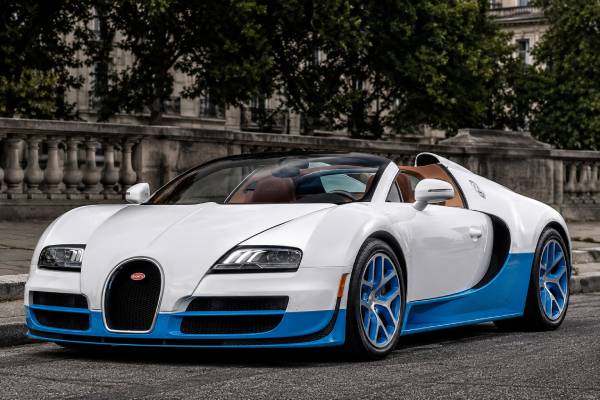
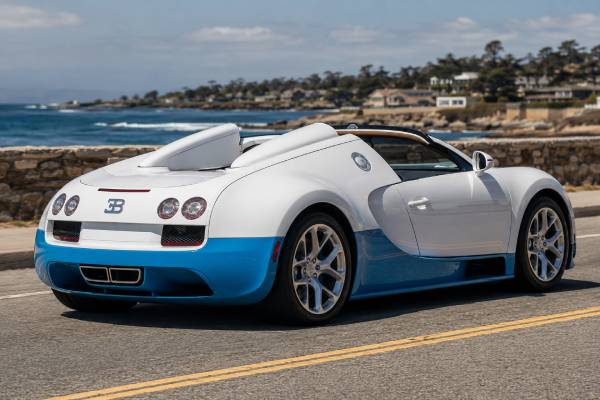
The Bugatti Veyron 16.4 Grand Sport Vitesse is the open-top Veyron turned all the way up. It combines the reinforced targa-style Grand Sport body with the stronger Super Sport version of Bugatti’s quad-turbo 8.0-liter W16, giving it the full 1,200 PS performance level and a very different personality from the earlier 1,001 PS Grand Sport. Built from 2012 to 2015, the Vitesse sits near the end of the Veyron story, just before the Chiron era began. It matters because it is not only rare and dramatic, but also one of the clearest examples of Bugatti’s engineering philosophy: extreme speed, enormous technical complexity, and luxury-car usability in one machine. For buyers and enthusiasts, the Vitesse is best understood as a record-setting roadster that demands factory-level maintenance, careful documentation, and serious respect.
Table of Contents
- Why the Vitesse Still Matters
- W16 Specs and Performance Data
- How Vitesse Examples Differ
- Open-Top Engineering and Design Details
- How the Vitesse Feels to Drive
- Maintenance Realities for Veyron Owners
- Buying a Grand Sport Vitesse
Why the Vitesse Still Matters
The Veyron Grand Sport Vitesse matters because it turned Bugatti’s fastest closed-roof Veyron formula into a usable open-top hypercar. It was not simply a regular Veyron with more power; it was a carefully reinforced, reworked, and highly specialized version built to handle 1,500 Nm of torque without losing the refinement that made the Veyron famous.
The original Veyron 16.4 shocked the industry by making 400 km/h performance feel like a factory-engineered product rather than a tuner claim. The Super Sport pushed that idea further with more power, revised aerodynamics, and a higher speed ceiling. The Grand Sport Vitesse took the Super Sport powertrain and placed it into the open Grand Sport architecture, creating a car with the intensity of the 1,200 PS model and the sensory drama of a removable roof.
The result is one of the most important late Veyron variants. It belongs to the final phase of Veyron production, when Bugatti had already solved many of the basic technical challenges and began using the platform for ultra-limited editions, bespoke commissions, and heritage-themed collector cars. The Vitesse also carried strong symbolic weight: it proved that an open Bugatti could still operate in a speed range normally reserved for closed-roof hypercars.
The “SV” wording sometimes appears in database-style naming, but it should not be confused with a separate factory trim in the way some other brands use “SV.” The car’s proper identity is Bugatti Veyron 16.4 Grand Sport Vitesse. The CBLA reference is commonly associated with the 8.0-liter W16 engine family in catalog-style contexts, but the meaningful buyer-facing specification is the 7,993 cc quad-turbo W16 in 1,200 PS tune.
Today, collectors care about the Vitesse for four main reasons:
- It is an open-top version of the most powerful Veyron road formula.
- It was produced in small numbers during the final Veyron years.
- It includes some of the most desirable Bugatti special editions.
- It combines record-setting performance with genuine grand-touring comfort.
That mix makes it different from many modern hypercars. The Vitesse is not light, minimalist, or track-focused. It is heavy, complex, lavish, and brutally fast. Its appeal comes from the way it makes impossible numbers feel controlled.
W16 Specs and Performance Data
The most important Vitesse specification is its 8.0-liter quad-turbo W16 producing 1,200 PS and 1,500 Nm of torque. In horsepower terms, that output is often rounded in enthusiast writing as “1,200 hp,” although the metric factory-style figure is 1,200 PS, equal to about 1,183 bhp.
| Category | Specification |
|---|---|
| Production years | 2012–2015 |
| Body style | Two-door targa-style roadster with removable roof panel |
| Engine | 7,993 cc quad-turbocharged W16 |
| Engine designation | CBLA / 8.0-liter W16 family reference |
| Maximum output | 1,200 PS / 882 kW / about 1,183 bhp |
| Maximum torque | 1,500 Nm |
| Induction | Four turbochargers with intercooling |
| Transmission | 7-speed dual-clutch automatic |
| Drivetrain | Permanent all-wheel drive |
| Engine position | Mid-mounted, behind the cabin |
| Wheelbase | 2,710 mm |
| Length | 4,462 mm |
| Width | 1,998 mm |
| Height | 1,204 mm |
The Vitesse’s engine is the central character. The W16 layout is essentially a very compact 16-cylinder arrangement built around narrow-angle cylinder banks, four turbochargers, and extensive cooling hardware. The “16.4” name points to the 16 cylinders and four turbochargers, which is still one of the clearest naming systems in hypercar history.
The transmission is just as important. A conventional manual gearbox would not be suitable for this torque level, and a normal automatic would have weakened the car’s response. The 7-speed dual-clutch gearbox gives the Vitesse smooth low-speed manners, fast high-load shifts, and enough strength for repeated full-power use when maintained properly.
| Metric | Figure |
|---|---|
| 0–100 km/h | About 2.6 seconds |
| Normal road speed limit | Electronically limited to about 375 km/h |
| Open-top record speed | 408.84 km/h |
| Torque band | 1,500 Nm across the main mid-range |
| Brake type | Carbon-ceramic discs with multi-piston calipers |
| Tire type | Special Michelin high-speed tire system developed for the Veyron |
The 408.84 km/h record is central to the Vitesse legend, but it should be understood in context. That speed was achieved under controlled conditions, with the right preparation, space, and support. In normal use, the car is electronically limited well below that figure. For owners, the more relevant performance trait is not the absolute top speed, but the way the car can produce huge acceleration with little drama.
The braking system uses carbon-ceramic technology because ordinary iron brakes would struggle with the heat and mass involved. The Veyron is a heavy car by supercar standards, so braking hardware, tire condition, and suspension health matter enormously. Any inspection that treats the Vitesse like a normal sports car will miss the point.
How Vitesse Examples Differ
Vitesse examples differ mainly through specification, special-edition status, provenance, and originality. Mechanically, the core Grand Sport Vitesse formula stayed consistent, but individual cars can vary greatly in collector value because Bugatti allowed deep personalization.
The Veyron production story is easy to simplify, but the details matter. The overall Veyron family ran from 2005 to 2015, with 450 total cars across coupe and open-top variants. The Grand Sport Vitesse arrived late in that timeline, after the original coupe, the Grand Sport roadster, and the Super Sport coupe had already established the platform.
Several Vitesse examples were standard customer commissions, though “standard” is a relative word for Bugatti. Buyers could choose paint, exposed carbon fiber, leather colors, stitching, wheel finishes, interior trim, and special detailing. A car with a restrained color scheme may appeal to one buyer, while another may prefer a bold visible-carbon example with unusual cabin colors.
Special editions carry another layer of desirability. The World Record Car edition is one of the most obvious examples because of its connection to the open-top speed record. Bugatti also created the “Les Légendes de Bugatti” series, honoring figures from the company’s history. These cars were produced in very small groups and often used unique materials, colors, badges, and trim details.
Important Vitesse-related collector themes include:
- World Record Car examples tied to the 408.84 km/h achievement.
- “Les Légendes de Bugatti” editions honoring historic Bugatti figures.
- The final Veyron, known as La Finale, based on the Grand Sport Vitesse.
- One-off or highly personalized factory commissions.
- Low-mileage cars with complete Bugatti service records.
Identification should never rely only on paint or trim. A serious buyer should verify the VIN, build records, original sales documentation, service history, factory configuration, special-edition documentation, and any later changes. Because the cars are so valuable, small claims can have large financial consequences. A missing document, repainted panel, replaced trim item, or incomplete accessory set can affect confidence even when the car itself is mechanically sound.
Factory accessories also matter. Buyers should confirm the presence and condition of the removable roof panel, temporary roof solution where supplied, keys, top-speed key where applicable, books, battery maintainer, luggage or special accessories, and original tools. On a Vitesse, completeness is part of the car’s value.
Open-Top Engineering and Design Details
The Vitesse is special because Bugatti had to preserve extreme speed capability without the structural help of a fixed roof. That required reinforcement, careful airflow control, and a body that could manage heat, lift, cooling demand, and cabin comfort at speeds far beyond normal convertibles.
The open-top body gives the Vitesse a different emotional character from the Super Sport coupe. With the roof removed, the driver and passenger hear more of the W16’s intake, turbo, and exhaust character. The car feels less sealed-off, even though it remains far more refined than most open supercars.
The exterior is shaped by function. The Vitesse uses large air intakes, a broad stance, a low nose, and rear bodywork designed to feed and cool the W16. Its rear wing and active systems are not decorative. At very high speeds, the car needs aerodynamic stability, cooling flow, and braking support. The rear wing can help manage downforce and braking behavior, while the body openings help move heat away from the engine, intercoolers, and drivetrain.
The Veyron family is famous for its cooling system. The car uses multiple radiators and heat exchangers because the W16, dual-clutch gearbox, differentials, charge-air system, and cabin climate system all create or manage major thermal loads. This is one reason the car has such a distinctive shape. It is not styled only to look dramatic; it is packaged around heat management.
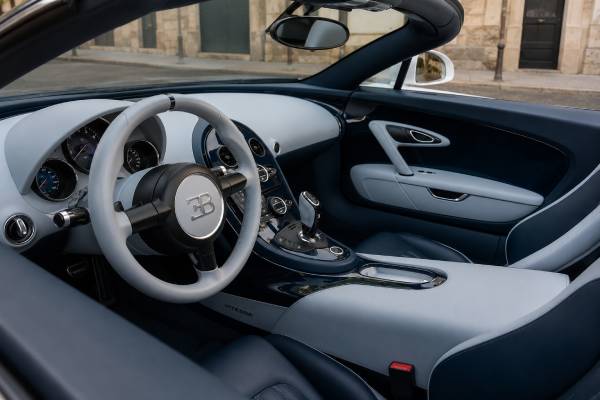
Inside, the Vitesse is more grand tourer than stripped racing car. The cabin uses leather, polished metal, precise switchgear, and a relatively simple dashboard compared with many later digital hypercars. That simplicity is part of the charm. The driving position is low and focused, but the car does not feel like a track special. It feels like a luxury object engineered for impossible speed.
The removable roof changes the ownership experience. Roof seals, latches, storage, panel condition, and wind noise all deserve attention. A roof panel that looks fine on display may still need careful inspection for fit, seal compression, and finish quality. Because many cars are stored for long periods, seals can age even when mileage is low.
The sound is also part of the design. The Vitesse does not scream like a naturally aspirated V12. Its character is deeper, denser, and more mechanical. The turbos soften some of the sharpness, but the sheer mass of the W16 gives the car a huge, layered sound. With the roof removed, the experience becomes more physical without becoming crude.
How the Vitesse Feels to Drive
The Vitesse feels fast in a calm, heavy, and deeply controlled way. It is not a nervous lightweight supercar; it is a high-speed grand touring machine that uses power, all-wheel drive, aerodynamics, and mass to create stability.
At low speed, the most surprising quality is usability. Visibility is better than the numbers suggest, the gearbox can behave smoothly, and the engine does not need to be worked hard. The car can move through normal roads without the constant aggression that defines many track-focused machines. That does not make it easy to own, but it explains why the Veyron became famous for combining speed with civility.
Under hard acceleration, the Vitesse’s main trait is relentless torque. The four turbochargers and 8.0-liter displacement create a power delivery that feels less like a rising wave and more like a massive push. The car gathers speed so quickly that the driver must think far ahead. Full throttle is not a casual act, even with all-wheel drive.
The dual-clutch gearbox suits the car’s personality. It does not need theatrical shifts to feel special. Instead, it delivers quick, clean gear changes that keep the W16 in its strongest range. In automatic mode, the car can feel almost relaxed. In manual mode, the driver gets more involvement, but the Vitesse never becomes a raw analog sports car.
Steering feel is stable and measured. The front end is not delicate in the way a small mid-engine car can be, but it is accurate enough to place the car with confidence. The Vitesse’s width and weight are always present. On narrow mountain roads, the driver is aware of the car’s size. On fast open roads, that same size becomes part of its confidence.
Ride quality is one of the Veyron’s greatest achievements. Many cars with this performance level punish the driver at ordinary speeds. The Vitesse is firm, but it is not a crude race car. Its suspension, tire sidewalls, and structure give it a composed, expensive feel. Poor pavement still matters, especially because wheels, tires, and carbon components are costly, but the car does not feel fragile when properly maintained.
Braking performance is immense, but condition is everything. Carbon-ceramic brakes work best when inspected correctly and used within their intended temperature range. Pedal feel can vary with temperature and use, so buyers should not judge the system from one gentle stop around a dealership block. A specialist should check rotor condition, pad life, calipers, brake fluid history, and any signs of heat damage.
On track, the Vitesse can be extremely fast, but it is not the natural home for the car. It is heavy, valuable, and costly to consume. Tires, brakes, fluids, and cooling systems face enormous loads. The car’s real sweet spot is high-speed road and runway-style use under safe, legal, controlled conditions, where its stability and power can be experienced without treating it like a disposable track tool.
Maintenance Realities for Veyron Owners
A Vitesse must be maintained like a low-production aircraft-grade machine, not a normal exotic car. Mileage matters, but age, storage, service history, tire date codes, fluid condition, software status, and specialist inspection matter just as much.
The W16 is strong when maintained correctly, but it lives inside a tightly packaged and heat-intensive car. Access is labor-heavy, and small problems can become expensive because of the time required to reach components. A fluid leak, aging hose, weak pump, or heat-damaged connector should never be dismissed as a minor nuisance.
Important maintenance areas include:
- Engine oil, filters, and fluid services performed on schedule.
- Cooling system checks across the car’s many heat exchangers.
- Turbocharger plumbing, intercooler circuits, and boost-control hardware.
- Dual-clutch gearbox service history and shift-quality checks.
- All-wheel-drive system, differentials, and related fluids.
- Carbon-ceramic brake rotor, pad, and caliper inspection.
- Tire age, tire condition, and correct Veyron-approved fitment.
- Battery health, battery maintainer use, and control-module voltage stability.
- Roof seals, latches, drainage paths, and removable-panel condition.
- Active rear wing, ride-height system, and hydraulic functions.
Tires are a major ownership topic. The Veyron uses a special high-speed tire system, and tires can age out before they wear out. A low-mileage Vitesse on old tires is not “ready to drive hard.” It is a car that needs careful tire evaluation before any meaningful performance use. Wheel condition also matters because the tire and wheel system is part of the car’s high-speed safety package.
Carbon-ceramic brakes require specialist inspection. Owners should not rely only on visual appearance. Rotor weight, surface condition, edge damage, heat marks, pad life, and service records all matter. A car that has been used for repeated high-speed events may show different wear patterns from a car used only for gentle road mileage.
Electrical health is another key issue. Modern Bugattis depend on stable voltage and healthy control modules. Long storage, weak batteries, incorrect charging, and moisture can create expensive diagnostic problems. A proper battery maintainer and regular specialist checks are not optional for a car stored in a collection.
The roof system deserves special attention because the Vitesse is open-top. Seals can flatten, latches can fall out of adjustment, and panel finishes can suffer from storage marks. Water leaks are not only annoying; they can threaten interior materials and electronics. A buyer should inspect the roof installed, removed, and stored.
Parts availability is not like a mass-market car. Many components are available only through Bugatti or specialist channels, and labor requires technicians who understand the platform. Independent exotic-car experience is useful, but it is not the same as Veyron-specific knowledge. The best ownership approach is preventive: fix small issues before they become major faults.
Buying a Grand Sport Vitesse
The best Vitesse to buy is the one with the strongest documentation, the cleanest specialist inspection, and the most complete factory history. Color and mileage matter, but they should not outrank condition, originality, and Bugatti service records.
Start with provenance. Confirm the VIN, model designation, market delivery, number of owners, original selling dealer, factory configuration, and any special-edition paperwork. For a high-value Vitesse, verbal claims are not enough. The file should support the car’s story.
Next, inspect the service record. A car with very low mileage can still need major recommissioning if it sat unused. A car with moderate mileage and consistent Bugatti care may be healthier than a delivery-mile car with old tires, aged fluids, and dormant systems.
A good pre-purchase inspection should include:
| Area | What to Check |
|---|---|
| Documentation | VIN, build sheet, service invoices, ownership history, import papers, special-edition proof |
| Powertrain | Cold start, leaks, boost behavior, cooling performance, gearbox shift quality |
| Tires and wheels | Correct fitment, date codes, wheel damage, service records for tire replacement |
| Brakes | Carbon-ceramic rotor condition, pad life, caliper health, fluid service |
| Body and carbon | Panel alignment, exposed carbon finish, paintwork, repair evidence, underside condition |
| Roof system | Panel fit, seals, latches, storage condition, wind noise, water-tightness |
| Electronics | Battery condition, warning lights, control modules, infotainment, sensors |
| Completeness | Keys, books, tools, maintainer, accessories, luggage, original parts |
Market value depends heavily on configuration. A World Record Car, a “Les Légendes” example, La Finale, or a one-off commission may trade differently from a more discreet customer car. However, rarity alone does not erase condition concerns. A special car with weak history can still be risky.
Originality is usually more valuable than modification. Because Bugatti already built the Vitesse as an extreme factory product, aftermarket changes rarely improve collector appeal. Non-original paint, retrimmed interiors, changed wheels, tuning claims, or missing factory parts should be studied carefully. Some changes may be reversible; others can permanently affect value.
Buyers should also think about use. A Vitesse can be driven, but it should be driven with planning. Long trips require confidence in tire age, battery health, service status, and roadside support. Track events and top-speed events require even more preparation. The wrong environment can turn a dream drive into a very expensive problem.
For collectors, the strongest cars usually share the same traits: complete records, original specification, expert maintenance, careful storage, current tires and fluids, no unresolved warning lights, no mystery repairs, and a clear ownership story. For drivers, the best car is one that has been exercised enough to stay healthy without being consumed.
The Vitesse is not a rational purchase in the ordinary sense. It is a landmark machine from the peak of the first modern Bugatti era. Bought carefully, it offers a rare mix of open-air drama, W16 power, historic significance, and engineering depth. Bought casually, it can become a costly lesson in why hypercars demand hypercar-level diligence.
References
- Bugatti Veyron 16.4 Grand Sport Vitesse 2012 (Manufacturer)
- Bugatti Veyron Grand Sport Vitesse sets world record for fastest open-top car 2013
- Driving the Bugatti Veyron Grand Sport Vitesse, the World’s Fastest Roadster 2013
- Guinness World Records statement: Fastest Production Car 2013
- 2013 Bugatti Veyron 16.4 Grand Sport Vitesse ‘Le Ciel Californien’ | Monterey 2014 2014
Disclaimer
This article is for informational purposes only and is not a substitute for professional diagnosis, repair, valuation, or pre-purchase inspection. Specifications, torque values, service intervals, procedures, software requirements, and parts availability can vary by VIN, market, equipment, and service history. Always verify details against official Bugatti service documentation and consult a qualified Bugatti specialist before buying, servicing, or driving a Veyron Grand Sport Vitesse at speed.
If this guide helped you, please consider sharing it on Facebook, X/Twitter, or your preferred enthusiast community to support our work.