
The 2005–2009 Bugatti Veyron 16.4 is the car that turned the modern hypercar from a poster fantasy into a usable, road-legal engineering product. Its numbers still look extreme: an 8.0-liter quad-turbo W16, 1001 hp, all-wheel drive, a seven-speed dual-clutch gearbox, and a top speed beyond 250 mph when the car is prepared for its special high-speed mode. Yet the Veyron’s real achievement was not speed alone. It made that speed repeatable, stable, luxurious, and surprisingly calm.
This guide focuses on the early standard Veyron 16.4 coupe from 2005 through 2009, before the later Super Sport and open-top Grand Sport Vitesse moved the story forward. For buyers, collectors, and enthusiasts, these launch-era cars matter because they represent the original promise: Ferdinand Piëch’s 1001 hp Bugatti built not as a race car, but as a fully finished grand touring hypercar.
Table of Contents
- Veyron 16.4 in Bugatti History
- CBXA W16 Specs and Chassis Data
- Production Years, Editions, and Identification
- Design Choices That Made 253 mph Possible
- How the Standard Veyron Drives
- Exotic-Car Maintenance Reality
- How to Buy a Veyron 16.4 Well
Veyron 16.4 in Bugatti History
The Veyron 16.4 is important because it restarted Bugatti as a modern engineering brand, not merely as a historic luxury name. It was built to prove that a road car could combine 1000 hp, 400 km/h capability, daily usability, and traditional Bugatti craftsmanship in one finished machine.
The project grew from Volkswagen Group’s revival of Bugatti after the brand’s long and complicated postwar history. Earlier concepts explored exotic cylinder counts and dramatic styling, but the production car settled into a clear formula: mid-mounted W16 power, four turbochargers, all-wheel drive, and a compact two-seat coupe body assembled in Molsheim, France.
For the 2005 launch, the target was not simply to beat another supercar. The target was to make a new class of car feel credible. Earlier icons such as the McLaren F1, Ferrari Enzo, Porsche Carrera GT, and Mercedes-Benz SLR McLaren each had a clear personality. The Veyron was different. It was not lightweight, raw, or minimalist. It was heavy, complex, quiet by hypercar standards, and designed to feel composed at speeds where many performance cars would feel nervous.
That is why the early 2005–2009 Veyron remains so interesting. Later Bugatti models became quicker and more powerful, but the original car carried the hardest burden. It had to make the 1001 hp claim believable. It had to cool a 16-cylinder engine, manage four turbochargers, send enormous torque through a dual-clutch transmission, keep special Michelin tires alive, and satisfy customers who expected both world-record performance and luxury-car refinement.
The “16.4” name explains the concept in shorthand: 16 cylinders and four turbochargers. The CBXA engine code identifies the standard 8.0-liter W16 used in the original 1001 hp Veyron 16.4. In common enthusiast language, the output is usually called 1001 hp, although the European figure is 1001 PS, equal to 736 kW.
Today, the Veyron is valued not only because it is rare, but because it changed expectations. After it, four-digit horsepower no longer sounded impossible in a street car. It also forced the industry to think about tires, cooling, drivetrain durability, and aerodynamic stability as complete systems rather than isolated headline numbers.
CBXA W16 Specs and Chassis Data
The Veyron 16.4’s specification is best understood as a complete high-speed system. The engine, gearbox, tires, cooling package, body structure, aerodynamics, and suspension all exist to support the same goal: stable, repeatable performance above 400 km/h.
| Item | Specification |
|---|---|
| Model focus | Bugatti Veyron 16.4 coupe, 2005–2009 early standard model years |
| Engine code | CBXA |
| Engine type | 8.0-liter quad-turbocharged W16 petrol engine |
| Displacement | 7,993 cc |
| Valvetrain | 64 valves, four camshafts |
| Induction | Four turbochargers with intercooling |
| Power | 1001 PS / 736 kW at 6,000 rpm, commonly described as 1001 hp |
| Torque | 1,250 Nm from about 2,200 to 5,500 rpm |
| Transmission | Seven-speed dual-clutch automatic with paddle shift control |
| Drivetrain | All-wheel drive |
The W16 is often described as two narrow-angle V8-style cylinder groups sharing a common crank architecture. That description helps, but it also understates the packaging challenge. Bugatti had to place a huge engine behind the cabin, route intake and exhaust paths, feed four turbochargers, cool the charge air, cool the engine oil, cool the transmission, and still leave a finished interior, luggage space, crash structure, and service access.
| Area | Useful data |
|---|---|
| Body style | Two-door, two-seat fixed-roof coupe |
| Layout | Mid-engine, all-wheel drive |
| Body structure | Carbon-fiber central structure with aluminum and composite outer panels |
| Length | 4,462 mm |
| Width | 1,998 mm |
| Height | 1,204 mm |
| Wheelbase | 2,710 mm |
| Curb weight | About 1,888 kg, depending on specification and measurement standard |
| 0–100 km/h | About 2.5 seconds |
| 0–200 km/h | About 7.3 seconds |
| 0–300 km/h | About 16.7 seconds |
| Top speed | About 407 km/h / 253 mph in top-speed configuration |
The transmission was one of the car’s defining pieces of engineering. A conventional manual gearbox would not have suited the torque load, the luxury brief, or the speed target. The seven-speed dual-clutch unit gave the Veyron fast, smooth shifts and allowed the car to behave like an automatic in normal traffic. That mattered because Bugatti did not want a fragile racing prototype with license plates. It wanted a car that could cruise through a city, cross a continent, and then run at extreme speed under the right conditions.
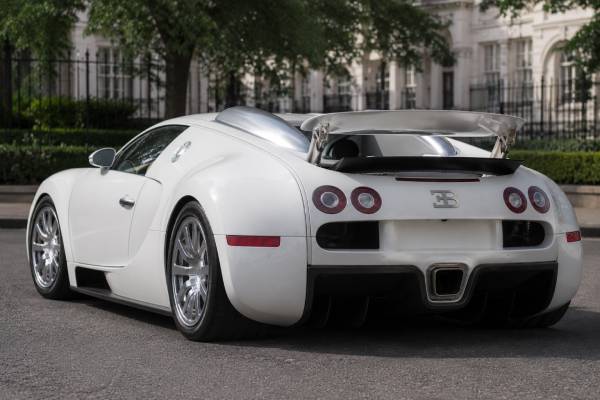
The braking system was equally serious. The Veyron used carbon-ceramic brakes with multi-piston calipers, supported by an active rear wing that could act as an airbrake. At very high speed, aerodynamic drag and the wing’s braking position helped slow the car before the mechanical brakes carried the hardest load. That blended approach was necessary because the kinetic energy at 400 km/h is enormous.
Production Years, Editions, and Identification
For this guide, the key car is the early fixed-roof Veyron 16.4 coupe sold from 2005 through 2009. The broader standard coupe continued beyond 2009, but the 2005–2009 cars are the launch-era examples that established the Veyron’s reputation before later variants changed the range.
Bugatti built the Veyron in very small numbers, with assembly taking place at Molsheim rather than on a normal mass-production line. The car was not a conventional model-year product with large annual changes. Instead, each car was highly specified, carefully finished, and supported by a tight factory and dealer network.
The main versions around this period were:
- Standard Veyron 16.4 coupe: the original fixed-roof 1001 hp car and the focus of this article.
- Special-edition coupes: limited cosmetic and material-focused versions such as Pur Sang, Fbg par Hermès, Sang Noir, Bleu Centenaire, and other highly individualized commissions.
- Grand Sport: the open-top version introduced for the 2009 model period, structurally related but not the same ownership proposition as the fixed-roof coupe.
- Later Super Sport: the 1200 PS high-output coupe introduced after the 2005–2009 scope of this guide.
Identification starts with the basics: VIN, engine code, factory build records, delivery market, paint and trim specification, service stamps, and Bugatti dealer history. Because many Veyrons were customized, the original build sheet matters far more than a casual description in a sales listing. A two-tone exterior, exposed carbon, contrasting lower body, unusual leather color, or custom stitching can be factory-correct, later factory-retrofitted, or aftermarket. Those three categories do not carry the same value.
Why early cars are desirable
Early Veyrons appeal to collectors because they represent the first form of the idea. They have the original 1001 hp specification, the fixed-roof body, and the cleanest link to the launch promise. Some buyers prefer later cars for updates, lower mileage, or improved familiarity within the service network, but a well-documented early car has a special place in the model’s history.
Special editions and authenticity
Special editions can be worth more, but only when the documentation is complete. A Pur Sang-style exposed-material look, for example, is not the same as an original Pur Sang. A Hermès-trimmed car must be verified by factory records, not by seat color alone. In this market, authenticity is not a detail; it is the product.
Design Choices That Made 253 mph Possible
The Veyron’s design looks smooth and simple, but nearly every shape serves cooling, stability, packaging, or brand identity. It had to look like a Bugatti while managing airflow, heat, tire load, and downforce at speeds usually associated with racing prototypes.
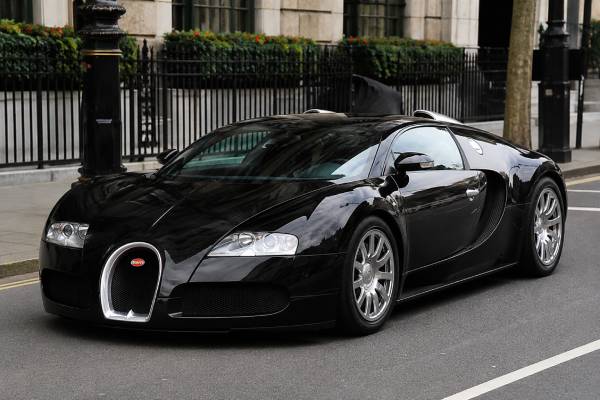
The most recognizable front detail is the horseshoe grille. On many cars, a heritage grille is mostly decorative. On the Veyron, it had to coexist with major cooling demands and a body shaped around air management. The rounded cabin, wide stance, large side intakes, and short rear overhang all support the mid-engine layout.
The side profile is especially important. The cabin sits forward, the engine mass lives behind the seats, and the body forms a strong shoulder around the rear wheels. This gives the Veyron its planted look, but it also helps hide the car’s size. It is almost two meters wide, yet the curves soften the visual mass.
Cooling as a design theme
A 1001 hp road car creates serious heat. The Veyron’s cooling package includes multiple radiators and heat exchangers for the engine, charge air, oil, transmission, differential systems, and air conditioning. The car’s intakes and vents are not decorative add-ons. They are part of the reason the car can produce huge power while still idling, driving slowly, and operating as a luxury vehicle.
Heat management also affects maintenance. Hot engine bays age rubber, seals, wiring insulation, fluids, and plastic components. A low-mileage Veyron that has sat unused can still need serious recommissioning because time and heat cycles matter as much as mileage.
Active aerodynamics and ride height
The Veyron changes its stance and wing position depending on speed and mode. In normal driving, it keeps enough ride height for road use. At higher speeds, the body lowers and the wing helps create stability. For the maximum-speed setting, the driver uses a separate top-speed key and the car checks several conditions before allowing the lowest-drag configuration.
That top-speed ritual is part of the Veyron legend. It reminds the driver that 253 mph is not just another setting on a screen. Tires, road surface, weather, fuel level, mechanical condition, and driver judgment all matter. Bugatti made the speed possible, but it did not make physics disappear.
Interior character
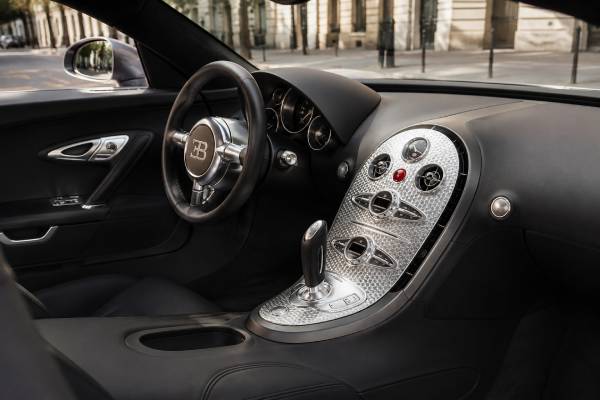
Inside, the Veyron is more restrained than many modern hypercars. The cabin uses high-quality leather, metal details, clear instruments, and a relatively simple control layout. It does not feel like a stripped racing cockpit. That was deliberate. The Veyron was meant to feel like a grand car first and a speed-record machine second.
The driving position is low, the sills are wide, and rear visibility is limited by the mid-engine layout. Still, the controls are not intimidating. This contrast is central to the Veyron’s appeal: the car can feel calm at ordinary speeds while carrying one of the most extreme powertrains ever fitted to a production road car.
How the Standard Veyron Drives
The standard Veyron drives less like a nervous race car and more like an impossibly fast grand tourer. Its biggest surprise is not the acceleration itself, but the way the car delivers it with smoothness, traction, and stability.
At low speeds, the Veyron feels wide and expensive, but not savage. The gearbox can creep through traffic, the engine does not demand constant revs, and the cabin is more insulated than the average supercar. The turbochargers soften some of the raw exhaust drama, so the sound is deep and mechanical rather than piercing.
Press the throttle harder and the character changes quickly. The W16 does not rely on a delicate high-rpm rush. It produces a huge, thick wave of torque. The all-wheel-drive system turns that output into forward motion instead of smoke and panic. That is the main reason the Veyron was so shocking in period: it made impossible acceleration feel organized.
Acceleration and power delivery
The Veyron’s acceleration is strongest when the car is already moving. From rest, traction and launch management dominate the experience. From highway speed, the engine’s torque becomes the story. Passing performance is absurdly easy, and the car can cover distance at a rate that makes normal speed judgment feel unreliable.
The power delivery is not as instant as a modern electric hypercar, and it is not as sharp as a naturally aspirated lightweight exotic. It is more like a private jet gathering speed on a runway: smooth, relentless, and deeply confident.
Steering, ride, and handling
The Veyron is heavy, and it never feels like a small track special. The steering is accurate, the grip is huge, and the car feels stable, but it is not a delicate lightweight machine. On a fast road, that mass can actually help the car feel planted. On a tight road, it reminds the driver that the Veyron was built for speed and composure, not low-speed playfulness.
Ride quality is firm, but the car’s grand touring mission keeps it from feeling crude. Tire construction, wheel size, and suspension calibration all play a role. Compared with many later hypercars, an original Veyron can feel surprisingly mature and calm.
Braking and high-speed confidence
The brakes are powerful, but owners should remember that carbon-ceramic systems need careful inspection. Pedal feel, disc condition, pad life, caliper state, and brake cooling all matter. At very high speed, the active rear wing adds another layer of confidence by helping slow and stabilize the car.
The Veyron’s greatest dynamic strength is trust. It feels engineered to protect the driver from the drama of its own numbers. That does not make it easy in an ordinary sense. It means that Bugatti spent enormous effort making 1001 hp feel usable rather than theatrical.
Exotic-Car Maintenance Reality
A Veyron is not maintained like a normal exotic, and it should never be bought on mileage alone. Condition, service history, tire age, battery care, hydraulic function, and factory support matter more than whether the odometer looks impressively low.
The CBXA W16 is a complex, hot-running engine with many supporting systems. The gearbox, differentials, cooling loops, suspension hydraulics, active aero, and electronics all need specialist knowledge. Even simple-sounding work can require unusual labor time because access is difficult and procedures are specific.
High-priority maintenance areas
- Tires: the Veyron uses special Michelin tires developed for its speed rating. Age, correct specification, storage history, and mounting procedure are critical.
- Wheels: wheels should be inspected carefully, especially on cars that have seen high-speed use or multiple tire changes.
- Cooling system: check radiators, hoses, clamps, coolant condition, fan operation, and signs of leaks or heat damage.
- Engine oil and fluids: service must follow Bugatti procedures. Fluid condition tells a buyer more than mileage alone.
- Gearbox and driveline: shift quality, clutch behavior, hydraulic pressure, differential noises, and software status all deserve expert inspection.
- Carbon-ceramic brakes: inspect disc wear, surface condition, pad thickness, calipers, and parking brake function.
- Hydraulic systems: verify ride-height changes, wing movement, top-speed mode checks, leaks, pump behavior, and warning messages.
- Electrical systems: battery health, control modules, sensors, TPMS function, and charging habits are important on low-use cars.
A common mistake is assuming that very low mileage means very low risk. A Veyron that has covered few miles but sat with old tires, weak batteries, stale fluids, and little recent exercise can be more expensive to sort than a regularly maintained example with higher mileage. These cars need expert storage, correct charging, careful warm-up, and scheduled service even when they are not driven often.
Parts availability and specialist labor
Parts availability is not like ordering components for a mass-market sports car. Many parts are costly, limited, model-specific, or routed through Bugatti’s approved network. Specialist labor is equally important. Independent exotic-car experience is useful, but a Veyron buyer should prefer technicians with direct Bugatti experience and access to correct service information.
Because the car was engineered as a system, shortcuts can create expensive secondary problems. Incorrect tires affect safety and value. Incorrect fluids can affect driveline health. Poor battery care can create electronic faults. Cosmetic disassembly can damage rare trim. Even aftermarket upgrades should be treated carefully because originality carries major value.
Service records that matter
A strong service file should include more than stamps. Look for invoices that show dates, mileage, parts used, tire replacement dates, brake measurements, fluid services, software checks, battery replacements, campaign or recall checks where applicable, and notes from Bugatti-authorized service centers.
For a collector-grade car, the history should also confirm paint, trim, options, special edition status, delivery location, ownership transfers, and any factory-authorized personalization. A beautiful car with weak paperwork is still a risk.
How to Buy a Veyron 16.4 Well
The best Veyron to buy is the one with complete documentation, current service condition, correct specification, and no unresolved questions. Price matters, but the wrong car can erase any discount quickly.
Start with identity. Confirm the VIN, engine code, original build specification, delivery market, model year, and whether the car is a standard Veyron 16.4 coupe, a recognized special edition, or a later modified or personalized example. Then move to condition. Do not rely on photos, mileage, or reputation alone.
| Area | What to verify |
|---|---|
| Documentation | VIN, build sheet, ownership chain, service invoices, import documents, and special edition proof |
| Powertrain | Cold start behavior, leaks, boost control, cooling performance, fluid history, and diagnostic data |
| Transmission | Smooth engagement, shift quality, clutch data where available, and service records |
| Tires and wheels | Correct Michelin specification, age, condition, mounting history, and wheel inspection |
| Brakes | Disc condition, pad life, calipers, parking brake function, and high-speed heat history |
| Hydraulics and aero | Ride height, rear wing movement, airbrake function, warning lights, and leak checks |
| Body and paint | Original finish, exposed carbon condition, panel alignment, repair history, and factory personalization |
| Electronics | Battery condition, control modules, sensors, TPMS, infotainment, keys, and diagnostic scan results |
Value factors
The strongest cars usually combine low but credible mileage, continuous care, factory-correct specification, desirable colors, clean ownership, and recent major service. Special editions can command a premium, but only if they are documented. Unusual colors can be valuable when factory-original and less valuable when they make resale harder.
Modified cars need caution. Some upgrades may be reversible and professionally done, but many buyers in this market prefer factory originality. A factory-authorized refresh or personalization is different from aftermarket repainting, non-original trim, or undocumented power changes.
Questions to ask before buying
- Is the car confirmed as a 2005–2009 standard Veyron 16.4 coupe within the exact scope you want?
- Does the VIN match the build records, service records, and import documents?
- When were the tires last replaced, and are they the correct approved specification?
- When was the most recent major service, and who performed it?
- Are there any unresolved warning lights, hydraulic faults, software issues, or campaign checks?
- Has the car ever had paintwork, carbon repair, accident repair, or non-factory personalization?
- Can a Bugatti-experienced specialist inspect the car before money changes hands?
A Veyron is not a casual purchase, even for experienced exotic-car owners. It is a historic machine with aircraft-like maintenance expectations, rare parts, and major value sensitivity. The right car can be a landmark collectible and one of the most usable hypercars of its era. The wrong one can become a very expensive lesson in why documentation, service discipline, and specialist inspection matter.
References
- Bugatti Veyron 2026
- Bugatti Veyron 16.4 2026
- Review: Bugatti Veyron 16.4 Grand Sport 2009
- Elana Scherr Designed Her Perfect Bugatti Veyron with New Configurator 2026
Disclaimer
This article is for informational purposes only and is not a substitute for professional diagnosis, repair advice, appraisal, or pre-purchase inspection. Specifications, torque values, service intervals, procedures, software status, recalls, and approved parts can vary by VIN, market, equipment, and factory updates. Always verify details against official Bugatti service documentation and consult a qualified Bugatti specialist before servicing, modifying, inspecting, or buying a Veyron.
If this guide helped you, please consider sharing it on Facebook, X/Twitter, or your favorite car community to support our work.