
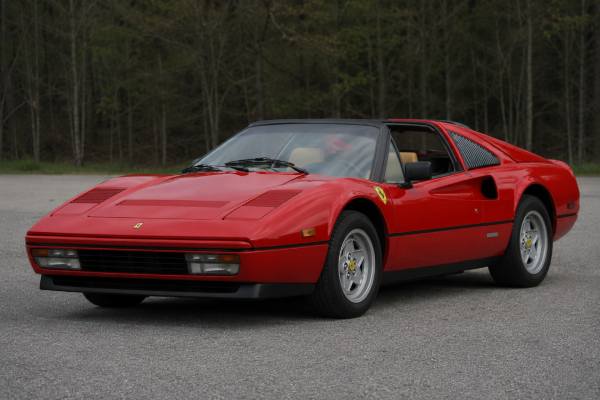
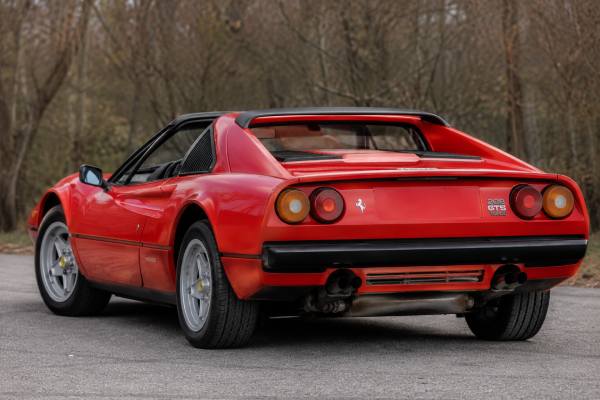
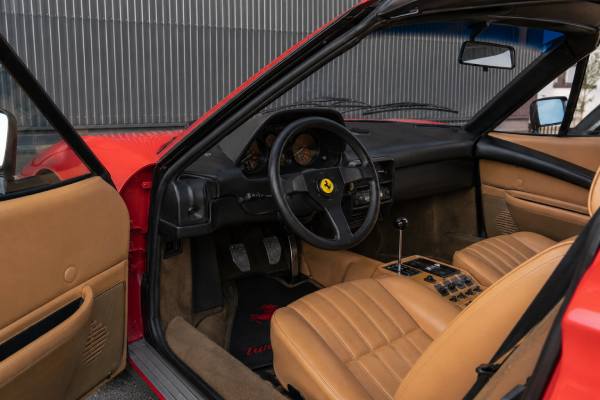
The Ferrari 208 GTS Turbo was the open-roof, two-seat, mid-engined Ferrari built from 1983 to 1985 with the F 106 DS 100 tubular chassis and the F 106 D 000 2.0-litre turbocharged V8. It matters because it turned Ferrari’s tax-driven 2.0-litre 208 idea into something genuinely quick, using forced induction before turbocharging became part of Ferrari’s road-car identity.
This is the early 208 GTS Turbo, the 308-based targa model with 220 hp, Bosch K-Jetronic injection, a single turbocharger, and distinctive cooling details. It should not be confused with the later 1986–1989 GTS Turbo, which used the 328-style body, intercooling, and higher output. The 1983–1985 car is rarer, more delicate in originality terms, and more directly tied to Ferrari’s first move from Formula 1 turbo thinking into road-car production.
Quick Take
The 208 GTS Turbo’s strongest appeal is its mix of classic 308-era Pininfarina style, removable targa roof, very low production, and Ferrari’s first-generation road-going turbo character. Its technical identity is unusually specific: a 1,991 cc transverse V8 created for markets where engines above 2.0 litres were heavily taxed, then boosted to restore proper Ferrari performance. The tradeoff is ownership sensitivity. Heat, turbo hardware, fuel injection condition, old rubber, corrosion, and missing model-specific details can turn a tempting car into an expensive project. The best buys are complete, original, well-documented cars with the correct engine, chassis identity, turbo equipment, interior details, books, tools, and specialist service history.
Table of Contents
- History and Collector Importance
- Engine, Chassis and Core Specifications
- Production, Variants and Factory Details
- Design, Engineering and Turbo Features
- Road Feel, Performance and Usability
- Maintenance, Restoration and Known Risks
- Values, Buying Advice and Rivals
History and Collector Importance
The Ferrari 208 GTS Turbo is historically important because it was part of Ferrari’s first turbocharged road-car family and the rare open version of the early 2.0-litre turbo V8 line. It was built for a specific market problem, but its solution became one of the most interesting engineering detours in Ferrari’s 1980s catalogue.
Ferrari’s 2.0-litre V8 cars existed largely because Italian tax rules made larger-displacement cars expensive to own. The earlier Dino 208 GT4 and later naturally aspirated 208 GTB/GTS kept displacement below two litres, but the small engine gave modest performance by Ferrari standards. The turbocharged 208 changed the story. Instead of accepting a slow Ferrari, Maranello used a single turbocharger to raise output to 220 hp, close enough to contemporary 3.0-litre 308 territory to make the concept credible.
The GTB Turbo coupe appeared first, and the GTS Turbo followed as the removable-roof version. The GTS body style gave buyers the familiar open-air appeal of the 308 GTS, but with a far rarer engine and a more unusual place in Ferrari history. The car sat beside the 308 line visually and mechanically, yet it served a different purpose: high performance under a strict displacement ceiling.
Its significance today comes from four main points:
- It belongs to Ferrari’s first road-going turbo generation.
- It uses the classic 308-era mid-engine layout, not the later 328-based turbo body.
- It was built in very small numbers, especially in GTS form.
- It has a clear market identity as a tax-special Ferrari that became technically important in its own right.
The 208 GTS Turbo is not a motorsport homologation special, and it does not have the wild reputation of the 288 GTO. Its importance is subtler. It shows Ferrari experimenting with turbocharging on a road car before the technology became central to many later performance models. For collectors, that makes it more than a smaller-engined 308. It is a rare, early forced-induction Ferrari with a direct connection to the brand’s 1980s technical direction.
Engine, Chassis and Core Specifications
The heart of the 208 GTS Turbo is a 1,990.64 cc, 90-degree V8 with a single turbocharger, Bosch mechanical fuel injection, and 220 hp at 7,000 rpm. The chassis is a tubular steel Ferrari structure, identified for the GTS Turbo as F 106 DS 100.
| Item | Specification |
|---|---|
| Production years | 1983–1985 |
| Body style | Two-seat targa-top spider |
| Chassis type | F 106 DS 100 tubular steel frame |
| Engine code | F 106 D 000 |
| Engine layout | Rear-mid, transverse, 90-degree V8 |
| Displacement | 1,990.64 cc |
| Bore x stroke | 66.8 mm x 71 mm |
| Compression ratio | 7.0:1 |
| Induction | Single turbocharger |
| Fuel system | Bosch K-Jetronic injection |
| Maximum power | 220 hp at 7,000 rpm |
| Maximum torque | 240 Nm at 4,800 rpm |
| Lubrication | Wet sump |
| Transmission | 5-speed manual plus reverse |
| Drive | Rear-wheel drive |
The engine was based on Ferrari’s compact V8 family, but the turbo version needed lower compression and revised breathing to handle boost. It used two valves per cylinder and twin overhead camshafts per bank, which gives it the classic Ferrari mechanical layout of the period without the later four-valve complexity of the 308 Quattrovalvole.
The gearbox sits in unit with the engine, as on the related 308 models. It uses the familiar gated manual shift, a single-plate clutch, and rear-wheel drive. The turbo engine’s torque curve gives it a different feel from the naturally aspirated 208 and 308 models. It is less linear at low revs, but more forceful once boost arrives.
| Item | Specification |
|---|---|
| Front suspension | Independent unequal-length wishbones, coil springs, telescopic dampers, anti-roll bar |
| Rear suspension | Independent unequal-length wishbones, coil springs, telescopic dampers, anti-roll bar |
| Brakes | Disc brakes front and rear |
| Steering | Rack and pinion |
| Fuel capacity | 74 litres |
| Wheelbase | 2,340 mm |
| Length | 4,230 mm |
| Width | 1,720 mm |
| Height | 1,120 mm |
| Dry weight | 1,243 kg |
| Top speed | 242 km/h |
The published top speed of 242 km/h, or about 150 mph, is the figure that best captures the car’s purpose. The naturally aspirated 2.0-litre 208 was known more for tax efficiency than speed. The turbocharged version restored the performance expectation that came with the badge.
Production, Variants and Factory Details
The 208 GTS Turbo is rare: only 250 examples of the early GTS Turbo were built from 1983 to 1985. The related GTB Turbo coupe was more numerous, with 437 examples, making total early 208 Turbo production 687 cars.
All early 208 Turbo models were left-hand drive. They were numbered in Ferrari’s road-car chassis sequence, and the GTS Turbo chassis range is commonly listed from 42863 to 59279. For buyers, this matters because the car’s identity is part of its value. The correct chassis type, engine type, body details, and paperwork should all tell the same story.
GTB Turbo versus GTS Turbo
The GTB Turbo is the closed coupe. The GTS Turbo is the removable-roof version, using the targa panel and flying-buttress rear design familiar from the 308 GTS family. Mechanically, the two cars are close, but the GTS has extra collector appeal for buyers who want open-air use and lower production.
The GTS also tends to expose condition issues more clearly. Roof seals, panel fit, targa storage, wind noise, and water leaks matter. A poor roof panel or tired seals are not just comfort problems; they are evidence of how carefully the car has been stored and maintained.
Early 208 GTS Turbo versus later GTS Turbo
A major buying point is the difference between the 1983–1985 208 GTS Turbo and the later 1986–1989 GTS Turbo. The later car moved to the 328-style body and used an intercooled version of the 2.0-litre turbo V8 with higher output. It is a different model generation, even though many casual listings blur the distinction.
The early car covered here is the 308-based 208 GTS Turbo with 220 hp. It has the earlier visual language, the F 106 DS 100 chassis reference, and the F 106 D 000 engine. Buyers should be cautious with listings that mix early and late specifications, especially when horsepower, intercooling, body details, or model years do not line up.
Factory equipment and authenticity
Factory specification is a major value factor because this model is rare and many cars have lived outside their original market. Important authenticity points include:
- correct turbo engine and red intake casting details
- correct turbocharger, wastegate, induction, and exhaust hardware
- original-style front spoiler and cooling vents
- side NACA ducts ahead of the rear wheel arches
- correct “Turbo” badging
- Veglia instruments and boost-related cockpit details
- correct wheels and period tire specification
- original books, tool kit, jack, service wallet, and ownership records
Color and trim matter, but documentation matters more. A rare color combination can add interest, yet a common Rosso Corsa car with excellent history is often more desirable than an unusual car with gaps, incorrect parts, or unclear identity. Ferrari Classiche certification, where present, can help confirm major-number and configuration questions, but it should not replace a physical inspection.
Design, Engineering and Turbo Features
The 208 GTS Turbo looks like a classic 308-era Pininfarina targa, but its cooling features and turbo details give it a distinct identity. The visual changes are not decoration; most of them exist because the turbocharged 2.0-litre engine needed more airflow and heat management.
The basic shape is one of Ferrari’s most recognizable mid-engine designs: low nose, pop-up headlights, wedge profile, side intakes, flying buttresses, and a removable roof panel. The GTS body gives the car a more dramatic open-cabin character than the coupe, while still keeping the tight proportions of the 308 family.
Compared with a standard 208 or 308, the Turbo adds several important details:
- extra front cooling slots beneath the main intake
- a deeper front spoiler
- venting in the front lid to extract radiator heat
- NACA ducts on the lower body sides ahead of the rear wheel arches
- turbo badging at the rear
- paired exhaust outlets in shrouded openings
- model-specific engine-bay appearance, including the red “Turbo” intake casting
The engineering story is just as important as the styling. Ferrari did not simply fit a turbo to chase a headline number. The 2.0-litre engine was an answer to tax rules, and the turbo was the way to make that answer satisfying to drive. Lower compression, mechanical injection, revised exhaust routing, and boost control all shaped the car’s character.
The lack of an intercooler on the early 1983–1985 car is important. It makes the engine bay simpler than the later intercooled turbo models, but it also means heat control and correct tuning are critical. Intake temperatures, ignition condition, fuel delivery, and wastegate behavior all influence how safely and consistently the engine performs.
Inside, the GTS Turbo remains very much a 1980s Ferrari. The low seating position, gated shifter, slim pillars, round Veglia instruments, and simple controls create a mechanical feel that modern cars do not copy. The cabin is compact, and the targa roof can increase noise and heat, but those traits are part of the period experience.
The best examples feel cohesive because the design and engineering are still factory-correct. Cars with missing turbo shields, aftermarket boost changes, incorrect exhausts, poor trim repairs, or non-original wheels may still be enjoyable, but they lose some of the model’s special identity.
Road Feel, Performance and Usability
The 208 GTS Turbo drives like a light, compact 1980s Ferrari with a clear step in power delivery as boost builds. It is not as instantly responsive as a naturally aspirated 308, but it has a sharper midrange surge than the earlier non-turbo 208 and a more unusual personality.
At low revs, the small-displacement V8 feels modest. It needs revs and proper warm-up. The car is happiest when the oil is up to temperature, the gearbox has loosened, and the driver works with the boost rather than expecting modern turbo response. Once the turbocharger is active, the engine becomes much more alive, pulling with an urgency that makes the 2.0-litre displacement feel almost surprising.
The sound is different from a 308. It still has Ferrari V8 character, but the turbo and exhaust plumbing soften some of the raw intake and exhaust edge. The reward is the period turbo sensation: a build-up, a pause, then a push. This makes the car engaging on flowing roads, where the driver can keep the engine in the right part of the rev range.
The five-speed gated manual is central to the experience. It should feel precise when warm, with a mechanical action that rewards deliberate inputs. A balky second gear when cold is common to many Ferraris of the era, but heavy grinding, jumping out of gear, or a vague shift can point to more serious wear or adjustment issues.
Steering is unassisted and should be communicative. At parking speeds it requires effort, but once moving it becomes one of the car’s strengths. The relatively compact dimensions, mid-engine balance, and wishbone suspension make the car feel alert without being nervous. Tire choice matters greatly. Old TRX tires, aged rubber, or mismatched modern replacements can change steering, braking, and ride quality more than many buyers expect.
Braking should be judged by period standards. The discs are capable when the system is healthy, but the pedal feel, stopping distance, and fade resistance are not modern-supercar territory. Old brake hoses, tired fluid, sticking calipers, or neglected pads can make a good car feel poor.
Everyday usability is mixed. Visibility is better than in many later supercars, the car is narrow by modern standards, and the cabin is simple. At the same time, heat management, air conditioning performance, roof sealing, luggage space, and low-speed clutch use remind the driver that this is a specialist classic. A well-sorted car can be used regularly, but it does not enjoy neglect.
Maintenance, Restoration and Known Risks
The 208 GTS Turbo is not unreliable by design, but it is highly condition-sensitive. Age, heat, rare turbo-specific parts, and decades of uneven maintenance are the main risks.
The most important maintenance principle is simple: buy the best-maintained, most complete car you can afford. A cheap 208 GTS Turbo with missing parts, improvised fuel-system repairs, weak documentation, or old belts can quickly become more expensive than a correct car bought at a higher price.
Mechanical priorities
Key mechanical areas to inspect include:
- timing belts, tensioners, cam seals, and service dates
- valve clearances and evidence of proper specialist servicing
- turbocharger shaft play, smoke, oil leaks, and boost control
- wastegate operation and exhaust heat shielding
- Bosch K-Jetronic fuel pressure, warm-up behavior, and injector condition
- ignition modules, coils, distributors, plug leads, and spark quality
- cooling hoses, radiator condition, fans, thermostat, and water pump
- clutch operation, gearbox synchros, differential noise, and driveshaft joints
- engine mounts and exhaust mounting points
The fuel system deserves special attention. Bosch K-Jetronic can work very well when clean and correctly set, but old fuel, worn injectors, air leaks, poor warm-up control, and incorrect adjustments can make the car hard to start, flat under load, or unsafe on boost. A turbo Ferrari must not run lean.
Cooling is another major area. A marginal cooling system may seem acceptable on a short test drive, then struggle in traffic or hot weather. The radiator, fans, coolant pipes, thermostat, expansion tank, and all hoses should be treated as a system, not as isolated parts.
Body, corrosion and structure
The 208 GTS Turbo uses a steel body over a tubular chassis, so corrosion and accident repairs matter. Check the lower doors, sills, wheel arches, front valance, rear lower panels, battery area, floor sections, suspension mounting areas, and roof-related sealing points. Look for bubbling paint, uneven panel gaps, fresh underseal, poor welding, or mismatched finishes.
Accident damage is a major value issue. These cars are low and often suffered front spoiler or nose damage. A repaired nose is not automatically a deal-breaker, but the quality of the repair matters. Poor alignment around the pop-up headlights, front lid, doors, and rear buttresses can signal deeper problems.
Interior and trim
The cabin should be judged for originality as well as condition. Leather can be restored, but incorrect retrims, missing trim pieces, poor carpets, non-original switches, and modern audio installations can reduce appeal. The targa roof panel, latches, seals, and storage hardware should be complete and functional.
Electrical issues are common on aging Italian classics. Slow windows, weak lighting grounds, fuseboard heat damage, relay problems, intermittent gauges, and pop-up headlight faults should be expected during inspection. None are unusual, but a pattern of neglected electrical faults suggests broader care issues.
Restoration difficulty
Restoring a 208 GTS Turbo is harder than restoring a more common 308 because model-specific parts are scarce. Turbo badging, induction pieces, exhaust shields, correct wheels, boost-related instruments, and body details can be expensive or difficult to source. A missing small part may become a long search.
Mechanical upgrades can be tempting, especially boost increases or modern fuel-system modifications. From a driving standpoint, sympathetic improvements may help usability. From a collector standpoint, originality usually wins. Keep any replaced original parts with the car, document changes carefully, and avoid irreversible modifications.
Values, Buying Advice and Rivals
The 208 GTS Turbo occupies a narrow but appealing market position: rarer than most 308 variants, historically more unusual, but often less universally understood. As of 2026, good early 208 GTS Turbo examples commonly sit in the broad €70,000–€100,000 or roughly $75,000–$110,000 range, with exceptional low-mileage, highly documented, freshly serviced cars capable of exceeding that and weaker cars selling below it.
Values depend less on headline mileage alone and more on completeness, originality, and confidence. A low-mile car with old tires, dried seals, weak service history, and poor storage can be worse than a higher-mile car that has been used and maintained correctly.
| Priority | Why it matters |
|---|---|
| Correct identity | Chassis, engine, body details, and documents must match the 1983–1985 208 GTS Turbo specification. |
| Specialist history | Turbo Ferrari maintenance needs knowledgeable work, not generic classic-car servicing. |
| Complete turbo hardware | Missing induction, exhaust, shield, or badging pieces can be difficult to replace. |
| Rust and accident inspection | Body and chassis repairs can exceed the value difference between average and excellent cars. |
| Fuel and cooling health | Lean running, poor boost control, or overheating can lead to serious engine damage. |
| Books, tools and records | Documentation strongly affects collector confidence and resale value. |
A proper pre-purchase inspection should include a cold start, warm restart, leak check, compression or leak-down testing where appropriate, boost behavior, fuel-pressure checks, cooling-system testing, suspension inspection, brake inspection, and a lift inspection of the chassis and underside. The inspector should know 308-era Ferraris and understand the 208 Turbo’s specific differences.
Cars to seek include:
- original, complete GTS Turbo examples with clear ownership history
- cars retaining factory-style turbo equipment and interior details
- examples with recent belts, fluids, tires, brake work, and fuel-system service
- cars with books, tools, service invoices, and credible mileage records
- well-preserved cars that have not been over-restored or modified beyond recognition
Cars to avoid include:
- mixed-spec cars advertised with later intercooled-model details
- cars with unclear engine identity or missing turbo components
- fresh cosmetic restorations hiding old mechanical neglect
- heavy corrosion, poor accident repair, or uneven panel fit
- cars tuned for more boost without documentation and supporting work
- examples with no meaningful service history
The closest Ferrari alternatives are the 308 GTSi, 308 GTS Quattrovalvole, 328 GTS, and the later 1986–1989 GTS Turbo. The 308 and 328 are easier for many buyers to understand, and the 328 is generally more developed and usable. The early 208 GTS Turbo is rarer and more historically unusual, but it asks the buyer to value specificity over broad recognition.
Outside Ferrari, period alternatives include the Porsche 911 Turbo 930 and Lotus Esprit Turbo. The Porsche offers stronger market recognition and a more brutal turbo image. The Lotus offers a similar 1980s forced-induction exotic feel at a different price and maintenance profile. Neither gives the same combination of Pininfarina targa style, Ferrari gated-shift atmosphere, and rare 2.0-litre V8 turbo engineering.
For long-term collectability, the 208 GTS Turbo has a solid case. It is rare, attractive, technically important, and tied to a clear moment in Ferrari history. Its ceiling may remain below more famous limited-production Ferraris, but the best examples should continue to attract buyers who understand why this small-displacement turbo car is more than a footnote.
References
- Ferrari 208 GTS Turbo (1983) 1983
- Ferrari 208 GTB Turbo (1982) 1982
- FERRARI 208 TURBO OWNER’S MANUAL Pdf Download | ManualsLib 1982 (Owner’s Manual)
- Ferrari 208 GTS Turbo Specifications 2025
- Ferrari 208 & GTB/GTS Turbo Market 2026
Disclaimer
This article is for informational purposes only and is not a substitute for professional diagnosis, repair, valuation, or inspection. Specifications, torque values, service intervals, procedures, and correct parts can vary by VIN, market, production date, and equipment. Always verify details against official Ferrari service documentation and consult a qualified Ferrari specialist before buying, repairing, tuning, or restoring a 208 GTS Turbo.
If this guide helped you, please consider sharing it on Facebook, X/Twitter, or your favorite enthusiast community to support our work.