
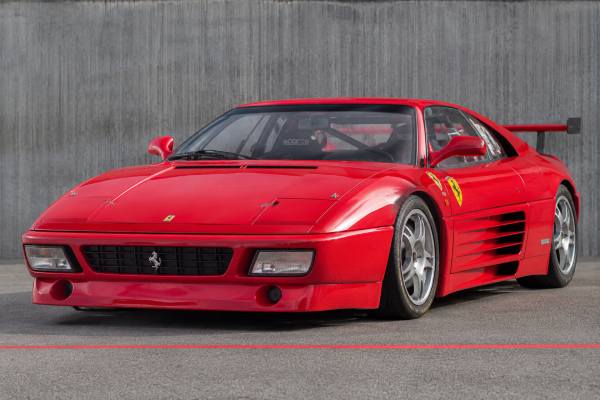
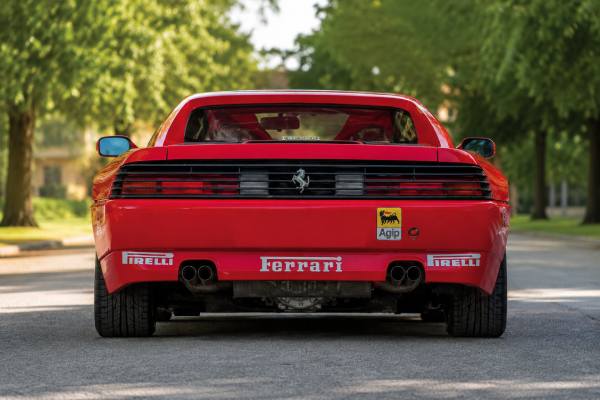
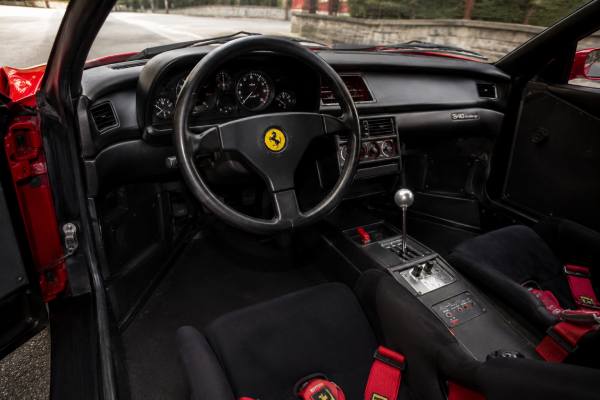
The Ferrari 348 Challenge is the competition version of Ferrari’s early-1990s mid-engine V8, built around the 3.4-liter Tipo F119H engine and developed for Ferrari’s first modern one-make customer racing series. Running from 1993 through 1995 in its core period, it turned the 348 from a controversial road car into a factory-supported track car with 320 hp, Challenge-specific safety equipment, revised braking hardware, racing tires, and a sharper purpose.
Its importance is larger than its power figure. The 348 Challenge helped create the template Ferrari later refined with the F355 Challenge, 360 Challenge, F430 Challenge, and modern Corse Clienti programs. For today’s buyers, it is attractive because it combines analog controls, period race history, manual gearbox involvement, and far greater rarity than a regular 348. The caution is that “Challenge” can mean different things: some cars were dealer-converted road cars, some were factory-prepared, and some have long competition histories that make documentation as important as condition.
Quick Take
The Ferrari 348 Challenge is most appealing as a raw, early Ferrari customer-racing car rather than as a polished road-going collectible. Its identity comes from the F119H 3.4-liter V8, five-speed gated manual gearbox, mid-engine chassis, and factory Challenge conversion parts that made it suitable for one-make racing. The tradeoff is that authenticity, race history, maintenance quality, and correct Challenge equipment matter more than mileage alone, so buyers should treat provenance, service records, and specialist inspection as central value factors.
Table of Contents
- History and Racing Importance
- Engine, Chassis and Key Specs
- Production, Versions and Authenticity
- Design, Engineering and Track Details
- Driving Character and Performance
- Maintenance, Reliability and Restoration
- Values, Buying Advice and Rivals
History and Racing Importance
The 348 Challenge matters because it was Ferrari’s first widely recognized modern one-make customer race car. It took the road-going 348 and gave private owners a factory-supported way to compete in near-identical Ferraris, which later became a major part of Ferrari’s client-racing culture.
The base 348 was introduced for 1989 as the successor to the 328. It brought a more dramatic design, a longitudinally mounted V8, a transverse gearbox layout, Testarossa-style side strakes, and a more aggressive mid-engine stance. By the early 1990s, Ferrari revised the model with the 348 GTB, GTS, and Spider, adding the later Tipo F119H engine specification rated at 320 hp. The Challenge version built on that updated mechanical base.
The 348 Challenge arrived at a time when Ferrari was rebuilding parts of its road-car image. The standard 348 had a mixed reputation. It looked exotic and sounded superb, but early cars were criticized for twitchy handling, difficult setup sensitivity, and uneven quality compared with later Ferraris. The Challenge program gave the platform a sharper job. On track, the car’s direct steering, manual gearbox, compact size, and naturally aspirated V8 made more sense than they sometimes did in daily road use.
The car’s racing role was simple but important. Owners bought or converted 348s using factory Challenge equipment and raced against similar cars. This lowered the barrier to Ferrari competition because the cars were not full prototype racers or heavily modified GT machines. They were close enough to production cars to feel familiar, but serious enough to require proper preparation, safety equipment, and running costs.
This is why collectors still pay attention to the 348 Challenge. It is not just a 348 with decals. A correct car represents the start of Ferrari’s modern Challenge lineage. Later Ferrari Challenge cars became more specialized and less road-car-like, while the 348 still carries the feel of a converted street Ferrari. That gives it a distinct place between road car, club racer, and collectible competition Ferrari.
Its significance also comes from rarity and documentation. Regular 348 production was not tiny by Ferrari standards, but genuine Challenge cars are much less common. Some were dealer-converted using official kits, some were prepared for national series, and a smaller number are often described as factory-built or factory-prepared cars. Because records vary by market and because individual cars may have been converted at different points, the strongest examples are those with clear period paperwork, race entries, logbooks, invoices, and known ownership history.
Today, the 348 Challenge sits in an interesting collector position. It is old enough to feel analog and mechanical, but not so old that it belongs to the carbureted classic era. It has no paddle-shift transmission, no electronic drive modes, no stability-control safety net, and no modern turbo or hybrid assistance. That makes it demanding, but also very clear in character. For many enthusiasts, that is the main appeal.
Engine, Chassis and Key Specs
The 348 Challenge uses the later 3.4-liter Tipo F119H naturally aspirated V8, rated at 320 hp, paired with a five-speed gated manual gearbox and rear-wheel drive. The major mechanical story is not huge extra power, but a road-car engine and chassis adapted for sustained track use.
The F119H is a 90-degree V8 with four valves per cylinder, dual overhead camshafts per bank, and a flat-plane character typical of Ferrari V8s from this period. It is a high-revving engine by early-1990s standards, with peak power arriving high in the rev range. Compared with earlier 300 hp 348 versions, the later 320 hp tune brought more useful performance and helped the Challenge car feel more credible against contemporary sports cars.
| Item | Specification |
|---|---|
| Model | Ferrari 348 Challenge |
| Core years covered | 1993–1995 |
| Engine code | Tipo F119H |
| Engine layout | Mid-mounted 90-degree V8 |
| Displacement | 3,405 cc |
| Bore x stroke | 85 mm x 75 mm |
| Compression ratio | 10.8:1 |
| Maximum power | 320 hp at 7,200 rpm |
| Maximum torque | About 324 Nm / 239 lb-ft at 5,000 rpm |
| Induction | Naturally aspirated |
| Transmission | Five-speed manual |
| Drivetrain | Rear-wheel drive |
The 348’s layout is unusual in Ferrari road-car history because the engine sits longitudinally while the gearbox is mounted transversely behind it. That is where the “t” in 348 tb and ts came from. It was a nod to Ferrari’s Formula 1 thinking, though in road use it also gave the 348 a distinctive service layout and weight distribution.
The chassis uses a steel structure with subframes rather than the carbon-fiber tubs that would later define many high-end exotics. Suspension is independent all round, with unequal-length wishbones, coil springs, telescopic dampers, and anti-roll bars. Steering is manual or hydraulically assisted depending on version and market context, but the 348’s basic front-end feel is famously direct compared with later, more filtered supercars.
Braking hardware on Challenge cars was upgraded for track use, with modified brakes and competition-focused pads. The important point for buyers is that brake specification can vary because cars were converted, updated, raced, repaired, and sometimes restored over many years. A car’s current hardware should be checked against its period documentation and intended use.
| Item | Figure |
|---|---|
| Length | 4,230 mm |
| Width | 1,894 mm |
| Height | 1,170 mm |
| Wheelbase | 2,450 mm |
| Front track | 1,502 mm |
| Rear track | 1,578 mm |
| Approximate curb weight | About 1,360 kg for berlinetta-based cars, depending on equipment |
| 0–100 km/h | About 5.4 seconds |
| Top speed | About 280 km/h / 174 mph |
| Fuel capacity | About 88 liters on later 348 versions |
The figures are best read as period reference points rather than modern instrumented-test absolutes. Tire type, gearing, alignment, engine health, weather, and whether a car is in road or track setup all affect real-world performance. A well-prepared Challenge car feels quicker than its numbers suggest because the cabin is noisy, the controls are heavy, and the engine delivers its best work near the top of the tachometer.
Production, Versions and Authenticity
The hardest part of understanding a 348 Challenge is not the specification sheet; it is proving what the car actually is. Genuine Challenge identity depends on period conversion, factory or dealer paperwork, correct equipment, and traceable history.
Unlike later Challenge cars that were delivered as more dedicated race machines, many 348 Challenge cars began as ordinary 348 road cars. They were then fitted with factory-supplied Challenge kits by Ferrari dealers or specialist preparers. This creates natural variation. Two real Challenge cars can differ in trim, safety equipment, race history, and current road legality.
The core forms include berlinetta-based cars, targa-roof ts or GTS-based cars, and cars converted in different markets for different Challenge series. The most desirable examples tend to be those with clear proof of period competition use or factory/dealer conversion. A later cosmetic tribute may look similar but should not be valued like a documented period Challenge car.
What usually defines a proper Challenge car
A correct 348 Challenge should have more than stripes and a roll cage. The important items are the parts and records that connect the car to the original Ferrari Challenge program.
Typical Challenge-related equipment may include:
- Roll cage or period race safety structure
- Racing harnesses and appropriate seat equipment
- Fire extinguisher or fire-system equipment
- Electrical cut-off switch
- Tow hook
- Competition brake pads or brake upgrades
- Racing exhaust or Challenge-specific exhaust equipment
- Slick or track tire setup in period use
- Challenge decals, number panels, or series markings where documented
- Smaller or repositioned battery on some conversions
- Factory-supplied Challenge kit invoices
- Period race logbooks, entry records, scrutineering documents, or photographs
The documentation matters because many of these parts can be added later. A buyer should ask when the conversion occurred, who performed it, which kit was used, and whether the car raced in period. A car that was converted after the fact for track days is still enjoyable, but it is a different collector object.
Factory-built, dealer-converted, and race-prepared cars
The market often separates cars into broad groups. Factory-built or factory-prepared cars tend to attract the most attention, especially when their identity is supported by Ferrari or specialist documentation. Dealer-converted cars can also be highly collectible if the conversion was done in period using proper Challenge parts. Cars prepared by well-known Ferrari importers or racing specialists may have their own appeal if the history is strong.
There are also cars with heavy racing histories. These can be very desirable, but only when the history is clean and the repairs are well documented. A race car with period damage, tub repairs, engine swaps, missing logbooks, or unclear identity needs careful review. In this world, “race history” adds value only when it is understandable.
Originality is not always simple. A never-raced, perfectly preserved Challenge car may appeal to collectors who want completeness. A hard-used car with famous drivers, podium results, and period photos may appeal to motorsport buyers. A modified track-day car may be the most fun to drive but less valuable as a collector piece. The best car depends on whether the buyer wants investment-grade provenance, historic-event eligibility, or usable Ferrari track character.
Design, Engineering and Track Details
The 348 Challenge looks dramatic because the standard 348 already had strong visual identity, but its special character comes from functional track changes. The design is a mix of Pininfarina-era wedge styling, Testarossa-inspired side strakes, and visible competition equipment.
The exterior keeps the compact, low, wide proportions of the 348 road car. The side strakes feed air toward the radiators, and the rear deck sits over a mid-mounted V8 rather than a front engine. Compared with the smoother F355 that followed, the 348 has a more angular and architectural look. It feels very much like an early-1990s Ferrari, with sharp shut lines, rectangular rear lamps, and a cabin pushed forward over a short nose.
The Challenge conversion did not turn the car into a wide-body silhouette racer. That is part of the charm. It remained visibly close to the road car, so the racing details stand out: tow points, decals, harnesses, stripped or simplified cabin areas, and competition wheels or tires. On some cars, the difference is subtle until the door opens and the roll cage appears.
Cooling, brakes and track durability
Track use changes the priorities of any mid-engine Ferrari. Cooling, braking, and setup matter as much as peak horsepower. The 348 Challenge relied on improved preparation rather than radical redesign. The engine still needed proper belt service, fluid control, and cooling health. The brakes needed competition pads and careful monitoring. The chassis needed alignment settings suited to circuit use.
The front radiator layout and side intake design make airflow and duct condition important. Damaged undertrays, missing ducting, poor repairs, or blocked radiators can cause problems that are not obvious during a short road test. On a collector car, original ducting and panels matter. On a track-use car, function and safe temperatures matter even more.
Cabin and controls
Inside, the 348 Challenge has the feel of a road Ferrari adapted for competition. The driving position is low, the windshield is close, and the gated shifter sits in the classic open metal gate. The pedals require deliberate inputs, and the steering gives the driver a strong sense of the front tires.
The cabin can be hot, loud, and tight, especially in a car with reduced trim or race equipment. A correct Challenge car is not luxurious in the way a modern special-edition Ferrari is. Its appeal is more mechanical. You hear intake noise, exhaust resonance, gearbox sounds, tire noise, and the general vibration of an early-1990s mid-engine car.
That sensory character is one reason the 348 Challenge has aged well among enthusiasts. Modern supercars are far faster, but they are also more insulated. The 348 makes ordinary speeds feel involved, and track speeds feel busy. It asks the driver to work.
Driving Character and Performance
A good 348 Challenge feels sharp, mechanical, and demanding rather than effortlessly fast. It rewards smooth inputs, correct tire temperatures, and confidence, but it does not flatter careless driving.
The F119H engine is happiest when revved. Low-speed torque is usable, but the car does not deliver modern turbocharged shove. The real performance comes as the engine climbs through the midrange and heads toward the upper rev band. The sound becomes harder and more metallic, and the car begins to feel lighter on its feet.
The five-speed gated manual gearbox is central to the experience. It requires a firm, clean shift and benefits from warm oil. When cold, many 348 gearboxes dislike rushed second-gear engagement. This is normal for the era, but it can also hide wear, tired linkage adjustment, or internal issues. A proper test drive should include warm shifting, downshifts, and a check for synchro health.
Steering is one of the car’s best traits. The 348 does not have the wide front tires or electronic filtering of modern Ferraris, so the front end feels alive. On smooth roads or a circuit, that makes the car engaging. On rough surfaces, it can feel nervous if the suspension is tired or the alignment is wrong.
The chassis balance is classic mid-engine Ferrari: responsive, agile, and sensitive to inputs. Early 348s developed a reputation for tricky limit behavior, and setup quality remains critical. A Challenge car with correct alignment, fresh suspension joints, healthy dampers, and suitable tires can be rewarding. A neglected car can feel unpredictable.
Braking performance depends heavily on preparation. Period brake systems need the right pads, fresh fluid, good hoses, and properly maintained calipers. On track, heat management is everything. A car used only for display may have old fluid, aged tires, and glazed pads even if it looks beautiful.
Road use versus track use
On the road, the 348 Challenge can feel intense. Noise levels are high, the ride can be firm, and race equipment may reduce comfort. Some cars remain road registered, while others are effectively track or collection cars. Before buying, it is important to know whether the car can be legally and comfortably used where the buyer lives.
On track, the car makes more sense. The engine needs revs, the brakes need temperature, and the chassis wants commitment. It is not a point-and-shoot modern supercar. It is a momentum car by current standards, but it still has enough power to demand respect. The best drivers are precise rather than aggressive.
Performance numbers also need context. A roughly 5.4-second 0–100 km/h time was serious in period, but many modern hot hatchbacks are quicker in a straight line. That does not reduce the 348 Challenge’s appeal. Its value is in response, sound, rarity, and the connection to Ferrari’s one-make racing history.
Maintenance, Reliability and Restoration
The 348 Challenge is not a normal used sports car, and its maintenance should be treated like a Ferrari race-derived collectible. The biggest risks are deferred belt service, poor race preparation, tired suspension, unclear accident repair, and missing Challenge-specific documentation or parts.
The F119H engine is fundamentally strong when serviced correctly, but it is not cheap to maintain. Timing belt service is a major event on the 348 because access is difficult and specialist labor is required. Many owners follow conservative time-based belt intervals rather than waiting for mileage, especially on cars that sit for long periods.
Important maintenance areas include:
- Timing belts, tensioners, cam seals, and related major-service items
- Cooling system hoses, radiators, thermostat, water pump, and fans
- Fuel hoses, fuel pumps, injectors, and aged rubber components
- Clutch condition, release bearing, hydraulics, and adjustment
- Gearbox synchros, linkage wear, and oil leaks
- Engine mounts and gearbox mounts
- Suspension bushings, ball joints, dampers, and wheel bearings
- Brake calipers, discs, pads, lines, and fluid condition
- Electrical connectors, fusebox condition, alternator output, and battery wiring
- Exhaust condition, catalysts where fitted, and heat shielding
- Roll cage mounting points and evidence of shell repair
Race use magnifies all of these concerns. A car that has lived on slicks may have seen higher suspension, hub, brake, and chassis loads than a road car. That is not automatically bad, but it must be reflected in inspection depth. Look for cracks, poor welding, distorted mounting points, and old repairs hidden under paint or underseal.
Known ownership issues
Common 348 ownership concerns include sticky interior plastics, electrical gremlins, slow windows, HVAC faults, oil leaks, aged rubber, cooling issues, and gearbox wear. On Challenge cars, add race-harness expiry, cage certification questions, seat condition, fire-system age, and whether current safety equipment is legal for any event the buyer wants to enter.
Suspension condition is especially important. A tired 348 can feel nervous and vague, which unfairly reinforces the model’s old reputation. Fresh bushings, correct ride height, quality tires, and expert alignment can transform the car. Many disappointing examples are not bad by design; they are simply old, poorly set up, or running on unsuitable tires.
Parts availability is mixed. Normal 348 service parts are generally obtainable through Ferrari specialists and parts suppliers, but Challenge-specific pieces can be difficult. Original wheels, safety equipment, kit components, documentation, and trim details may be rare or expensive. For a collector-grade car, missing parts can be a major value issue.
Restoration and originality choices
Restoring a 348 Challenge requires a clear goal. A concours-style restoration may erase the visible signs of racing that make the car interesting. A sympathetic restoration preserves period modifications, old scrutineering stickers, race wear, and documentation. A track-focused rebuild may improve safety and reliability but reduce originality.
The best approach depends on the car. A highly original factory-prepared car should usually be preserved carefully. A known period racer with strong history may deserve restoration to a documented race livery. A less documented car may be best enjoyed as a usable analog track Ferrari, with safety updates clearly recorded.
Before spending heavily, owners should gather all documentation. That includes service invoices, old photos, race results, importer records, Ferrari dealer paperwork, ownership history, and any certification available through Ferrari or marque experts. Paperwork can be as valuable as parts.
Values, Buying Advice and Rivals
The 348 Challenge market is much more sensitive to identity than the regular 348 market. A documented period Challenge car can be worth several times more than a standard 348, while a cosmetic conversion should be priced far more cautiously.
Recent market data shows a wide spread. Ordinary 348 models often trade in a more accessible collector range, while Challenge examples can climb much higher when they have strong provenance, low mileage, factory or dealer documentation, and desirable history. A major 2026 public-market result for a 1994 348 tb Challenge showed how far the best examples can separate from normal 348 values, but that should not be applied blindly to every car with Challenge-style parts.
The main value drivers are:
- Verified factory or period dealer conversion
- Complete Challenge kit documentation
- Period race history and logbooks
- Known ownership chain
- Original engine and gearbox, where documented
- Correct wheels, cage, interior, safety equipment, and exterior details
- Strong service history from recognized Ferrari specialists
- Accident-free or properly documented repaired chassis
- Desirable color and period livery
- Road registration status, where relevant
- Eligibility for historic Ferrari or club events
Mileage matters less than story and condition. A low-mileage car with no proof may be less desirable than a higher-mileage car with documented Challenge history. A freshly painted car may look better in photos but raise questions if it hides old race damage. A fully original car may need expensive recommissioning before serious use.
Pre-purchase inspection priorities
A buyer should not inspect a 348 Challenge like a normal used exotic. The inspection should involve both a Ferrari mechanical specialist and, ideally, someone who understands Challenge cars.
| Area | What to Confirm |
|---|---|
| Identity | VIN, engine number, gearbox number, conversion paperwork, and market history |
| Challenge proof | Factory kit invoices, dealer records, race logbooks, photos, and period entries |
| Engine | Belt-service date, compression/leakdown results, oil leaks, cooling health, and fuel-system condition |
| Gearbox | Warm shift quality, second-gear behavior, clutch operation, linkage adjustment, and leaks |
| Chassis | Accident damage, cage mounting, suspension pickup points, corrosion, and race repairs |
| Suspension | Bushings, dampers, ball joints, ride height, alignment records, and wheel condition |
| Brakes | Correct hardware, caliper condition, disc wear, pad type, fluid age, and track suitability |
| Original parts | Seats, wheels, steering wheel, safety equipment, exhaust, tools, books, and removed road parts |
| Legal use | Road registration, emissions equipment, harness legality, cage rules, and event eligibility |
Avoid cars with vague claims. Phrases such as “Challenge specification,” “Challenge-style,” or “believed to be” should trigger deeper research. The seller should be able to explain the car’s origin, conversion path, and race history clearly. If not, price it as a modified 348 until proven otherwise.
The closest Ferrari alternative is the F355 Challenge. It is faster, more developed, and more famous, but also more expensive to maintain in several areas and often more costly to buy. A regular 348 GTB or GTS offers much of the road-car feel for less money, but without the same Challenge significance. The 348 GT Competizione is rarer and more exotic, but it belongs to a different collector tier.
Non-Ferrari rivals include the Porsche 964 Carrera RS, Porsche 993 Cup, Lotus Esprit Sport 300, Honda NSX Type R, and period club-racing versions of the Porsche 911. The Porsche products often offer stronger motorsport infrastructure and broader parts support. The NSX is more refined and precise. The Ferrari counters with sound, rarity, gated-shift drama, and a direct link to Maranello’s one-make racing story.
The long-term collectability case is strong for the best cars, but selective. The 348 Challenge is unlikely to become universally loved in the way the F40 or F355 has been, and that is part of its niche appeal. It is for buyers who appreciate the awkward, raw, transitional Ferrari era. Buy the right car, with the right paper trail, and it is one of the most interesting analog Ferraris of the 1990s. Buy the wrong one, and it can become an expensive modified 348 with a story that is hard to prove.
References
- Ferrari 348 Challenge (1993) – Ferrari.com 1993
- Ferrari 348 GTS (1993) 1993
- Vehicle Detail Search – 1994 FERRARI 348 | NHTSA 2026 (Recall Database)
- Ferrari 348 Challenge Market – CLASSIC.COM 2026 (Market Data)
- 1992 Ferrari 348 Challenge | London 2022 | RM Sotheby’s 2022 (Auction Record)
Disclaimer
This article is for informational purposes only and is not a substitute for professional diagnosis, repair, inspection, or valuation. Specifications, torque values, service intervals, legal requirements, and procedures can vary by VIN, market, equipment, race preparation, and later modification. Always verify details against official Ferrari service documentation and consult a qualified Ferrari specialist before buying, repairing, restoring, or tracking a 348 Challenge.
If you found this guide useful, please consider sharing it on Facebook, X/Twitter, or your favorite enthusiast community to support our work.