
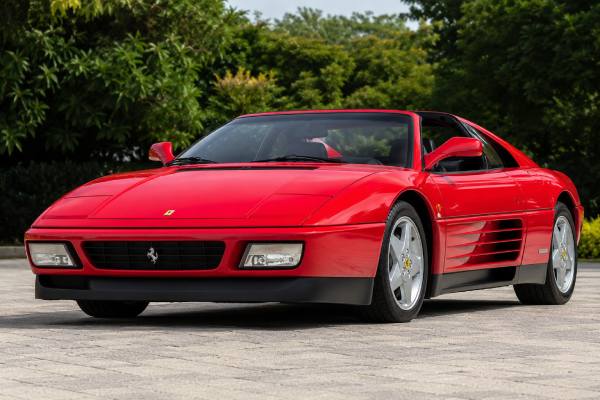
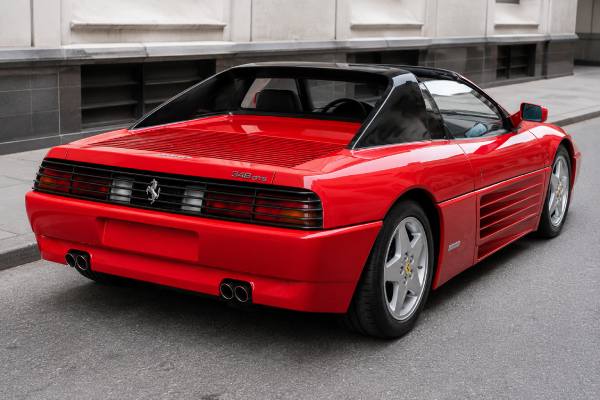
The Ferrari 348 GTS is the late-production targa version of Ferrari’s F119-series V8 sports car, powered by the Tipo F119H 3.4-liter naturally aspirated V8 and rated at 320 PS, or about 316 bhp, in European specification. Built at the end of the 348 line and sold across the 1993–1995 period depending on market and registration date, it replaced the earlier 348 ts with more power, revised chassis tuning, wider rear-track hardware, body-color lower panels, and a more resolved driving character.
Its appeal today is not just rarity. The 348 GTS sits in a narrow window between the old-school 328 and the more polished F355. It has a gated manual gearbox, no power steering, no traction control, a removable roof panel, and the raw mid-engine feel that later Ferraris gradually filtered. It is also a car that rewards careful buying: a great one feels vivid and special, while a neglected one can become expensive very quickly.
Quick Take
The Ferrari 348 GTS is one of the most interesting late analog V8 Ferraris because it combines the open-air feel of the earlier 348 ts with the stronger F119H engine and improved late-model chassis setup. Its main draw is a mechanical, targa-top Ferrari experience with rarity on its side; its main caution is ownership sensitivity, since belt service, cooling, suspension, electrical condition, roof seals, originality, and documentation matter far more than mileage alone.
Table of Contents
- Why the 348 GTS Still Matters
- Tipo F119H Engine and Core Specs
- Production Numbers, Variants, and Options
- Design Details and Engineering Character
- Road Feel, Speed, and Handling
- Maintenance Reality and Restoration Risks
- Values, Buying Checks, and Rivals
Why the 348 GTS Still Matters
The 348 GTS matters because it is the most developed targa version of Ferrari’s 348 road car, not merely a renamed 348 ts. It arrived after Ferrari had already heard the criticism of the early 348 and responded with more power, revised suspension geometry, and cleaner exterior detailing.
The wider 348 family replaced the 328 in 1989. That was a major shift. The 328 still felt like an evolution of the 308 line, while the 348 adopted a more modern structure, a longitudinal mid-mounted V8, and a transverse gearbox layout inspired by Ferrari’s racing practice. The “348” name followed Ferrari’s familiar formula: 3.4 liters and eight cylinders. The early cars were the 348 tb coupe and 348 ts targa.
The GTS came later, as part of the final GT update. It kept the removable roof panel layout of the ts but received the uprated Tipo F119H engine and a series of chassis and presentation changes. In simple terms, the 348 GTS is the late, stronger, more sorted targa 348.
Its place in Ferrari history is slightly complicated. The 348 was launched after Enzo Ferrari’s death, but it belonged to the last generation of cars developed under his era of influence. It also arrived before the Luca di Montezemolo-led transformation that made the F355 more refined, easier to drive, and more widely admired. That makes the 348 GTS feel like a bridge: more modern than a 328, but less polished and less assisted than an F355.
The car’s reputation has improved with time. Early 348 reviews often compared it harshly with the Honda NSX, Porsche 911, Lotus Esprit, Corvette ZR-1, and later the F355. Buyers today judge it differently. They are often looking for feel, rarity, open-gate shifting, steering feedback, and the drama of a compact mid-engine Ferrari. On those terms, the 348 GTS makes more sense now than it did when new.
Collectibility is helped by several factors:
- It is much rarer than the standard 348 ts.
- It has the late 320 PS F119H engine.
- It has cleaner body-color lower trim.
- It retains the removable targa roof.
- It predates widespread electronic driver aids.
- It is overshadowed by the F355, which can make it more distinctive to knowledgeable buyers.
The GTS is not the most famous 348 variant. The 348 Challenge and 348 GT Competizione have stronger motorsport connections, and the Spider has the appeal of Ferrari’s first series-production two-seat convertible since the Daytona Spider era. But for buyers who want a rare road-focused 348 with an open roof and late-model mechanical improvements, the GTS is arguably the sweet spot.
Tipo F119H Engine and Core Specs
The 348 GTS uses the Tipo F119H version of Ferrari’s 3.4-liter quad-cam V8, rated at 235 kW and 320 PS at 7,200 rpm. The important point is that this was the late 348 engine specification, with the stronger output and Bosch Motronic M2.7 management compared with earlier 300 hp versions.
| Category | Specification |
|---|---|
| Model | Ferrari 348 GTS |
| Internal type | F119 |
| Engine code | Tipo F119H |
| Engine layout | Rear-mid-mounted 90-degree V8 |
| Displacement | 3,404.70 cc |
| Bore x stroke | 85.0 mm x 75.0 mm |
| Valvetrain | Double overhead camshafts per bank, four valves per cylinder |
| Compression ratio | 10.8:1 |
| Fuel and ignition management | Bosch Motronic M2.7 electronic injection and ignition |
| Lubrication | Dry sump |
| Maximum power | 235 kW / 320 PS at 7,200 rpm |
| Maximum torque | 324 Nm / 239 lb-ft at 5,000 rpm |
| Transmission | 5-speed manual with open-gate selector |
| Drivetrain | Rear-wheel drive |
| Body style | Two-seat targa |
The 348’s drivetrain layout is one of its defining technical features. The V8 is mounted longitudinally behind the cabin, while the gearbox is mounted transversely. This is why the early cars used the “tb” and “ts” naming: “trasversale” referred to the transverse gearbox. It helped package the drivetrain in a compact mid-engine chassis and gave the car a strong link to Ferrari’s racing thinking, even if the road car remained very much a street machine.
The F119H was more than a small badge change. Compared with earlier versions, the late engine specification brought higher compression, revised intake and exhaust details, and updated engine management. It is not a low-revving engine. It makes its best work high in the rev range, and a healthy car should feel sharper as the tachometer climbs past the midrange.
| Item | Ferrari 348 GTS |
|---|---|
| Chassis construction | Steel platform structure with separate subframes |
| Front suspension | Independent unequal-length wishbones, coil springs, dampers, anti-roll bar |
| Rear suspension | Independent unequal-length wishbones, coil springs, dampers, anti-roll bar |
| Steering | Unassisted rack-and-pinion |
| Brakes | Ventilated discs with ABS |
| Front tires | 215/50 ZR17 |
| Rear tires | 255/45 ZR17 |
| Wheelbase | 2,450 mm |
| Length | 4,230 mm |
| Width | 1,894 mm |
| Height | 1,170 mm |
| Dry weight | About 1,370 kg |
| Fuel capacity | About 88 liters |
| 0–100 km/h | About 5.4 seconds |
| Standing 400 m | About 13.5 seconds |
| Top speed | Over 280 km/h |
The numbers are still respectable, but they do not fully describe the car. A modern performance hatchback can match or beat some acceleration figures. The GTS feels special because of the way it delivers speed: the dry-sump V8 behind the cabin, the mechanical shift, the steering weight, the intake and exhaust noise, and the sense that every input matters.
Production Numbers, Variants, and Options
The 348 GTS was a low-volume late variant, and that is central to its appeal. Production-number references vary depending on how cars are counted by market, model year, and delivery, but the GTS is consistently treated as far rarer than the earlier 348 ts and the full-convertible Spider.
The broader 348 range is much easier to understand when split into early cars and late cars. The early 348 tb and ts launched the line. The later GTB, GTS, and Spider received the uprated late engine specification and several chassis and trim improvements. The GTS is the late targa.
| Variant | Role in the range | Buyer relevance |
|---|---|---|
| 348 tb | Early fixed-roof coupe | Usually more available and often less expensive than late GT cars |
| 348 ts | Early removable-roof targa | Open-roof feel, but earlier engine and chassis setup |
| 348 Serie Speciale | Limited U.S.-market special based on early cars | Collectible, but specification and originality need close checking |
| 348 Spider | Full convertible introduced late in the model run | More open-air drama, more body-structure and roof-condition concerns |
| 348 GTB | Late fixed-roof GT update | Closest closed-roof sibling to the GTS |
| 348 GTS | Late removable-roof GT update | Rare mix of targa roof, F119H engine, and late chassis revisions |
| 348 Challenge | Dealer-converted competition version for Ferrari Challenge racing | More valuable when documented, but condition and conversion history matter greatly |
| 348 GT Competizione | Lightweight homologation-style road/competition model | Very rare and valued separately from normal road cars |
For the 348 GTS specifically, buyers should understand the difference between production year, model year, and first registration. Some cars may be described as 1995 cars because they were first registered or sold then, even though the GTB and GTS were late-production models that gave way to the F355. That is not automatically a problem, but it makes paperwork important.
Factory options were not as complex as modern Ferrari personalization programs, but specification still matters. Common value factors include:
- Exterior color, especially Rosso Corsa, Nero, Giallo, Argento, and rarer period shades.
- Interior color and material condition.
- Original wheels.
- Original exhaust and catalyst equipment where required.
- Air conditioning function.
- Tool kit, books, jack, keys, and service records.
- Market specification, especially left-hand drive versus right-hand drive.
- Ferrari Classiche certification or strong specialist documentation.
The removable roof panel is a key identifier and ownership point. It should fit properly, latch securely, and store correctly. A GTS with damaged roof trim, poor seals, or evidence of water entry can become frustrating and costly even if the engine is healthy.
Matching-numbers relevance is also important. For a normal driver-quality 348, condition may matter more than perfect paperwork. For a rare GTS, original engine, gearbox, body tags, paint history, and factory documentation can make a meaningful difference. A buyer paying collector money should expect more than a stack of recent invoices; the car should have a coherent identity.
Design Details and Engineering Character
The 348 GTS looks the way it does because Ferrari was moving away from the rounded 308 and 328 era while borrowing visual energy from the Testarossa and F40. The late GTS adds cleaner body-color lower panels, which make it look more mature than the earlier black-sill 348 ts.
Pininfarina’s design is sharp, low, and very period-specific. The side strakes are the most obvious feature. They feed air toward the engine bay and radiators, but they also visually connect the smaller V8 Ferrari to the Testarossa. The rectangular rear lights, slatted rear grille, low nose, and strong horizontal lines make the 348 unmistakably late-1980s and early-1990s Ferrari.
The GTS body style adds another layer. With the roof panel installed, it has the shape of a compact mid-engine coupe. With the panel removed, it gives much of the open-air experience without the full soft-top compromise of the Spider. It is not as rigid as a fixed-roof GTB, but it feels more structural and enclosed than a full convertible.
Cooling and packaging
The 348’s side intake treatment is not just styling. Mid-engine cars need careful heat management, and the 348 uses side inlets, rear openings, and underbody airflow to manage the engine bay, radiators, intake air, and exhaust heat. Heat is part of 348 ownership. A well-sorted car should maintain temperature properly, but old hoses, tired fans, blocked radiators, weak expansion tanks, or poor bleeding can quickly turn normal heat into an expensive problem.
The dry-sump lubrication system is another important engineering feature. It helps keep the engine supplied with oil under hard cornering and allows more compact engine positioning. It also means oil-level checking must be done correctly, with the right procedure and temperature. Treating it like a normal wet-sump car can lead to overfilling or misleading readings.
Cabin and controls
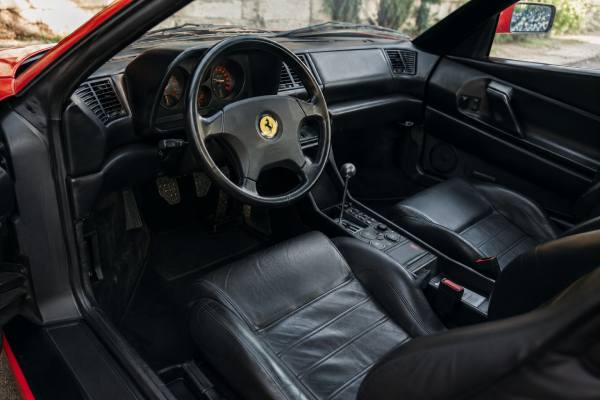
The cabin is simple by modern standards. The main event is the driving position, gated shifter, low dashboard, and view over the front wings. It is not a luxury GT in the modern sense. Switchgear can feel delicate, the cabin can get warm, and the storage space is modest. Yet the simplicity is part of the appeal.
The open metal gate is not decorative. It shapes the whole driving experience. Shift quality is mechanical, deliberate, and temperature-sensitive. Cold second gear can be stiff, and a rushed shift can feel clumsy. Once warm and adjusted properly, the gearbox becomes one of the car’s best features.
The targa roof changes the cabin mood. With the panel off, the engine note becomes more present, the cabin feels less enclosed, and the car becomes more relaxed at moderate speeds. With the panel on, condition of seals, latches, trim, and roof storage hardware becomes more obvious. Rattles are not unusual, but heavy leaks, wind noise, or poor alignment suggest neglect or past repairs.
Road Feel, Speed, and Handling
The Ferrari 348 GTS feels fast because it is physical, noisy, compact, and highly mechanical, not because it overwhelms modern performance numbers. The best examples feel light on their feet once moving, with heavy low-speed steering, crisp throttle response, and a V8 that wakes up properly in the upper half of the rev range.
At parking speeds, the unassisted steering takes effort. That is normal. The front end lightens as speed builds, and the steering becomes one of the car’s strongest qualities. It tells you about road surface, tire load, and front-end grip in a way many later assisted systems do not.
The engine is smooth but not lazy. Below the midrange it is tractable enough for normal driving, but the character is above 4,000 rpm. From there, the F119H feels sharper and more urgent. The sound is mechanical rather than theatrical in the modern supercar sense: intake noise, valvetrain texture, exhaust rasp, and a hard-edged V8 note behind your shoulders.
The gearbox demands patience. First gear sits to the left and back in the traditional dogleg-style Ferrari gate arrangement. The movement across the gate is part of the ritual, but it should not feel broken. A good car may be stiff when cold, then become cleaner as oil temperature rises. A bad car may grind, baulk, pop out of gear, or feel badly misaligned.
The late GTS chassis is more confidence-inspiring than early 348 criticism suggests. The wider rear-track setup and revised suspension made the car more stable and less nervous. It still asks for respect. There is no traction control, no stability control, and no modern electronic safety net. Lift abruptly mid-corner on old tires or poor alignment and the mid-engine layout can remind you where the mass sits.
Ride quality is firmer than a grand tourer but not unbearable. On the right tires and dampers, the GTS can flow well on fast B-roads and mountain roads. On old tires, tired bushings, or incorrect alignment, it can feel skittish and disappointing. Many poor opinions of the 348 come from cars that were not set up correctly.
Braking performance is strong for the period, with ventilated discs and ABS. Pedal feel should be firm and progressive. A long pedal, vibration, pulling, sticky calipers, or old flexible brake hoses should be treated as inspection warnings.
The GTS is best enjoyed as an analog road car. It is not the most forgiving Ferrari in bad weather, and it is not a modern track weapon. Its strengths are steering, sound, balance, visibility, compact size, and driver involvement. Drive it with timing and mechanical sympathy, and it feels special. Try to force it like a modern dual-clutch supercar, and it feels old.
Maintenance Reality and Restoration Risks
A Ferrari 348 GTS can be reliable when maintained by specialists, but deferred maintenance is the real danger. The car is now old enough that age, storage conditions, previous workmanship, and parts quality matter as much as mileage.
The biggest routine maintenance topic is the cambelt service. The 348 is widely treated as an engine-out major-service car. A proper major service usually includes timing belts, tensioners, accessory belts, cam seals as needed, water pump inspection or replacement, hoses, fluids, filters, and careful checks around the clutch, gearbox, mounts, and cooling system. The interval depends on market guidance, specialist practice, and usage, but many owners plan on time-based belt service rather than waiting for mileage.
Common mechanical inspection areas
- Timing belts and tensioners: Age matters. A low-mile car with old belts is not low-risk.
- Cooling system: Check radiators, fans, hoses, thermostat, expansion tank, bleed procedure, and signs of overheating.
- Clutch and release bearing: Look for slipping, hydraulic leaks, noisy operation, and heavy pedal behavior.
- Gearbox: Cold stiffness can be normal; grinding, jumping out of gear, or metal debris is not.
- Engine oil leaks: Cam covers, seals, hoses, and dry-sump plumbing should be inspected carefully.
- Fuel hoses: Old rubber in a hot mid-engine bay is a serious safety and reliability concern.
- Exhaust: Manifolds, catalysts, mufflers, brackets, and heat shielding can suffer from age and heat.
- Suspension: Bushings, ball joints, dampers, wheel bearings, and alignment condition transform the car.
- Brakes: Calipers, hoses, ABS function, discs, pads, and old fluid should be checked.
Electrical issues are common on cars of this age. Slow windows, weak grounds, fuse-board problems, intermittent gauges, tired alternators, starter issues, poor battery connections, and HVAC faults are all worth checking. Later 348s benefited from some improved electrical components compared with early cars, but age can erase that advantage if the car has been neglected.
The targa roof adds its own inspection list. Check roof seals, latch tension, panel condition, storage hardware, wind noise, water entry, and evidence of damp carpets. Water leaks can lead to trim damage, corrosion, electrical issues, and unpleasant smells. A beautifully polished car with damp footwells is not a good buy.
Restoration and originality
Restoring a 348 GTS is rarely cheap enough to make sense as a casual project. Paintwork, interior leather, roof seals, suspension renewal, engine-out servicing, and parts sourcing can quickly exceed the price difference between a tired car and a good one.
Originality should be judged intelligently. Sensible maintenance upgrades can be positive if they are reversible and documented. Examples include improved hoses, modern tires in correct sizes, updated fuse or relay work done properly, or a stainless exhaust that comes with the original system. Poor modifications, missing emissions equipment, non-original body panels, bad stereo installations, cut wiring, incorrect wheels, and cheap interior retrims hurt value.
Accident damage is a major concern. The 348’s low nose, wide rear bodywork, and mid-engine structure make careful inspection essential. Panel gaps, paint thickness, inner structure, suspension pickup points, undertray damage, and wheel alignment history tell a story. A pre-purchase inspection should include compression or leak-down testing, underside inspection, electronic checks where possible, and a review of invoices.
The safest ownership approach is simple: buy the best documented car you can afford, then budget as if it will still need work. A recently serviced 348 GTS is not automatically sorted unless the service was done by a competent Ferrari specialist and included the right age-related items.
Values, Buying Checks, and Rivals
The 348 GTS sits in a more specialized market than ordinary 348 tb and ts models because it is rarer and has the late F119H specification. As of 2026, public market data and European listings generally place good GTS examples around the upper end of normal 348 values, with condition, history, color, market specification, and originality creating wide variation.
A driver-quality car with needs may look tempting, but the cheapest GTS can become the most expensive one after belts, tires, suspension, roof seals, clutch work, cooling repairs, paint correction, and electrical sorting. Conversely, an expensive car is not automatically a good one. The best examples justify their price through documentation, condition, originality, and specialist inspection results.
| Value factor | Why it matters |
|---|---|
| Service history | Major-service timing, belt age, and specialist workmanship affect risk immediately |
| Originality | Correct wheels, trim, exhaust, tools, books, and body details support collector value |
| Condition | Paint, leather, roof seals, suspension, cooling, and electrical health are expensive to correct |
| Market specification | Right-hand-drive cars are rare; left-hand-drive cars suit a wider global buyer pool |
| Color combination | Classic Ferrari colors are easier to sell, while rare colors can bring a premium if attractive |
| Mileage | Low mileage helps only when storage and service history are excellent |
| Documentation | Books, tools, invoices, ownership history, and certification reduce uncertainty |
| Accident history | Structural damage or poor repair work can seriously limit value |
A practical buyer checklist should be more Ferrari-specific than ordinary used-car advice:
- Confirm the exact model identity: GTS, not an earlier ts advertised loosely as a GTS.
- Check chassis, engine, gearbox, and body numbers against paperwork.
- Review service invoices, not just stamped books.
- Confirm timing-belt age and what the last major service included.
- Inspect the cooling system for overheating history.
- Test the gearbox both cold and warm.
- Check clutch operation, release bearing noise, and hydraulic leaks.
- Inspect roof seals, latches, carpets, and targa panel fit.
- Measure paint and inspect for accident damage.
- Put the car on a lift and inspect chassis, suspension, undertrays, leaks, and corrosion.
- Check tire age, not just tread depth.
- Verify tools, books, keys, jack, and original parts.
- Have a Ferrari specialist perform compression or leak-down testing.
- Budget for immediate sorting even after a positive inspection.
Cars to seek are clean, unmodified, regularly serviced examples with clear ownership history, good roof fit, correct wheels, healthy cooling, tidy wiring, fresh tires, and no signs of structural repair. Cars to avoid are those with vague histories, old belts, overheated engines, poor paintwork, missing parts, damp interiors, gearbox problems, or seller claims that “they all do that” without specialist evidence.
The closest Ferrari alternatives are the 348 ts, 348 GTB, 348 Spider, 328 GTS, and F355 GTS. The 348 ts gives a similar roof concept for less money but lacks the late GTS specification. The GTB is the purist fixed-roof choice. The Spider gives more open-air appeal but adds more body and roof complexity. The 328 GTS is older, simpler, and more classic in feel. The F355 GTS is faster, prettier to many eyes, and more polished, but it has its own major maintenance risks and usually commands stronger demand.
Non-Ferrari rivals include the Acura/Honda NSX, Porsche 964 and 993 Carrera models, Lotus Esprit S4 and S4s, Chevrolet Corvette ZR-1, and early Lamborghini Diablo for buyers stretching into a more extreme category. The NSX is easier to use and more rational. The Porsche is more practical. The Lotus is more niche. The Corvette is much cheaper to run. The 348 GTS wins when the buyer wants a compact, analog, mid-engine Ferrari with a removable roof and real rarity.
Long-term collectability looks healthy but not guaranteed. The 348 GTS has rarity, a gated manual, naturally aspirated V8 power, and late-model improvements. It also carries the 348’s old reputation baggage and sits near the shadow of the F355. That tension is exactly why it is interesting. It is not the obvious choice, but for the right buyer, it may be the more distinctive one.
References
- Ferrari 348 GTS (1993) 1993 (Manufacturer Page)
- Ferrari 348 GTB (1993) 1993 (Manufacturer Page)
- Ferrari 348 GT Competizione (1993) 1993 (Manufacturer Page)
- Vehicle Detail Search – 1994 FERRARI 348 | NHTSA 2026 (Recall Database)
- Ferrari 348 GTS Market – CLASSIC.COM 2026 (Market Data)
Disclaimer
This article is for informational purposes only and is not a substitute for professional diagnosis, repair, valuation, or inspection. Specifications, torque values, service intervals, market data, and repair procedures can vary by VIN, market, equipment, production date, and vehicle history. Always verify details against official Ferrari service documentation and consult a qualified Ferrari specialist before purchase or repair.
If this guide helped you, please consider sharing it on Facebook, X/Twitter, or your favorite enthusiast community to support our work.