
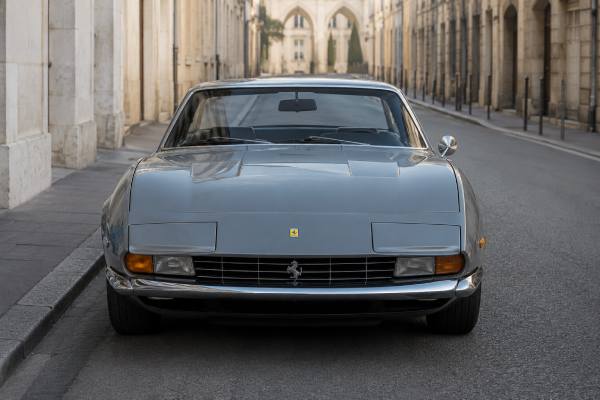
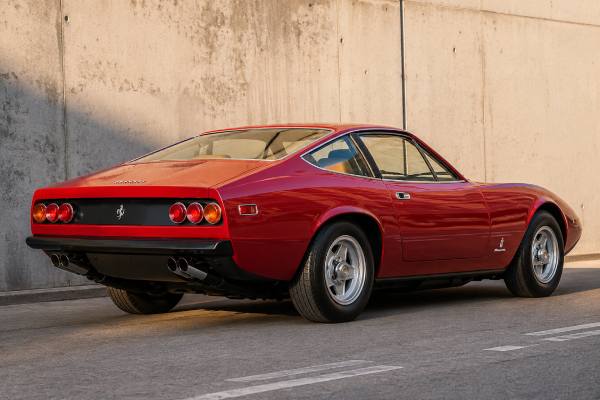
The Ferrari 365 GTC/4, Tipo F101, is a front-engined 2+2 grand tourer built for 1971 and 1972 with Ferrari’s 4.4-liter F101 AC 000 four-cam V12. Rated at 340 hp in European specification, it sat between the compact two-seat 365 GTC and the more aggressive 365 GTB/4 “Daytona,” offering much of the Daytona-era V12 character in a more relaxed, usable, and quietly unusual form.
Its appeal is not based on racing fame or poster-car drama. The 365 GTC/4 matters because it blends a low-slung Pininfarina body, a powerful Colombo-family V12, power steering, air conditioning, rear occasional seats, and a five-speed manual into one of Ferrari’s most distinctive early-1970s road cars. It was produced in small numbers, has complex hand-built details, and can be deeply rewarding when correct. It can also become expensive quickly when corrosion, tired carburetors, weak self-leveling rear suspension, worn trim, or incomplete documentation are ignored.
Quick Take
The Ferrari 365 GTC/4 is a rare, elegant, front-engine V12 Ferrari for buyers who want Daytona-era sound and speed with more comfort and less obvious aggression. Its technical identity is the 4.4-liter F101 AC 000 four-cam V12 with six side-draft Weber carburetors, a five-speed manual gearbox, independent suspension, and a grand-touring cabin. The main caution is that it is far more complex to restore than its understated shape suggests, so originality, books, tools, matching numbers, corrosion condition, and specialist maintenance history matter more than headline mileage or fresh paint.
Table of Contents
- Why the 365 GTC/4 Matters
- V12, Chassis and Key Specifications
- Production Numbers, Variants and Options
- Pininfarina Design and Engineering Details
- Road Character and Period Performance
- Maintenance, Reliability and Restoration Risks
- Values, Buying Checks and Rivals
Why the 365 GTC/4 Matters
The 365 GTC/4 is important because it captures Ferrari’s shift from 1960s round-bodied grand tourers to the sharper, lower, more technical style of the 1970s. It was not a direct Daytona replacement; it was a more refined V12 GT built for fast road use, long trips, and a buyer who wanted performance without the harder edge of the GTB/4.
Ferrari introduced the model in 1971 as the successor to the 365 GTC, a handsome two-seat coupé that had itself followed the 330 GTC. The GTC/4 kept the front-engine V12 tradition alive but moved the concept forward with four-cam cylinder heads, hidden headlights, a more modern Pininfarina profile, and a cabin arranged as a 2+2. The rear seats were small, but they gave the car a different mission from the two-seat Daytona.
The “365” name refers to the approximate displacement of each cylinder in cubic centimeters. The “GTC” badge placed it in Ferrari’s grand touring coupé line. The “4” signaled four overhead camshafts, a key technical distinction in this generation of Ferrari V12s.
The 365 GTC/4 was launched during a busy and transitional period for Maranello. The Daytona was Ferrari’s front-engine super-GT flagship. The Dino 246 was proving that a smaller mid-engine road car could succeed without a traditional Ferrari V12. The 365 GT4 BB, Ferrari’s mid-engine flat-12 flagship, was on the horizon. In that setting, the GTC/4 became a short-lived bridge between the classic front-engine era and the more angular, experimental 1970s.
Production was limited, with 505 examples generally accepted as the total. That makes the GTC/4 much rarer than the Daytona coupé, but rarity alone has never made it more valuable. Its market reputation has long been complicated. Some collectors admire its usability, sound, and scarcity. Others prefer the purity of the earlier 365 GTC or the drama of the 365 GTB/4. That tension is part of the car’s identity.
Today, the 365 GTC/4 is best understood as a connoisseur’s Ferrari. It rewards buyers who value engineering nuance, discreet design, and real road ability. It is also a car where condition matters enormously. A well-maintained example can feel sophisticated and muscular. A neglected one can feel heavy, hot, reluctant, and financially punishing.
V12, Chassis and Key Specifications
The heart of the 365 GTC/4 is the F101 AC 000 4.4-liter V12, a wet-sump, four-cam Ferrari engine tuned for tractability rather than maximum Daytona-style aggression. Its chassis is a tubular steel structure with independent suspension and a front-mounted gearbox, giving the car a more conventional grand-touring layout than the Daytona’s rear transaxle.
| Category | Specification |
|---|---|
| Model years | 1971–1972 |
| Type | Front-engine, rear-wheel-drive 2+2 coupé |
| Engine code | F101 AC 000 |
| Engine layout | 60-degree V12, longitudinal front mounting |
| Displacement | 4,390.35 cc |
| Bore x stroke | 81 mm x 71 mm |
| Valvetrain | Double overhead camshafts per bank, two valves per cylinder |
| Fuel system | Six Weber 38 DCOE side-draft carburetors |
| Maximum power | 340 hp / 250 kW in European specification |
| Transmission | Five-speed manual |
| Drivetrain | Rear-wheel drive with limited-slip differential |
| Chassis | Tubular steel frame with steel and aluminum body panels |
| Wheelbase | 2,500 mm |
| Length | 4,550 mm |
| Width | 1,780 mm |
| Height | 1,270 mm |
| Dry weight | About 1,450 kg |
| Top speed | About 260 km/h, depending on source and specification |
The engine shares the broad spirit of the Daytona’s four-cam V12, but it is not simply the same installation. The GTC/4 uses side-draft carburetors rather than the Daytona’s downdraft arrangement. This allowed a lower hood line and helped create the car’s distinctive wedge-like nose. The compression ratio, cam timing, intake layout, emissions equipment on U.S. cars, and exhaust details all affect how an individual example performs.
European cars are normally quoted at 340 hp. U.S.-market cars used emissions equipment and are often quoted at around 320 hp. The difference is important when comparing cars, but condition is more important than paper output. A healthy, properly tuned U.S. car will usually be more enjoyable than a tired European-spec car with neglected carburetors and weak ignition.
Unlike the Daytona, the 365 GTC/4 does not use a rear transaxle. Its five-speed manual gearbox is mounted behind the engine in the conventional front location, with drive sent rearward through a torque tube to the differential. This layout contributes to a different feel from the GTB/4. The GTC/4 is still balanced for a large front-engine V12, but it is tuned as a more compliant road car.
The suspension uses independent wishbones, coil springs, telescopic dampers, and anti-roll bars. A self-leveling rear system was fitted, a feature that can make the car ride impressively well when working correctly but can also become one of the main ownership concerns when neglected. Brakes are power-assisted discs all round, and power steering is a major part of the car’s more relaxed character.
The wheels were typically alloy knock-off items, with Borrani wire wheels associated with some cars and often discussed by collectors. Tire choice has a large effect on steering feel and ride quality. Period-correct fitment and modern usability do not always point to the same answer, so buyers should look at both originality and how the car will be driven.
Production Numbers, Variants and Options
The 365 GTC/4 was built in one main body style: a Pininfarina-bodied 2+2 coupé. The most meaningful differences are not formal trim levels, but market specification, steering side, factory colors, interior materials, books and tools, and whether the original engine, gearbox, body, and chassis identity remain intact.
| Area | What matters |
|---|---|
| Total production | 505 examples are generally accepted |
| Body style | 2+2 coupé by Pininfarina |
| Primary market split | European and U.S. specifications, with emissions and lighting differences |
| Steering | Most cars are left-hand drive; right-hand-drive cars are especially scarce |
| Engine identity | F101 AC 000 V12; matching-numbers status is important |
| Documentation | Factory records, ownership history, books, tools, and service invoices affect value |
The GTC/4 did not have a long series development arc. It was produced for a short period before Ferrari moved to the larger, more angular 365 GT4 2+2. As a result, collectors usually focus less on “early versus late” hierarchy and more on individual authenticity.
U.S.-market cars can be identified by required lighting, safety, and emissions features. These details matter because many cars were altered over time. Some U.S. cars were modified to resemble European specification, while some European cars received updates or cosmetic changes during restorations. A buyer should not assume that a car’s current appearance tells the whole story.
Original colors and interiors are especially relevant. The GTC/4 could be ordered in a wide range of Ferrari colors, and its cabin is a major part of the model’s personality. Many cars used a combination of leather and patterned cloth, while full leather interiors are also seen. Re-trimming a GTC/4 is expensive because of the hand-built cabin, unusual trim pieces, seat details, dash layout, and age-sensitive materials.
Books, tools, jack equipment, manuals, and the leather pouch can add meaningful value. They also help support provenance. Missing items can be sourced, but correct period components are costly and sometimes difficult to verify. For concours-focused buyers, these details are not decoration; they are part of the car’s identity.
Factory documentation is worth seeking. Ferrari Classiche certification, historical paperwork, older registration records, restoration photos, service invoices, and ownership-chain evidence all help establish whether the car is what it appears to be. This matters because a freshly restored GTC/4 without clear identity evidence may be harder to value than an older, honest car with deep documentation.
Pininfarina Design and Engineering Details
The 365 GTC/4 is distinctive because it combines early-1970s wedge design with traditional Ferrari front-engine V12 proportions. Its shape is more restrained than the Daytona, but its low hood, covered headlights, black rear panel, fastback roofline, and compact 2+2 cabin give it a character that is not shared by any other Ferrari of the period.
Pininfarina’s design moved away from the softer curves of the 330 and 365 GTC. The nose is long and low, helped by the side-draft Weber carburetors that reduced the height needed above the engine. The covered headlamps give the front a clean, almost concept-car look when closed. The rear is short and broad, with a matte-black treatment around the tail lamps that visually lowers the car.
The body uses steel with aluminum panels in key areas. Like other coachbuilt Ferraris of the era, individual cars can vary in panel fit and detail. That does not mean poor workmanship. It means the buyer must understand hand-built construction. Perfectly even modern gaps may suggest high-level restoration, but they can also suggest heavy metalwork. Uneven but honest gaps may be original. The inspection needs to judge the whole car, not one visual cue.
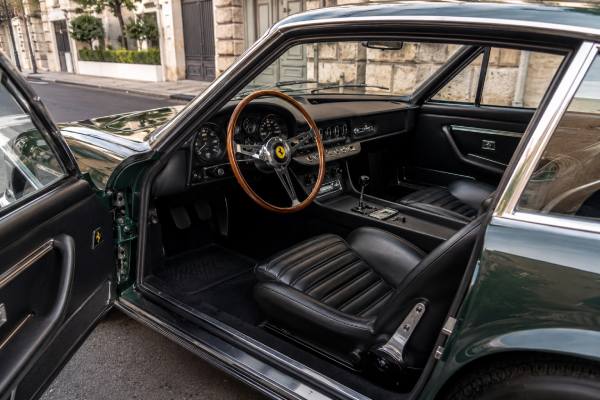
The cabin is one of the GTC/4’s strongest features. It feels more luxurious and more relaxed than a Daytona cabin. Power windows, power steering, and air conditioning suit the car’s grand-touring mission. The dashboard is broad and driver-focused, with clear instrumentation and a proper manual gear lever. The rear seats are best understood as occasional seats or luggage space, not true adult accommodations.
Why the side-draft V12 matters
The six Weber 38 DCOE side-draft carburetors are central to the car’s identity. They allowed the low hood line and helped give the engine a different throttle feel from the Daytona. When properly tuned, the engine is smooth, strong, and responsive across a wide rev range. When out of tune, the car can feel flat, smoky, thirsty, and difficult to start cleanly.
The engine bay is dense. Access is not as simple as the elegant body suggests. Carburetor synchronization, ignition health, fuel pressure, cooling system condition, and valve timing all need specialist attention. Small setup errors can change the whole character of the car.
Comfort engineering
The GTC/4’s engineering brief was not just speed. It was speed with reduced effort. Power steering makes the car easier to place in towns and on tight roads. Air conditioning gives it true touring ability, although system performance depends heavily on condition and updates. The rear self-leveling arrangement was intended to keep the car composed with luggage and passengers.
These features are exactly what make the car appealing, but they also increase restoration complexity. A stripped, simplified, or poorly converted car may lose much of what makes a GTC/4 special.
Road Character and Period Performance
A good 365 GTC/4 feels fast, cultured, and surprisingly usable for a 1970s front-engine V12 Ferrari. It is not as raw as a Daytona and not as delicate as an earlier 275 or 330-series car; its personality is muscular, long-legged, and relaxed at speed.
Acceleration is strong rather than explosive by modern supercar standards. The V12 builds power with a smooth, mechanical urgency, and the side-draft carburetors give the engine a rich intake note. The car is happiest when warmed properly and driven with rhythm. It does not reward cold starts followed by immediate hard use.
The five-speed manual gearbox is part of the experience. When healthy and warm, it should feel positive and mechanical. Like many classic Ferraris, it may prefer a gentle hand before the oil has reached temperature. A gearbox that crunches, jumps out of gear, or feels vague should be treated as a serious inspection point, not a minor annoyance.
Power steering changes the GTC/4’s character compared with more demanding Ferraris of the same era. It reduces low-speed effort and makes the car less tiring in traffic or on long trips. Some drivers coming from earlier manual-steering Ferraris may find it less raw. Others will see it as one of the model’s great strengths.
The ride is more compliant than the Daytona’s reputation would suggest. A properly sorted GTC/4 should cover poor surfaces with confidence while still feeling like a serious high-performance GT. If the rear self-leveling system is weak, disconnected, or incorrectly converted, the car may sit wrong, squat under acceleration, or lose some of its intended balance.
Braking performance is period-correct and confidence-inspiring when the system is fresh, but expectations need to be realistic. The brakes do not feel like modern carbon-ceramics, and repeated hard use will reveal the age of the design. Old hoses, tired fluid, seized calipers, and incorrect pads can make a dramatic difference.
Visibility is better than many later exotic cars, but the long nose and low seating position still require care. Cabin heat, fuel smell, fan noise, and air-conditioning effectiveness vary greatly from car to car. A restored car with a renewed cooling and ventilation system can feel surprisingly usable. A neglected one can feel like a beautiful furnace.
On a flowing road, the GTC/4’s appeal becomes clear. It has enough torque to avoid constant shifting, enough rev range to feel special, and enough comfort to keep the driver fresh. It is a Ferrari for covering distance quickly, not for chasing lap times.
Maintenance, Reliability and Restoration Risks
The 365 GTC/4 can be reliable in the classic Ferrari sense: it can work well if exercised, maintained by specialists, and repaired before small problems spread. It is not a low-maintenance collector car, and deferred maintenance usually becomes expensive because the engine, chassis, body, trim, and hydraulic systems are all complex.
The V12 itself is strong when correctly built and maintained. The risks are usually age, neglect, poor setup, and old repairs. Carburetors need proper rebuilding and synchronization. Ignition components must be healthy. Cam chain condition and valve adjustment require specialist knowledge. Cooling systems must be clean and efficient because heat is the enemy of both reliability and driver comfort.
Common inspection areas include:
- Cold-start behavior, hot restart behavior, smoke, oil pressure, and exhaust smell.
- Carburetor condition, linkage wear, fuel leaks, and evidence of fire damage.
- Cooling system renewal, radiator condition, hoses, fans, thermostat function, and water pump history.
- Cam chain noise, valve adjustment records, compression and leak-down results.
- Gearbox synchros, clutch operation, torque tube condition, and differential noise.
- Brake calipers, master cylinder, flexible hoses, discs, and parking brake function.
- Rear self-leveling suspension condition and whether any conversion was done correctly.
- Power steering leaks, pump noise, steering box wear, and hose condition.
- Wiring harness condition, fuse boxes, relays, lighting motors, gauges, and window lifts.
- Air-conditioning compressor, evaporator, condenser, controls, and hose upgrades.
Corrosion is one of the biggest restoration risks. The body may look clean from above while hiding rust in lower panels, sills, floor sections, wheel arches, door bottoms, battery areas, and structural junctions. Old underseal can hide poor repairs. Accident damage is also a major concern because correct coachwork requires people who understand hand-built Ferraris, not just general classic body repair.
Interior restoration can be surprisingly costly. Seats, dash materials, switches, gauges, carpets, headliner, rear trim, and air-conditioning controls all require careful sourcing or restoration. The cabin is central to the car’s value, so a poor re-trim can hurt both appearance and market appeal.
The originality-versus-upgrade question needs judgment. Some upgrades, such as improved cooling fans, modern fuel hoses, careful air-conditioning improvements, electronic ignition hidden within a period-looking setup, or stainless exhaust sections, can make the car more usable. But visible modern changes, incorrect wheels, non-original interior materials, or major mechanical substitutions can reduce collector appeal.
A proper pre-purchase inspection should include a Ferrari specialist, not just a general classic-car mechanic. Ideally, it should include a lift inspection, engine tests, documentation review, paint-depth readings, chassis and body-number checks, road test from cold to hot, and confirmation of books, tools, and major components.
| Area | Why it matters | Best buyer response |
|---|---|---|
| Corrosion | Body and structural repair can exceed the value difference between cars | Inspect on a lift and review restoration photos |
| V12 setup | Poor carburetion or ignition makes the car feel wrong and can mask deeper faults | Ask for compression, leak-down, and recent tuning records |
| Rear suspension | The self-leveling system affects stance, ride, and originality | Confirm condition or quality of any conversion |
| Documentation | Identity and provenance strongly affect value | Verify numbers, ownership chain, books, tools, and invoices |
| Interior trim | Correct restoration is expensive and visible | Compare materials and details with known original cars |
Values, Buying Checks and Rivals
The 365 GTC/4 remains one of the more nuanced front-engine V12 Ferrari buys: rarer than many better-known models, usually less expensive than a Daytona, and more complex than its quiet image suggests. Recent market data often places usable cars around the high-$100,000s to mid-$200,000s, with projects below that and exceptional, highly documented cars above it.
Values are driven by the same factors that matter across serious classic Ferraris, but the GTC/4 has its own weighting. Originality and condition matter more than color alone. A rare color is valuable only if the rest of the car supports it. A beautiful repaint over rust, missing tools, uncertain numbers, and weak mechanicals is not a bargain.
The best cars usually have:
- Matching engine and chassis identity.
- Clear ownership history and strong service records.
- Correct manuals, pouch, tools, jack, and related equipment.
- Original or accurately restored interior.
- Proper body fit with no hidden corrosion or accident shortcuts.
- A healthy V12 with documented tuning and test results.
- Correct stance, working rear suspension, and sorted brakes.
- Sensible, reversible usability upgrades if any have been made.
Cars to approach carefully include stalled restorations, shiny auction cars with thin paperwork, cars with missing engine identity, poorly converted suspension, non-original interiors, and examples with long periods of inactivity. A project GTC/4 can look tempting because the purchase price is lower, but the cost of bodywork, engine rebuilding, trim, tools, and mechanical sorting can overwhelm the initial saving.
Inspection sequence for serious buyers
A logical buying process starts with paperwork before paint. First, confirm chassis and engine identity, ownership history, and any factory or specialist documentation. Second, inspect the body and chassis on a lift. Third, review mechanical records and test the engine from cold. Fourth, drive the car long enough to check gearbox, temperature stability, brakes, steering, suspension, and hot restart behavior. Last, assess the books, tools, trim, and originality details that affect long-term value.
The closest Ferrari alternatives include the 365 GTB/4 Daytona, 365 GTC, 330 GTC, 365 GT4 2+2, and later 400-series cars. The Daytona is faster, more famous, and more expensive. The 365 GTC is cleaner and more classically styled, but it lacks the four-cam GTC/4 engine character. The 365 GT4 2+2 is roomier and often less costly, but it has a very different shape and market position. The 400-series cars offer V12 touring at a lower entry point, though they do not have the same early-1970s coachbuilt charm.
Period non-Ferrari rivals include the Lamborghini Espada, Maserati Ghibli, Iso Grifo, Aston Martin DBS V8, and Lamborghini Jarama. The Espada offers more rear-seat usability and dramatic presence. The Ghibli is more flamboyant. The Iso Grifo has American V8 simplicity with Italian design. The DBS V8 has a very different British GT feel. The Jarama is rare and intriguing but has its own specialist demands. Against all of them, the Ferrari stands out for its four-cam V12, brand depth, and unusual mix of rarity and usability.
| Alternative | Why buyers compare it | Main difference |
|---|---|---|
| Ferrari 365 GTB/4 Daytona | Same era, front V12, greater fame | More aggressive, more valuable, less relaxed |
| Ferrari 365 GTC | Earlier GTC line, elegant two-seat GT | Simpler style, less power, stronger classic purity |
| Ferrari 365 GT4 2+2 | Successor with V12 2+2 format | Roomier and more angular, usually less collectible |
| Lamborghini Espada | Italian V12 grand tourer with real seating | More practical rear cabin, different maintenance ecosystem |
| Maserati Ghibli | Italian GT with strong design appeal | More dramatic styling, different engine character |
Long-term collectability looks sound for correct examples because the GTC/4 combines rarity, V12 power, Pininfarina design, manual transmission, and front-engine Ferrari heritage. It is unlikely to become as universally sought after as the Daytona, but that is not necessarily a weakness. The car’s best market is made of knowledgeable buyers who understand what it is: a rare, comfortable, complex, and deeply charismatic Ferrari GT that rewards careful selection.
References
- Ferrari 365 GTC4 (1971) – Ferrari.com 1971 (Manufacturer Specifications) ([Ferrari][1])
- FERRARI 365 GTC4 OPERATING, MAINTENANCE AND SERVICE HANDBOOK MANUAL Pdf Download | ManualsLib 1971 (Owner’s Manual) ([ManualsLib][2])
- FERRARI 365 GTC4 ADDITIONAL INSTRUCTIONS Pdf Download | ManualsLib 1971 (USA Supplement) ([ManualsLib][3])
- Ferrari 365 GTC/4 – Mechanicals and Specifications 2026 (Technical Reference) ([365gtc4.com][4])
- Ferrari 365 GTC/4 Market – CLASSIC.COM 2026 (Market Data) ([Classic.com][5])
Disclaimer
This article is for informational purposes only and is not a substitute for professional diagnosis, repair, appraisal, or restoration advice. Specifications, torque values, service intervals, market equipment, and repair procedures can vary by VIN, market, production detail, and installed components. Always verify details against official Ferrari service documentation and consult a qualified Ferrari specialist before purchase, repair, or restoration work.
If this guide helped you, please consider sharing it on Facebook, X/Twitter, or with other classic Ferrari enthusiasts to support our work.