
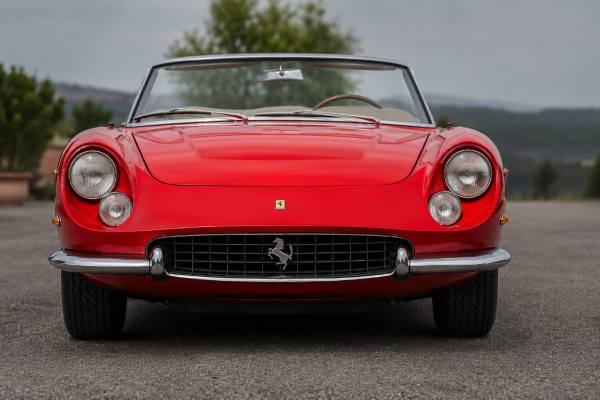
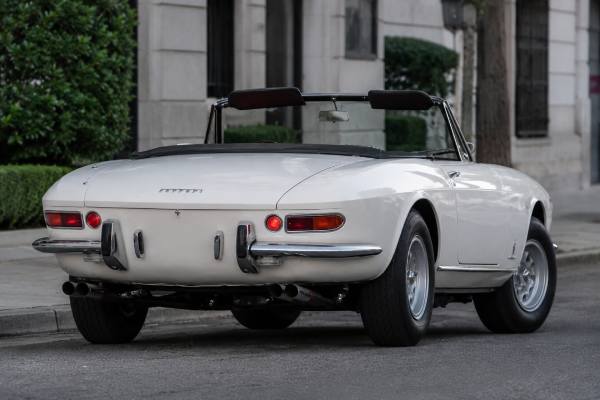
The Ferrari 365 GTS was the short-lived open version of Ferrari’s late-1960s two-seat grand tourer, built around the Tipo 592C chassis and the 4.4-liter Tipo 245/C Colombo V12. Produced in very small numbers during 1969, it replaced the 330 GTS formula with more displacement, more torque, and a cleaner Pininfarina body whose bonnet vents made it easy to separate from its predecessor.
This is not the later 365 GTS/4 Daytona Spider. The 365 GTS is quieter in its styling, rarer in production, and closer in spirit to the 330 GTC/GTS family: compact, elegant, front-engined, and usable by classic Ferrari standards. Its appeal comes from that mix of restraint and scarcity. It gives the open-air V12 experience without the dramatic shape or market profile of the Daytona Spider, yet it is one of the rarest regular-production Ferrari road cars of its era.
Quick Take
The Ferrari 365 GTS is prized because it combines Pininfarina elegance, a short-wheelbase open body, a 320 hp 4.4-liter Colombo V12, and just 20 accepted production examples. Its strongest appeal is not outright speed but the blend of rarity, sound, balance, and hand-built 1960s Ferrari character. The main caution is that a poor restoration, missing original components, weak documentation, or incorrect drivetrain identity can change the car’s value and ownership experience dramatically.
Table of Contents
- History and Collector Significance
- Engine, Chassis and Key Specifications
- Production, Variants and Factory Options
- Design, Engineering and Special Details
- Driving Experience and Performance Character
- Maintenance, Reliability and Restoration Risk
- Market Value, Buying Guide and Rivals
History and Collector Significance
The 365 GTS matters because it was Ferrari’s final expression of the compact, single-overhead-cam, open two-seat grand tourer before the market moved toward the more dramatic Daytona Spider. It sits between the 330 GTS and the 365 GTS/4, but it has its own identity because of its 4.4-liter engine, limited production, and understated Pininfarina body.
Ferrari’s 330 GTC and 330 GTS had already proved that a short-wheelbase V12 Ferrari could be civil, fast, beautiful, and usable. The 365 GTC and 365 GTS kept the same basic idea but added the larger 4,390 cc V12 used elsewhere in Ferrari’s 365 family. The name followed Ferrari’s period convention: roughly 365 cc per cylinder, multiplied across twelve cylinders.
The 365 GTS was not launched as a loud new design statement. It was more of a refined final evolution. Compared with the 330 GTS, the most obvious visual change was the relocation of engine-bay ventilation from the front wings to the bonnet. Mechanically, the bigger story was the Tipo 245/C V12. It gave the car stronger torque and a broader power band while keeping the smooth, flexible personality that made the GTC/GTS family so well liked.
Pininfarina’s role is central. The body was elegant rather than aggressive, with a long bonnet, slim pillars, delicate chrome, and a compact tail. In period, this car was aimed at buyers who wanted a refined open Ferrari rather than a raw competition-derived machine. Today, that same restraint is part of the appeal. A 365 GTS looks expensive without trying hard to look important.
The car’s collector status is heavily tied to rarity. The accepted production figure is 20 spiders, making it much scarcer than the already collectible 365 GTC coupe and even rarer than the Daytona Spider. That does not automatically make every example equal. The best cars have clear provenance, matching-numbers drivetrains, known colors, original coachwork, factory documentation, and high-quality restoration records.
Its significance is also mechanical. The 365 GTC/GTS line represents the end of Ferrari’s single-overhead-cam V12 road-car tradition in this compact two-seat layout. Later Ferrari V12 grand tourers moved into a different design and engineering era. For collectors, the 365 GTS is attractive because it captures the last mature version of an older Ferrari formula: front engine, rear transaxle, hand-built bodywork, carburetors, and open-air touring.
Engine, Chassis and Key Specifications
The 365 GTS used a front-mounted 4.4-liter Colombo-derived V12 and a rear five-speed transaxle, giving it strong performance with balanced road manners. Its technical package was not experimental, but it was carefully evolved and very sophisticated for a late-1960s road car.
| Item | Specification |
|---|---|
| Model | Ferrari 365 GTS |
| Chassis type | Tipo 592C tubular steel chassis |
| Engine type | Tipo 245/C 60-degree V12 |
| Displacement | 4,390.35 cc |
| Bore x stroke | 81 mm x 71 mm |
| Valve gear | Single overhead camshaft per bank, two valves per cylinder |
| Fuel system | Triple twin-choke Weber downdraft carburetors |
| Compression ratio | 8.8:1 |
| Maximum output | 320 hp at 6,600 rpm |
| Torque | About 267 lb-ft / 363 Nm |
| Transmission | Five-speed manual rear transaxle |
| Drive | Rear-wheel drive |
The Tipo 245/C engine was the reason the 365 GTS felt different from the 330 GTS. The older 4.0-liter V12 was already smooth and musical, but the 4.4-liter unit gave the car more low- and mid-range strength. That mattered in real driving. The driver did not need to chase the top of the rev range constantly to make quick progress.
The chassis was a development of Ferrari’s proven tubular steel structure. The engine sat up front, but the gearbox was mounted at the rear in a transaxle layout. This helped weight distribution and gave the car a more balanced feel than a simple front-engine, front-gearbox layout would have offered.
| Area | Specification |
|---|---|
| Front suspension | Independent wishbones, coil springs, telescopic dampers, anti-roll bar |
| Rear suspension | Independent wishbones, coil springs, telescopic dampers, anti-roll bar |
| Brakes | Servo-assisted discs front and rear |
| Steering | Manual steering system |
| Standard wheels | 14-inch alloy wheels |
| Tyres | 205 x 14 period specification |
| Wheelbase | 2,400 mm |
| Length | About 4,470 mm |
| Width | About 1,670 mm |
| Height | About 1,300 mm |
| Fuel capacity | 90 liters |
| Top speed | About 245 km/h / 152 mph |
The suspension layout is important because it explains why these cars have such a strong reputation as road machines. Four-wheel independent suspension, a rear transaxle, disc brakes, and a compact wheelbase gave the 365 GTS a more modern feel than many earlier open Ferraris. It was still a hand-built classic, but it was not primitive.
The braking system is strong when properly restored, but expectations should stay period-correct. The car does not have modern ABS, electronic brake distribution, stability control, or modern tire technology. Brake performance depends heavily on fresh hydraulics, correct pads, true discs, good servo operation, and properly aged tires.
Production, Variants and Factory Options
The 365 GTS was built in extremely small numbers, and identification is a major part of its value. Buyers should treat chassis, engine, gearbox, body, color, trim, and factory documentation as part of the car’s core specification, not as secondary details.
The accepted production figure is 20 examples. That makes the car much rarer than the 365 GTC coupe and places it among the more elusive open road Ferraris of the 1960s. Some cars were completed or prepared around the changeover from late 1968 into 1969, but the model is generally associated with the 1969 production year.
The main production relationship is simple:
| Model | Body style | Role in the range |
|---|---|---|
| 330 GTS | Two-seat spider | Predecessor with 4.0-liter V12 |
| 365 GTC | Two-seat coupe | Closed companion model with 4.4-liter V12 |
| 365 GTS | Two-seat spider | Open 4.4-liter GTC-family car |
| 365 GTS/4 Daytona Spider | Two-seat spider | Later Daytona-based successor, a different model |
The quickest visual distinction from the 330 GTS is the bonnet venting. The 330 used wing-side vents, while the 365 adopted bonnet vents for engine-bay extraction. The cabin also received small updates, including changes around ventilation and trim details. These differences are subtle, so a proper inspection should never rely on appearance alone.
Factory equipment and special-order details matter. Period Ferrari production was not as standardized as modern production, and individual cars may differ in trim, instruments, lighting, market equipment, exterior color, leather color, radio fitment, air conditioning, wheels, and hardtop provision. Optional Borrani wire wheels, air conditioning, radio equipment, and a removable hardtop can affect both desirability and restoration complexity.
Matching numbers are vital. On a car this rare, the engine, gearbox, body number, and original chassis identity should be checked against factory records and respected marque documentation. A Ferrari Classiche Red Book, factory correspondence, build sheets, Marcel Massini-style history reports, older registration records, restoration invoices, and concours judging records can all support the car’s story.
Original colors can also matter. A 365 GTS restored in red may look familiar and sell well, but an unusual original color with correct interior trim can be more interesting to serious collectors. The same is true for preserved details: factory manuals, tool roll, jack, original wheels, period radio, original soft-top frame, and trim pieces can be very difficult and expensive to replace.
Design, Engineering and Special Details
The 365 GTS is distinctive because it hides serious engineering under a restrained Pininfarina body. Its design does not shout, but the proportions, surface control, and mechanical layout make it one of the most elegant open Ferraris of the late 1960s.
The front view is clean and formal, with a long bonnet and a relatively narrow body by modern standards. The side profile is the real strength. The windscreen is upright enough to give good visibility, the cabin sits neatly between the axles, and the tail is short without looking abrupt. The chrome bumpers, slim lights, and delicate trim make the car feel more tailored than theatrical.
Body construction combined hand-built craft with practical production methods. The bodies were made mainly from steel, with aluminum used for the bonnet and boot lid. Because these cars were built in small numbers, panel gaps, door fit, and trim placement can show hand-built variation. That is normal, but poor symmetry, heavy filler, weak shut lines, or inconsistent swage lines may point to accident damage or a low-quality restoration.
The open body was not simply a coupe with the roof removed. Open Ferraris needed additional reinforcement to manage body flex. A good 365 GTS should feel solid for a 1960s spider, though it will never have the torsional stiffness of a modern carbon or aluminum structure. Excessive scuttle shake, door movement, or unusual rattles should be investigated.
The engine bay is part of the car’s appeal. The Colombo V12 fills the space with polished intake hardware, cam covers, carburetors, linkages, ignition components, and plumbing. Correct finishes matter. Over-restored brightwork, modern clamps everywhere, incorrect hoses, non-period ignition conversions, or poorly routed fuel lines can reduce authenticity even if the car runs well.
The rear transaxle is one of the car’s key engineering features. It helped Ferrari achieve better balance and gave the 365 GTS a more settled feel on fast roads. The torque tube connection between engine and transaxle also makes drivetrain alignment important. Bad mounts, worn joints, or poor assembly can create vibration that is expensive to diagnose.
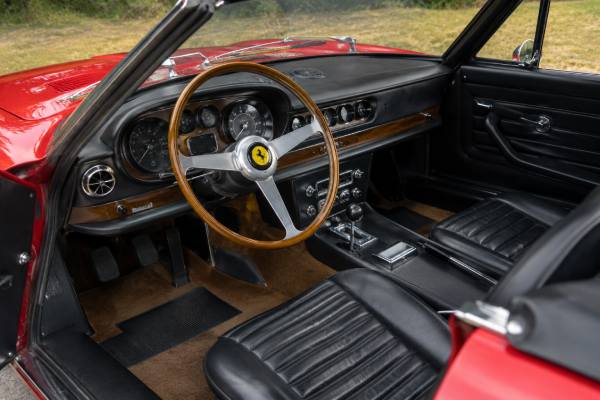
The cockpit is simple, leather-lined, and driver-focused. Large instruments, a gated manual shifter, a thin-rimmed steering wheel, and compact switchgear define the experience. The cabin feels closer to a tailored GT than a racing car. Correct leather grain, carpets, dash covering, instruments, knobs, and ventilation controls are all important because many trim items are rare and costly.
The sound is one of the special features. The 4.4-liter V12 is smoother and fuller than many smaller Colombo engines. With the roof down, the driver hears more intake, exhaust, and mechanical noise. A well-tuned car should sound crisp without popping, spitting, or smelling heavily of fuel once warm.
Driving Experience and Performance Character
A properly sorted 365 GTS feels quick, flexible, and beautifully mechanical rather than harsh or intimidating. It is a fast 1960s grand tourer, not a modern supercar, and its best qualities appear when the car is warm, correctly tuned, and driven with mechanical sympathy.
The engine is the center of the experience. The 4.4-liter V12 pulls smoothly from low revs, builds strongly through the middle of the tachometer, and rewards higher rpm with a sharper voice. Compared with a smaller 4.0-liter 330, the 365 feels more relaxed because it does not need as much gear-changing to cover ground quickly.
The throttle response depends heavily on carburetor condition. A good car should take small throttle openings cleanly, pull evenly, and idle without drama once warm. Hesitation, flat spots, fuel smell, or uneven response often point to carburetor imbalance, ignition weakness, air leaks, tired fuel lines, or poor setup.
The gearbox rewards patience. The rear five-speed transaxle can feel stiff when cold, and second gear should not be rushed until the oil warms. Once everything is up to temperature, the shift should be precise and satisfying. Crunching, baulking, jumping out of gear, or heavy vibration are warning signs.
Steering effort is higher at parking speed but becomes natural on the move. The car’s narrow tires and compact footprint help it feel alert without being nervous. It should not wander, tramline badly, or feel loose over bumps. If it does, the cause may be old tires, worn suspension bushes, incorrect alignment, tired dampers, or previous chassis repair.
The ride is part of the car’s charm. On correct tires and suspension settings, a 365 GTS should breathe with the road rather than crash into it. The chassis has enough compliance for touring, but the short wheelbase and independent rear suspension keep it responsive on flowing roads.
Braking is good for the era when the system is fresh. The driver must still leave modern-car margins. Old hoses, sticking calipers, poor servo assistance, contaminated pads, or tired fluid can make a good car feel poor. Because many cars spend long periods parked, brake condition should never be assumed from mileage alone.
With the roof down, the GTS feels more vivid than the coupe. The tradeoff is wind noise, cabin heat, and more exposure to smells and mechanical sounds. That is part of the appeal, but it also makes a tired car harder to ignore. A weak-running engine, loose body, noisy transaxle, or poor top fit will be obvious.
Maintenance, Reliability and Restoration Risk
The 365 GTS can be reliable in specialist hands, but it is an exotic, hand-built, carbureted V12 Ferrari with rare body and trim parts. Ownership risk comes less from one famous defect and more from age, storage, incorrect repairs, corrosion, and the cost of putting small details right.
The engine itself is robust when maintained properly. The Colombo V12 needs clean oil, correct valve adjustment, healthy ignition, accurate carburetor setup, and a sound cooling system. Cars that sit unused can suffer from dried seals, stale fuel, blocked jets, corroded tanks, weak fuel pumps, and perished hoses.
Key mechanical inspection points include:
- Oil pressure when hot, both at idle and while driving.
- Coolant temperature in traffic and after a spirited run.
- Smoke on start-up, overrun, or hard acceleration.
- Timing-chain noise, valve-train noise, and cam-cover leaks.
- Carburetor balance, throttle-shaft wear, and fuel seepage.
- Distributor condition, points, coils, leads, plugs, and charging output.
- Exhaust leaks, cracked manifolds, and incorrect silencers.
The transaxle and driveline need careful attention. Worn synchros, tired bearings, noisy final-drive gears, clutch judder, weak clutch cable adjustment, worn mounts, and torque-tube vibration can all become expensive. A short test drive is not enough. The car should be driven from cold to fully warm, then checked again after heat soak.
Cooling is another major area. Radiator condition, fan operation, thermostat function, hoses, clamps, water pump condition, and coolant passages all matter. A car that runs cool on a mild day may still struggle in summer traffic if the system is marginal.
Corrosion is one of the largest restoration risks. The body is largely steel, and old repairs can hide rust under paint and filler. Pay close attention to:
- Sills, floors, jacking points, and lower door areas.
- Wheel arches, bonnet edges, boot lid edges, and boot floor.
- Front and rear valances.
- Windscreen and scuttle areas.
- Suspension mounting points and chassis tubes.
- Battery area and fuel-tank surroundings.
Accident damage is equally serious. These cars were valuable for decades, but not always valuable enough to justify perfect repairs at every point in their lives. Look for uneven wheelbase measurements, poor panel alignment, non-original welds, distorted chassis tubes, heavy filler, odd bumper fit, and inconsistent door gaps.
Interior restoration is expensive because the small details matter. Correct instruments, switches, handles, soft-top hardware, carpets, leather pattern, dash trim, and chrome pieces can be difficult to source. A missing hardtop, tool roll, jack, manuals, or original wheels may not stop the car being enjoyable, but it affects value.
The best ownership approach is preventive. Use the car, service it regularly, keep fuel fresh, exercise the brakes and clutch, and store it in a dry environment. A low-mileage car that has sat for years may need more work than a higher-mileage car maintained by a respected Ferrari specialist.
Market Value, Buying Guide and Rivals
The 365 GTS trades in the low-to-mid seven-figure collector market, but individual value depends heavily on authenticity, history, color, restoration quality, and whether the car is fresh or already fully sorted. Because only 20 exist, one auction result can influence perception, but it does not define every car.
Recent public market evidence shows the model’s narrow but serious buyer base. Strong examples have sold around the $2 million to $3.6 million range in the modern era, with a 2026 public result around $2.59 million and earlier high-profile cars reaching above $3 million. A 2024 Monterey example carried a $2.8 million to $3.2 million estimate but did not sell, which shows that rarity alone does not guarantee a transaction at any price.
The main value drivers are:
- Original chassis, engine, gearbox, and coachwork.
- Ferrari Classiche certification or equivalent documentation strength.
- Known ownership history and continuous provenance.
- Original color combination or a highly attractive period-correct color.
- Restoration quality from a recognized specialist.
- Correct body details, trim, instruments, wheels, and soft-top hardware.
- Complete books, tools, jack, manuals, and historical paperwork.
- Mechanical readiness, not just cosmetic presentation.
The buyer’s inspection should be more like a forensic review than a normal used-car check. A 365 GTS is rare enough that a buyer should confirm identity first, condition second, and drivability third. A beautiful car with unclear numbers or weak documentation carries more risk than an older restoration with a transparent history.
A sensible pre-purchase process is:
- Confirm chassis, engine, gearbox, and body identity against marque records.
- Review ownership history, restoration invoices, old photos, and registration documents.
- Inspect the chassis and body on a lift with a Ferrari body specialist.
- Perform a compression and leak-down test on the warm engine.
- Drive the car long enough to assess gearbox, cooling, brakes, steering, and heat soak.
- Check originality of major components, trim, wheels, instruments, and top hardware.
- Estimate the cost of making the car correct, not just roadworthy.
Cars to seek are matching-numbers examples with clear provenance, correct details, and recent specialist maintenance. Cars to approach carefully include older restorations with little documentation, cars missing rare trim, cars with unclear color history, and cars that have been stored for long periods without proper recommissioning.
The closest rivals depend on what the buyer values. A 330 GTS offers similar styling with a 4.0-liter engine and a different rarity profile. A 365 GTC coupe gives much of the same mechanical character at a lower price, though without the open body and extreme rarity. The 365 GTS/4 Daytona Spider is more dramatic, more famous, and more muscular, but it is a different driving and design experience. The 275 GTS is softer and earlier in feel, while a 275 GTB/4 offers stronger performance and a more sporting closed-body profile.
For a collector who wants an open V12 Ferrari with elegance, rarity, and usability, the 365 GTS is a serious target. For someone who wants maximum drama, poster-car recognition, or modern usability, other Ferraris may make more sense. The right 365 GTS is about quiet confidence: rare, beautiful, mechanically rich, and deeply sensitive to authenticity.
References
- Ferrari 365 GTS (1969) 1969 (Manufacturer specifications)
- 1969 Ferrari 365 GTS by Pininfarina | Arizona 2017 | RM Sotheby’s 2017 (Auction and provenance)
- 1969 Ferrari 365 GTS by Pininfarina | Monterey 2024 | RM Sotheby’s 2024 (Auction and market reference)
- Ferrari 365 GTS Market – CLASSIC.COM 2026 (Market data)
- Ferrari 365 GTC & 365 GTS Guide — Supercar Nostalgia 2021 (Technical background)
Disclaimer
This article is for informational purposes only and is not a substitute for professional diagnosis, repair, appraisal, or inspection. Specifications, torque values, service intervals, procedures, and original equipment can vary by chassis number, market, production detail, and later restoration history. Always verify critical information against official Ferrari service documentation, factory records, and a qualified Ferrari specialist before buying, repairing, or restoring a 365 GTS.
Share this guide on Facebook, X/Twitter, or your favorite enthusiast community if it helped you research this rare Ferrari.