

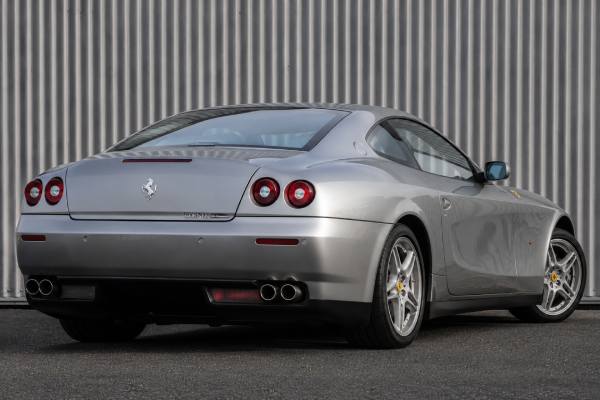

The Ferrari 612 Scaglietti Cornes 30th Anniversary Edition is a rare Japan-market version of Ferrari’s front-mid-engine V12 grand tourer. It is based on the F137-generation 612 Scaglietti, but its identity is tied to Cornes & Co., Ferrari’s long-standing Japanese importer, and to a small 2006 production run built to celebrate Cornes’ 30th anniversary with the marque.
Unlike a track-special Ferrari, this car’s appeal comes from a mix of rarity, specification, long-distance ability, and understated status. It uses the same 5.7-liter Tipo F133F naturally aspirated V12 as the standard 612 Scaglietti, with 540 hp, rear-wheel drive, aluminum construction, and a serious 2+2 cabin. The Cornes edition adds a collector layer: special colors, unique trim details, and a production story that makes documentation especially important.
Quick Take
The 612 Scaglietti Cornes 30th Anniversary Edition is strongest as a rare, usable V12 Ferrari with true grand-touring character rather than as a lightweight sports car. Its most important identity is the combination of the F133F 5.7-liter V12, aluminum F137 chassis, Japan-only Cornes anniversary specification, and very limited production. The main caution is ownership cost: F1 transmission health, clutch wear, suspension electronics, brakes, sticky interior parts, and deferred service can quickly outweigh any purchase-price bargain. For buyers, the key factor is not just mileage, but proof that the car is a genuine Cornes edition with correct build details, complete Ferrari history, recall completion, and specialist inspection.
Table of Contents
- Model History and Collector Context
- F133F V12 Specs and Chassis Data
- Production, Variants and Cornes Details
- Pininfarina Design and 612 Engineering
- Road Character and Performance
- Maintenance Risks and Restoration Reality
- Values, Inspection and Buying Guide
Model History and Collector Context
The 612 Scaglietti matters because it was Ferrari’s modern aluminum V12 2+2 before the FF and GTC4Lusso changed the formula with hatchback practicality and four-wheel drive. The Cornes 30th Anniversary Edition matters because it turns that already distinctive grand tourer into a small-run collector version linked to Ferrari’s Japanese market history.
Ferrari introduced the 612 Scaglietti for the 2004 model year as the successor to the 456M. The 456 had been elegant and traditional, but the 612 was bigger, more technically ambitious, and more usable as a long-distance Ferrari. It kept the classic front-engine V12 layout, but the engine sat well back behind the front axle line, giving it a front-mid-engine balance rather than the nose-heavy feel many large GT cars suffer from.
The name honored Sergio Scaglietti, the Modenese coachbuilder closely tied to Ferrari’s greatest aluminum-bodied competition and road cars. That was not just a nostalgic badge. The 612 itself used aluminum construction, and its body was produced through Ferrari’s modern manufacturing approach rather than old-style coachbuilding. It was one of the cars that helped normalize aluminum structures in Ferrari’s V12 road-car range.
The Cornes 30th Anniversary Edition arrived in 2006 for Japan. Cornes & Co. had a major role in Ferrari’s presence in Japan, and this limited model was created to recognize that relationship. Publicly available registry and period information describe the run as only 20 cars. That makes it far rarer than a standard 612 and more obscure than headline Ferrari limited editions such as the 612 Sessanta.
For collectors, that obscurity cuts both ways. A Cornes edition can be far more interesting than a normal F1 612, especially in its original specification. Yet it also requires more careful verification because many buyers outside Japan will not know the visual cues, option codes, or original market details. A standard 612 in blue paint is not automatically a Cornes anniversary car.
The broader 612 reputation has changed over time. When new, it was often viewed as large, expensive, and visually challenging compared with mid-engine Ferraris. Today, its virtues are easier to appreciate. It has a naturally aspirated V12, hydraulic steering, restrained electronics by modern standards, real rear seats for occasional adult use, and enough luggage space for actual travel. It is also from a period before Ferrari’s V12 GT cars became more complex in driveline and cabin electronics.
The Cornes version adds a specific collector story without changing the basic mission. It is still a refined, fast, front-engine Ferrari GT. Its importance lies in rarity, specification, provenance, and its link to Japan’s Ferrari importer rather than in motorsport success or radical performance engineering.
F133F V12 Specs and Chassis Data
The Cornes 30th Anniversary Edition uses the 612 Scaglietti’s 5,748 cc Tipo F133F naturally aspirated V12, rated at 540 hp and 588 Nm of torque. It is not a separate engine tune, so the buying focus should be on condition, service history, and correct specification rather than claims of extra factory power.
| Item | Specification |
|---|---|
| Model code | F137 |
| Production year | 2006 |
| Body style | 2-door 2+2 grand touring coupe |
| Layout | Front-mid-engine, rear-wheel drive |
| Engine | Tipo F133F 65-degree V12 |
| Displacement | 5,748 cc |
| Induction | Naturally aspirated |
| Maximum power | 540 CV / 397 kW at 7,250 rpm |
| Maximum torque | 588 Nm / 434 lb-ft at 5,250 rpm |
| Transmission | 6-speed F1A electrohydraulic automated manual on typical Cornes examples |
| Drivetrain | Rear-wheel drive with rear transaxle layout |
| Top speed | Over 315 km/h / about 199 mph |
| 0–100 km/h | About 4.2 seconds |
The engine is related to Ferrari’s contemporary front-engine V12 family and shares its character with the 575M and Superamerica era, but the 612 installation is tuned for a broader grand-touring role. It is smooth at low speed, flexible in the midrange, and serious at high rpm. The 7,250 rpm power peak tells you something important: this is not a lazy luxury coupe engine. It rewards revs, but it does not need to be worked hard in normal driving.
The F1A gearbox is an automated single-clutch manual. It is not a torque-converter automatic and not a modern dual-clutch transmission. Mechanically, it uses a clutch and gearset similar in concept to a manual, but gear selection and clutch operation are controlled electrohydraulically through steering-column paddles and electronic logic. That matters for ownership because clutch wear, actuator health, sensor function, and correct setup are key inspection points.
| Area | Details |
|---|---|
| Body and structure | Aluminum body and aluminum space-frame construction |
| Suspension | Independent suspension with adaptive damping |
| Steering | Hydraulic power steering |
| Wheelbase | 2,950 mm |
| Length | 4,902 mm |
| Width | 1,957 mm |
| Height | 1,344 mm |
| Approximate kerb weight | About 1,840–1,865 kg depending on specification |
| Fuel capacity | About 108–110 liters depending on market documentation |
The size is central to the 612’s character. It is nearly 4.9 meters long, with a long wheelbase and a wide stance. That gives it stability at speed and real cabin space, but it also means it never feels like a small, tossable Ferrari. The engineering goal was mature speed and everyday usability, not the nervous feel of a mid-engine berlinetta.
Brakes depend on the exact package and market build. Cornes cars are widely described with HGTC equipment, which is associated with more focused suspension and braking hardware. Buyers should still confirm the individual car’s build sheet because carbon-ceramic brakes, caliper color, wheel style, and package content are all value-sensitive on a limited model.
Production, Variants and Cornes Details
The Cornes 30th Anniversary Edition is generally described as a 20-car Japan-market run built in 2006. The main authenticity task is to separate a real Cornes anniversary car from a normal 612 with similar paint, later trim changes, or incomplete documentation.
The regular 612 Scaglietti was produced through the 2000s in far larger numbers than the Cornes edition. Standard cars could be ordered with a manual gearbox or Ferrari’s F1A automated manual, though manual cars are much rarer across the whole model line. Later 612s moved into the One-to-One personalization era, while special editions such as the Sessanta gave Ferrari’s 2+2 GT range a more formal limited-production strategy.
The Cornes car sits in an earlier and more localized space. It was not a global anniversary model. It was a dealer/importer-linked special edition for Japan. That makes original Japanese-market paperwork, import history, and Ferrari build records unusually important.
Known Cornes Edition identifiers
Public descriptions of the 612 Scaglietti Cornes 30th Anniversary Edition commonly point to several features:
- Limited Japan-market production, widely stated as 20 cars.
- Association with Cornes & Co.’s 30th anniversary as Ferrari’s importer in Japan.
- Special Blu Cornes exterior finish on many examples.
- Carbon-fiber fuel filler cap.
- Mesh grille inserts in the front and rear fascia areas.
- HGTC-related equipment on commonly cited specification summaries.
- Distinct interior color and trim combinations, often including blue-themed details.
Because rare Ferraris often gain small changes through later ownership, these identifiers should be treated as starting points, not final proof. A buyer should ask for the Ferrari build sheet, original Japanese registration documents where available, service book, import/export papers, factory option list, manuals, toolkit, tire inflator or mobility kit, key set, and any Cornes-specific sales material.
| Check | Why it matters |
|---|---|
| VIN and factory build data | Confirms the car’s identity, market, color, equipment, and original configuration. |
| Original paint and trim codes | Separates a true anniversary specification from a later repaint or retrim. |
| HGTC equipment confirmation | Affects braking hardware, suspension setup, desirability, and replacement costs. |
| Japanese market documentation | Supports provenance and explains import history if the car now lives outside Japan. |
| Service and recall records | Shows whether age-sensitive systems have been maintained correctly. |
The Cornes edition is not the only collectible 612. Manual-transmission cars have a clear market premium because so few were built. The 612 Sessanta, limited to 60 cars, is another better-known collector variant. The One-to-One cars can also be desirable when they have strong color and option combinations. The Cornes edition competes in a different way: it is rarer than the Sessanta but less widely recognized, which can create opportunity for knowledgeable buyers and confusion for casual sellers.
Originality matters. A Cornes car with correct paint, interior, books, tools, Ferrari service history, and no questionable repaint story will normally be more appealing than a modified or color-changed car, even if the modified car presents well. For limited-edition Ferraris, the best examples usually feel boringly complete: no missing paperwork, no unclear ownership gaps, no unexplained trim changes, and no dramatic stories.
Pininfarina Design and 612 Engineering
The 612’s design is distinctive because it combines a large, formal 2+2 body with Ferrari proportions and a front-mid-mounted V12. The Cornes edition does not redesign the car, but its special colors and trim details make the shape feel more intentional and more collectible.
Pininfarina shaped the 612 around a long hood, set-back cabin, broad rear haunches, and strong side scallops. Those side scallops are among the car’s most debated design features. They were not simply decoration; they gave the car visual identity and linked it to historic Ferrari forms, especially the Ingrid Bergman-linked 375 MM inspiration often associated with the 612’s design story.
The 612 is not a delicate car visually. It has real mass, a high beltline, and a long wheelbase. In darker colors it can look formal and understated. In Blu Cornes, it takes on a more special character without becoming loud. That suits the model well, because the 612 is not about theatrical doors or track-day aggression. It is about carrying speed with polish.
Aluminum structure and packaging
The aluminum structure is one of the most important engineering points. Ferrari used aluminum to reduce weight compared with a similar steel structure and to increase stiffness. In a large V12 2+2, that matters because the car needs to feel stable and solid while still responding like a Ferrari.
The front-mid-engine layout also helps the car’s balance. The V12 is ahead of the cabin but positioned well back, while the rear transaxle helps distribute mass toward the rear. This layout gives the 612 better high-speed composure and cornering behavior than its size might suggest.
The cabin packaging is unusually useful for a Ferrari coupe. Rear seats are real enough for shorter adult trips, and the luggage area can support touring. The front seats are comfortable, the dashboard is driver-focused without being cramped, and the view forward emphasizes the long hood. Rear visibility and parking confidence depend heavily on driver familiarity, because this is still a long, expensive, wide-bodied car.
Sensory character
The engine is the emotional center. The F133F V12 has the smoothness expected of a Ferrari twelve-cylinder, but it is not isolated into silence. At lower rpm it gives the car a cultured, expensive feel. As revs build, the intake and exhaust become sharper, and the 612 reminds you that it is not merely a luxury coupe.
HGTC-related exhaust and calibration equipment, where fitted and confirmed, add urgency. The difference is not just sound. It can affect how the car responds to throttle and gear changes, and it changes how special the 612 feels during spirited driving. For buyers, the important point is to verify that the hardware is original and healthy, not simply to accept a badge or sales description.
Road Character and Performance
The 612 Scaglietti Cornes edition drives like a fast, mature V12 Ferrari GT: stable, muscular, long-legged, and more agile than its size suggests. It is quick by any normal standard, but its real strength is the way it covers distance with a calmness that smaller sports cars cannot match.
Acceleration is strong rather than brutal by modern supercar standards. The 0–100 km/h time of roughly 4.2 seconds still feels serious because the V12 builds speed in a smooth, linear way. There is no turbo surge and no electric torque fill. Instead, the car gives a clear rise in sound, speed, and urgency as the tachometer climbs.
The F1A gearbox defines much of the driving experience. Driven slowly and lazily, it can feel less polished than a modern automatic or dual-clutch unit. It prefers a driver who understands how to ease the throttle slightly during shifts, especially at lower speeds. In quicker driving, it feels more natural and more mechanical. The shift is part of the event, not something hidden from the driver.
Steering is one of the 612’s underrated qualities. Hydraulic assistance gives more natural weighting than many later electric systems. The car is long and wide, so it does not dart into corners like a small mid-engine Ferrari, but it responds cleanly. On a flowing road, the chassis makes sense: settle the car, guide it in, let the V12 pull it out, and use the long wheelbase as an advantage rather than fighting it.
Ride quality is better than many expect. The adaptive damping helps the 612 handle poor roads without feeling loose. A tired car, however, will not feel this way. Worn suspension joints, old tires, weak dampers, incorrect alignment, or neglected bushings can make the car feel heavy and imprecise. A properly sorted 612 should feel planted, not vague.
Braking performance is strong, but condition matters. Steel-brake cars need careful inspection for disc wear, pad quality, and fluid service. Carbon-ceramic-equipped cars need even more careful inspection because replacement costs are high. On a collector-grade Cornes example, brake originality, remaining disc life, and evidence of correct maintenance all affect value.
The best setting for the car is a fast road or long-distance route rather than a tight city center. In traffic, the width, low nose, F1 clutch behavior, and limited rear visibility require care. On the open road, the car becomes far more convincing. It can cruise quietly, overtake effortlessly, and then deliver real Ferrari sound when asked.
Maintenance Risks and Restoration Reality
The 612 is not fragile when maintained well, but it is an expensive V12 Ferrari with age-sensitive electronics, hydraulics, suspension parts, and trim. The Cornes edition adds rarity, so originality and correct parts matter more than on an ordinary used grand tourer.
The engine itself is generally respected, but neglect is costly. Service history should show regular oil changes, proper annual inspections, cooling-system care, belt and accessory attention where applicable, and immediate correction of leaks or warning lights. A car that has done very few miles but sat unused for long periods can be just as risky as a higher-mileage car with steady specialist maintenance.
The F1 transmission system deserves special focus. Buyers should ask for clutch wear readings, actuator checks, sensor history, and evidence of correct setup with Ferrari diagnostic equipment. Jerky low-speed behavior can be normal to a point, but harsh engagement, warning lights, refusal to select gears, or inconsistent shifts are red flags.
Known ownership areas include:
- F1 clutch wear, clutch position sensors, hydraulic actuator issues, and calibration needs.
- Cooling-system hoses, radiators, expansion tank condition, and age-related leaks.
- Suspension wear, adaptive damper faults, ball joints, bushings, and alignment sensitivity.
- Brake condition, especially carbon-ceramic disc wear where fitted.
- Sticky interior switchgear and soft-touch coating deterioration.
- Battery drain, weak batteries, alternator issues, and warning lights caused by low voltage.
- Air-conditioning performance, compressor health, and climate-control electronics.
- Exhaust bypass or sport-exhaust component condition on cars with performance packages.
Recall history should be checked by VIN. The 2005–2007 F1 clutch sensor recall is especially relevant to an F1-equipped 2006 car. A later brake fluid reservoir cap recall also involved 612 Scaglietti model years. A seller should be able to prove recall completion through Ferrari dealer records or official service documentation.
Restoration is different from maintenance. A tired 612 can be made right, but the cost may exceed the value gap between a poor car and a good one. Paintwork on aluminum panels requires proper expertise. Accident repair must be inspected carefully because aluminum structures need correct methods, not generic body-shop work. Interior restoration can also be expensive if special Cornes colors, stitching, Alcantara, carbon parts, or unique trim pieces are missing or damaged.
For a Cornes edition, originality should guide decisions. Some upgrades may improve usability, such as modern tires, discreet battery maintenance equipment, or improved sticky-button refinishing. But irreversible changes, non-original interior retrims, aftermarket wheels, modified exhaust systems, and repainting away from a rare original color can weaken collector appeal.
A pre-purchase inspection should be done by a Ferrari specialist who knows 612s, not just exotic cars in general. The inspection should include diagnostic scans, clutch data, suspension checks, brake measurements, underbody inspection, paint-depth readings, leak checks, cold start, hot restart, road test, and document review. On a limited-edition car, the paperwork review is as important as the mechanical test.
Values, Inspection and Buying Guide
The Cornes 30th Anniversary Edition does not trade often enough to have a simple public price guide, so buyers should value it by combining standard 612 market data, rarity, originality, and proof of identity. A genuine, documented Cornes car should not be priced like an ordinary tired F1 612, but rarity alone cannot fix poor condition.
The broader 612 market has a wide spread. Ordinary F1 cars with mileage, deferred needs, or less desirable colors can sit far below rare manual cars, late One-to-One examples, and special editions. Public market data in 2026 showed regular 612 Scaglietti averages around the low six-figure dollar range, while manual examples and rare special versions can sit much higher. The Cornes edition belongs in the “special version” conversation, but exact value depends heavily on whether buyers recognize the edition and whether documentation is complete.
What drives value
The strongest Cornes examples usually have several things working together:
- Clear factory and Cornes-linked identity.
- Original paint color and correct interior specification.
- Complete books, tools, keys, manuals, service invoices, and ownership history.
- Low to moderate mileage with evidence of regular use and maintenance.
- Ferrari dealer or respected specialist service history.
- Completed recalls and no unresolved warning lights.
- Excellent cosmetic condition without over-restoration.
- Correct wheels, brakes, exhaust, carbon trim, and anniversary details.
Mileage matters, but it is not the only factor. A very low-mile car with original tires, old fluids, sticky controls, weak battery history, and no recent major service can be expensive to recommission. A slightly higher-mile car with careful maintenance, clean diagnostics, and excellent provenance may be the safer buy.
Buyer inspection checklist
| Area | What to confirm |
|---|---|
| Identity | VIN, build sheet, original market, Cornes anniversary details, paint and trim codes. |
| Documents | Service book, invoices, manuals, tools, keys, import records, and recall proof. |
| Engine | Cold start behavior, leaks, cooling performance, service intervals, and clean diagnostics. |
| F1 gearbox | Clutch wear reading, shift quality, actuator function, sensor recall completion, and calibration. |
| Brakes | Disc thickness, pad life, carbon-ceramic condition if fitted, fluid age, and brake recall status. |
| Suspension | Dampers, bushings, ball joints, warning lights, ride height, and alignment evidence. |
| Body | Paint readings, aluminum repair signs, panel fit, underbody damage, and corrosion around fasteners. |
| Interior | Correct trim, sticky buttons, leather shrinkage, seat wear, electronics, and climate control. |
Avoid cars with vague “special edition” claims and no factory support. Also be careful with cars that have been repainted, retrimmed, exported multiple times without records, converted mechanically, or modified with non-original wheels and exhausts. Those changes may not ruin a normal 612, but they can weaken the appeal of a limited Cornes car.
A good purchase should feel transparent. The seller should understand the edition, know the car’s history, and have records ready. The inspection should not reveal a backlog of expensive “normal Ferrari” work hidden behind a rare badge. For collectors, the right car is one that can be enjoyed without erasing its originality. For drivers, the right car is one that has been used enough to stay healthy and maintained enough to feel like the polished V12 GT Ferrari intended.
Long term, the Cornes 30th Anniversary Edition has a credible collectability case. It has a naturally aspirated V12, a rare Japan-market story, limited production, and a usable body style. Its market may stay narrower than manual 612s or better-known Ferrari limited editions, but knowledgeable buyers are likely to keep valuing documented originality. The safest approach is simple: buy the best-proven car, not the cheapest rare car.
References
- Ferrari 612 Scaglietti (2004) – Ferrari.com 2004 (Factory Specifications)
- USA RECALL CAMPAIGN 2008 (Recall Campaign)
- Part 573 Safety Recall Report 22V-536 2022 (Recall Database)
- ECR – Ferrari 612 Scaglietti Cornes 30th Anniversary Edition list 2026 (Registry)
- Ferrari 612 Scaglietti Market – CLASSIC.COM 2026 (Market Data)
Disclaimer
This article is for informational purposes only and is not a substitute for professional diagnosis, inspection, maintenance, or repair. Specifications, torque values, service intervals, recall status, option content, and procedures can vary by VIN, market, production date, and equipment. Always verify details against official Ferrari service documentation, factory records, and a qualified Ferrari specialist before buying, servicing, or restoring a vehicle.
Please share this guide on Facebook, X/Twitter, or your preferred automotive community if it helped your research and you would like to support our work.