
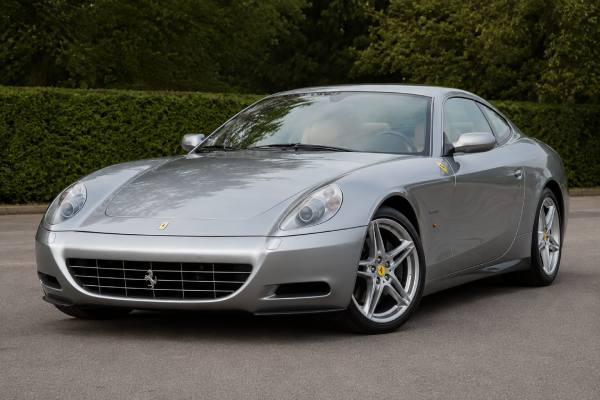

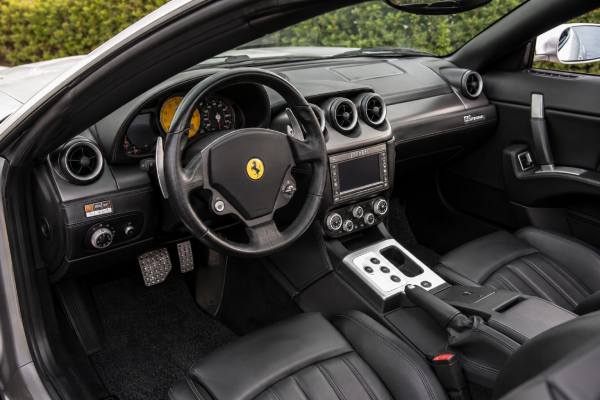
The Ferrari 612 Scaglietti GP Berne Edition is one of the least common modern V12 Ferrari grand tourers, not because it changed the basic 612 formula, but because it wrapped that formula in a very specific Swiss commemorative identity. It was based on the front-mid-engined 612 Scaglietti, used Ferrari’s F133F 5.7-liter V12, and added the desirable HGTC handling package, carbon-ceramic brakes, two-tone exterior treatment, special interior trim, and a plaque linked to the historic Bern Grand Prix circuit.
For buyers and enthusiasts, the important point is that this is still a 612 Scaglietti underneath: a large, aluminum-bodied, four-seat Ferrari built for fast road use rather than short-distance drama. Its value depends heavily on originality, documentation, service history, and proof that the GP Berne-specific details remain intact.
Quick Take
The 612 Scaglietti GP Berne Edition’s strongest appeal is its mix of rare-series collectability and usable V12 grand touring character. Its technical identity comes from the F137 612 platform, the F133F naturally aspirated V12, rear-wheel drive, and the HGTC package that sharpened the car without turning it into a track special. The caution is ownership cost: cam-belt service, F1 gearbox condition, carbon-ceramic brake wear, suspension components, electronics, and age-related cooling or rubber deterioration all need expert inspection. For collectors, the key factor is not just mileage, but whether the car still has its original two-tone GP Berne specification, interior details, plaque, books, tools, service invoices, and ideally Ferrari network documentation.
Table of Contents
- History and Collector Significance
- Engine, Chassis, and Key Specifications
- Production, Variants, and Factory Equipment
- Design, Engineering, and Special Features
- Driving Experience and Performance
- Reliability, Maintenance, and Restoration
- Market Value and Buying Guide
History and Collector Significance
The GP Berne Edition matters because it combines the 612 Scaglietti’s long-distance V12 Ferrari role with a tiny commemorative production run. It is not a separate mechanical model in the way a Challenge Stradale or Scuderia is, but it is much rarer than an ordinary 612 and more distinctive than most color-and-trim special orders.
The standard 612 Scaglietti arrived for the 2004 model year as Ferrari’s replacement for the 456M. Its job was difficult: carry four people better than the 456, deliver front-engined V12 speed, feel worthy of the Ferrari badge, and still work as a civilized grand tourer. Ferrari named it after Sergio Scaglietti, the Modenese coachbuilder closely tied to many of the marque’s most celebrated bodies.
The 612’s design came from Pininfarina and stood apart from the sharper, more compact mid-engined Ferraris of the same era. It was long, low, and clean-sided, with large side scallops inspired by the famous 375 MM made for Roberto Rossellini and Ingrid Bergman. That link gave the 612 a historical theme, though the shape was modern and controversial when new.
The GP Berne Edition added another layer of history. Publicly recorded accounts describe the edition as a small run built in 2006 to celebrate Ferrari’s long Swiss presence and the memory of the first Swiss Grand Prix held at Bern in 1949. The cars are generally recorded as a nine-unit series. They used a dark grey exterior with contrasting silver-grey scallop treatment, a red and grey interior, HGTC equipment, and a dashboard plaque showing the historic Bern circuit outline.
That makes the car interesting for two different audiences. For the enthusiast, it is a refined V12 Ferrari with meaningful chassis hardware. For the collector, it is a low-production, market-specific 612 with identifiable trim and provenance features. A standard 612 can be judged mainly by condition, mileage, color, transmission, and service history. A GP Berne Edition needs those checks plus confirmation that the special-series features are original and complete.
The 612 also sits at an important point in Ferrari history. It was one of the brand’s major steps into aluminum space-frame construction for a large GT, following the 360 Modena’s use of aluminum. It also came before the FF, which replaced the traditional rear-drive V12 2+2 formula with shooting-brake styling and four-wheel drive. In that sense, the 612 is one of the last classic-layout Ferrari V12 four-seaters: front-mid engine, rear drive, naturally aspirated twelve-cylinder engine, and a cabin designed for real travel.
Engine, Chassis, and Key Specifications
The GP Berne Edition uses the same core mechanical package as the 2006 Ferrari 612 Scaglietti, with the important addition of HGTC hardware. The heart of the car is the F133F 5.7-liter V12, a naturally aspirated engine that gives the 612 its performance, sound, and long-distance identity.
| Category | Specification |
|---|---|
| Model | Ferrari 612 Scaglietti GP Berne Edition |
| Internal type | F137 |
| Model year covered | 2006 |
| Engine code | F133F |
| Engine layout | 65-degree naturally aspirated V12 |
| Displacement | 5,748 cc |
| Power | 540 hp at 7,250 rpm |
| Torque | About 588 Nm at 5,250 rpm |
| Drivetrain | Front-mid engine, rear-wheel drive |
| Transmission | 6-speed F1 automated manual on GP Berne cars |
| Construction | Aluminum space frame with aluminum body panels |
| Performance | 0–100 km/h in about 4.2 seconds; top speed around 315 km/h |
The engine is large but not lazy. It uses a short-stroke character compared with many traditional GT engines, so it rewards revs while still having enough torque for relaxed high-speed travel. The 540 hp output was strong for a four-seat GT in 2006, especially because the power was delivered without turbocharging. That also means the engine’s condition can be judged by smoothness, throttle response, oil pressure behavior, exhaust smoke, warning lights, and the quality of maintenance rather than by boost-system complexity.
The 612’s chassis was one of its defining engineering features. Ferrari used an aluminum space frame and aluminum bodywork to keep weight under control despite the car’s size. The wheelbase was long, which helped rear-seat space and stability, while the engine sat behind the front axle line to improve weight distribution. The result was a front-mid-engined GT rather than a nose-heavy luxury coupe.
Suspension is by double wishbones, with adaptive damping that gives the car a broader comfort range than older front-engined Ferraris. The HGTC package gave the GP Berne Edition a sharper setup, including revised suspension calibration, sportier gearbox behavior, a louder exhaust character, specific wheels, and carbon-ceramic brakes. That package matters because it changes both the feel and the buying risk: the car is more desirable, but brake-disc condition becomes a major inspection point.
| Item | Figure |
|---|---|
| Length | 4,902 mm |
| Width | 1,957 mm |
| Height | 1,344 mm |
| Wheelbase | 2,950 mm |
| Seats | 2+2 |
| Fuel capacity | About 110 liters |
These numbers explain the car’s character. The 612 is not small, and it does not try to hide that at parking speeds. On the open road, the size becomes a strength. The long wheelbase, front-mid engine position, rear-wheel drive layout, and V12 power make it feel stable, confident, and built for covering distance quickly.
Production, Variants, and Factory Equipment
The GP Berne Edition is best understood as a very limited 612 Scaglietti special series with HGTC equipment and unique Swiss-themed presentation. Its collectability depends on proving that the car is a real GP Berne Edition rather than a standard 612 later modified to resemble one.
The broader 612 Scaglietti range ran from 2004 to 2011. Across that period, buyers could specify the car with a six-speed manual gearbox or Ferrari’s F1 automated manual, though the F1 transmission was far more common. Later cars received further personalization possibilities, most notably the One-to-One program introduced around the end of the decade. Special versions included the Sessanta, Cornes 30th Anniversary Edition, One-to-One cars, and other regional or client-focused specifications.
The GP Berne Edition sits in the early special-series period. It is associated with 2006, the HGTC package, two-tone paint, and distinctive cabin treatment. The important identifiers are visual and documentary rather than structural.
Key GP Berne Edition identifiers usually include:
- dark grey exterior color, often described around the Grigio Silverstone family
- contrasting silver-grey treatment on the 612’s side scallops
- HGTC handling package equipment
- carbon-ceramic brakes
- color-coded brake calipers
- red and grey interior trim
- special dashboard plaque with the historic Bern circuit outline
- Swiss commemorative background and supporting paperwork
Because the 612 was available through Ferrari’s personalization programs, color and trim alone are not enough. A buyer should ask for build documentation, dealer correspondence, original order details, service book entries, manuals, tool kit, tire inflator, factory cover if supplied, and any Ferrari network documentation confirming the special-series identity. The dashboard plaque is important, but a plaque by itself should not be treated as full proof.
The HGTC package also needs confirmation. On a genuine GP Berne car, it should not feel like a later mix of parts. The brakes, wheels, suspension calibration, exhaust specification, and F1 gearbox behavior should line up with the car’s original build. Any missing or substituted parts should be documented, especially if the car has had brake work, wheel replacement, or interior retrimming.
A normal 612 can tolerate some tasteful updating if the buyer wants a driver. A GP Berne Edition is different. Its appeal is tied to originality. Repainted side scallops, non-original interior colors, missing plaque, incorrect wheels, aftermarket exhausts, or incomplete records all weaken the reason to pay a premium. The more special the edition, the less forgiving the market becomes about missing details.
Design, Engineering, and Special Features
The GP Berne Edition’s design works because the 612’s large side surfaces gave Ferrari a natural place to create a commemorative two-tone treatment. The silver-grey scallops are not random decoration; they highlight one of the car’s most important design links to historic coachbuilt Ferraris.
The standard 612 shape has always divided opinion. It is not compact or aggressive in the way a mid-engined Ferrari is. The nose is long, the cabin is set back, and the rear is broad and clean. The side scallop is the signature element. On a darker GP Berne car, the contrasting scallop makes the shape easier to read and gives the special edition a stronger identity than many single-color 612s.
The body construction matters as much as the styling. Ferrari’s aluminum structure allowed a large four-seat V12 coupe to avoid becoming an old-fashioned, heavy steel GT. The space frame used aluminum pieces designed for strength, stiffness, and weight control. For owners, this is a benefit on the road but a serious consideration after accident damage. Aluminum Ferrari structure repair is specialist work. Poor repairs, hidden corrosion around fasteners, damaged undertrays, and bad panel alignment can be expensive to correct.
The cockpit is more restrained than newer Ferrari cabins. It has leather, simple major controls, a gated-era visual influence in the central tunnel even on F1 cars, and a driving position intended for long trips. The rear seats are usable by exotic-car standards, especially for shorter adults or children, and the luggage space makes the 612 more practical than most Ferraris with similar performance.
The GP Berne interior gives the car its clearest special-edition feel. The red and grey trim treatment, steering wheel detailing, door panels, tunnel sides, seat faces, and commemorative plaque should all be inspected carefully. Leather shrinkage, sticky switchgear, worn bolsters, fading, and retrim work are common age-related concerns on 2000s exotic cars. On this edition, a poor retrim is more damaging because the interior is part of the car’s identity.
Mechanically, the special features are centered on HGTC. The package does not make the 612 a lightweight track car, but it does tighten the experience. The exhaust gives more voice to the V12. The gearbox calibration feels more purposeful. The suspension calibration gives the car better control during quick direction changes. The carbon-ceramic brakes reduce fade and add prestige, but they also create a large replacement-cost risk if discs are cracked, heavily worn, or mishandled.
This is the key engineering theme of the GP Berne Edition: it is a more focused 612, not a different car. It keeps the standard 612’s usability, size, and grand touring manners, then adds sharper responses and a rarer presentation.
Driving Experience and Performance
A good GP Berne Edition should feel like a fast, refined, naturally aspirated V12 GT with a firmer edge from the HGTC package. It is quick enough to feel special today, but the main pleasure is the way it gathers speed, sounds, and settles into long-distance rhythm.
The F133F V12 is the center of the experience. At low rpm, it is smooth and flexible rather than brutal. As revs rise, it becomes more urgent, cleaner, and more Ferrari-like. The sound is not as raw as a stripped track model, but the HGTC exhaust gives it more presence than a quiet standard 612. The car suits flowing roads, fast highways, and long mountain climbs where the engine can breathe.
The F1 gearbox needs the right expectations. It is an automated manual, not a modern dual-clutch transmission. At gentle speeds, it can feel mechanical and occasionally slow compared with newer systems. Driven properly, with a slight lift in some situations and clean throttle timing, it becomes satisfying and period-correct. In sportier settings, the HGTC calibration gives quicker, firmer shifts, but it still has clutch wear and actuator behavior to monitor.
Steering is one of the reasons the 612 remains interesting. It has more feel than many later luxury performance cars, and the front-mid engine layout helps the car turn in with more balance than its size suggests. You are always aware of the length and width, but the car does not feel clumsy when healthy. Worn tires, tired suspension joints, old dampers, or incorrect alignment can make a 612 feel vague; a sorted one feels much more precise.
Ride quality depends on tires, suspension condition, and road surface. The HGTC setup is firmer than a comfort-focused 612, but it should not crash over bumps or feel loose. Harshness, knocking, wandering, or uneven braking are inspection warnings, not normal character.
The brakes should feel strong and confidence-inspiring. Carbon-ceramic brakes are excellent when in good condition, but they are not maintenance-free. A buyer should look for disc condition reports, pad life, even wear, no impact damage, and no signs that the car has been washed carelessly when the brakes were very hot. A low-mileage collector car can still have expensive brake issues if it has sat badly or been used hard on poor pads.
In normal use, the 612 is more usable than many people expect. Visibility is reasonable for a large GT, the cabin is comfortable, and the engine is tractable. The main city drawbacks are size, low bodywork, heat, fuel use, and the F1 clutch’s dislike of repeated creeping. The car is happiest when it is allowed to move properly.
Reliability, Maintenance, and Restoration
The 612 Scaglietti can be a dependable exotic when serviced correctly, but neglected examples become expensive quickly. The GP Berne Edition adds rarity and carbon-ceramic brake risk, so a buyer should inspect it like a collector Ferrari, not like a normal used GT.
The F133F V12 is respected, but it is not a low-maintenance engine. It uses timing belts, and belt age matters even when mileage is low. A strong service file should show regular annual care, belt services at the correct age and mileage intervals for the market, fluid changes, spark plugs when due, filters, coolant service, and attention to leaks. Cam-cover leaks, aging hoses, tired mounts, cooling-system issues, and old accessory belts are all realistic concerns.
The F1 gearbox is another major inspection area. Buyers should ask for clutch wear readings from the correct Ferrari diagnostic equipment, not guesses based on feel. The system should shift cleanly, select reverse without drama, avoid warning lights, and show no hydraulic leaks or actuator issues. The 2005–2007 F1 clutch sensor recall is especially relevant to early cars, so records should confirm whether any applicable campaign work has been completed.
Important maintenance and inspection areas include:
- timing belts, tensioners, accessory belts, and date-based service history
- clutch wear percentage and F1 hydraulic system condition
- carbon-ceramic brake disc and pad condition
- suspension ball joints, bushings, dampers, and alignment
- coolant hoses, radiator condition, fans, and temperature stability
- engine mounts, gearbox mounts, exhaust mounts, and underbody hardware
- sticky interior switches, infotainment faults, window operation, and alarm issues
- tire age, correct rating, matching brands, and flat-spotting from storage
- battery health, charging system behavior, and evidence of tender use
- recall and service-campaign completion by VIN
The 2022 brake-fluid reservoir cap recall is another must-check item. Affected Ferrari models, including 2005–2011 612 Scaglietti vehicles, were recalled because the cap could fail to vent correctly, potentially contributing to brake-fluid leakage and loss of braking capability. For a buyer, the practical step is simple: check the VIN with an authorized Ferrari dealer or official recall database and confirm the repair.
Restoration is possible but not cheap. The car’s aluminum structure, special paint treatment, leather interior, GP Berne plaque, HGTC parts, and carbon brakes all raise the stakes. A standard 612 with tired cosmetics might be bought as a driver and improved over time. A GP Berne Edition with missing special trim or incorrect paint can become a difficult project because the value depends on exactly the details that are hardest to recreate convincingly.
Parts availability is generally better than for obscure classics, but not every trim item or special-series detail will be easy to source. Mechanical parts shared with other 612s are less frightening than GP Berne-specific cosmetic pieces. This is why originality matters so much. Buying the right car is usually cheaper than restoring the wrong one.
Market Value and Buying Guide
The GP Berne Edition should be valued as a rare 612 special series, not simply as a normal 612 with attractive colors. The problem is that so few trade publicly that pricing must be judged from standard 612 values, HGTC desirability, special-edition rarity, condition, and provenance rather than from a deep list of comparable GP Berne sales.
The broader 612 market has become more interesting as buyers reassess naturally aspirated V12 Ferraris. Standard F1 cars usually remain the entry point. Manual cars command major premiums because so few were built. Sessanta and other limited versions sit above ordinary cars when properly documented. A GP Berne Edition belongs in the rare-version discussion, but its premium depends heavily on proof and condition.
Value drivers include:
- confirmed GP Berne Edition identity
- complete original paint scheme or high-quality documented original-color repaint
- intact interior specification and dashboard plaque
- HGTC equipment still present and documented
- low but believable mileage
- regular Ferrari specialist or dealer service history
- completed recalls and campaigns
- strong clutch and carbon-ceramic brake condition
- original books, tools, keys, cover, charger, and accessories
- desirable ownership history and clean accident record
Cars to seek are those with a clear paper trail and no need for immediate major corrective work. A slightly higher-mileage car with careful maintenance can be a better buy than a static low-mileage car with old belts, old tires, weak battery history, sticky interior parts, and no recent diagnostic report. Long storage is not automatically good for a 612. Fluids age, seals dry, tires harden, and electronics dislike weak batteries.
Cars to avoid include those with unclear identity, missing plaque, altered interior colors, repaint work without photographs and invoices, incomplete HGTC equipment, unresolved warning lights, poor F1 shift quality, unknown clutch wear, carbon brake uncertainty, or accident damage around aluminum structure. A cheap rare Ferrari can become expensive faster than a fairly priced correct one.
A sensible pre-purchase inspection should be done by a Ferrari dealer or a specialist familiar with 612s and F1-era V12 cars. It should include:
- VIN and build identity check.
- Confirmation of GP Berne-specific features.
- Ferrari diagnostic scan and clutch wear reading.
- Review of timing-belt and annual service history.
- Carbon-ceramic brake inspection.
- Suspension and steering joint inspection.
- Paint-depth readings and aluminum repair assessment.
- Underbody, radiator, hose, and leak inspection.
- Interior trim and electronics check.
- Recall and service-campaign verification.
For long-term collectability, the GP Berne Edition has several strengths: rarity, V12 power, natural aspiration, Ferrari special-series identity, HGTC equipment, and a clear link to Swiss Ferrari history. Its challenge is that the 612 shape remains less universally loved than some two-seat Ferraris. That can be good for buyers who want a usable rare V12, but it also means condition and documentation matter more than hype.
The best reason to buy one is not speculation alone. It is the chance to own a genuinely rare version of a usable Ferrari V12 GT. Buy the most complete, most original, best-documented example available, then maintain it with the seriousness its rarity deserves.
References
- Ferrari 612 Scaglietti (2004) – Ferrari.com 2004 (Manufacturer Model Page)
- Ferrari 612 Scaglietti GP Berne Edition is something special 2015 (Special Edition Background)
- Part 573 Safety Recall Report 22V-536 2022 (Recall Database)
- USA RECALL CAMPAIGN 2008 (Recall Campaign)
- Ferrari 612 Scaglietti Market 2026 (Market Data)
Disclaimer
This article is for informational purposes only and is not a substitute for professional diagnosis, inspection, repair, valuation, or restoration advice. Specifications, torque values, maintenance intervals, recall applicability, repair procedures, and equipment can vary by VIN, market, production date, and individual configuration. Always verify details against official Ferrari service documentation, dealer records, and a qualified Ferrari specialist before buying, servicing, or restoring a vehicle.
If this guide was useful, please consider sharing it on Facebook, X/Twitter, or with other Ferrari enthusiasts to support our work.