
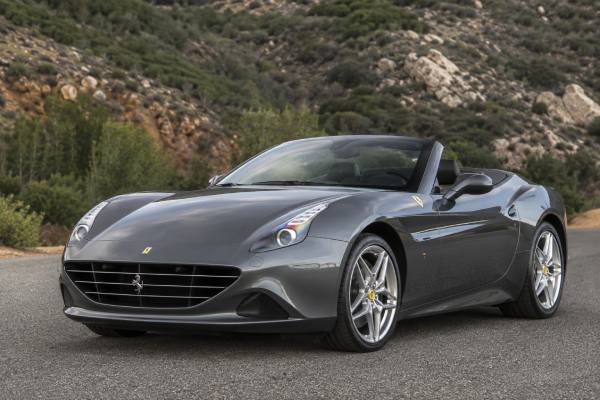


The Ferrari California 30 is the sharpened final version of the naturally aspirated first-generation California before the turbocharged California T arrived. It kept the original car’s front-mid-mounted V8, folding metal roof, 2+2 layout, and grand touring usability, but added more power, less weight, and the optional Handling Speciale package. For buyers today, it is one of the more usable modern Ferraris, but it still needs proper Ferrari-level inspection, service history, and condition discipline.
Quick Take
The California 30’s strongest appeal is its mix of naturally aspirated Ferrari V8 character, everyday usability, and open-top grand touring comfort. Its identity matters because it was the last version of the original F149 California before Ferrari moved this model line to turbo power, and the “30” update brought 490 hp, a 30 kg weight reduction, and a more focused chassis setup. The tradeoff is that it is not as raw or collectible as a 458 or a limited-series Ferrari, so value depends heavily on condition, options, service records, roof operation, and whether the car has been maintained by specialists rather than merely kept clean.
Table of Contents
- Why the California 30 Still Matters
- F136IH V8, Chassis, and Core Specs
- Production, Variants, and Factory Options
- Design, Engineering, and Special Features
- Road Feel, Performance, and Character
- Maintenance, Reliability, and Restoration Risks
- Market Values and Buying Priorities
Why the California 30 Still Matters
The California 30 matters because it made the original California more convincing without changing the car’s basic mission. It remained a comfortable front-mid-engine Ferrari GT, but the 2012 update gave it the power, response, and chassis sharpness many enthusiasts felt the early car needed.
The first-generation California was a significant car for Ferrari. It introduced a set of ideas that were unusual for Maranello at the time: a front-mounted V8 in a road car, direct fuel injection, a seven-speed dual-clutch transmission, a folding hardtop roof, and a more approachable daily-use personality. That combination made it controversial among purists, but it also brought new buyers into Ferrari ownership.
The California 30 arrived for the 2012 model year in Europe and was sold in North America mainly as a 2013 and 2014 model-year car. The name was not just marketing. Ferrari increased output by 30 CV and reduced weight by about 30 kg compared with the earlier California. The updated 4.3-liter F136IH V8 produced 490 hp, while chassis changes and revised calibration made the car feel more alert.
Its place in Ferrari history is interesting. It is not a limited-production collectible in the way a 599 GTO, 458 Speciale, or LaFerrari is. Instead, it is a transitional Ferrari: modern enough to use regularly, old-school enough to keep a naturally aspirated V8, and practical enough to serve as a weekend GT rather than a garage sculpture.
That practical side is central to its appeal. The California 30 has a power-folding metal roof, a usable trunk when the roof is up, a dual-clutch gearbox that works in traffic, and a cabin that is easier to live with than many mid-engine Ferraris. It is a Ferrari for long lunches, mountain roads, weekend trips, and occasional daily use.
Collectors tend to view it through a different lens. The best cars are low-mileage but not neglected, highly original, well optioned, and documented with dealer or respected specialist service. The optional Handling Speciale package adds desirability because it gives the California 30 a more precise character without turning it into a track car.
The California 30 also sits in a useful buying window. It is newer than older belt-service Ferraris and less intimidating than some V12 GTs, but it has aged enough that deferred maintenance, roof mechanism faults, sticky interior parts, old tires, and incomplete histories can separate good examples from expensive mistakes.
F136IH V8, Chassis, and Core Specs
The California 30 uses a 4,297 cc naturally aspirated 90-degree V8 from Ferrari’s F136 engine family. In this version, the F136IH engine delivers 490 hp at 7,750 rpm and 505 Nm of torque at 5,000 rpm, paired with a seven-speed dual-clutch transaxle and rear-wheel drive.
| Item | Specification |
|---|---|
| Model code | F149 |
| Engine code | F136IH |
| Engine type | 90-degree naturally aspirated V8, direct fuel injection |
| Displacement | 4,297 cc |
| Bore x stroke | 94.0 mm x 77.4 mm |
| Compression ratio | 12.2:1 |
| Maximum power | 490 hp at 7,750 rpm |
| Maximum torque | 505 Nm at 5,000 rpm |
| Transmission | 7-speed F1 dual-clutch automatic transaxle |
| Drivetrain | Rear-wheel drive |
| 0–100 km/h | 3.8 seconds |
| Top speed | 312 km/h |
The engine is the heart of the car’s appeal. It is smoother and more flexible than an older Ferrari V8, but it still has a high-revving, naturally aspirated feel. The extra power in the California 30 came from engine mapping and exhaust-side changes, giving the car a broader torque curve while preserving the clean top-end pull that makes the F136 family special.
The gearbox is equally important. The seven-speed dual-clutch unit gives the California 30 a very different personality from older single-clutch F1 Ferraris. It can shift smoothly in town, respond quickly on a back road, and avoid the low-speed clutch drama that makes some earlier automated-manual Ferraris tiring in traffic.
The chassis is aluminum, with a front-mid-engine layout and rear-mounted transaxle helping weight distribution. Ferrari quoted a 47 percent front and 53 percent rear balance, which is one reason the car feels more settled than its folding-roof body style might suggest.
| Area | Details |
|---|---|
| Body structure | Aluminum chassis and body construction |
| Suspension | Double wishbone front, multilink rear |
| Steering | Power-assisted rack-and-pinion |
| Brakes | Carbon-ceramic discs, approximately 390 mm front and 360 mm rear |
| Standard tire sizing | 245/40 ZR19 front, 285/40 ZR19 rear |
| Wheelbase | 2,670 mm |
| Length | 4,562 mm |
| Width | 1,909 mm |
| Height | 1,322 mm |
| Dry weight | 1,630 kg |
| Kerb weight | About 1,735 kg |
| Fuel capacity | 78 liters |
The figures tell only part of the story. The California 30 is not a stripped-out sports car. It carries a folding roof, leather-lined interior, infotainment, electric seats on many cars, and a usable grand touring equipment set. Its performance is impressive because it combines those luxuries with sub-four-second acceleration and nearly 194 mph top speed.
Production, Variants, and Factory Options
The California 30 was not a separate body style but an updated version of the first-generation California. The main versions to understand are the standard California 30 and the California 30 fitted with the optional Handling Speciale package.
Ferrari did not position the California 30 as a limited-edition special. It was the improved production version of the California before the turbocharged California T replaced it in 2014. Exact production splits for the California 30 are not always published in a clean public form, so buyers should focus less on claimed rarity and more on specification, provenance, and condition.
The model is easy to misunderstand because the California name covers several related but different cars:
| Version | Years | Main identity |
|---|---|---|
| California | 2008–2012 | Original 4.3-liter naturally aspirated V8, 460 hp |
| California 30 | 2012–2014 | Updated 4.3-liter naturally aspirated V8, 490 hp, reduced weight |
| California 30 HS | 2012–2014 | Handling Speciale package with sharper steering, springs, and damper calibration |
| California T | 2014 onward | Newer turbocharged V8 successor with different character |
The Handling Speciale package is the most important enthusiast option. It brought a quicker steering ratio, firmer springs, and faster-reacting magnetorheological damper control. The result is not a harsh car, but it does feel more disciplined over fast direction changes and more precise on a twisty road. For many buyers, HS is the sweet spot.
Other desirable factory options vary by taste and market. Common high-value features include Scuderia Ferrari fender shields, 20-inch wheels, carbon-fiber interior trim, carbon-fiber driver-zone trim with LED shift lights, Daytona-style seats, contrast stitching, parking sensors, rear camera, upgraded audio, and special paint.
Ferrari’s Tailor Made and personalization culture also matters. A well-chosen unusual color can make a California 30 stand out, but not every rare combination adds value. A tasteful blue, grey, silver, or deep red car with a complementary interior can be very appealing. A heavily personalized cabin with unusual colors may need the right buyer.
Documentation is part of originality. Buyers should look for the books, tools, battery tender, service invoices, factory build information where available, option list, and evidence that recalls or campaigns have been completed. A California 30 without records is not necessarily bad, but it should be priced as a higher-risk car.
Manual transmission claims deserve caution. The early California was technically associated with a tiny number of manual cars, but the California 30 is overwhelmingly a dual-clutch car. A seller presenting a California 30 as a normal manual-production variant should be challenged with documentation.
Design, Engineering, and Special Features
The California 30 is designed around a difficult brief: it had to be a Ferrari, a convertible, a 2+2, and a usable GT. Its shape, roofline, cabin layout, and engineering compromises all come from trying to combine those roles in one car.
The exterior design was by Pininfarina, and it has aged better than many early critics expected. The long hood, short rear deck, side vents, and muscular haunches create a front-engine Ferrari profile, while the folding hardtop gives it a cleaner closed-roof shape than many soft-top convertibles. The rear is taller than a pure coupe because the roof mechanism needs space, but that is part of the car’s GT function.
The folding hardtop is one of the car’s defining features. With the roof up, the California 30 feels more secure and refined than a traditional fabric-roof convertible. With the roof down, it gives the driver full access to the V8 sound. The tradeoff is complexity. Roof alignment, hydraulic operation, seals, drains, and microswitches all become important inspection points as the car ages.
The front-mid-engine layout is another key feature. The engine sits behind the front axle line, while the gearbox is mounted at the rear as part of the transaxle layout. This helps the car avoid the nose-heavy feel that can affect some front-engine convertibles. The California 30 is still a substantial GT, but it does not feel like a simple boulevard cruiser.
Cooling and airflow are managed through a broad front intake, side venting, and underbody work rather than dramatic active aero. The California 30 is not a downforce-focused track machine like some later Ferraris, but it is stable at high speed and designed to cover ground quickly with the roof up or down.
Inside, the cabin blends traditional Ferrari cues with GT comfort. The steering-wheel manettino controls drive modes, the shift paddles are fixed to the steering column, and the central tachometer keeps the engine as the visual focus. Many cars have leather-rich interiors, electrically adjustable seats, and contrast stitching, so condition varies greatly depending on climate, storage, and care.
The sound is a major part of the experience. The California 30 does not have the razor-edged shriek of a 458 Italia, but it has a full, mechanical, naturally aspirated V8 voice. It sounds more mature than frantic, with enough intake and exhaust character to remind the driver that this is still a Ferrari engine, not just a luxury convertible with power.
The engineering theme is balance. The California 30 is not the lightest Ferrari, not the loudest, and not the most aggressive. Its special quality is that it can feel relaxed one minute and genuinely fast the next. That duality is exactly why the car appeals to owners who want to drive their Ferrari more often.
Road Feel, Performance, and Character
The California 30 feels quick, polished, and more involving than the early California, especially with the Handling Speciale package. It is best understood as a fast Ferrari GT rather than a soft sports car or a hard-edged track weapon.
Acceleration is strong from low and medium rpm, but the engine becomes more exciting as it climbs. The 505 Nm torque figure gives the car real flexibility, while the 7,750 rpm power peak encourages the driver to use the upper half of the tachometer. Unlike a turbocharged GT, the California 30 rewards clean throttle inputs and revs rather than relying on a sudden wave of boost.
The dual-clutch gearbox suits the car well. In automatic mode it can behave politely, which is useful in town or on long trips. In manual mode with the paddles, it shifts quickly and cleanly. The gearbox is not as dramatic as an old single-clutch F1 transmission, but it is far easier to live with and much better matched to the car’s GT role.
Steering feel depends heavily on alignment, tires, and whether the car has Handling Speciale. Standard cars are accurate but more relaxed. HS cars feel keener near center and more controlled during quick transitions. Neither version should feel vague, unstable, or nervous; if it does, the car may have tire, suspension, alignment, or accident-history issues.
Ride quality is one of the California 30’s strengths. On good tires and healthy dampers, it can cover long distances without punishing the driver. The structure is not as rigid-feeling as a fixed-roof coupe, but it is solid enough for spirited road use. Roof-down driving adds some wind and cabin noise, but the car remains usable at highway speeds.
Braking performance is serious, thanks to carbon-ceramic brakes. Pedal feel should be firm, predictable, and confidence-building. Any warning lights, long pedal travel, vibration, grinding, or visible rotor damage should be taken seriously. Carbon-ceramic brake replacement costs can change the economics of a purchase.
Cornering balance is secure rather than edgy. The California 30 has enough rear weight bias to feel athletic, but it is tuned to be forgiving. The stability systems allow brisk driving without making the car intimidating. It is a good car for fast open roads, coastal routes, and mountain passes. It is less satisfying as a repeated track-day machine, mainly because of weight, brake cost, tire cost, and its GT setup.
The driving position is comfortable for most adults, and visibility is better than in many mid-engine Ferraris. The rear seats are small and best treated as luggage space or child-only seating, but they add flexibility. With the roof up, the trunk is useful. With the roof down, luggage space drops, so buyers planning road trips should test the packaging rather than assume it works for them.
The best California 30s feel tight, smooth, and eager. A tired one can feel like an expensive convertible with a badge. That difference is why condition matters more than mileage alone.
Maintenance, Reliability, and Restoration Risks
The California 30 can be a dependable modern Ferrari when serviced correctly, but neglected examples become expensive quickly. The main risks are not usually catastrophic engine failures; they are deferred maintenance, roof faults, electronic issues, brake costs, DCT concerns, sticky interior parts, and age-related deterioration.
The F136IH V8 is generally well regarded. It uses timing chains rather than traditional belt-service intervals, which removes one old Ferrari ownership headache. That does not make it cheap to maintain. Oil quality, proper warm-up, coolant condition, exhaust leaks, engine mounts, sensors, and regular annual servicing still matter.
Ferrari’s regular service approach for modern cars centers on annual maintenance or mileage-based service, depending on market and program eligibility. For a used California 30 today, the important point is not whether the original free maintenance period still applies. It usually will not. The important point is whether the car has had consistent, documented service by Ferrari dealers or specialists who know the platform.
Common ownership areas to inspect include:
- Roof mechanism: confirm smooth opening and closing, correct panel alignment, no hydraulic leaks, no warning messages, and no water leaks.
- DCT gearbox: check shift quality from cold and hot, diagnostic data, clutch behavior, and service history.
- Brakes: inspect carbon-ceramic rotors, pads, calipers, brake fluid condition, warning lights, and recall completion.
- Suspension: check magnetorheological dampers where fitted, bushings, ball joints, tire wear patterns, and alignment.
- Interior: inspect sticky switches, leather shrinkage, dashboard pulling, seat bolster wear, and HVAC controls.
- Electrical system: verify battery health, tender use, module communication, infotainment function, parking sensors, and warning lights.
- Tires: check age as well as tread depth, because old performance tires can ruin the car’s ride and grip.
| Area | Why it matters | What to look for |
|---|---|---|
| Service records | Shows whether the car was maintained or merely stored | Annual invoices, fluids, recalls, specialist notes |
| Folding roof | Complex and costly if neglected | No leaks, no pauses, no warning messages |
| DCT transaxle | Repairs can be expensive | Smooth shifts, clean diagnostics, no overheating history |
| Carbon-ceramic brakes | Replacement costs are high | No cracks, chips, heavy wear, or vibration |
| Interior trim | Ferrari soft-touch parts age poorly | Sticky switches, warped leather, damaged controls |
| Accident history | Aluminum structure requires proper repair | Paint readings, panel gaps, chassis inspection |
Recall and campaign status should be checked by VIN. One important U.S. recall involved the brake fluid reservoir cap and brake warning software on a wide range of Ferrari models, including California model years. A completed recall does not replace a brake inspection, but an incomplete recall is a clear negotiating and safety issue.
Restoration is not the right word for most California 30s yet, but age-related refurbishment is becoming normal. Sticky-button refinishing, leather repair, wheel refurbishment, roof seal work, suspension refreshes, and brake service can easily turn a cheap car into an expensive one. Originality still matters: poorly installed aftermarket exhausts, non-factory carbon parts, repainted panels without records, and modified electronics can reduce buyer confidence.
A pre-purchase inspection should be done by a Ferrari dealer or independent Ferrari specialist with diagnostic equipment. A general exotic-car shop may miss California-specific roof, DCT, and electronic details. The inspection should include a road test, cold start, lift inspection, paint readings, scan report, roof cycle test, brake assessment, and service-record review.
Market Values and Buying Priorities
The California 30 occupies the usable modern Ferrari value band: expensive enough to demand serious due diligence, but often less costly than more focused V8 and V12 Ferraris. In recent U.S. market guides and listings, many 2013–2014 examples sit broadly around the high-five-figure to low-six-figure range, with condition and specification driving the real number.
A normal retail-quality 2013 car may sit around the low-$100,000 range, while especially clean, low-mileage, well-optioned, or Handling Speciale examples can command more. Higher-mileage cars, cars with weak records, unpopular specifications, accident history, roof issues, or deferred service should be meaningfully cheaper. The lowest-priced car is rarely the best value.
The biggest value drivers are:
- Documented annual maintenance.
- Handling Speciale package.
- Low but believable mileage.
- Strong color combination.
- Original paint or well-documented paintwork.
- Clean roof operation.
- Healthy DCT behavior.
- Complete books, tools, tender, and records.
- Ferrari dealer or respected specialist history.
- No unresolved recalls or warning lights.
Color and interior choices matter, but not always in the obvious way. Rosso Corsa with tan or black remains easy to understand and easy to sell. Silver, grey, blue, and black can suit the California’s GT character very well. Unusual Tailor Made specifications may be valuable to the right buyer, but extreme cabin colors can narrow the resale audience.
Handling Speciale cars deserve extra attention. They are usually more desirable because they sharpen the car’s responses, but condition still comes first. A neglected HS car is not better than a beautifully maintained standard California 30. Buy the better car, not just the better badge on the option list.
A serious buyer should follow a clear sequence:
- Confirm the car is truly a California 30 and not an earlier California described loosely.
- Obtain the option list, VIN, service records, and recall status.
- Review ownership history, mileage consistency, and title history.
- Arrange a Ferrari-specialist pre-purchase inspection.
- Test the roof, gearbox, brakes, electronics, and cold-start behavior.
- Price the car after estimating immediate needs, not before.
- Walk away from sellers who resist inspection or cannot explain the car’s history.
The best examples to seek are clean, original, regularly serviced cars with good tires, healthy brakes, complete records, and a specification you genuinely like. Cars with recent major service, fresh tires, corrected sticky interior parts, and documented roof service can be worth paying more for.
The examples to avoid are cars with long service gaps, multiple unexplained owners, warning lights, bargain tires, inconsistent paint, roof faults, missing records, or vague claims such as “just needs a sensor.” On a modern Ferrari, small unresolved faults can hide larger diagnostic and parts-cost problems.
Long-term collectability should be viewed realistically. The California 30 is unlikely to become the next major Ferrari investment icon simply because it has a naturally aspirated V8. It was built as a usable GT and was not rare in the way limited-series cars are rare. Still, the best examples should remain desirable because they combine Pininfarina styling, naturally aspirated power, dual-clutch usability, and the final development of the original California formula.
For the right owner, that is the point. The California 30 is not the Ferrari to buy if the goal is maximum drama or concours-grade scarcity. It is the Ferrari to buy if the goal is to drive, enjoy open-top V8 sound, take real trips, and still own a car with enough engineering depth and brand significance to feel special years later.
References
- Ferrari California 30 (2012) – Ferrari.com 2012 (Manufacturer specifications) ([Ferrari][1])
- Ferrari California 30: Ferrari History 2012 (Manufacturer history) ([Ferrari][2])
- Warranties And Official Ferrari Maintenance 2026 (Official maintenance and warranty information) ([Ferrari][3])
- Part 573 Safety Recall Report 22V-536 2022 (Recall Report)
- Used 2013 Ferrari California California Ratings, Values, Reviews & Awards 2026 (Valuation guide) ([JD Power][4])
Disclaimer
This article is for informational purposes only and is not a substitute for professional diagnosis, repair, valuation, or inspection. Specifications, torque values, service intervals, recall applicability, procedures, and parts requirements can vary by VIN, market, equipment, and service history. Always verify details against official Ferrari service documentation and use a qualified Ferrari technician before buying, servicing, or repairing the vehicle.
If this guide helped you, please consider sharing it on Facebook, X/Twitter, or your preferred car community to support our work.