
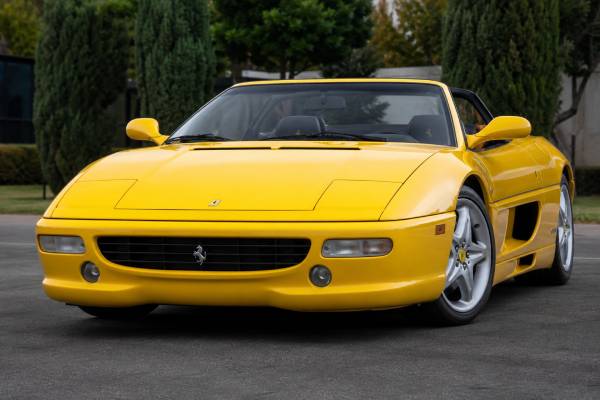
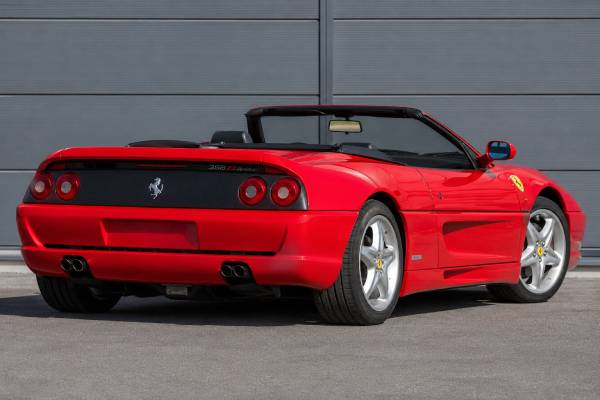

The Ferrari F355 Spider Serie Fiorano is the final, limited-run open version of Ferrari’s F129-generation F355. Built for the 1999 model year, it combined the standard F355 Spider’s 3.5-liter five-valve V8 with a sharper Fiorano handling package, special trim, Challenge-style details, and extremely low production numbers. It sits at an important point in Ferrari history: the last evolution of the 348-derived mid-engine V8 platform, the end of the F355 line, and one of the earliest road Ferraris to mix classic analog feel with the option of F1-style paddle shifting. Collectors care because it is rare, visually distinctive, and more focused than a regular Spider. Drivers care because the F355 still has one of Ferrari’s most memorable naturally aspirated V8 soundtracks, plus steering and chassis feel that later cars softened with more electronics.
Table of Contents
- Why the Serie Fiorano Matters
- F129 V8 Specs and Chassis Data
- Production Numbers, Options, and Identification
- Pininfarina Design and Fiorano Engineering
- Road Feel, Sound, and Performance
- Maintenance Risks and Restoration Realities
- Values, Buying Checks, and Collectability
Why the Serie Fiorano Matters
The Serie Fiorano matters because it is not just a cosmetic final edition. It is a sharper, rarer F355 Spider with factory handling and braking changes that moved the road car closer to the F355 Challenge spirit without making it a stripped race car.
The regular F355 arrived in the mid-1990s as Ferrari’s answer to criticism of the 348. The 348 looked dramatic and had a strong identity, but it was often described as demanding, edgy, and less forgiving than rivals. The F355 kept the mid-engine V8 layout but improved almost everything that mattered: engine breathing, gearbox feel, steering, aerodynamics, ride control, and daily usability.
The Spider joined the range after the Berlinetta and gave the F355 a more emotional, open-air character. It used a powered soft top, a low-slung Pininfarina shape, and the same screaming 3.5-liter V8 as the coupe. In normal F355 form, it was already a major step forward from the 348 Spider. The Serie Fiorano went further by adding equipment aimed at response and driver involvement.
Historically, it also arrived at a turning point. The 360 Modena was introduced as Ferrari’s next-generation aluminum-chassis V8 model, so the Serie Fiorano became a farewell to the older F355 architecture. That matters to collectors because final-year Ferrari special series often attract attention when they combine rarity, recognizable features, and a meaningful mechanical story.
The Serie Fiorano’s reputation today rests on four main qualities:
- It was a final-year F355 Spider special edition.
- It used the high-revving 40-valve F129 V8, one of Ferrari’s best-loved modern-classic engines.
- It added Fiorano-specific steering, suspension, braking, and trim details.
- It was built in very small numbers, with manual cars especially scarce.
It is also important because it bridges two eras. A manual Serie Fiorano feels like a classic analog Ferrari with a gated shifter, hydraulic steering, and a naturally aspirated engine. An F1-equipped Serie Fiorano reflects Ferrari’s late-1990s push to connect its road cars with Formula 1 technology. Both versions are collectible, but they appeal to different buyers.
The car’s place in Ferrari history is therefore specific rather than generic. It is not the fastest Ferrari of its period, and it is not the most extreme F355. The F355 Challenge is the more direct competition car. The Serie Fiorano is valuable because it combines road usability, rarity, open-top drama, and factory performance upgrades in one final-edition package.
F129 V8 Specs and Chassis Data
The Serie Fiorano used the same basic F355 Spider powertrain: a 3,496 cc dry-sump V8 with five valves per cylinder, quoted at 380 metric horsepower, or about 375 hp by some U.S. measures. Its special appeal comes from the chassis and specification mix, not from a large engine-output increase.
| Category | Specification |
|---|---|
| Model | Ferrari F355 Spider Serie Fiorano |
| Internal type | F129-generation F355 |
| Model year | 1999 |
| Engine | 3,496 cc 90-degree V8, dry sump |
| Valve layout | Five valves per cylinder, 40 valves total |
| Output | 380 PS / about 375 hp at 8,250 rpm |
| Torque | 363 Nm / 268 lb-ft at 6,000 rpm |
| Fuel system | Bosch Motronic electronic fuel injection and engine management |
| Drivetrain | Rear mid-engine, rear-wheel drive |
| Transmission | 6-speed manual or 6-speed F1 automated manual |
| Chassis | Steel semi-monocoque with tubular steel subframe structure |
| Suspension | Independent double wishbones with coil springs, anti-roll bars, and electronically controlled dampers |
| Steering | Power-assisted rack and pinion; Fiorano cars received a quicker competition-derived setup |
| Brakes | Ventilated discs with ABS; Serie Fiorano added drilled discs and competition-style pads |
| Front tires | 225/40 ZR18 |
| Rear tires | 265/40 ZR18 |
| Length | About 4,250 mm |
| Width | About 1,900 mm |
| Height | About 1,170 mm |
| Wheelbase | About 2,450 mm |
| Dry weight | About 1,350 kg for the F355 Spider specification |
| Fuel capacity | About 82 liters |
| Claimed top speed | About 295 km/h / 183 mph |
| Claimed 0–100 km/h | About 4.7 seconds |
The engine is central to the car’s identity. Ferrari’s five-valve head design used three intake valves and two exhaust valves per cylinder to improve breathing at high rpm. In plain terms, the engine was designed to rev hard and keep pulling where many road-car V8s began to fade. The dry-sump lubrication system also suited the car’s mid-engine layout and hard cornering use.
The gearbox choice changes the character more than the stopwatch. The gated six-speed manual is more valuable today because it gives a direct mechanical experience and was produced in smaller numbers. The F1 transmission is historically significant because it brought paddle-shift operation to the F355 line, using electro-hydraulic control over a conventional manual gearbox. It is not as smooth or quick as later dual-clutch systems, but it belongs to the era and gives the car a distinct personality.
The chassis remained compact by modern supercar standards. That helps the F355 feel narrow, low, and responsive on real roads. The Fiorano package tightened that base with firmer suspension parts, a thicker anti-roll bar, quicker steering, and more aggressive brake hardware. The result was not a harsh track special, but it did make the Spider feel more serious and immediate than a normal open F355.
Production Numbers, Options, and Identification
The Serie Fiorano is rare by any F355 standard, with 100 cars planned and 104 generally reported as completed. The usual breakdown is 100 for the U.S. market, three for Europe, and one for South Africa, making market, plaque status, and documentation important parts of authentication.
Most U.S. cars carried a numbered dashboard plaque. That plaque is a major identifier, but it should never be treated as the only proof. A serious buyer should verify the car through Ferrari records, build documentation, service history, original window sticker or sales paperwork where available, and physical inspection of the Fiorano-specific parts.
The U.S.-market production is usually described as 74 F1 cars and 26 manual cars. That makes manual cars especially desirable, but the F1 cars are still significant because the paddle-shift system is part of the F355’s late-production story. The best car is not always the manual by default; condition, originality, and documentation can outweigh gearbox preference, especially with such a small pool of examples.
Key Serie Fiorano identifiers include:
- Numbered dashboard plaque on U.S. examples.
- Fiorano handling package components.
- Quicker steering rack.
- Firmer springs and suspension tuning.
- Thicker anti-roll bar.
- Drilled and ventilated brake discs with more aggressive pads.
- Challenge-style rear grille.
- Enameled Scuderia Ferrari fender shields.
- Carbon-fiber interior trim, including areas such as the center console and door sills.
- Suede or Alcantara-covered steering wheel, depending on description and market wording.
Because the car is rare and valuable, authenticity matters more than on a normal driver-grade F355 Spider. Many regular F355s have received Challenge grilles, shields, carbon trim, aftermarket wheels, or lowered suspension over the years. Those upgrades may look similar to some Serie Fiorano features, but they do not make a car a Serie Fiorano.
For collectors, the strongest examples usually have:
- Original paint or clearly documented paintwork.
- Matching VIN, build records, and market documentation.
- Correct Fiorano plaque and equipment.
- Factory books, tools, keys, and pouch.
- Major service invoices from known Ferrari specialists or dealers.
- Clear ownership chain.
- No accident history or well-documented professional repairs.
- Original interior trim with minimal sticky-plastic deterioration.
- Correct wheels and brake equipment.
Factory colors also influence desirability. Rosso Corsa over beige is the best-known Ferrari combination and appears often, but unusual original colors can be valuable if well documented. A rare color is not automatically worth more if the car has poor history, incorrect parts, or deferred maintenance. On a low-production Ferrari, originality and condition must support the specification.
The Serie Fiorano should also be separated from the broader Fiorano Handling Package idea. Some late F355s in certain markets could be equipped with Fiorano-style handling options, but the Spider Serie Fiorano was the limited final-series model. This distinction matters because sellers may use “Fiorano” loosely. A buyer should ask whether the car is a documented Serie Fiorano or a standard F355 with Fiorano-related parts.
Pininfarina Design and Fiorano Engineering
The F355 Spider Serie Fiorano works because its design and engineering are closely linked. Pininfarina gave the Spider a clean shape with strong aerodynamic function, while the Fiorano package sharpened the parts the driver actually feels: steering, roll control, braking response, and chassis discipline.
The basic F355 shape is one of Ferrari’s most balanced 1990s designs. It is lower and cleaner than the 348, with less visual heaviness around the side strakes and rear body. The front end is smooth, the side intakes are integrated, and the tail returns to a classic round-lamp Ferrari look. The Spider adds the appeal of open-air driving without losing the F355’s compact mid-engine proportions.
Aerodynamics were not just decoration. The F355 used underbody work to manage airflow, and the body was shaped to feel stable at high speed. Unlike many modern supercars, it does not rely on large wings or aggressive exposed aero devices. Its design is more subtle, which is one reason it has aged well.
The Serie Fiorano details make the car easier to recognize. The Challenge-style rear grille gives the tail a more purposeful look and helps visually connect the car to Ferrari’s one-make racing program. The Scuderia shields add factory identity, while the carbon interior inserts and suede steering wheel make the cabin feel more special than a regular Spider.
The engineering upgrades are more important than the trim. The quicker steering rack changes the way the car responds near center and through quick direction changes. The firmer springs and anti-roll bar reduce body motion compared with a standard Spider. The brake upgrades improve bite and repeated-use confidence, though they do not make the car a modern carbon-ceramic-brake supercar.
The cockpit is small and direct. The driving position is low, the view over the front wings is clean, and the controls feel close around the driver. In manual cars, the open metal gate is part of the theater. In F1 cars, the paddles and automated clutch system create a very different feel, more period motorsport-inspired than modern luxury-fast.
The power roof is another important Spider feature. It was advanced for a Ferrari convertible of the period and adds convenience, but it is also one of the ownership areas that needs careful inspection. A perfect roof mechanism makes the Spider easier to enjoy. A tired one can become expensive and frustrating.
What makes the Serie Fiorano special is the combination. A regular F355 Spider gives sound, style, and open-top Ferrari charm. A Serie Fiorano adds rarity and a more focused chassis without removing the leather-lined, road-car personality that makes the Spider usable.
Road Feel, Sound, and Performance
The F355 Spider Serie Fiorano feels fast because it combines high-rpm power, compact size, sharp steering, and a huge sense of mechanical occasion. Modern cars are quicker, but few give the same mix of sound, response, and driver involvement at normal road speeds.
The engine is the star. Below the middle of the rev range, it is responsive but not brutally torquey. It wants revs. As the tachometer climbs, the five-valve V8 becomes harder-edged and more urgent, building toward a sharp metallic sound that defines the F355 experience. The peak power figure matters less than how the engine gets there. It encourages the driver to use the gearbox and keep the car alive.
Manual cars deliver the most traditional experience. The gated shifter rewards deliberate inputs, especially once the gearbox oil is warm. Like many Ferraris of this era, the shift can feel reluctant when cold, so patient warm-up is part of proper use. Once warm, a good manual F355 has a precise, satisfying mechanical action.
F1 cars should be judged differently. The shifts are slower and more physical than in later dual-clutch Ferraris. Low-speed clutch modulation can feel clumsy if the system is worn or poorly adjusted. On open roads, however, the gearbox becomes part of the period character. It works best when the driver lifts slightly during shifts and treats it as an automated manual rather than a modern automatic.
The Serie Fiorano chassis tuning gives the Spider a more alert front end. Steering response is one of the car’s best traits. It is assisted, but it still gives meaningful information through the wheel. Compared with heavier modern supercars, the F355 feels slim and placed close to the road. The car does not need extreme speed to feel interesting.
Ride quality depends heavily on tire choice, damper condition, suspension bushings, and alignment. A well-maintained Fiorano car should feel firm but not broken or nervous. A tired one may tramline, knock, wander, or feel harsh in a way that has more to do with worn parts than factory tuning.
Braking feel is strong for the period, especially with the Fiorano brake hardware, but expectations should be realistic. The car uses steel discs, not modern carbon-ceramics. Brake condition, fluid age, pad compound, and hose health make a major difference. A car that has sat for long periods may need a full brake refresh before it feels trustworthy.
The Spider body also changes the experience. With the roof down, the engine and exhaust dominate the cabin. There is more wind, heat, and noise than in a modern convertible, but that is part of the appeal. With the roof up, the car is usable but not quiet. Anyone expecting current grand-tourer refinement will misunderstand it.
On mountain roads, the Serie Fiorano is at its best: compact, vocal, and highly responsive. In city traffic, it demands patience, especially if fitted with the F1 gearbox. On track, it can be enjoyable, but values and age mean most owners now reserve serious circuit use for carefully prepared cars.
Maintenance Risks and Restoration Realities
The F355 Spider Serie Fiorano is not a casual used exotic; it is a limited-production Ferrari built around a high-revving engine and aging 1990s systems. The right car can be reliable for its type, but only if maintenance has been consistent, specialist-led, and properly documented.
The major ownership topic is belt service. The F129 V8 uses timing belts, and traditional F355 servicing often involves significant labor because access is tight. Many specialists remove the engine assembly for major belt and “while you are in there” work. Buyers should not focus only on the date of the last belt change. They should inspect the scope of the service: tensioners, seals, water pump, hoses, engine mounts, cam-cover gaskets, fluids, and related hardware.
Known F355 inspection areas include:
- Timing belts, tensioners, and evidence of proper major service.
- Exhaust headers, which can crack and create costly repair decisions.
- Valve guide wear, especially on some earlier F355s, though any car should be assessed on condition.
- Exhaust bypass valve operation and exhaust control hardware.
- Catalytic converters, thermocouples, and slow-down warning system faults.
- Fuel lines, fuel divider block recall status, and hose age.
- Cooling system hoses, radiators, fans, and coolant leaks.
- Clutch condition, especially on F1 cars used heavily in traffic.
- F1 pump, actuator, accumulator, and hydraulic system health.
- Manual gearbox synchros and cold-shift behavior.
- Suspension bushings, ball joints, damper actuators, and alignment.
- Brake discs, pads, hoses, calipers, and ABS operation.
- Sticky interior plastics and shrinking leather.
- Spider roof hydraulics, switches, elastic straps, latches, and frame movement.
- Air-conditioning performance and electrical switchgear.
The exhaust headers deserve special attention because failed headers can lead to noise, poor running, heat issues, and possible engine damage if ignored. Many cars have had repaired, replaced, or upgraded headers. For collectors, originality matters, but a well-documented high-quality repair can be preferable to original headers that are failing.
Fuel-system safety is another serious area. The F355 had recall activity relating to fuel-supply pipe and divider-block concerns. A buyer should confirm that applicable campaigns were completed and inspect the current condition of fuel hoses and fittings. Age, heat, and previous service work all matter. On a car with an engine-bay fuel smell, the correct response is inspection before driving, not hope.
The Spider roof can be expensive because it combines mechanical, electrical, and hydraulic parts. Slow movement, uneven operation, warning lights, fluid leaks, torn fabric, and misaligned windows all need attention. A roof that works once during a viewing is not enough; it should be tested carefully by someone who knows the system.
Interior restoration has its own traps. Sticky switches and trim are common on Ferraris from this era. Refinishing can make the cabin look new, but poor work can remove markings or create incorrect textures. On a Serie Fiorano, carbon trim and special steering-wheel materials should be preserved carefully.
Parts availability is generally better than for many obscure exotics, but “available” does not mean cheap. Some items are expensive, some are rebuilt rather than replaced, and some Fiorano-specific trim or documentation pieces may be difficult to source. A missing or damaged special part can matter more than it first appears.
The best ownership approach is preventive rather than reactive. These cars dislike long storage without proper care. Regular exercise, clean fluids, battery maintenance, careful warm-up, and annual specialist checks can prevent many expensive surprises.
Values, Buying Checks, and Collectability
The Serie Fiorano sits near the top of the road-going F355 market, especially in documented manual form. Values vary widely because mileage, gearbox, originality, color, service history, and plaque/documentation quality can change the result by six figures.
Recent public-market data shows a broad spread, from driver-quality or higher-mileage F1 examples around the lower end of the six-figure range to exceptional low-mileage or highly original cars reaching far higher. Manual Serie Fiorano cars usually command a premium because only a small minority were built. Still, a neglected manual is not automatically better than an excellent F1 car.
The strongest value drivers are:
- Verified Serie Fiorano identity.
- Manual gearbox, where condition and history are strong.
- Low mileage with evidence of regular maintenance.
- Original paint or carefully documented paintwork.
- Complete books, tools, keys, plaque, and records.
- Correct Fiorano equipment.
- Desirable factory color combination.
- No accident history.
- Recent major service by a respected Ferrari specialist.
- Clean roof operation and healthy interior trim.
- Ferrari Classiche certification or strong equivalent documentation where available.
Buyers should avoid cars that rely on vague claims. Phrases like “Fiorano package,” “Challenge style,” or “rare final edition” need proof. The question is not whether the car looks right in photos. The question is whether the VIN, factory build, physical equipment, and paperwork all agree.
A serious pre-purchase inspection should include:
- Confirm the VIN, model identity, plaque, and documentation.
- Verify gearbox type, original equipment, and Fiorano-specific parts.
- Review all service invoices, not just stamps in a book.
- Check date and mileage of the last major engine service.
- Inspect headers, fuel lines, cooling hoses, and engine leaks.
- Test compression or leakdown if history or running quality raises concern.
- Read fault memory where applicable.
- Measure clutch wear on F1 cars if diagnostic access allows.
- Inspect suspension joints, dampers, steering rack, and brake condition.
- Operate the Spider roof several times from fully open to fully closed.
- Inspect underbody, jacking points, frame areas, and accident-repair signs.
- Confirm tire age, wheel condition, and correct sizing.
- Check cabin trim, carbon pieces, seat bolsters, switchgear, and air conditioning.
- Road-test the car from cold and warm, listening for gearbox, exhaust, and suspension behavior.
The best examples to seek are cars that have been used enough to stay healthy but preserved carefully enough to remain collectible. Ultra-low-mileage cars can be valuable, but they may need recommissioning if they have sat unused. Higher-mileage cars can be excellent to drive, but they must be priced for wear and future maintenance.
The risky examples are those with incomplete records, aftermarket modifications presented as factory equipment, unresolved roof faults, old tires, fuel smells, poor paintwork, weak air conditioning, sticky interior repairs done badly, or a recent sale history that suggests unresolved problems.
Long-term collectability looks strong because the Serie Fiorano has the ingredients collectors understand: final-year status, low production, factory performance upgrades, a naturally aspirated Ferrari V8, manual scarcity, and a direct link to the F355’s enthusiast reputation. The car also benefits from the broader movement toward analog modern classics.
The practical buying advice is simple: buy the best documented car you can justify, not the cheapest car with the right badge. A bargain Serie Fiorano can become expensive quickly if it needs headers, major service, roof work, clutch work, suspension renewal, sticky trim restoration, and missing special parts. A properly maintained car may cost more upfront but usually offers a better ownership experience and stronger resale position.
References
- FERRARI F355 OWNER’S MANUAL Pdf Download | ManualsLib 1997 (Owner’s Manual)
- RC48 cover USA.pmd 2009 (Recall Campaign)
- Vehicle Detail Search – 1999 FERRARI F355 | NHTSA 2026 (Recall Database)
- 1999 Ferrari 355 F1 Spider ‘Serie Fiorano’ | Fort Lauderdale 2018 | RM Sotheby’s 2018 (Auction Listing)
- Ferrari F355 Spider Serie Fiorano Market – CLASSIC.COM 2026 (Market Data)
Disclaimer
This article is for informational purposes only and is not a substitute for professional diagnosis, repair, valuation, or inspection. Specifications, torque values, service intervals, recall applicability, and procedures can vary by VIN, market, equipment, service history, and later updates. Always verify details against official service documentation and consult a qualified Ferrari specialist before buying, repairing, or modifying a Ferrari F355 Spider Serie Fiorano.
If you found this guide useful, please consider sharing it on Facebook, X/Twitter, or your favorite car community to support our work.