
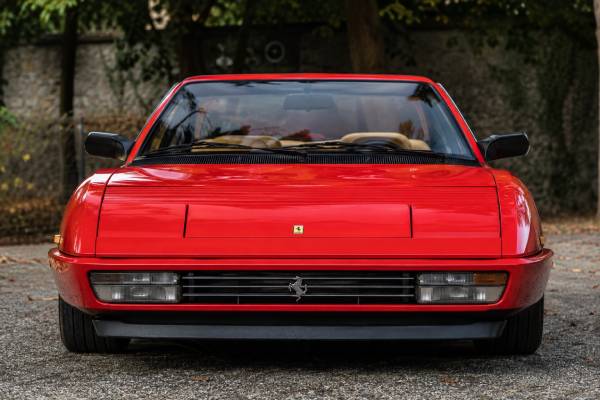
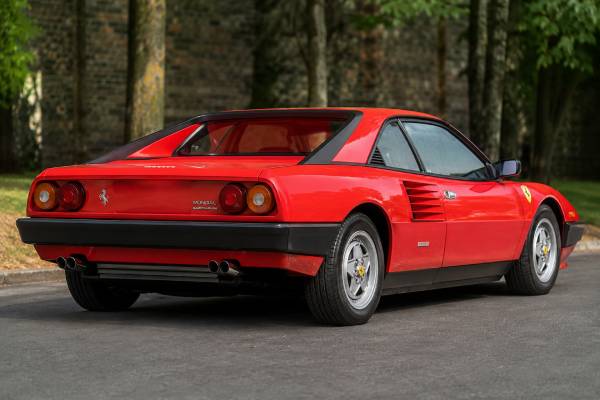
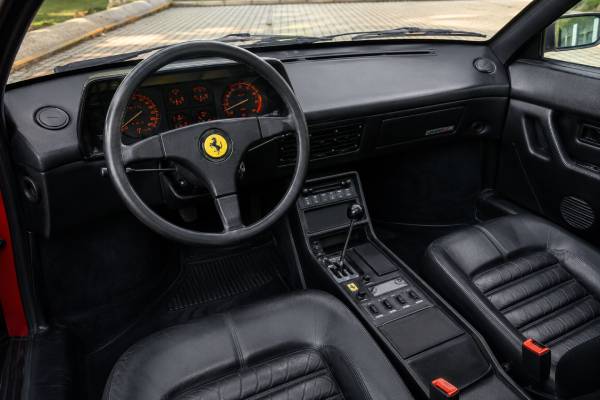
The Ferrari Mondial Quattrovalvole is the four-valve version of Ferrari’s 1980s mid-engined 2+2 grand tourer. In F 108 BL 100 form, it sits between the slower Mondial 8 and the later 3.2 Mondial, using the F105A 2.9-liter V8 with four valves per cylinder, Bosch K-Jetronic injection, and a five-speed gated manual gearbox. It kept the Mondial’s unusual brief: a practical, Pininfarina-styled Ferrari with rear seats, usable luggage space, and a mid-mounted V8 behind the cabin.
Today, the Mondial QV matters because it offers a rare mix of classic Ferrari sound, mechanical simplicity, and real-world usability. It is not the fastest 1980s Ferrari, and it was long undervalued, but good examples have gained respect among buyers who want an analog Ferrari without the prices of a 308, 328, or Testarossa.
Table of Contents
- Why the Mondial QV Still Matters
- F105A V8, Chassis, and Core Specifications
- Production, Variants, and Factory Identification
- Pininfarina Design and Mid-Engine Packaging
- How the Mondial Quattrovalvole Drives
- Maintenance Risks and Restoration Realities
- Market Values and Buying Strategy
Why the Mondial QV Still Matters
The Mondial Quattrovalvole matters because it fixed the main weakness of the original Mondial 8: performance. By adding four-valve cylinder heads to the familiar transverse Ferrari V8, the QV restored much of the urgency buyers expected from a mid-engined Ferrari while keeping the car’s unusual 2+2 practicality.
Ferrari launched the Mondial line in 1980 as a replacement for the Dino 308 GT4. The idea was ambitious. The company wanted a car that could carry more than two people, meet stricter emissions rules, work in important export markets, and still feel like a Ferrari. That was not easy. A mid-engined layout is excellent for balance, but it makes packaging rear seats difficult. The Mondial solved this with a long wheelbase, a taller cabin, and a body that put usability ahead of pure wedge drama.
The first Mondial 8 used a two-valve version of the 2.9-liter V8. It was smooth, refined, and usable, but it quickly gained a reputation for being too heavy and not quick enough. The Quattrovalvole update arrived for the 1982 model period and changed the character of the car. “Quattrovalvole” means four valves, and in this case it referred to a 32-valve version of Ferrari’s 90-degree V8. Output rose to 240 hp in the commonly quoted factory specification, giving the Mondial a more convincing performance level.
The QV still was not a raw two-seat sports car. It was a Ferrari grand tourer with a practical streak. That is exactly why it is interesting today. It has the same broad engine family as the 308 GTB/GTS QV, but with a longer wheelbase, more cabin space, easier access, and a more relaxed personality. It is a car for owners who want to use their classic Ferrari rather than only preserve it.
The Mondial’s reputation has also changed. For years, it was treated as the affordable Ferrari that people bought because they could not reach a 308 or 328. That view misses the point. The Mondial QV offers its own appeal: a mid-engined V8, a gated manual, Pininfarina styling, a removable rear subframe concept for service access, and a cabin that can handle short family trips or weekend touring. Good cars now attract buyers who value condition and documentation more than badge snobbery.
For collectors, the Mondial QV is important because it represents a transitional Ferrari. It belongs to the analog era, but it was shaped by emissions rules, safety demands, and a broader luxury market. It also introduced the open Mondial Cabriolet during the QV period, giving Ferrari one of the only regular-production mid-engined four-seat convertibles ever built. Even when focusing on the F 108 BL 100 coupe, the wider QV family helps explain why the model has lasting historical value.
F105A V8, Chassis, and Core Specifications
The Mondial Quattrovalvole’s key specification is its F105A 2,926.9 cc transverse V8, rated at 240 hp and paired with a five-speed manual transaxle. The important point for buyers is that this is a high-revving, belt-driven, four-cam Ferrari engine, not a low-maintenance ordinary V8.
| Category | Specification |
|---|---|
| Model | Ferrari Mondial Quattrovalvole, F 108 BL 100 coupe family |
| Production period | 1982–1985 for QV coupe; Cabriolet introduced during the QV period |
| Engine code | F105A |
| Engine layout | Rear mid-mounted, transverse 90-degree V8 |
| Displacement | 2,926.9 cc |
| Bore x stroke | 81 mm x 71 mm |
| Valve gear | Double overhead camshafts per bank, four valves per cylinder |
| Fuel system | Bosch K-Jetronic mechanical fuel injection |
| Maximum power | 240 hp at 7,000 rpm |
| Maximum torque | 260 Nm at 5,000 rpm |
| Transmission | Five-speed manual transaxle |
| Drive | Rear-wheel drive |
| Top speed | About 240 km/h, or 149 mph, in factory-period figures |
The F105A engine uses a short-stroke character. It is happiest when warm and revved, with its strongest feel in the upper half of the tachometer. Bosch K-Jetronic injection makes it more civil than earlier carbureted Ferraris, especially in everyday starting and emissions behavior, but it also means fuel pressure, warm-up regulation, vacuum leaks, and old rubber fuel lines matter greatly.
The gearbox is the familiar Ferrari open-gate five-speed. It shares the car’s transaxle packaging and uses a dogleg-style traditional shift plane, with the mechanical feel that defines many classic Ferraris. When cold, second gear can be reluctant. That does not automatically mean the gearbox is failing, but a healthy, properly adjusted car should improve as the oil warms. A gearbox that grinds when warm, jumps out of gear, or feels vague after adjustment deserves specialist inspection.
| Area | Details |
|---|---|
| Structure | Tubular steel chassis with steel bodywork |
| Designer | Pininfarina |
| Body construction | Steel panels, with bodies associated with Scaglietti production |
| Front suspension | Independent unequal-length wishbones, coil springs, telescopic dampers, anti-roll bar |
| Rear suspension | Independent unequal-length wishbones, coil springs, telescopic dampers, anti-roll bar |
| Brakes | Ventilated discs front and rear |
| Steering | Manual rack-and-pinion |
| Wheelbase | 2,650 mm |
| Length | 4,580 mm |
| Width | 1,790 mm |
| Height | About 1,260 mm |
| Dry weight | About 1,430 kg in factory data |
| Period tire type | Michelin TRX metric fitment on many original cars |
The dimensions explain much of the Mondial’s personality. Its wheelbase is long for a mid-engined Ferrari, which gives it stability and useful cabin space. The price is weight and visual bulk compared with a 308. In exchange, the Mondial feels more settled on long roads and more usable in normal driving.
The braking system is conventional by modern standards but strong when properly rebuilt. Age is often the bigger issue than design. Old hoses, tired calipers, contaminated fluid, and sticking handbrake mechanisms can make a sound design feel poor. The same applies to the suspension. Fresh bushings, correct dampers, proper ride height, and good tires can transform a Mondial QV.
Production, Variants, and Factory Identification
The Mondial QV was built in coupe and cabriolet form, with the coupe arriving first and the Cabriolet becoming one of the model’s most distinctive variants. For buyers, body style, market specification, originality, and documentation matter more than small year-to-year trim differences.
| Variant | Production years | Approximate production | Buyer relevance |
|---|---|---|---|
| Mondial Quattrovalvole coupe | 1982–1985 | About 1,145 cars | Closest match to the F 108 BL 100 focus; generally valued for cleaner roofline and lower complexity |
| Mondial Quattrovalvole Cabriolet | 1983–1985 | About 629 cars | Rarer, open-air version; more desirable to some buyers but roof condition is critical |
The QV coupe is the purer shape. It keeps the buttressed rear roofline, a usable rear compartment, and the more rigid fixed-roof structure. The Cabriolet adds open-air appeal and rarity, but buyers need to inspect the roof frame, seals, rear window, interior water damage, and body alignment very carefully.
Identification starts with the obvious QV details. The car should have “Quattrovalvole” badging, red cam covers, and the 32-valve V8 specification. The VIN, chassis plate, engine number, gearbox number, market equipment, emissions label, and import history should all make sense together. A car that has been imported, federalized, repainted, or restored may still be excellent, but the paperwork must explain the story.
Important identification and authenticity checks include:
- VIN and chassis number matching the model, market, and year claimed.
- Engine type and number consistent with the car’s documentation.
- Correct QV engine details rather than a later replacement installed without records.
- Original body style, color, interior trim, and market equipment where claimed.
- Service invoices that connect mileage, ownership, and major maintenance over time.
- Tool kit, books, jack kit, spare wheel, warranty booklet, and old registration documents where available.
- Ferrari Classiche or specialist documentation when originality is a major value claim.
Factory colors varied widely, but Rosso Corsa remains the most recognizable. Dark blue, black, silver, white, and metallic tones can suit the Mondial’s long shape well. Interior colors such as beige, tan, black, and darker leather shades all appear. A non-red car can be very appealing, but color changes need scrutiny. A documented original color is usually better for value than a quick repaint in a more marketable shade.
The Mondial QV also exists across different market specifications. U.S.-market cars may have emissions equipment and lighting differences. European cars may feel cleaner in specification but can have import paperwork questions if sold in another region. Right-hand-drive cars are much rarer and can attract market-specific interest, especially in the United Kingdom, Australia, and other RHD markets.
Matching-numbers status matters, but condition still matters more for most buyers at this price level. A beautifully maintained Mondial QV with full records and one high-quality engine replacement may be a better ownership prospect than a neglected matching-numbers car needing corrosion repair, belt service, fuel-system work, and interior restoration. Collectors should prioritize originality; drivers should prioritize a clear, honest car with evidence of proper specialist care.
Pininfarina Design and Mid-Engine Packaging
The Mondial QV’s design is best understood as a packaging solution, not simply as a styling exercise. Pininfarina had to create a mid-engined Ferrari with rear seats, luggage space, cooling flow, and global-market usability, which explains the long wheelbase and upright cabin.
The body keeps several classic Ferrari themes. It has a low nose, pop-up headlamps, side intakes, a strong beltline, and a rear deck shaped around the transverse engine bay. Compared with a 308, it looks taller and more formal. That was intentional. The Mondial was not meant to be a two-seat berlinetta. It was a grand tourer for buyers who wanted a Ferrari that could handle more of normal life.
The side profile is the key. The cabin is pushed forward enough to create room behind the front seats, but the engine still sits behind the passenger compartment. The rear buttresses help frame the engine bay and give the coupe its distinctive roofline. The result is less delicate than a 308 GTB, but it has a clean 1980s Ferrari identity.
The engine bay packaging is also important. The V8 sits transversely, with the gearbox and differential arranged as part of a compact rear drivetrain package. This saved length and allowed rear-seat space, but it concentrates heat, hoses, belts, wiring, and fuel-system parts in a tight area. Good access requires knowledge, not brute force.
Cooling is central to the car’s design. A mid-engined car needs long coolant pipes running between the engine and front radiator area. The Mondial relies on electric fans, proper bleeding, healthy hoses, and a clean radiator. Overheating is not a design feature to accept; it is a sign that the cooling system needs methodical work.
Inside, the Mondial feels more usable than many period exotics. The glass area is good, the seating position is less claustrophobic than expected, and the dashboard is straightforward once you learn the switchgear. The rear seats are best for children, smaller adults on short trips, or soft bags, but they make the car genuinely more flexible than a strict two-seater.
The QV’s sensory character is a major part of its appeal. The engine does not have the brutal low-end shove of a modern turbocharged car. Instead, it builds revs, sharpens above the midrange, and gives the metallic, layered sound associated with Ferrari’s small V8s. The exhaust note, intake noise, gated shift, and unassisted steering all create a type of involvement that modern cars often filter out.
The special features are not gimmicks. The Mondial’s features are practical engineering choices:
- A longer wheelbase to make a mid-engined 2+2 layout possible.
- Four-valve heads to improve breathing and restore performance.
- Mechanical fuel injection for drivability and emissions compliance.
- A five-speed gated manual for direct control.
- Independent suspension all around for genuine Ferrari road manners.
- A body shape that balances cooling, cabin space, and brand identity.
This is why the Mondial QV is more interesting than its old reputation suggests. Its shape is not just “awkward Ferrari.” It is a clear answer to a difficult engineering question: how do you make a mid-engined V8 Ferrari that can carry people and luggage without giving up the essential Ferrari experience?
How the Mondial Quattrovalvole Drives
A healthy Mondial QV drives like a refined, rev-happy 1980s Ferrari rather than a modern supercar. It is quick enough to feel special, but the real pleasure comes from steering feel, engine response, gearbox interaction, and the balance of the chassis.
Cold behavior is part of the experience. The engine should start cleanly, settle after warm-up, and respond without coughing or hunting. Some mechanical noise is normal from a classic Ferrari V8, but misfires, fuel smell, hard hot starting, or uneven idle suggest the fuel-injection, ignition, or vacuum systems need attention.
The engine rewards revs. Below the midrange, it is flexible but not forceful. Above roughly 4,000 rpm, it feels more alive, and near the upper range it gives the car its Ferrari character. The 240 hp rating sounds modest today, but in a manual car with strong sound and good visibility, it remains engaging.
The gearbox is a central part of the car’s appeal. The metal gate gives each shift a sense of occasion. First to second can feel stiff when cold, so patient drivers often shift from first to third for the first few minutes. Once warm, a good gearbox should feel precise and mechanical. Heavy resistance, graunching, or a vague lever can point to linkage, clutch, synchro, or lubricant issues.
Steering is unassisted, so parking speeds require effort. On the road, the steering becomes one of the car’s strengths. It is detailed, honest, and more communicative than many later power-assisted systems. The long wheelbase gives stability, while the mid-engine layout keeps the car balanced through flowing corners.
The ride quality is better than many people expect. The Mondial was meant for real roads, not just smooth mountain passes. With fresh suspension parts and correct tires, it can feel composed and comfortable for long drives. Worn bushings, old dampers, incorrect tires, or poor alignment can make the same car feel loose, noisy, and unimpressive.
Braking should be firm and predictable. A well-maintained system has enough performance for fast road use, but it does not feel like a modern carbon-ceramic setup. Pedal feel, fluid condition, caliper health, and tire grip make a large difference. Long periods of storage can be harder on the braking system than regular use.
Compared with nearby Ferrari models, the Mondial QV has a distinct personality:
| Model | General feel | Why it matters |
|---|---|---|
| Mondial 8 | Softer and slower | The QV feels more convincing because of the 32-valve engine |
| Mondial QV | Balanced, usable, analog | The best match for buyers who want classic feel with practical space |
| 308 GTB/GTS QV | More compact and sporting | More iconic, but less practical and usually more expensive |
| Mondial 3.2 | More torque and cleaner later styling | A stronger evolution, but not always as affordable as a QV |
| Mondial t | Faster and more modern | More complex, with higher service exposure |
The Mondial QV is at its best on open roads where the engine can breathe and the chassis can settle into rhythm. It is not ideal for drivers who want instant torque, modern air conditioning performance, or automatic convenience. It suits people who enjoy mechanical sympathy: warming the car properly, shifting deliberately, listening for changes, and treating the machine as something alive.
Maintenance Risks and Restoration Realities
The Mondial QV is not difficult by exotic-car standards, but it becomes expensive quickly when neglected. The main ownership rule is simple: buy the best-documented, best-maintained car you can afford, because catching up on deferred maintenance can exceed the price difference between an average car and a good one.
The engine’s timing belts are the most discussed service item. The F105A is a belt-driven, four-cam V8, and belt age matters even when mileage is low. A car that has covered only a few hundred miles in several years may still need belt service, tensioner attention, fluid changes, and careful inspection. Buyers should not accept “low mileage” as a substitute for recent, documented maintenance.
Fuel-system condition is another major area. Bosch K-Jetronic is durable when clean and correctly set up, but old cars suffer from stale fuel, varnish, cracked rubber lines, weak pumps, tired accumulators, dirty injectors, air leaks, and misadjusted warm-up components. Symptoms can include hard starting, rough idle, poor hot restart, uneven throttle response, and fuel smell. Any fuel smell in or around a mid-engined Ferrari deserves immediate attention.
Cooling systems need equal respect. The Mondial has long coolant runs, a front radiator, electric fans, aging hoses, and multiple bleed points. A healthy car should control temperature in traffic. Overheating can come from blocked radiators, weak fans, air pockets, failing caps, old hoses, thermostat trouble, or water pump issues. Replacing only one part without diagnosing the system often leads to repeat problems.
Electrical issues are common on cars of this age. They are not always catastrophic, but they can be time-consuming. Window lifts, headlamp motors, relays, fuse boards, grounds, cooling fan circuits, warning lights, and old connectors all need careful checking. A car with many small electrical faults may be telling you it has suffered from damp storage, poor repairs, or long neglect.
Body condition is critical. The Mondial’s bodywork can be costly to repair properly, and cheap paintwork can hide corrosion or accident damage. Inspect the sills, lower doors, wheel arches, A-pillars, front lower panels, rear quarters, floor edges, and areas around the windshield and rear glass. On Cabriolets, also check roof seals, inner trim, carpets, and hidden moisture damage.
Common maintenance and restoration concerns include:
- Timing belts, tensioners, cam seals, and related engine-out or access labor planning.
- Fuel hoses, injectors, pumps, accumulators, filters, and warm-up regulation.
- Cooling hoses, radiator condition, fan operation, thermostat, water pump, and bleeding.
- Clutch wear, hydraulic leaks, shift linkage adjustment, and gearbox synchro condition.
- Suspension bushings, ball joints, dampers, wheel bearings, and alignment.
- Brake calipers, flexible hoses, master cylinder, handbrake mechanism, and fluid age.
- Fuse board, relays, window motors, headlamp motors, grounds, and old wiring repairs.
- Air-conditioning performance, compressor condition, hoses, and refrigerant conversion quality.
- Interior leather shrinkage, sticky switches, cracked trim, and sun damage.
- Metric TRX tire age, availability, cost, and any wheel conversions.
Restoration should be approached carefully. A project Mondial can look tempting because purchase prices remain below many other Ferraris, but the parts and labor are still Ferrari-grade. A full interior retrim, paint correction, engine reseal, suspension rebuild, brake overhaul, and fuel-system restoration can quickly exceed the car’s market value.
Originality versus upgrades is a real decision. Sensible safety and drivability improvements, such as modern fuel hoses, upgraded fuse-board solutions, better cooling fans, or carefully chosen tire options, can make the car more usable. But irreversible modifications, poor wheel choices, non-original interiors, cheap audio installations, and undocumented engine swaps can hurt value.
A pre-purchase inspection by a Ferrari specialist is not optional for serious buyers. The inspection should include compression or leak-down testing when justified, chassis and body assessment, lift inspection, service-record review, road test from cold, cooling-system check, and confirmation that the car’s identity matches its paperwork. The most expensive Mondial is often the one that seemed like a bargain.
Market Values and Buying Strategy
The Mondial QV remains one of the more accessible classic Ferraris, but the market now separates good cars from neglected ones more sharply. As of May 2026, public-market benchmarks commonly place QV coupes in the mid-$30,000 to low-$40,000 range, with Cabriolets often somewhat higher, while exceptional low-mileage or highly documented cars can exceed those averages.
Values vary by region, currency, body style, and condition. U.S. auction data often shows drivers and older restorations trading well below the cost of making them excellent. European asking prices can be higher, especially for Cabriolets and attractive colors, but asking price is not the same as sale price. The best cars sell on documentation and inspection results, not just mileage.
The strongest value factors are:
| Value factor | Why it matters |
|---|---|
| Recent major service | Reduces immediate ownership risk, especially belts, fluids, fuel lines, and cooling work |
| Documentation | Proves mileage, ownership, maintenance, and identity over time |
| Originality | Correct colors, trim, wheels, engine, books, and tools support collector confidence |
| Body condition | Paint, corrosion, and accident repair can cost more than mechanical service |
| Interior condition | Leather, carpets, dash, switches, and roof condition are expensive to correct |
| Specialist ownership | Cars maintained by known Ferrari specialists are easier to trust |
| Market specification | European, U.S., and RHD cars appeal to different buyer groups |
A smart buyer should seek a car that has been used regularly but maintained properly. Ultra-low mileage can be attractive, but storage creates its own problems. Seals dry, fuel systems gum up, brake parts stick, tires age, and electrical contacts corrode. A car with steady mileage, frequent invoices, and recent major work may be the better driver.
Avoid cars with unclear identity, missing paperwork, recent cosmetic restoration with no mechanical evidence, overheating, fuel smell, weak oil pressure, gearbox noise, serious corrosion, or “needs only minor finishing” language. Minor finishing on a Ferrari often means expensive troubleshooting.
A practical buying process should look like this:
- Confirm the exact variant, market, VIN, engine identity, and claimed history.
- Review service records before traveling to inspect the car.
- Check the date and scope of the last belt service, not just the mileage since it.
- Inspect body structure, paint quality, corrosion areas, and accident repairs.
- Start the car from cold and observe idle, smoke, fuel smell, oil pressure, and temperature.
- Road test until fully warm, checking gearbox, clutch, brakes, steering, suspension, and fans.
- Put the car on a lift and inspect leaks, hoses, brake lines, suspension, underbody, and repairs.
- Price the car after estimating catch-up work, not before.
The best examples to seek are honest, complete cars with correct identity, good paint, healthy interiors, recent mechanical care, no overheating behavior, and a thick service file. The cars to avoid are neglected projects, heavily modified examples with no records, cars with inconsistent numbering, and shiny resprays hiding poor structure.
Long-term collectability should be steady rather than explosive. The Mondial QV is unlikely to overtake the 308 or 328 in broad collector demand, but it has several advantages: limited QV production, a classic Ferrari V8, manual transmission, analog controls, Pininfarina design, and unusual 2+2 mid-engine packaging. As more buyers are priced out of the obvious 1980s Ferraris, the best Mondial QVs should continue to earn respect.
For an enthusiast-owner, the ideal Mondial QV is not necessarily the lowest-mileage car. It is the car you can confidently drive. A well-sorted Mondial Quattrovalvole delivers the things people want from a classic Ferrari: sound, smell, steering feel, mechanical interaction, and a sense of occasion. Its bonus is that you can bring luggage, a child, or a friend in the back for short trips. That practical edge is not a compromise. It is the reason the Mondial exists.
References
- Ferrari Mondial Quattrovalvole (1982) – Ferrari.com 2026
- Ferrari Mondial Cabriolet (1983) – Ferrari.com 2026
- FERRARI MONDIAL QUATTROVALVOLE OWNER’S MANUAL Pdf Download | ManualsLib 1983 (Owner’s Manual)
- Vehicle Detail Search – 1984 FERRARI MONDIAL | NHTSA 2026 (Recall Database)
- Ferrari Mondial QV Coupe Market – CLASSIC.COM 2026 (Market Data)
Disclaimer
This article is for informational purposes only and is not a substitute for professional diagnosis, inspection, repair, or restoration advice. Specifications, torque values, service intervals, fluids, parts, emissions equipment, and procedures can vary by VIN, market, production date, and equipment. Always verify details against the official Ferrari service documentation for the exact vehicle and consult a qualified Ferrari specialist before purchase or repair.
If you found this guide useful, please consider sharing it on Facebook, X/Twitter, or your favorite enthusiast community to support our work.