
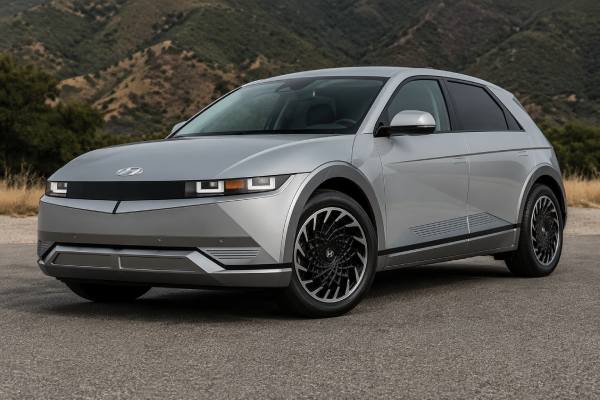
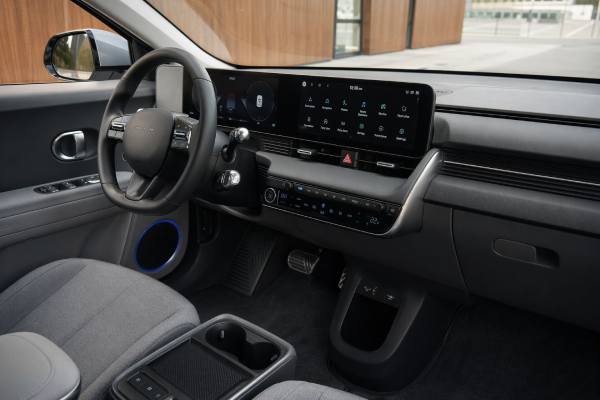
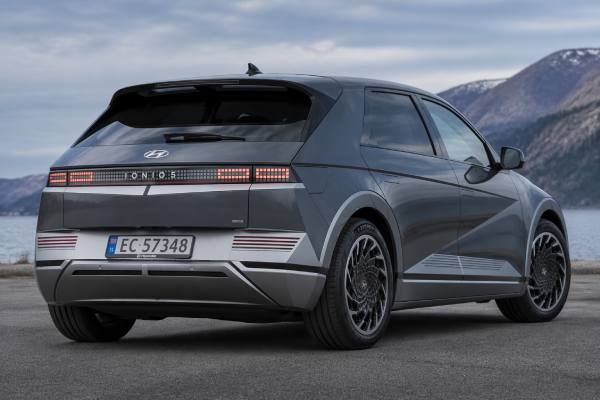
The facelifted Hyundai IONIQ 5 with the 125 kW rear motor is the entry point into the updated NE range, but it is not a stripped-down afterthought. In this form, it pairs a single rear motor with the newer 63.0 kWh battery, keeps the dedicated E-GMP architecture, and benefits from the facelift’s more thoughtful daily-use changes: standard battery heating and preconditioning in the UK range, a rear wiper, revised physical controls, updated infotainment, and a tidier cabin layout. It is still a family EV first, so the real appeal is not outright speed. It is the balance of space, charging speed, comfort, and lower running costs versus the larger 84 kWh versions.
For most buyers, that creates a clear ownership case. This is the facelift IONIQ 5 for urban, suburban, and mixed-route use, with enough range for regular intercity driving but not the same long-haul reserve as the bigger-battery rear-drive model. The most important thing is to shop by specification, software status, and service history, not just by badge or list price.
Essential Insights
- The facelift brings useful real-world upgrades, including a rear wiper, revised controls, and improved cabin usability.
- Standard battery heating, battery preconditioning, and heat pump fitment in the UK range improve cold-weather charging and efficiency.
- The 63.0 kWh rear-drive version keeps the IONIQ 5’s fast-charging character while staying lighter and cheaper than the bigger-battery cars.
- Long-term reliability data is still developing, so campaign history and software updates matter more than on an older, fully proven model.
- Tire rotation is due every 12,000 km, and the reduction gear fluid should be checked every 60,000 km.
Contents and shortcuts
- Hyundai IONIQ 5 Facelift Identity
- Hyundai IONIQ 5 Data Tables
- Hyundai IONIQ 5 Trims and Safety
- Emerging Issues and Service Campaigns
- Routine Care and Used-Buying
- Daily Driving and Real Efficiency
- Measuring It Against Rivals
Hyundai IONIQ 5 Facelift Identity
The facelifted standard-range IONIQ 5 is a more meaningful update than the exterior changes first suggest. Yes, it gets the expected cosmetic refresh: revised bumpers, new wheel designs, a tidier V-shaped front detail, and the long-requested rear wiper. But the more important changes are structural and everyday-oriented. Hyundai used the facelift to sharpen usability, improve refinement, and add the features owners had been asking for since the original car launched. That makes the 125 kW rear-drive version more convincing than the pre-facelift 58 kWh entry model, even before you look at the battery change.
For this article, the baseline region is UK and broader European specification, because that is where the facelift 63.0 kWh and 170 PS rear-drive model is clearly offered and documented. In that market context, the car sits at the bottom of the facelift lineup but still benefits from the major hardware and software improvements applied across the range. Hyundai’s revised standard-range battery is larger than before, the range is better, and the charging story stays strong for the class because the car continues to use the E-GMP platform’s 800 V class architecture.
That matters because this version is not supposed to be a junior performance model. It is supposed to be the rational choice. The single rear motor keeps the layout simple and avoids the weight and tyre cost of all-wheel drive. The smaller battery keeps price and mass down, but the car still preserves the core IONIQ 5 strengths: a huge-feeling cabin for its footprint, a flat floor, excellent rear leg room, a relaxed driving position, and genuinely fast DC charging for a mainstream family EV. The facelift also makes the car feel less experimental and more mature. The revised center console layout, new physical buttons for high-use functions, updated infotainment, and cleaner day-to-day ergonomics all push it in that direction.
The result is a clearer split inside the facelift range. If you regularly do long motorway runs, tow, or want the least compromise, the 84 kWh rear-drive version remains the broader all-rounder. But if your use is mainly city, suburban, commuting, school-run, and moderate mixed-distance travel, the 125 kW standard-range facelift has a strong argument. It feels modern, spacious, and better resolved than many entry EVs because Hyundai did not remove the expensive underlying architecture just because this is the cheaper version.
That said, this is still a relatively new facelift model, not a decade-old known quantity. The pre-facelift IONIQ 5 taught the market that Hyundai can build a genuinely advanced EV, but also that software campaigns, service actions, and charging-related updates matter. The facelift seems more polished out of the box, especially in cold-weather charging behavior, yet careful buyers should still think like engineers and not like brochure readers. Specification, campaign completion, and battery and charging behavior matter more than the badge on the tailgate.
Hyundai IONIQ 5 Data Tables
Powertrain, battery and efficiency
| Specification | Value |
|---|---|
| Motor type | Permanent-magnet synchronous motor |
| Motor layout | Single rear motor |
| Drive type | Rear-wheel drive |
| Max power | 170 hp (125 kW) |
| Max torque | 350 Nm (258 lb-ft) |
| Battery chemistry | Lithium-ion battery |
| Battery capacity | 63.0 kWh usable |
| Battery module structure | 288 cells (24 modules) |
| Electrical architecture | 800 V class |
| Thermal management | Liquid-cooled battery and power electronics |
| Heat pump | Standard in UK facelift range |
| Official test cycle | WLTP |
| Official range | 440 km (273 mi) |
| Official efficiency | 15.6 kWh/100 km |
Charging and driveline
| Specification | Value |
|---|---|
| Transmission | Single-speed reduction gear |
| Charging connector (AC) | Type 2 |
| Charging connector (DC) | CCS Combo 2 |
| Charging port location | Right rear quarter |
| Onboard charger | 10.5 kW AC |
| DC fast-charge peak | 260 kW |
| DC 10–80% time | 18 min |
| AC 10–100% time | 5 hr 50 min on 10.5 kW three-phase wallbox |
| 50 kW DC 10–100% | 58 min |
| Battery preconditioning | Standard in UK facelift range |
| Battery heating | Standard in UK facelift range |
| Vehicle-to-load output | 3.6 kW AC |
Performance, chassis and dimensions
| Specification | Value |
|---|---|
| 0–100 km/h | 8.5 s |
| Top speed | 185 km/h (114 mph) |
| Towing capacity, braked | 750 kg (1653 lb) |
| Towing capacity, unbraked | 750 kg (1653 lb) |
| Payload | 510 to 590 kg (1124 to 1301 lb) |
| Front suspension | MacPherson strut |
| Rear suspension | Multi-link |
| Steering system | Rack mounted |
| Steering lock-to-lock | 2.67 turns |
| Turning circle | 11.98 m |
| Front brakes | 325 mm discs |
| Rear brakes | 325 mm discs |
| Tyres and wheels | 235/55 R19 on 7.5J x 19 |
| Length | 4655 mm (183.3 in) |
| Width | 1890 mm (74.4 in) |
| Height | 1605 mm (63.2 in) |
| Wheelbase | 3000 mm (118.1 in) |
| Kerb weight | 1880 to 1960 kg (4145 to 4321 lb) |
| GVWR | 2470 kg (5445 lb) |
| Cargo volume | 520 L seats up / 1580 L seats down |
Safety and service data
| Specification | Value |
|---|---|
| Euro NCAP | 5 stars; Adult 88%, Child 86%, Vulnerable Road Users 63%, Safety Assist 88% |
| IIHS | Top Safety Pick+ for 2025 IONIQ 5 family |
| IIHS headlight rating | Good or Acceptable, depending on trim and lamp type |
| Airbags | 7 airbags standard in UK facelift range |
| ADAS baseline | FCA, lane keep assist, lane follow assist, highway drive assist, smart cruise control, parking distance warning, intelligent speed limit assist |
| Reduction gear fluid | Check every 60,000 km |
| Brake fluid specification | DOT 4 LV / ISO 4925 Class 6 |
| Wheel nut torque | 108 to 127 Nm (79 to 94 lb-ft) |
Hyundai IONIQ 5 Trims and Safety
The facelift range is easier to understand if you separate the standard-range car from the rest of the lineup. In UK form, the 63.0 kWh 170 PS rear-drive version is mainly tied to Advance and Premium grades. That is important because the bigger-battery 84 kWh cars spread much further up the range into N Line, Ultimate, and N Line S. In other words, the standard-range facelift is not meant to be the luxury or sporty version. It is the value-focused, practical end of the lineup, but Hyundai still equips it more thoughtfully than many rival entry EVs.
Advance is the true base car, yet it is not bare. It brings the refreshed body, 19-inch wheels, heated front seats and heated steering wheel, dual 12.3-inch screens, dual-zone climate control, wireless Apple CarPlay and Android Auto, OTA capability, drive modes including Snow and My Mode, smart regenerative braking, and the facelift’s welcome rear wiper. Premium is the better-used-buy trim for many owners because it adds the features that matter day to day rather than just visually: upgraded headlights, blind-spot support, a stronger assistance package, wireless phone charging, a powered tailgate, interior V2L, ambient lighting, and better seat adjustment. If the prices are close on the used market, Premium is usually the smarter long-term choice.
The facelift also cleaned up some of the original car’s usability complaints. Hyundai moved frequent-use functions to proper physical controls, improved the layout around the center console, updated the infotainment to the ccNC generation, and expanded over-the-air update coverage. Those are not glamorous changes, but they make the car feel less like an early EV experiment and more like a mature daily vehicle. That matters more on the standard-range model, where buyers are usually prioritizing practicality over drama.
Safety equipment is also better understood by trim. In UK form, Advance carries a solid baseline: forward collision avoidance, lane keeping, lane following, smart cruise, parking distance warning, speed limit assist, eCall, and seven airbags. Premium moves up to a richer ADAS set, including the more advanced forward collision system with junction turning support, Highway Drive Assist 2, blind-spot collision avoidance, and a broader convenience package around visibility and parking. On higher global facelift versions, Hyundai also added hands-on detection, Remote Smart Parking Assist 2, and parking collision-avoidance functions.
Crash-test context needs a small clarification. Euro NCAP has not published a wholly new, facelift-specific IONIQ 5 test program as a separate model line. The car still leans on the existing five-star IONIQ 5 family rating, which includes the 125 kW standard-range rear-drive variant within the broader assessment scope. In the U.S., IIHS awarded the 2025 IONIQ 5 family Top Safety Pick+, with a useful caveat that headlight performance varies by trim and lamp setup. Projector-lamp versions score better than reflector-lamp versions. That means the trim decision can genuinely affect night-driving confidence.
Child-seat usability remains good, and the platform’s long wheelbase helps second-row packaging. Repair quality, however, matters more on a tech-heavy EV like this. Windscreen replacement, bumper work, camera or radar changes, and steering or suspension disturbance can all require recalibration. On this model, a tidy history with evidence of correct repair practice is worth as much as an extra equipment badge.
Emerging Issues and Service Campaigns
The facelifted 125 kW standard-range IONIQ 5 is still too new to have the kind of long-term reliability map that older, fully established models develop. That does not make it risky by default. It means the right way to judge it is to separate confirmed, model-year-specific issues from broader platform watchpoints and then to weigh both against the fact that Hyundai clearly used the facelift to improve day-to-day operation.
The most important point is that there is not yet a widely established facelift-specific failure pattern for this exact 63.0 kWh rear-drive version on the level that early pre-facelift ICCU discussions created for the older model line. That is encouraging. Still, the facelift is not a clean-sheet car. It shares major platform concepts, control logic families, and electrical architecture with the earlier NE-generation IONIQ 5, so buyers should continue to treat software and campaign history as core parts of the health picture.
At the moment, the clearer confirmed facelift-era service action is not a drivetrain meltdown story but a production-quality one. In the U.S., certain 2025 IONIQ 5 vehicles were recalled for a rear floor wiring harness issue involving insufficient crimping at rear side airbag connector terminals. Symptoms could include an airbag warning lamp and loss of the deployment signal for the rear side airbag. That is a specific recall with an inspection-and-replace remedy, and while it does not define every facelift market, it shows why current recall completion should be checked on any near-new IONIQ 5.
From an ownership point of view, the issue map currently looks like this:
- Common and low severity: brake disc surface corrosion or light noise, especially on lightly used cars with strong regen; tyre shoulder wear if pressures or alignment are neglected; minor trim noises.
- Occasional and low-to-medium severity: AC charging slowdown or interruptions caused by temperature, cable, charger behavior, or software logic; charge-port latch or seal wear; 12 V battery weakness if the car is lightly used or repeatedly left discharged.
- Occasional and medium severity: incomplete software status leading to less polished charging, infotainment, or assistance behavior than the facelift is capable of delivering.
- Rare and higher severity: recall or service-campaign items involving safety hardware, wiring, or control units.
The encouraging part is that Hyundai addressed several of the original car’s ownership pain points before buyers even reached this facelift. Standard battery heating, preconditioning, and heat pump fitment in the UK facelift range are especially important because they reduce the chance that winter charging performance will feel arbitrary or disappointing. That does not eliminate the need for updates, but it does suggest Hyundai learned from early-user feedback.
The traction battery itself is not currently the biggest concern. The pack is liquid-managed, the platform is designed for fast charging, and there is no broad public evidence so far that the facelifted standard-range battery is degrading abnormally in ordinary use. That does not mean every car will age identically. Frequent high-speed driving, very hot climates, constant DC fast charging, and long periods parked at very high state of charge will still accelerate wear compared with gentler use. But the battery is not the first thing a careful buyer should fear.
The smarter checks are more practical. Ask for full dealer history, confirm software and service campaigns, inspect the charge port carefully, verify that AC charging is stable on a home or wallbox-type setup, and make sure there are no unresolved warnings in the assistance or restraint systems. A near-new facelift IONIQ 5 with complete records is a much safer purchase than a cheaper one with a vague explanation about updates being “done at some point.”
Routine Care and Used-Buying
Although the facelifted IONIQ 5 is still a fairly new model, the correct maintenance approach is already clear. It is a low-maintenance EV, but not a no-maintenance one. The big difference is that most of the useful care revolves around inspections, software status, tyres, brakes, charging hardware, cooling systems, and the 12 V battery rather than around engine oil and exhaust-related wear.
A practical working schedule for this car looks like this:
- Every month:
- Check tyre pressures when cold.
- Inspect the charge-port flap, seal, and pins for dirt, moisture, or impact damage.
- Check coolant levels visually.
- Confirm there are no new warning lights or charging errors.
- Every 12,000 km or 12 months:
- Rotate tyres.
- Inspect brake pads, brake disc faces, and caliper movement.
- Inspect suspension joints, steering components, and underbody panels.
- Test the 12 V battery.
- Check wheel alignment if tyre wear is uneven or the steering wheel is no longer straight.
- Every 24 months:
- Replace the cabin air filter sooner if the car runs in dust, pollen, or city pollution.
- Check brake fluid condition and moisture content.
- Inspect A/C performance and heat-pump operation where fitted.
- Every 60,000 km:
- Check the reduction gear fluid condition.
- Investigate any driveline hum, seepage, or vibration instead of writing it off as normal EV sound.
- Severe-use schedule:
- Shorten inspection intervals if the car sees frequent DC fast charging, repeated motorway use, very hot or very cold climates, salted winter roads, or regular towing.
This is the key difference between sensible EV ownership and lazy EV ownership. The car does not punish you with constant service visits, but it does reward a structured inspection routine. The brakes especially deserve attention. Strong regeneration means the friction brakes can look older than expected because they have not been worked hard enough to keep the surfaces clean. Owners who never use the brakes firmly and never inspect them can end up with noise, corrosion, or uneven wear long before the pads are actually “used up.”
For buyer guidance, the facelift standard-range car should be judged as a near-new or lightly used purchase rather than as a bargain-basement used EV. The first question is not mileage. It is whether the car is the right trim and whether the history is complete. Premium is often the more desirable choice because the added ADAS and lighting features improve daily ownership more than most cosmetic options do. Advance still makes sense when price matters and the car is well documented.
A focused buying checklist should include:
- Battery behavior: compare displayed range with ambient temperature and state of charge, and look for consistent charging behavior rather than miracle dashboard estimates.
- Charging hardware: inspect port pins, seal condition, flap action, and stable AC charging performance.
- Cooling and thermal management: confirm the car reaches charge speed properly after preconditioning and shows no coolant or thermal warnings.
- Chassis and body: inspect tyre shoulders, wheel condition, underbody covers, and any lift or jack damage around the battery shield area.
- Electronics: verify ADAS functions, cameras, sensors, navigation-based charger routing, OTA history, and infotainment response.
- Campaign status: request dealer evidence for recall and service-campaign completion.
Long term, the outlook is promising but still developing. The most likely medium-cost ownership items remain tyres, brake hardware if neglected, 12 V battery replacement, and the occasional charging or software-related repair once the car is older. That is a better risk profile than many people expect from a modern EV, but only if you buy one with evidence instead of assumptions.
Daily Driving and Real Efficiency
The facelifted 170 hp IONIQ 5 is not a car that wins people over with spec-sheet drama. It wins with ease. Around town and in normal commuting, the rear motor’s 350 Nm makes the car feel stronger than its power figure suggests. Step-off response is immediate, the single-speed reduction gear keeps delivery smooth, and the rear-drive layout avoids the slightly artificial tug that some front-driven EVs can produce under hard throttle. The official 0–100 km/h time of 8.5 seconds tells the story well. It is brisk enough for confident merging and overtaking, but the real point is how cleanly it does the job.
Ride quality remains one of the IONIQ 5’s strongest traits, and the standard-range facelift benefits from the basic fact that it sits on 19-inch wheels in its UK trims. That is good news. This is the wheel and tyre package that best suits the platform’s comfort bias. The long 3,000 mm wheelbase smooths broken roads nicely, the battery mass sits low, and the facelift’s small chassis and body refinements appear to make the car feel slightly calmer and less hollow over poor surfaces than some early examples did. It is not a sporty crossover. It is a quiet, stable, comfort-first EV, and in this powertrain that identity works.
Steering feel is accurate rather than talkative. You place the car easily, but there is not much genuine texture. That is normal for the class. The more interesting control system is regenerative braking. Hyundai’s approach remains one of the better ones because it gives drivers useful variation without turning the process into a software exercise. You can coast, add regen in steps, or use one-pedal-style driving in traffic. Most owners adapt quickly, and the facelift’s better everyday interface helps here too.
Real efficiency depends heavily on speed, temperature, and route type. The official WLTP figure of 15.6 kWh/100 km is achievable only in friendly conditions, but it does tell you that the facelift standard-range car is an efficient baseline EV rather than a blunt, heavy one. In real mixed use, expect something closer to the mid-to-high teens kWh/100 km in mild weather. In town and slower mixed routes, it can do better than that. On steady motorway runs, especially in cold weather, expect the number to climb into the low-to-mid 20s. That is where the 63.0 kWh battery starts to define the ownership experience.
So what does that mean for real range? In everyday mixed driving, the car should feel comfortably usable and far closer to the official figure than many older EVs. On gentle suburban or urban use, it can be surprisingly strong. On fast motorway work at around 120 km/h, especially with heating or strong headwinds, expect a much shorter practical leg and plan accordingly. This is the part of the range where the larger 84 kWh car just has less stress baked into it.
Charging is what keeps the standard-range facelift attractive. The 18-minute 10–80% claim on a powerful DC charger is still a major advantage in this class, and the standard battery heating and preconditioning improve the odds of seeing something close to that in cooler conditions. Home charging is easy: about 5 hours 50 minutes on a proper 10.5 kW three-phase wallbox. In daily ownership terms, that makes this car far easier to live with than its modest battery size might imply.
Measuring It Against Rivals
The facelifted 63.0 kWh rear-drive IONIQ 5 competes less on raw battery size than on how intelligently the whole package is put together. That is why it still deserves serious attention in a crowded EV market. It is roomy, charges quickly, rides well, and feels designed around daily life rather than around a single headline number.
Its closest conceptual rival remains the Kia EV6 standard-range rear-drive model. The two cars share the same broader family thinking, and that means both benefit from strong charging performance and modern EV-native packaging. The difference is character. The Kia feels lower, more driver-led, and more tightly drawn. The Hyundai feels more open, more upright, and easier to use as a family crossover. If you want the more spacious and more relaxed option, the IONIQ 5 is the better fit.
The Volkswagen ID.4 Pure and similar entry-battery MEB rivals usually feel more conventional. That can be a strength if you want familiar ergonomics and a calmer learning curve. What they tend to give away is charging drama and interior packaging flair. The Hyundai still feels like the more ambitious EV product, especially once you factor in its 800 V class platform and very strong fast-charging capability.
The Renault Scenic E-Tech in smaller-battery form is another strong alternative for buyers who prioritize efficiency and modern packaging. It can feel very well judged, and in some markets it presents a strong value argument. The Hyundai answers with better charging credibility, a more distinctive interior sense of space, and a more established long-wheelbase crossover feel. The Scenic may be the sharper efficiency tool. The IONIQ 5 is the more relaxed lounge-like EV.
Skoda’s Enyaq family and newer smaller-battery group alternatives also deserve consideration because they are practical, generally comfortable, and easy to recommend as rational EVs. Yet again, the Hyundai’s strength is that it does not feel like a compromised entry version when you stop at a charger or load the cabin with adults. The architecture still feels premium, even if the battery is not the biggest in the class.
That leads to the verdict. The facelifted 125 kW rear-drive IONIQ 5 is not the IONIQ 5 for everybody. It is not the best choice for people who live on high-speed motorways, tow regularly, or simply do not want to think about winter range at all. But within its intended use, it is very good. The facelift fixes several of the original car’s minor daily frustrations, the standard battery heating and preconditioning help the ownership experience in colder weather, and the single-motor layout remains the cleanest, simplest way to enjoy the platform.
For many buyers, that makes it the smart entry point into the facelift range. Not the most glamorous. Not the most powerful. Just one of the most coherent.
References
- New IONIQ 5 pricing and specification 2024 (Technical Specifications)
- 9. Maintenance – Hyundai | UK | User Manuals 2022 (Owner’s Manual)
- Euro NCAP | Hyundai IONIQ 5 2021 (Safety Rating)
- 2025 Hyundai Ioniq 5 2025 (Safety Rating)
- IMPORTANT SAFETY RECALL 2025 (Recall Notice)
Disclaimer
This article is for informational purposes only and is not a substitute for professional diagnosis, repair, or official workshop guidance. Specifications, torque values, service intervals, software actions, procedures, and equipment can vary by VIN, market, and trim, so always verify details against the official service documentation for the exact vehicle.
If this guide helped you, please consider sharing it on Facebook, X, or another social platform to support our work.