
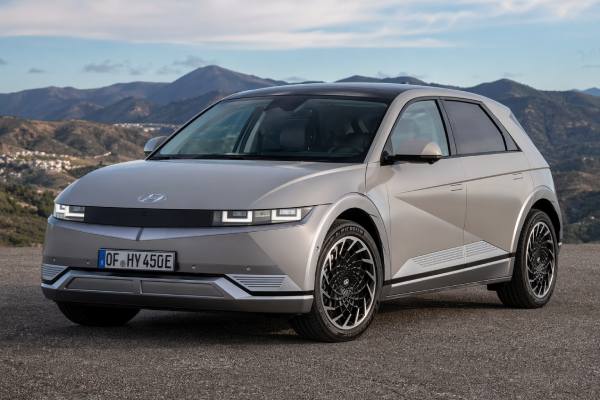
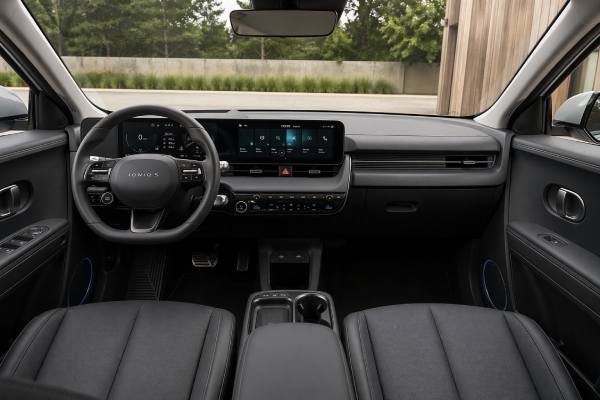
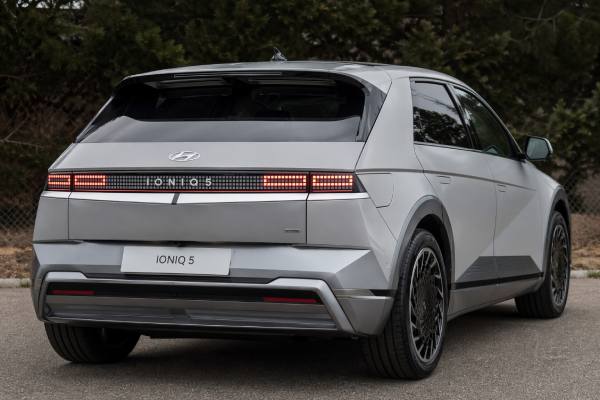
The facelifted Hyundai IONIQ 5 with the 168 kW rear motor is the version that makes the model feel fully matured. It keeps the calm, spacious character that made the original car stand out, but adds a larger 84 kWh battery, updated software and charging logic, and a more polished ownership experience. In this form, the rear-drive IONIQ 5 is still not the sharpest EV in its class, yet it often feels like one of the easiest to live with. It is quick enough, genuinely roomy, unusually comfortable, and still among the better mainstream EVs for fast long-distance charging when the battery is prepared properly. For used and nearly new buyers, the details matter: trim, wheel size, software level, recall history, and thermal equipment can change the experience more than the headline power figure. Pick the right example, and this facelifted IONIQ 5 remains one of the most convincing comfort-first electric crossovers on sale.
What to Know
- The 84 kWh battery gives this rear-drive version stronger real-world trip usability than the earlier long-range model.
- Fast 800-volt charging remains a major strength, especially on high-power public chargers.
- Ride comfort, cabin space, and motorway refinement are better than many same-era rivals.
- VIN-based recall and campaign checks still matter, especially on early facelift production cars.
- Rotate tyres every 12,000 km or 12 months to keep wear and efficiency under control.
Section overview
- Hyundai IONIQ 5 facelift essentials
- Hyundai IONIQ 5 facelift spec sheets
- Hyundai IONIQ 5 facelift trims and safety tech
- Weak points and factory fixes
- Maintenance rhythm and buying strategy
- Real range and driving behavior
- Rival check and value
Hyundai IONIQ 5 facelift essentials
The facelifted rear-drive IONIQ 5 is the version that makes the most sense for buyers who want the full concept without paying the efficiency and complexity penalty of the dual-motor car. Hyundai kept the same basic E-GMP formula, but sharpened the details that matter in daily use: battery size, charging behavior, connected functions, and trim structure. The result is not a radical new vehicle, but it is a better sorted one.
This version uses the updated long-range pack, rated at 84 kWh in facelift European material, with the familiar rear-mounted permanent-magnet motor producing 168 kW. Depending on market language, that output is quoted as 228 PS or rounded to 229 hp, but the character matters more than the label. It is brisk rather than explosive, which suits the car well. Step-off is clean, mid-range response is strong enough for easy motorway joining, and the rear-drive layout keeps the front axle free of powertrain tug or heaviness.
The facelift also makes better use of its charging hardware. Hyundai already had one of the strongest fast-charging foundations in the class, and this update leans into that advantage. Battery conditioning is easier to find, software logic is more mature, and the car feels less like an early adopter’s EV than the first wave of IONIQ 5s. In practical terms, that means shorter cold-weather frustration, more predictable charge planning, and a clearer gap between the IONIQ 5 and slower-charging rivals.
Comfort remains central to the appeal. The long wheelbase, flat floor, and upright cabin shape still create a sense of space that many competitors cannot quite match. The facelift did not change that basic strength. It still feels bigger inside than its outer size suggests, and it still works particularly well as a family EV or a long-distance commuter. Rear-seat room is generous, the boot is useful, and the seating position is easy rather than sporty.
The most important ownership point is that this car rewards informed buying. The facelift is newer and, in many areas, better resolved than the earlier IONIQ 5, but it still belongs to a component family that needs proper campaign and software history. A smart buyer should care about charging consistency, recall completion, trim-specific equipment, tyre size, and battery-preconditioning behavior just as much as mileage or paint condition.
That is why this version stands out. It is not simply the updated IONIQ 5. It is the one where Hyundai’s original idea feels closest to fully delivered: a spacious, easygoing EV with genuinely useful fast charging and enough polish to make it feel current rather than merely interesting.
Hyundai IONIQ 5 facelift spec sheets
Powertrain and battery
| Spec | Value |
|---|---|
| Motor type | Permanent Magnet Synchronous Motor |
| Motor layout | Single rear motor, rear axle |
| Drive type | RWD |
| Transmission | Single-speed reduction gear |
| Max power | 168 kW / 228 PS / commonly listed as 229 hp |
| Max torque | 350 Nm / 258 lb-ft |
| Battery chemistry | Lithium-ion |
| Battery capacity | 84 kWh usable |
| Battery module structure | 384 cells / 32 modules |
| Battery layout | Floor-mounted traction battery |
| Battery and power electronics thermal management | Liquid-cooled |
| Heat pump | Standard in UK facelift range |
| Battery preconditioning system | Fitted |
Charging and efficiency
| Spec | Value |
|---|---|
| AC connector | Type 2 |
| DC connector | CCS |
| Charging port location | Right rear quarter |
| Onboard AC charger | 10.5 kW |
| Charging architecture | 400 V / 800 V compatible fast charging |
| DC fast-charge peak | up to 240 kW |
| DC 10–80% charging time | about 18 min |
| AC 10–100% charging time | about 7 h 35 min on 10.5 kW three-phase wallbox |
| Public DC 50 kW charge time | about 1 h 16 min from 10–100% |
| Typical DC average power over 10–80% | about 190–200 kW in ideal conditions |
| Typical taper onset | usually becomes more noticeable above about 55–60% SOC |
| Official test standard | WLTP |
| Rated efficiency, 19-inch trims | about 16.1 kWh/100 km |
| Rated efficiency, 20-inch trims | about 17.0–17.2 kWh/100 km |
| Rated range, 19-inch trims | up to 570 km / 354 mi |
| Rated range, 20-inch trims | about 495–530 km / 307–329 mi |
| Real-world highway at 120 km/h | about 24–27 kWh/100 km |
| Real-world highway range at 120 km/h | about 290–330 km / 180–205 mi |
Performance and capability
| Spec | Value |
|---|---|
| 0–100 km/h | about 7.5 s |
| 0–62 mph | 7.5 s |
| Top speed | 183 km/h / 114 mph |
| Towing capacity, braked | 1,600 kg / 3,527 lb |
| Towing capacity, unbraked | 750 kg / 1,653 lb |
| Payload | about 505–605 kg / 1,113–1,334 lb |
| Turning circle | 11.98 m / 39.3 ft |
Chassis and dimensions
| Spec | Value |
|---|---|
| Front suspension | MacPherson strut |
| Rear suspension | Multi-link |
| Steering type | Rack-mounted motor-driven power steering |
| Steering turns lock-to-lock | 2.67 |
| Brake system | Active hydraulic booster with regenerative braking, ABS, ESC |
| Front brake discs | 345 mm |
| Rear brake discs | 345 mm |
| Parking brake | Electronic |
| 19-inch tyre size | 235/55 R19 |
| 20-inch tyre size | 255/45 R20 |
| Length | 4,655 mm / 183.3 in |
| Width | 1,890 mm / 74.4 in |
| Height | 1,605 mm / 63.2 in |
| Wheelbase | 3,000 mm / 118.1 in |
| Kerb weight | about 1,985–2,085 kg / 4,376–4,597 lb |
| GVWR | 2,590 kg / 5,710 lb |
| Cargo volume, seats up | 520 L / 18.4 ft³ |
| Cargo volume, seats down | 1,580 L / 55.8 ft³ |
Safety and service data
| Spec | Value |
|---|---|
| Euro NCAP rating | 5 stars |
| Euro NCAP adult occupant | 88% |
| Euro NCAP child occupant | 86% |
| Euro NCAP vulnerable road users | 63% |
| Euro NCAP safety assist | 88% |
| IIHS rating status | 2025 Top Safety Pick+ |
| IIHS rating application | applies to 2024–2026 models |
| IIHS headlight result | Good or Acceptable, depending on headlight package |
| Core ADAS suite | AEB, ACC, lane keep assist, lane follow assist, intelligent speed assist, blind-spot support, rear cross-traffic support |
| Highway assist | Highway Drive Assist 1.5 or 2.0 depending on trim |
| Over-the-air updates | Standard in UK facelift range |
| Reduction gear fluid check interval | every 60,000 km |
| Brake fluid specification | Hyundai-specified low-viscosity DOT 4 class fluid |
| Coolant type | Hyundai EV low-conductivity blue coolant plus standard coolant circuit |
| Wheel nut torque | 108–127 Nm / 79–94 lb-ft |
Hyundai IONIQ 5 facelift trims and safety tech
For the facelifted 168 kW rear-drive IONIQ 5, trim choice changes the ownership experience more than the power figure does. In UK and broader European-style specification, the key grades are usually Advance, Premium, N Line, Ultimate, and N Line S. All of them share the same core battery and motor in this configuration, but the wheel choice, lighting, comfort features, parking hardware, and assistance systems can materially change how the car feels and how much range it delivers.
Advance is the value-focused entry point, but it is not stripped. It already includes the bigger battery, the 10.5 kW AC charger, heat pump, battery heating with pre-conditioning, the main touchscreen and digital cluster setup, smart cruise control, lane support, and 19-inch wheels. For buyers who care about range, ride comfort, and lower running costs, it is actually one of the smartest versions to own. Premium builds on that with more convenience and a richer cabin feel, and it is often the sweet spot for people who want the car’s best core strengths without chasing every tech feature.
N Line changes the tone more than the mechanical fundamentals. You get a sportier appearance package, 20-inch wheels, and a slightly sharper visual presence, but you also give away some range and some ride softness. Ultimate adds the more premium comfort and visibility items, including the stronger camera and parking hardware, richer seat trim, head-up display, and the option of larger tech packs. N Line S combines the sportier styling theme with the fullest equipment level.
Quick identifiers matter on the used market because online listings are not always accurate. Nineteen-inch wheels usually point to the range-friendlier versions. Twenty-inch wheels, upgraded headlamp packages, Bose audio, a head-up display, blind-spot view monitor, digital side mirrors in some markets, and powered rear-seat functions usually signal upper trims. Inside, upholstery, seat memory, and the presence of premium relaxation seats are strong clues too.
The facelift also improves the tech story. Over-the-air updates are broader, Highway Drive Assist is better integrated, and battery preconditioning is easier to verify. In UK facelift specification, battery heating with pre-conditioning is standard across the range, which is a meaningful benefit for winter fast charging. That is one of the most useful year-and-trim improvements because it changes real trip performance, not just convenience.
Safety remains a strong point. The underlying IONIQ 5 structure already had a solid Euro NCAP result, and the facelift continues to sit within a well-rated safety package. It uses front, side, curtain, and centre-impact protection strategies, and some facelift market material lists an expanded airbag count compared with earlier regional configurations. Child-seat provision remains practical, with rear-seat anchor points and a shape that is easy to work with.
ADAS coverage is broad, but buyers should still confirm exactly what a car has. Lower trims already cover the core needs with AEB, smart cruise, lane support, and speed-sign assistance. Higher trims layer on better blind-spot support, camera-based aids, remote parking functions, and more advanced highway-driving features. After bumper work, windscreen replacement, or accident repair, calibration quality matters as much as the options list, so that is something worth checking before purchase.
Weak points and factory fixes
The facelifted 168 kW rear-drive IONIQ 5 is newer and generally better resolved than the earliest cars, but it still belongs to the same broad electrical and charging ecosystem that made recall history important on earlier IONIQ 5s. That means reliability is best understood in two layers: ordinary age-and-use wear, and campaign-sensitive electronic issues.
The most important known area remains the Integrated Charging Control Unit, or ICCU. This is the issue every serious buyer should ask about first. On affected vehicles, symptoms can include a weak or repeatedly discharged 12 V battery, warning messages, charging irregularities, and in some cases reduced-power operation. The fault path is more serious than a nuisance because the ICCU also supports low-voltage charging. Hyundai’s official remedies have included inspection, software updates, and replacement of the ICCU and fuse if fault codes are present. On facelift cars, especially early 2024 examples, a VIN check and dealer record review are essential.
The second category is AC charging behavior. Some IONIQ 5s can show interrupted Level 2 charging, slower-than-expected AC rates, or sessions that drop power once the charge port area gets hot. Symptoms are simple: charging starts, then pauses, stops, or continues below the expected rate. These problems are not always hardware failures. In many cases, Hyundai has addressed them through software logic updates and revised system management. That is why a car that looks fine on a short drive can still be a poor buy if its update history is incomplete.
Battery and thermal-management reliability is better than many forum discussions suggest. Severe early capacity loss is not the typical concern. What matters more is consistency. A good car should show stable range behavior for its wheel size and season, normal fast-charge performance when preconditioned, and no unexplained warnings from the cooling or charging systems. The facelift’s standard or widely available preconditioning hardware is a real advantage here, because it reduces cold-weather charge inconsistency.
The onboard charger, charge-port assembly, and DC-DC side of the system also deserve attention. Look for repeated charging complaints, charge-port latch issues, water ingress signs around the flap or seals, and any history of charging harness or control-module work. These problems are not universal, but they are more important than trim squeaks or minor cosmetic wear because they change how easy the car is to live with.
The chassis side is more ordinary. Heavy EV mass means tyres, bushes, and brake hardware still need watching. Regen reduces brake wear, but it also means discs and pads can corrode if the car has done mainly gentle urban use. That can show up as noise, uneven braking feel, or rusty disc surfaces. Suspension knocks and hatch-area rattles are not unknown, but they are usually low-to-medium cost issues rather than structural concerns.
A sensible fault map looks like this:
- Common and higher priority: ICCU history, 12 V support, software campaign completion.
- Occasional and medium priority: interrupted AC charging, charge-port heat or latch concerns, sensor or warning-message glitches.
- Occasional and lower priority: brake corrosion, tailgate noises, trim rattles, alignment-related tyre wear.
- Rare but expensive: out-of-warranty high-voltage component replacement.
Before purchase, ask for full service history, recall proof, software campaign proof, records of any charging-system or ICCU work, and a battery state-of-health report. On this model, documented electronic health is often more valuable than a spotless body.
Maintenance rhythm and buying strategy
The facelifted IONIQ 5 is not a high-maintenance car, but it does benefit from a disciplined service rhythm. The mistake many EV owners make is assuming fewer fluids means no maintenance. In reality, the IONIQ 5 still needs regular tyre care, brake inspection, cooling-system checks, and software attention. It is best maintained like a sophisticated EV rather than a simplified one.
A practical schedule looks like this:
- At charging stops and at least monthly
- Check coolant level.
- Check washer fluid.
- Check tyre pressures and look for uneven wear.
- Watch for steering pull, unusual brake feel, or new warning messages.
- Every 12,000 km or 12 months
- Rotate tyres.
- Check balance and alignment.
- Inspect brake pads, discs, and caliper movement.
- Inspect suspension joints, bushes, and steering components.
- Check the charge-port seals, latch, and connector condition.
- Test the 12 V battery and confirm correct charging support.
- Review open recalls, software campaigns, and OTA history.
- Every 24,000 km or 24 months
- Replace the cabin air filter, or sooner in dusty use.
- Inspect brake fluid condition and moisture content.
- Recheck brake corrosion, especially on lightly used cars.
- Inspect underbody covers, battery shielding, and fasteners.
- Every 60,000 km
- Check reduction gear fluid.
- Inspect drive-unit mounts, seals, and any emerging drivetrain noise.
- Severe-use adjustments
- Shorten inspection intervals if the car does frequent DC fast charging, repeated motorway work, towing, mountain driving, or operation in extreme cold or heat.
Fluid accuracy matters more than many general workshops realise. Hyundai uses EV-specific coolant strategy here, including low-conductivity blue coolant in the high-voltage related circuit. Mixing in the wrong coolant or topping up with unsuitable fluid is poor practice and can create expensive problems later. Brake fluid also needs the correct specification, and reduction gear servicing should use the correct Hyundai-approved fluid. The practical takeaway is simple: this is a car that rewards dealer-level familiarity or a specialist EV workshop.
For buyers, the inspection process should start with charging and battery behavior, not cosmetics. Ask for a battery state-of-health report, then compare the displayed range and energy history with what the trim and wheel size should reasonably deliver. A healthy 19-inch rear-drive facelift car should feel believable and consistent, not erratic. Then test AC charging. A stable charge session is worth more than a polished detail job.
Next, inspect the cooling and thermal side. Look for dried coolant marks, signs of amateur hose work, blocked front cooling areas, or a cabin heater that seems less effective than it should. On a facelift car, battery preconditioning should be part of the ownership story, so verify that it works as expected.
The best used or ex-demonstrator choices are usually the 19-inch Advance or Premium cars if range, comfort, and tyre cost matter most. Ultimate is the richer option if you want the full cabin and camera suite. N Line and N Line S make sense if you value styling and equipment more than maximum range. For most long-term owners, rear-drive remains the wiser buy than AWD because it is simpler and already quick enough.
The long-term outlook is good. Battery degradation should be gradual rather than dramatic, and the more likely higher-cost items over time are tyres, brake servicing on low-use cars, 12 V battery replacement, and any out-of-warranty charging-system repairs rather than wholesale battery-pack failure.
Real range and driving behavior
The facelifted 168 kW rear-drive IONIQ 5 drives much like a mature EV should. It is smooth, settled, and quietly confident rather than flashy. The motor’s response is immediate, but the tuning avoids the exaggerated jumpiness that can make some electric cars tiring in traffic. That gives the IONIQ 5 an easy, low-stress character in daily use, especially in town and on mixed suburban roads.
Ride quality remains one of its biggest strengths. The long wheelbase and low battery mass help the body stay composed over broken surfaces, and the suspension has more calmness than many electric crossovers that try too hard to feel sporty. On 19-inch wheels, the car feels particularly well judged. Sharp edges are smoothed out well, secondary ride is controlled, and motorway stability is strong. On 20-inch wheels, the car still behaves well, but you notice more road noise and a little more low-speed firmness.
The steering is accurate and light rather than rich in feedback. That fits the mission. This is not a hot hatch disguised as a crossover. It is a comfort-led family EV with tidy body control and a predictable rear-drive balance. In wet weather, it feels clean and natural under power, and the stability systems are usually well calibrated rather than intrusive.
Regenerative braking is another strong point. Hyundai’s paddle-adjustable regen system gives the driver useful control, and one-pedal driving is easy to learn. The system is intuitive enough for everyday use, with enough variation between coast and stronger regen settings to suit different drivers. The only limitation is the same one many EVs face: the final handoff between regeneration and friction braking is good rather than class-leading.
Real-world efficiency depends heavily on speed and wheel choice. In city use or slower mixed driving, around 16–19 kWh/100 km is realistic in mild conditions, which is respectable for a vehicle this large and roomy. In mixed normal use, many owners will see something closer to 18–21 kWh/100 km. On the motorway, the story changes. At 120 km/h, expect around 24–27 kWh/100 km, with wind, rain, winter temperatures, and 20-inch wheels pushing the figure upward. That usually means a genuine highway range around 290–330 km before you start keeping a reserve.
Cold weather still matters. HVAC use, lower battery temperature, and dense air all reduce range, and this is not the most slippery EV at sustained motorway pace. The facelift’s stronger preconditioning story helps charging more than it eliminates winter consumption loss, so buyers should keep expectations realistic.
Charging performance remains the headline feature. At home, the 10.5 kW AC charger makes overnight recovery easy on a suitable three-phase wallbox. On DC, the IONIQ 5 still feels unusually capable for a mainstream crossover. In warm conditions, on a good high-power charger, it can get through the 10–80% window in about 18 minutes and charge at power levels many rivals still cannot match. That is the main reason it continues to feel current: it saves real travel time, not just brochure time.
Rival check and value
The facelifted rear-drive IONIQ 5 competes by being well-rounded. It is not the sharpest driver’s EV, not the absolute efficiency champion at motorway speeds, and not the cheapest way into a family electric crossover. What it does better than most rivals is combine comfort, space, charging speed, and day-to-day ease in one coherent package.
The Kia EV6 remains the most direct mechanical rival because it shares so much underneath. The difference is character. The EV6 feels lower, more cocooned, and a little more driver-focused. The IONIQ 5 feels more open, more relaxed, and more obviously family-oriented. If you want the platform in its sportier form, the Kia makes more sense. If you want the same hardware with better cabin openness and a calmer attitude, the Hyundai is usually the better fit.
The Tesla Model Y is the benchmark in some practical areas, especially software integration and energy efficiency. It also feels more urgent under load. But the Hyundai fights back with a more distinctive cabin, easier physical controls for many drivers, and a ride that many owners will prefer on ordinary roads. For buyers who do not want every function pushed through one central screen, the IONIQ 5 is the more comfortable and more human-feeling alternative.
Compared with the Volkswagen ID.4 and Skoda Enyaq, the Hyundai feels more technically ambitious. Its 800-volt charging system is a real advantage, and the cabin design feels more special. The Volkswagen-group cars often feel more conventional and familiar, which some drivers genuinely like, but the Hyundai tends to win the long-trip argument once charging speed enters the conversation.
The Polestar 2 offers a stronger sense of driver focus and a lower, more car-like feel, but it cannot match the IONIQ 5 for rear-seat room, upright practicality, or airy crossover comfort. The Toyota bZ4X and Subaru Solterra twins are easy to drive and often comfortable, but they cannot touch the Hyundai’s charging pace or packaging sophistication. That matters more the farther you drive.
Where does the IONIQ 5 give ground? High-speed efficiency still trails the slipperiest rivals, and the styling can mislead buyers into expecting a sportier chassis than the car actually delivers. Upper trims can also become expensive, and 20-inch cars sacrifice some of the very range advantage people buy the facelift for.
That said, the value case remains strong. In rear-drive facelift form, the IONIQ 5 offers enough performance, genuinely useful range, and unusually fast charging without forcing you into the extra complexity of an AWD setup. For buyers who want a spacious, comfort-led EV that still feels advanced in the right areas, it remains one of the strongest and most rational rivals in the class.
References
- New IONIQ 5 pricing and specification 2024 (Technical Specifications)
- 9. Maintenance – Hyundai | UK | User Manuals 2022 (Owner’s Manual)
- Euro NCAP | Hyundai IONIQ 5 2021 (Safety Rating)
- 2025 Hyundai Ioniq 5 2025 (Safety Rating)
- Safety Recall 272: Integrated Charging Control Unit (ICCU) 2024 (Recall Database)
Disclaimer
This article is for informational purposes only and is not a substitute for professional diagnosis, repair, or official service information. Specifications, torque values, service intervals, charging behavior, and repair procedures can vary by VIN, market, model year, software level, and installed equipment, so always verify details against the correct official service documentation for the exact vehicle.
If this guide helped you, please consider sharing it on Facebook, X, or another platform to support our work.